(7% discount is applied at checkout)
Cart is empty
Your go-to destination for cutting-edge server products
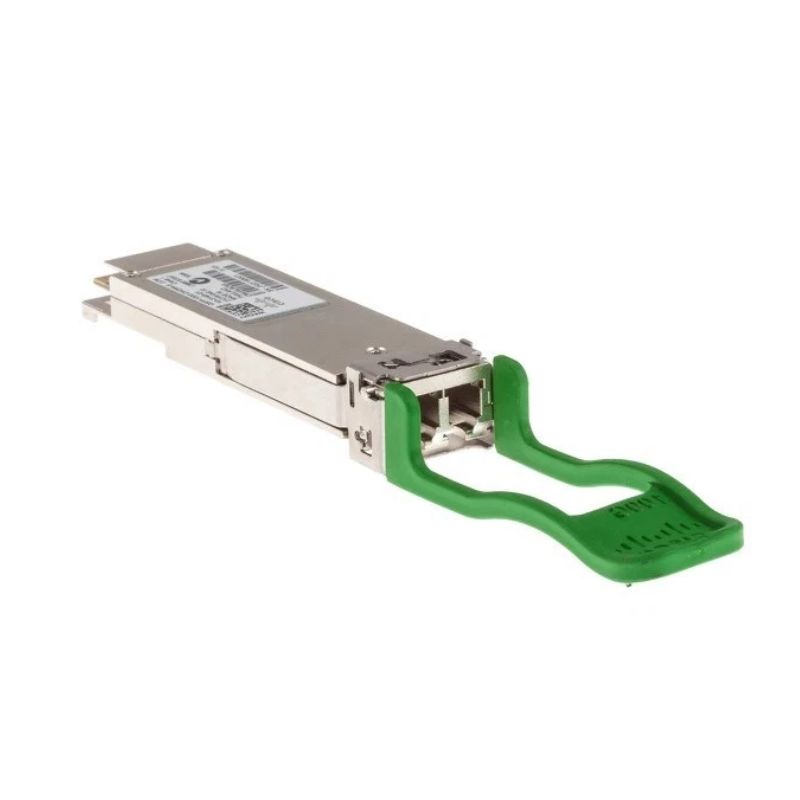


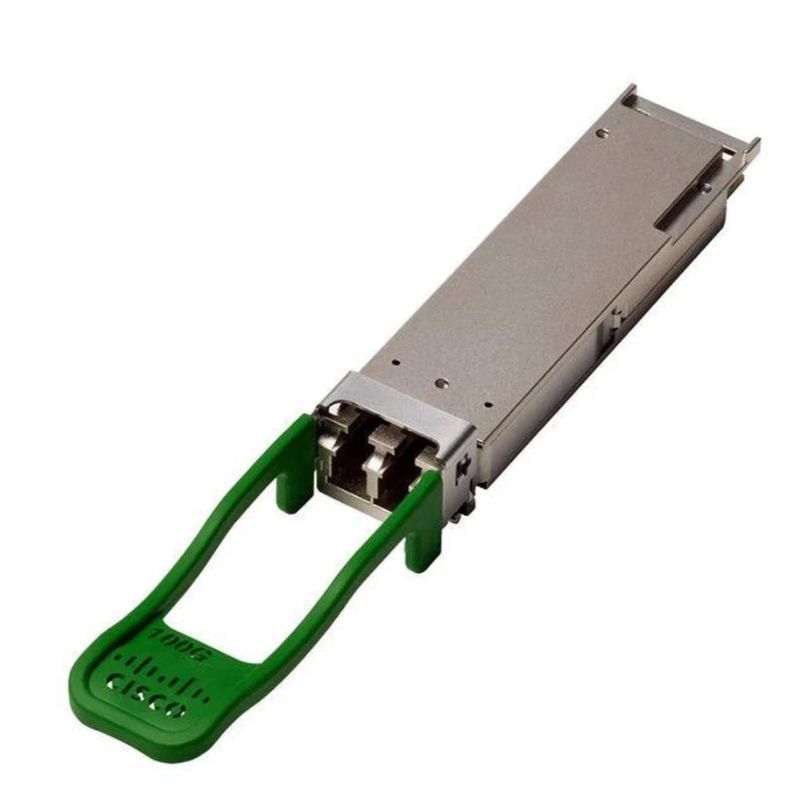
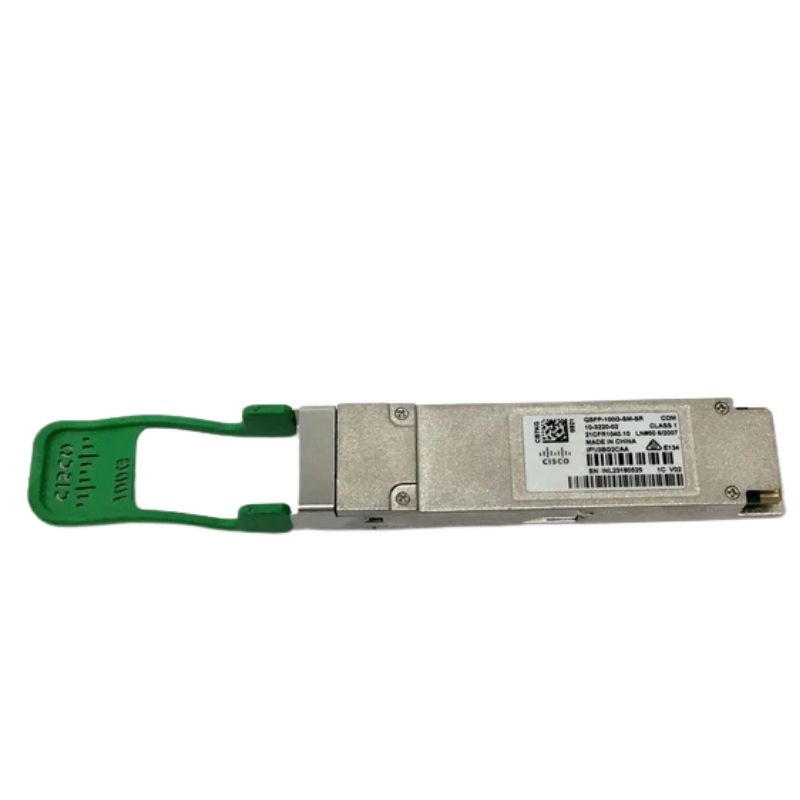
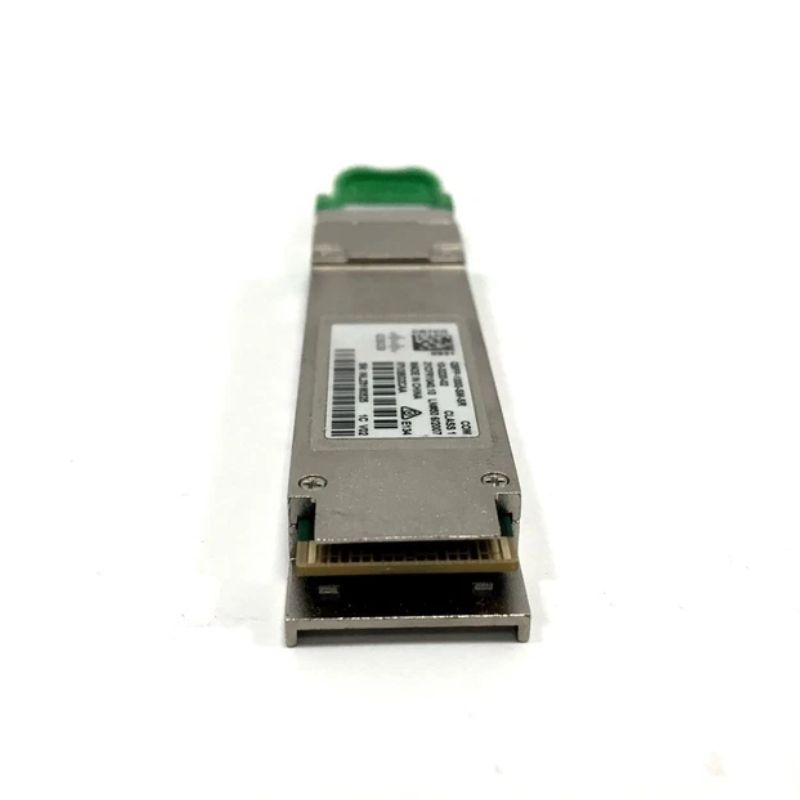
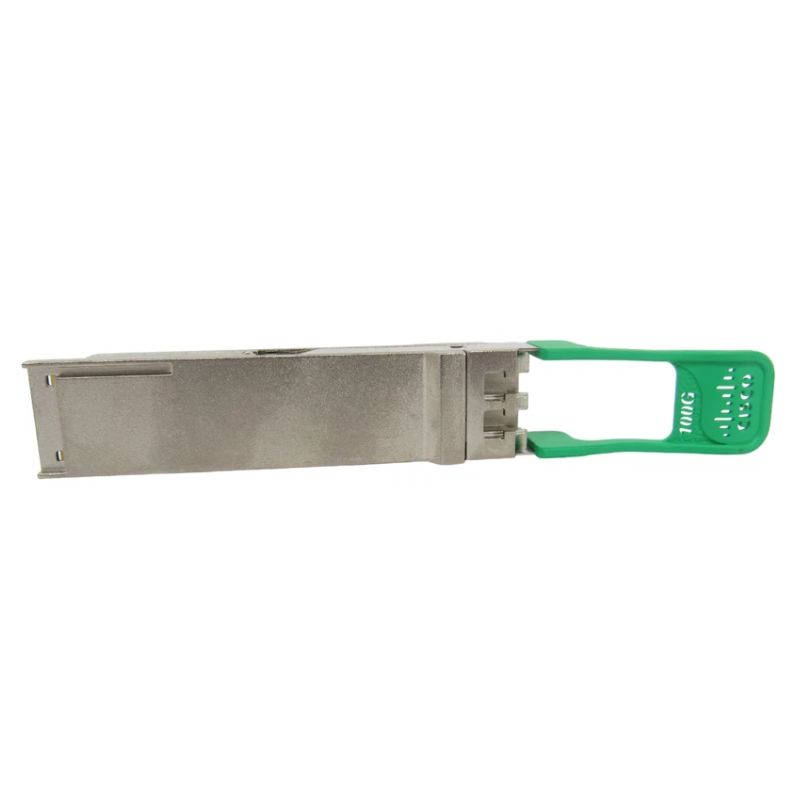
Cisco 10-3220-02 CWDM4 Lite 100 GBPS 2km over SMF QSFP Transceiver Module. Excellent Refurbished with 1 year replacement warranty
Overview of Cisco 10-3220-02 100G QSFP28 Transceiver
The Cisco 10-3220-02 CWDM4 Lite 100Gbps QSFP28 optical transceiver is engineered to deliver high-bandwidth data transmission across long-reach single-mode fiber infrastructures. Designed for top-tier data centers, cloud networks, and enterprise aggregation layers, this QSFP28 module ensures seamless 100-Gigabit Ethernet connectivity over distances reaching up to 2 km using standard G.652 SMF.
Operating across four discrete CWDM wavelengths, the module internally manages multiplexing and de-multiplexing, ensuring stable high-speed communication with minimal latency. With an optical link budget of 4.2 dB, the transceiver accommodates additional losses typically caused by patch panels, cross-connects, and structured cabling paths, making it ideal for modern high-density environments.
The Cisco 10-3220-02 CWDM4 Lite 100 Gbps 2km over SMF QSFP transceiver module sits within a focused category of high-density, high-performance optical pluggable modules engineered for short-reach, single-mode fiber links. This category encompasses QSFP-class optical transceivers designed to deliver 100 Gigabit Ethernet over single-mode fiber using coarse wavelength division multiplexing, optimized for links up to two kilometers. As part of the CWDM4 Lite family, modules in this group prioritize cost-efficiency and simplified optical architecture while maintaining Cisco-quality engineering, interoperability with common Cisco platforms, and adherence to relevant multi-source agreement (MSA) form factors and electrical interfaces. The category is intended for data center spine-and-leaf aggregation, campus interconnects, metro edge connections, and high-capacity server uplinks where a balance of price, capacity, and moderate reach is required.
CWDM4 Lite is an optical layer approach based on coarse wavelength division multiplexing that reduces the number of optical components needed to transmit four independent 25 Gbps lanes over single-mode fiber. The module aggregates four lanes into a single 100 Gbps signal while using fixed wavelength channels within the CWDM band. The "Lite" designation typically signals design choices that favor simplified optics, fixed wavelengths, and narrower operational tolerances compared with tunable or ER (extended reach) variants. In practical terms, a CWDM4 Lite QSFP module houses four laser sources, an internal multiplexer/demultiplexer and a single duplex SMF electrical-to-optical interface that presents to the network as a single 100G port. The QSFP transceiver conforms to electrical and mechanical MSA guidelines, ensuring prompt hot-swap serviceability and standard mechanical mounting in Cisco QSFP-capable line cards and switches. For systems engineers, the architecture means predictable insertion loss budgets and straightforward link engineering, without the need for additional DWDM multiplexers or tunable optics for short metro or campus links.
Electrically, the module complies with the QSFP28 electrical interface specifications and supports 100 Gbps serial lanes that are backward-compatible with switch ASICs and QSFP ports designed for 100 Gigabit Ethernet. The optical interface uses the standardized duplex LC or MPO/optical interface as specified by the vendor; for CWDM4 Lite modules, the physical fiber connector type and pinout must be confirmed with the product datasheet and ordering information. Optical transmit power, receive sensitivity, central wavelength, lane rate, and channel isolation are engineered to meet IEEE 802.3ba and relevant CWDM MSA profiles so that performance is consistent when integrated into a properly engineered SMF link. The module design also provides digital diagnostic monitoring (DDM) or digital optical monitoring (DOM) capability for live telemetry of temperature, optical power, and supply voltage to support operational visibility and troubleshooting.
Performance metrics that matter in this category include data rate (100 Gbps aggregate), reach (up to 2 kilometers over standard single-mode fiber), optical budget, and latency characteristics introduced by the optical conversion. CWDM4 Lite transceivers are tuned to fixed CWDM wavelengths and engineered to minimize inter-lane skew and jitter to meet stringent Ethernet host interface requirements. For enterprise and data center use-cases, typical operational expectations are low power consumption relative to longer-reach optics, robust thermal performance across the operating temperature range, and stable optical power across the certified wavelength band. Because CWDM4 Lite modules are not tunable, network designers should plan fiber routes and patching to ensure channel alignment and consider spare stock management for fixed-wavelength parts. When deployed as intended, these modules provide deterministic throughput and predictable link availability for high-priority east-west or north-south traffic flows.
When engineering links with modules in this category, link loss budget and fiber plant quality are primary considerations. Single-mode fiber for 2 km links typically exhibits low attenuation; however, factors such as connector losses, splice losses, aging fiber, and patching infrastructure must be included in the loss budget calculation. The optical budget specification for a CWDM4 Lite module defines the maximum allowable insertion loss between the transmitter in one end and the receiver at the other, and is shaped by the module's transmit power and receiver sensitivity. Network operators should verify that the cumulative loss in the fiber path does not exceed the optical budget to avoid link errors or reduced margin. In addition, evaluating chromatic dispersion and polarization mode dispersion is useful for longer, more marginal runs, even though 2 km is typically well within comfortable margins for CWDM4 applications.
Compatibility is essential in transceiver procurement. The Cisco 10-3220-02 series aligns with Cisco platforms that support QSFP modules and 100G optical ports; compatibility matrices and platform firmware requirements must be checked when planning a deployment. Interoperability extends beyond Cisco hardware to third-party fiber patch panels, transceivers from other manufacturers, and multiplexing equipment. Because CWDM4 Lite uses fixed wavelength channels, ensuring the remote end module or the integrated optical system supports the matching wavelength profile is critical. System integrators should also verify switch firmware versions and transceiver lane mapping behavior; some platforms restrict third-party optics or require specific configuration to enable non-Cisco-branded modules. When purchasing, decide whether to buy Cisco-branded modules for guaranteed compatibility or cost-optimized third-party alternatives, weighing warranty, support, and long-term lifecycle management against initial savings.
Modules in this category conform to relevant IEEE Ethernet specifications and QSFP form-factor MSAs. Compliance with IEEE 802.3 standards ensures the electrical and Ethernet functional behavior is consistent across platforms. Optical performance aligns with CWDM MSA definitions for channel wavelengths and channel spacing. Certifications commonly associated with enterprise-class modules include electromagnetic compatibility (EMC) approvals, safety certifications such as UL or equivalent, and environmental compliance statements like RoHS. When buying for regulated environments, request documentation for each certification and confirm that production batches meet the same compliance levels referenced in the product literature.
There are multiple, well-suited deployment scenarios for the CWDM4 Lite 100G QSFP transceiver module. In data center fabrics, the module is frequently used for server-to-leaf or leaf-to-spine connections where 2 km reach is more than enough to traverse multi-row deployments inside large facilities or to span adjacent buildings in campus environments. In enterprise campus backbones, these modules enable high-throughput links between aggregation switches, wiring closets, and campus core routers without the premium of long-reach optics. For service providers and metro networks, CWDM4 Lite can serve as a cost-effective option for short metro interconnects and edge aggregation where link distances are modest and capacity requirements high. The category also supports converged infrastructure and virtualized environments where high bandwidth and low-latency connections are essential to support east-west VM migration, storage traffic, and high-performance computing clusters.
Data centers deploying this module category will often adopt a spine-and-leaf topology where each leaf switch aggregates server racks and uplinks to multiple spine switches using 100G ports. The 2 km reach of CWDM4 Lite allows flexibility in physical placement of spine switches and reduces the need for additional aggregation layers or optical amplification. Network architects frequently pair these transceivers with passive or active MPO-to-LC cabling in structured cabling schemes, ensuring consistent polarity and fiber management to avoid channel mismatches. For larger campus environments, the QSFP modules can be applied to redundant paths to increase resilience and load balancing across multiple fabrics.
This category competes with other 100G optical options including SR4 multimode QSFP modules for very short runs, 100G LR/ER DWDM modules for longer metro runs, and 100G CWDM variants with extended reach. Compared to multimode SR4, CWDM4 Lite offers longer single-mode reach and lower modal dispersion concerns, but requires single-mode fiber plant investment. Compared with LR or DWDM solutions, CWDM4 Lite is more cost-effective for short distances but lacks tunability and very long reach. When planning for future growth, evaluate upgrade paths that maintain QSFP form-factor continuity while scaling reach with different optical engines. A migration plan might include stocking both CWDM4 Lite for immediate short-range needs and LR or DWDM transceivers for anticipated longer links as facilities evolve.


 Contact Us
 Information
 Catalog
 Solid State Drives (SSD)
 Network Switches
 Hard Disk Drives
 HBA & Controllers
 PC & Servers
 PC & Server Memory
 CPU & Processors
 Network Routers
 Power Supplies
 Tape Drives & Libraries
 Network Devices
 Computer & Network Cables