(7% discount is applied at checkout)
Cart is empty
Your go-to destination for cutting-edge server products
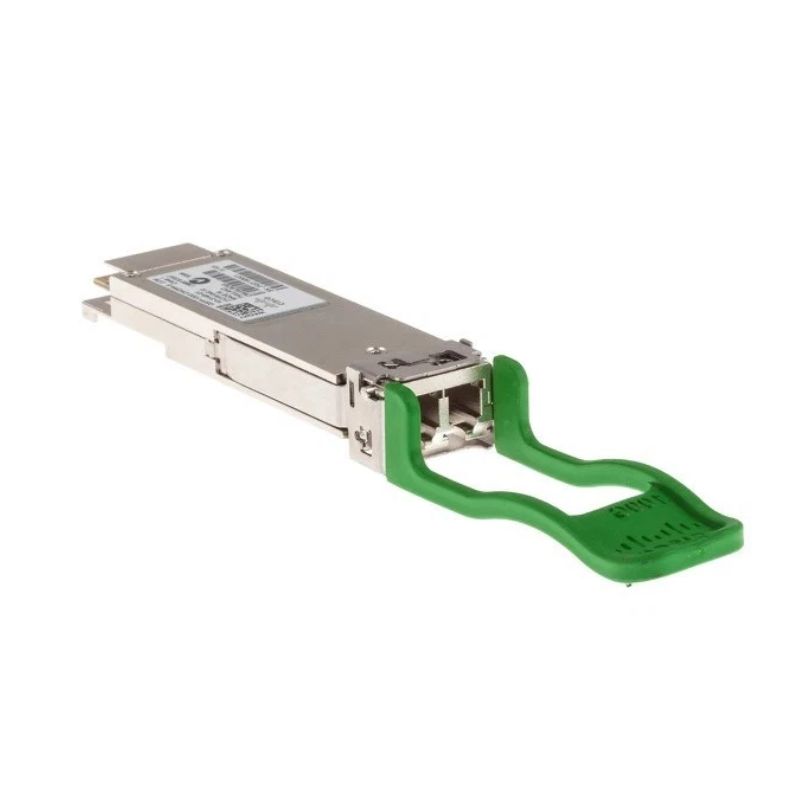


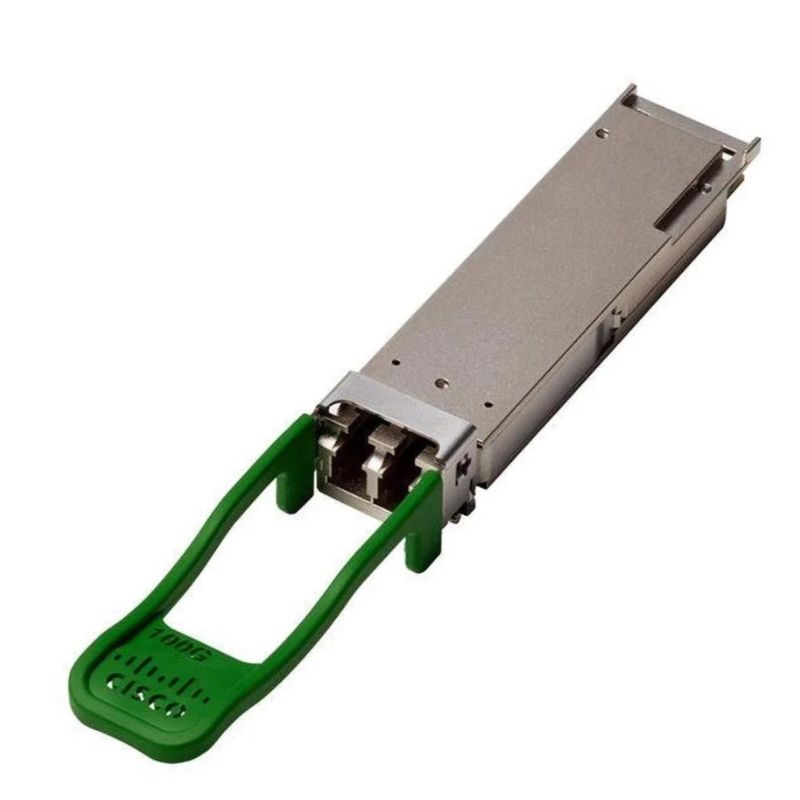
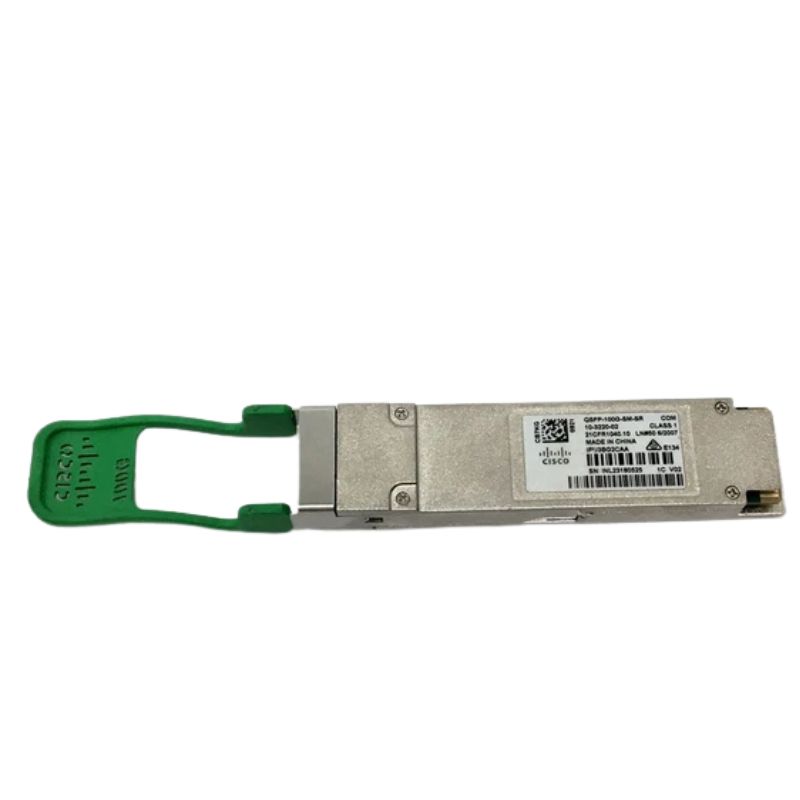
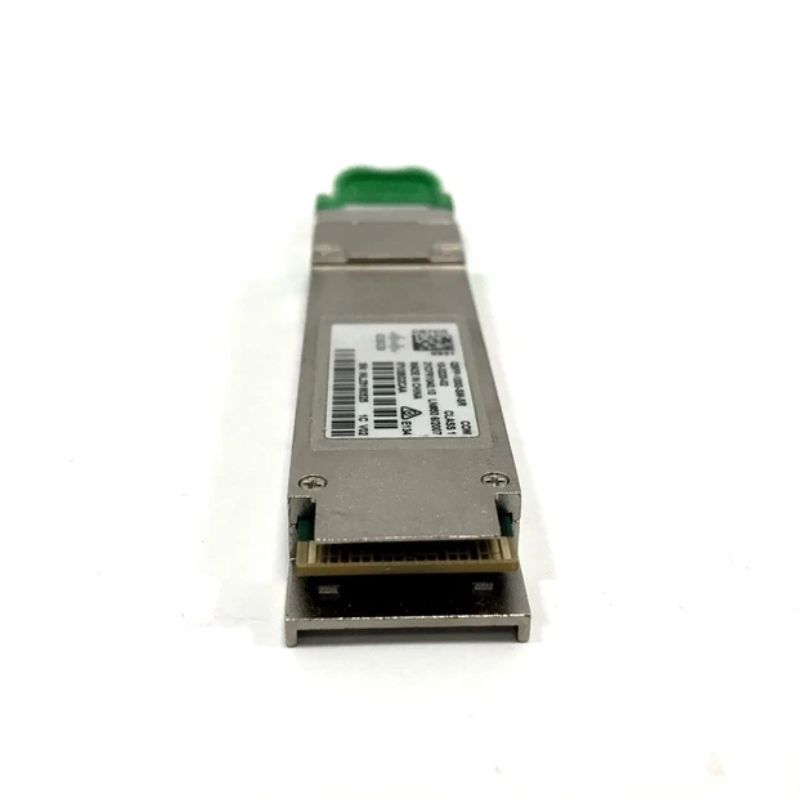
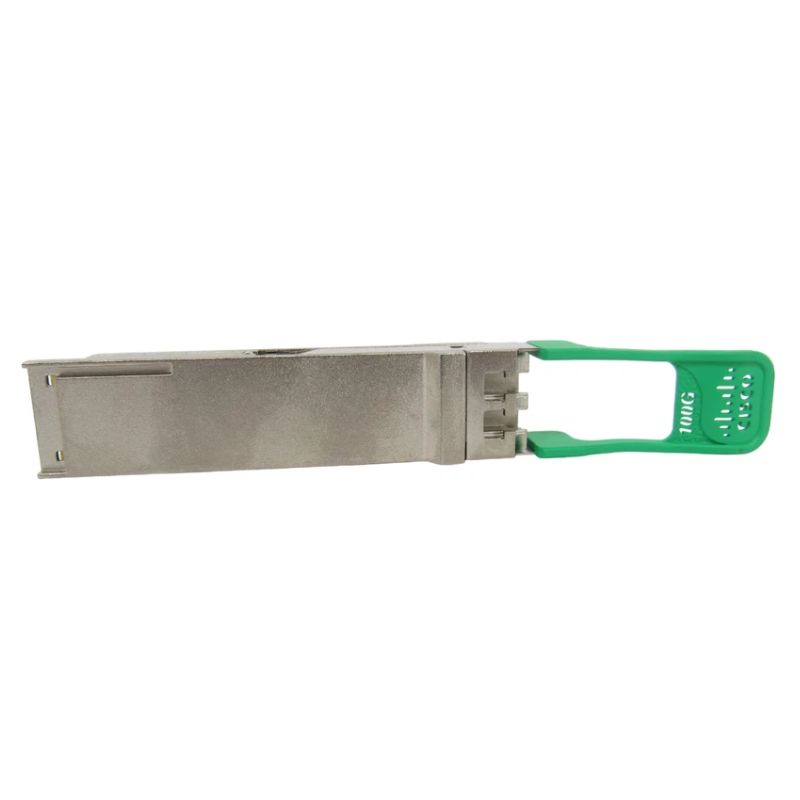
Cisco 10-3248-02 100GBPS Qsfp28 Gigabit Ethernet Transceiver Module. Factory-Sealed New in Original Box (FSB) with 1 year replacement warranty
| SKU/MPN | Warranty | Price | Condition | You save |
|---|---|---|---|---|
| 10-3248-02 | 1 Year Warranty | $150.00 | Excellent Refurbished | You save: $52.50 (26%) |
| 10-3248-02 | 1 Year Warranty | $395.00 | Factory-Sealed New in Original Box (FSB) | You save: $138.25 (26%) |
Insights into the Cisco QSFP28 100G Optical Module
The Cisco 10-3248-02 QSFP28 transceiver is engineered for high-density 100 GbE networking, delivering strong performance for long-distance fiber links. This plug-in optical module supports advanced modulation, stable signal delivery, and seamless operation in modern data centers and enterprise backbones that require consistent high-speed throughput. Designed with durability, efficiency, and interoperability in mind, it ensures smooth integration across switching, routing, and transport infrastructures.
The Cisco 10-3248-02 100Gbps QSFP28 Gigabit Ethernet Transceiver Module category represents a focused selection of high-density, high-performance optical and electrical interfaces engineered for modern data center, campus, and service provider networks. This category highlights transceiver modules that adhere to the QSFP28 form factor and are designed to enable 100 gigabit-per-second Ethernet connectivity. Pages in this category typically cover the part family associated with Cisco’s modular optics for 100G transport, addressing the needs of network architects who require compact, energy-efficient, and interoperable pluggable interfaces. The content here emphasizes device compatibility, physical characteristics, thermal considerations, and deployment scenarios while providing the technical context purchasers and engineers often seek when selecting modules for switches, routers, or optical line cards.
At the heart of this category is the QSFP28 mechanical envelope, a compact and standardized pluggable transceiver form factor optimized for 100 Gbps line rates. The modules grouped here conform to the QSFP28 mechanical and electrical footprint, meaning they share common dimensions, cage interfaces, and mating faces with front-panel switch ports designed for line cards and top-of-rack switches. QSFP28 modules typically feature a hot-pluggable design that allows technicians to insert or remove optics without powering down equipment, an essential attribute for high-availability environments. The module housings are engineered for robust mechanical alignment and retention, and the optical interface area is protected by a latch or ejector mechanism to guard against accidental disengagement.
Thermal management is a central consideration in this category because 100Gbps transceivers operate with significant power dissipation relative to lower-rate optics. Modules under the Cisco 10-3248-02 umbrella are designed to operate across specified ambient temperature ranges suited for both standard data center environments and, in some cases, extended-temperature deployments. Power consumption is presented as a characteristic for this family, with designs focused on minimizing energy per bit while maintaining signal integrity. The category content often examines how power draw affects port density planning, the need for adequate airflow at the switch front panel, and the implications for chassis-level cooling systems when deploying multiple high-speed optics in adjacent bays.
Contents in this category explore both electrical signaling and optical interface options supported by QSFP28 transceivers. QSFP28 modules present an electrical host interface that connects to the switch or router backplane using differential pairs and is compatible with 4×25 Gbps lanes aggregated to form a 100 Gbps channel. On the optical side, modules in this category may be optimized for multimode fiber, single-mode fiber, or direct attach copper, depending on variant. For multimode deployments, common optics implementations include parallel lanes such as 100GBASE-SR4-type architectures that use MPO/MTP connectors. Single-mode implementations may use wavelength-division multiplexing approaches like 100GBASE-LR4 or CWDM4 equivalents. The category explains the distinction between electrical host lanes and optical lane mapping to help buyers understand which transceiver variant suits their fiber plant and distance requirements.
The connector interface is a critical detail covered in this category. QSFP28 transceivers may utilize MPO/MTP connector interfaces for parallel optics, LC coppings for duplex single-mode variants, or fixed twinax pigtails for active or passive direct-attach copper (DAC) assemblies. Fiber type, fiber grade, and connector cleanliness are emphasized as real-world deployment factors that affect link performance. The category elaborates on modal bandwidth, fiber attenuation at 850 nm and 1310 nm for multimode and single-mode, respectively, and the distance classes typically achievable with each variant. Guidance is included on selecting the right connector type according to existing fiber infrastructure and channel distance needs, ensuring that purchasers match the transceiver to their fiber plant to avoid unnecessary upgrades or compatibility issues.
One of the most valuable aspects of this category is its focus on standards and interoperability. QSFP28 is a form factor standardized to provide consistency across vendor ecosystems, but the specific optical protocols and IEEE or MSA-defined implementations matter greatly. The category clarifies how QSFP28 modules align with industry standards such as various IEEE 802.3 specifications for 100G Ethernet and multi-source agreements (MSAs) that define pinouts, power envelopes, and interface electrical characteristics. It also addresses vendor compatibility considerations, including how some modules are optimized and tested for native operation in Cisco platforms while also being functionally compatible with a range of multi-vendor equipment that supports QSFP28 interfaces. Readers are guided to consider firmware, switch transceiver validation matrices, and platform-specific compatibility notes when planning purchases for heterogeneous environments.
Modern transceiver modules often incorporate diagnostic monitoring interfaces that provide real-time telemetry about laser output, received power, temperature, and supply voltage. This category describes how QSFP28 modules support digital diagnostic monitoring (DDM) or diagnostics that conform to the QSFP MSA, enabling network operations teams to query optics health through the switch management plane. The content explains how telemetry data can be used proactively to identify fiber degradation, connector contamination, or failing optics before they cause service interruptions. It also underscores the role of transceiver diagnostics in capacity planning and in meeting service-level agreements by reducing mean time to detection for physical-layer problems.
This category elaborates on the expected performance envelope of modules in the Cisco 10-3248-02 class and details the practical use cases where these optics shine. Target applications include high-bandwidth aggregation at the top-of-rack layer, spine-leaf fabrics in hyperscale data centers, high-capacity switch-to-switch links, and interconnects between routers and optical transport systems. The content outlines how 100Gbps links enable network consolidation by reducing the number of physical ports required for equivalent aggregate bandwidth compared to lower-rate interfaces, simplifying cabling and switch fabric complexity. It also discusses latency considerations, lane equalization, and forward error correction (FEC) support where applicable. Potential deployment patterns examined include leaf-spine fabrics, multi-chassis link aggregation, and high-performance computing (HPC) clusters needing deterministic, high-throughput links.
Transceiver selection often hinges on the relationship between modulation schemes, fiber type, and achievable distance. Content within this category explains how different 100G optical implementations trade off spectral efficiency, modulation format, and coding schemes to reach varying distances. For example, parallel-lane approaches may be favored for shorter distances due to simplicity and cost-efficiency, while PAM4 and coherent optical techniques are used in more advanced long-reach applications. The category carefully articulates typical distance ranges for the common variants and discusses signal integrity management techniques, such as pre-emphasis, equalization, and adaptive EQ, that maintain link stability across high-speed channels.
The category addresses vendor compatibility guidance and platform-specific constraints that can influence purchasing decisions. It covers how some network vendors implement validation matrices in their hardware and software stacks, recommending certain transceiver SKUs for guaranteed performance and support. In some environments, platform-specific licensing or feature activation might be required to enable full throughput or certain FEC modes; the content encourages administrators to verify software compatibility and to consult release notes for platform firmware and operating-system versions. This section also discusses the importance of reviewing vendor interoperability guides when integrating third-party optics into networks that rely on advanced features like telemetry aggregation, automatic negotiation of interface modes, or platform-specific telemetry reporting.
Secure operations for physical-layer components are a component of broader cybersecurity and operational best practices. The category outlines how transceiver inventory should be tracked within asset management systems and how access controls can limit physical tampering. It discusses the role of transceiver diagnostics in detecting unexpected link changes or unauthorized connections, and it recommends auditing physical-layer logs to detect anomalies such as frequent re-seatings or unexpected module swaps. Furthermore, the content contemplates supply-chain verification, encouraging procurement teams to verify vendor authenticity to avoid counterfeit or substandard optics that could pose reliability or security risks.
Environmental considerations are included to help buyers ensure compliance with local regulations and to achieve sustainability goals. The category examines roHS, WEEE, and other regulatory programs that may affect disposal and recycling practices for end-of-life optics. It also touches on power-efficiency metrics and how choosing optics with lower energy-per-bit characteristics can contribute to data center energy optimization. Thermal performance and acoustic impacts of cooling solutions are discussed as part of a comprehensive plan to manage densified deployments of high-speed optics.
To ground the discussion in practical terms, the category presents deployment scenarios such as a cloud data center implementing a leaf-spine fabric with 100Gbps uplinks, a service provider provisioning 100G links between aggregation nodes, or an enterprise consolidating multiple 10G ports into single 100G trunks for backbone efficiency. Each scenario describes motivations for selecting QSFP28 modules, the expected operational benefits, and the implementation nuances to watch for—like lane mapping conventions, FEC enablement, and required firmware versions on both ends of the link. The content emphasizes operational readiness steps such as fiber audits, pre-deployment testing, and staged rollouts to validate performance before production cutover.


 Contact Us
 Information
 Catalog
 Solid State Drives (SSD)
 Network Switches
 Hard Disk Drives
 HBA & Controllers
 PC & Servers
 PC & Server Memory
 CPU & Processors
 Network Routers
 Power Supplies
 Tape Drives & Libraries
 Network Devices
 Computer & Network Cables