(7% discount is applied at checkout)
Cart is empty
Your go-to destination for cutting-edge server products
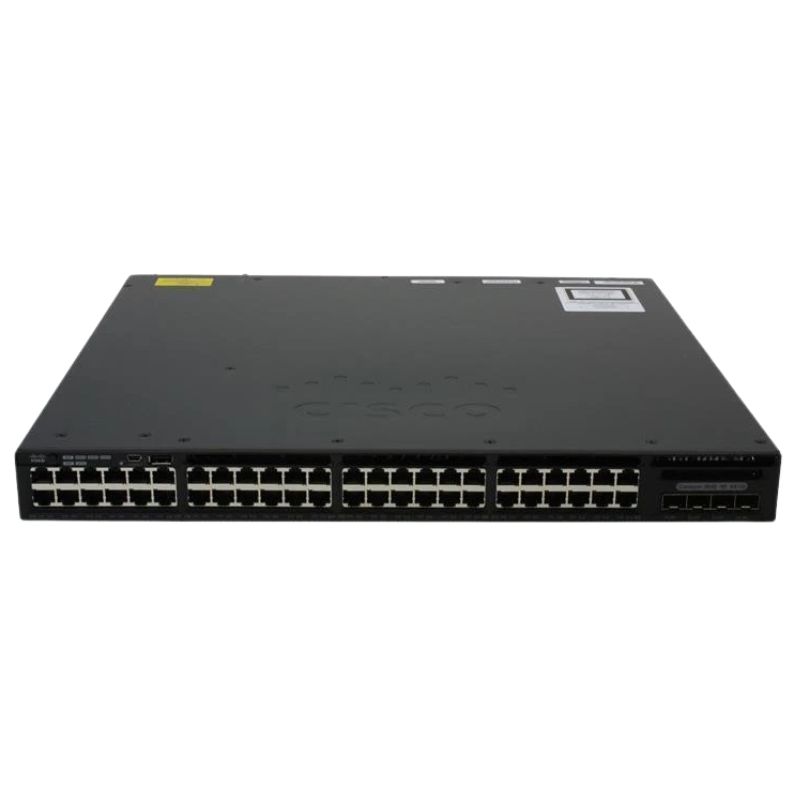


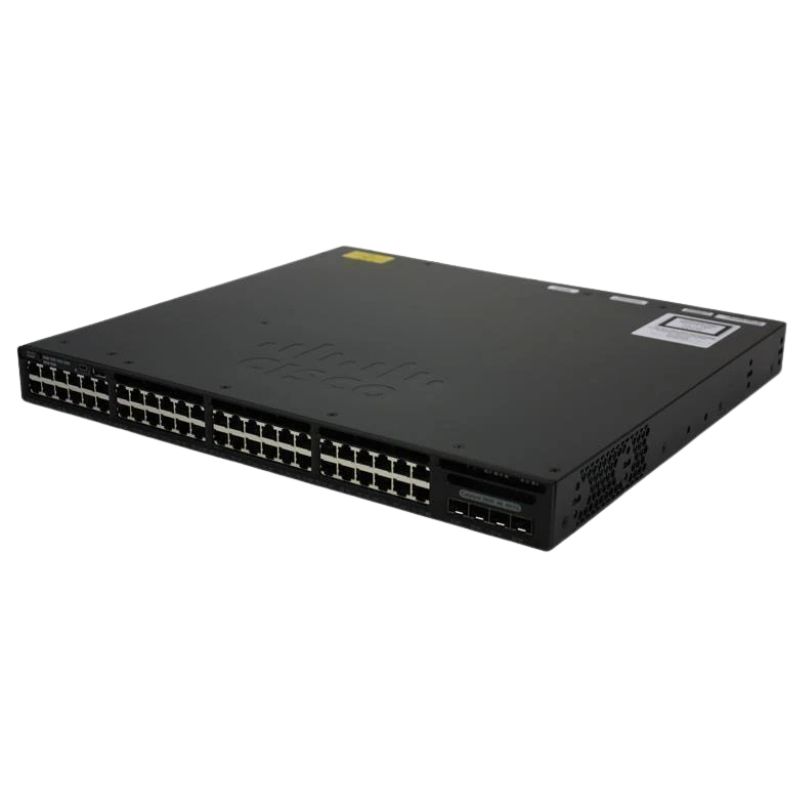
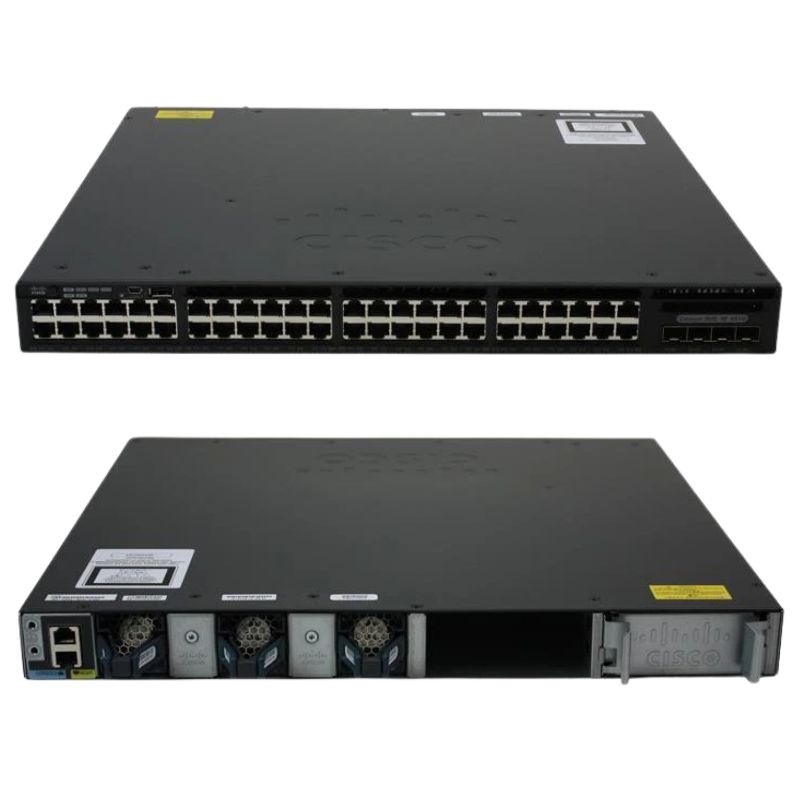
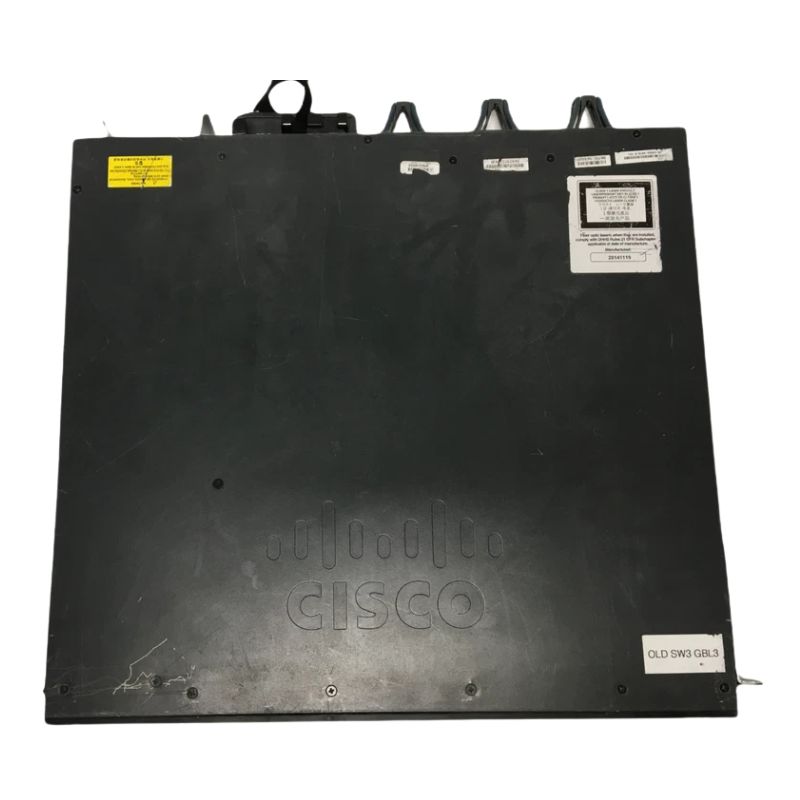
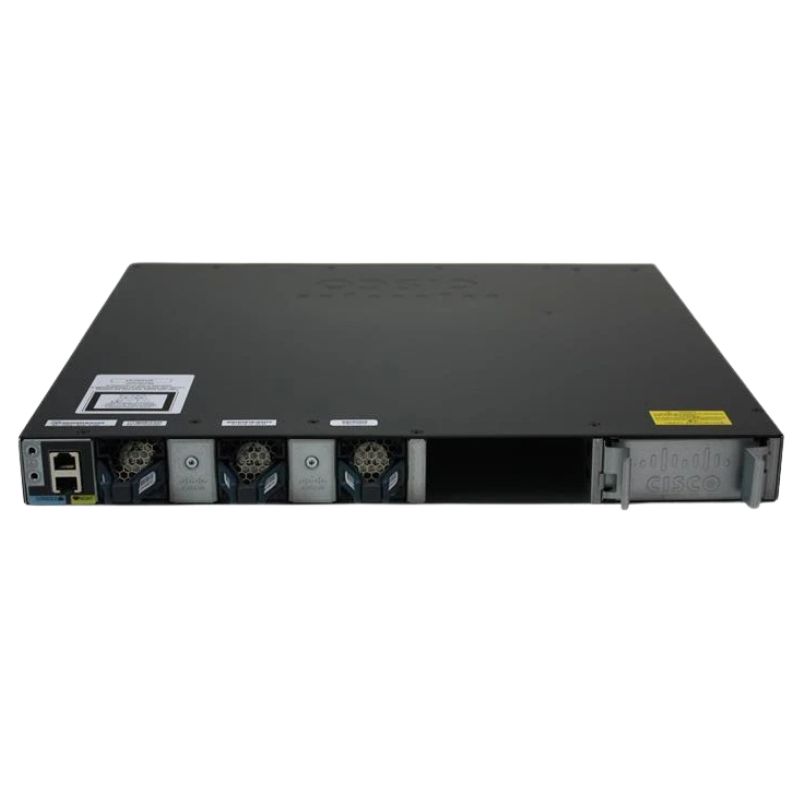
Cisco C1-WS3650-48FS/K9 One Catalyst 3650 48 Ports Full POE 4X1G Uplink. Excellent Refurbished with 1 year replacement warranty
| SKU/MPN | Warranty | Price | Condition | You save |
|---|---|---|---|---|
| C1-WS3650-48FS/K9 | 1 Year Warranty | $560.00 | Factory-Sealed New Retail in Original Box (FSB) | You save: $196.00 (26%) |
| C1-WS3650-48FS/K9 | 1 Year Warranty | $184.00 | Excellent Refurbished | You save: $64.40 (26%) |
The Cisco C1-WS3650-48FS/K9 is engineered for modern enterprise networks that require reliable performance, flexible connectivity, and intelligent Layer 3 switching capabilities. As part of the Catalyst 3650 Series, this 48-port model delivers high-density Gigabit Ethernet, advanced traffic handling, and modular uplink options that ensure smooth scalability across growing infrastructures.
The Cisco C1-WS3650-48FS/K9 One Catalyst 3650 48 Ports Full POE 4x1G Uplink class of switches represents a balanced enterprise-grade access layer solution designed for medium-to-large campus networks, branch offices, and converged voice/data/video deployments. This category focuses on the 48-port full PoE (Power over Ethernet) variant with four 1 Gigabit uplink ports — a configuration that combines dense edge connectivity with robust power delivery for IP phones, wireless access points, security cameras, and IoT endpoints.
The Catalyst 3650 series in this configuration is a fixed-configuration, rack-mountable switch built to fit standard 19-inch equipment racks. The sturdy metal chassis supports consistent airflow for reliable thermal performance and long-term uptime. Front-facing LED indicators provide immediate visual status for power, link/activity, PoE usage, and stack membership, allowing technicians to quickly diagnose physical-layer issues during maintenance windows.
With 48 RJ-45 ports arranged in a single dense layout, cable management becomes a key operational consideration. This category benefits from labeled ports, optional front-to-back or back-to-front cooling designs (depending on series revision), and accessible SFP/SFP+ uplink slots or dedicated 1G uplink ports for fiber connectivity. Using structured cabling best practices — proper patch panels, PoE-capable patch cords, and strain-relief management — minimizes disruption and makes future moves/adds/changes straightforward.
Full PoE capability means each access port can deliver up to the standard PoE/PoE+ wattage required by demanding devices. The built-in power supply and internal PoE budget are sized to support mixed portfolios of devices, but administrators should carefully plan expected load to ensure the combined wattage of attached devices does not exceed the switch’s maximum PoE budget. When designing a deployment, consider power redundancy options, optional external power supplies, and policies that prioritize critical PDs.
Designed for enterprise edge deployments, the Catalyst 3650 class balances throughput and low-latency switching with smart buffer management for bursty traffic. The four 1G uplinks allow aggregated bandwidth to the distribution layer; for higher-capacity environments, stacking technologies or uplink module upgrades provide flexible scaling without replacing the entire access layer. The hardware forwarding engine ensures wire-speed performance across all 48 access ports under typical campus loads.
Stacking is an essential scaling and resilience feature for this category. Multiple switches can be stacked and managed as a single logical unit — simplifying configuration, improving failover times, and centralizing status monitoring. Stacking also allows for a higher aggregated uplink capacity when individual units share a distributed traffic load across the stack. Consider the recommended stack sizes and use official Cisco stacking cables/modules to maintain warranty and support coverage.
Although this specific model offers 1G uplinks, network architects often plan for eventual transitions to multi-gigabit or 10G uplinks. The Catalyst platform commonly supports modular uplink upgrades or replacement of select units with higher-speed aggregation switches. When purchasing within this category, evaluate the availability of optional uplink modules, compatible SFP optics, and migration guides to minimize future CAPEX and operational friction.
Cisco Catalyst switches run a variant of Cisco IOS that provides enterprise networking features: VLANs, Spanning Tree Protocol (STP) and Rapid STP, Link Aggregation Control Protocol (LACP), Quality of Service (QoS) policies for prioritizing voice/video, multicast protocols (IGMP snooping), and advanced routing capabilities in some firmware editions. These software features enable administrators to shape traffic, enforce segmentation, and maintain predictable performance across converged applications.
For teams managing multiple switches, centralized tools such as Cisco DNA Center, Cisco Prime, or compatible network management platforms simplify lifecycle tasks — from provisioning and policy enforcement to monitoring and software image management. The product category supports industry-standard management interfaces including SNMP, NetFlow, REST APIs, and CLI scripting, enabling automation and integration into existing orchestration workflows.
Modern network operations rely heavily on telemetry data. Catalyst devices support flow analytics, per-port statistics, and event logs that can be exported to SIEMs or analytics engines. Telemetry helps troubleshoot performance anomalies, measure PoE usage, and track security events — essential when supporting large numbers of wireless APs, IP endpoints, and camera systems that generate diverse traffic patterns.
Security at the access layer is critical. The Catalyst 3650 family includes capabilities such as 802.1X authentication, MAC address filtering, dynamic VLAN assignment, and port-security features to prevent unauthorized devices from gaining access. Network Access Control (NAC) integrations allow dynamic policy enforcement based on device posture and user roles.
VLAN-based segmentation reduces the blast radius of threats, while Access Control Lists (ACLs) and role-based access policies help enforce east-west and north-south traffic rules. In environments with sensitive data or regulatory requirements, combining VLANs, private VLANs, and ACLs on this switch category supports compliance goals by restricting access only to authorized systems.
Secure device administration is enabled through SSH, TACACS+/RADIUS integration, and role-based administrative accounts. Disabling insecure protocols and ensuring firmware is kept up to date are industry best practices when operating this equipment. Logging and audit trails should be configured to meet internal governance and external compliance requirements.
This switch category is ideal for campus buildings where dense wired access is required to support staff workstations, IP phones, wall-mounted APs, and PoE IoT sensors. Its PoE budget enables ceiling-mounted access points to be powered without separate power infrastructure, simplifying deployment and reducing installation costs.
For branch offices or retail outlets that require a combination of VoIP, CCTV, and point-of-sale systems, a 48-port full PoE Catalyst 3650 provides the necessary port density and management features. Centralized management via cloud or on-premises controllers simplifies policy enforcement across multi-site deployments.
In smaller data center environments, this category can function as a top-of-rack aggregation switch for access servers or edge virtualization hosts. Although primarily an access device, its advanced QoS and L3-lite features make it suitable for traffic segregation and prioritization at the rack level.
This product class supports IEEE 802.3af (PoE) and IEEE 802.3at (PoE+) standards — delivering the power necessary for IP phones, most access points, and many types of security cameras. Some later Catalyst models also support features for 802.3bt (higher power) devices via optional upgrades or specific hardware revisions. Confirm the exact PoE standard supported by the SKU to ensure compatibility with modern high-power PDs.
While this SKU emphasizes 4x1G uplinks, deployments that require longer-distance connectivity or higher uplink bandwidth can employ SFP optics in available module slots or replace certain units in a stack with higher-speed aggregation devices. Choosing the correct optics (single-mode vs. multi-mode) and verifying transceiver compatibility is essential for long-life interoperability.
Cisco Catalyst switches follow established Ethernet standards which allow them to interoperate with other vendors’ equipment for basic L2/L3 functions. For advanced feature parity and platform-specific services, such as Cisco-specific management extensions, ensure the broader network supports those functions or prepare for operational differences when integrating heterogeneous hardware.
Applying hierarchical network design principles (access-distribution-core) around this switch category enhances resilience and simplifies troubleshooting. Keep access VLANs localized, aggregate uplinks through distribution switches, and enforce consistent QoS and security policies across the hierarchy for predictable behavior.
Design for redundancy: dual-homed uplinks, stacked access switches, and redundant power supplies (where supported) increase uptime. Where possible, spread mission-critical PDs across multiple physical devices to avoid single points of failure. Regular firmware maintenance and scheduled configuration backups are simple measures that significantly reduce outage risk.
Select fiber and copper cabling according to distance, environment, and budget: multimode OM4 for shorter intra-building links, single-mode for campus/fiber backbone spans, and shielded copper for electrically noisy environments. Use factory-tested and vendor-qualified optics to reduce the risk of intermittent failures and to maintain support eligibility.


 Contact Us
 Information
 Catalog
 Solid State Drives (SSD)
 Network Switches
 Hard Disk Drives
 HBA & Controllers
 PC & Servers
 PC & Server Memory
 CPU & Processors
 Network Routers
 Power Supplies
 Tape Drives & Libraries
 Network Devices
 Computer & Network Cables