(7% discount is applied at checkout)
Cart is empty
Your go-to destination for cutting-edge server products
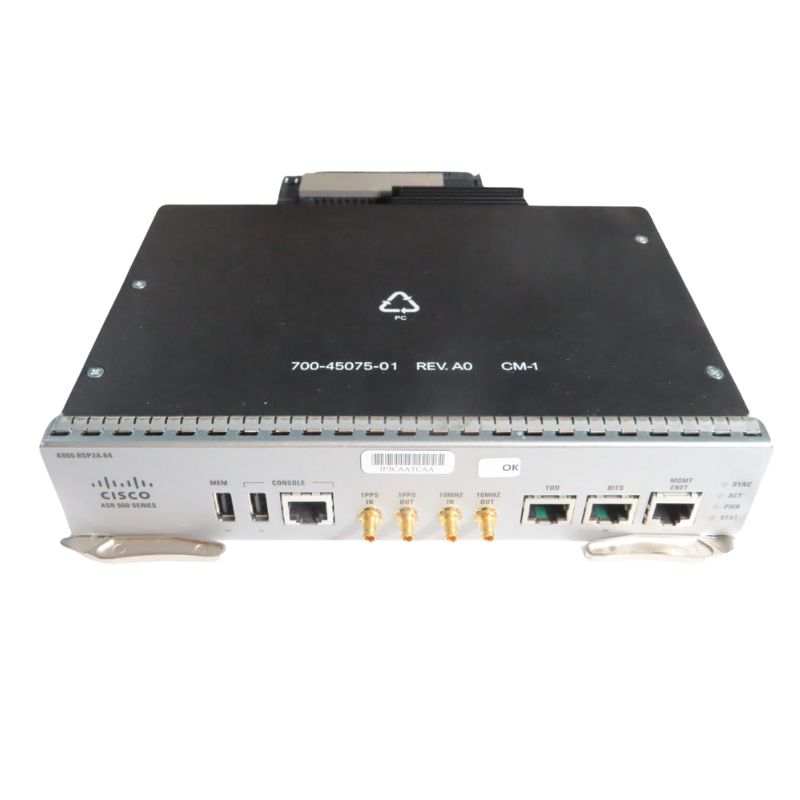


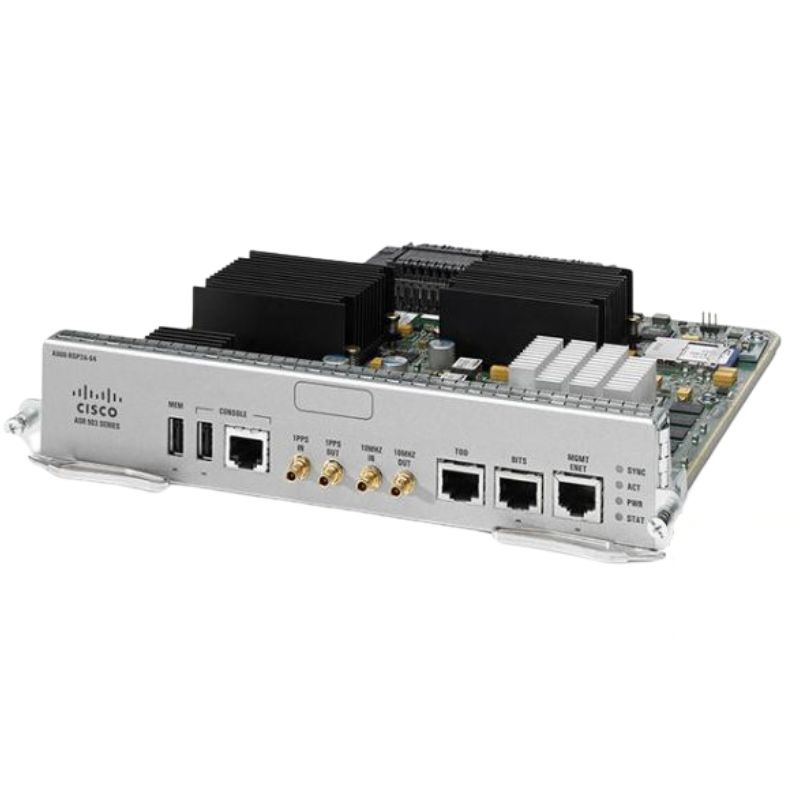
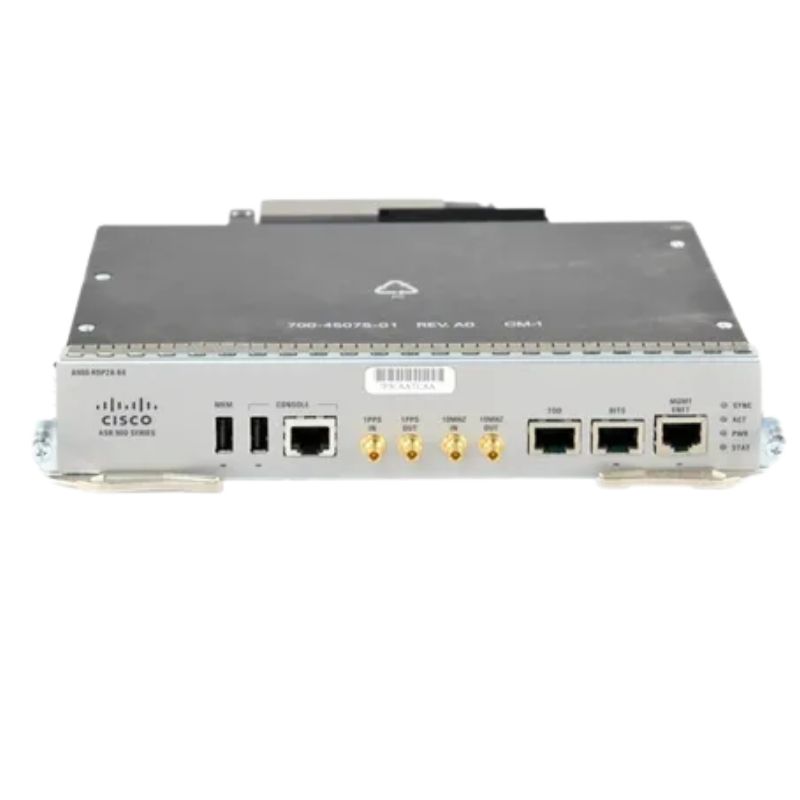
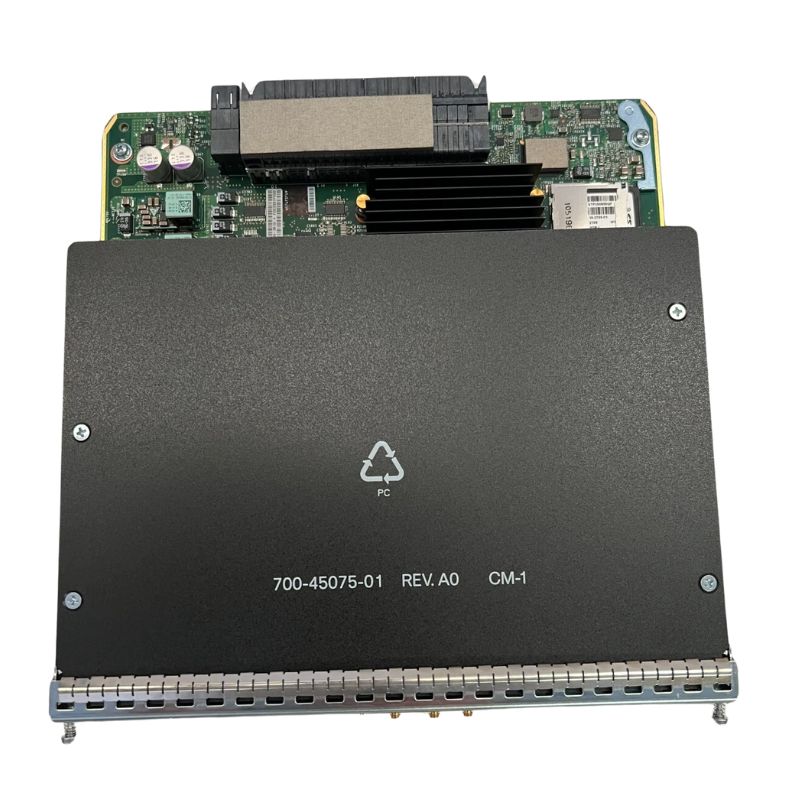
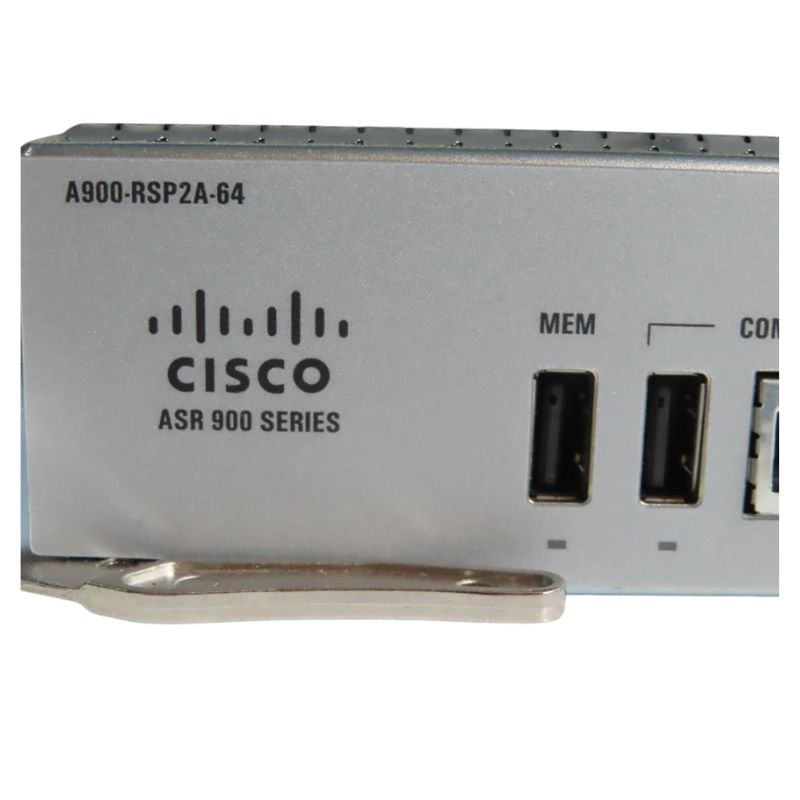
Cisco A900-RSP2A-64 ASR900 Route Switch Processor 2- 64G Base Scale. Excellent Refurbished with 1 year replacement warranty
The Cisco A900-RSP2A-64 Route Switch Processor delivers robust performance and advanced network management for the ASR 900 Series. Designed for demanding environments, it ensures efficient routing, enhanced reliability, and streamlined connectivity options.
The Cisco A900-RSP2A-64 is built upon a massively parallel, distributed architecture that separates the control and data planes—a hallmark of the ASR 9000 Series. This design philosophy ensures linear scalability and non-stop operations. The RSP2 itself is the dedicated control plane entity, hosting the Cisco IOS XR software, the modular and resilient operating system that powers the platform.
At its core, the A900-RSP2A-64 integrates powerful multicore CPUs, 64 gigabytes of dedicated control plane DRAM, and high-speed interconnect fabrics to communicate with the distributed line card forwarding engines. This substantial memory allocation is critical for handling extensive routing tables (e.g., full Internet BGP tables for both IPv4 and IPv6), complex MPLS label databases, and a multitude of subscriber sessions and services without degradation in control plane responsiveness. The processor works in tandem with the built-in switching fabric of the ASR 9000 chassis and the programmable forwarding ASICs on the line cards to create a cohesive, high-throughput system.
The RSP2 module is always deployed in a redundant configuration, typically in slots RSP0 and RSP1 of the ASR 9000 chassis. This active/standby or active/active (for certain processes) setup provides stateful failover. In the event of a hardware or software fault on the active RSP, the standby processor can assume control with minimal service interruption, ensuring the "five nines" (99.999%) availability expected in carrier-grade environments. The 64GB memory footprint directly supports this resilience by allowing the standby RSP to maintain synchronized state information for rapid cutover.
The "64G Base Scale" designation of the A900-RSP2A-64 is a direct indicator of its enhanced capacity over previous generations. This scale refers to the control plane's ability to manage resources that support millions of forwarding entries and hundreds of thousands of logical interfaces and service instances.
With the proliferation of internet endpoints and the exhaustion of IPv4 addresses leading to more specific routes, the global Internet routing table (BGP) continues to grow exponentially. The RSP2-64G is engineered to hold multiple full Internet routing tables in memory concurrently. This capability is paramount for service providers engaged in multihoming, internet exchange (IX) peering, or large-scale enterprise WAN aggregation. The processor efficiently manages the propagation of these routes from the control plane to the distributed Forwarding Information Base (dFIB) on each line card, ensuring consistent and high-speed packet forwarding across the entire system.
For networks offering MPLS Layer 3 VPN (L3VPN) and Layer 2 VPN (L2VPN) services, the RSP2-64G provides the necessary scale for VPN Routing and Forwarding (VRF) tables and MPLS labels. It can manage hundreds of thousands of VRF instances and millions of MPLS label entries, enabling service providers to offer secure, scalable, and segmented VPN services to a vast customer base over a shared infrastructure. This makes it an ideal choice for next-generation business services and mobile backhaul aggregation.
In broadband network gateways (BNGs) and cable modem termination systems (CMTS) deployments, the router must authenticate, manage, and apply policy to a massive number of subscriber sessions. The RSP2-64G's memory and processing power are crucial for maintaining the subscriber session database, which includes IP address assignments, QoS policies, access control lists (ACLs), and accounting records. Its scale supports hundreds of thousands to millions of concurrent subscribers, making it a foundational element for fixed and mobile convergence.
Beyond raw forwarding power, the Cisco A900-RSP2A-64, running Cisco IOS XR software, is a platform for network automation and programmability. It opens the network to modern operational models essential for agility and cost reduction.
The RSP2 exclusively runs Cisco IOS XR, a self-healing, disk-based operating system. Its in-service patching and upgrade capabilities allow for software maintenance without planned downtime. The modular nature of IOS XR means individual processes can be restarted if needed without impacting the entire system, further enhancing availability. The 64GB of memory provides ample space for these isolated processes and their data, contributing to overall system stability.
The RSP2 enables full model-driven programmability through support for YANG data models and standard interfaces like NETCONF and gRPC. This allows network operators to automate configuration, operational state collection, and telemetry streaming using modern tools and scripts. The processor's resources are utilized to host these programmatic agents and handle API requests efficiently, transforming the router from a CLI-driven device to an API-driven network element.
Modern networks require real-time visibility for proactive management and fast troubleshooting. The RSP2-64G supports high-performance, dial-in telemetry streaming (e.g., using gRPC). It can collect and export granular performance data from the control plane and data plane at configurable intervals—potentially as frequent as sub-second—without imposing a significant performance penalty. This massive data stream, used for analytics and AI/ML operations, is facilitated by the processing and memory headroom of the module.
The versatility of the Cisco A900-RSP2A-64 makes it suitable for a range of high-demand network roles. Its primary function is to provide the control plane scale needed for these intensive applications.
At the service provider edge (PE), the router aggregates traffic from thousands of customer edges (CE) or from aggregation routers. Here, the RSP2-64G manages extensive BGP peering sessions, applies complex routing policies, and maintains the large number of VRF instances required for L3VPN services. At Internet peering points, its ability to process full Internet tables from multiple peers with rapid convergence is indispensable.
In 4G/LTE and 5G mobile networks, the RSP2 can serve in the evolved packet core (EPC) or as a centralized router for backhaul aggregation. It manages GTP tunnels for user plane traffic, enforces QoS for different classes of service, and handles the scale required by the massive increase in connected devices and small cells. Its high availability features are non-negotiable in this always-on environment.
For global enterprises, the ASR 9000 with RSP2-64G acts as a high-capacity WAN aggregation router at headquarters or major regional sites. It terminates encrypted tunnels (DMVPN, GET VPN, IPsec), runs advanced routing protocols with large-scale topologies, and provides segmentation for different business units. In data center interconnect (DCI) applications, it provides high-bandwidth, low-latency MPLS or SRv6 connectivity between geographically dispersed data centers.
The Cisco A900-RSP2A-64 is not a standalone product; it is a system component with specific compatibility requirements.
The RSP2-64G is compatible with specific Cisco ASR 9000 Series chassis, including the ASR-9904, ASR-9912, and ASR-9922. It is designed to work in harmony with a wide array of Ethernet and optical interface modules (line cards) for the series. When planning a system, it is crucial to verify compatibility in the Cisco Hardware Compatibility Matrix (HCM) to ensure the chosen RSP, chassis, line cards, and IOS XR software version are all supported together for optimal performance and feature availability.
While the RSP2 manages the control plane, the actual data throughput is determined by the line cards and the fabric capacity of the chassis. The RSP2-64G is capable of supporting systems with multi-terabit per second aggregate fabric bandwidth. Engineers must ensure the overall system design—including fabric cards and line card placement—is balanced to prevent bottlenecks and fully utilize the forwarding capabilities of the line cards, which are orchestrated by the RSP.


 Contact Us
 Information
 Catalog
 Solid State Drives (SSD)
 Network Switches
 Hard Disk Drives
 HBA & Controllers
 PC & Servers
 PC & Server Memory
 CPU & Processors
 Network Routers
 Power Supplies
 Tape Drives & Libraries
 Network Devices
 Computer & Network Cables