(7% discount is applied at checkout)
Cart is empty
Your go-to destination for cutting-edge server products
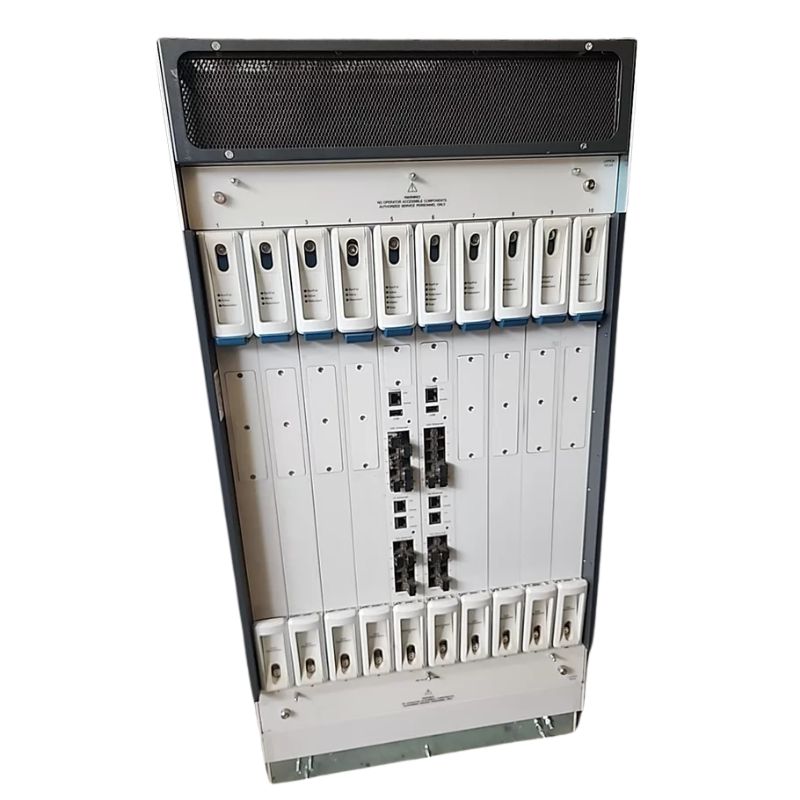


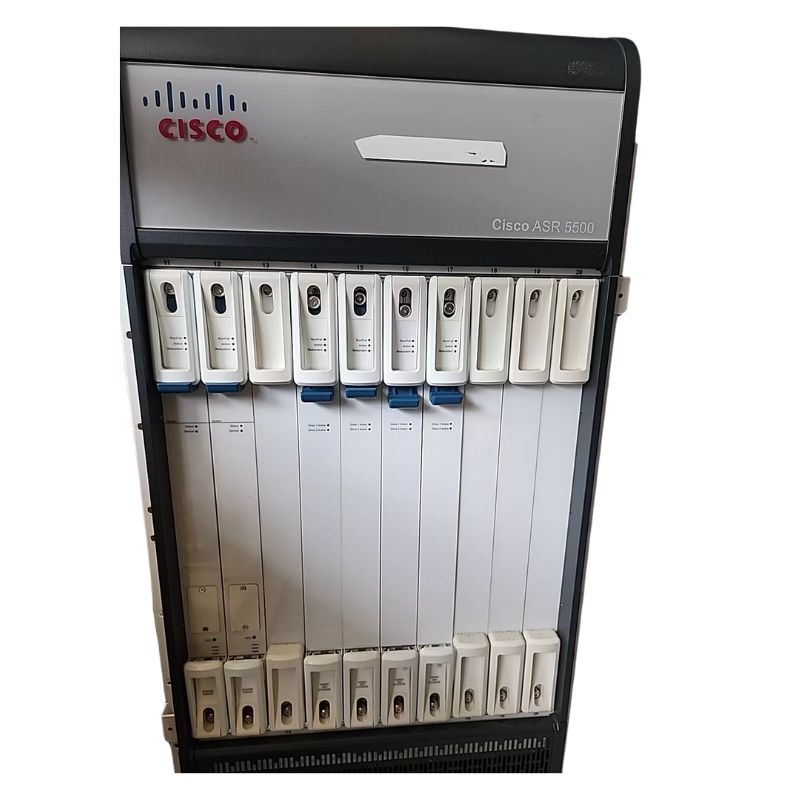
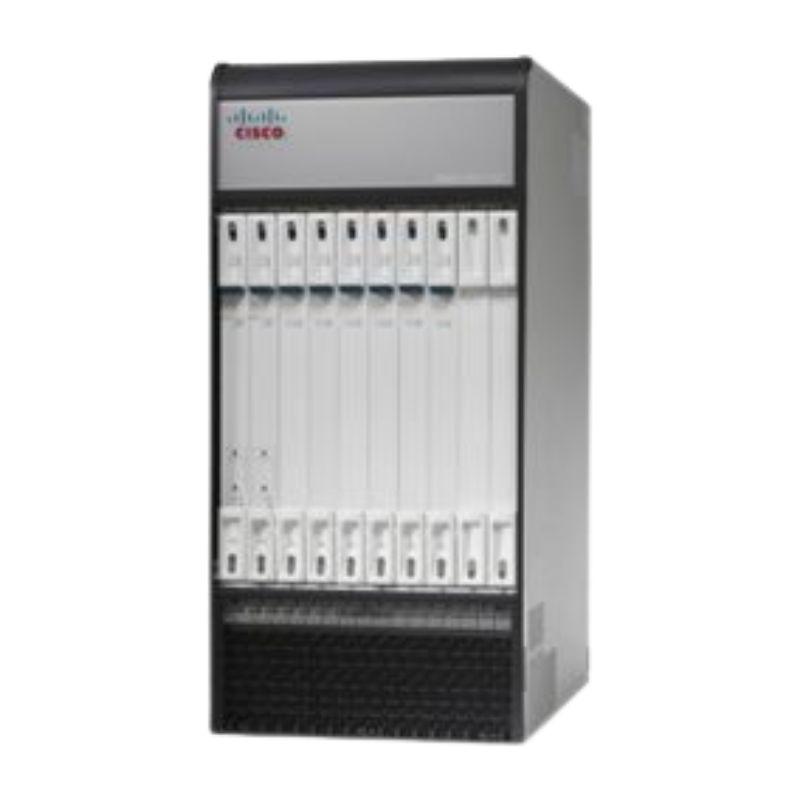
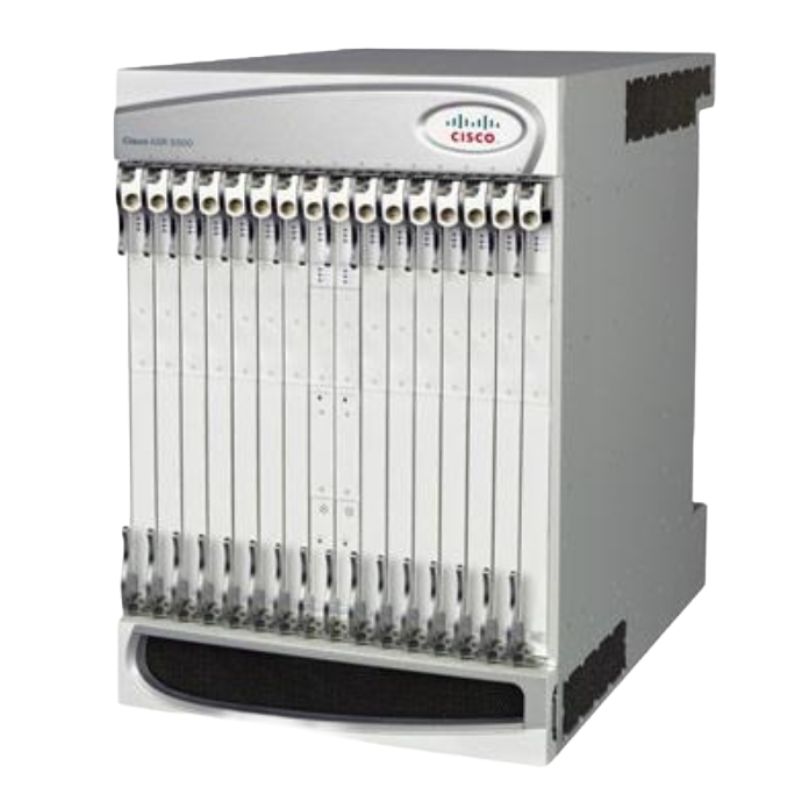
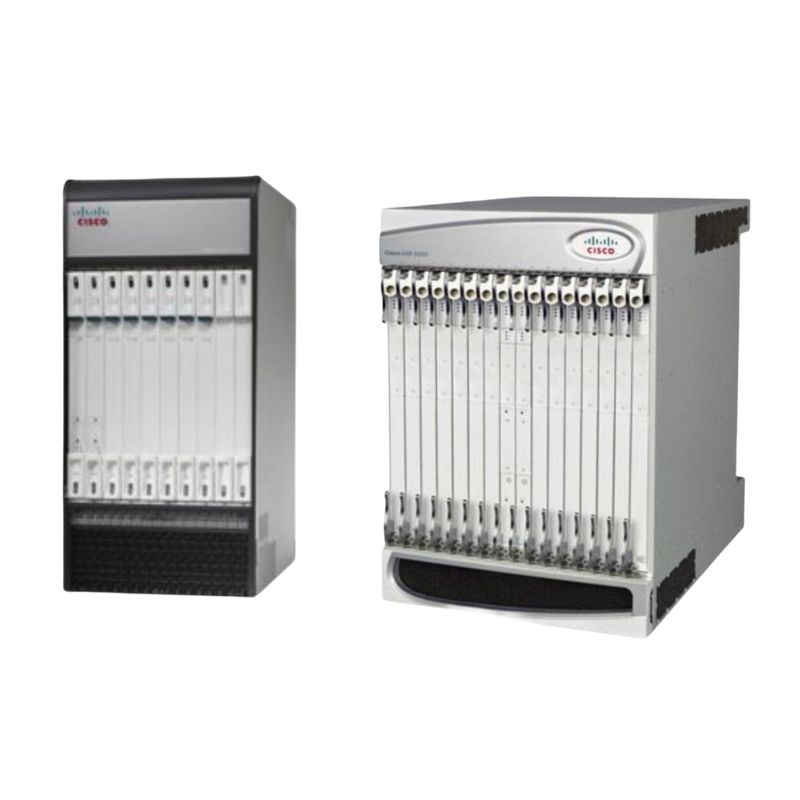
Cisco ASR55-CHS-SYS ASR5500 Chassis Switch Modular Expansion Base. Excellent Refurbished with 1 year replacement warranty
Discover the Cisco ASR55-CHS-SYS, a high-performance ASR5500 chassis modular expansion base engineered for carrier-grade networking environments. This rack-mountable chassis delivers scalable slot density, front-to-back airflow, and enterprise-class reliability for high-throughput network aggregation and service-provider infrastructures.
The physical and operational integrity of the ASR 5500 platform hinges on the sophisticated design of its chassis. The ASR55-CHS-SYS is not merely an enclosure; it is an intelligent, high-availability backplane system engineered for maximum uptime and service density.
The chassis is a rack-mountable unit, typically occupying multiple rack units (RU) in a standard data center or central office rack. Its robust construction is built to handle the thermal and weight demands of fully populated line cards, power supplies, and fan trays. Key physical attributes include reinforced guide rails for safe insertion/removal of heavy modules, strategic airflow channels for optimized cooling, and clear visual indicators for system status at a glance. The front and rear layouts are meticulously planned: the front often houses the high-throughput packet processing cards and system management modules, while the rear is dedicated to power infrastructure, fan assemblies, and auxiliary interfaces.
The true differentiator of the ASR55-CHS-SYS is its non-blocking, high-bandwidth backplane. This internal fabric is the central communication highway, interconnecting all installed modules with tremendous speed and low latency. It ensures that traffic between any line card, session management card, and the system management processor does not become a bottleneck, even under terabit-scale loads. The backplane architecture supports redundant paths, contributing to the system's overall five-nines (99.999%) availability by eliminating any single point of failure in internal data transit.
The backplane manages three distinct traffic planes: Data Plane: Handles the actual user session and packet forwarding traffic at multi-gigabit speeds. Control Plane: Carries signaling and routing protocol information between the system processor and line cards. Management Plane: Dedicated to out-of-band management traffic for system configuration, monitoring, and software updates.
The chassis features a carefully defined slot configuration. Slots are not generic; they are purpose-engineered for specific module types to optimize performance and signal integrity.
Dedicated slots house the Session & Management Processor (SMP) modules. These are the brains of the ASR 5500, responsible for call/session control, system configuration, software management, and overall platform orchestration. For high availability, these slots are configured in an active/standby redundancy pair.
The redundant SMPs engage in constant state synchronization. In the event of an active SMP failure, the standby assumes control within milliseconds, maintaining millions of existing sessions without dropping them—a critical requirement for carrier-grade voice and data services.
In some configurations, specific slots may be reserved for fabric extension cards that augment the internal switching capacity, ensuring the backplane can keep pace as higher-speed interfaces (like 100GbE) are deployed on the line cards.
Beyond the slot architecture, the chassis integrates several critical subsystems that ensure reliable, continuous operation in demanding environments.
The power system is a masterpiece of modular redundancy. The ASR55-CHS-SYS supports multiple, hot-swappable AC or DC power supply units (PSUs) that share load and provide N+1 or even N+N redundancy. The chassis includes complex power distribution boards that condition and deliver precise voltage levels to different modules. Advanced power management features include intelligent load shedding, power budgeting per slot (to prevent over-subscription), and the ability to mix power supply types for deployment flexibility.
Given the thermal output of densely packed processors, the cooling system is engineered for efficiency and resilience. It employs multiple, variable-speed fan trays that create a side-to-side or front-to-back airflow pattern, pulling cool air across hot components. Fans are N+1 redundant and hot-swappable. The system management processors constantly monitor thermal sensors across all cards and dynamically adjust fan speeds to balance cooling effectiveness with acoustic noise and power consumption.
Embedded within the chassis is a baseboard management controller that works in tandem with the SMPs. It handles initial boot sequencing, environmental monitoring (temperature, voltage, fan status), and provides a last-resort console access. This subsystem ensures the chassis itself is a managed entity, reporting its health independently of the software running on the main processors.
The modular nature of the ASR55-CHS-SYS makes it a versatile platform suited for multiple roles in the service provider edge and core network.
This is a primary use case. The chassis can host a combination of session management modules (acting as a Gateway GPRS Support Node - GGSN, or Packet Data Network Gateway - PGW in 4G/5G) and deep packet inspection (DPI) cards. It becomes a consolidated Gi-LAN platform, performing video optimization, traffic steering, parental controls, and advanced charging services directly at the mobile internet border.
For fixed-line providers, the ASR 5500 chassis can be configured as a massive-scale BNG or Broadband Remote Access Server (BRAS). It aggregates tens of thousands of subscriber connections, managing their authentication (via RADIUS), IP address allocation, and per-subscriber QoS policies. The chassis’ ability to add processing cards allows it to scale subscriber capacity as the customer base grows.
While a hardware-centric platform, the ASR 5500’s architecture aligns with NFV principles. The chassis can host specialized cards that provide a hardware-assisted virtualization environment, allowing virtual network functions (VNFs) like virtual firewalls or carrier-NAT to run on the platform while leveraging dedicated hardware for packet acceleration, bridging the gap between pure software VNFs and bare-metal performance.
The investment in an ASR55-CHS-SYS chassis is protected by Cisco’s forward-looking design. Scalability is multi-dimensional.
You can increase the capacity of a single chassis by installing more powerful packet processing cards or cards with higher port density. Newer generations of line cards, often with faster CPUs and more memory, are typically backward compatible with the chassis, allowing for in-service upgrades.
For capacities beyond a single chassis, multiple ASR 5500 systems can be clustered together to act as a single logical entity. This is common in session-intensive deployments like mobile packet cores, where a cluster can manage tens of millions of simultaneous subscriber sessions.
New services are added by inserting new service-specific cards (e.g., a dedicated SSL inspection card) or by installing new software images on existing cards. The chassis’ high-speed backplane ensures that inter-service communication (e.g., passing traffic from a DPI module to a firewall module) happens at line rate without external cabling.
Operating a system of this complexity requires robust management tools, which the chassis platform natively supports.
The chassis runs Cisco’s proprietary StarOS, a carrier-grade, Linux-based operating system. StarOS is installed on the SMPs and manages all hardware components. It provides a unified CLI and supports SNMP, NETCONF/YANG models, and XML API for integration with overarching orchestration systems like Cisco NFV Director or third-party OSS/BSS platforms.
A critical feature for maintaining uptime, ISSU allows the entire software system—from the kernel on the SMPs to the microcode on the packet processors—to be upgraded without dropping existing sessions. This process leverages the redundant SMPs and is meticulously coordinated by the system software, ensuring a hitless upgrade for the vast majority of services.
The ASR 5500 chassis does not operate in isolation. It is designed to be a cohesive part of a comprehensive service delivery network.
While running StarOS, the ASR 5500 seamlessly interoperates with core routers running Cisco IOS XR (like the ASR 9000) and aggregation switches running IOS XE. Standard routing protocols (BGP, OSPF, IS-IS) ensure smooth network integration. It can also participate in MPLS networks, acting as a Provider Edge (PE) device for VPN services.


 Contact Us
 Information
 Catalog
 Solid State Drives (SSD)
 Network Switches
 Hard Disk Drives
 HBA & Controllers
 PC & Servers
 PC & Server Memory
 CPU & Processors
 Network Routers
 Power Supplies
 Tape Drives & Libraries
 Network Devices
 Computer & Network Cables