(7% discount is applied at checkout)
Cart is empty
Your go-to destination for cutting-edge server products
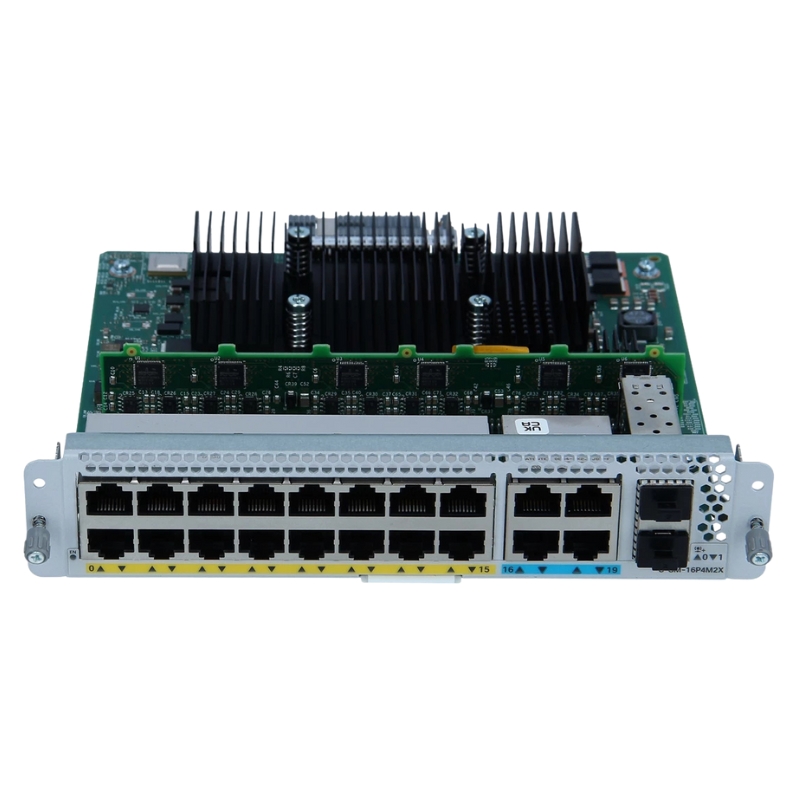


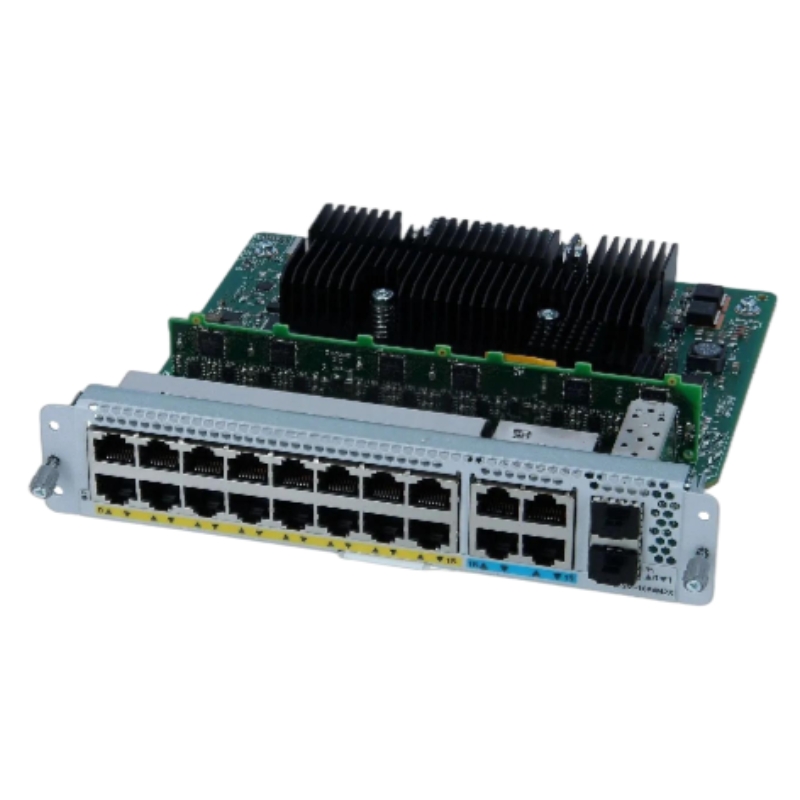
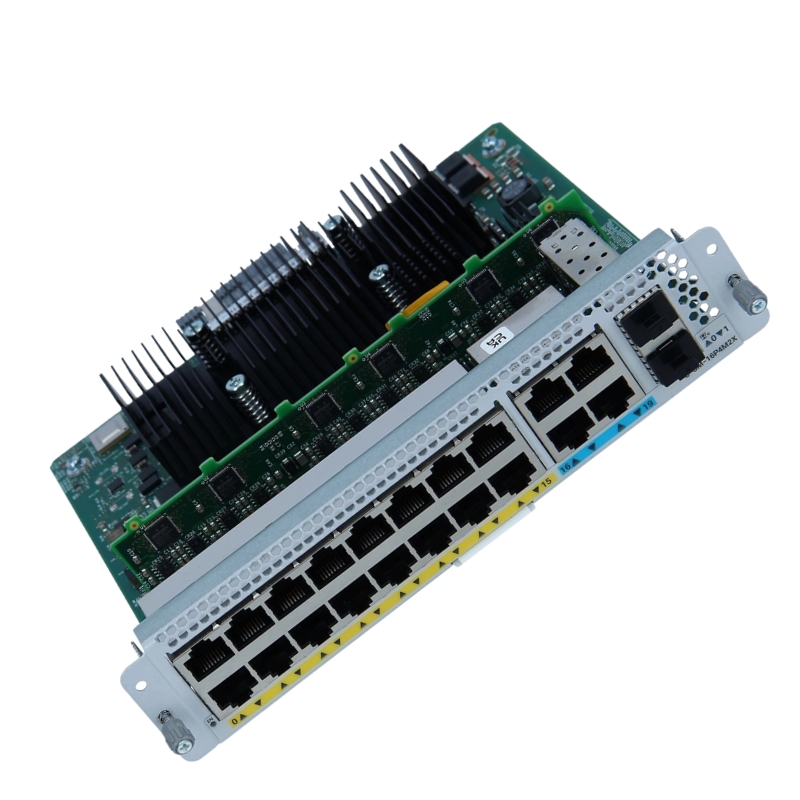
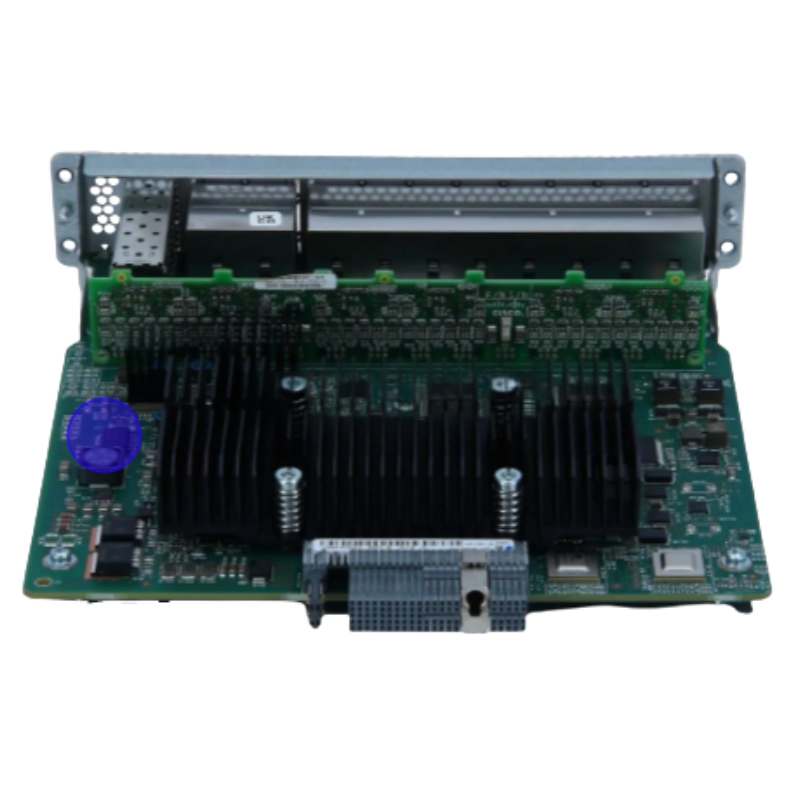
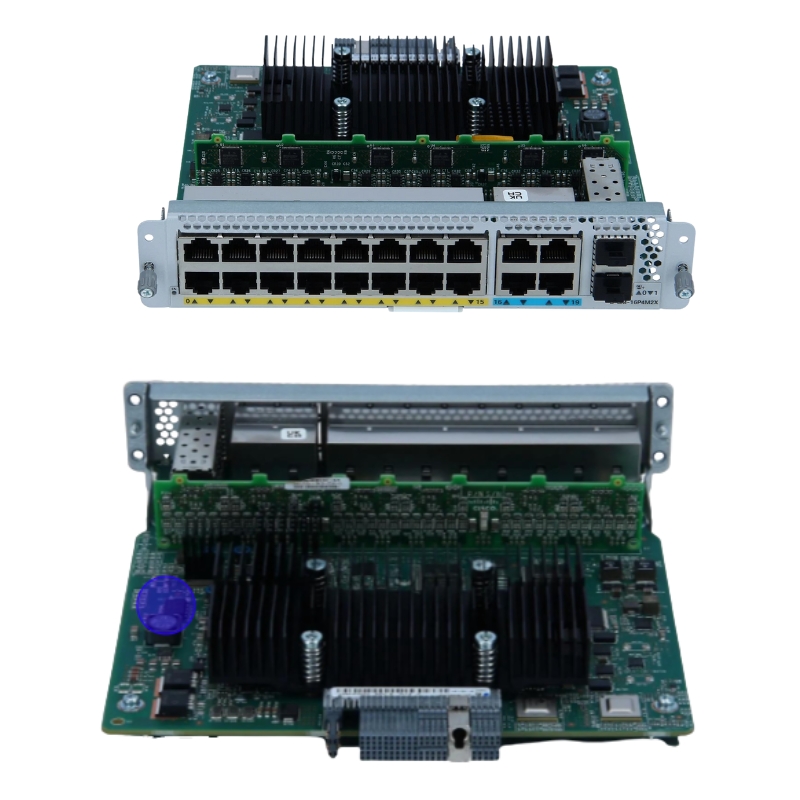
Cisco C-SM-16P4M2X Catalyst 8000 Series 10 Gigabit Ethernet Edge Service Module. Factory-Sealed New in Original Box (FSB) with 1 year Replacement Warranty
Discover the high-performance Cisco C-SM-16P4M2X module, designed for the Catalyst 8000 Series to deliver exceptional 10-Gigabit Ethernet capabilities for modern edge networking environments. This advanced service module enhances scalability, flexibility, and network efficiency for enterprise-class deployments.
This versatile network module comes equipped with robust functionalities to optimize edge switching performance.
The module offers diverse connectivity choices to support comprehensive network setups.
The Catalyst 8000 chassis, such as the Catalyst 8500 Series, is designed with a modular, pay-as-you-grow philosophy. Instead of over-provisioning an entire router, network architects can select specific interface modules and service cards that meet precise current needs, with the ability to add or change modules non-disruptively as requirements evolve. This architecture provides unparalleled investment protection and operational agility.
Within the Catalyst 8000 ecosystem, expansion hardware typically falls into two primary form factors:
Network Interface Modules (NIMs): These are larger, high-capacity modules that occupy dedicated slots in the chassis, providing dense port configurations for WAN, LAN, and optical interfaces.
Service Module (SM) Cards: Often referred to as "service modules" or "internal service modules," these are compact, high-speed cards that install into specific sub-slots within a module or the chassis base, typically adding specialized functionality or high-density Ethernet ports.
The Cisco C-SM-16P4M2X is a prime example of a high-performance Service Module designed to significantly boost the Ethernet density and capabilities of a Catalyst 8000 edge platform. This module is engineered for demanding edge and aggregation deployments where high-density 1/10 Gigabit Ethernet connectivity is paramount.
This module's nomenclature reveals its core features: 16P (sixteen 1/10GBASE-T ports), 4M (four 1/10G SFP+ ports), and 2X (two 40G QSFP+ uplink ports). This blend of interfaces offers exceptional versatility for connecting to a variety of devices and network segments.
These RJ-45 ports support 100M/1G/10G speeds with auto-negotiation, making them ideal for connecting to:
Local area network (LAN) switches and access points within a branch or campus.High-performance servers and network-attached storage (NAS) devices in colocation or data center edge deployments.
IoT gateways and aggregation points for bandwidth-intensive applications like video surveillance.
These ports support a wide range of 1G and 10G SFP/SFP+ optics, including short-reach (SR), long-reach (LR), and extended-reach (ER/ZR) transceivers. They are typically used for:
Fiber-based uplinks to a core switch or another distribution layer device.Connections requiring longer distances than copper 10GBASE-T can provide. Specialized optical connections like passive optical networks (PON) or dark fiber.
The dual 40G QSFP+ ports represent the high-speed backbone of the module. They can be used as:
40G or 4x10G (via breakout cable) uplinks to the chassis backplane, ensuring no internal bottleneck for the aggregate traffic from the other ports.Direct high-capacity links to data center core switches or other aggregation routers.
A future migration path to 100G with compatible QSFP28 optics, depending on platform and software support.
The module is designed for wire-speed performance across all ports, leveraging the Catalyst 8000's advanced ASIC architecture for deep buffering, low latency, and advanced queuing. It integrates fully with Cisco's IOS XE operating system, meaning all interfaces are managed through the same CLI, SNMP, NETCONF/YANG, or Cisco vManage dashboard as the rest of the router, ensuring consistent policy application for QoS, security, and SD-WAN.
Deploying a module like the C-SM-16P4M2X transforms a Catalyst 8000 router from a pure WAN edge device into a multiservice aggregation node. This is critical for consolidating functions at the network edge, reducing total cost of ownership, and simplifying operations.
In large regional branches or headquarters, the router can serve as both the SD-WAN gateway and the local aggregation switch. The 10GBASE-T ports connect to in-building switches and Wi-Fi controllers, the SFP+ ports link to a local data center or server farm, and the QSFP+ uplinks provide high-speed transport back to the enterprise core or to the internet/MPLS cloud.
The high-density 10G ports are perfect for enabling zero-trust security architectures (with inline traffic inspection), high-definition video collaboration suites, and large-scale data backup/replication between sites, all while maintaining application-aware routing and path selection via SD-WAN policies.
At the service provider edge, the Catalyst 8000 with high-density modules plays a vital role in 4G/5G network evolution. It can function as a cell site router (CSR) or aggregation router for numerous cell towers.
The mixture of copper and fiber ports allows for flexible connectivity to radio units, distributed units (DUs), and centralized units (CUs) in disaggregated 5G RAN architectures. The deterministic performance and timing synchronization features of the platform ensure it can meet the stringent latency and jitter requirements of mobile traffic.
For enterprises hosting workloads in colocation facilities or building direct cloud interconnects, the Catalyst 8000 serves as the secure gateway. The C-SM-16P4M2X module provides direct 10G connections to hosted firewalls, load balancers, or storage arrays within the same cage, while using its uplinks for encrypted tunnels over Direct Connect, ExpressRoute, or Interconnect links to public clouds like AWS, Azure, or Google Cloud.
Choosing the right module requires careful consideration of platform compatibility, performance requirements, and future needs.
The C-SM-16P4M2X and similar service modules are specifically designed for the Catalyst 8500 Series fixed and modular chassis. It is critical to consult the specific platform's datasheet and compatibility matrix, as slot availability, supported module types, and maximum quantity per chassis vary between models like the Catalyst 8500 Series Edge Platforms, the Catalyst 8500 Series L or H variants, and the Catalyst 8000V Edge Software.
Module functionality is enabled by the Cisco IOS XE software. A specific minimum release is required for hardware recognition, feature support, and bug fixes. Always verify the required software version for the module in the product release notes and plan upgrades accordingly.
The C-SM-16P4M2X is one of many options. The Catalyst 8000 module portfolio is vast, enabling tailored solutions.
For core-facing or data center interconnect roles, NIMs with 100G QSFP28 or 400G QSFP-DD ports provide massive bandwidth for aggregating multiple edge routers or connecting to high-speed core networks.
These modules offer traditional T1/E1, T3/E3, SONET/SDH, and OTN interfaces for seamless integration with existing service provider transport networks or for business-critical legacy circuit termination.
Dedicated hardware-based encryption modules (like the SM-X modules) offload IPsec/SSL encryption and decryption from the main CPU, ensuring high-performance, line-rate encryption for thousands of tunnels without impacting routing or SD-WAN performance.
Critical for mobile backhaul and financial services, these cards provide precise timing via GNSS (GPS) receivers, IEEE 1588v2 PTP, and SyncE to deliver phase and time synchronization for 5G networks and high-frequency trading applications.
Every interface on every module can be provisioned, monitored, and managed through Cisco's centralized controllers. In an SD-WAN fabric, vManage allows zero-touch provisioning of modules in remote devices, applying feature templates that define everything from interface IP addresses to advanced routing policies.
All modules are fully exposed through NETCONF/YANG data models. This allows network automation tools like Ansible, Puppet, or custom Python scripts to programmatically discover module inventory, configure interfaces, and collect telemetry, treating the entire router and its expansions as code.
The traffic flowing through the module's ports benefits from the Catalyst 8000's deep application visibility (using NBAR2) and sophisticated Quality of Service (QoS) mechanisms. Policies can prioritize critical applications like VoIP or Salesforce over bulk data transfers, ensuring optimal user experience regardless of the physical interface used.


 Contact Us
 Information
 Catalog
 Solid State Drives (SSD)
 Network Switches
 Hard Disk Drives
 HBA & Controllers
 PC & Servers
 PC & Server Memory
 CPU & Processors
 Network Routers
 Power Supplies
 Tape Drives & Libraries
 Network Devices
 Computer & Network Cables