(7% discount is applied at checkout)
Cart is empty
Your go-to destination for cutting-edge server products
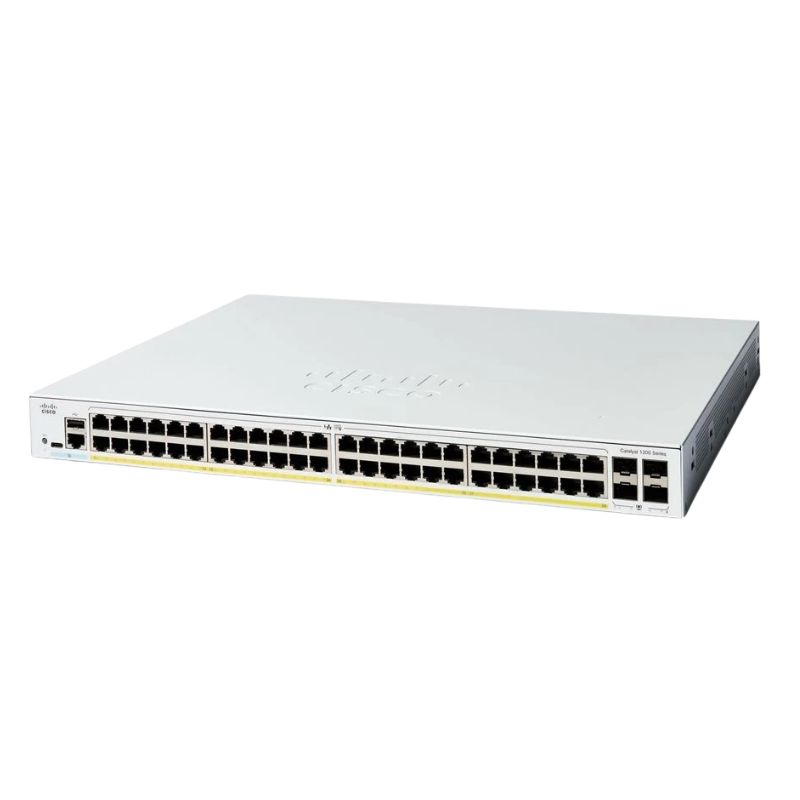


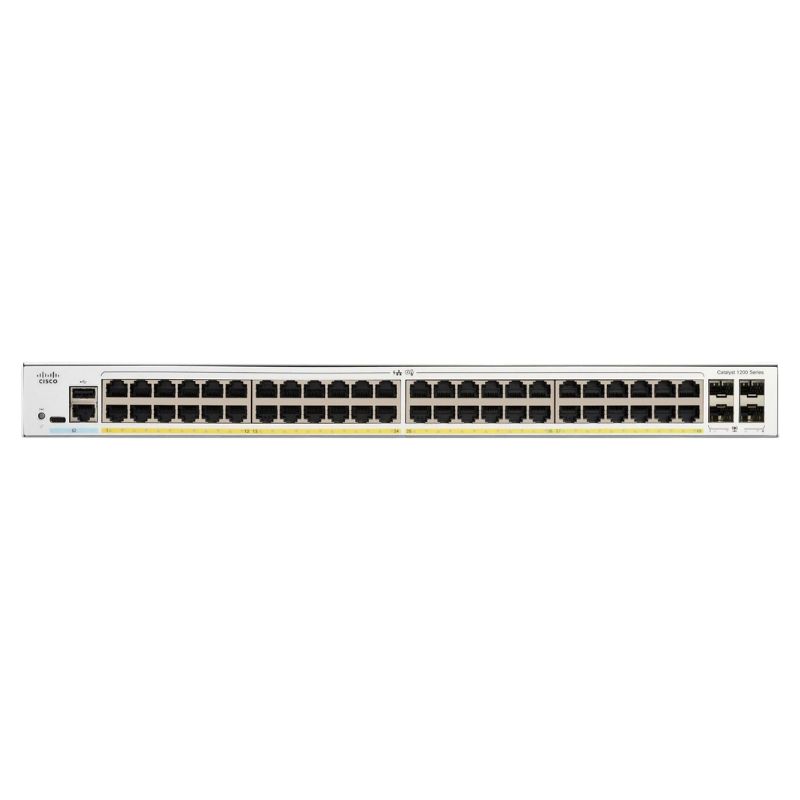
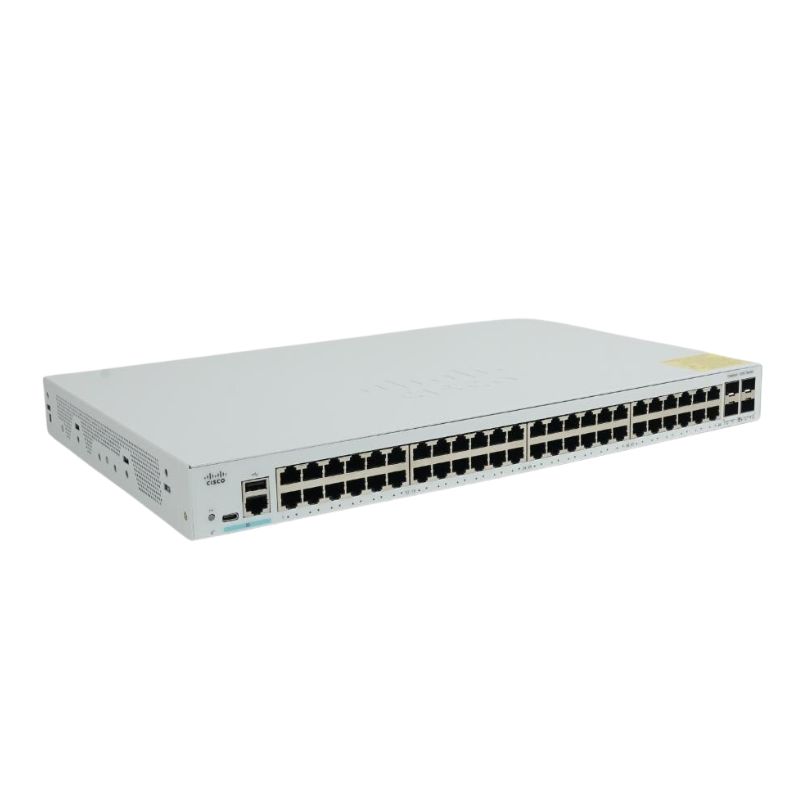
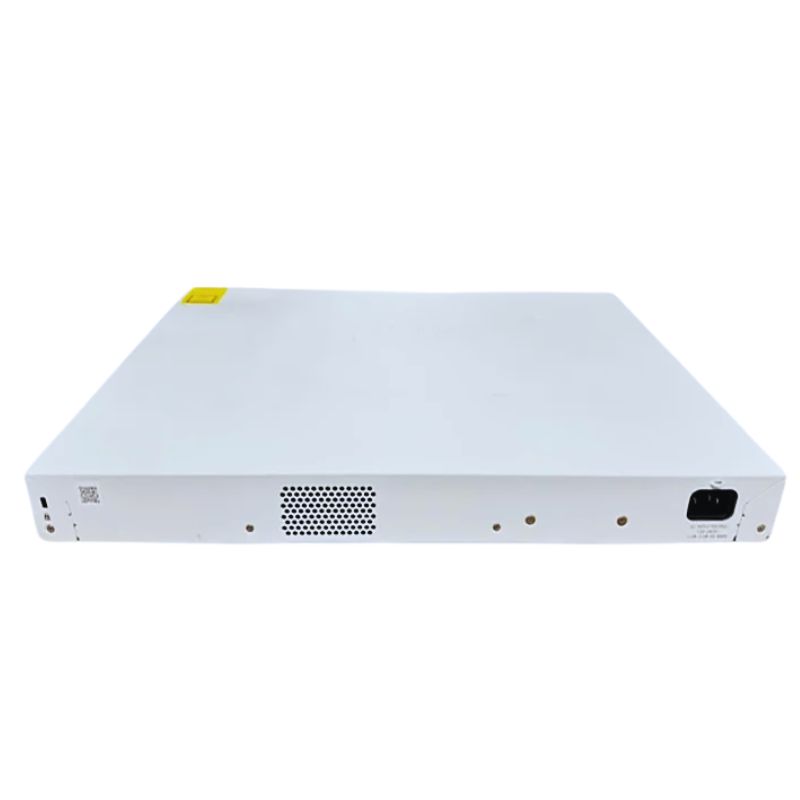
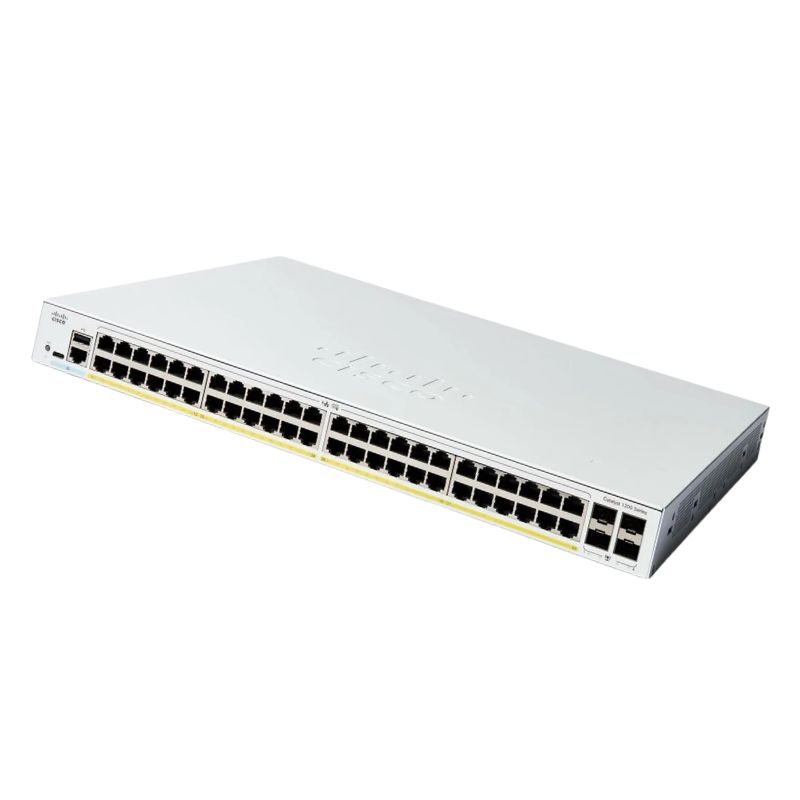
Cisco C1000-48T-4G-L Catalyst Switch with 48 Ports Managed and SFP Ports. Excellent Refurbished with 1 year replacement warranty.
| SKU/MPN | Warranty | Price | Condition | You save |
|---|---|---|---|---|
| C1000-48T-4G-L | 1 Year Warranty | $555.00 | Excellent Refurbished | You save: $194.25 (26%) |
| C1000-48T-4G-L | 1 Year Warranty | $788.00 | Factory-Sealed New in Original Box (FSB) | You save: $140.80 (15%) |
The Cisco Catalyst C1000-48T-4G-L is a high-performance managed Ethernet switch designed for small to medium-sized business networks. It delivers reliable connectivity, advanced traffic control, and enterprise-grade management features to support growing IT infrastructures.
This Cisco Catalyst switch is equipped with a high-density port layout that ensures fast data transfer and seamless network expansion.
Powered by an efficient processor, the switch ensures consistent performance for daily business operations and network-intensive applications.
The Catalyst C1000-48T-4G-L supports multiple routing and spanning tree protocols, enhancing network stability and traffic optimization.
This managed Cisco switch offers extensive remote management options, enabling administrators to monitor, configure, and secure the network efficiently.
The Cisco C1000-48T-4G-L is a fixed, managed Gigabit Ethernet Layer 2 access switch in the Cisco Catalyst 1000 Series, designed for small businesses, branch offices, and out-of-the-wiring-closet deployments that need reliable, secure connectivity with simple operations. Running Cisco IOS Software with both CLI and an intuitive on-box web UI, it brings enterprise-grade features into compact environments where ease of use and robust security are crucial.
With 48 10/100/1000 Ethernet downlink ports for high-density edge connectivity and 4 dedicated 1G SFP uplinks to tie your access layer into aggregation or core, the C1000-48T-4G-L gives you flexible wiring and straightforward growth paths while keeping management focused and predictable. It fits teams that want classic Catalyst dependability without the complexity of large-campus designs, prioritizing stability, compatibility, and cost-efficiency for everyday network tasks.
At the heart of the model are 48 auto-negotiating Gigabit Ethernet ports that deliver line-rate forwarding for data-optimized workgroups, endpoints, and IoT devices. This density is ideal when refreshing legacy Fast Ethernet switches or consolidating multiple smaller switches into a single, manageable unit without compromising performance.
The switch includes 4 fixed 1G SFP uplink interfaces, enabling clean, resilient connections to upstream switches or firewalls. Using fiber uplinks reduces electrical interference over long runs and gives a professional, modular approach to linking closets or floors, especially in larger branch sites and small campuses.
Network operators can configure and monitor the C1000-48T-4G-L using Cisco IOS CLI or an embedded web UI, offering approachable operations for teams with varying experience levels. The Catalyst 1000 family emphasizes simplicity with enterprise-grade reliability, making it easier to adopt and maintain consistent access-layer policies across sites.
Catalyst 1000 switches deliver enhanced network security and operational efficiency, aligning with small organizations that require dependable connectivity for business-critical devices. The series focuses on secure Layer 2 features that help segment traffic, enforce access controls, and strengthen the network edge against common threats.
For streamlined administration, the model can participate in setups where up to 8 switches are managed via a single IP, reducing management overhead and simplifying configuration rollouts in multi-switch environments. This approach is advantageous for small sites that want a unified control point without complex stacking backplanes.
The C1000-48T-4G-L provides 48 Gigabit Ethernet downlinks and 4 1G SFP uplinks, fitting standard rack deployments with a footprint designed for typical wiring closets. It is a non-PoE variant, simplifying power design when device power is not required and focusing on pure data switching for desktops, printers, and non-PoE IoT endpoints.
Under the hood, the platform is built to keep traffic moving. It offers a forwarding bandwidth of 52 Gbps and a switching bandwidth of 104 Gbps, supporting wire-speed performance across its ports in common access-layer scenarios. For small sites, this capacity is more than ample for typical office traffic patterns and bursty workloads.
The switch can achieve a forwarding rate of 77.38 Mpps for 64-byte Layer 3 packets, ensuring that even latency-sensitive applications benefit from consistent packet delivery in mixed traffic compositions. This helps mitigate microbursts and maintains responsiveness for user applications in busy workgroups.
With dimensions of approximately 17.5 x 10.73 x 1.73 inches, the unit fits standard racks and shelves without consuming excessive depth. It’s powered by an ARM v7 800 MHz CPU with 512 MB DRAM and 256 MB flash memory, balancing capable control-plane resources with the simplicity expected in access switches.
Cisco IOS Software brings long-standing reliability, industry-standard CLI, and an on-box web interface for configuration and monitoring. This dual management approach supports both traditional network engineers and IT generalists, lowering the barrier to consistent, secure operations across diverse sites.
The switch supports key IEEE standards crucial for stable Layer 2 networks, including STP and its rapid/Multiple variants, VLAN tagging, QoS prioritization, and 802.1X network access control. These standards enable resilient topologies, segmented broadcast domains, and secure user/device onboarding in business environments.
Dynamic ARP Inspection helps defend against ARP spoofing at the access layer, complementing 802.1X for authenticated access. Together, these features elevate the security posture in small offices and branches that increasingly face the same threats as larger enterprises, but with smaller teams to mitigate them.
By focusing on enterprise-class Layer 2 capabilities, the Catalyst 1000 Series provides simple, robust switching with the controls needed for safe multi-VLAN environments and dependable spanning tree behavior. This simplicity is a benefit where Layer 3 routing is handled upstream, avoiding unnecessary complexity at the edge.
For branch offices needing to connect dozens of endpoints—workstations, VoIP handsets (powered by local injectors or phones’ own adapters), printers, surveillance viewers—the C1000-48T-4G-L offers a clean, high-density edge with straightforward segmentation and policy enforcement. Its 4 SFP uplinks make it easy to tie the branch into a core or SD-WAN edge with fiber resilience.
Schools and retail stores can rely on the switch to segregate staff, student, point-of-sale, and guest traffic using VLANs and QoS. With manageable throughput and familiar IOS tooling, IT teams can apply consistent templates, monitor health, and adjust quickly when seasonal or semester-driven peaks hit the network.
Out-of-the-wiring-closet deployments, including compact industrial or IoT corners in facilities, benefit from Catalyst 1000’s secure and simple design philosophy. While the C1000-48T-4G-L is a data-only model, it can serve sensor gateways, controllers, and edge compute devices that do not require PoE, keeping wiring clean and management light.
Administrators can perform configuration tasks with familiar CLI syntax or use the on-box web UI for quick setups, port changes, and basic troubleshooting. The dual approach helps hybrid IT teams balance speed and governance, ensuring changes align with standards while remaining accessible to non-specialists.
When multiple switches are deployed, managing up to 8 units via a single IP streamlines updates, backups, and policy rollouts. This consolidated view reduces repetitive tasks and mistakes when maintaining branch networks with limited on-site resources.
Using standardized VLAN, QoS, and access control templates ensures consistent configurations across branches and floors. Teams can define port roles for endpoints, printers, and uplinks, then apply templates to speed deployments and reduce drift across the fleet.
Port-based 802.1X with EAP methods allows the network to authenticate users and devices before granting access, protecting sensitive segments and minimizing the lateral movement risk. It ensures only authorized devices participate on corporate VLANs, aligning with best practices for zero trust at the edge.
VLANs are a cornerstone of access design. By partitioning user, voice, guest, and device traffic, you contain broadcast domains, prioritize sensitive applications, and simplify policy enforcement at perimeter firewalls. The switch’s Layer 2 focus keeps segmentation clean and performant.
Dynamic ARP Inspection validates ARP traffic to reduce spoofing. Combined with STP variants, the switch maintains loop-free topologies and quick recovery from link changes, guarding against instability that could affect point-of-sale devices, VoIP, or learning management systems in small sites.
The 104 Gbps switching bandwidth is more than sufficient for typical access-layer use, accommodating multiple VLANs, bursty office workloads, and consistent upstream traffic across the 4 SFP uplinks. For small campuses, it provides room to scale endpoints without saturating the switch fabric.
Four 1G SFP uplinks allow flexible aggregation—dual uplinks per upstream switch for redundancy or multiple uplinks to different devices for traffic engineering. Fiber modules can be selected per distance and medium (SM/MM), letting you adapt to building layouts without overcomplicating cabling.
Even as endpoint counts rise, the C1000-48T-4G-L’s line-rate downlinks and consistent management model support phased growth. If PoE becomes a requirement, adjacent Catalyst 1000 PoE variants can be introduced, while keeping policy and monitoring consistent across the access layer.
Pick the C1000-48T-4G-L when you need many data-only ports, straightforward fiber uplinks, and enterprise Layer 2 features without PoE budgeting or fanless constraints. It focuses on reliability, simple operations, and secure access, fitting business floors heavy on desktops and printers.
Other Catalyst 1000 models include PoE+ options and varying port counts (8, 16, 24, 48), plus different uplink configurations. If powering phones, APs, or cameras from the switch is a priority, consider a PoE+ sibling while keeping the same management and security approach found across the series.
The series is tailored for out-of-the-wiring-closet and IoT deployments with simplicity at the forefront, making it friendly for limited-space, low-noise environments. Choose based on power needs, uplink types, and port density, guided by the consistent features and UI across the family.
As a Layer 2-managed access switch, the C1000-48T-4G-L anchors the endpoint edge. It handles segmentation, prioritization, and secure admission, while upstream routers or L3 switches take care of inter-VLAN routing and policy enforcement. This clean separation simplifies design and troubleshooting.
Where endpoints are primarily PCs, thin clients, and printers, non-PoE models avoid unnecessary power budgets and heat profiles. The C1000-48T-4G-L fills this niche, keeping capital costs focused on port density and optical uplinks rather than power provisioning per port.
Out-of-the-wiring-closet and IoT-friendly designs require minimal operational drag. Cisco Catalyst 1000’s combination of web UI and IOS management keeps the barrier low while enabling enterprise-grade, standards-based control, ideal for teams that wear many hats.
Support for IEEE 802.1D STP, 802.1w Rapid STP, and 802.1s Multiple STP gives flexible topology options, ensuring loop prevention with fast convergence. These are essential in multi-switch environments, retail floors, and schools with improvised cabling paths or legacy links.
IEEE 802.1Q VLAN tagging provides clean traffic isolation. IEEE 802.1p CoS prioritization lets you elevate voice and critical application traffic at the access layer, reducing jitter and delays without requiring advanced QoS configurations. Both are pragmatic for mixed endpoint populations.
802.1X secures port admission and 802.1ab LLDP enriches device discovery, aiding inventory and automated policy assignment. Together, they enhance visibility and control, forming the bedrock of manageable, auditable access networks in small organizations.
The model is available through local channels in Bangladesh, serving Dhaka offices and regional branches with familiar specifications and standards compliance that integrate into existing networks. This ensures easier procurement, support, and replacement logistics for growing organizations.
When evaluating, confirm the need for non-PoE data ports versus potential PoE demands, ensure 4 SFP uplinks match your upstream architecture, and verify standards like 802.1X and VLAN/QoS fit your security policies. Catalyst 1000’s simplicity and reliability are consistent strengths that reduce operational friction.
For locations with multiple switches, leveraging single-IP management across up to 8 devices cuts administrative overhead, which is especially valuable for teams supporting multiple floors or nearby branches from a central hub in Dhaka. Plan configurations to take advantage of this consolidation.
Create dedicated VLANs for users, printers, voice, and guests; enforce 802.1X where feasible on user VLANs, and restrict inter-VLAN routing at upstream firewalls. This approach enhances security and keeps access-layer policies clear and auditable for compliance and incident response.
Mark voice traffic with higher CoS values and ensure queueing policies at upstream devices respect those tags. At the access layer, keep QoS simple—prioritize real-time traffic and critical apps to ensure steady user experiences without overengineering policies.
Enable portfast on user-facing ports to speed workstation boot and reduce unnecessary STP delays. Maintain consistent STP priorities across closets and avoid accidental trunks on access ports, which can introduce loops and broadcast storms in flat VLAN designs.
Adopt a change window for port role updates, VLAN additions, and uplink adjustments; document changes in a centralized system. With IOS and web UI available, ensure engineers standardize on one method per site to avoid drift and confusion in audit trails.
Store running configurations in a secure repository after each approved change. When managing multiple switches under a single IP, coordinate backups to capture synchronized snapshots, making rollback straightforward in case of unexpected behavior.
Quarterly reviews of 802.1X policies, ARP inspection bindings, and VLAN ACLs help maintain a strong posture as devices and personnel change. This cadence keeps access controls current and reduces the risk of lingering exceptions becoming entry points for threats.
Monitor per-port utilization to catch overloaded endpoints, misbehaving NICs, or unexpected broadcast traffic. Threshold alerts let IT intervene before user complaints escalate, protecting productivity on shared floors and labs.
Distribute VLANs or traffic classes across uplinks if upstream architecture allows, keeping paths resilient and preventing hotspots. The 1G SFP uplinks offer predictable behavior, and clear documentation of link roles ensures fast failover during maintenance or faults.
Use 802.1X for corporate devices and separate onboarding flows for guests. Routine checks with LLDP data help validate inventories and identify rogue devices or mispatched ports, aligning network visibility with asset management efforts.


 Contact Us
 Information
 Catalog
 Solid State Drives (SSD)
 Network Switches
 Hard Disk Drives
 HBA & Controllers
 PC & Servers
 PC & Server Memory
 CPU & Processors
 Network Routers
 Power Supplies
 Tape Drives & Libraries
 Network Devices
 Computer & Network Cables