(7% discount is applied at checkout)
Cart is empty
Your go-to destination for cutting-edge server products
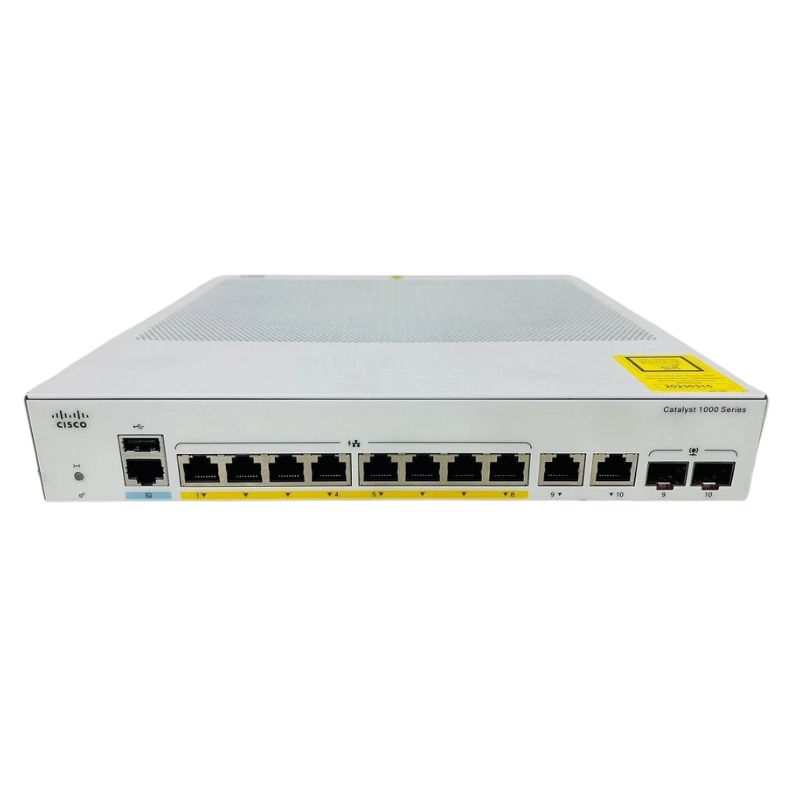


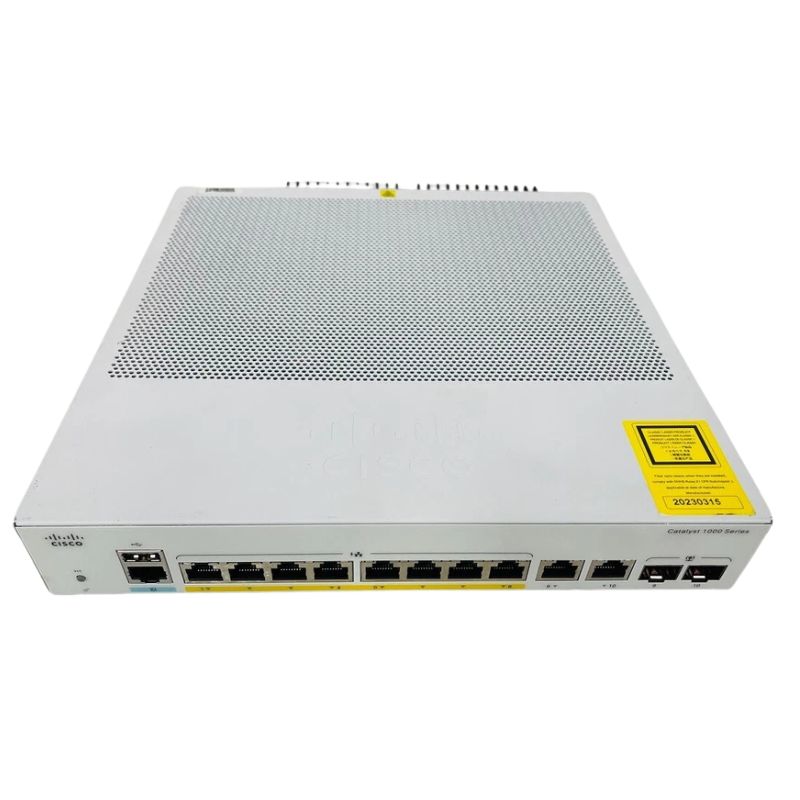
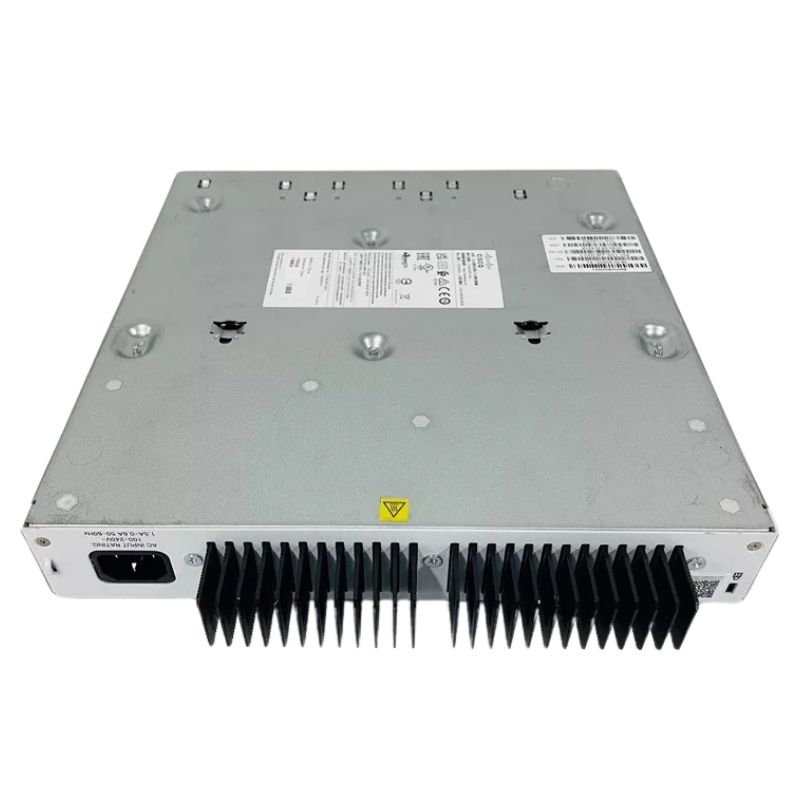
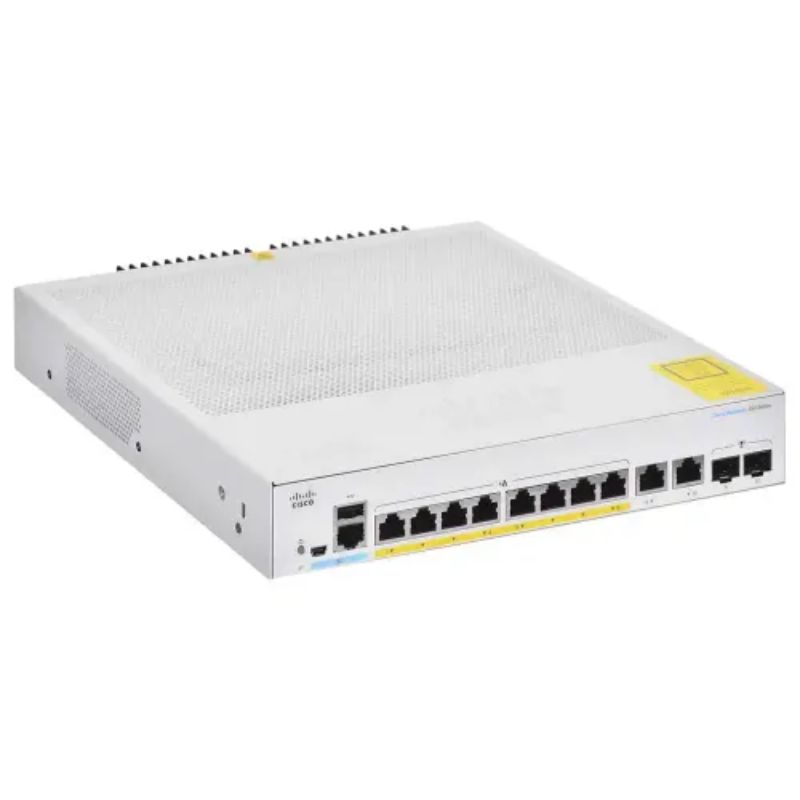
Cisco C1000-8P-E-2G-L Catalyst Managed Switch with 8 Ports+ Ethernet Ports. Factory-Sealed New in Original Box (FSB) with 1 year replacement warranty
| SKU/MPN | Warranty | Price | Condition | You save |
|---|---|---|---|---|
| C1000-8P-E-2G-L | 1 Year Warranty | $425.00 | Excellent Refurbished | You save: $148.75 (26%) |
| C1000-8P-E-2G-L | 1 Year Warranty | Contact us for a price | Factory-Sealed New Retail in Original Box (FSB) |
The Cisco Catalyst C1000-8P-E-2G-L is a reliable managed network switch designed for small to medium-sized business environments. With advanced switching capabilities, Power over Ethernet support, and a compact fanless design, this switch delivers stable connectivity, efficient power usage, and enterprise-grade performance.
The alphanumeric designation C1000-8P-E-2G-L precisely details the switch's capabilities. C1000 identifies the series. 8P confirms eight downlink ports that support PoE+. E signifies an enhanced software image with advanced security and management features. 2G denotes the presence of two dedicated Gigabit Ethernet uplink ports. L indicates a LAN Base feature set, providing comprehensive Layer 2 functionality. This specific configuration is architected to act as a versatile access layer switch, connecting end devices like IP phones, wireless access points, and security cameras to the broader network core via its high-speed uplinks. Its fixed configuration is optimized for deployment scenarios where space is at a premium, such as wiring closets, retail point-of-sale areas, or small office server rooms, without sacrificing performance or control.
The hardware of the C1000-8P-E-2G-L is built for reliability and silent operation in office environments, featuring a fanless design. The front panel is intuitively laid out:
Eight 10/100/1000 Ethernet Ports (Ports 1-8): Each of these ports provides auto-sensing, auto-negotiation, and auto-MDI/MDIX capabilities. Critically, they comply with the IEEE 802.3at PoE+ standard, capable of delivering up to 30 watts per port to powered devices. This allows a single cable to provide both data connection and electrical power to a wide array of devices.
Two Dedicated Gigabit Ethernet Uplink Ports (SFP Slots): These are not RJ45 ports but Small Form-factor Pluggable (SFP) slots. This design allows for flexible uplink connectivity using either copper SFP modules (for short runs) or fiber SFP modules (for long-distance or electrically noisy environments). Fiber uplinks can connect to a core switch or router hundreds of meters or even kilometers away, providing superior scalability and isolation.
Management and Console Port: A dedicated RJ-45 console port provides out-of-band management access for initial setup and troubleshooting, independent of the network's operational status.
A key operational aspect is the Total PoE Power Budget. This switch typically provides a budget of up to 130 watts. Intelligent power management ensures that connected devices receive the power they require (up to 30W per port for PoE+ devices like advanced wireless access points or pan-tilt-zoom cameras) without overloading the system. The switch can prioritize power delivery to critical devices like phones during a power budget shortfall, ensuring business continuity.
The "E" (Enhanced) software image and "L" (LAN Base) feature set unlock a suite of powerful management tools. Configuration and monitoring can be performed through multiple avenues: a familiar command-line interface (CLI) for network professionals, a user-friendly web-based graphical interface (GUI) for simpler day-to-day management, and support for SNMP for integration into network monitoring systems like Cisco Prime or other third-party platforms. This multi-access approach ensures that administrators of all skill levels can effectively manage the network.
As a fully managed Layer 2 switch, it provides control over network traffic flow, performance, and segmentation:
VLAN (Virtual LAN) Support: Allows logical segmentation of a physical network into multiple broadcast domains. This enhances security (separating guest traffic from corporate data), reduces broadcast traffic, and simplifies network management. Support for 802.1Q trunking enables a single uplink to carry traffic for multiple VLANs.
Spanning Tree Protocol (STP): Implements IEEE 802.1D STP and its rapid evolution, Rapid Spanning Tree Protocol (RSTP) IEEE 802.1w. These protocols prevent network loops in redundant topologies, ensuring a loop-free logical topology and providing failover capabilities for critical network paths.
Link Aggregation (EtherChannel): Supports the bundling of multiple physical ports into a single logical channel (using LACP - Link Aggregation Control Protocol). This increases uplink bandwidth, provides load balancing, and offers inherent redundancy; if one link in the bundle fails, traffic is redirected through the remaining links.
Quality of Service (QoS): Employs sophisticated classification, marking, policing, and scheduling mechanisms. Network traffic (e.g., voice, video, data) can be prioritized, ensuring that latency-sensitive applications like VoIP and video conferencing experience minimal delay and jitter, even during periods of high network congestion.
Security is integrated at multiple levels to protect the network infrastructure and the data flowing through it:
Port Security: Limits the number of MAC addresses allowed on a port or specifies exact MAC addresses, preventing unauthorized devices from connecting to the network.
802.1X Network Access Control: Provides industry-standard, port-based authentication. Devices must be authenticated by a RADIUS server (like Cisco Identity Services Engine) before being granted network access. This is crucial for securing wireless access points and wired ports in sensitive areas.
ACLs (Access Control Lists): Allow granular filtering of traffic based on IP addresses, protocols, and port numbers. ACLs can be used to restrict inter-VLAN routing, block malicious traffic, or enforce company policies.
DHCP Snooping: Acts as a firewall between untrusted hosts and trusted DHCP servers. It prevents rogue DHCP servers from distributing incorrect IP addresses and can be used with IP Source Guard to mitigate IP address spoofing attacks.
Storm Control: Protects the network from being overwhelmed by broadcast, multicast, or unicast traffic storms, which can be caused by misconfigurations or malicious attacks, ensuring network stability.
The versatility of the Cisco C1000-8P-E-2G-L makes it suitable for a wide range of business applications. Its compact size and feature set address common connectivity challenges in modern workspaces.
In environments deploying Cisco IP phones or other VoIP systems, this switch is ideal. The PoE+ ports eliminate the need for separate power adapters for each phone, reducing cable clutter and cost. The integrated QoS features guarantee high voice quality by prioritizing voice traffic over less time-sensitive data. Phones can also be connected in a "pass-through" mode, where a computer shares the single network drop via the phone's built-in switch port, further simplifying cabling infrastructure.
For businesses implementing or expanding a wireless LAN with Cisco Aironet or other enterprise-grade access points (APs), this switch provides essential support. The PoE+ budget can power multiple, modern 802.11ac or Wi-Fi 6 APs that require higher wattage. The dedicated Gigabit uplinks ensure the wireless backhaul to the network core does not become a bottleneck, supporting high-speed client connectivity and seamless roaming.
Modern IP-based security cameras, especially those with pan, tilt, zoom, heating, or infrared features, often require PoE+. This switch can power a suite of such cameras while providing the reliable, high-bandwidth connectivity needed for streaming high-definition video to a network video recorder (NVR). Features like VLANs can isolate surveillance traffic on its own network segment for enhanced security and performance.
For a small office requiring a handful of wired connections for computers, printers, and servers, alongside wireless and phone support, this 8-port model can serve as the central networking hub. Its management features allow the IT administrator to control access, monitor performance, and troubleshoot issues remotely. In a branch office, it provides a consistent, secure, and manageable network experience that aligns with corporate policies set by headquarters.
When selecting a switch, it's important to compare models to find the perfect fit. The C1000-8P-E-2G-L sits within a broader family with varying port counts, PoE capabilities, and uplink options.
Unlike its non-PoE sibling (the C1000-8T-E), this model provides both data and power. Compared to the 24-port or 48-port models in the series, the 8-port version is for smaller device densities. The "2G" uplink (SFP slots) is a significant advantage over models with only copper uplinks, offering flexibility for longer distances and fiber connectivity. Some models offer 10G uplink options for future-proofing against extreme bandwidth demands.
The "L" in the model number denotes the LAN Base software image, which is focused on advanced Layer 2 features. The Catalyst 1000 series also offers an IP Lite image (designated with an "I"), which adds basic static routing capability (Layer 3) for inter-VLAN routing without needing an external router. For most small businesses where VLANs are routed by a firewall or core router, LAN Base is sufficient and cost-effective.


 Contact Us
 Information
 Catalog
 Solid State Drives (SSD)
 Network Switches
 Hard Disk Drives
 HBA & Controllers
 PC & Servers
 PC & Server Memory
 CPU & Processors
 Network Routers
 Power Supplies
 Tape Drives & Libraries
 Network Devices
 Computer & Network Cables