(7% discount is applied at checkout)
Cart is empty
Your go-to destination for cutting-edge server products
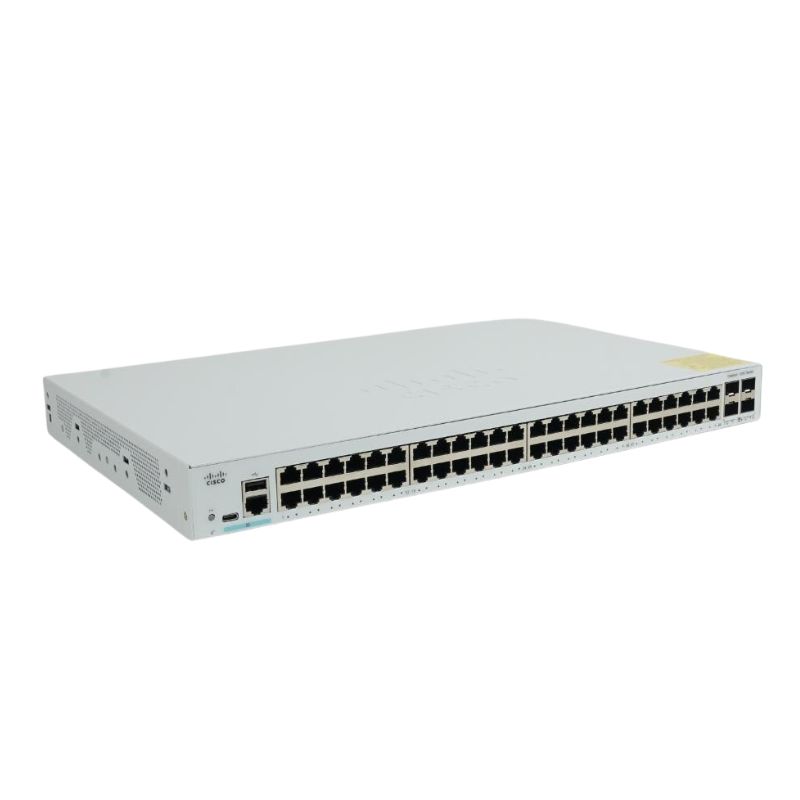


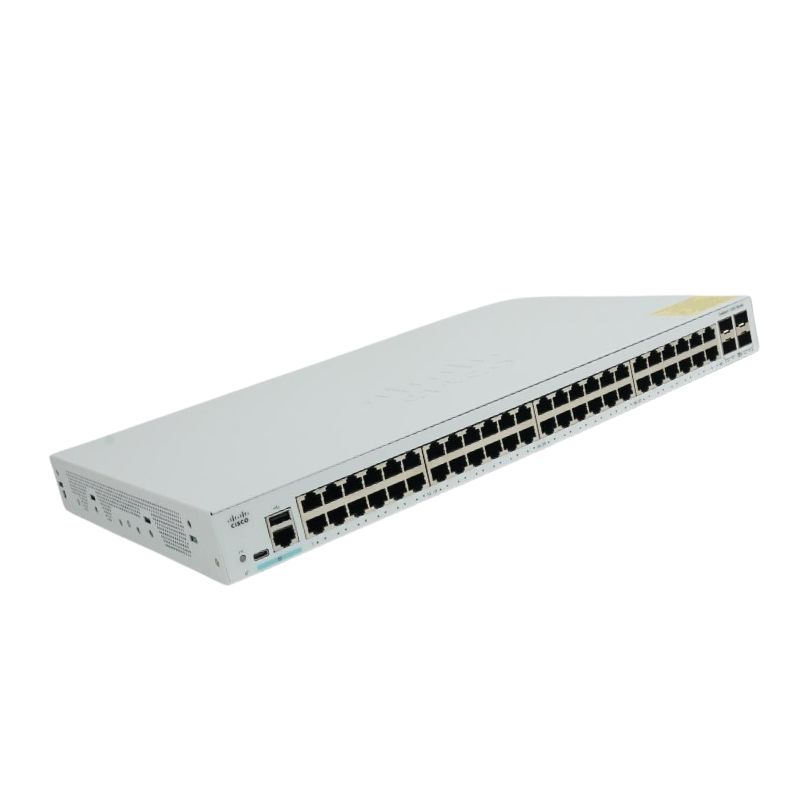
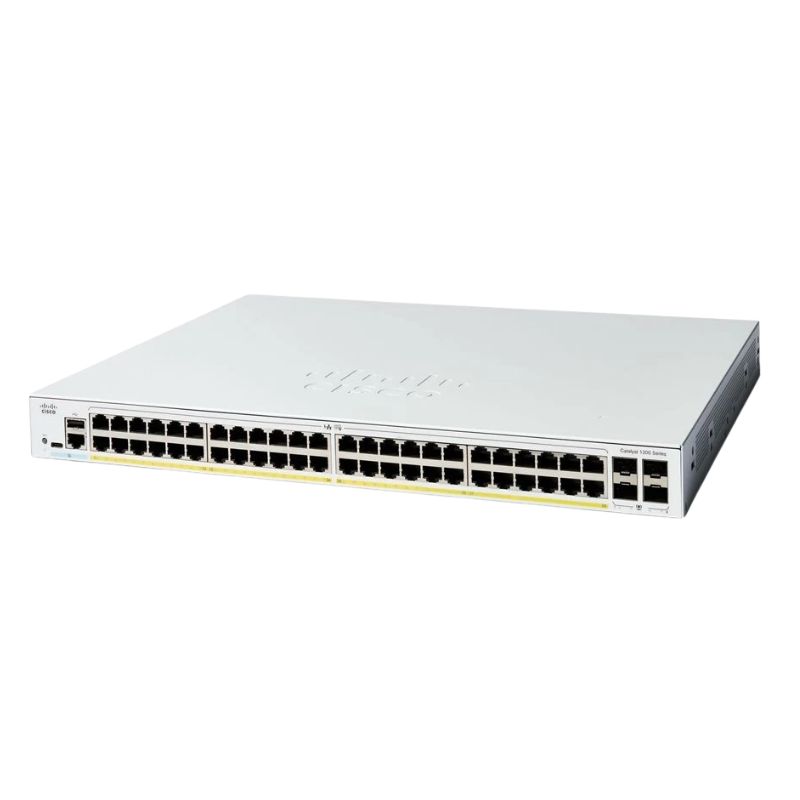
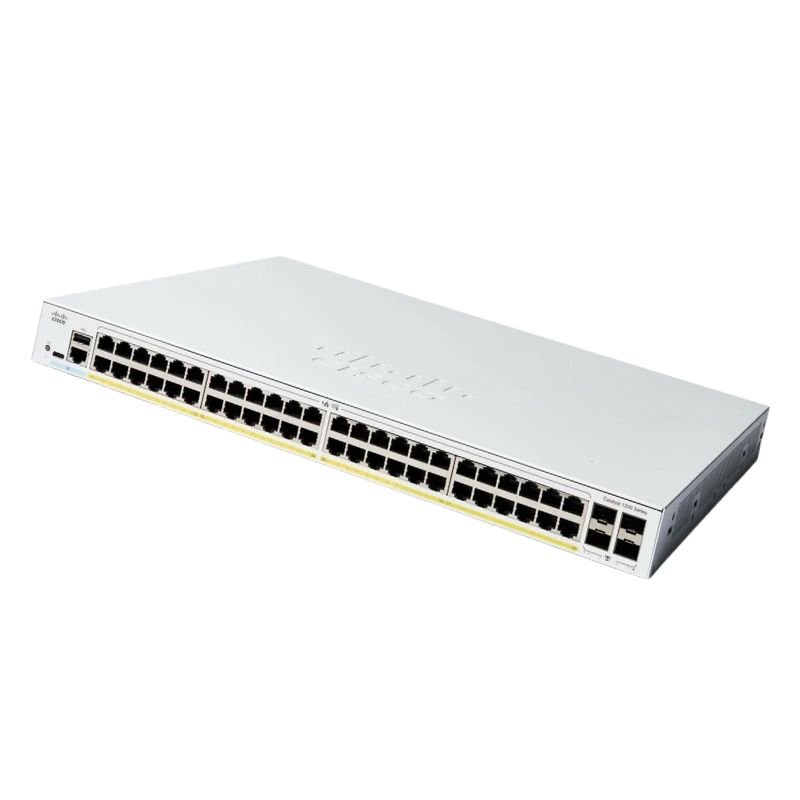
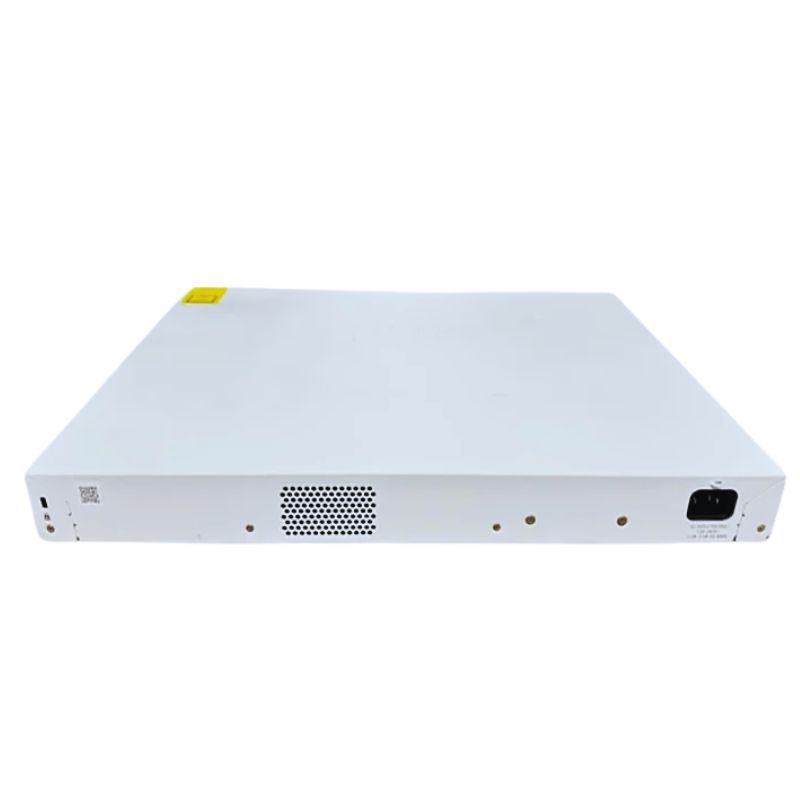
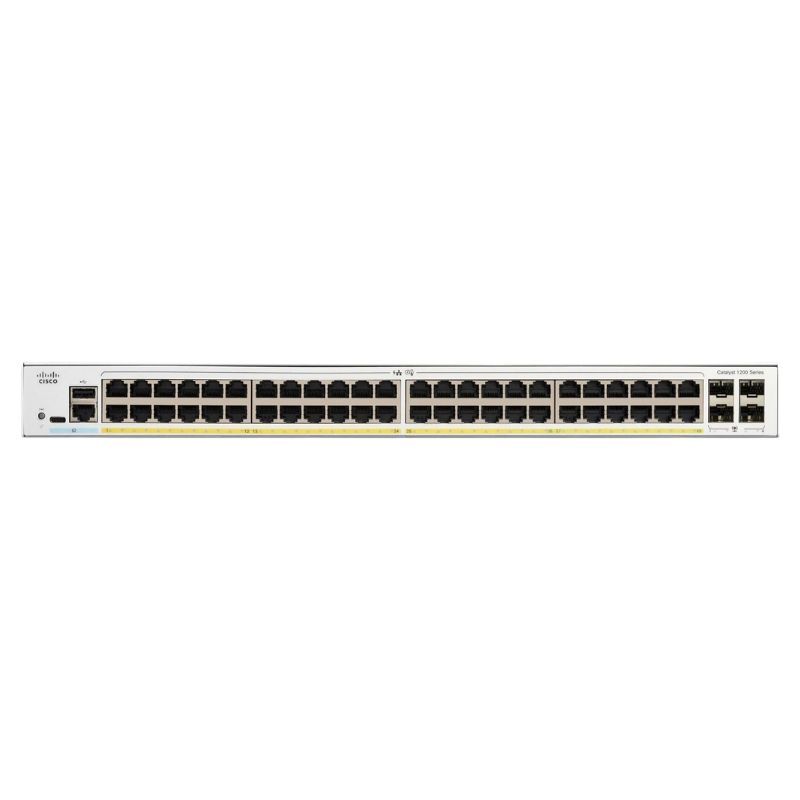
Cisco C1000FE-48T-4G-L 48 Ports Managed Switch Layer 2 Supported 4 SFP Slots. Excellent Refurbished with 1 year replacement warranty
| SKU/MPN | Warranty | Price | Condition | You save |
|---|---|---|---|---|
| C1000FE-48T-4G-L | 1 Year Warranty | Contact us for a price | Factory-Sealed New Retail in Original Box (FSB) | |
| C1000FE-48T-4G-L | 1 Year Warranty | $950.00 | Excellent Refurbished | You save: $332.50 (26%) |
The Cisco Catalyst C1000FE-48T-4G-L is a reliable Layer 2 managed network switch designed for small to medium-sized enterprises. With high port density, flexible uplink options, and enterprise-grade management features, this Fast Ethernet switch ensures stable connectivity, improved traffic control, and secure network operations.
This Cisco managed switch delivers efficient packet forwarding and smooth data transmission, making it ideal for business networks with consistent traffic demands.
The Cisco C1000FE-48T-4G-L belongs to the Catalyst 1000 Series, offering enterprise-class Layer 2 switching with 48 Fast Ethernet access ports and flexible Gigabit uplinks, making it ideal for small businesses, branches, and out-of-the-wiring-closet deployments. It runs Cisco IOS Software and supports both CLI and an on-box web UI for simplified management, blending reliability, security, and operational efficiency into a compact, rack-mountable form factor. As a managed switch, it aligns with the essential needs of access-layer networks, providing VLAN segmentation, QoS, and link aggregation features to stabilize and scale network traffic flows across diverse environments.
In this category, the Cisco C1000FE-48T-4G-L stands out for environments that still rely on Fast Ethernet endpoints but need Gigabit uplinks to core, distribution, or aggregation layers. The device emphasizes ease of deployment and ongoing operations—important for teams that balance day‑to‑day tasks with network reliability. With 48x 10/100 Mbps ports and a combination of SFP and RJ‑45 Gigabit uplinks, it allows mixing copper and fiber interconnects to meet evolving cabling and distance requirements across floors or buildings.
Organizations choose this category when they need the predictable performance and mature feature set of Cisco’s access switching while controlling costs in endpoint connectivity. The C1000FE-48T-4G-L supports key IEEE standards at Layer 2, jumbo frame handling, and MAC address scalability that suit typical office LANs, retail, K‑12 campuses, and IoT footprints. Its compact enclosure and 35 W power consumption also help reduce rack heat loads and energy budgets, supporting long‑term operational efficiency in constrained spaces.
At the hardware level, the switch is a rack-mountable, managed device with 48 Fast Ethernet access ports, designed to anchor endpoint connectivity at the access layer. Uplink versatility is provided through four Gigabit interfaces, with two combo uplinks that support either SFP or RJ‑45 copper, plus two additional dedicated SFP uplinks for fiber. This mix makes it straightforward to tie into diverse upstream infrastructure without retooling the entire cabling plant, especially where fiber runs are preferred for longer distances or environments with EMI considerations.
The MAC address table supports up to 16K entries, which is sufficient for typical small to medium deployments with a variety of endpoints, printers, IP phones, and IoT devices. Jumbo frame support up to 10240 bytes helps optimize throughput in scenarios with larger payloads, especially where uplinks carry aggregated traffic or where specific applications benefit from reduced fragmentation overhead. The device's rated power consumption at approximately 35 W reflects energy-conscious design for access-layer deployments, contributing to lower OPEX and better thermal stability in compact wiring closets.
As part of the Catalyst 1000 family, the C1000FE-48T-4G-L inherits enterprise-grade reliability and operates on Cisco IOS, providing consistent behaviors and interoperability with established Cisco tooling. The series is tailored for small businesses and branch offices needing secure, flexible Layer 2 switching, and offers management via CLI and on-box web UI, ensuring administrators can configure, monitor, and troubleshoot without depending on external platforms for basic operations. This promotes faster rollouts and streamlined upkeep in distributed networks.
The switch supports a broad set of IEEE protocols commonly used in enterprise networks, including 802.1d (STP), 802.1w (Rapid STP), and 802.1s (MSTP) for loop prevention and redundancy; 802.1q/p for VLAN tagging and prioritization; and 802.1x for port-based network access control. It also supports 802.3 variants covering Ethernet physical layers and flow control (such as 802.3, 802.3u, 802.3x, 802.3z), energy-efficient Ethernet (802.3az), and link aggregation via 802.3ad. Together, these standards ensure stable spanning tree domains, secure edge access, traffic engineering via VLANs, and improved resiliency with port-channel methods.
Layer 2 switching in this category focuses on reliable forwarding, segmentation, and broadcast containment rather than Layer 3 routing. Administrators leverage VLANs to isolate departments or security zones, while trunk interfaces propagate tags to upstream switches or firewalls. Rapid STP / MSTP minimize convergence times during topology changes, helping maintain service continuity for endpoints and VoIP phones. 802.1x enables strong edge authentication, making the C1000FE‑48T‑4G‑L suitable for environments demanding controlled device access.
With four Gigabit uplinks—two combo (SFP/RJ‑45) plus two dedicated SFP—the switch accommodates mixed copper and fiber connections to distribution or aggregation switches. The combo uplinks allow administrators to choose copper for short, local ties or SFP transceivers for longer runs and fiber media types (e.g., single-mode or multi-mode). This hybrid approach reduces the need to standardize on a single medium and keeps options open as campuses upgrade their core backbones or reconfigure wiring closets for growth and redundancy.
The Gigabit uplinks benefit traffic patterns that aggregate many Fast Ethernet endpoints, ensuring sufficient headroom for inter-VLAN traffic, uplinked services, and bandwidth-intensive applications traversing the access layer. Jumbo frame support further improves efficiency, particularly for workloads like backups, imaging, or surveillance streams where larger frame sizes translate to fewer headers and reduced protocol overhead. These design elements collectively help stabilize performance across the access‑to‑core pathway in everyday operations.
Management flexibility is central to the Catalyst 1000 Series proposition: administrators can use CLI—which is familiar and scriptable for many network teams—or leverage the on-box web UI for direct configuration and monitoring. The web UI simplifies common tasks like VLAN creation, port profiles, security settings, and basic troubleshooting, while CLI offers granular control, templates, and change control procedures often mandated by IT governance. This dual approach helps organizations standardize processes while maintaining agility in small or remote sites.
Beyond interface options, the category emphasizes operational efficiency through stable firmware, predictable behaviors, and compatibility with broader Cisco practices. In distributed environments with limited IT staff, the ability to perform quick audits, adjust port configurations, and enforce security consistently is crucial. The C1000FE‑48T‑4G‑L’s feature set supports these goals by aligning with enterprise expectations for access control, VLAN segmentation, STP tuning, and QoS prioritization, all accessible through straightforward, well-documented workflows.
Security at the access layer typically begins with 802.1x port-based authentication, enforcing identity checks for connected endpoints before granting VLAN access. Administrators can deploy MAC-based policies, guest VLANs, and isolate unknown devices to keep the network posture resilient and compliant. Combined with VLAN segmentation, this approach reduces lateral movement risks and keeps sensitive zones like finance or HR insulated from general office traffic. Integrated with established Cisco practices, the C1000FE category offers the foundational tools needed to build secure, audit-ready edge access.
QoS capabilities allow administrators to prioritize latency-sensitive traffic such as VoIP and video conferencing, ensuring call reliability and smoother collaboration experiences even during peak utilization. 802.1p prioritization tags and queue management are fundamental to maintaining predictable performance across Fast Ethernet access ports feeding Gigabit uplinks. In branch offices or small campuses, QoS at the access layer acts as the first line of enforcement, complementing upstream policies and safeguarding critical communications during congestion events.
Small and medium businesses commonly deploy the C1000FE‑48T‑4G‑L to connect PCs, printers, IP phones, and IoT sensors, relying on VLANs for departmental separation and 802.1x for access control. Retail locations benefit from predictable Layer 2 operations across POS terminals, surveillance cameras, and back‑office systems, while leveraging Gigabit uplinks to central servers or cloud gateways. In education, classrooms and labs gain stable access for wired endpoints, with STP protection against accidental loops and QoS to prioritize voice over administrative traffic.
Branch offices often use this category as a standardized access switch: IT teams roll out uniform configs, manage via CLI or the web UI, and monitor uplink health to the WAN or data center. The mix of combo and dedicated SFP uplinks is especially useful where fiber backbones serve multiple floors or remote buildings, and copper ties address local patch panel runs. As organizations gradually transition to more Gigabit endpoints, the C1000FE switches can coexist in the access layer, while uplinks maintain high‑speed paths to modern core switches.
The Catalyst 1000 Series explicitly targets IoT and out-of-the-wiring-closet deployments that demand manageable, secure Layer 2 switching in non-traditional network spaces. With small form factor considerations and energy-efficient operation, these switches can be placed closer to endpoint clusters while still delivering enterprise-grade controls. Features like 802.1x and VLAN segmentation keep sensor networks and operational technology segmented from office IT, reducing risk and simplifying compliance with internal standards.
Organizations leveraging the C1000FE‑48T‑4G‑L often operate across mixed media—legacy copper runs for short distances and fiber for longer or cleaner pathways. The two combo uplinks plus two SFP uplinks make it straightforward to frame migration plans, choosing SFP modules for single‑mode or multi‑mode fiber as needed while retaining copper options. This flexibility minimizes rework and allows incremental upgrades to aggregation or distribution layers, aligning with budget cycles and project timelines without disrupting endpoint connectivity.
While the access ports are Fast Ethernet, the design is optimized around aggregating endpoint traffic efficiently to Gigabit uplinks. Jumbo frames up to 10240 bytes can help reduce header overhead for certain workloads, improving throughput on uplinks and reducing CPU load on devices handling larger payloads. The 16K MAC address table scales to typical small and medium deployments, ensuring the switch can learn and forward efficiently without excessive table churn or collisions in everyday operations.
When planning performance, administrators assess VLAN topology, STP design (RSTP or MSTP), and QoS queues at the access layer. Proper VLAN scoping avoids oversized broadcast domains; RSTP accelerates convergence during failures or changes; and QoS policies prioritize voice or critical apps. Combined with fiber uplinks, these considerations help keep latency low and throughput consistent, especially in branches where the switch connects to WAN routers and upstream security appliances.
Catalyst 1000 switches run Cisco IOS and are engineered for simple, flexible, and secure operations targeting small businesses and branch offices. Standardized Layer 2 constructs and management models make them accessible to IT teams with varying levels of network specialization. The on‑box web UI supplements CLI, enabling rapid setup, visibility into port states, and security controls without depending on external controllers for routine tasks. This aligns the C1000FE‑48T‑4G‑L with modern, pragmatic operations in lean IT environments.
The series focuses on network security, reliability, and operational efficiency—key priorities where downtime and complexity can disrupt business flows. Consistency in software behaviors and support for mainstream protocols lets teams blend these switches into existing topologies without rethinking upstream designs. That’s especially beneficial when branches must be brought online quickly or when upgrading legacy switches to gain stronger access control and management capabilities.
VLANs enable logical separation across departments or functions, with trunk ports carrying multiple VLAN tags upstream to routers, firewalls, or distribution switches. The use of 802.1q tagging and structured VLAN schemes simplifies policy enforcement, logging, and compliance checks. In the C1000FE category, VLANs remain the cornerstone of segmentation strategies that prevent broad broadcast domains and contain issues to specific segments, reducing the scope of troubleshooting and minimizing risk at the access layer.
802.3ad link aggregation (LACP) groups multiple physical links into a logical bundle to increase throughput and provide resiliency if one link fails. At the access layer, this can be used on uplinks to upstream switches or servers where supported, ensuring both performance and failover benefits. Paired with STP controls and thoughtfully planned VLAN trunks, link aggregation contributes to robust access-to-core connectivity, mitigating single points of failure.
Compliance with a wide spectrum of IEEE standards ensures interoperability and predictable operations. Among them are 802.1d (STP), 802.1w (RSTP), 802.1s (MSTP), 802.1q/p (VLAN and priority tagging), 802.1x (port-based access control), and multiple 802.3 variants for Ethernet physical layers, flow control, EEE, and fiber. This standards coverage allows the C1000FE‑48T‑4G‑L to integrate into diverse environments without surprises and maintain consistent behaviors with other enterprise gear from various generations.
Organizations with regulatory or internal compliance needs benefit from the documented behavior of these protocols and the auditability of CLI and web‑based configuration steps. Policy enforcement at the edge via VLANs and 802.1x dovetails with upstream NAC, firewalls, and SIEM tools to create layered defenses. The result is a category of switches that can serve as reliable building blocks in defense‑in‑depth strategies across different industries.
Each Fast Ethernet port can be profiled for access VLAN, voice VLAN, 802.1x auth, and QoS settings. Administrators often deploy standard templates: “employee port profile” with 802.1x enabled, “voice port profile” leveraging LLDP‑MED where applicable, and “guest VLAN” for unknown devices. Uplink ports are configured as trunks, sometimes with LACP where upstream supports it, and MSTP or RSTP parameters are tuned to avoid topology risks. These standardized tactics keep deployments consistent across branches.
In fiber uplinks, selecting appropriate SFP modules based on distance and fiber type is critical; multi‑mode for short campus spans and single‑mode for long-distance building‑to‑building links. Where copper uplinks are used, ensuring cable quality and length compliance keeps gigabit stable. The switch’s combo uplinks simplify local adjustments—copper for immediate needs, SFP for planned expansions—allowing pragmatic switching between media without hardware changes at the access layer.
Jumbo frames up to 10240 bytes can be enabled where applications or uplink traffic patterns benefit from reduced per‑packet overhead. In practice, environments handling storage replication, VDI imaging, or surveillance can see smoother uplink utilization when larger frames are consistently supported across the path. Administrators should validate end‑to‑end jumbo compatibility and consider MTU impacts on upstream devices to avoid fragmentation or drops at boundaries.
Adopting consistent naming conventions for VLANs, ports, and trunk interfaces simplifies maintenance and audits. Documenting 802.1x policies and fallback behaviors (like guest VLANs) reduces confusion during endpoint onboarding. Regularly reviewing STP states, uplink counters, and MAC address tables helps catch anomalies early, preventing performance degradation. Utilizing both CLI and web UI provides flexibility in responding to field issues and maintaining configuration hygiene across distributed sites.
Change control processes should include pre‑deployment validation in a lab or staging area, especially for QoS and 802.1x policies. Backup configurations and versioning allow rollback if unexpected behavior occurs. When rolling out firmware updates, schedule windows that minimize user impact and ensure upstream devices are prepared for any protocol or feature changes. Thorough communication with local staff can prevent accidental cable moves or mispatches during upgrades.
Implementing port security, BPDU guard on edge ports, and storm control helps maintain integrity and limit accidental disruptions. Combining 802.1x with directory-backed identity systems centralizes policy enforcement, while per-port ACLs can restrict traffic patterns where necessary. Logging and monitoring via CLI or web UI provide visibility into authentication events and port states, aiding in incident response and compliance reporting.
The C1000FE‑48T‑4G‑L is optimized for Fast Ethernet access with Gigabit uplinks, while other Catalyst 1000 models offer full Gigabit access ports or varying uplink configurations. Across the series, managed Layer 2 features, Cisco IOS operation, and small business focus remain consistent, with differences centering on port speeds, PoE capabilities in some models, and form factors. This gives organizations a menu of options based on endpoint requirements, power needs, and budget constraints, under the same operational umbrella.
Choosing the FE model makes sense where Fast Ethernet endpoints predominate and PoE is not required. If PoE or Gigabit access is needed, teams can select sibling models accordingly while retaining similar management workflows. The series’ design philosophy—simple, flexible, secure Layer 2 switching—supports cohesive planning across sites, letting IT mix and match models to fit localized needs without fragmenting operational practices.


 Contact Us
 Information
 Catalog
 Solid State Drives (SSD)
 Network Switches
 Hard Disk Drives
 HBA & Controllers
 PC & Servers
 PC & Server Memory
 CPU & Processors
 Network Routers
 Power Supplies
 Tape Drives & Libraries
 Network Devices
 Computer & Network Cables