(7% discount is applied at checkout)
Cart is empty
Your go-to destination for cutting-edge server products
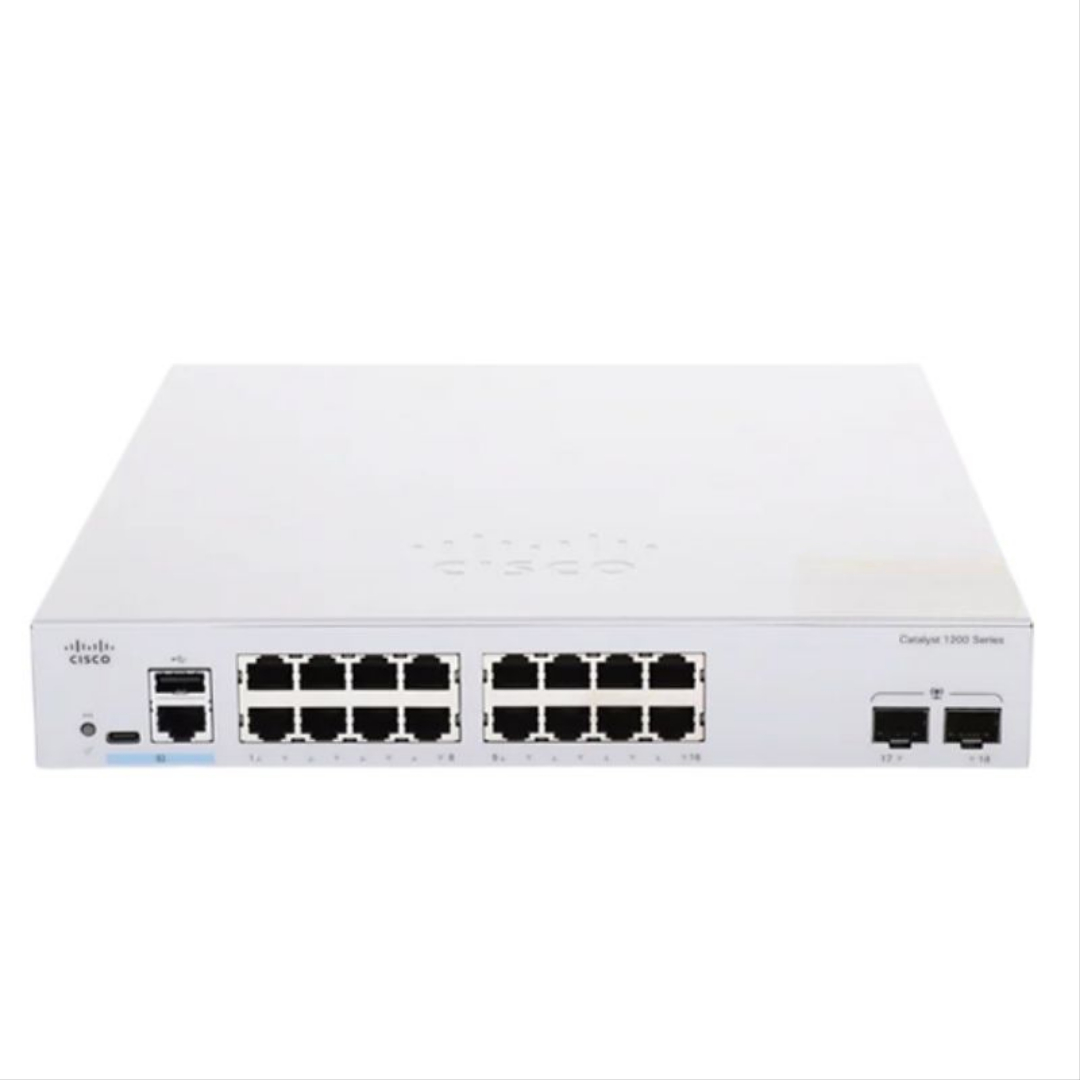


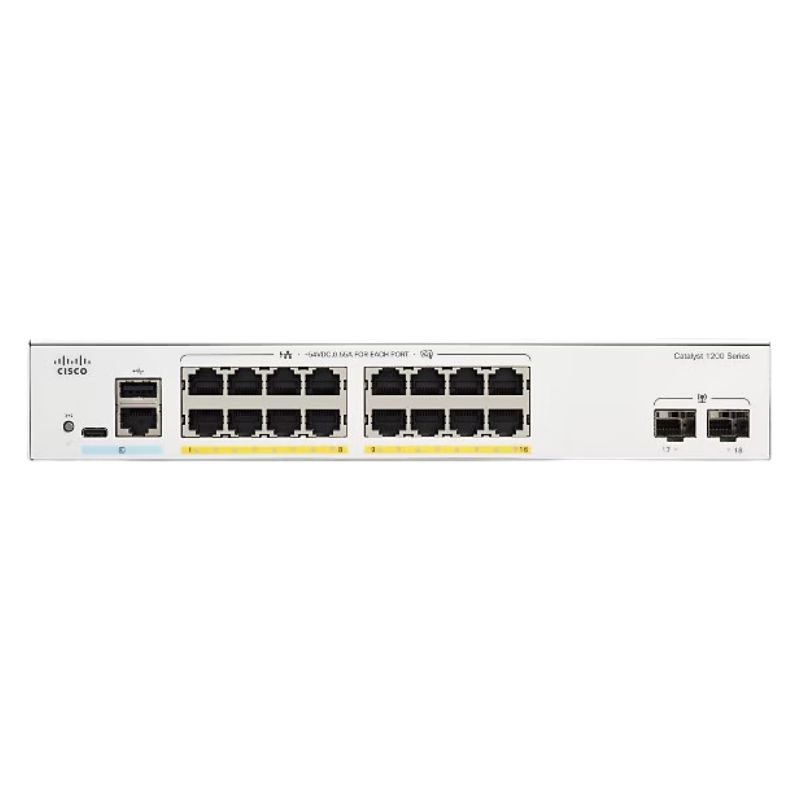
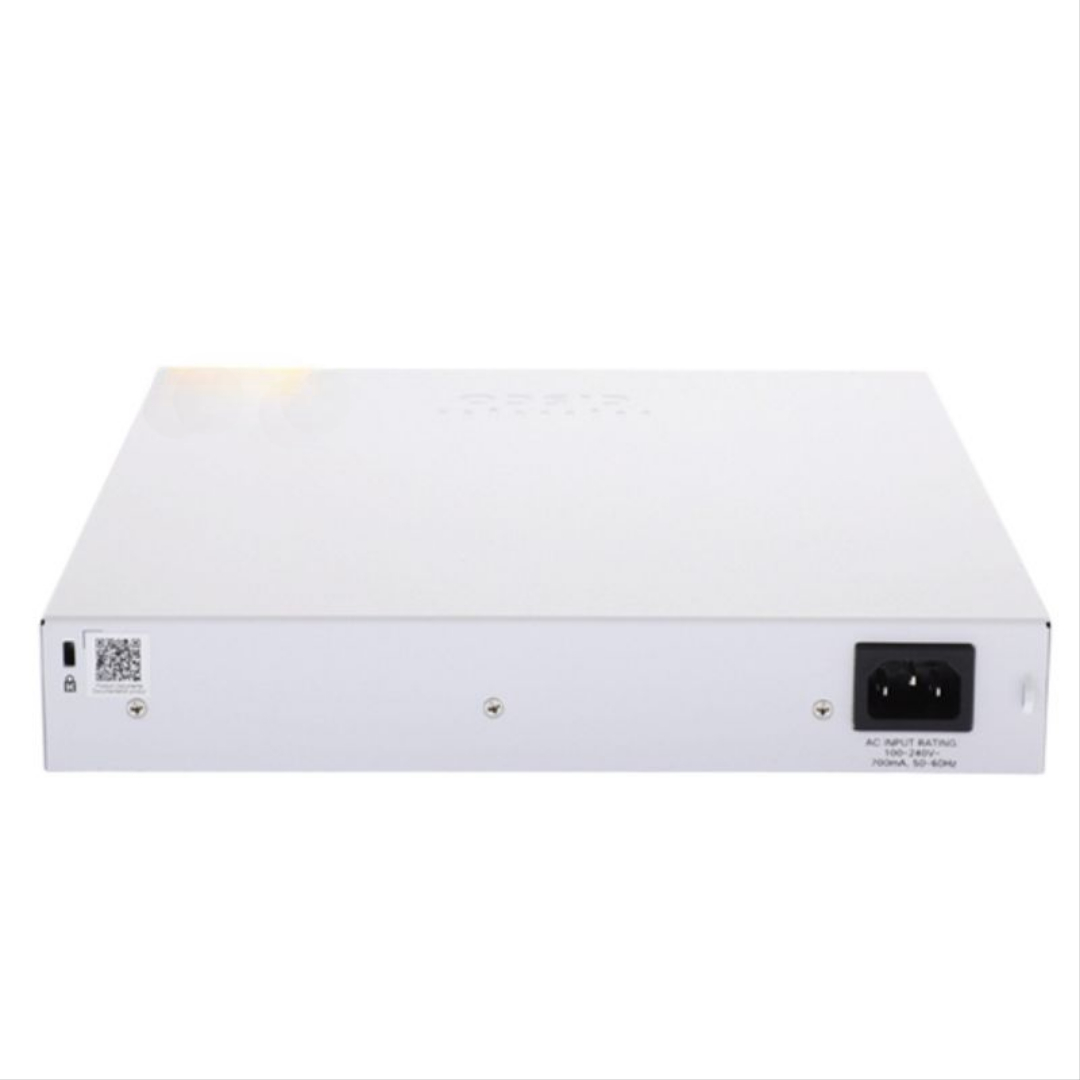
Cisco C1200-16P-2G Catalyst 1200 L3 Smart 16 Ports SFP Rack Mountable Switch. Factory-Sealed New in Original Box (FSB) with 1 year replacement warranty
| SKU/MPN | Warranty | Price | Condition | You save |
|---|---|---|---|---|
| C1200-16P-2G | 1 Year Warranty | $340.00 | Excellent Refurbished | You save: $119.00 (26%) |
| C1200-16P-2G | 1 Year Warranty | $630.00 | Factory-Sealed New in Original Box (FSB) | You save: $220.50 (26%) |
The Cisco C1200-16P-2G Catalyst 1200 Series is a smart, rack-mountable network switch engineered for small to medium businesses and enterprise branch networks. With advanced Layer 3 capabilities, Power over Ethernet Plus (PoE+), and high-performance Gigabit connectivity, this switch delivers reliability, scalability, and simplified network management.
The Cisco C1200-16P-2G Catalyst 1200 16 Ports Smart Rack-mountable Switch represents a versatile and reliable solution for small to medium-sized businesses, branch offices, and distributed enterprise environments. This category of switches is designed to deliver secure, manageable, and efficient Layer 2 connectivity with advanced smart features that simplify deployment and ongoing operations. With 16 Gigabit Ethernet ports and 2 Gigabit uplink interfaces, the C1200-16P-2G provides a balance of access density, uplink scalability, and rack-mountable convenience, making it a cornerstone in modern access-layer designs.
Belonging to the Catalyst 1200 series, this model emphasizes smart management capabilities, intuitive configuration, and enterprise-grade reliability. It is engineered to support VLAN segmentation, QoS prioritization, link aggregation, and security features that align with evolving business needs. The rack-mountable form factor ensures neat integration into wiring closets or server rooms, while the smart management layer provides administrators with both web-based and CLI options for streamlined control.
The Cisco C1200-16P-2G is equipped with 16 Gigabit Ethernet access ports, enabling high-speed connectivity for endpoints such as PCs, printers, IP phones, and IoT devices. The inclusion of 2 Gigabit uplink ports ensures seamless integration with distribution or core switches, providing sufficient bandwidth for aggregated traffic flows. This combination of access and uplink ports makes the switch suitable for environments where performance, scalability, and reliability are critical.
The rack-mountable design allows for easy installation in standard racks, optimizing space utilization and cable management. The switch is engineered for energy efficiency, reducing operational costs while maintaining consistent performance. Its smart management features provide visibility into port states, traffic flows, and security events, empowering IT teams to maintain control over network operations.
With 16 Gigabit access ports, the switch supports dense endpoint connectivity in small offices or branch deployments. The 2 Gigabit uplinks provide flexibility for connecting to higher-tier switches or routers, ensuring that aggregated traffic from multiple endpoints is efficiently transported upstream. This design balances cost-effectiveness with performance, making it ideal for organizations that require reliable Gigabit access without over-investing in excessive port counts.
The rack-mountable form factor ensures that the switch integrates neatly into existing infrastructure. Cable management is simplified, and the compact design reduces clutter in wiring closets. This physical design consideration is crucial for organizations that prioritize neat installations, scalability, and ease of maintenance.
The Catalyst 1200 series emphasizes smart management, offering both web-based interfaces and CLI options. Administrators can configure VLANs, QoS policies, and security settings through intuitive dashboards, reducing the complexity of deployment. CLI access provides granular control for advanced users, enabling scripting, automation, and detailed troubleshooting.
Smart management also includes monitoring tools that provide visibility into traffic patterns, port utilization, and authentication events. This proactive approach helps IT teams identify anomalies, optimize performance, and enforce security policies consistently across the network.
The on-box web UI simplifies configuration tasks, making it accessible to IT staff with varying levels of expertise. Common tasks such as VLAN creation, port assignments, and QoS adjustments can be completed quickly, reducing deployment times and minimizing errors. The web interface also provides graphical insights into traffic flows and port states, enhancing visibility and control.
For advanced users, CLI access offers granular control over configurations and troubleshooting. CLI enables scripting and automation, supporting standardized deployments across multiple sites. This dual management approach ensures flexibility, catering to both novice administrators and experienced network engineers.
The Cisco C1200-16P-2G supports a wide range of Layer 2 features, including VLAN segmentation, spanning tree protocols, link aggregation, and port-based security. These features are essential for building secure, resilient, and efficient access-layer networks. VLANs allow logical segmentation of traffic, reducing broadcast domains and enhancing security. Spanning tree protocols prevent loops and ensure redundancy, while link aggregation increases throughput and provides failover capabilities.
Standards compliance ensures interoperability with other devices and predictable behavior across diverse environments. Support for IEEE protocols such as 802.1d (STP), 802.1w (RSTP), 802.1s (MSTP), 802.1q (VLAN tagging), and 802.1x (port-based authentication) makes the switch suitable for enterprise-grade deployments.
VLANs enable logical separation of traffic, allowing organizations to isolate departments, applications, or security zones. This segmentation reduces the risk of lateral movement in case of security breaches and simplifies policy enforcement. VLAN tagging ensures that traffic is properly identified and routed across trunk links to upstream devices.
Spanning tree protocols prevent loops in Layer 2 networks, ensuring stable and resilient topologies. Rapid STP (802.1w) and Multiple STP (802.1s) provide faster convergence and support for complex VLAN structures. These protocols are critical for maintaining uptime and preventing broadcast storms in busy environments.
Link aggregation (802.3ad) allows multiple physical links to be combined into a single logical link, increasing throughput and providing redundancy. This feature is particularly useful for uplinks, ensuring that traffic flows remain stable even if one physical link fails. Link aggregation enhances both performance and reliability in access-to-core connectivity.
Security at the access layer is a priority for modern networks, and the Cisco C1200-16P-2G delivers essential features to protect against unauthorized access and malicious activity. Port-based authentication via 802.1x ensures that only authorized devices can connect to the network. VLAN segmentation further isolates sensitive traffic, while port security and ACLs provide additional layers of defense.
Administrators can enforce policies that restrict MAC address learning, limit broadcast traffic, and monitor authentication events. These measures reduce the risk of attacks and ensure compliance with organizational security standards.
802.1x port-based authentication enforces identity checks for devices attempting to connect to the network. This feature integrates with directory services, ensuring that only authorized users and devices gain access. Guest VLANs can be configured for unknown devices, providing controlled access without compromising security.
Port security allows administrators to limit the number of MAC addresses learned on a port, preventing unauthorized devices from connecting. This feature is particularly useful in environments where physical access to ports is not tightly controlled. Violations can trigger alerts or shut down ports, maintaining network integrity.
QoS capabilities ensure that critical applications such as VoIP and video conferencing receive priority treatment, maintaining performance even during congestion. The switch supports 802.1p prioritization and queue management, enabling administrators to define policies that prioritize latency-sensitive traffic. QoS at the access layer complements upstream policies, safeguarding collaboration and communication tools.
By tagging traffic with priority values, administrators can ensure that voice and video packets are transmitted ahead of less critical data. This prioritization reduces jitter and latency, improving call quality and collaboration experiences.
Queue management ensures that prioritized traffic is handled efficiently, preventing congestion from impacting critical applications. Administrators can configure queues to align with organizational priorities, maintaining predictable performance across the network.
The Cisco C1200-16P-2G is suitable for a wide range of deployment scenarios, including small offices, branch networks, retail environments, and educational institutions. Its combination of Gigabit access ports, smart management, and security features makes it adaptable to diverse needs.
In small offices, the switch provides reliable connectivity for PCs, printers, and IP phones. VLANs can be used to separate departments, while QoS ensures that voice traffic remains stable. The web-based interface simplifies management, making it accessible to IT staff with limited networking expertise.
Branch offices benefit from the switch’s compact design and smart management capabilities. Standardized configurations can be deployed across multiple sites, ensuring consistency and simplifying troubleshooting. Uplink flexibility allows branches to connect to core networks via copper or fiber, depending on infrastructure.


 Contact Us
 Information
 Catalog
 Solid State Drives (SSD)
 Network Switches
 Hard Disk Drives
 HBA & Controllers
 PC & Servers
 PC & Server Memory
 CPU & Processors
 Network Routers
 Power Supplies
 Tape Drives & Libraries
 Network Devices
 Computer & Network Cables