(7% discount is applied at checkout)
Cart is empty
Your go-to destination for cutting-edge server products


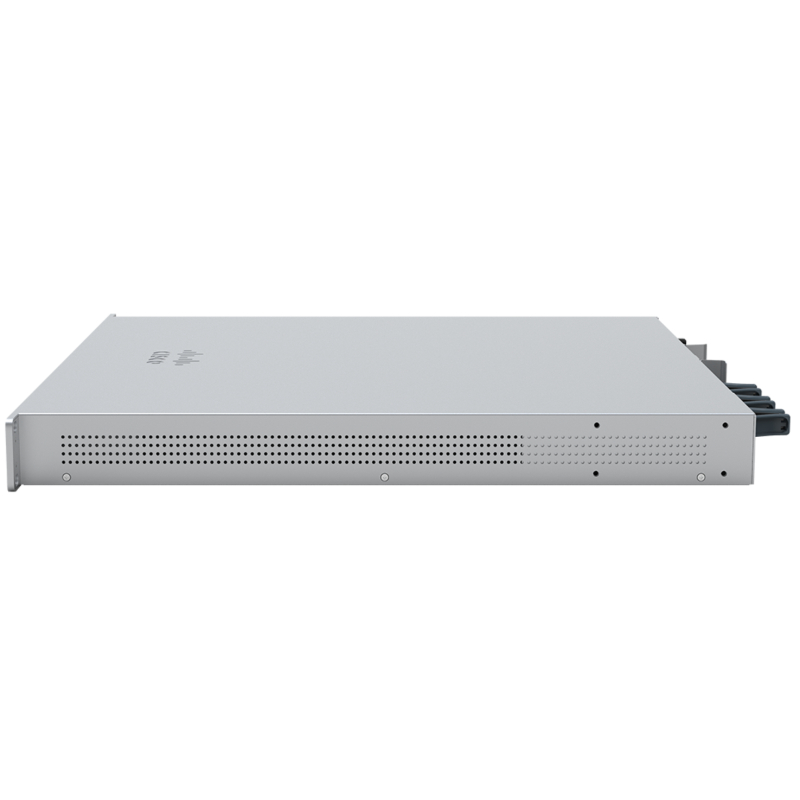
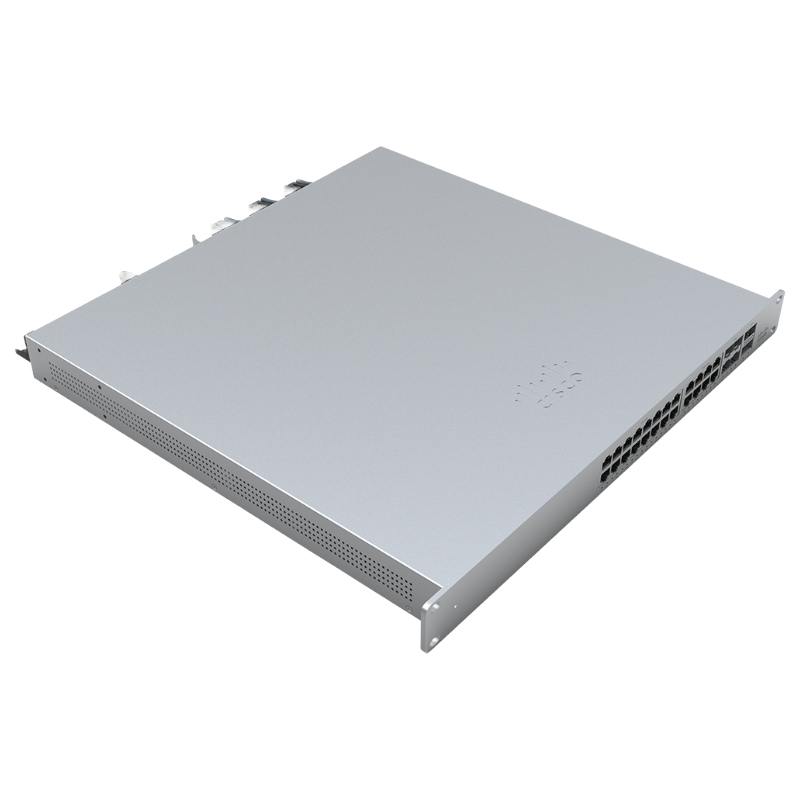
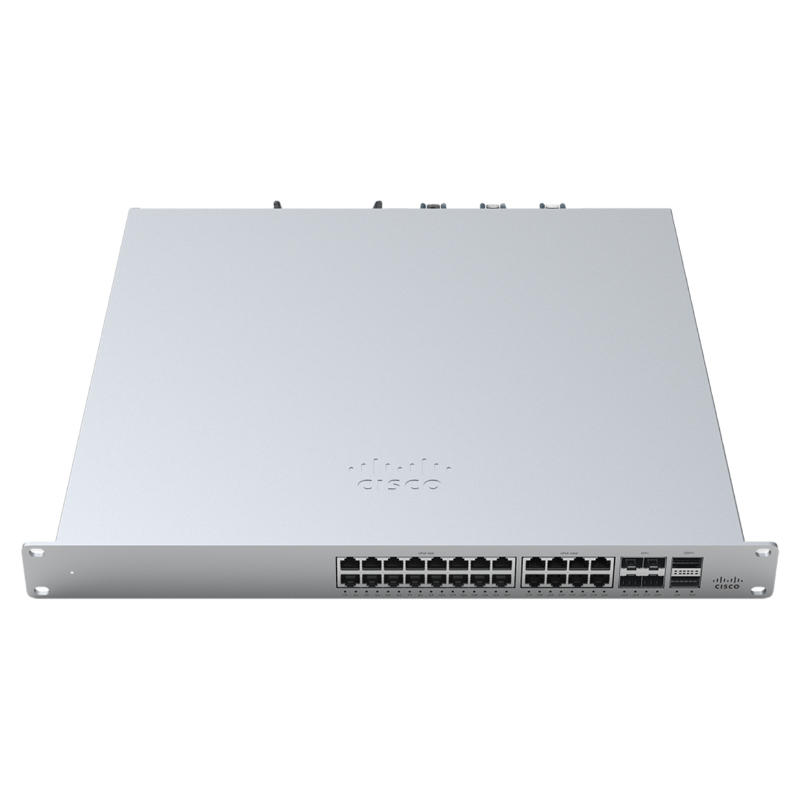
Cisco C1200-24FP-4G Catalyst L3 Smart PoE+ 24-Port Gigabit Ethernet SFP Network Switch with 4G Uplink and Rack Mounting Option. Excellent Refurbished with 1 year replacement warranty
| SKU/MPN | Warranty | Price | Condition | You save |
|---|---|---|---|---|
| C1200-24FP-4G | 1 Year Warranty | $599.00 | Excellent Refurbished | You save: $209.65 (26%) |
| C1200-24FP-4G | 1 Year Warranty | $810.00 | Factory-Sealed New in Original Box (FSB) | You save: $283.50 (26%) |
The Cisco C1200-24FP-4G Smart PoE+ Switch is a powerful, enterprise-grade networking solution designed for growing businesses and modern IT environments. It delivers high-speed Gigabit connectivity, advanced Layer 3 intelligence, and robust Power over Ethernet capabilities in a compact rack-mountable form factor.
This switch supports advanced PoE+ technology, making it ideal for powering IP phones, wireless access points, and surveillance cameras directly through Ethernet cables.
The C1200-24FP-4G Cisco Smart PoE+ 24-Port Gigabit Ethernet SFP network switch sits at the intersection of performance, simplicity, and scalable power over Ethernet, making it a versatile choice for modern edge networks. With 24 gigabit downlink ports and PoE+ capabilities (IEEE 802.3af/at) alongside 4 dedicated Gigabit SFP uplink interfaces, it provides a balanced foundation for high-density device deployments, reliable uplink aggregation, and straightforward management. Smart switching features focus on essential Layer 2 controls, intuitive configuration workflows, and practical automation that helps small-to-midsize businesses, branch offices, retail floors, education campuses, hospitality venues, and managed service providers handle growth without unnecessary complexity.
In environments where IP cameras, wireless access points, VoIP handsets, building sensors, digital signage, and IoT endpoints compete for ports and power, a PoE+ switch consolidates power delivery and data transport into a single cable run, reducing installation overhead and improving flexibility when devices need to be moved or upgraded. The 24-port design hits a sweet spot for most floor plans: enough density to centralize edge connectivity, while the 4 SFP uplinks offer clean separation for fiber or copper uplinks to core or distribution switches. Smart management options emphasize web-based configuration, profile-driven port settings, VLAN segmentation, quality of service (QoS) controls, link aggregation, and essential security guardrails—all without the steep learning curve of fully managed enterprise platforms.
The C1200-24FP-4G offers 24 10/100/1000BASE-T ports that support auto-negotiation and auto MDI/MDI-X, simplifying cabling across mixed endpoint populations. These access ports frequently carry end-user traffic, AP backhaul, surveillance feeds, and voice services, all with the option to inject power if the endpoint supports PoE/PoE+. The 4 dedicated Gigabit SFP uplink ports are reserved for linking the switch to upstream distribution layers or ring backbones, using fiber (single-mode or multi-mode) or copper SFP modules as needed. This separation of access and uplink roles preserves overall throughput and keeps segmentation clean when designing network topologies that must scale.
While power budgets vary by model and SKU, PoE+ support typically empowers a switch like this to supply up to 30W per port within the constraints of the overall budget. Planning for total draw is essential in high-density camera or AP deployments, which often require assessing power class, device startup surges, and sustained consumption. By assigning ports to power profiles and enabling intelligent power management, network operators can ensure critical devices remain powered while nonessential endpoints follow scheduled or threshold-based policies to conserve power during off-peak periods. The balanced physical design makes it suitable for closet racks, small cabinets, or wall-mount placements when airflow guidelines are observed.
The “Smart” designation emphasizes approachable Layer 2 controls that are powerful enough to shape traffic and maintain resilience but remain intuitive for non-specialist administrators. VLAN tagging separates logical networks—like guest Wi-Fi, staff data, VoIP, cameras, and facilities sensors—without requiring complex routing policies at the edge. Spanning Tree variants help prevent loops, while link aggregation (LACP) improves uplink throughput and redundancy. IGMP snooping optimizes multicast handling for IPTV or surveillance streams, and storm control guards against broadcast or multicast floods that would otherwise degrade performance across the fabric.
QoS prioritization ensures time-sensitive applications receive appropriate treatment. For example, voice traffic can be mapped to higher priority queues, while bulk data or best-effort traffic remains unimpeded yet deprioritized. Smart switches typically provide ways to mark DSCP or 802.1p values and translate these into queueing behavior, even without advanced Layer 3 intelligence. Combined with port-based and VLAN-based separation, these controls help maintain stable experience levels across high-density environments, allowing you to deploy more devices without sacrificing consistency or reliability.
Security at the access layer is a foundational requirement for modern deployments. Smart switches commonly support 802.1X port-based authentication, MAC-based access control, and static MAC bindings to reduce the risk of unauthorized access. Port isolation and private VLANs can segment devices that should never communicate laterally, such as isolating guest clients from corporate assets. DHCP snooping prevents rogue servers, while dynamic ARP inspection (DAI) reduces common spoofing attacks. These controls, while fundamental, provide meaningful protection when layered with endpoint security and upstream firewall policies.
Beyond access control, features such as secure management channels, role-based configuration access, and logging/auditing ensure changes are traceable and reversible. Smart PoE+ switches often include per-port shutdown capabilities, scheduled enable/disable windows, and auto-recovery behaviors that can be tuned for compliance or operational needs. For sites deploying IoT, surveillance, or remote sensors, implementing port security and monitoring link states can catch anomalies early—like unexpected device swaps or unusual traffic patterns—before they propagate across the network.
A hallmark of smart switching is the web-based interface that exposes commonly used features through guided forms and profiles. Administrators can create VLANs, assign ports, configure QoS, and define security policies without memorizing command-line syntax. Dashboard views show port status, PoE power draw, link speeds, traffic trends, and event logs, enabling quick health checks and trend analysis. Firmware management is streamlined, with options to schedule maintenance windows and preserve settings across upgrades. For organizations scaling beyond one site, centralized monitoring tools can complement the switch’s in-box interface to standardize policy across locations.
Role-based access control within the management interface ensures that frontline IT staff can handle routine tasks, while senior admins retain authority over advanced configurations and firmware changes. SNMP support allows for integration with common network monitoring platforms, and syslog export keeps event data available for security operations or compliance archives. The result is a management posture that balances simplicity with accountability, making it well-suited for teams who need reliable operations without an enterprise-grade learning curve.
Deployments commonly pair the C1200-24FP-4G with a mix of wireless access points, IP cameras, VoIP phones, door controllers, and environmental sensors. PoE+ is especially useful for APs with multiple radios, multi-gig backhaul fallbacks running at gigabit, or cameras with pan-tilt-zoom mechanisms and IR arrays. When planning port assignments, consider the power class and peak usage patterns of each device. Grouping high-draw endpoints across multiple switches or balancing them across separate PoE rails helps prevent maximum draw conditions from overtaxing one unit.
For surveillance, dedicated VLANs per camera zone reduce broadcast scope and simplify bandwidth management. QoS policies can ensure video streams retain consistent priority without starving user traffic. For voice deployments, LLDP-MED and VLAN auto-assignment options on supporting phones expedite configuration, while QoS ensures low jitter and latency. Building automation sensors typically draw minimal power but benefit from isolation and monitoring, as unexpected traffic spikes may signal security issues or device malfunction.
The four Gigabit SFP uplink ports give network architects freedom to connect to core or distribution switches using fiber when longer runs or electrical isolation is desired. Multi-mode fiber with short-range transceivers is common within a campus or building, while single-mode fiber supports longer distances between buildings or to data centers. Copper SFP modules may be used for short patch runs in mixed environments, but fiber typically offers better resilience to electrical noise and provides clean separation across floors or areas with high interference potential.
In topologies that require redundancy, pairing SFP uplinks with link aggregation and separate paths reduces risk. One uplink can route to the primary distribution switch, and another to a secondary path, providing rapid failover. When integrating with security policies, applying VLAN tagging and ACLs at the upstream switch simplifies enforcement while keeping the access switch’s role focused on forwarding and basic guardrails. Over time, upgrading SFP modules rather than replacing the switch itself offers a cost-effective path to adapt to changes in distance, media, or error budget requirements.
Small-to-midsize businesses benefit from centralized management and a power margin that supports modern APs and cameras. In hospitality, guest Wi-Fi, lobby display systems, and property surveillance can coexist efficiently with VLAN separation and QoS policies ensuring acceptable experience. Retail environments use PoE+ to power payment terminals, signage, and ceiling-mounted APs without additional power outlets, streamlining store build-outs and remodels. Education deploys the switch in classrooms and halls to support AP coverage, VoIP for staff, and cameras to secure perimeters, all managed centrally for consistency across buildings.
Healthcare sites, where device reliability is paramount, leverage access layer isolation to protect sensitive systems from guest networks. Manufacturing floors combine sensors, machine interfaces, and security cameras under a single PoE+ umbrella, while fiber uplinks carry traffic back to an operations center. Government and municipal facilities use smart switching to apply policy tiers—guest, staff, secure devices—while simplifying the audit trail of changes. For managed service providers, the switch’s approachable toolset shortens deployment times and reduces support friction for common tasks, enabling predictable service-level outcomes.
Gigabit access ports support typical desktop, AP, and camera bandwidth requirements. QoS lets you prioritize voice, real-time video, or business-critical application flows. While smart switches emphasize Layer 2 capabilities over advanced Layer 3 routing, they deliver consistent forwarding performance within their operational envelope. Employ queue configurations, shaping, and policing policies to align traffic with SLA goals across VLANs and device classes. Applying QoS alongside segmentation is often enough to stabilize performance for mixed loads like file transfers, cloud app usage, camera feeds, and VoIP sessions.
To further enhance performance consistency, distribute high-throughput endpoints (like uplinks for multiple APs or cameras) across the switch to avoid localized hot spots. Monitoring per-port utilization enables capacity planning and informs decisions about link aggregation or upgrading uplinks to fiber. Periodic firmware updates may introduce optimizations or fixes that improve stability under load. Most importantly, steady policy enforcement—VLAN hygiene, QoS alignment, and minimal broadcast domains—reduces the risk of microbursts or contention that can ripple across busy networks.
In the smart PoE+ category, switches differ by port count, total PoE budget, uplink speed options, and management breadth. A 24-port model like the C1200-24FP-4G balances density and cost, suitable for typical floors or medium-sized branch sites. Higher port-count models (48-port) may be chosen for large open spaces or dense AP arrays but can complicate cable runs and increase thermal output. Conversely, 8- or 16-port models offer lightweight deployments for micro-branches, but they may require additional units as the environment grows.
Uplink capabilities are a key differentiator. While Gigabit SFP uplinks handle common needs well, some environments may look to multi-gig or 10G uplink options for aggregation. If uplink saturation is a possibility—like multiple APs passing peak traffic simultaneously—consider LACP groups or stepping up to devices with higher-speed uplinks at the distribution layer. Smart management features across vendors vary, but the core essentials—VLANs, QoS, security guardrails, and PoE profiles—remain consistent enough to standardize policy across mixed fleets when necessary.
PoE+ budgeting is both art and science. Start by documenting each endpoint’s typical and peak power draw. Consider environmental factors—APs may boost radios during high usage, and cameras may activate IR during low-light. Apply per-port limits with priority tiers to ensure mission-critical devices remain powered first. If total power budget is approached, stagger device startup to avoid inrush issues and evaluate moving noncritical devices to non-PoE ports or alternative power.
Optimization includes scheduling power for specific device classes—like signage or sensors—to align with business hours. Monitor power consumption trends over time; unexpected increases may reveal firmware changes, misconfigurations, or failing hardware. For large deployments, spreading high-draw devices across multiple switches reduces thermal stress and increases resilience. Educate on-site staff about signs of power constraint (like intermittent resets) so they report issues quickly.
IoT and camera networks introduce unique risk profiles. Devices may have limited patching options or minimal onboard security. Using VLAN isolation, DHCP snooping, and DAI reduces exposure. Port-based MAC limits and static bindings prevent unauthorized replacements from joining the network unnoticed. Where possible, enforce 802.1X on capable devices and use certificates to establish trust. Continuous monitoring of traffic patterns helps identify compromised endpoints, especially in unattended areas.
Integrate switch security with upstream firewalls and NAC systems to enforce device roles and quarantine suspicious behavior. Use ACLs at Layer 3 boundaries to restrict inter-VLAN communication. For cameras, ensure streams are encrypted end-to-end when supported by the NVR and camera firmware. Periodic audits of device firmware and configurations help maintain consistent security posture across diverse hardware generations.
Building policy templates accelerates deployment and ensures consistency. Create VLAN profiles for common device classes—guest, staff, voice, camera, IoT—and reuse them across ports and switches. Define PoE profiles with per-port limits and priorities, then assign them based on device roles. QoS templates should map DSCP/CoS values to queues according to application tiers. Security templates can cover 802.1X settings, DHCP snooping trust ports, DAI parameters, and MAC limits for static devices.
When templates are maintained centrally, onboarding new switches takes minutes. Versioning policies and documenting changes help avoid drift and reflect evolving business needs. Regular reviews ensure templates remain aligned with endpoint upgrades—like new AP generations or camera firmware that requires different VLANs or QoS handling. This approach turns smart switching into a repeatable practice rather than a series of one-off configurations.
Smart Layer 2 switches like the C1200-24FP-4G pair well with upstream Layer 3 devices that handle inter-VLAN routing and security enforcement. Keep the access layer focused on segmentation and prioritization, while the distribution layer applies ACLs, NAT, and firewall policies. Define clear VLAN boundaries and trunk permissions to maintain predictable paths. Use SFP uplinks to anchor connections to distribution switches, where policy engines can refine traffic flow without burdening the access layer.
Logging and telemetry should flow upstream to centralized collectors. SNMP informs network health dashboards, while syslog conveys event details for security operations. If network access control is in play, enforce 802.1X and posture assessments at the edge while central servers make authorization decisions. Together, these controls create a layered defense with consistent performance outcomes and manageable complexity.


 Contact Us
 Information
 Catalog
 Solid State Drives (SSD)
 Network Switches
 Hard Disk Drives
 HBA & Controllers
 PC & Servers
 PC & Server Memory
 CPU & Processors
 Network Routers
 Power Supplies
 Tape Drives & Libraries
 Network Devices
 Computer & Network Cables