(7% discount is applied at checkout)
Cart is empty
Your go-to destination for cutting-edge server products
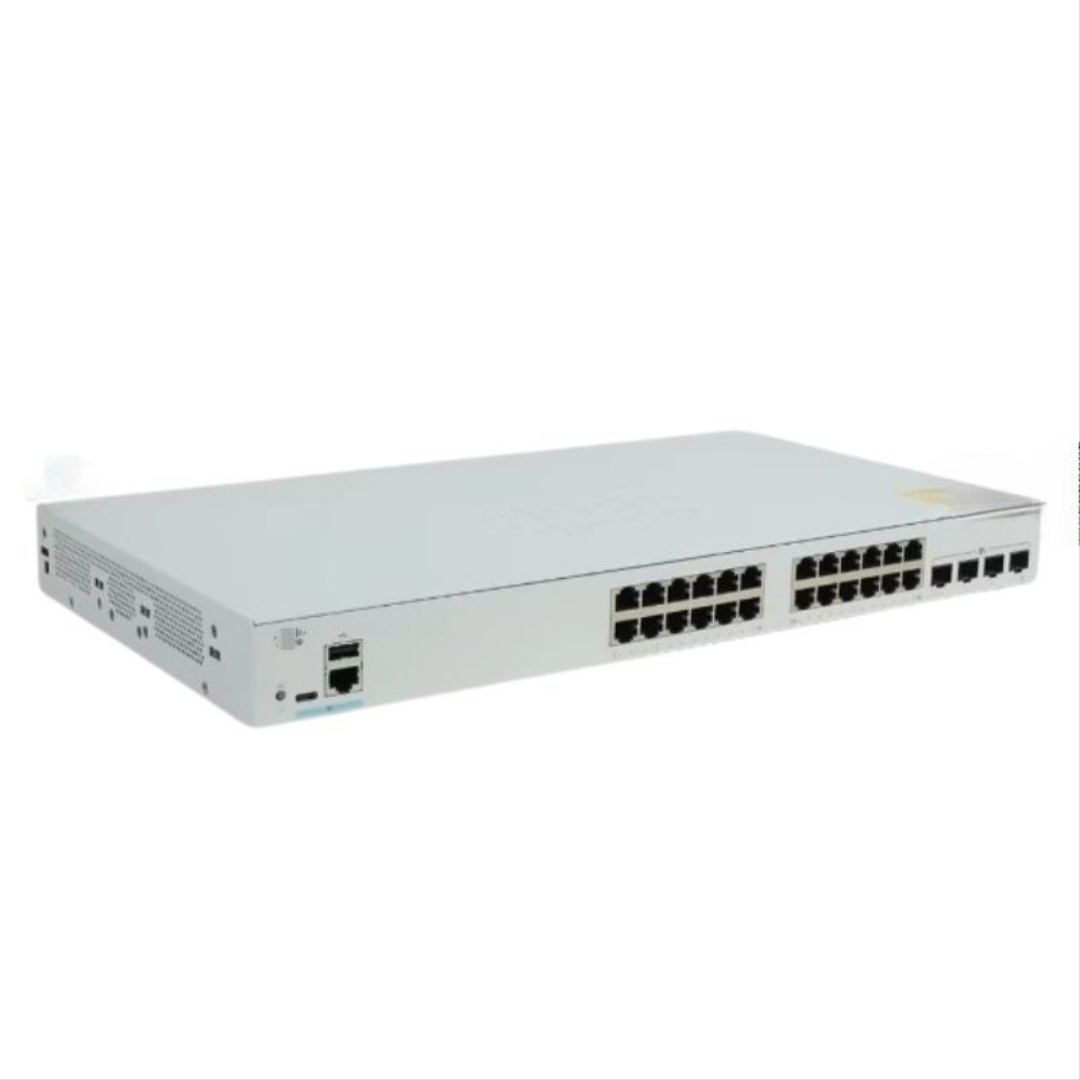


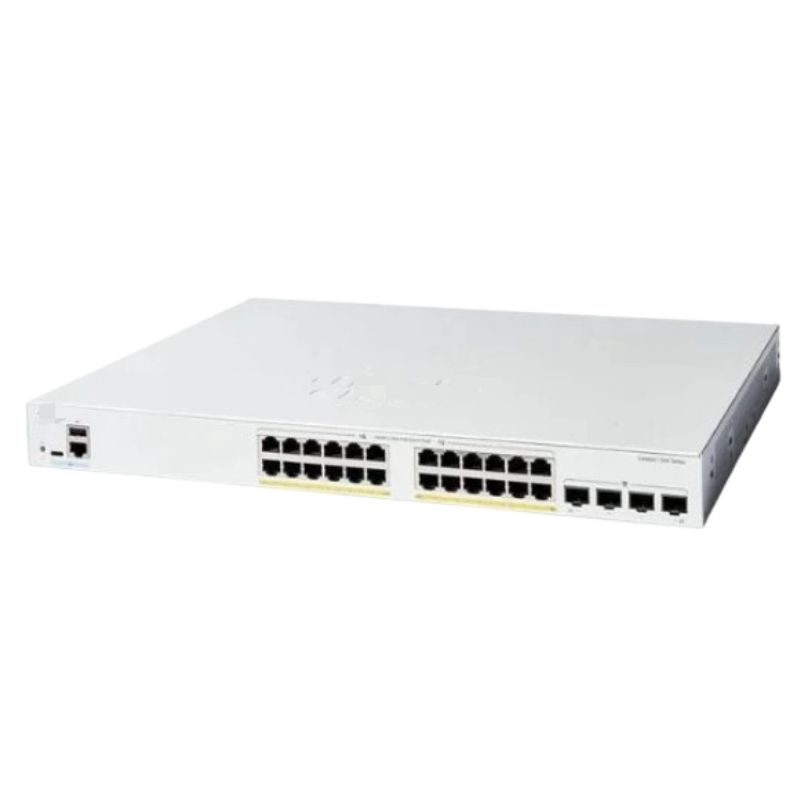
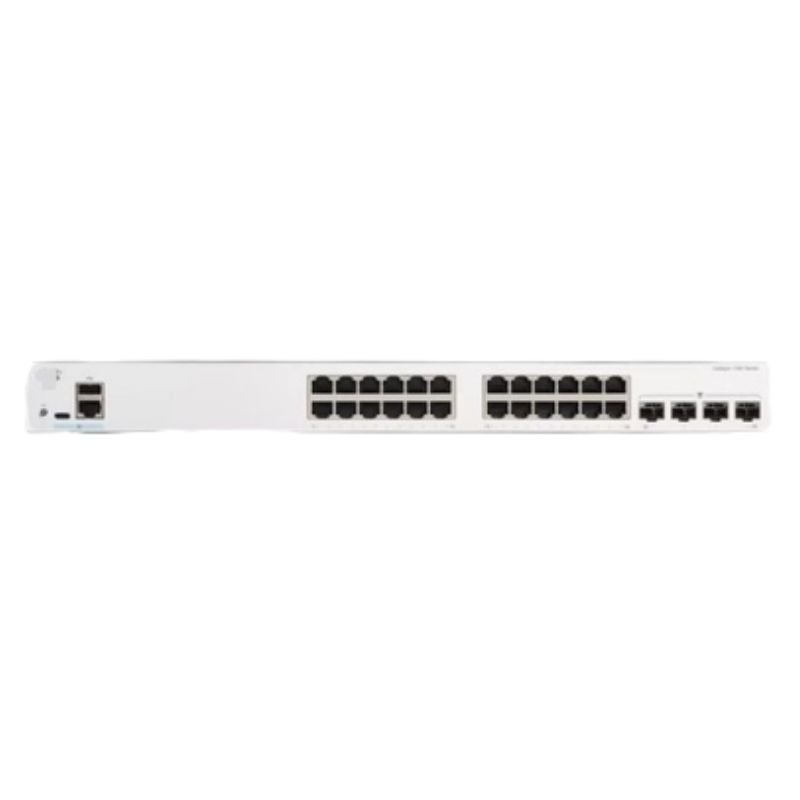
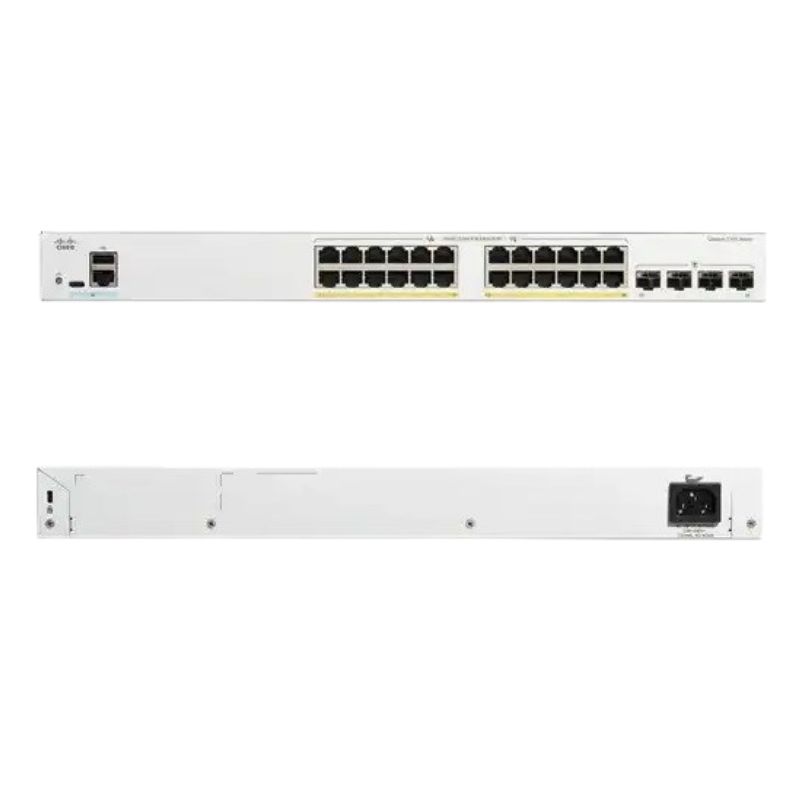
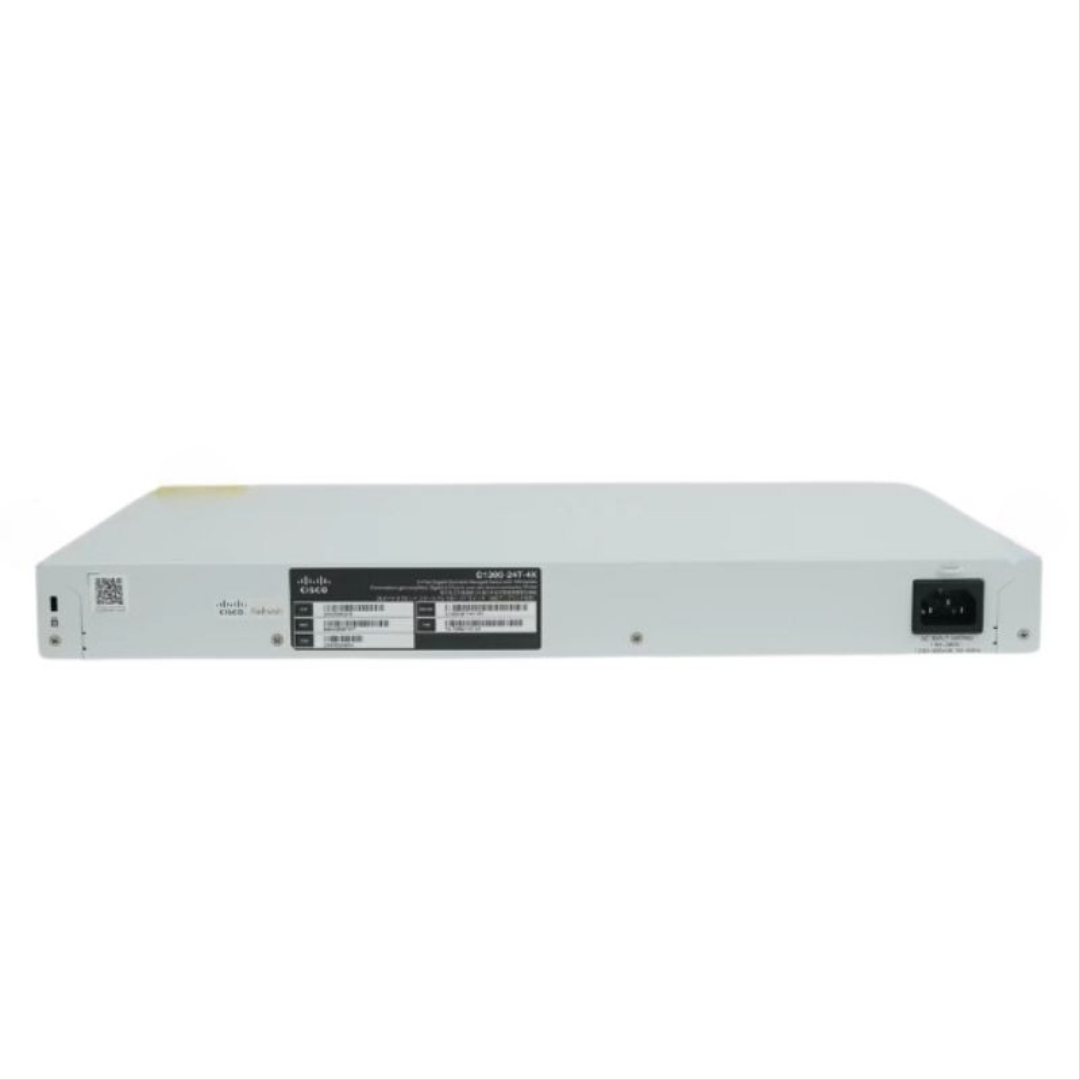
Cisco C1200-24T-4G 24 Ports Manageable 10 Gigabit Ethernet 3 Layer 1u Rack-mountable Ethernet Switch. Factory-Sealed New in Original Box (FSB) with 1 year replacement warranty
The Cisco C1200-24T-4G is a 24-port fully manageable Ethernet switch designed for high-performance networking. Ideal for modern enterprises, this 1U rack-mountable switch delivers 10 Gigabit connectivity while supporting Layer 3 routing functionalities.
The Cisco C1200-24T-4G is engineered for modern enterprise, campus, and performance-driven SMB networks that demand robust Layer 3 routing, secure segmentation, and consistent multi-gig throughput. As a 1U rack-mountable manageable switch with twenty-four copper data ports and four high-speed 10G uplinks, it aligns high-density edge connectivity with top-of-rack aggregation in a compact footprint. This category explores its capabilities, subcategory use cases, and deployment design patterns—covering VLANs, inter-VLAN routing, ACL-driven security, QoS prioritization, automation-ready management, and resilient architectures for converged environments.
Within the broader category of managed Layer 3 switches, the Cisco C1200-24T-4G balances advanced control-plane features with intuitive operational workflows. It is positioned for networks that have outgrown basic Layer 2 segmentation and require dynamic routing, scalable policy enforcement, and better traffic engineering. Compared with pure Layer 2 models, it reduces reliance on external routers for inter-VLAN routing, lowers latency across segments, and simplifies topology changes.
As part of the 1U rack-mountable subcategory, it fits neatly into standard 19-inch racks in wiring closets, server rooms, and edge aggregation sites. Its 24-port density enables efficient desk or device distribution, while the 10G uplinks provide backbone connectivity to core switches, hyperconverged infrastructure nodes, or data center fabrics. These contrasts expose a compelling value proposition for organizations seeking predictable scale without a complex chassis-based footprint.
In access-layer deployments, the switch acts as the primary on-ramp for user devices, phones, and access points, enabling per-VLAN segmentation and per-port security controls. In aggregation roles, it consolidates links from multiple access switches, normalizes policies, and forwards traffic via 10G uplinks to the distribution or core. At the edge of branch offices, it provides Layer 3 boundaries, DHCP relay, static or dynamic routing, and simple failover designs that complement SD-WAN or WAN routers.
The platform offers 24 copper Ethernet ports for access connectivity, plus 4 dedicated 10 Gigabit Ethernet uplinks for high-speed aggregation, backbone alignment, or east-west traffic bursts between performance-sensitive segments. The 24 access ports are suitable for endpoints such as desktops, printers, IP phones, cameras, APs, or small servers. The 10G uplinks can be used to interconnect to core layers, storage arrays, or cloud on-ramps, ensuring low oversubscription ratios when demand peaks.
The copper ports allow standardized twisted-pair cabling runs within offices and campus floors, typically Cat6 or better for reliable Gigabit and multi-gig scenarios depending on cabling and device support. Administrators can enforce per-port access policies, set speed/duplex, enable auto-negotiation, and apply storm control to guard against broadcast or multicast anomalies. Port-based VLAN assignments and trunking provide flexible segmentation across floor zones and departments.
The 4×10G uplinks create bandwidth headroom, improve failover topology options, and optimize paths to distribution or core layers. In designs with dual upstream switches, these uplinks support link redundancy, load balancing, and fast convergence. For workloads like backup windows, telemetry bursts, and VDI traffic, 10G ensures reduced congestion and more deterministic performance. Administrators can deploy LACP link aggregation to bundle multiple uplinks for higher throughput and resilience.
Consistent port templates streamline deployments across many closets: standardized QoS markings for voice, port-security for endpoint lockdown, native VLAN designations for phones, and trunk profiles for APs or micro-segmentation. Automation-friendly CLI, API hooks, or template-based policy make it easier to replicate best practices at scale without manual drift, improving operational confidence across distributed sites.
As a Layer 3 switch, the C1200-24T-4G handles inter-VLAN routing within the fabric, minimizing the need to hairpin traffic through external routers. Static routes enable deterministic paths, while dynamic routing protocols offer convergence and adaptability. This significantly simplifies network evolution, letting teams adopt new segments and services without disruptive re-cabling or hardware reconfiguration.
Inter-VLAN routing is central to modern segmentation. IT teams can isolate traffic by department, function, or compliance zone, then selectively permit flows via ACLs. This ensures that finance does not inadvertently share broadcast domains with guest Wi-Fi, while development labs can access specific services through controlled policies. Routing at the access layer reduces latency between nearby VLANs and eases troubleshooting.
For campuses and branches, common dynamic routing options include OSPF for internal route exchange and possibly BGP for integrating with upstream providers or multi-tenant overlays. Routing adjacencies can be tuned with passive interfaces, area hierarchies, and route summarization for scalable propagation. Policy-based routing can steer traffic based on application or source criteria, aligning network behavior with business priorities.
First-hop redundancy through VRRP or HSRP provides a virtual IP gateway shared by multiple switches. If one fails, the other assumes the gateway role, reducing downtime and preventing endpoint reconfiguration. Combined with rapid link detection and robust STP variants, networks maintain continuity during maintenance or incidental failures. Convergence improvements correlate directly to user experience in voice, video, and transaction-heavy systems.
The switch is designed for managed environments where policy consistency, configuration hygiene, and visibility drive outcomes. Administrators rely on structured management through CLI, web UI, or controller platforms. Role-based access helps segment duties, letting network engineers maintain core policy while help-desk staff review edge status safely.
Teams can build baseline templates for VLANs, ACL frameworks, QoS classes, and monitoring exports, then apply them uniformly across deployments. Version control of configuration files enables rollbacks and change tracking, which is helpful during audits or when reverting policy adjustments. Automated backups reduce the risk associated with misconfiguration or hardware events.
SNMP, Syslog, and streaming telemetry feed observability platforms, enriching dashboards with interface counters, CPU/memory metrics, and error rates. Threshold alerts help triage link flaps, duplex mismatches, and abnormal utilization early. Port mirroring supports deep packet inspection during incident investigations, while flow-based telemetry can surface application-level patterns relevant to capacity planning.
Zero-touch provisioning reduces onsite labor by letting devices fetch initial configurations upon first boot via secure methods. Staged rollouts enable incremental deployment across floors or branches, validating performance before broader rollout. Change windows can be optimized for minimal user impact, and pre/post deployment checks ensure baseline health.
Security on the C1200-24T-4G spans port-level enforcement to Layer 3 policy. Administrators can harden access, limit lateral movement, and align controls with industry frameworks. The goal is to prevent unauthorized entry, detect anomalies early, and contain risks without hindering legitimate workflows.
Port security policies define allowable MAC addresses per port and actions for violations. IEEE 802.1X supports network access control with RADIUS backends, enabling per-user authentication and dynamic VLAN assignment. Guest devices can be directed to quarantine VLANs, reducing risk while maintaining a working user journey.
Access Control Lists enforce which subnets, hosts, or applications can communicate across VLAN boundaries. Micro-segmentation lowers blast radius within the same physical segment by narrowing flows between endpoints. Policy borders at the Layer 3 gateway give administrators tight rein over east-west traffic, aligning with zero-trust principles and compliance mandates.
Storm control limits broadcast and multicast anomalies that can disrupt segments. DHCP snooping validates leases from trusted servers, preventing rogue DHCP from redirecting traffic. IP Source Guard binds IP/MAC/port tuples, blocking spoofing attempts and ensuring integrity of endpoint identity on the wire.
QoS ensures high-priority applications remain responsive under load. The switch supports classification, marking, queuing, and scheduling strategies that elevate voice, video, and critical business apps. Proper QoS turns a busy network into a predictable one, minimizing jitter and packet loss where it matters.
Ingress classification identifies traffic by protocol, port, or device profile. The switch can enforce DSCP or CoS markings to represent application value across the fabric. Consistent markings enable upstream devices to continue honoring policy, creating end-to-end quality assurances from access through core.
Multiple hardware queues per port help separate traffic types. Weighted scheduling ensures fair access to bandwidth while prioritizing critical flows. Tail-drop thresholds and shaping can smooth bursts, while policing controls misbehaving hosts without degrading the entire segment.
Voice VLANs simplify deployment of IP telephony with automated tagging and isolation. Prioritized video paths stabilize conferencing quality, reducing buffering under peak conditions. When combined with uplink capacity, QoS transforms end-user experience across collaboration platforms.
Enterprises expect continuous uptime. The C1200-24T-4G supports redundant architectures that minimize downtime during failures or maintenance. Thoughtful designs at the access and distribution layers produce graceful degradation rather than service disruption.
Link Aggregation (LACP) forms logical bundles from multiple physical links, improving throughput and fault tolerance. Dual-homing the switch to separate upstream devices enables path diversity. Administrators can tune hashing methods to balance flows effectively across member links.
Rapid Spanning Tree (RSTP) or tailored variants accelerate convergence and mitigate loops. Root guard and BPDU guard reduce misconfiguration risks by controlling STP influence from edge devices. Portfast speeds up host join times, beneficial for endpoints that rely on rapid DHCP and identity services.
First-hop redundancy as described earlier pairs well with monitoring to validate failover behavior. Regular drills verify that gateway roles transition smoothly and traffic patterns remain stable. Documented runbooks and test cadences improve operational readiness during real events.
Beyond capabilities, practical deployment patterns help teams derive value. Whether building a campus edge, a branch gateway, or a compact data center pod, the C1200-24T-4G’s flexibility supports consistent outcomes.
For multi-floor offices, deploy one switch per closet with VLANs mapped to departments and services. Trunk the AP ports for SSID-based VLANs and enforce ACLs at the gateway. Uplink each closet back to distribution with 10G links for resilient bandwidth and balanced load.
At branches, the switch can terminate local VLANs for staff, IoT, and guest segments, perform inter-VLAN routing, and connect upstream to SD-WAN edges. DHCP relay ensures consistent IP management across sites. Policy-based routing can direct cloud SaaS traffic to optimized paths while local services remain on-site.
Use the 10G uplinks to connect to core fabric switches or hyperconverged nodes. Create separate VLANs for management, vMotion, storage, and user access, and shape policies with ACL and QoS. Mirror critical ports to an IDS for deeper visibility during testing or incident response.
Interoperability is central to long-term success. The switch integrates with multi-vendor environments through standards-based protocols for VLANs, trunking, LACP, STP, LLDP, OSPF, BGP (as required), and SNMP. LLDP helps discover neighbors, easing troubleshooting and asset mapping.
Wireless controllers and APs benefit from trunked SSID VLANs and QoS prioritization for voice-over-Wi-Fi. IP telephony sees improved call quality via voice VLANs and DSCP marking. Security appliances consume mirrored traffic and telemetry exports to enhance threat detection.
Configuration templating and APIs make the switch amenable to infrastructure-as-code approaches. Administrators can define desired state with standardized modules that enforce VLAN layouts, ACL definitions, and QoS profiles. This reduces drift and improves rollouts across many sites.
As a 1U rack-mountable unit, the C1200-24T-4G installs into standard racks with included brackets. Proper power and cooling practices prolong hardware life and reduce incidents. Cable management contributes to airflow integrity and serviceability.
Calculate total draw with margin for peak loads, factoring in eventual port utilization and accessory modules. Redundant power where available improves resilience. UPS-backed circuits provide ride-through during electrical anomalies, protecting configurations and runtime.
Maintain ambient temperatures within manufacturer guidelines, using rack-mounted cooling or room-level CRAC units if needed. Keep cabling tidy to prevent airflow blockages and avoid dust accumulation through regular maintenance. Temperature telemetry helps anticipate issues before impact.
Versus Layer 2-only models, the C1200-24T-4G reduces complexity by routing locally, curbing latency between segments, and enabling policy at the edge. Compared with larger chassis systems, it offers a smaller footprint and lower TCO while still providing multi-10G uplinks and advanced features. Within 24-port manageable switches, it excels where campuses, branches, or labs need dynamic routing, consistent QoS, and strong segmentation without overbuilding.
Choose the C1200-24T-4G when you need a high-density access layer with Layer 3 services, near-term growth on 10G uplinks, and rich manageability. It suits organizations iterating toward zero trust, optimizing collaboration traffic, or consolidating branch network roles onto a single, reliable platform. It is especially apt where predictable performance and policy control outweigh the need for modular chassis expansion.
In environments requiring PoE/UPoE for dense AP or IP phone deployments, pair or select adjacent models with power capabilities. For larger core layers or metro aggregation, consider high-capacity chassis or spine-leaf designs that interoperate through standards. Firewalls, IDS/IPS, and NAC solutions complement the switch’s built-in security by adding advanced inspection and posture assessment.
Maintain protocol consistency across vendors using LLDP, LACP, standardized VLAN trunking, and common routing configurations. Ensure DSCP codepoints are honored end-to-end, and align MTU settings where jumbo frames are used. Document neighbor relationships and test cross-platform features during pilots.


 Contact Us
 Information
 Catalog
 Solid State Drives (SSD)
 Network Switches
 Hard Disk Drives
 HBA & Controllers
 PC & Servers
 PC & Server Memory
 CPU & Processors
 Network Routers
 Power Supplies
 Tape Drives & Libraries
 Network Devices
 Computer & Network Cables