(7% discount is applied at checkout)
Cart is empty
Your go-to destination for cutting-edge server products
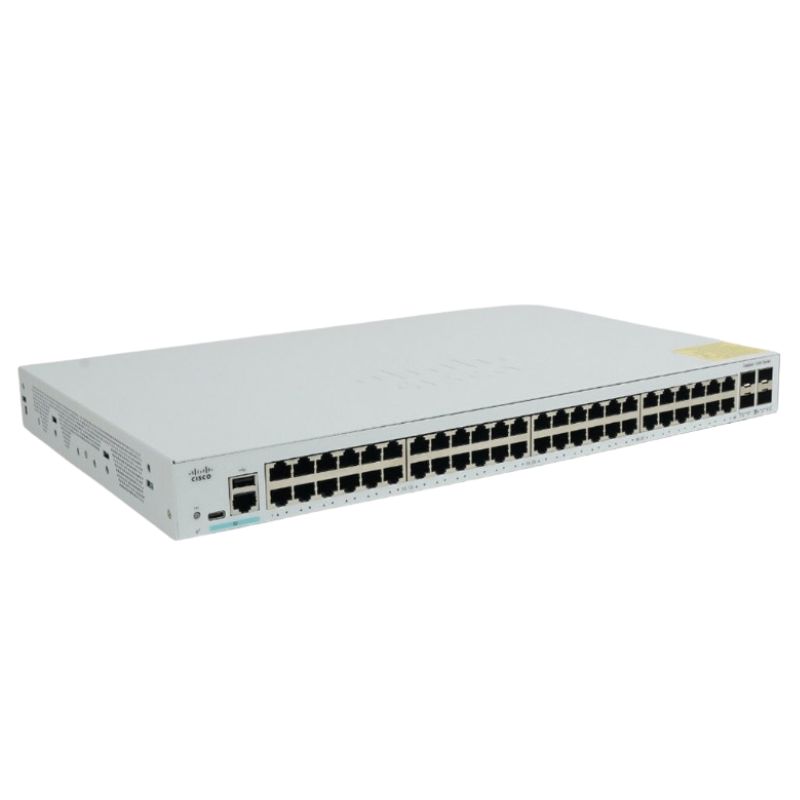


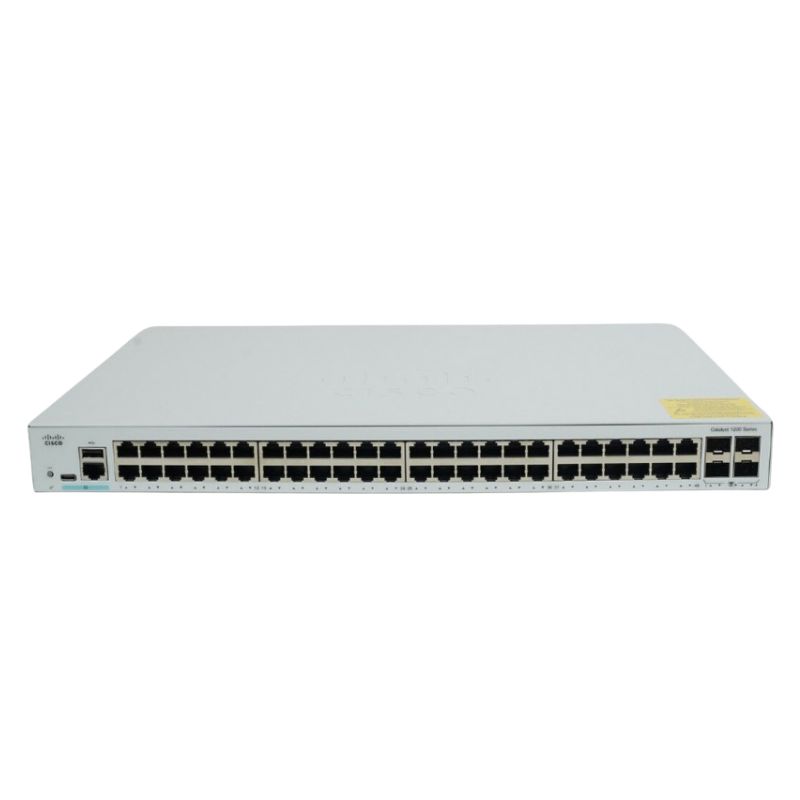
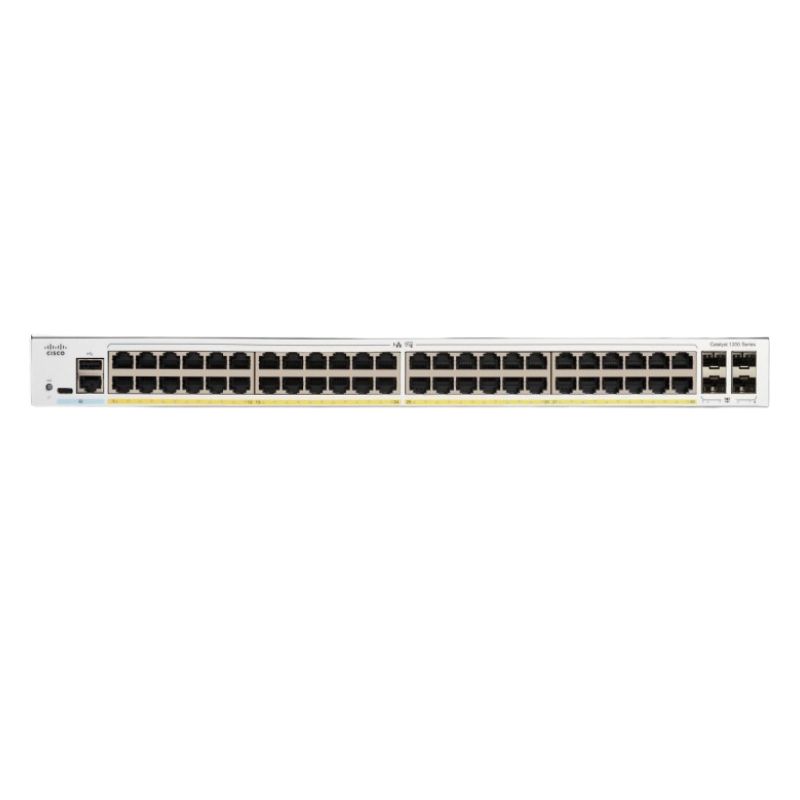
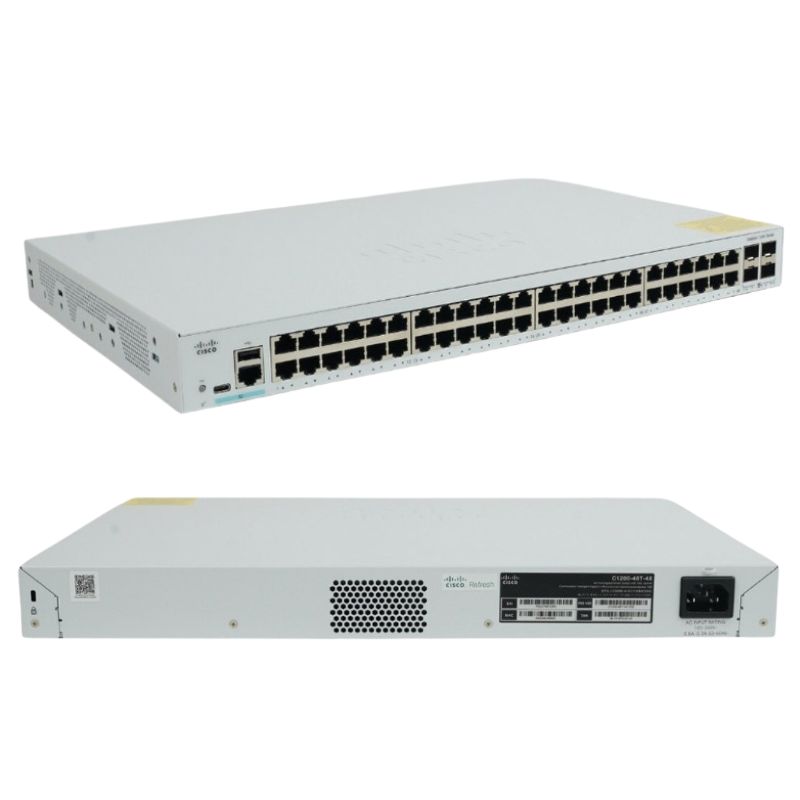
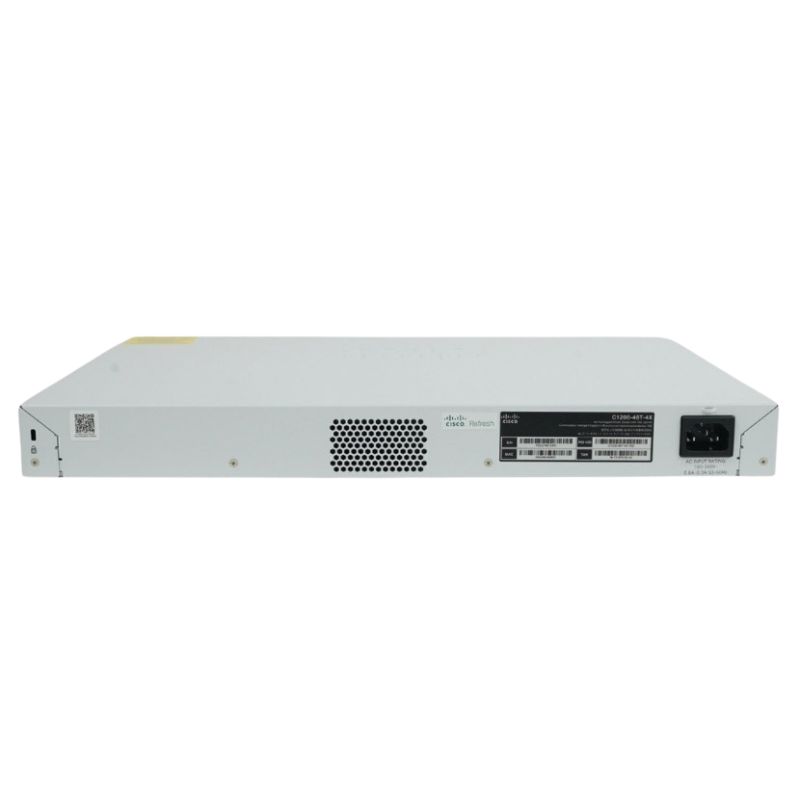
Cisco C1200-48T-4G Catalyst 1200-48T-4G 48 Ports Smart Rack-mountable Switch. Excellent Refurbished with 1 year replacement warranty
| SKU/MPN | Warranty | Price | Condition | You save |
|---|---|---|---|---|
| C1200-48T-4G | 1 Year Warranty | $310.00 | Excellent Refurbished | You save: $108.50 (26%) |
| C1200-48T-4G | 1 Year Warranty | $699.00 | Factory-Sealed New in Original Box (FSB) | You save: $244.65 (26%) |
The Cisco C1200-48T-4G Catalyst is a 48-port intelligent rack-mount switch designed for small to medium business networks. It offers high-performance connectivity with robust Layer 3 routing capabilities and energy-efficient operation.
The Catalyst 1200 family targets small and medium businesses and branch offices that require enterprise‑grade features in a compact, cost‑effective platform. These switches emphasize simplified management through the Cisco Business mobile app and dashboard, integrated security features, and predictable performance for wired access and PoE (where applicable) scenarios.
The C1200-48T-4G variant specifically provides 48 Gigabit Ethernet ports for high‑density access and 4 SFP uplinks for fiber aggregation or uplink flexibility, packaged in a rack‑mountable chassis suitable for wiring closets and small data closets.
Port density and uplinks: The model offers 48 RJ‑45 Gigabit ports for desktop, AP, and IP phone connectivity, plus four SFP slots for fiber or SFP transceiver uplinks to distribution switches or aggregation points, enabling flexible topology design and futureproofing for fiber backhaul.
The Catalyst 1200 series is engineered to deliver consistent Layer 2 switching performance for access‑layer traffic, with hardware and software tuned for low latency and predictable throughput in SMB environments. While exact forwarding rates vary by configuration, the platform is optimized for typical business workloads including VoIP, wireless backhaul, and standard data traffic.
Performance is further enhanced by Cisco’s focus on non-blocking architecture, ensuring that all 48 ports can operate at full Gigabit speeds simultaneously without bottlenecks. This makes the switch suitable for environments where multiple devices are streaming, transferring large files, or running cloud-based applications concurrently.
Rack‑mountable design: The C1200-48T-4G ships in a compact rack‑mount chassis that fits standard 19‑inch racks, making it suitable for centralized wiring closets or distributed branch racks. Its physical design balances port density with thermal and power considerations for continuous operation in business environments.
Ventilation and airflow are optimized to maintain stable operating temperatures, while the rack-mount brackets ensure secure installation. This design is particularly valuable for businesses with limited space, as the switch can be stacked neatly alongside other networking equipment.
Simple management options: Cisco positions the Catalyst 1200 series for simplified operations using the Cisco Business mobile app and cloud dashboard, enabling administrators to provision, monitor, and troubleshoot without deep CLI expertise. This reduces operational overhead for small IT teams and third‑party integrators.
The intuitive graphical interface allows administrators to quickly configure VLANs, monitor traffic, and apply security policies. For more advanced users, the switch still supports traditional CLI access, ensuring flexibility for different IT skill levels.
Administrators can expect a mix of smart switch features: VLAN segmentation, basic QoS for voice and video prioritization, link aggregation for uplink resiliency, and access control lists for traffic filtering. These features support common SMB needs such as secure guest segmentation, prioritized VoIP traffic, and resilient uplinks to core switches.
Additional features include storm control to prevent broadcast floods, loop detection to avoid network disruptions, and IGMP snooping for efficient multicast traffic management. These capabilities ensure that the switch can handle diverse workloads without compromising performance.
Built‑in security: The Catalyst 1200 family includes security controls appropriate for access switches, such as port security, 802.1X authentication support, and ACLs to limit lateral movement and protect sensitive segments. These controls help meet compliance and operational security goals without complex overlays.
Security policies can be applied per port, allowing administrators to enforce strict access controls for sensitive devices while maintaining flexibility for guest or employee networks. Integration with Cisco’s broader security ecosystem ensures consistent enforcement across wired and wireless environments.
While access switches are not typically the primary redundancy point, the C1200-48T-4G supports resilient uplink designs via its SFP ports and link aggregation, enabling administrators to architect failover paths to distribution or core layers. Proper power and cooling planning further enhance long‑term reliability in rack deployments.
Dual uplink configurations can be implemented to ensure continuous connectivity even if one link fails. Combined with Cisco’s proven hardware reliability, this makes the switch a dependable choice for mission-critical business operations.
In a typical SMB wiring closet, the C1200-48T-4G serves as the primary access switch for employee desktops, IP phones, and wireless access points. Its 48 ports accommodate dense user populations while the SFP uplinks connect to a fiber backbone or an aggregation switch in the building core.
This deployment ensures that employees have fast, reliable access to business applications, while IT teams benefit from centralized management and simplified troubleshooting.
For branch offices with multiple access switches, the C1200-48T-4G can act as a consolidation point for local access, aggregating traffic from smaller edge switches or PoE access points and forwarding to a WAN router or SD‑WAN appliance via the SFP uplinks.
This architecture reduces complexity and ensures that branch offices maintain consistent performance and security policies aligned with headquarters.
Schools and universities can deploy the C1200-48T-4G to support classrooms, labs, and administrative offices. The high port density allows for connecting multiple devices per room, while VLAN segmentation ensures that student, faculty, and administrative traffic remain isolated and secure.
Hospitals and clinics benefit from the switch’s reliability and security features, which are critical for protecting patient data and ensuring uninterrupted access to medical applications. The ability to prioritize VoIP and video traffic ensures smooth communication between staff and departments.
Cisco ecosystem integration: The Catalyst 1200 series integrates with Cisco’s management and security ecosystem, enabling consistent policy enforcement and simplified lifecycle management across other Cisco access and core products. This compatibility helps organizations scale while maintaining operational consistency.
The four SFP slots accept standard SFP transceivers for multimode or single‑mode fiber, allowing administrators to choose the appropriate optics for distance and bandwidth needs. Copper cabling for the 48 Gigabit ports follows standard Cat5e/Cat6/Cat6A practices depending on link speed and environment.
By supporting both fiber and copper, the switch provides flexibility for diverse deployment scenarios, whether upgrading existing infrastructure or building new networks.
When selecting the C1200-48T-4G, verify the exact SKU for regional power and regulatory compliance, and confirm whether PoE variants or alternate uplink counts are required for your deployment. Authorized resellers provide configuration guidance and warranty registration assistance.
Businesses should also consider future growth, ensuring that the chosen model can scale with increasing device counts and bandwidth demands.


 Contact Us
 Information
 Catalog
 Solid State Drives (SSD)
 Network Switches
 Hard Disk Drives
 HBA & Controllers
 PC & Servers
 PC & Server Memory
 CPU & Processors
 Network Routers
 Power Supplies
 Tape Drives & Libraries
 Network Devices
 Computer & Network Cables