(7% discount is applied at checkout)
Cart is empty
Your go-to destination for cutting-edge server products
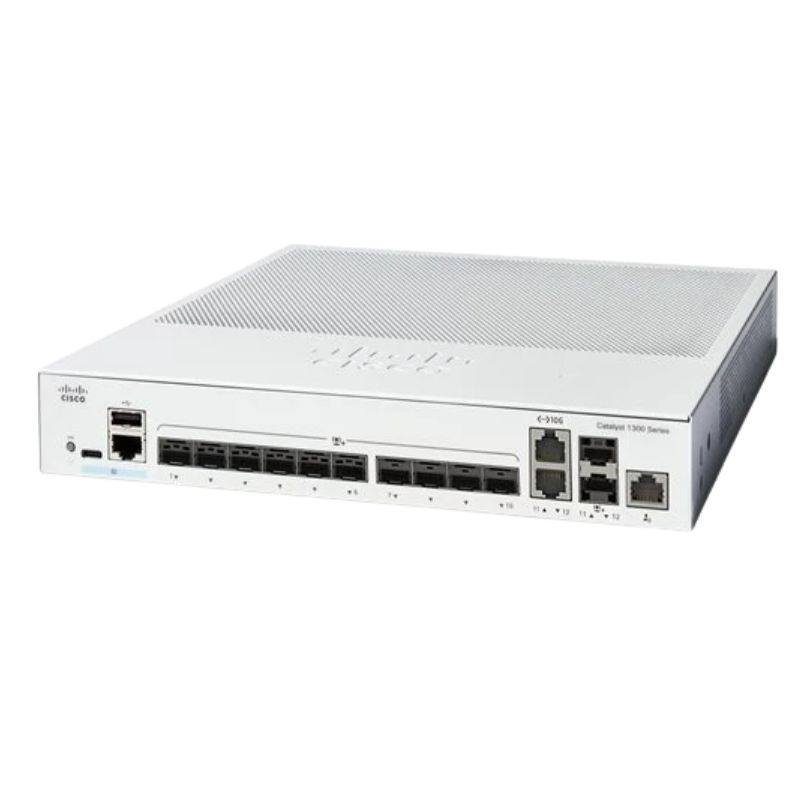


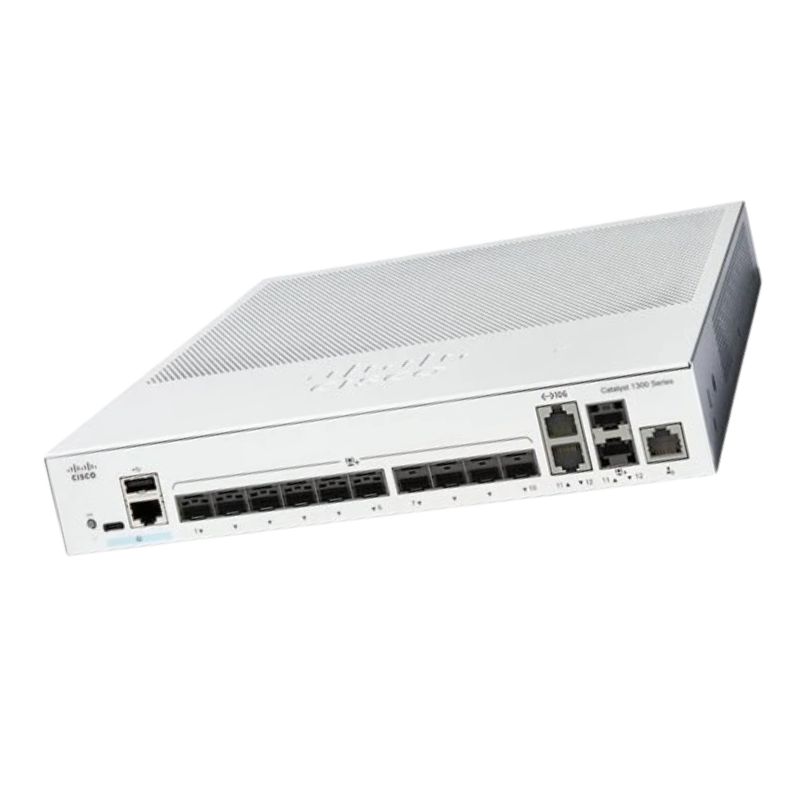
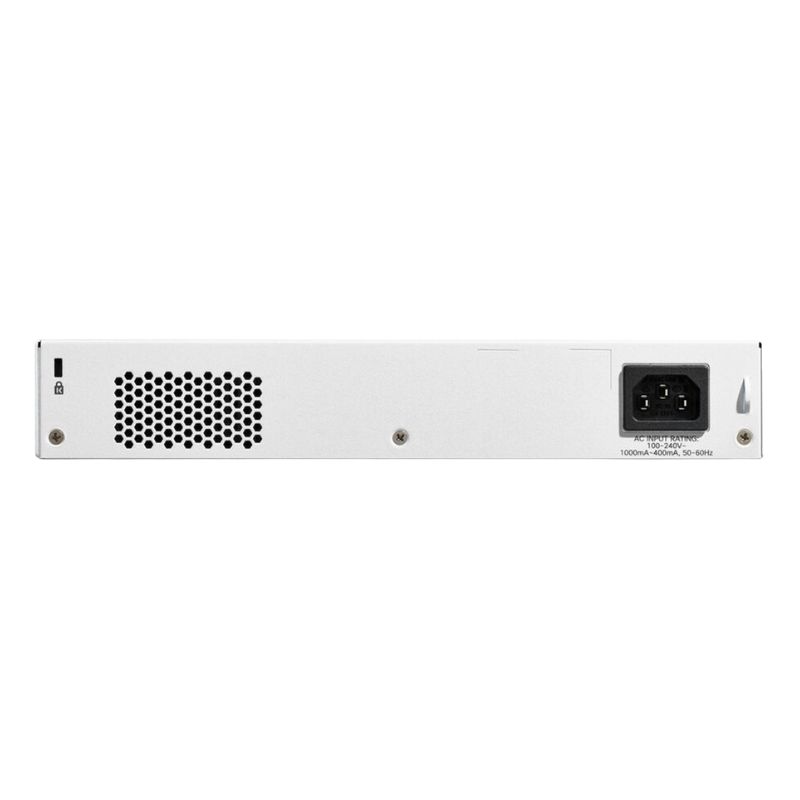
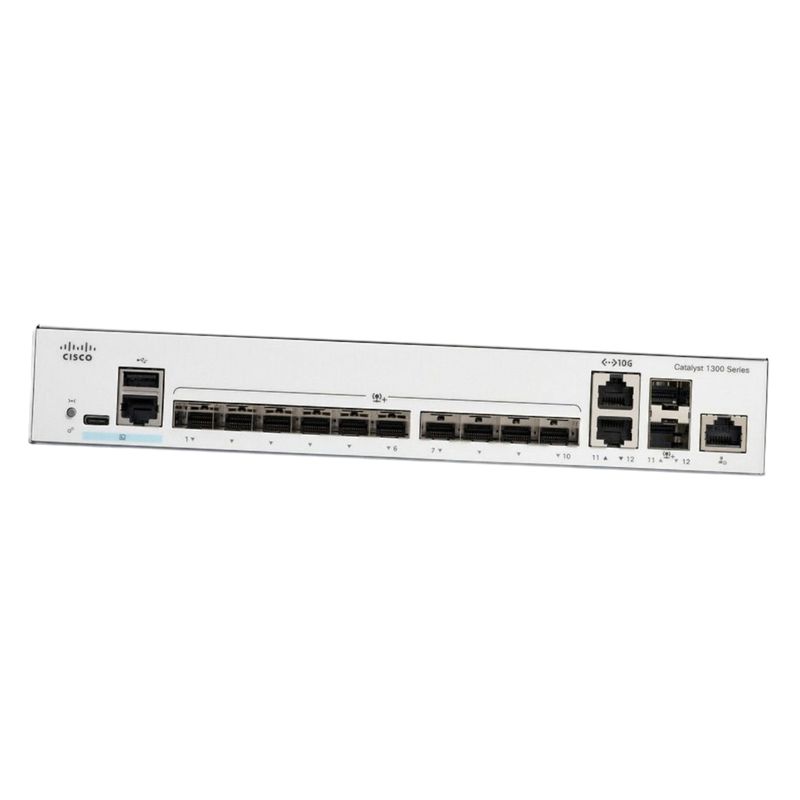
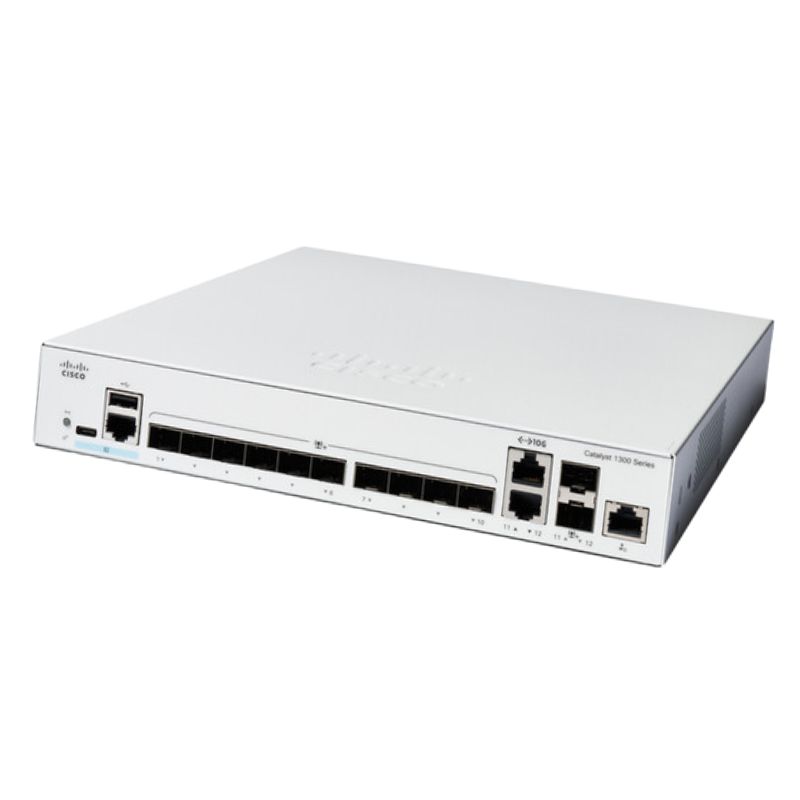
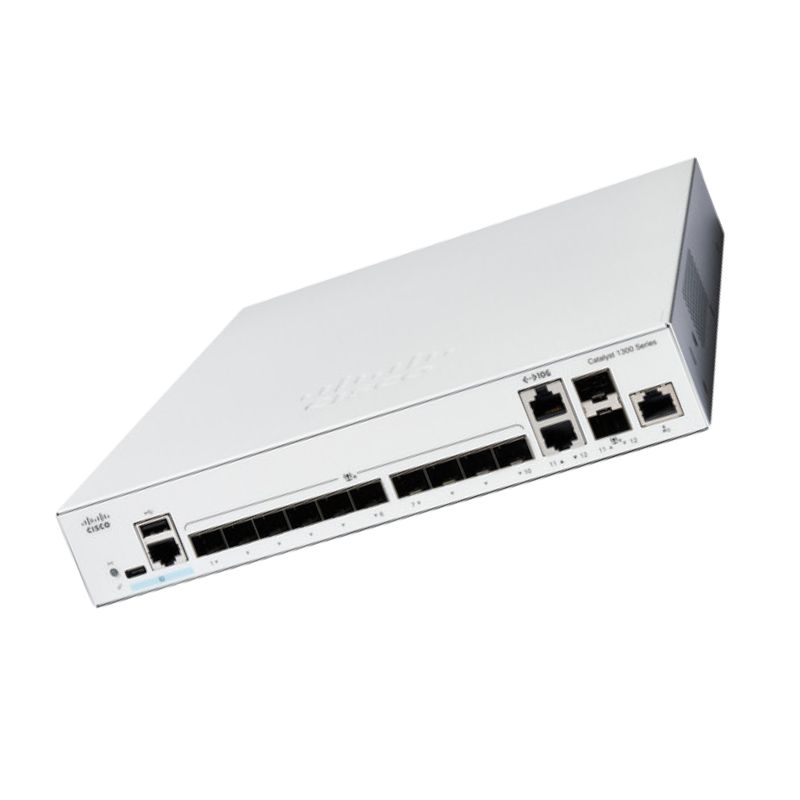
Cisco C1300-12XS Catalyst 1300 12-Ports SFP+2x10GE Shared Switch. Factory-Sealed New in Original Box (FSB) with 1 year replacement warranty
| SKU/MPN | Warranty | Price | Condition | You save |
|---|---|---|---|---|
| C1300-12XS | 1 Year Warranty | $640.00 | Excellent Refurbished | You save: $224.00 (26%) |
| C1300-12XS | 1 Year Warranty | $1,368.00 | Factory-Sealed New Retail in Original Box (FSB) | You save: $478.80 (26%) |
The Cisco C1300-12XS Catalyst 1300 is a high-performance 12-port SFP+ switch with 2x10GE shared uplinks, designed for seamless wired network connectivity. Ideal for businesses seeking reliable, rack-mountable networking solutions, this switch supports advanced Layer 2 and Layer 3 networking protocols.
The Cisco C1300-12XS Catalyst 1300 12-Ports SFP+2x10GE Shared Switch sits in the broader Catalyst 1300/X Series family as an affordable, enterprise-grade access switch built for branch offices and SMBs that need reliable 10 Gigabit aggregation, simple management, and strong security in a compact footprint. It offers high-density 10G fiber connectivity with shared 10GE combo capability, making it ideal for performance-sensitive edge deployments, small data center aggregation zones, and uplinks to core networks or cloud gateways. The switch is managed through Cisco Business Dashboard, the local web UI, and the Cisco Business mobile app for straightforward, guided operations, while its hardware design and software capabilities focus on uptime, security, and ease of scaling as network demands grow.
Within this category, the C1300-12XS emphasizes streamlined deployment with intuitive workflows and step-by-step setup, reducing the complexity of onboarding and minimizing the time required to reach production readiness. With multiple 10G SFP+ ports and shared 10GE copper/SFP+ combo ports, it consolidates diverse link types on one device, which is especially useful when transitioning from copper to fiber or when mixing server links, inter-switch trunks, and ISP handoffs. The inclusion of a dedicated GE management port further separates out-of-band management from data traffic, improving control-plane hygiene and operational safety for administrators.
Cisco positions the Catalyst 1300/X Series as reliable, secure, and cost-effective switches intended for SMB and branch office networks where simplicity and affordability are crucial without sacrificing enterprise-level features. The portfolio’s design supports connectivity to cloud applications with management options that streamline ongoing operations and reduce overhead. This aligns the C1300-12XS to roles where consistent performance and easy lifecycle management matter: retail branches, boutique professional services firms, managed service providers, and small campus edge deployments that still require 10G throughput for modern applications.
The category’s value proposition focuses on reduced complexity—delivered through a unified dashboard and mobile app—while maintaining network resilience and security controls fit for professional environments. The hardware form factor and port mix enable seamless aggregation of high-speed links, flexible uplink strategies, and gradual migration paths from copper to fiber within the same switch. This flexible approach supports businesses in varied states of infrastructure modernization, helping them implement 10G connectivity incrementally and cost-effectively.
At the heart of the C1300-12XS is a high-density 10G arrangement: 10 ports of 10G SFP+ for fiber connectivity, plus 2 shared 10GE combo ports that support copper or SFP+ modules, and a dedicated 1G management port. This configuration allows a mix of fiber-based server links, inter-switch trunks, and copper lines for legacy equipment or shorter runs. The shared combo nature of the two 10GE ports offers adaptability for evolving cabling strategies—swap between copper and fiber to optimize for distance, latency, or cost—while keeping the port count balanced for aggregation purposes. This setup is specifically stated in retail product documentation and aligns with Cisco’s series messaging on simplicity and flexibility.
The switch’s physical design supports rack or shelf deployment in tight branch environments. Common accessories included with the model’s retail packaging are mounting hardware and cables suitable for quick installation, minimizing friction during the initial rollout. The product dimensions offer a compact footprint that pairs well with small network closets and wall-mounted enclosures, though the exact physical form is less crucial than the category-defining port mix and management options, which simplify both physical installation and logical network design. These details highlight the device’s role in SMB and edge contexts where space and installation time are at a premium.
The “shared” nature of the 2x10GE combo ports means each port can operate either as a copper interface or accept an SFP+ module, typically not both simultaneously on the same port. This choice enables network designers to adapt the switch’s uplink or edge connection type based on cabling availability and performance needs. Copper (10GBASE-T) is common for short runs and legacy infrastructure; SFP+ is preferred for longer distances, lower latency, and cleaner electromagnetic environments. Practical deployments often start with copper for simplicity and migrate to SFP+ fiber as scale or distance requirements grow, leveraging the combo design without replacing the switch chassis.
Using combo ports intelligently can reduce total cost of ownership: start with copper modules if existing cabling is Cat6a or better and gradually transition to fiber to support more complex topologies or inter-room risers. This staged approach makes the C1300-12XS suitable for network modernization projects where capital costs must be distributed over time, but the demands of 10G bandwidth cannot be deferred. Administrators can plan their uplinks and trunking architectures with confidence that port technology can be adapted later with minimal disruption.
Management simplicity is a defining attribute in this category. The C1300-12XS can be set up, monitored, and managed using the Cisco Business Dashboard, Cisco Business mobile app, and the local web interface, providing step-by-step instructions to expedite installation and streamline configuration changes. This multi-channel management approach reduces learning curves for IT generalists, MSP field techs, and small teams that need to maintain uptime without deep CLI expertise. It also promotes consistency across the Catalyst 1300/X portfolio, which is beneficial for standardized operations in distributed environments.
For branch offices and SMBs, unified dashboards minimize context switching and centralize essential functions like VLAN assignment, trunk configuration, link status, firmware updates, and alerting. The mobile app allows on-site technicians to make adjustments and validate connectivity quickly, while the web UI provides a familiar environment for day-to-day tasks. Together, these tools support a collaborative maintenance model where remote administrators can guide local staff through changes, enhancing organizational resilience and reducing downtime risk.
The dedicated GE management port provides an out-of-band path for administrative access, separating management traffic from production data. This separation can improve network security posture, especially in environments that enforce strict segmentation of control-plane functions. It also offers a reliable access pathway when production interfaces are congested or misconfigured, which can be critical during incident response or firmware updates. For SMBs and branches, this reinforces the balance between simplicity and professional-grade controls.
Having a distinct management interface aligns with best practices for operational safety: administrators can keep configuration sessions stable even during aggressive traffic tests or topology changes on data ports. It also supports cleaner monitoring, as telemetry collectors can poll the device without competing with user workloads. The end result is fewer interruptions to management workflows and a more predictable maintenance experience.
The C1300-12XS’s 10G-centric port layout is ideal for aggregation at the edge, where multiple access switches, Wi‑Fi controllers, or server nodes need high-bandwidth interconnects. By concentrating 10G SFP+ ports, it facilitates trunking and link aggregation groups (LAGs) to upstream distribution or core switches, reducing bottlenecks in environments with heavy cloud application usage, large file transfers, or virtualized workloads. In SMBs and branches transitioning to modern collaboration suites, VoIP, and video, 10G uplinks help keep latency and congestion in check as user counts and data streams grow.
In small data centers or micro‑edge compute sites, the switch can anchor top-of-rack designs for midrange servers or hyperconverged appliances that require predictable throughput. The combo ports are particularly useful for establishing diverse uplinks to separate upstream networks (e.g., WAN gateway and core distribution), or for redundancy strategies that mix copper and fiber for path diversity. This flexibility ensures the switch can serve as a strategic building block as network roles evolve, which is a central theme of the Catalyst 1300/X series positioning.
Beyond raw bandwidth, the category’s affordability and simplicity are tailored to organizations adopting cloud-first strategies without large networking teams. The C1300-12XS’s management ecosystem makes it easier to maintain consistent connectivity to SaaS platforms and cloud workloads while keeping the on-prem network stable. As businesses roll out more cloud-based tools—CRM systems, collaborative suites, and security analytics—reliable 10G aggregation helps absorb traffic spikes and asynchronous data flows. Cisco’s positioning underscores this as a critical building block for branch and SMB journeys to the cloud.
With guided setup and intuitive controls, the switch reduces the complexity of multi‑VLAN segmentation, guest access provisioning, and QoS policies for voice/video services. This creates a path to best‑practice network hygiene even for teams with limited time, ensuring that application experiences remain consistent and secure. In many modernization projects, the switch’s role is to provide a stable, high-capacity interconnect layer while access devices and wireless upgrades proceed incrementally.
The Catalyst 1300/X Series emphasizes reliability and security alongside affordability, enabling branch offices and SMBs to deploy professional networking controls without prohibitive costs. While specific advanced security features vary by model and software, the family’s messaging focuses on resilient operation and protection that aligns with enterprise expectations. Combined with out-of-band management and simple configuration flows, this focus helps organizations adopt policies that mitigate common misconfigurations and reduce exposure at the edge.
Reliability manifests in consistent management experiences, sturdy hardware design suited for continuous operation, and clear workflows for updates and monitoring. When paired with good design practices—redundant uplinks via the combo ports, careful VLAN segmentation, and proactive firmware lifecycle management—the switch can deliver dependable service under variable workloads. The Catalyst 1300/X Series’ guiding theme is helping smaller organizations achieve “big network” outcomes without excessive complexity.
To maximize the C1300-12XS’s reliability, administrators can adopt a few practical patterns: dedicate the GE management port for out-of-band access; establish dual uplinks using the 10GE combo ports for path diversity; use LAGs across the 10G SFP+ ports to increase aggregate bandwidth and reduce single-link failure impact; and maintain a predictable VLAN scheme. Regular health checks through the Cisco Business Dashboard and timely firmware updates via the guided tools keep the device aligned with security baselines and new features. These practices support steady-state operations and faster recovery when changes are needed.
Additionally, mixing fiber and copper connections in the combo ports can reduce risk associated with physical layer issues—fiber links are immune to electromagnetic interference common in industrial or electrically noisy environments, while copper may be cost-effective for short runs in office spaces. Choosing the right medium for each path balances budget and reliability goals. This built-in flexibility is part of the category’s appeal: adapt the switch’s behavior to your environment without swapping hardware.
In branch aggregation designs, place the C1300-12XS centrally to collect 1G/2.5G access switch uplinks, then trunk those to upstream distribution via the 10G SFP+ ports. Use the combo ports for diverse uplinks—one to a WAN edge/router and one to a campus distribution switch—or for primary/secondary connections to the same upstream device for resilience. This keeps branch traffic consolidated and simplifies routing and security policy enforcement at higher layers. The dedicated management port remains reserved for out-of-band administration, ensuring clean control even during production network changes.
For small data centers, employ the 10G SFP+ ports for server-to-switch connections using DACs or optical transceivers, depending on rack layout and distances. The combo ports can serve as uplinks to core or spine switches, offering a mix of copper and fiber as needed. This arrangement is practical for modest virtualization clusters, NAS appliances requiring 10G, and backup systems that benefit from faster ingest speeds. As clusters scale, LAGs across multiple SFP+ ports improve aggregate performance and reduce single-link sensitivity.
High-density Wi‑Fi deployments often require robust 10G backhaul from wireless controllers or distributed AP switches. Position the C1300-12XS to receive uplinks from PoE access switches serving APs, then trunk to distribution or core via the 10G ports to prevent oversubscription under peak usage. For guest and IoT segmentation, use VLANs with ACLs applied upstream to separate and control traffic flows. This keeps wireless services performant and secure while leveraging the switch’s easy management for day-to-day changes.
In edge services scenarios—content filtering appliances, SD‑WAN devices, or analytics probes—the combo ports can be assigned to devices with differing media needs, while SFP+ paths provide stable high-speed trunks to analytics storage or monitoring nodes. The flexibility to assign port types per device simplifies heterogeneous edge stacks, a reality in modern SMB environments with multi‑vendor solutions. The switch’s role is to maintain clean, high-capacity interconnects with minimal fuss.
Within the Catalyst 1300/X category, the C1300-12XS distinguishes itself by concentrating on 10G SFP+ density with shared combo uplinks, targeting aggregation and small core roles in compact environments. Other 1300 series variants emphasize GE access density with fewer 10G uplinks, catering to classic access-layer needs. For SMBs deciding between models, the key differentiator is whether your primary requirement is 10G aggregation bandwidth or mass 1G access ports; the C1300-12XS suits the former use case and mixed-media uplinks that facilitate modernization. Cisco’s series positioning makes clear the intent to cover both access and aggregation roles with affordable, simple-to-use devices.
Adjacent Cisco categories like Catalyst 1000 or 1200 series may offer similar management simplicity with different port mixes more tailored to access networks. However, the C1300‑12XS’s specific 10G focus and combo port flexibility stand out for edge aggregation scenarios. When moving toward more advanced campus cores or data center fabrics, higher-end series provide additional scale and features; yet for many branches and SMBs, the 1300 series offers a sweet spot where performance meets straightforward operations.
Network teams choose the C1300-12XS when they need: a high count of 10G SFP+ ports for aggregation; the versatility of 2x10GE copper/SFP+ combo ports; a dedicated 1G management port; and easy setup via mobile app, web interface, and Cisco Business Dashboard. These characteristics simplify deployment while offering future-proofing for cabling strategies and incremental upgrades. For organizations aiming to consolidate edge bandwidth to meet modern application demands without deep networking staff, the switch’s category promise of affordable simplicity is compelling.
Its role as a stepping stone in modernization projects is particularly strong: start with copper uplinks if that’s what the site has, then introduce fiber trunks as budgets and distances justify. Meanwhile, keep operational management streamlined through guided tools that reduce the need for advanced CLI proficiency. The product’s documentation underscores these themes, making it clear that the category is engineered for practical, real-world deployment paths.
Use the 10G SFP+ ports to aggregate uplinks from multiple access switches that serve desktops, printers, and IP phones. Assign VLANs per department and trunk them upstream using tagged links. The combo ports can serve as resilient uplinks to the distribution layer or connect to an SD‑WAN edge device, ensuring high throughput to cloud services. Out-of-band management via the GE management port lets administrators update firmware or adjust configurations without impacting user traffic.
Set QoS policies upstream; keep the C1300-12XS focused on clean aggregation via VLAN tagging and trunking. The switch’s 10G capacity prevents oversubscription during peak video calls. The mobile app and web UI make it straightforward to adjust VLANs and trunks as departments shift or new services come online. Reliable aggregation preserves quality of experience for collaboration tools central to modern SMB productivity.
Deploy the switch as a top-of-rack aggregator for virtualization nodes and storage arrays requiring 10G links. Connect servers using SFP+ DACs within the same rack and use fiber optics to reach distribution if distance or interference is a concern. The combo ports provide flexible uplinks to core or spine devices without committing to one media type. With the dashboard, administrators monitor link health and plan capacity increases with LAGs as workloads expand.
Backup servers and NAS appliances often saturate 1G links; the C1300‑12XS’s 10G array supports faster backup windows and sync operations. Use VLANs to isolate backup traffic from user workloads and ensure consistent throughput. Combining multiple 10G links in aggregation groups further reduces the likelihood of a single saturated path disrupting schedules. The intuitive management tools allow precise monitoring and adjustments as data volumes grow.
Retail sites rely on steady connectivity for POS, inventory systems, and guest Wi‑Fi. Aggregate access switches serving these services into the C1300‑12XS, then trunk upstream to a secure gateway. Guest networks remain segmented through VLANs to protect payment systems and corporate services. The category’s simplicity delivers reliable operations for sites with limited on‑site IT, complemented by remote oversight via the dashboard.
In hospitality or light industrial settings, IoT devices and sensors generate traffic patterns distinct from user productivity. Isolate IoT networks using VLANs mapped through the C1300‑12XS and transport them upstream for policy enforcement. The 10G bandwidth ensures that bursty sensor uploads or analytics feeds do not impair user services. The switch’s role is to keep segmentation clean and capacity ample.


 Contact Us
 Information
 Catalog
 Solid State Drives (SSD)
 Network Switches
 Hard Disk Drives
 HBA & Controllers
 PC & Servers
 PC & Server Memory
 CPU & Processors
 Network Routers
 Power Supplies
 Tape Drives & Libraries
 Network Devices
 Computer & Network Cables