(7% discount is applied at checkout)
Cart is empty
Your go-to destination for cutting-edge server products
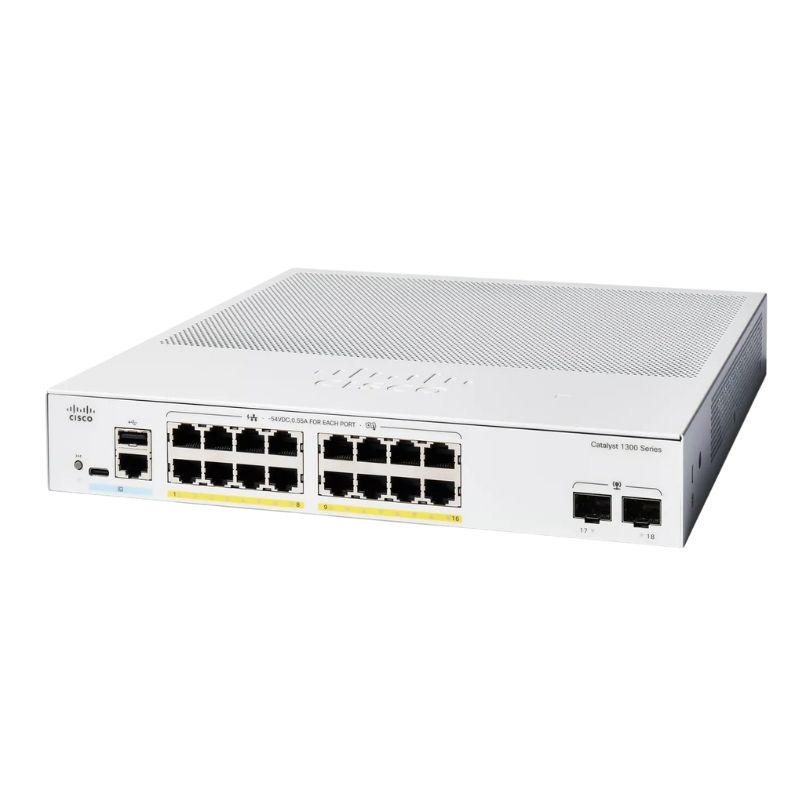


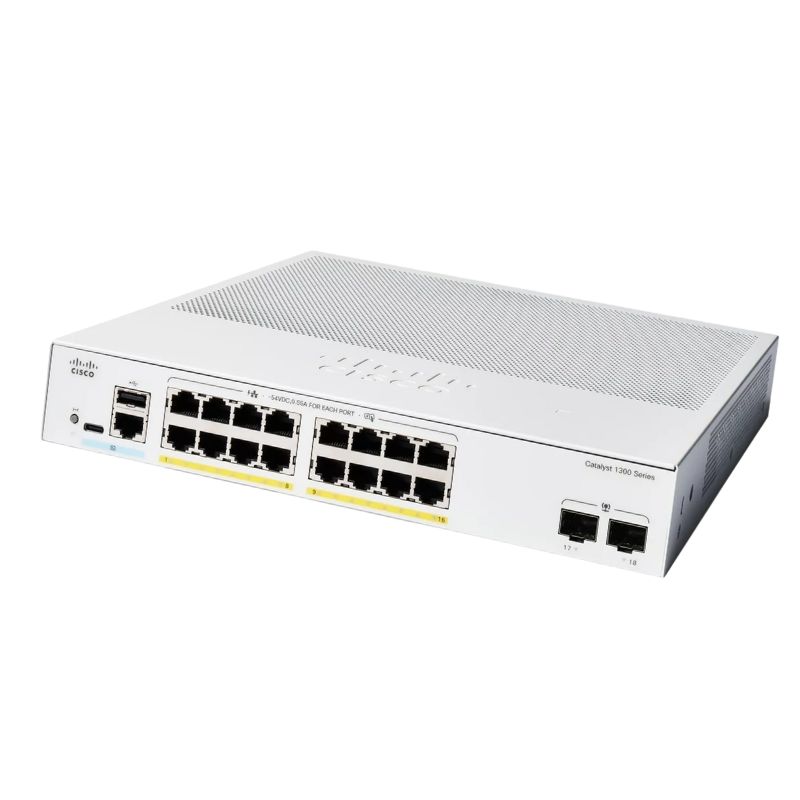
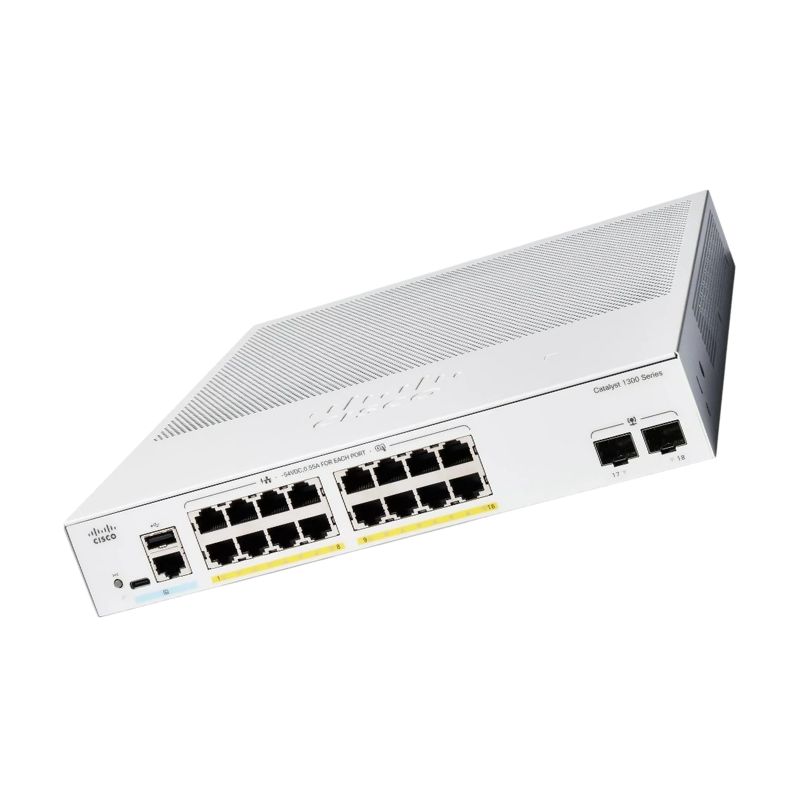
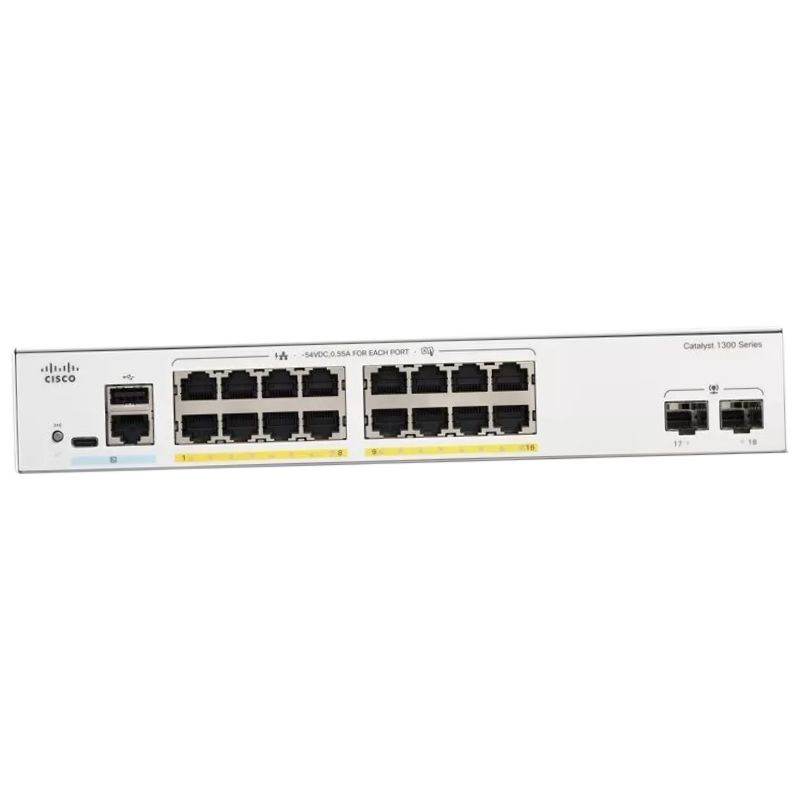
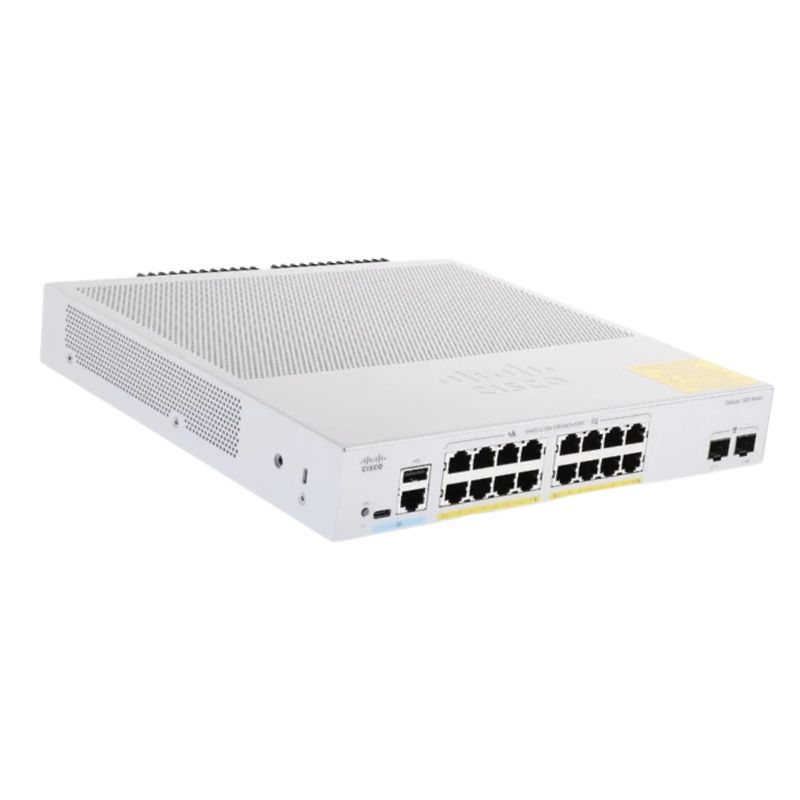
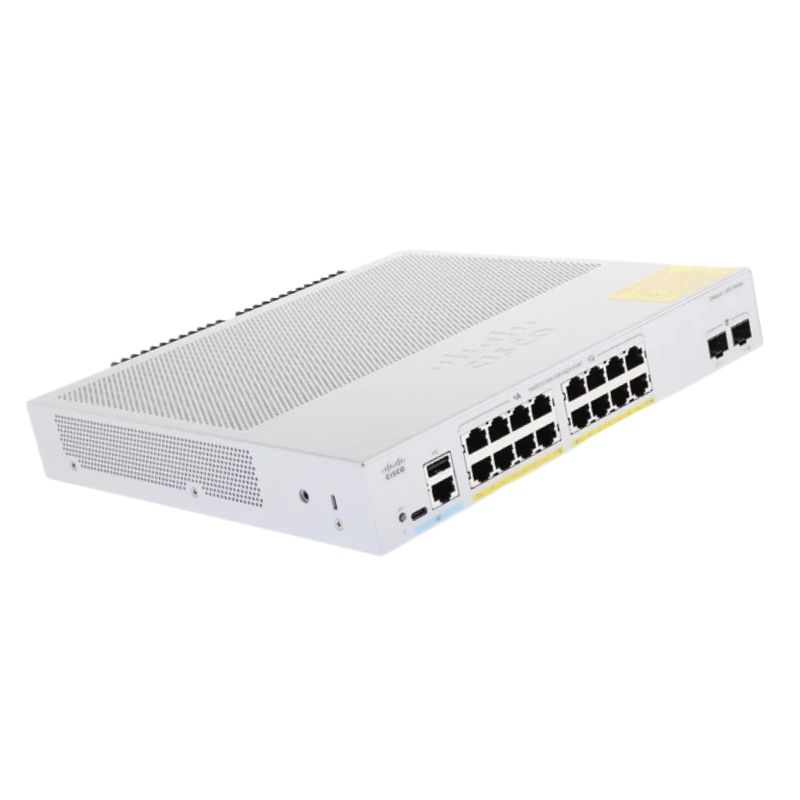
Cisco C1300-16P-2G Ethernet 16 Ports Manageable Switch Gigabit Ethernet 1000Base-X 3 Layer Supported Modular 2 SFP Power Optical Fiber. Factory-Sealed New in Original Box (FSB) with 1 year replacement warranty
The Cisco Catalyst C1300-16P-2G is a high-performance, enterprise-grade managed Ethernet switch designed for growing business networks. Built under the trusted Cisco Catalyst 1300 Series, this switch delivers reliable Layer 3 networking, Power over Ethernet Plus (PoE+), and flexible uplink connectivity for modern IT environments.
The Cisco C1300-16P-2G Catalyst 1300 switch is a compact, enterprise-ready Layer 2/Layer 3-capable access switch that delivers reliable Gigabit Ethernet connectivity across 16 copper ports with integrated Power over Ethernet (PoE) and two 1G SFP uplinks for flexible fiber or copper backhaul. Designed for small to midsize businesses, branch locations, retail floors, hospitality venues, healthcare clinics, and education environments, this model emphasizes simplicity, energy efficiency, security, and seamless scalability. Its rich feature set includes VLAN segmentation, QoS prioritization, advanced security controls, and intuitive management options, making it a versatile choice for modern edge networks that need dependable power and bandwidth for IP phones, wireless access points, security cameras, and other connected endpoints.
With silent or near-silent operation in many deployments, a low footprint, and the robust reliability customers expect from the Catalyst family, the C1300-16P-2G streamlines network rollouts and ongoing operations. Whether you’re refreshing aging infrastructure, extending coverage to new floors, or standardizing on a consistent switching platform, this switch integrates smoothly into existing networks and supports future growth with standards-based interoperability. Its two SFP uplinks provide clean aggregation paths to core or distribution switches, while the PoE capabilities reduce cabling clutter and simplify device power management. The result is a cost-effective, secure, and high-performance access layer switch that balances feature depth with ease of use.
The C1300-16P-2G delivers 16 auto-negotiating 10/100/1000 Mbps RJ-45 ports for seamless endpoint connectivity. These ports support enterprise-grade features like 802.1Q VLAN tagging, 802.1p QoS, port mirroring, and link aggregation for better traffic engineering and visibility. Two dedicated 1G SFP uplink slots enable fiber or copper SFP modules for uplinks to aggregation or core layers, offering flexibility across different media types and distances. This architecture ensures strong northbound connections while maintaining abundant access density at the edge, aligning with common campus and branch topologies.
Power over Ethernet simplifies deployments by delivering power and data through a single cable to compatible connected devices. The C1300-16P-2G PoE capability helps support a wide range of endpoints such as VoIP phones, wireless access points, badge readers, POS terminals, and CCTV cameras. Centralized power management reduces the need for local adapters, streamlining inventory and sparing, and enabling remote power cycling for troubleshooting. It also makes ceiling-mount APs and wall-mounted cameras quicker to install, improving deployment agility and aesthetics in customer-facing areas.
Modern networks demand granular security at the edge, where users and devices first connect. Cisco integrates controls such as MAC-based port security, DHCP snooping, dynamic ARP inspection, and 802.1X authentication to help prevent rogue access, IP spoofing, and man-in-the-middle attacks. Network segmentation via VLANs and private VLANs limits lateral movement, while ACLs provide policy enforcement at line rate. Together, these capabilities create layered defenses that align with zero-trust principles and regulatory compliance requirements in industries like healthcare and finance.
The C1300-16P-2G supports standards-based QoS to prioritize latency-sensitive and mission-critical traffic. Classification and marking with DSCP, CoS, or ACLs, plus queuing and scheduling techniques (e.g., strict priority and weighted round-robin), ensure that voice calls, real-time video streams, and transactional systems receive consistent performance during peak utilization. Granular QoS on each port translates to smoother user experiences and fewer support incidents, especially in unified communications and digital signage deployments.
Administrators benefit from intuitive command-line options, secure management protocols, and optional centralized orchestration within Cisco’s ecosystem. Common activities—configuring VLANs, enabling PoE, setting QoS policies, and monitoring port status—are straightforward, reducing time-to-value during rollouts and minimizing ongoing maintenance effort. Role-based access, logging, and SNMP/telemetry support integrate with existing monitoring systems to deliver visibility and proactive alerting, helping teams maintain SLA targets and rapid incident response.
The C1300-16P-2G features a compact, durable chassis engineered for reliability in wiring closets, office cabinets, or small racks. Thoughtful thermal design supports stable operation across typical ambient temperatures, and acoustic optimization keeps noise levels low—ideal for open offices or customer-facing areas. Mounting options accommodate both rack installations and desktop placement, providing flexibility during space-constrained deployments. Careful attention to airflow and component spacing improves longevity and reduces thermal-related failures.
A modern switching fabric delivers wire-speed performance across the 16 Gigabit ports, ensuring consistent throughput without bottlenecks in access-layer scenarios. Hardware-based forwarding enables low-latency packet handling and line-rate policy enforcement, while features like storm control and loop prevention maintain stability under adverse network conditions. Even in mixed traffic environments—voice, video, bulk data—users experience responsive applications and predictable performance profiles.
The PoE budget on the C1300-16P-2G is geared to support a balanced portfolio of endpoint types. In typical deployments, administrators can power multiple Wi-Fi 6/6E access points, a fleet of VoIP handsets, and several IP cameras simultaneously. Smart power management features allow prioritization of critical devices, define maximum per-port draw, and implement power policing to prevent overload. By leveraging PoE, teams can scale devices in stages without electrical refits or additional wall power, reducing project complexity and cost.
The two 1G SFP uplinks accept a range of transceivers for multimode or single-mode fiber and copper SFP options, enabling distance-appropriate links to aggregation or core switches. Administrators can select optics based on cable availability, building layout, and desired reach—from short runs within the same floor to longer spans between buildings. Standard-compliant interfaces preserve interoperability and protect investments as network backbones evolve, allowing future migration to higher-speed uplinks at aggregation while keeping access stable.
Comprehensive Layer 2 features include 802.1Q VLAN tagging, trunk/access modes, Spanning Tree variants (RSTP, MSTP), Link Aggregation (LACP), and port-based isolation for precise topology control. These capabilities ensure resilient paths, controlled broadcast behavior, and efficient utilization of redundant links. With proper design, edge switches like the C1300-16P-2G contribute to a highly available campus architecture that can tolerate link failures and maintenance events with minimal end-user disruption.
Many Catalyst access switches provide basic Layer 3 functionality to simplify segmentation and reduce dependency on upstream routers for inter-VLAN traffic. Common options may include static routing and limited dynamic routing features for small-scale routing domains. This approach streamlines deployments where simple inter-VLAN routing is sufficient and keeps latency low for local traffic, especially in branch environments that rely on central firewalls for internet egress and inspection.
Granular QoS allows tagging, classification, and queuing strategies that align with application requirements. Voice VLANs and auto-QoS profiles help fast-track telephony and conferencing gear, while bandwidth policing and shaping maintain fair usage and guard against contention. These controls are critical in converged networks where best-effort data shares the same edge with real-time workloads, ensuring service consistency without overprovisioning.
Enterprise security at the access layer typically includes 802.1X with RADIUS for identity-based port control, guest VLANs for unauthenticated devices, and MAB fallback for endpoints that lack supplicants. DHCP snooping builds trusted mappings to block rogue servers, while dynamic ARP inspection mitigates ARP-based attacks. Port security limits MAC addresses to prevent unauthorized bridging devices, and ACLs restrict traffic based on IP/port criteria. Together, these measures reduce attack surface and enforce least-privilege principles from the moment a device connects.
In SMB offices, the C1300-16P-2G often anchors workgroup connectivity, powering desk phones, connecting PCs, and uplinking wirelessly via APs placed throughout the floor. The PoE capabilities reduce desk clutter, and VLANs separate corporate, guest, and IoT traffic. QoS makes voice calls and video meetings more reliable in open-plan spaces where bandwidth contention can occur. The compact chassis fits neatly into small cabinets without demanding special facilities or complex cooling.
Retail spaces benefit from secure, segmented networks where POS devices, payment terminals, cameras, and digital signage co-exist. The C1300-16P-2G’s PoE powers ceiling cameras and signage controllers, while VLANs isolate sensitive cardholder data zones from guest Wi-Fi. Uplink redundancy via dual SFPs can be used for resilient backhaul to a distribution switch, maintaining operations during cabling or link failures. QoS prioritizes transactional traffic to ensure payment flows stay responsive even at peak shopping times.
Hotels, serviced offices, and co-working spaces require strong segmentation and scalable wireless coverage. With the C1300-16P-2G, multiple APs can be powered and distributed throughout floors, and per-tenant VLANs can isolate traffic to meet privacy and compliance expectations. Security policies enforce role-based access and restrict east-west traffic. The switch’s manageable footprint and quiet operation suit guest-facing areas where equipment must remain unobtrusive.
Healthcare environments rely on stable, secure LAN connectivity for patient management systems, VoIP, and surveillance. The switch’s security features help guard against common LAN threats, while PoE powers critical cameras and access control devices. VLAN segmentation separates administrative, clinical, and guest networks, limiting exposure and aiding compliance. Robust uptime and predictable performance are key for scheduling systems and telemedicine endpoints operating during extended hours.
Schools and training centers often deploy the C1300-16P-2G to support mixed endpoints including PCs, tablets via APs, IP phones, and cameras. QoS helps keep interactive learning platforms responsive, and VLANs isolate staff networks from student access. The compact size makes it easy to mount in classroom cabinets, and PoE reduces the need for local power adapters, simplifying AV equipment setups and AP installations across campus buildings.
Wire-speed forwarding across all Gigabit access ports ensures consistent application performance, even in busy offices. Hardware-based features and efficient buffer management help maintain low-latency traffic flows and minimize packet loss. Combined with intelligent QoS, this yields smooth voice/video experiences and reliable data transfers across endpoint types.
Redundant uplinks via SFP modules, loop prevention with Spanning Tree, and link aggregation increase resilience to failures. Configuration backups and planned maintenance cycles reduce downtime risk during software updates or policy changes. Environmental monitoring and clear airflow paths support stable operation across seasons and workload changes.
Energy-conscious designs reduce operational costs over the device’s lifecycle. PoE power management avoids waste by allocating only what endpoints need, and idle ports can enter low-power states. Optimized thermal paths maintain component health, while quiet operation supports deployments in shared spaces without disruption.
Within the broader Catalyst family, the C1300-16P-2G positions as a versatile, cost-conscious access switch for environments needing modest port counts, PoE, and reliable 1G uplinks. It’s ideal where simplicity, security, and interoperability are prioritized over advanced multi-gig uplinks or extensive Layer 3 routing domains. This balance makes it a fit for branch offices, small campuses, and workgroup floors that need consistent performance without excessive complexity.
If your environment demands dozens of APs, dense IP camera arrays, or high-throughput uplinks to support heavy data flows, consider models with 24–48 ports or multi-gig (2.5/5G) support. Those platforms better match Wi-Fi 6E/7 backhaul requirements in high-density venues or content production facilities. However, many small to mid-size deployments find 16 ports sufficient and budget-friendly, especially when workgroups are distributed across floors or rooms, and aggregated via SFP uplinks.
Hybrid work reduces on-site density but increases the need for stable access and collaboration gear for employees present. The C1300-16P-2G accommodates varied endpoint mixes, including PoE phones and APs, without oversizing the network edge. Its straightforward operations and reliable performance help IT teams maintain service quality while focusing on cloud application delivery and security posture across remote connections.


 Contact Us
 Information
 Catalog
 Solid State Drives (SSD)
 Network Switches
 Hard Disk Drives
 HBA & Controllers
 PC & Servers
 PC & Server Memory
 CPU & Processors
 Network Routers
 Power Supplies
 Tape Drives & Libraries
 Network Devices
 Computer & Network Cables