(7% discount is applied at checkout)
Cart is empty
Your go-to destination for cutting-edge server products
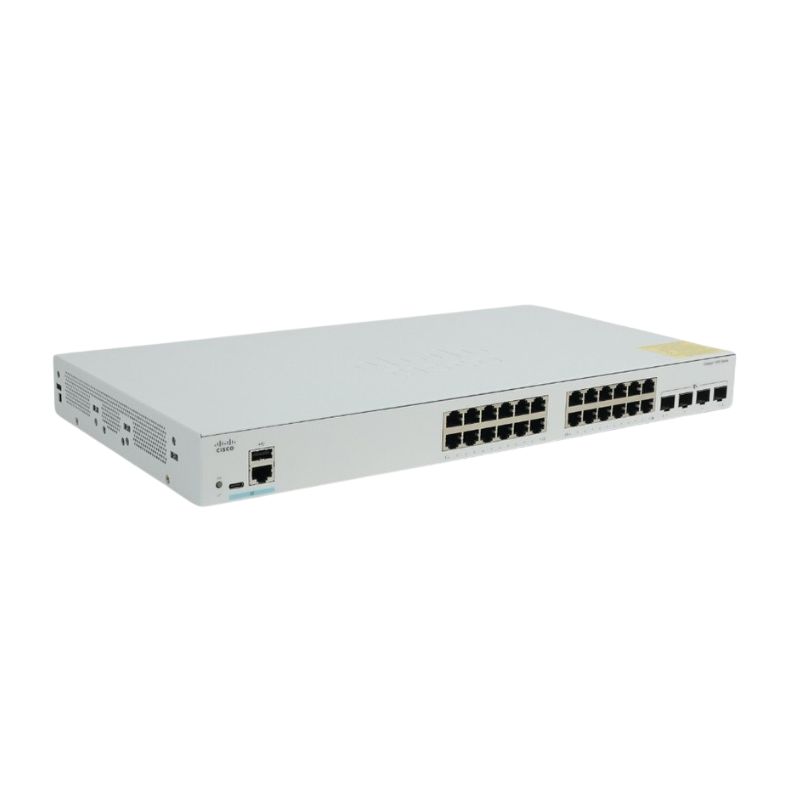


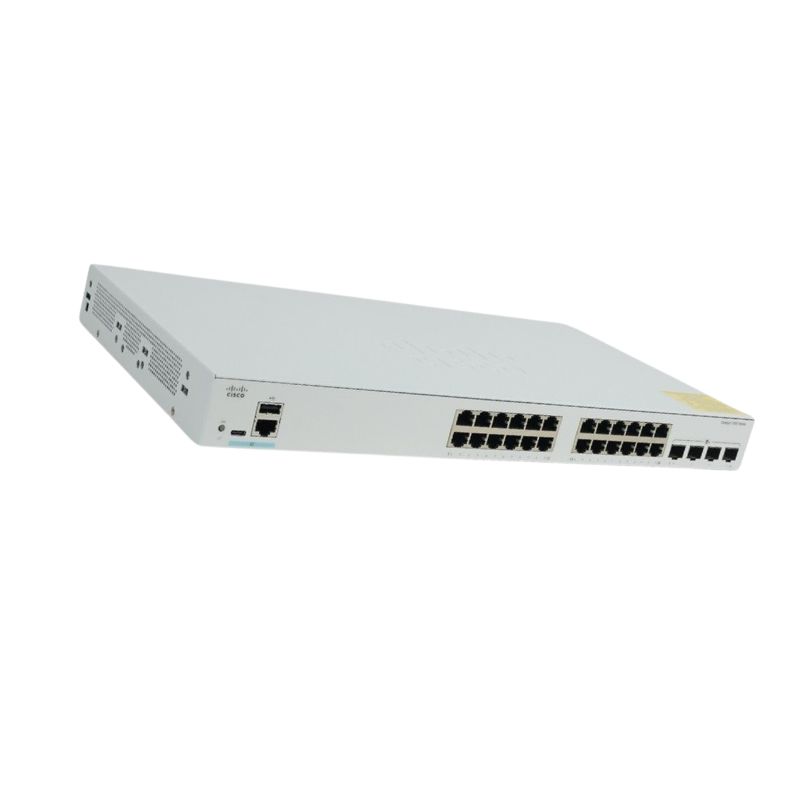
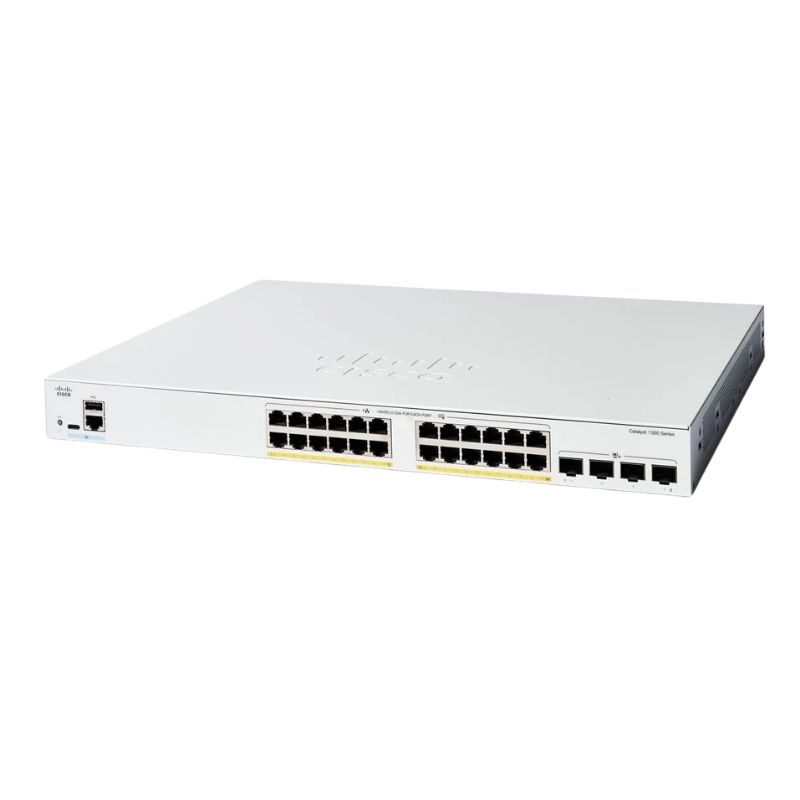
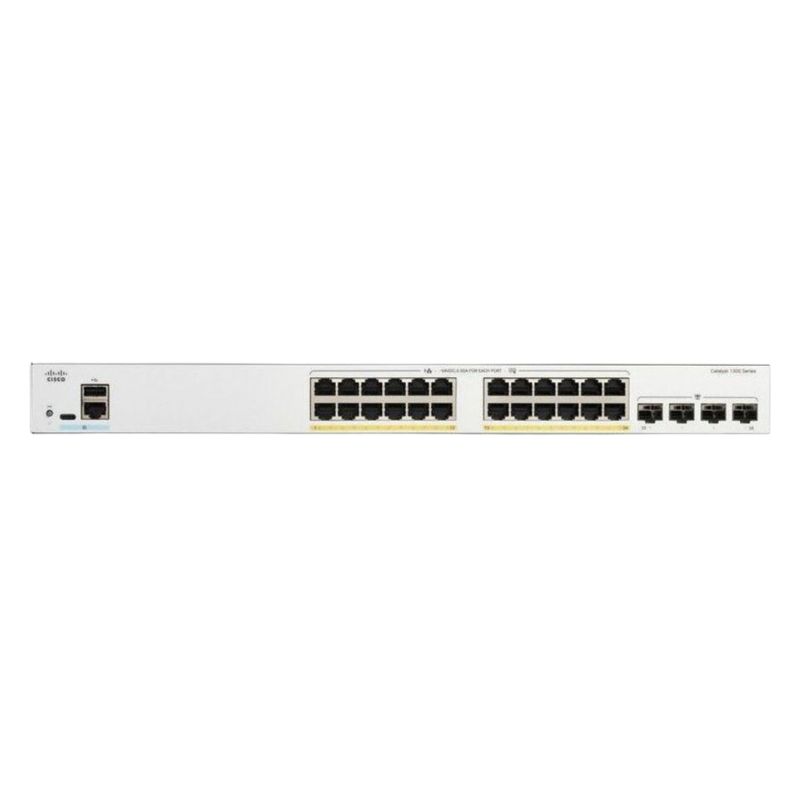
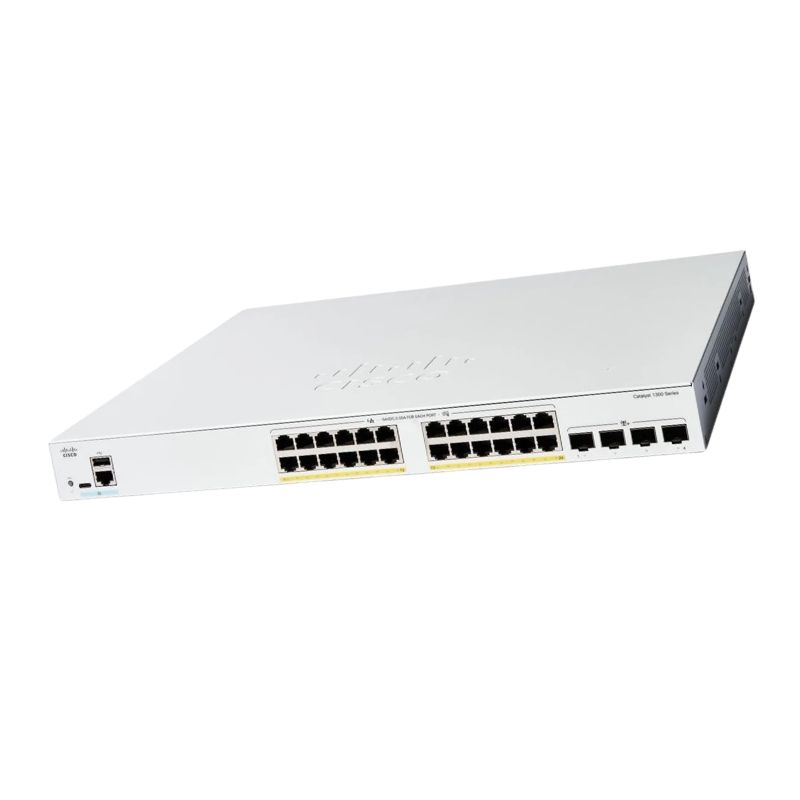
Cisco C1300-24FP-4X PoE+ Managed Network Switches with 4 X 10 Gigabit SFP+ and 24 Ports. Excellent Refurbished with 1 year replacement warranty
| SKU/MPN | Warranty | Price | Condition | You save |
|---|---|---|---|---|
| C1300-24FP-4X | 1 Year Warranty | $850.00 | Excellent Refurbished | You save: $297.50 (26%) |
| C1300-24FP-4X | 1 Year Warranty | $1,599.00 | Factory-Sealed New in Original Box (FSB) | You save: $559.65 (26%) |
The Cisco Catalyst 1300-24FP-4X is a high-performance Layer 3 managed network switch designed for modern enterprise, SMB, and campus environments. This rack-mountable Cisco switch delivers reliable Gigabit Ethernet connectivity, advanced routing features, and robust Power over Ethernet Plus (PoE+) support for scalable network deployments.
The Cisco C1300-24FP-4X Catalyst switch is a 24-port Gigabit Ethernet, PoE+ capable, rack-mountable, Layer 2/Layer 3-managed access switch designed for SMBs and enterprise branch networks that need reliable wired connectivity and high-speed fiber uplinks. It combines 24x 10/100/1000Base-T ports with PoE+ and 4x 10G SFP+ uplink interfaces, delivering a balanced blend of power delivery, throughput, and simple cloud-ready management through Cisco Business Dashboard and the Cisco Business mobile app for day-to-day operations.
Purpose-built for modern, distributed environments, this model provides a robust switching fabric and intelligent management that helps simplify provisioning, monitoring, and troubleshooting. With PoE+ power budget of 375W across 24 ports, it can power a fleet of IP phones, Wi‑Fi access points, cameras, and IoT endpoints, while 10G SFP+ uplinks ensure aggregation or backbone connections remain unconstrained by access-layer traffic.
At the hardware level, the C1300-24FP-4X features 24 Gigabit Ethernet ports and 4 SFP+ uplinks, achieving a switching capacity of 128.0 Gbps, supported by a dual‑core ARM CPU running at 1.4 GHz and 512 MB of flash. This platform is designed to deliver consistent wired performance for growing networks that may have fluctuating workloads and multi-application traffic profiles.
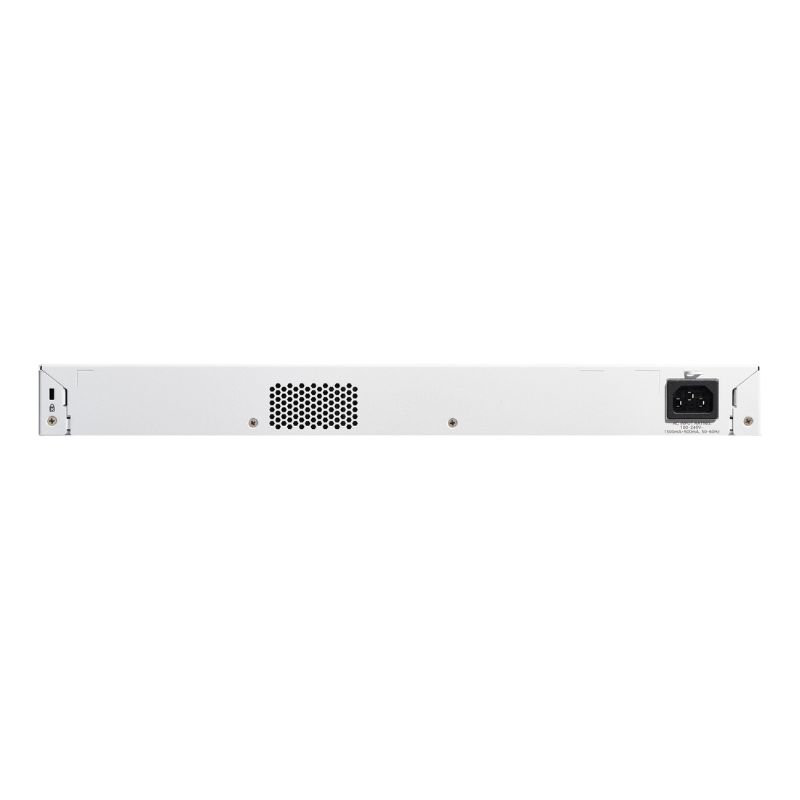
The PoE+ subsystem provides 375W of power, allowing flexible deployment of devices across floors and rooms without separate power runs. Combined with rack-mountable form factor and fan/cooling suitable for wiring closets, the platform fits seamlessly into standard 19-inch racks in branch offices and SMB core closets where density and power matter.
The Catalyst 1300/1300X family is engineered for affordability and simplicity, giving organizations the consistency of a Cisco-managed experience while maintaining cost efficiency for branch and SMB scenarios. Management is centralized via Cisco Business Dashboard and the mobile app, reducing operational overhead and enabling admins to handle multiple switches, alerts, and firmware updates from a unified interface.
This switch suits a wide range of deployment models: branch office access, SMB campus edge, retail floor aggregation, clinic or school wiring closets, and surveillance/IoT networks. The 24-port PoE+ provides enough headroom to power dense endpoints on a single floor, while the 4x 10G SFP+ uplinks connect upstream to distribution/core or to servers and storage with minimal bottlenecks. These characteristics align with the Catalyst 1300 series’ mission to be a critical building block in branch office and SMB networks where reliability, security, and simplified operations are essential.
In hospitality or retail, the 375W PoE+ budget helps minimize infrastructure costs by powering APs and cameras directly via Ethernet, while centralized management streamlines multi-site deployments. In education or healthcare, the combination of managed features, high-speed uplinks, and PoE+ enables segmented, secure environments with adequate bandwidth for digital learning tools, VoIP, and patient information systems, without sacrificing visibility or control.
The 24x Gigabit Ethernet ports support 10/100/1000 Mbps operation and provide PoE+ to connected devices, with an overall power budget of 375W. This capacity allows scenarios such as powering dozens of IP phones at roughly typical PoE draw, or mixed deployments of Wi‑Fi 6 access points and cameras, subject to per-device power profiles. PoE+ (802.3at) ensures sufficient wattage for devices requiring higher power than standard PoE.
Designing a PoE budget requires planning to ensure peak draw fits the 375W envelope. Administrators can allocate per‑port budgets, prioritize critical devices, and use monitoring via the Cisco Business tools to track consumption and spot anomalies, which is especially valuable in environments with cameras that may have IR draw at night or APs with dynamic power states.
The 4x 10G SFP+ uplinks offer path redundancy and high-speed aggregation to upper tiers or to network services like firewalls and routers. Using fiber uplinks helps isolate the access layer from electrical interference and provide longer-run, high-bandwidth links across floors or buildings. In distributed topologies, pair or stack multiple access switches feeding into redundant distribution links to maintain availability and headroom for future growth.
These uplinks are key to avoiding oversubscription when many PoE endpoints generate traffic, such as video streams from cameras or AP backhaul. By leveraging 10G, you can consolidate traffic from multiple access switches, push to an aggregation layer capable of L3 routing, and maintain service-level expectations for latency and throughput across mission-critical applications.
For simplified operations, the Catalyst 1300 series supports management via Cisco Business Dashboard and the Cisco Business mobile app, designed to reduce complexity and time spent on routine tasks. This integrated management approach streamlines provisioning, firmware lifecycle, health monitoring, and alarms, enabling small IT teams to maintain enterprise-grade oversight without extensive tooling or scripting.
Dashboard-based management also supports visual topology discovery, performance summaries, and configuration baselines. This aligns with the product’s goal as an affordable, simple-to-use switch for SMB and branch networks, emphasizing reduced operational friction without compromising reliability or control.
Initial configuration can be guided via the dashboard to set VLANs, QoS, PoE budgets, and link aggregation on uplink ports. Template-based configurations enable consistent rollouts across multiple sites, which is helpful in retail or hospitality chains. Administrators can quickly replicate port settings for phones and APs, standardize tagging, and apply access control policies to ensure consistent behavior across deployments.
Firmware updates and security patches can be staged and applied in maintenance windows, with rollback options ensuring continuity. Event-driven alerts notify operators of link flaps, power anomalies, or port security violations, helping detect issues early before they affect customer service or staff productivity.
The switch’s architecture, with a dual‑core ARM CPU at 1.4 GHz and 512 MB flash, underpins responsive management and feature execution, complemented by a switching capacity of 128.0 Gbps. This ensures that control-plane tasks, such as monitoring and policy enforcement, do not become bottlenecks while the data plane moves frames at line rate across Gigabit access and 10G uplinks.
High-capacity fabric is important in mixed environments where voice, video, and data converge. The 128.0 Gbps capacity delivers consistent wire-speed forwarding under load, giving IT the assurance that access ports can maintain throughput even as aggregate traffic grows during peak operations or multicast-heavy scenarios.
As part of the Catalyst 1300 series, the C1300-24FP-4X was designed for reliability and affordability in branch and SMB contexts, with features and management tooling tailored to minimize downtime. Coupled with 10G uplinks for fast failover paths, the model fits redundancy designs where multiple uplinks connect to different distribution switches or cores for high availability.
Administrators can implement link aggregation (LACP) on uplink ports to increase bandwidth and failover resilience. With proper VLAN segmentation and QoS, critical applications retain priority during failover events, aiding continuity of services such as voice communications and POS transactions.
Network segmentation through VLANs and secure access via port-level policies are foundational in branch and SMB designs. The C1300-24FP-4X, managed through Cisco Business Dashboard, supports configuring VLANs, ACLs, and port security measures that help prevent unauthorized access, isolate guests or IoT devices, and minimize the blast radius of potential incidents.
PoE endpoints such as cameras and APs benefit from per-port control, allowing administrators to disable power on suspicious devices, implement MAC binding, or enforce 802.1X network access control. Policies can be standardized and propagated across multiple devices from the dashboard, ensuring consistent enforcement even as the network expands.
Centralized configuration baselines improve governance by ensuring that only authorized settings are deployed. Change management via dashboards reduces misconfigurations that could lead to security gaps. Audit logs and alerts provide traceability and support compliance reporting in regulated industries, aligning with the switch’s role in secure, manageable SMB/branch networks.
Planning PoE delivery begins with inventorying device power draws and allocating per-port budgets to fit within the 375W total. For example, a set of IP phones with typical draw may be combined with APs and cameras that have higher wattage requirements; ensuring nighttime IR camera peaks are accounted for avoids surprise power deficits. Monitoring power events via the dashboard helps maintain stability.
In multi-floor deployments, centralizing PoE budgets per closet combined with 10G uplinks enables consistent service quality while simplifying cabling. The PoE+ capability supports growing IoT adoption, powering sensors and controllers without extra power lines, helping reduce installation complexity and cost.
QoS on managed switches is essential in converged networks. Administrators can prioritize voice and video traffic, ensure AP backhaul remains stable, and shape guest or low-priority traffic to preserve business-critical applications. The switch’s architecture and management approach assist in enforcing these policies consistently across ports and VLANs.
In call centers or hospitality, consistent QoS prevents voice jitter, while video surveillance relies on steady bandwidth for streams and recording. APs serving high-density client areas benefit from prioritized uplink queues and proper per‑SSID VLAN mapping to avoid contention, especially during peak hours.
Implement port security to limit MAC addresses per port, and apply ACLs to restrict traffic flows between VLANs. 802.1X authentication can be used to validate devices, ensuring only authorized hosts gain access. These measures help reduce the attack surface at the edge, where diverse endpoints connect, aligning with SMB and branch security needs.
Segregate guests, IoT, and corporate devices via VLANs with tailored policies and DHCP scopes. This segmentation strategy prevents lateral movement and isolates misbehaving devices, leveraging the switch’s managed features for practical, defensive network architecture.


 Contact Us
 Information
 Catalog
 Solid State Drives (SSD)
 Network Switches
 Hard Disk Drives
 HBA & Controllers
 PC & Servers
 PC & Server Memory
 CPU & Processors
 Network Routers
 Power Supplies
 Tape Drives & Libraries
 Network Devices
 Computer & Network Cables