(7% discount is applied at checkout)
Cart is empty
Your go-to destination for cutting-edge server products
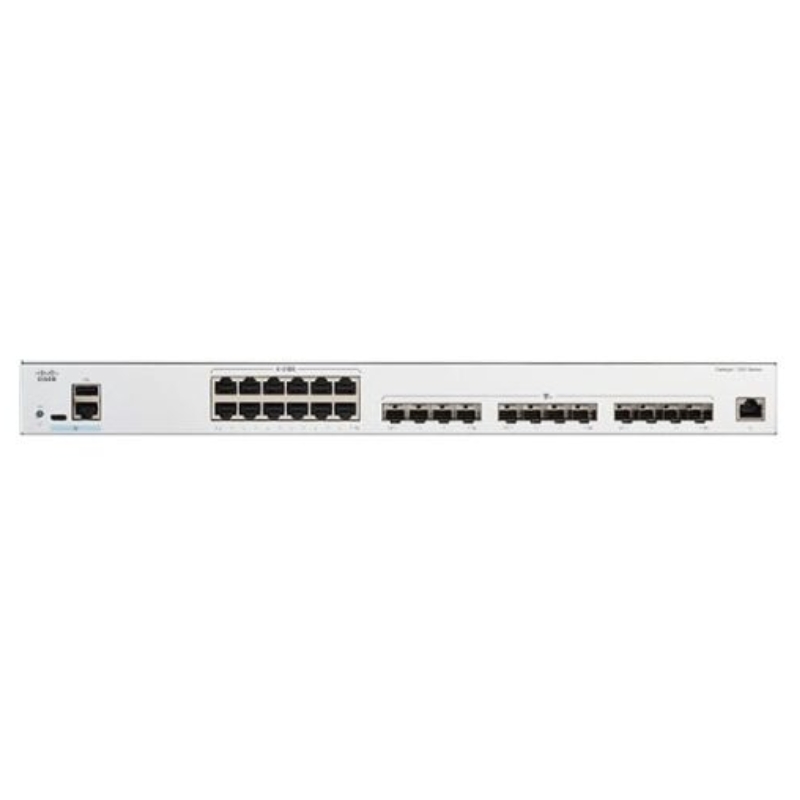


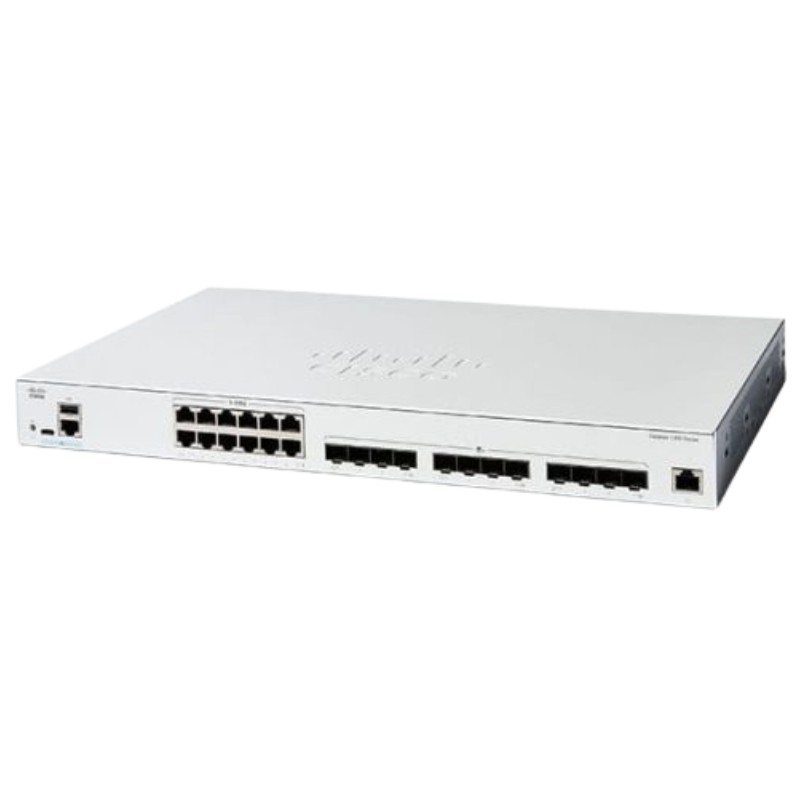
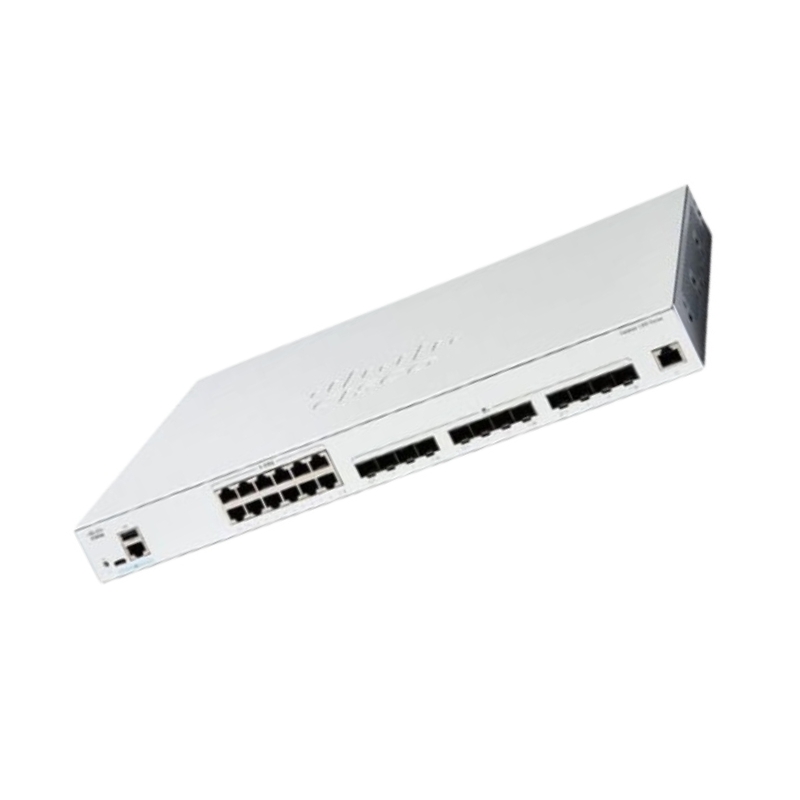
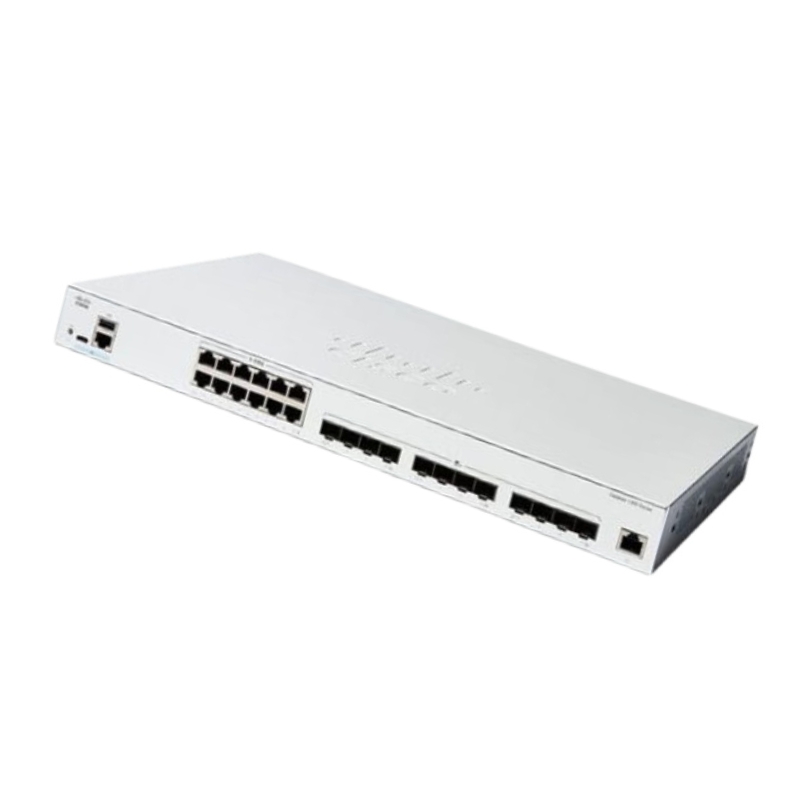
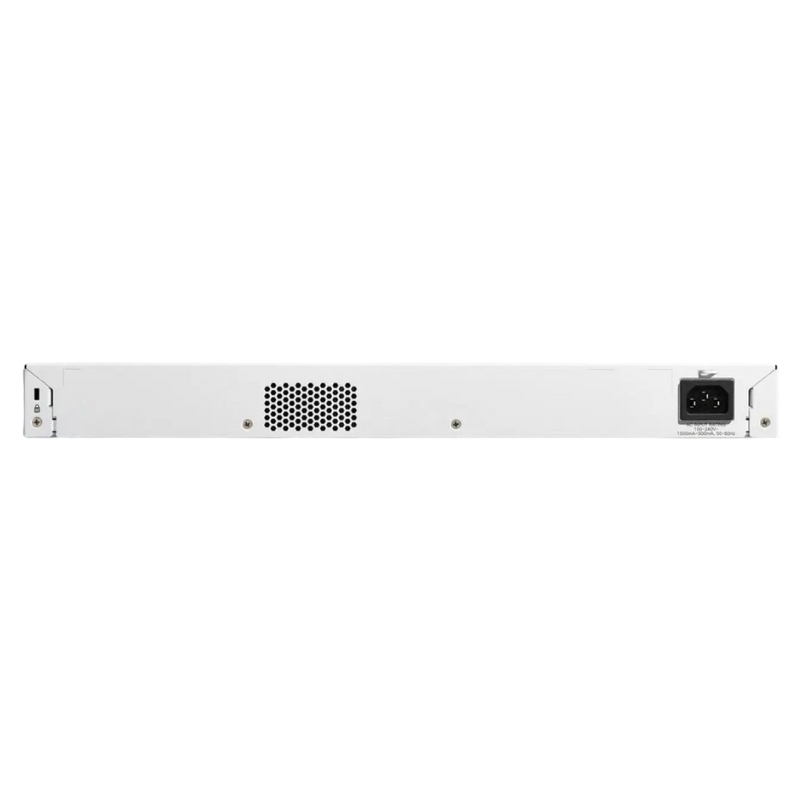
Cisco C1300-24MGP-4X Catalyst 1300 8 Port 2.5ge, 16 Port Ge, Poe, 4x10g Sfp+ Arm Dual-core At 1.4 Ghz Ethernet Switch. Excellent Refurbished with 1 year replacement warranty
The Cisco C1300-24MGP-4X is a high-performance managed network switch designed to deliver reliable connectivity, advanced security, and efficient power distribution for modern business networks. Built with scalability and flexibility in mind, this switch is ideal for enterprise, SMB, and growing IT infrastructures.
The Cisco C1300-24MGP-4X Catalyst 1300 Ethernet Switch category focuses on access and aggregation-layer switches designed for modern campus networks, branch offices, retail floors, and high-density edge deployments that demand multi-gigabit connectivity and scalable Power over Ethernet. This category centers around platforms offering eight 2.5G ports for Wi-Fi 6 and Wi-Fi 6E backhaul, sixteen Gigabit Ethernet ports for endpoint devices, four 10G SFP+ uplinks for resilient core connectivity, and an ARM dual-core processor at 1.4 GHz for efficient packet handling and security services. It highlights energy-efficient hardware, rich Layer 2 and Layer 3 features, automated provisioning capabilities, and robust monitoring and policy enforcement tailored for secure, high-performance enterprise environments.
Solutions in this category are optimized for seamless integration with wired and wireless infrastructures, enabling consistent user experiences across laptops, phones, IP cameras, point-of-sale terminals, and IoT sensors. The multi-gigabit access ports remove bottlenecks for advanced wireless access points and bandwidth-intensive endpoints, while SFP+ uplinks support modular fiber or copper transceivers to extend connectivity to aggregation or core distribution layers. Administrators benefit from standardized management workflows, streamlined deployment templates, and per-port visibility that reduces operational overhead while enhancing compliance, segmentation, and resilience.
This category emphasizes balanced port density, future-ready multi-gig access, dependable PoE budgets, and uplink flexibility that simplify scaling. The switch design supports campus access layers, branch interconnects, remote warehouses, SMB networks with growth plans, and specialized verticals such as education, hospitality, healthcare, and professional services. The ARM dual-core CPU contributes to responsive control-plane operations and helps sustain performance when policy, telemetry, and security features are enabled. Administrators seeking streamlined rollouts, predictable lifecycle costs, and standards-based interoperability will find these platforms ideal for evolving digital workplaces.
The hardware architecture centers on a non-blocking or near-non-blocking switching fabric, optimized for consistent throughput across mixed traffic types. The ARM dual-core at 1.4 GHz underpins control-plane activities, supporting features such as advanced VLANs, QoS classification, access control lists, multicast management, and telemetry export without compromising user experience. Eight 2.5G multi-gig ports ensure higher bandwidth lanes for AP backhaul and next-generation endpoints, while sixteen Gigabit ports provide reliable connectivity for mainstream devices, voice handsets, printers, and industrial sensors. Four 10G SFP+ uplinks connect the switch to aggregation, distribution, or core tiers, allowing diverse transceiver options for short-range and long-range deployments.
Physical design typically includes ample airflow channels, low-noise fans, and efficient power supplies to minimize thermal stress and energy consumption, supporting continuous operation in wiring closets or open office environments. Port labeling, LED indicators, and front-facing access simplify identification and troubleshooting, reducing mean time to repair and facilitating routine moves, adds, and changes. With PoE capabilities, the switch powers endpoints directly, reducing the need for local adapters while enabling remote restarts and monitoring. Flexible uplinks enable ring, mesh, or hub-and-spoke designs, incorporating redundancy and bandwidth headroom for peak usage periods.
The eight 2.5G ports are tailored for high-throughput access points, advanced workstations, and devices requiring more than 1G but not necessarily 5G or 10G. This design matches the practical bandwidth demands of Wi-Fi 6 and Wi-Fi 6E radios, which frequently exceed 1G backhaul under heavy client density or advanced modulation schemes. Multi-gig supports auto-negotiation, enabling seamless operation with existing Cat5e or Cat6 cabling, unlocking performance gains without wholesale rewiring. The sixteen 1G ports provide deterministic performance for typical edge devices, ensuring predictable latency and throughput for daily productivity.
Four 10G SFP+ uplinks offer diverse topology options. Administrators can deploy dual-uplink redundancy to separate aggregation nodes, or use load-sharing for increased throughput into the distribution layer. SFP+ slots accommodate a variety of transceivers and DAC cables, enabling short-reach, long-reach, and cost-optimized connections. This flexibility supports growth, allowing networks to scale from basic aggregation to more complex designs with minimal disruption, while maintaining consistent performance for high-bandwidth applications and critical services.
The category highlights PoE provisioning for a range of endpoint types, including IP phones, cameras, access points, signage, PoS terminals, and IoT gateways. PoE simplifies deployment by providing power and data over a single cable, reducing clutter and improving maintainability. Administrators benefit from per-port power monitoring, prioritization, and budgeting mechanisms that ensure critical devices receive guaranteed power, especially during recovery or brownout scenarios. With intelligent power allocation, the switch can optimize energy usage, disable inactive ports, and align consumption with organizational sustainability goals.
PoE provisioning typically supports multiple classes and profiles, allowing fine-grained control tailored to device needs. Endpoint types may require varying wattages, and the switch responds dynamically, granting or limiting draw as appropriate. Scheduling and policies can reduce power after hours for nonessential devices, while ensuring continuous power for security cameras and environmental sensors. Granular controls help avoid oversubscription, maintaining stability and compliance across diverse sites and use cases.
This category supports robust Layer 2 features such as VLANs, trunking, spanning tree variants for loop avoidance, and link aggregation for bandwidth and redundancy. Layer 3 capabilities often include static routing, policy-based routing, and dynamic protocols suitable for campus interconnects and branch backhaul. These features enable segmentation by department, device type, or security posture, reducing broadcast domains and improving performance. Multicast support aids in efficient distribution of media streams and IPTV services, while QoS frameworks ensure latency-sensitive traffic like voice and video receive appropriate prioritization.
Segmentation methodologies, including VLAN-based isolation, apply consistent access controls and minimize lateral movement. Policy enforcement via ACLs, DHCP snooping, and source guard mechanisms strengthens defense-in-depth for edge devices and guest users. Integration with identity services can provide dynamic policies per user or device role, enabling tailored network access with minimal manual intervention. These techniques collectively reduce risk, streamline compliance, and support least-privilege designs across diverse organizations.
QoS frameworks classify, mark, and queue traffic based on business priority, ensuring critical applications retain performance during congestion. Voice, video conferencing, real-time collaboration tools, and transactional systems benefit from low-latency and low-jitter handling. Hierarchical policies and per-port queuing enable flexible control, letting administrators allocate bandwidth to important services while preventing bulk transfers from dominating. This approach translates into a consistent user experience, predictable application behavior, and improved service-level alignment.
Multicast optimization allows efficient distribution of identical content to multiple recipients without duplicating streams. By managing group membership and pruning unnecessary paths, the switch ensures bandwidth is conserved and organized logically. This is particularly effective for IPTV, digital signage, and live broadcasts in campuses or large facilities, enabling high-quality delivery without taxing uplink capacity. Coordinated multicast controls reduce complexity and mitigate misconfigurations that could otherwise lead to flooding or instability.
Security features in this category support zero trust principles, requiring verification and policy enforcement at every access point. Capabilities include port security, dynamic VLAN assignments, MAC-based controls, IP source validation, and DHCP protections that prevent rogue services. Secure management via encrypted protocols, role-based administration, and strong credential policies guard the control plane. Audit logs, event telemetry, and integration with security analytics tools contribute to rapid detection and response for abnormal behavior.
Access control lists provide granular allow and deny rules, with logging that informs both operations and compliance teams. Endpoint hygiene can be enforced via profiling and posture checks coordinated through identity systems, granting appropriate access only to compliant devices. Guest access policies segregate visitors from production environments, protecting business data while maintaining convenience. These controls may be combined with monitoring to spot unusual traffic patterns indicative of early-stage compromises.
Secure management practices rely on encrypted sessions, privilege separation, and centralized configuration repositories. Change control workflows reduce errors, prevent drift, and preserve audit trails for governance. Backup and restore capabilities ensure configurations can be quickly recovered, reducing downtime after incidents or failed experiments. Administrators benefit from templated deployments, preventing inconsistencies and enabling repeatable rollouts across multiple sites.
Telemetry exported from the switch helps correlate events across endpoints, servers, and security platforms. Flow records, syslog entries, and counters reveal anomalies such as scanning, brute force attempts, or unusual protocol usage. Connected analytics systems can alert operators, trigger automated quarantines, or initiate guided investigations. This integration closes visibility gaps and fortifies the edge against evolving threats.
Common deployment scenarios include access-layer placements feeding aggregation or distribution stacks, branch office edge switches connecting to WAN routers, and retail floors where PoS devices and cameras require reliable power and segmentation. In campuses, multi-gig ports connect to high-capacity access points servicing dense classrooms, auditoriums, and conference areas. SFP+ uplinks attach to aggregation pairs, ensuring resiliency and swift failover. This category’s design patterns emphasize modularity, redundancy, and consistent policy enforcement across wired and wireless domains.
Campus networks benefit from multi-gig ports that prevent backhaul saturation for modern access points. These switches provide enough PoE capacity to power APs, phones, and sensors without external injectors, simplifying installations in ceilings and concealed spaces. Segmentation isolates departments such as faculty, students, and administrative staff, improving security and performance. QoS policies prioritize lecture streaming, interactive seminars, and telepresence solutions, maintaining quality during peak hours.
Distributed sites require compact, efficient, and reliable switching platforms with flexible uplinks for regional aggregation. The switch’s ARM-based control plane sustains policy and security features without imposing burdensome overhead, allowing small teams to manage remote infrastructure confidently. Templates and automation reduce the effort required to replicate designs, enabling consistent experiences for employees across locations. Power efficiency minimizes cooling needs, keeping OPEX in check while supporting long operating hours.
Retail floors often combine PoS terminals, RFID readers, digital signage, and surveillance cameras that draw power via PoE. The switch’s per-port controls allow safe provisioning, preventing unexpected power disruptions to critical devices. VLANs separate transactional systems from guest Wi-Fi, and QoS ensures card processing remains responsive even during promotional broadcasts. Uplink redundancy maintains continuity during maintenance windows, preserving customer service and security operations.
Multi-gig 2.5G ports commonly operate over existing copper cabling such as Cat5e or Cat6, helping organizations derive higher throughput without rewiring. SFP+ modules and DAC cables provide tailored uplink choices, supporting short and long runs based on building layouts and budgets. Endpoint compatibility covers mainstream IP phones, cameras, access points, PCs, printers, and IoT sensors, with auto-negotiation ensuring smooth link establishment. The switch’s focus on standards-based operation promotes interoperability and avoids vendor lock-in for accessories and peripherals.
Transceiver selection depends on distance, fiber type, and environmental constraints. Short-reach modules suit data closets and adjacent rooms, while long-reach options link floors or buildings across campuses. DAC cables provide low-cost, low-power connections for very short distances in racks or cabinets. Thoughtful choices reduce both capital and operational costs, maintaining bandwidth and resilience with minimal complexity.
Endpoint onboarding relies on automatic discovery, 802.1X authentication, and dynamic VLAN assignment based on device profile or user role. With diverse endpoints ranging from phones to cameras to sensors, policies ensure each category receives appropriate access and bandwidth. PoE features streamline deployments, allowing endpoints to be mounted where needed without local power. Device diversity is addressed through flexible QoS queues, ACLs, and segmentation frameworks, maintaining consistency even as environments evolve.
High-density wireless backhaul benefits from the eight 2.5G ports, ensuring access points can fully leverage channel widths, MIMO streams, and modern modulation. With PoE, APs receive consistent power, enabling advanced features without external injectors. QoS protects real-time traffic traversing the wired backhaul, keeping latency within acceptable limits for voice and interactive conferencing. Segmentation separates guest traffic, preventing contention with employee services and safeguarding internal resources.
Wi-Fi 6 and Wi-Fi 6E technologies increase spectral efficiency, raising throughput demands on wired backhaul. Multi-gig ports reduce bottlenecks, allowing the wireless edge to function at intended capacity even in large classrooms, stadiums, or conference halls. PoE ensures adequate power for multi-radio APs and added modules. Policies and monitoring provide clarity over client behaviors, roaming patterns, and concurrent usage spikes.
Seamless roaming relies on stable wired infrastructure, correct VLAN assignments, and consistent QoS enforcement across access switches. Latency is governed by backhaul congestion, queue management, and uplink headroom. Fine-tuned policies maintain user experience across collaboration tools, streaming media, and cloud applications. Observability confirms that the network meets expectations during events and daily operations alike.
Surveillance deployments combine cameras, storage, and monitoring consoles that rely on reliable PoE and stable throughput. The switch’s per-port power control ensures cameras receive consistent power, with remote power-cycle capability aiding in troubleshooting. VLANs isolate video traffic, preserving bandwidth and ensuring privacy controls. Uplink choices provide flexibility to connect NVRs or video management systems without saturating distribution links.
Camera provisioning accounts for codec types, frame rates, and resolution, all of which affect bandwidth requirements. QoS policies can prioritize live feeds over archival transfers, ensuring responsive monitoring. With power budgets mapped to camera wattage, administrators avoid surprises during peak activity. Monitoring reveals packet loss or jitter that could degrade image quality, guiding remediation steps in real time.
Failure domain planning segments cameras across ports and VLANs to reduce the impact of isolated issues. Redundant uplinks maintain access to recording systems if a link or module fails. Documentation and topology diagrams aid rapid incident response, guiding technicians to the correct ports and policies. By isolating potential faults, organizations preserve safety and investigative capabilities.
Voice handsets, softphones, and video conferencing tools rely on low-jitter, low-latency networks. The switch category provides QoS policies that mark and queue real-time traffic, maintaining clarity even during data bursts. VLANs separate voice from data, simplifying troubleshooting and sustaining consistent performance. PoE powers handsets directly, streamlining installations and enabling remote resets when needed.
Different codecs exhibit diverse bandwidth, jitter tolerance, and packetization characteristics. Prioritization techniques ensure real-time flows receive dedicated queues and appropriate scheduling weights. Per-port policies align with device roles so phones, conferencing endpoints, and collaboration hubs receive consistent treatment. This structured approach guards user experience and reduces support tickets.
Sustainability efforts look beyond raw performance to include energy-conscious operation. PoE scheduling reduces draw during off-hours, while efficient power supplies and cooling designs minimize waste. Automation helps deactivate unused ports, align energy usage with occupancy patterns, and report consumption metrics. These measures contribute to corporate sustainability goals without sacrificing user experience.
Green initiatives incorporate targets for energy reduction, heat management, and lifecycle planning. Measurable outcomes include lower power bills, reduced cooling requirements, and improved equipment longevity. Transparent reporting promotes accountability and supports stakeholder communications. By embedding sustainability into network operations, organizations demonstrate responsible stewardship.
Balancing efficiency and performance requires careful policy design and monitoring. QoS ensures critical services retain priority while nonessential tasks operate within defined limits. Observability validates that efficiency measures do not degrade user experience. Administrators adjust thresholds based on real-world behavior to sustain both goals.


 Contact Us
 Information
 Catalog
 Solid State Drives (SSD)
 Network Switches
 Hard Disk Drives
 HBA & Controllers
 PC & Servers
 PC & Server Memory
 CPU & Processors
 Network Routers
 Power Supplies
 Tape Drives & Libraries
 Network Devices
 Computer & Network Cables