(7% discount is applied at checkout)
Cart is empty
Your go-to destination for cutting-edge server products
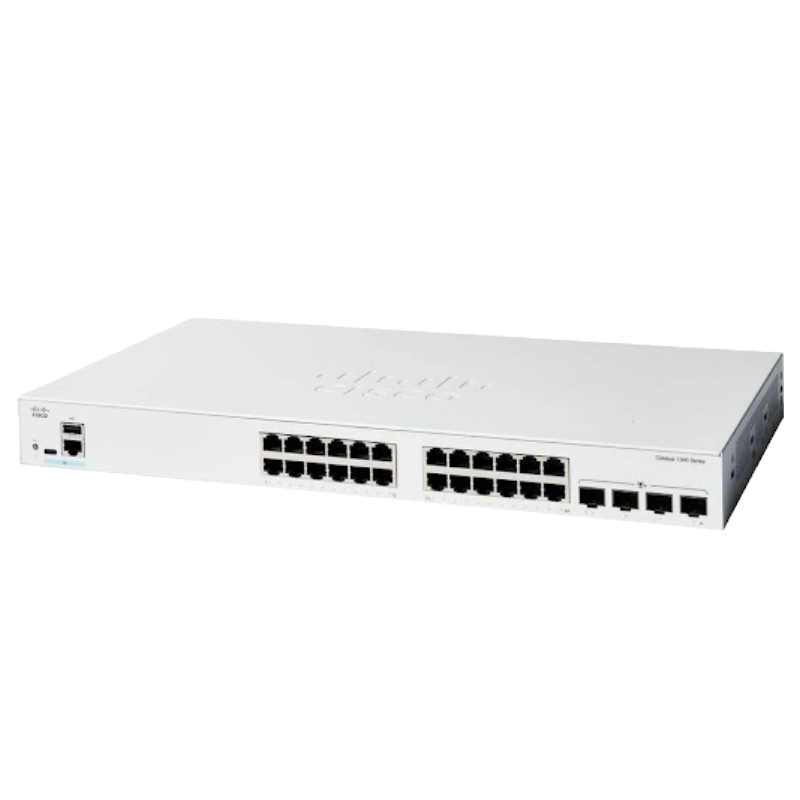


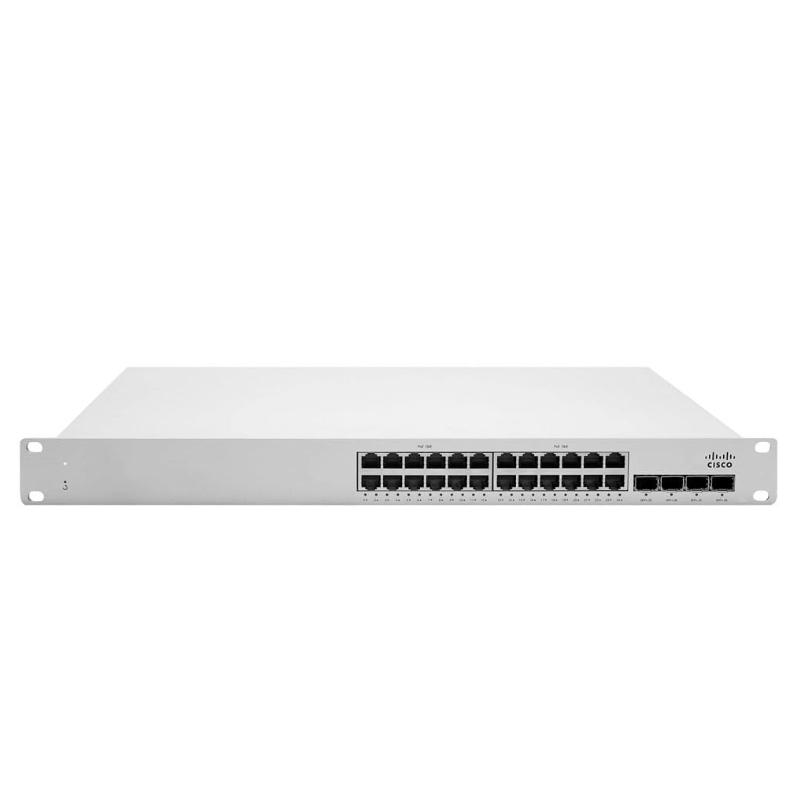
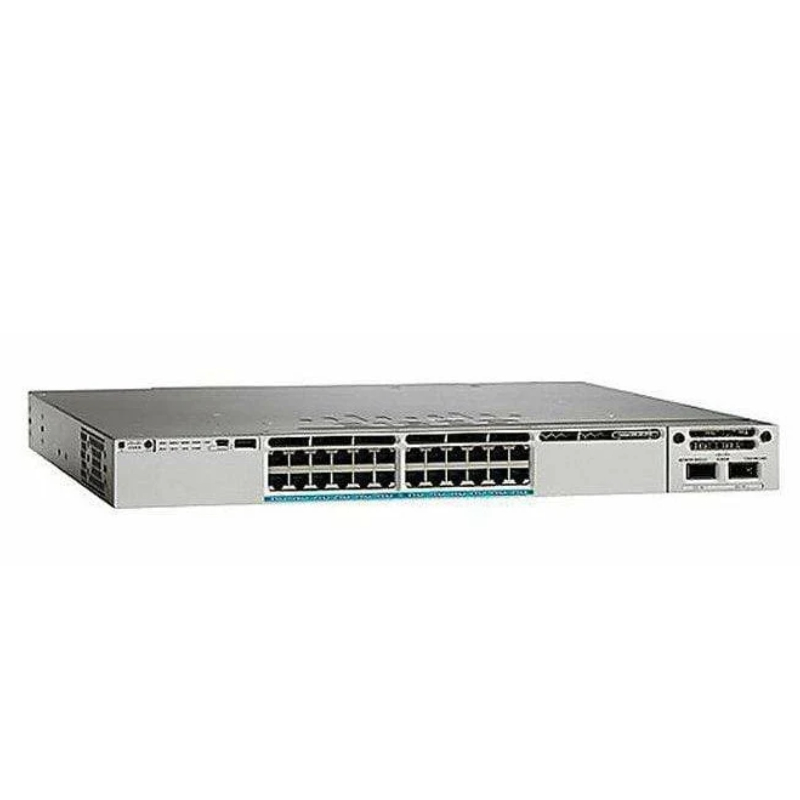
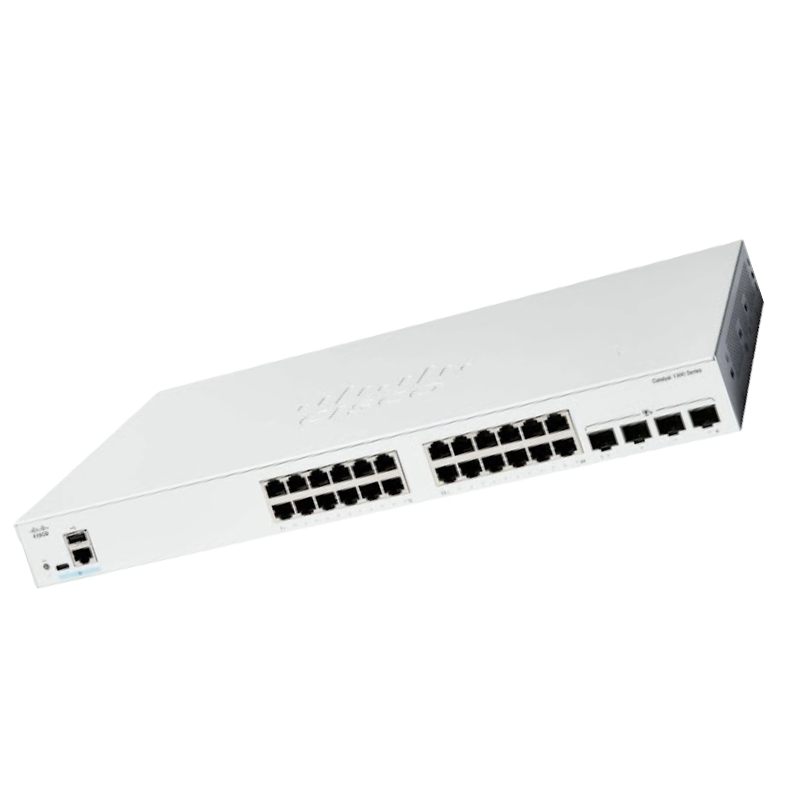
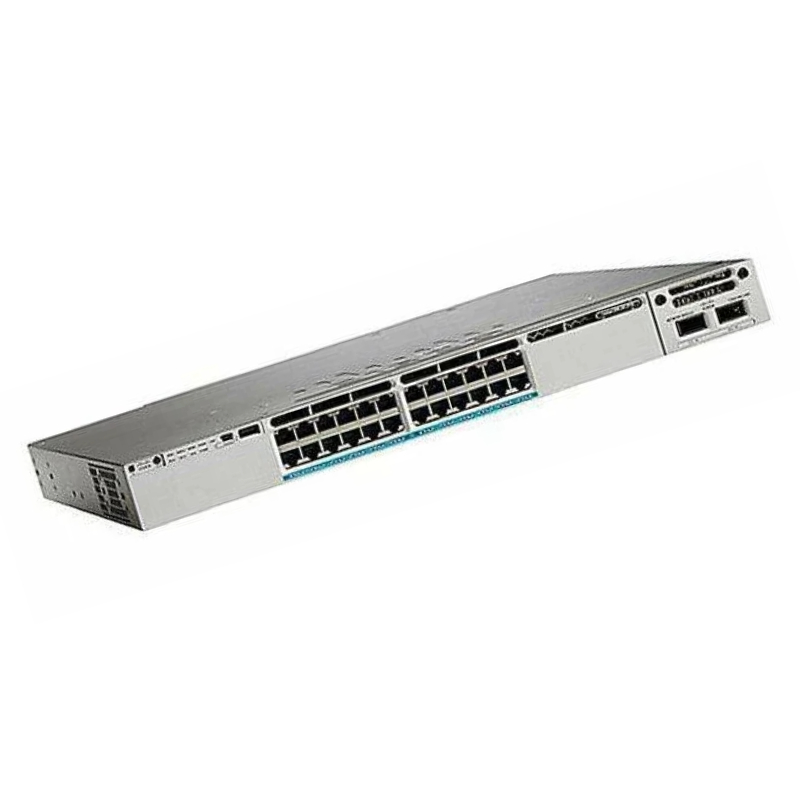
Cisco C1300-24P-4X Catalyst 1300 SFP+ Layer 3 Manageable 24 Ports Ethernet Switch. Factory-Sealed New in Original Box (FSB) with 1 year replacement warranty
| SKU/MPN | Warranty | Price | Condition | You save |
|---|---|---|---|---|
| C1300-24P-4X | 1 Year Warranty | $630.00 | Excellent Refurbished | You save: $220.50 (26%) |
| C1300-24P-4X | 1 Year Warranty | $890.00 | Factory-Sealed New in Original Box (FSB) | You save: $311.50 (26%) |
The Cisco C1300-24P-4X is a high-performance, rack-mountable Ethernet switch designed for modern enterprise networks. With 24 PoE-enabled ports and advanced Layer 3 capabilities, it ensures seamless connectivity and robust data management for your organization.
The Cisco C1300-24P-4X sits in the Catalyst 1300 Series category, purpose-built for enterprise branch offices and small-to-medium businesses that need reliable, secure, and affordable switching with straightforward operations. Managed through Cisco Business Dashboard and the Cisco Business mobile app, this category emphasizes simplicity without sacrificing essential Layer 3 capabilities or modern uplink performance. It’s engineered as a foundational building block for networks that connect users to applications and the cloud, balancing performance, visibility, and control in a compact access-layer footprint.
Within this category, the hallmark model brings together 24 Gigabit Ethernet ports for access connectivity and four SFP+ 10G uplinks that provide ample headroom for aggregation and upstream bandwidth. The design supports power over Ethernet (PoE+) for cameras, access points, and VoIP endpoints, making it a versatile choice for branches that want fewer power injectors and cleaner cable runs. The management experience is unified and approachable, enabling lean IT teams to do more with less—both at initial deployment and during ongoing operations.
This category centers on a 24-port Gigabit Ethernet access layer, delivering ample density for user endpoints, IoT devices, and edge systems. Complementing access are four SFP+ uplinks that unlock 10 Gb/s fiber connectivity to distribution or core switches, accommodating high-throughput services, inter-VLAN routing, and uplink redundancy. The balanced port mix ensures seamless growth from small-scale deployments to busier branch networks that benefit from multi-gig uplink lanes.
The C1300-24P-4X provides PoE+ power up to 30W per port, serving power-hungry devices like Wi‑Fi 6 access points and PTZ cameras without external injectors. With a 195W total power budget, network planners can support a meaningful mix of phones, cameras, and APs while maintaining reserve capacity for peak demands and future additions. This consolidated power strategy reduces complexity and lowers TCO by limiting auxiliary power gear and simplifying cable management across the branch.
To keep latency low and micro-burst traffic handled smoothly, the model delivers a 128 Gb/s switching capacity and a forwarding rate of 95.23 Mpps. This level of throughput ensures steady performance in multi-VLAN environments, converged voice/video networks, and uplink-heavy designs where inter-VLAN routing and east-west traffic patterns are routine. As SMBs adopt more cloud-based services and real-time collaboration tools, sustained line-rate capabilities become an essential ingredient for a responsive user experience.
Under the hood, the category includes a dual-core ARM processor operating at 1.4 GHz, paired with 512 MB flash that supports operating system images, configuration storage, and logging. This hardware combination aids smooth management operations, rapid configuration application, and reliable firmware management for standardized rollouts across multiple sites. The result is a well-balanced resource profile for a Layer 3 manageable switch optimized for pragmatic, day-to-day IT needs.
Management is streamlined through Cisco Business Dashboard and the Cisco Business mobile app, which provide centralized visibility, configuration, and monitoring tools tailored to SMB and branch operations. This approach reduces setup time and makes ongoing adjustments and firmware updates more predictable, ensuring network hygiene doesn’t slip as the environment scales. It’s a pragmatic blend of enterprise-grade oversight with an interface designed for organizations without deep networking teams.
Layer 3 manageable switches in this category allow you to implement inter-VLAN routing directly at the access layer, simplifying network designs and reducing dependence on central routers for local traffic. By moving routing closer to endpoints, you can produce lower latency paths and more efficient traffic steering, especially in branches with localized services. The architecture also aids segmentation, enabling cleaner separation between departments or device classes.
VLANs and ACLs provide granular control over traffic patterns, access permissions, and broadcast domains, helping IT teams enforce least-privilege networking. Policies can define how devices communicate across subnets, which services are reachable, and which flows should be rate-limited or inspected. This policy-first mindset reduces risk and makes troubleshooting far more deterministic.
Redundant SFP+ uplinks enable link aggregation and fast failover, which hardens the branch against upstream disruptions. In practice, aggregated uplinks increase throughput while lowering risk; if one fiber link fails, another can sustain connectivity without user-visible downtime. For organizations that need predictable connectivity to core services, these uplink options are foundational.
With 24 Gigabit ports, the category is ideal for mixed environments where laptops, thin clients, printers, and point-of-sale devices sit alongside cameras and phones. The PoE+ capability up to 30W per port makes it straightforward to power access points and VoIP handsets, trimming power adapters and simplifying cable runs through shared switching infrastructure. Four 10G SFP+ uplinks maintain performance headroom and clean traffic separation to upstream aggregation switches.
Deploying IP cameras—especially PTZ or multi-sensor models—benefits from PoE+ without external power supplies, reducing clutter and simplifying maintenance. The 195W power budget supports multiple cameras alongside other powered devices, ensuring stable operation during peak motion detection or recording events. Segmented VLANs keep camera feeds isolated from user traffic, limiting lateral exposure and improving overall security posture.
Modern APs often require PoE+ for full radio performance and multi-user throughput. The category’s power per port and overall budget can comfortably sustain several APs across a floor, while uplink bandwidth guarantees sufficient backhaul for dense client populations. Layer 3 features allow flexible SSID-to-VLAN mapping and routing decisions at the edge for smoother roaming and targeted policy control.
VoIP phones and UC endpoints integrate cleanly through PoE+, removing desk-level power bricks and easing moves, adds, and changes. Quality of Service policies ensure voice traffic receives priority treatment during busy periods, reducing jitter and packet loss. With 10G uplinks, voice and video conferencing traffic can traverse upstream links without bottlenecks that would otherwise degrade call quality.
Four SFP+ uplinks at 10 Gb/s offer a mix of redundancy and scale for branch networks that need consistent performance. Link aggregation groups can increase effective bandwidth beyond a single link while still providing resilience, and diverse uplink paths can connect to multiple aggregation switches for high availability. This strategy lets branches grow without refactoring the access layer every time traffic volume increases.
SFP+ optics enable flexible media selection, such as short-reach multimode for in-building runs and long-reach single-mode for campus spans. Choosing optics to match distance and budget allows IT teams to build practical uplink designs without compromising performance. The ability to reuse existing fiber plant also aids cost control during upgrades.
Because the switch category is Layer 3 manageable, upstream links can carry multiple VLANs and routed interfaces, maintaining clean separation all the way to the core. This reduces the complexity of handling inter-VLAN communication centrally while ensuring security policies remain consistent across the path. In multi-tenant or multi-department environments, the approach increases control without adding undue operational overhead.
A 128 Gb/s switching capacity supports concurrent flows, multicast traffic, and heavy east-west movement between VLANs without undue congestion. At 95.23 Mpps forwarding, small-packet workloads—common in voice signaling and control protocols—are handled capably, improving the perceived responsiveness of applications. For SMBs adopting cloud SaaS and real-time collaboration, this level of performance reduces stalls and keeps user experiences crisp.
Branch environments often blend bulk data transfers, interactive applications, and background services. The performance envelope of this category helps smooth out variability, making bursts less disruptive to steady traffic. Combined with smart QoS and segmentation, the platform delivers consistent results even as endpoint counts climb.
The PoE+ design ensures powered devices receive adequate wattage under normal operating conditions, minimizing brownouts or reboots caused by insufficient power. With a 195W budget, planners can size deployments for cameras, phones, and APs, then expand carefully as requirements grow. This predictability fosters fewer site visits and less reactive troubleshooting.
PoE+ up to 30W per port lowers the need for inline injectors and localized power bricks, which simplifies cabling and enhances aesthetics in open office layouts. Fewer power points mean fewer single points of failure and cleaner cable trays. The approach also reduces the per-device setup effort, making rollouts faster and more repeatable.
Many modern access points draw closer to the upper bounds of PoE+ power when operating multiple radios or advanced features. The category’s per-port capacity accommodates these demands, ensuring full-feature APs can deliver high throughput and client density. That means less compromise when designing wireless for collaboration-heavy spaces.
As cameras and phones multiply in branch environments, the PoE budget becomes a critical planning metric. With 195W available, the category can serve a meaningful number of devices while leaving overhead for peak or future expansions. Administrators can monitor utilization through management dashboards and fine-tune allocations as the device mix evolves.
Separating user, device, and application domains with VLANs limits broadcast and controls lateral visibility. Branches can isolate cameras, voice, and IoT endpoints from general user segments, reducing blast radius if a device is compromised. Clear segmentation also streamlines compliance reporting and audit exercises.
ACLs on a Layer 3 manageable switch let administrators specify which flows are permissible, which subnets can communicate, and which ports should be restricted. This enables strong perimeter controls inside the LAN, not just at the WAN edge. Coupled with logging, policy enforcement becomes both transparent and measurable.
Typical enterprise practices such as 802.1X network access control integrate with the category’s Layer 3 manageability, helping validate endpoints before granting full access. Combined with VLAN assignment upon authentication, onboarding becomes cleaner and safer. Policy-driven segmentation then keeps endpoint behavior aligned with organizational standards.
Evaluate whether two or more SFP+ 10G uplinks should be aggregated to increase throughput and provide rapid failover. Diverse paths to separate aggregation switches further increase resilience, making maintenance windows less risky. A well-structured uplink design is the backbone of a reliable branch network.
Inventory the intended powered devices—phones, cameras, APs—and sum expected draw to ensure headroom within the 195W budget. Consider peak scenarios (e.g., APs under heavy load or cameras with infrared illumination) to avoid surprises. Continuous monitoring in the dashboard keeps the plan aligned with reality over time.
Use Layer 3 interfaces to route between user VLANs locally, reducing hairpin traffic to upstream routers. Apply QoS to prioritize voice and interactive apps while rate-limiting low-priority background services. This keeps user experience high and makes incident triage more straightforward.
Restrict management access to designated admin VLANs and enforce strong authentication for dashboard and CLI entry points. Enable logging and alerts for configuration changes and failed logins. These measures protect the control plane from misuse or compromise.
Limit MAC learning where appropriate, and deploy storm control to prevent broadcast floods from causing instability. These safeguards contain aberrant endpoint behavior and help maintain service quality. They are foundational practices for stable access networks.
Design ACLs to allow only necessary inter-VLAN flows, with deny-by-default policies where feasible. Tag exceptions clearly and document rationale to simplify future updates. This reduces risk and makes compliance posture more defensible.
Use VLANs to separate POS devices, cameras, APs, and staff laptops. PoE+ powers APs and cameras, using the 195W budget to avoid external power infrastructure. Aggregate two 10G uplinks to a distribution layer for resilience and throughput.
PoE+ supports desk phones and conference room devices while QoS ensures voice and video remain prioritized. Edge routing reduces latency for intra-office communication. Management dashboards keep firmware and configs aligned across suites.
Segment IoT sensors and controllers into dedicated VLANs, applying ACLs to limit cross-talk. Monitor PoE draw and interface health to maintain stability in harsher conditions. SFP+ uplinks provide ample headroom for telemetry bursts and administrative traffic.


 Contact Us
 Information
 Catalog
 Solid State Drives (SSD)
 Network Switches
 Hard Disk Drives
 HBA & Controllers
 PC & Servers
 PC & Server Memory
 CPU & Processors
 Network Routers
 Power Supplies
 Tape Drives & Libraries
 Network Devices
 Computer & Network Cables