(7% discount is applied at checkout)
Cart is empty
Your go-to destination for cutting-edge server products
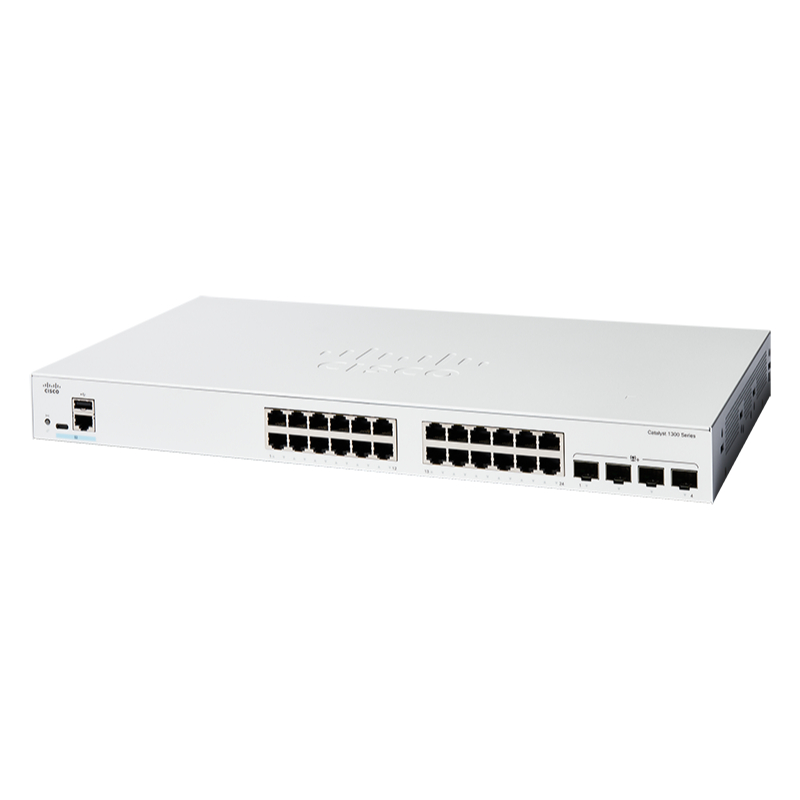


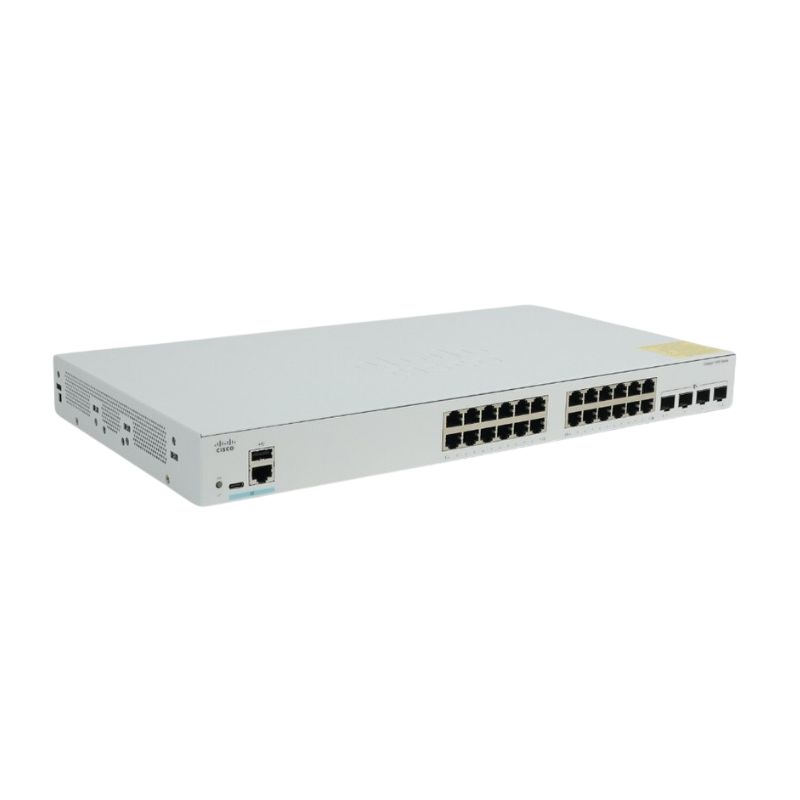
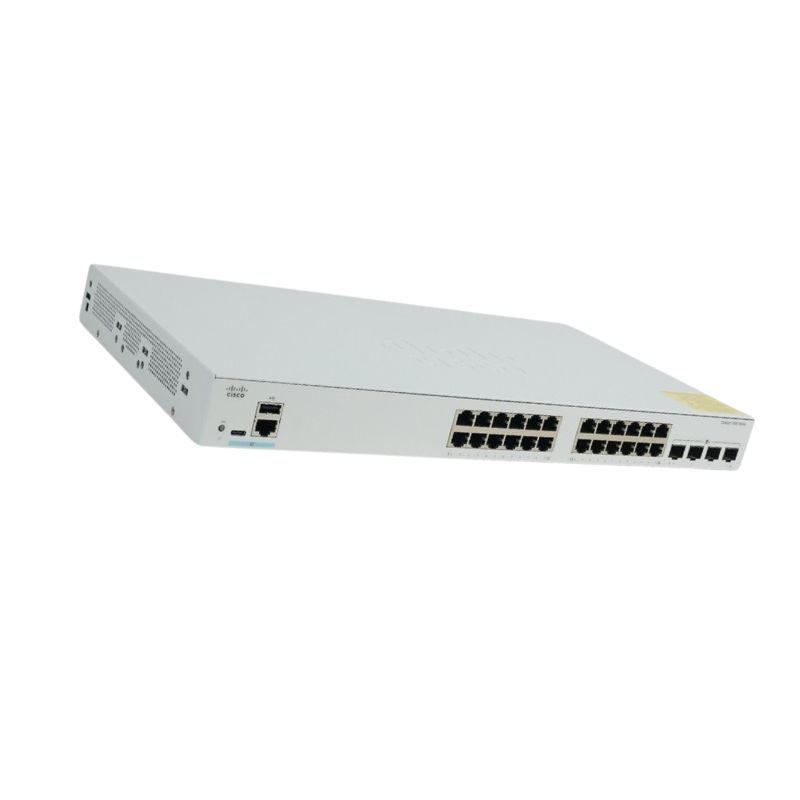
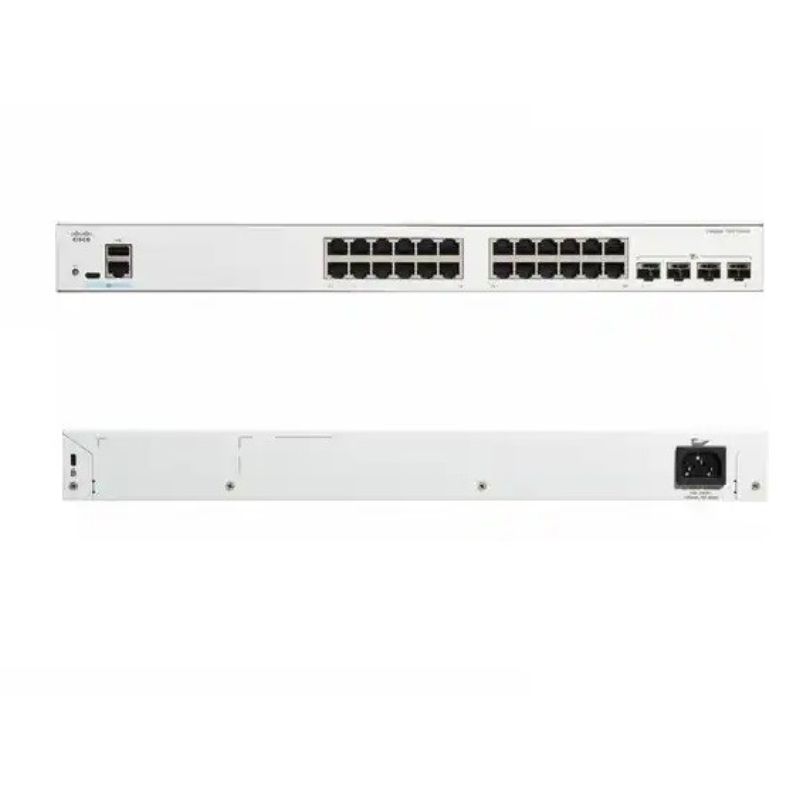
Cisco C1300-24T-4X Catalyst 24 Ports Manageable 10 Gigabit Ethernet 10/100/1000base-t, 10gbase-x - 3 Layer Supported Modular 27.25 W Power Consumption Optical Fiber, Twisted Pair - 1u High - Rack-mountable Ethernet Switch. Factory-Sealed New in Original Box (FSB) with 1-Year Replacement Warranty
Designed for modern enterprise networks, the Cisco Catalyst C1300-24T-4X is a high-performance Ethernet switch with advanced manageability and flexible connectivity options. Ideal for mission-critical environments, this model ensures seamless operations for your office, IP cameras, business networks, and more.
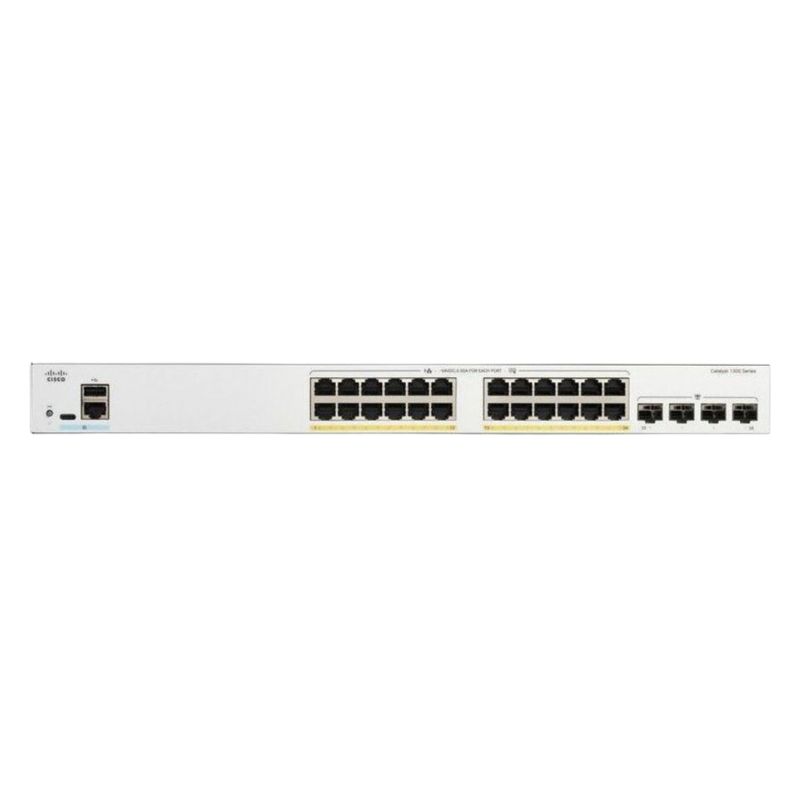
The C1300-24T-4X is a 1U, rack-mountable, Layer 3 supported, modular Ethernet switch that blends 10/100/1000BASE‑T copper access with 10GBASE‑X optical uplinks to deliver high-density aggregation and distribution for modern networks. Designed for performance and manageability, it offers 24 auto‑negotiating RJ‑45 ports for edge connectivity and multiple 10G SFP+ uplink interfaces for high‑throughput backbone connections. With a typical power consumption of 27.25 W and an energy‑aware architecture, it is optimized for efficient operation in enterprise wiring closets, campus networks, SMB core layers, and branch offices requiring robust switching, routing, security, and automation tools.
Built for advanced traffic control, the switch supports Layer 2 and Layer 3 features including VLANs, link aggregation, spanning tree variants, static and dynamic routing, multicast optimization, and QoS policies. Its manageable design integrates with common network management platforms, provides a comprehensive CLI, web GUI, and standardized APIs, and includes modular capabilities for uplink flexibility and environment‑specific expansions. The combination of optical fiber uplinks and twisted pair access ports makes it a versatile choice for environments where low‑latency, high‑bandwidth data flow and consistent operational control are essential.
The category of 24‑port manageable, 10 Gigabit capable switches is engineered for organizations that need predictable performance, easy scaling, and simplified day‑to‑day administration. Whether you are segmenting IoT devices, connecting high‑density user floors, or building a compact core for a branch, these switches provide the blend of copper access and optical uplinks that fits most deployment models. The C1300‑24T‑4X excels as an aggregation point where multiple gigabit edge devices feed into 10G uplinks for data center, campus backbone, or service provider peering.
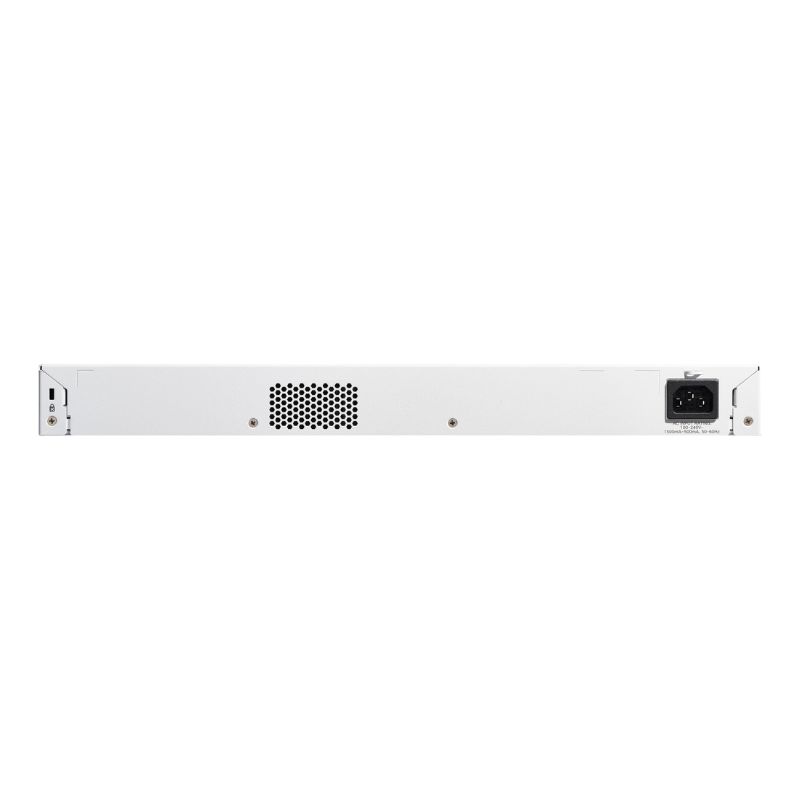
The C1300‑24T‑4X is a compact, 1U high device designed for 19‑inch rack‑mount installations. Front‑facing ports enable clean cable management, while status LEDs provide immediate feedback on link, activity, speed, and device health. Venting and internal thermal controls maintain consistent operating temperatures, and silent or low‑noise fan profiles (depending on model configuration) support deployment in office‑adjacent environments or enclosed racks. The chassis is reinforced for durability and minimal vibration, and the included rack ears and mounting hardware streamline installation without specialized tools.
Twisted pair access ports use standard RJ‑45 connectors supporting 10/100/1000BASE‑T with auto‑MDIX. The 10GBASE‑X interfaces typically accept SFP+ modules for fiber connectivity such as SR (short‑range multimode), LR (long‑range single‑mode), and DAC/AOC for low‑cost short‑reach link aggregation to adjacent switches. Modular uplink options let you tailor the switch to either copper or fiber based on the environment, distance, and performance requirements, ensuring compatibility with existing backbone infrastructure and gradual migration paths to higher speeds.
10GBASE‑X uplinks provide substantial headroom for aggregating multiple gigabit access ports without contention. The backplane switching capacity is designed to accommodate line‑rate forwarding on all user ports and uplinks in typical scenarios. Latency remains low thanks to non‑blocking switch fabric and efficient packet processing, while jumbo frame support (commonly up to 9K) enhances throughput for storage, backup, and virtualization traffic between distribution and core layers. QoS classifications can prioritize latency‑sensitive applications (voice/video) so they remain stable even under high utilization.
Microburst handling and buffer management reduce packet loss spikes during peak activity. Features such as intelligent queue scheduling, congestion avoidance, and weighted round robin or strict priority (depending on configuration) provide predictable application performance. Link aggregation across 10G uplinks can double or quadruple available throughput for redundant and scalable paths to aggregation switches or core routers, maintaining consistent delivery under maintenance or failure conditions.
VLAN segmentation: IEEE 802.1Q tagging organizes traffic by department, device type, or security level to reduce broadcast noise and improve control.
Spanning tree variants: RSTP/MSTP prevent loops; define regions and instances to align with VLAN groups and simplify convergence.
Link aggregation: LACP bundles multiple physical links into logical trunks for resilience and bandwidth scaling.
Storm control: Rate‑limit broadcast, multicast, and unknown unicast to protect against misconfiguration and rogue traffic events.
Port mirroring: SPAN/RSPAN for traffic analysis and IDS/IPS visibility without disrupting live flows.
Inter‑VLAN routing: SVI interfaces enable efficient routing between segments without external routers, improving latency and control.
Static routes: Define deterministic paths to remote subnets, ideal for small branches or simplified topologies.
Dynamic routing: OSPF and/or similar protocols (depending on software image) auto‑discover paths, optimize failover, and reduce manual configuration.
Policy‑based routing: Match traffic and steer it to specific next hops for compliance, monitoring, or performance objectives.
Multicast optimization: IGMP snooping and PIM support efficient streaming to subscribed receivers without flooding.
The manageable nature of the C1300‑24T‑4X category emphasizes comprehensive control via CLI, HTTPS web UI, SNMP, and modern automation interfaces. You can integrate the switch with network management systems for centralized configuration, monitoring, and alerting. Templates and profiles streamline consistent deployments across multiple racks and sites, while secure APIs and scripting accelerate provisioning, firmware updates, and policy rollouts. Role‑based access control ensures that administrators have the appropriate permissions for tasks and change windows.
Configuration backups, config diffs, and standardized imaging help maintain version control and compliance. Syslog exports and NetFlow/sFlow (depending on software bundle) provide visibility into traffic patterns, enabling capacity planning and security analytics. Scheduled tasks can rotate keys, renew certificates, and apply staged updates during maintenance windows to minimize downtime. When combined with tag‑based policies, automation creates a scalable, intent‑driven network where site consistency and uptime improve measurably.
Security features in this category address threats at the access and distribution layers with granular policy enforcement and hardware‑based protections. 802.1X port‑based authentication ties access to user/device identity, and MAC authentication bypass supports non‑supplicant endpoints. DHCP snooping and dynamic ARP inspection prevent common Layer 2 attacks, while IP source guard binds addresses to ports to stop spoofing. Role‑aware ACLs and traffic filters keep unauthorized flows from reaching sensitive segments or uplinks.
Secure management channels, including SSH, HTTPS, and certificate‑based trust, protect administrative sessions. TACACS+/RADIUS centralizes authentication, authorization, and accounting, aligning device control with organizational policies. Firmware integrity features may include signed images and secure boot routines, reducing risks from tampered software. When paired with segmentation best practices and monitoring, the switch becomes a hardened point in the network’s trust chain.
With a typical power consumption around 27.25 W under normal operating loads, the C1300‑24T‑4X category prioritizes energy efficiency without sacrificing performance. This modest draw helps organizations meet sustainability targets and reduce operational expenses, especially in large deployments where dozens of switches run continuously. Energy‑efficient Ethernet features may reduce link power during idle periods, and adaptive fan profiles cut unnecessary cooling overhead while preserving safe operating temperatures.
Thermal design focuses on stable air flow and intelligent speed control. In dense racks, maintaining front‑to‑back or side‑to‑side cooling paths and keeping intake areas clear ensures the device remains within recommended temperature ranges. Environmental monitoring triggers warnings if temperatures rise unexpectedly, allowing staff to adjust HVAC or airflow patterns. Deploying blanking panels and cable management bars improves air pressure dynamics and reduces hotspots near switch intakes and exhausts.
QoS features ensure critical applications receive the bandwidth and latency profiles they need. Classify traffic using DSCP, CoS, or ACL matches, then apply queueing strategies and scheduling methods to prioritize voice, video, and interactive workloads. Rate limiting at edges prevents a single device from overwhelming shared uplinks, while policing and shaping maintain fairness across tenants or departments. Marking policies can preserve or override upstream labels to keep service assurances consistent end‑to‑end.
End‑user experience improves when congestion is predictable and mitigated. For unified communications, enable LLDP‑MED for automatic VLAN and priority assignment to IP phones, and verify that uplinks support adequate bandwidth per floor or building. For collaboration suites and virtualization, ensure jumbo frames and MTU alignment across the path, and avoid asymmetric routing that complicates troubleshooting. Regularly review traffic reports to adjust queues and thresholds as user behavior and application portfolios evolve.
The C1300‑24T‑4X category fits a broad set of network designs. In a campus, deploy it at the distribution layer to aggregate multiple access switches via 10G fiber uplinks. In a branch office, it can serve as a compact core, routing between VLANs for staff, guest Wi‑Fi, VoIP, and surveillance, with uplinks to the WAN edge. In labs and SMB data centers, combine it with storage arrays and hypervisors to provide predictable throughput and simplified management for virtualization clusters.
Multi‑tenant environments benefit from per‑VLAN QoS and ACL policies to enforce service tiers. Education campuses can isolate dorm networks, faculty devices, and administrative systems while maintaining shared resources such as authentication and library services. Retail and hospitality use it to segment POS terminals, back‑office systems, and public Wi‑Fi, while monitoring for anomalies and applying compliance‑driven controls. Because the switch is manageable and Layer 3 capable, it reduces complexity by localizing routing and policy at the aggregation point.
The C1300‑24T‑4X category aligns with widely adopted IEEE standards, ensuring smooth interoperability across multi‑vendor environments. 802.3 for Ethernet physical and MAC layers, 802.1Q for VLAN tagging, 802.1D/802.1w/802.1s for spanning tree variants, 802.3ad for link aggregation, and 802.1X for port‑based authentication are foundational to cross‑compatibility. Support for IPv4/IPv6 routing protocols, management frameworks like SNMPv2/v3, and secure access methods enhance its ability to blend into existing operations with minimal friction.
Interoperability testing during rollout should confirm consistent behavior across neighboring gear, especially for link aggregation hashing, spanning tree root placements, and QoS tag propagation. Validate SFP+ module compatibility lists and firmware baselines on connected devices to avoid subtle mismatches. Adhering to standards not only reduces deployment risks but also protects investments by enabling flexible vendor strategies in future expansions or upgrades.
As user counts and application loads grow, the C1300‑24T‑4X category scales using additional switches, link aggregation, and hierarchical segmentation. Design with extra fiber strands for uplink expansion, and consider modular uplinks that allow mixing optics based on new distance or bandwidth requirements. Where stacking or virtual chassis is supported, unify multiple units to simplify management, enhance redundancy, and expand port counts while maintaining a single control plane for policy consistency.
Future‑ready designs prioritize standards adherence and flexible media. Even if current needs fit within 10G uplinks, planning duct space and optical paths for potential 25G or 40G transitions reduces future rework. Invest in structured cabling that supports higher signal integrity, document pathways for additional risers, and assess power and cooling margins for incremental equipment. A thoughtful plan ensures the switch remains a reliable building block as network complexity increases.
Compared to unmanaged or Layer 2‑only switches, the C1300‑24T‑4X category adds routing, policy enforcement, and advanced monitoring, enabling consolidation of roles in compact deployments. Against higher‑density units, it offers a balanced port count and power profile suitable for mid‑sized floors or branches, without the noise or power of large chassis systems. When set against core routers, it delivers lower latency and simpler control for inter‑VLAN traffic at the edge, while handing off WAN routing to specialized devices where appropriate.
Adjacent segments include 48‑port models for larger floors, PoE variants for powering phones and access points directly, and 25G/40G uplink switches for data center spines. Selection hinges on density needs, media types, and growth trajectories. For many organizations, a 24‑port, 10G uplink, Layer 3 manageable switch provides the sweet spot between capability and cost, pairing easily with PoE access switches or Wi‑Fi controllers as part of a coherent architecture.


 Contact Us
 Information
 Catalog
 Solid State Drives (SSD)
 Network Switches
 Hard Disk Drives
 HBA & Controllers
 PC & Servers
 PC & Server Memory
 CPU & Processors
 Network Routers
 Power Supplies
 Tape Drives & Libraries
 Network Devices
 Computer & Network Cables