(7% discount is applied at checkout)
Cart is empty
Your go-to destination for cutting-edge server products
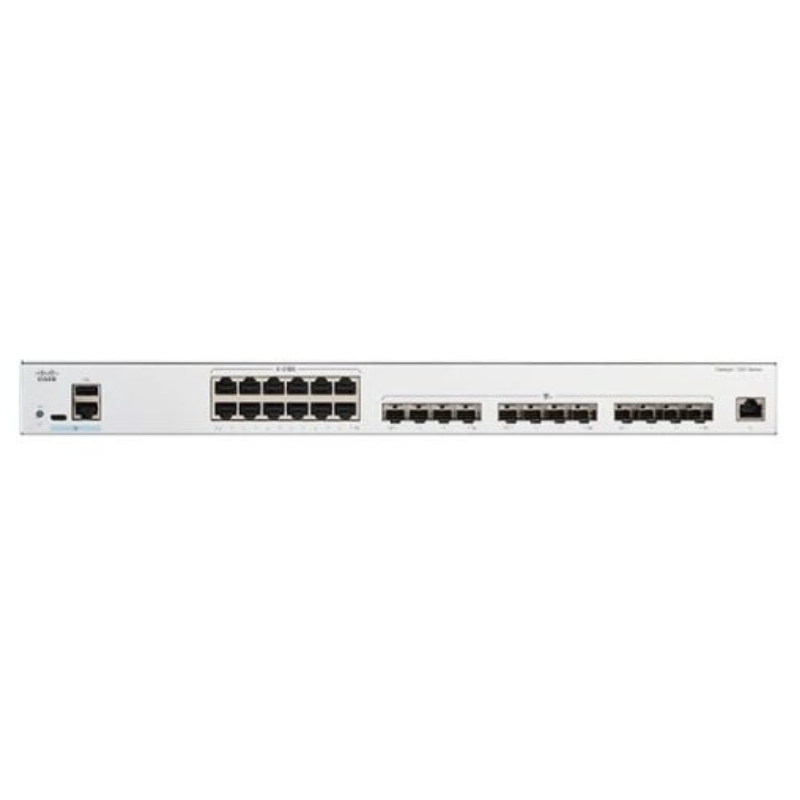


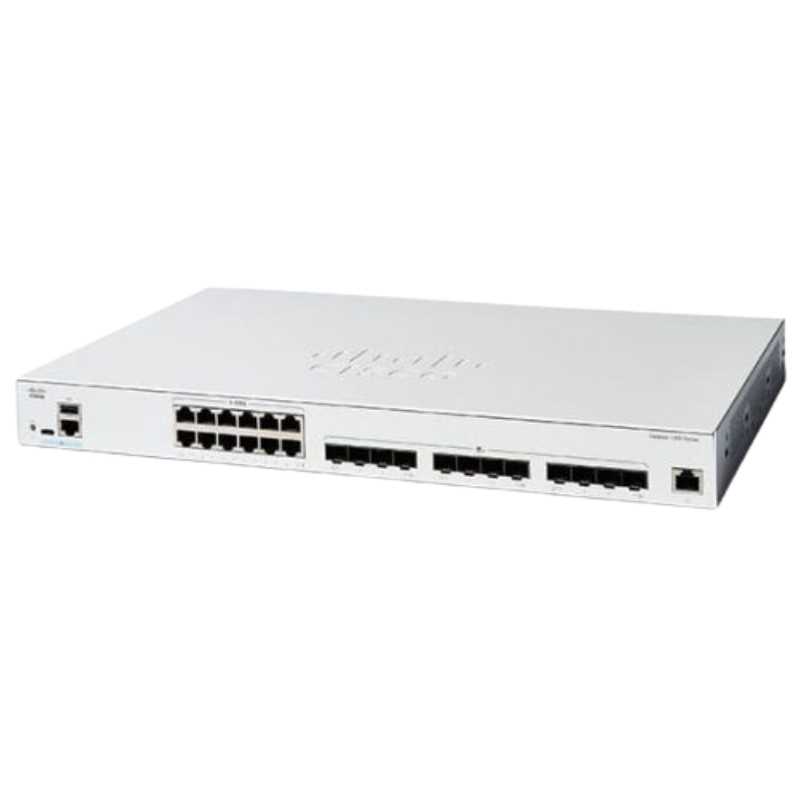
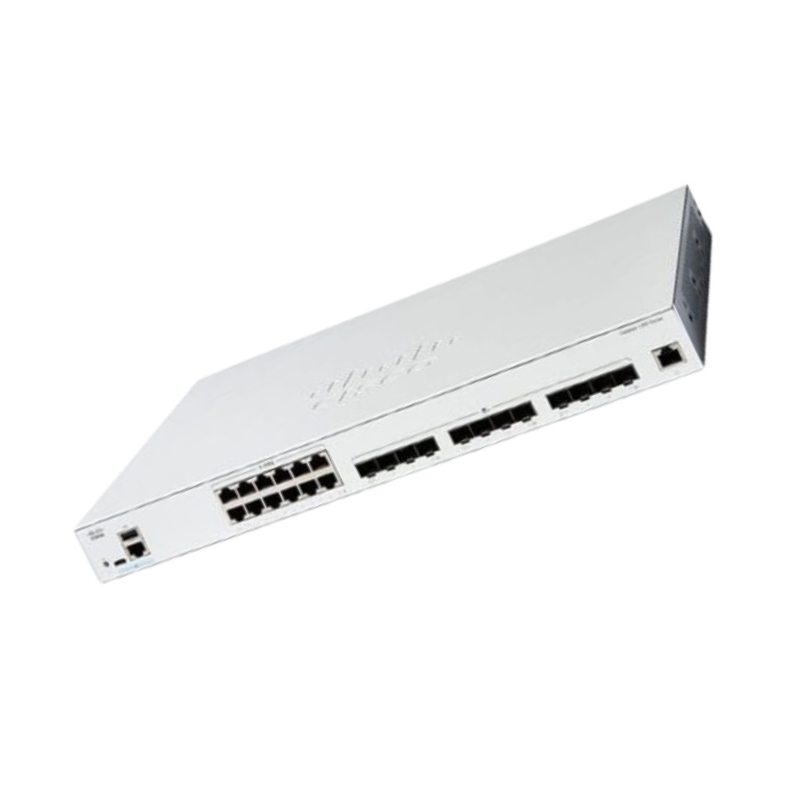
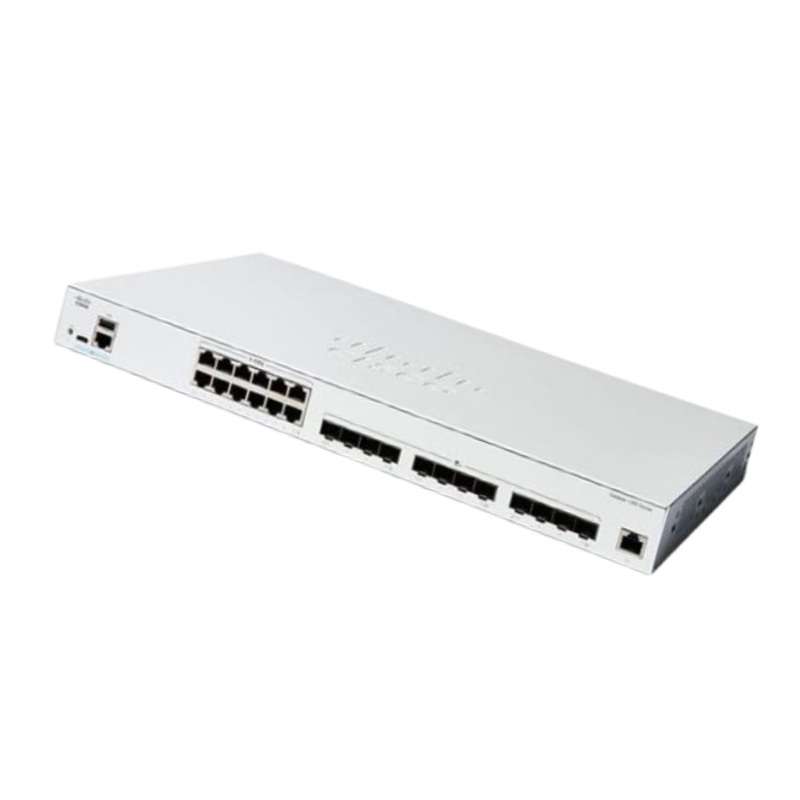
Cisco C1300-24XTS Catalyst Layer 3 Switch 12 Ports Manageable 10 Gigabit Ethernet 3 Layer Supported 195W POE 1U Rack Mountable Switch. Factory-Sealed New in Original Box (FSB) with 1 Year Replacement Warranty.
| SKU/MPN | Warranty | Price | Condition | You save |
|---|---|---|---|---|
| C1300-24XTS | 1 Year Warranty | $3,360.00 | Factory-Sealed New in Original Box (FSB) | You save: $1,176.00 (26%) |
| C1300-24XTS | 1 Year Warranty | $1,280.00 | Excellent Refurbished | You save: $448.00 (26%) |
The Cisco Catalyst C1300-24XTS is a high-performance, enterprise-grade Layer 3 switch engineered to deliver advanced networking features, reliable connectivity, and scalable performance for demanding environments. Designed with cutting-edge hardware and powerful protocols, it is well-suited for modern enterprise infrastructures, data centers, and high-traffic networks requiring secure and efficient management.
The switch incorporates versatile ports designed to meet diverse connectivity requirements, providing flexibility and reliable data transfer.
Built to support a wide range of protocols and standards, the Cisco C1300-24XTS enhances interoperability and delivers smooth traffic management across different infrastructures.
Equipped with robust management features, the switch allows administrators to configure, monitor, and optimize network performance seamlessly.
Engineered for future-ready networks, the device includes multiple expansion options to adapt as the business grows.
Designed with power efficiency in mind, the Cisco C1300-24XTS reduces energy usage without compromising network stability.
The Cisco Catalyst C1300-24XTS is engineered as a compact but powerful Layer 3 managed switch tailored for demanding access and aggregation layers. Marketed under the Catalyst family and commonly referenced by its model string "C1300-24XTS Cisco Catalyst Layer 3 Switch 12 Ports Manageable 10 Gigabit Ethernet 3 Layer Supported 195W POE 1U Rack Mountable Switch", this unit blends high-density 10 Gigabit connectivity, advanced routing, and enterprise-grade manageability into a 1U rack footprint. It is optimized for organizations that require multi-gigabit uplinks, flexible PoE delivery for edge devices, and the operational efficiencies of modern programmability and telemetry. The following continuous category description dissects its capabilities, deployment scenarios, and the value it delivers to IT teams and network architects.
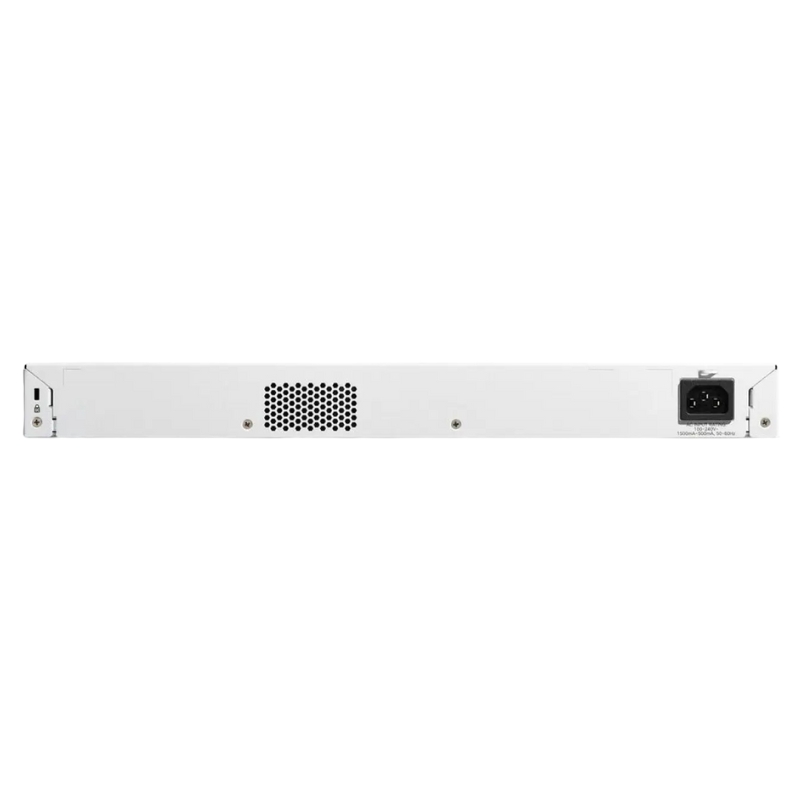
The C1300-24XTS exposes a mix of high-performance copper and SFP/SFP+ port options designed to deliver low-latency, high-throughput connectivity. At the heart of the hardware profile are up to twelve native 10 Gigabit Ethernet ports that serve as uplinks or aggregation interfaces for high-bandwidth servers, storage arrays, or distribution switches. Complementing the 10G ports are additional gigabit Ethernet access interfaces suitable for workstation and device connectivity. The compact 1U chassis makes the switch suitable for rack-dense environments while still offering the thermal headroom and power delivery required for PoE-enabled deployments. The rear power architecture supports redundant power provisioning on select variants and integrates a PoE power budget of approximately 195W, enabling the direct powering of access devices such as IP phones, wireless access points, and compact surveillance cameras without external injectors.
Designed for edge-to-distribution roles, the C1300-24XTS provides predictable packet forwarding and wire-speed switching across its 10G interfaces. Its switching fabric and forwarding tables are sized to accommodate large numbers of MAC addresses and IPv4/IPv6 routes typical of campus and branch deployments. Whether used for converged enterprise traffic, virtualized data center access, or latency-sensitive applications such as VoIP and real-time collaboration, the switch sustains low jitter and microsecond-class latency characteristics. The hardware acceleration of key features—ACLs, QoS classification, and basic routing—ensures that advanced services do not compromise throughput.
The integrated PoE budget of the C1300-24XTS, approximately 195 watts on supported models, provides sufficient headroom to run a fleet of edge devices without separate power supplies. The unit supports dynamic power allocation and intelligent port-level power controls to prioritize critical devices while preserving overall network availability. PoE management, including scheduling, power limits, and real-time monitoring, is accessible through both the GUI and programmatic interfaces, empowering administrators to optimize power distribution and plan for future expansion. This integrated power capability simplifies cable management and reduces installation complexity for campus and branch office rollouts.
As a Layer 3-capable switch, the Catalyst C1300-24XTS supports static routing, dynamic routing protocols, and inter-VLAN routing to serve as a local routing hub or distribution node. Its feature set enables IPv4 and IPv6 routing, with support for common protocols used in enterprise networks for reachability and resiliency. Network designers can use the device to implement segmented topologies, route between security zones, and offload north-south traffic from upstream routers. The flexible routing capabilities make the switch suitable for medium-sized campus cores, aggregated access layers, and advanced branch office networks that require local breakout and policy-based forwarding.
Beyond basic forwarding, the C1300-24XTS can host services that are typically required at the access-distribution boundary. Support for VRF-lite, route filtering, policy-based routing, and multicast routing extends its applicability into environments that need traffic segregation, application-aware steering, and efficient multicast distribution for streaming and conferencing. Multicast optimizations minimize wasted bandwidth during video distribution and IoT telemetry collection, and they interact cleanly with access control policies and QoS mechanisms to preserve service quality.
Large enterprises and distributed organizations benefit from the switch’s capacity to hold sizable routing tables and manage thousands of host addresses. The forwarding tables and ARP caches are engineered to operate reliably as device counts grow, while hierarchical addressing and VLAN segmentation allow administrators to design networks that are both scalable and manageable. Native IPv6 support ensures future-proof addressing for next-generation devices and growth scenarios where scarce IPv4 space is a constraint.
Security is a first-class concern for the Catalyst family, and the C1300-24XTS brings multiple layers of protection and segmentation to the edge. Port security and dynamic host control mechanisms help prevent MAC spoofing and unauthorized device attachment at the access layer. Network access control technologies and integration with identity services enable administrators to enforce role-based policies for users and devices, ensuring that endpoints receive the appropriate network and security posture upon connection.
The switch supports operational controls such as Access Control Lists (ACLs), DHCP snooping, dynamic ARP inspection, and IP source guard to help mitigate spoofing and rogue device attacks. Internal traffic-filtering and granular ACL capabilities allow teams to implement zero-trust-like micro-segmentation at Layer 2/3, restricting lateral movement and isolating critical subnets. Combined with secure management planes—SSH, secure SNMP, and role-based administrative access—the device can be integrated into security-conscious architectures where auditability and compliance are required.
Secure management protocols and options for encrypted telemetry protect operational data in transit. For environments that require elevated assurance, the switch supports modern cryptographic protocols for management and telemetry, enabling safe remote configuration and state collection without exposing sensitive configuration or monitoring traffic.
To maintain predictable application performance, the C1300-24XTS includes robust Quality of Service features. Traffic classification, hierarchical queuing, policing, and shaping enable administrators to prioritize latency-sensitive flows—such as voice, video, and interactive applications—over best-effort bulk traffic. Marking and remarking of packets preserves QoS values across the network, ensuring consistent handling by downstream devices. Policy-based QoS lets organizations tie business-critical application behavior to network priority, which is particularly valuable for unified communications and real-time collaboration deployments.
Operational visibility is critical for maintaining service levels. Built-in monitoring capabilities—Syslog, SNMP, flow telemetry, and streaming telemetry—allow administrators to collect granular data about traffic flows, interface health, and system events. The switch integrates with centralized management systems for aggregated analytics, trending, and alerting, enabling faster root-cause identification and proactive maintenance. On-box diagnostic utilities provide packet capture, interface counters, and event timestamps to facilitate rapid troubleshooting without the need for physical taps or external analyzers.
Modern networks demand automation and repeatability. The Catalyst C1300-24XTS supports multiple management paradigms to fit diverse operational models. Traditional CLI-based workflows remain available for hands-on engineers, while web-based GUIs simplify routine tasks for operational staff. More advanced teams can exploit RESTful APIs, model-driven telemetry, and scripting to automate configuration, deploy template-based policies, and integrate the switch into infrastructure-as-code pipelines.
The switch is designed to integrate with contemporary network controllers and management platforms to enable lifecycle orchestration, software updates, and centralized policy management. Through these integrations, IT teams can enforce consistent segmentation policies, roll out firmware upgrades at scale, and maintain inventory and compliance records across a distributed estate. The availability of telemetry and event hooks allows the switch to participate in closed-loop automation, where detected anomalies can automatically trigger remediation workflows.
For distributed rollouts, zero-touch provisioning and secure onboarding accelerate deployment by allowing new devices to boot, connect to a provisioning service, and receive configuration profiles without manual intervention. This approach shortens time-to-service for branch and remote locations while ensuring consistent configuration baselines across the estate.
The 1U rack-mountable form factor of the C1300-24XTS caters to densely packed equipment racks and constrained rack space. Thoughtful mechanical design balances robust port placement, cable management friendliness, and effective thermal design to ensure continuous operation in enterprise data closets and wiring rooms. Front-accessible ports and status indicators simplify hands-on maintenance, while the chassis supports common rack mounting kits for quick installation into standard 19-inch racks. Cooling solutions—variable-speed fans and engineered airflow—help maintain optimal operating temperatures under load, contributing to reliable multi-year operation.
The Catalyst C1300-24XTS fits diverse deployment scenarios. In campus environments it can function as a compact distribution switch providing high-speed uplinks and PoE for wireless APs. In branch offices it can consolidate access and local routing while powering IP devices. For service providers and multi-tenant venues, the switch offers the port density and security features needed to separate tenant traffic and deliver managed services. Edge computing sites and IoT aggregation points also benefit from the combined PoE, Layer 3, and monitoring capabilities that simplify connectivity and device power management.
When used to aggregate multiple access switches and wireless controllers, the C1300-24XTS delivers the throughput and policy enforcement necessary to maintain a consistent user experience across a building or campus wing. Its PoE profile makes it convenient for deploying Wi-Fi 6 access points and modern collaborative devices that require both network and electrical connectivity from the same cable.
At branch locations, the switch can reduce equipment count by providing uplink routing, local VLAN segregation, and PoE for telephony and wireless, thus lowering footprint and simplifying operations. Centralized management and zero-touch provisioning further reduce the burden on central IT staff when scaling to many remote sites.
The C1300-24XTS is part of a broader ecosystem of transceivers, cables, power modules, and software services. It accepts a range of optical and copper transceiver modules for flexible uplink choices and pairs with standard mounting brackets and rack kits. The switch’s interoperability with common network operating practices makes it straightforward to introduce into heterogeneous estates where backbone switches, routers, and controllers from multiple vendors coexist. Administrators should consult current compatibility matrices and transceiver guides to select the appropriate optics and cable types for their topology and distance requirements.
Depending on organizational requirements, software feature sets and advanced services may be enabled through licensing options. These permit a tailored approach where baseline functionality serves smaller deployments while advanced security, telemetry, and automation capabilities can be activated for larger, more demanding networks. Licensing flexibility enables predictable cost planning and phased feature adoption aligned with business priorities.
Compared to unmanaged or limited-capability access switches, the Catalyst C1300-24XTS delivers a comprehensive set of features—high-speed ports, Layer 3 routing, PoE, and advanced manageability—that reduce the need for multiple discrete devices. Its compact size and consolidated functionality translate into lower rack space usage, simplified cabling, and reduced operational complexity. For teams seeking a platform that supports both current application needs and straightforward upgrade paths for future services, the C1300 series represents a balanced trade-off between power, flexibility, and cost-effectiveness.


 Contact Us
 Information
 Catalog
 Solid State Drives (SSD)
 Network Switches
 Hard Disk Drives
 HBA & Controllers
 PC & Servers
 PC & Server Memory
 CPU & Processors
 Network Routers
 Power Supplies
 Tape Drives & Libraries
 Network Devices
 Computer & Network Cables