Your go-to destination for cutting-edge server products
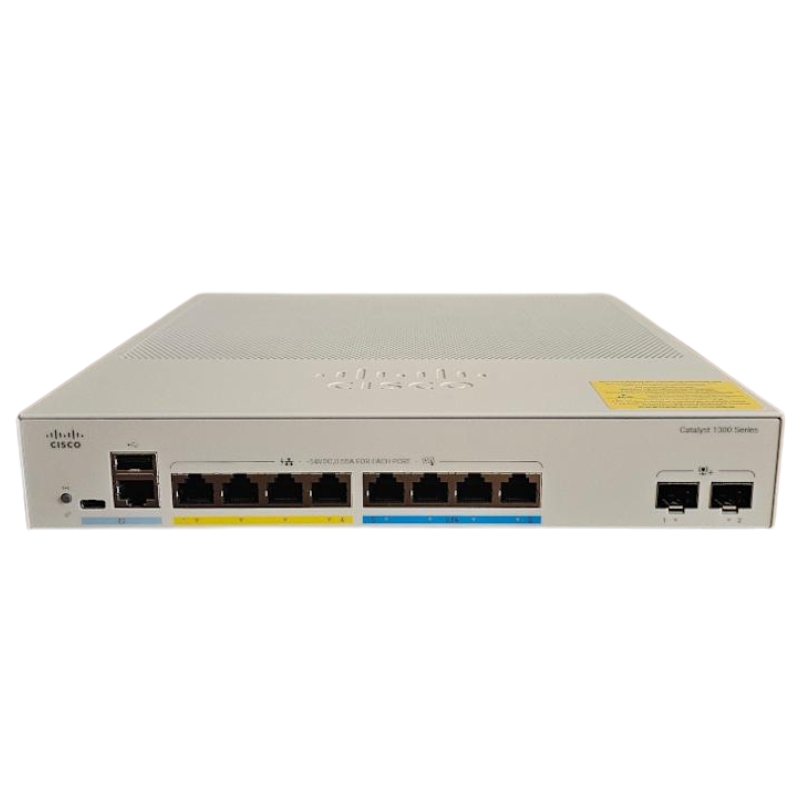
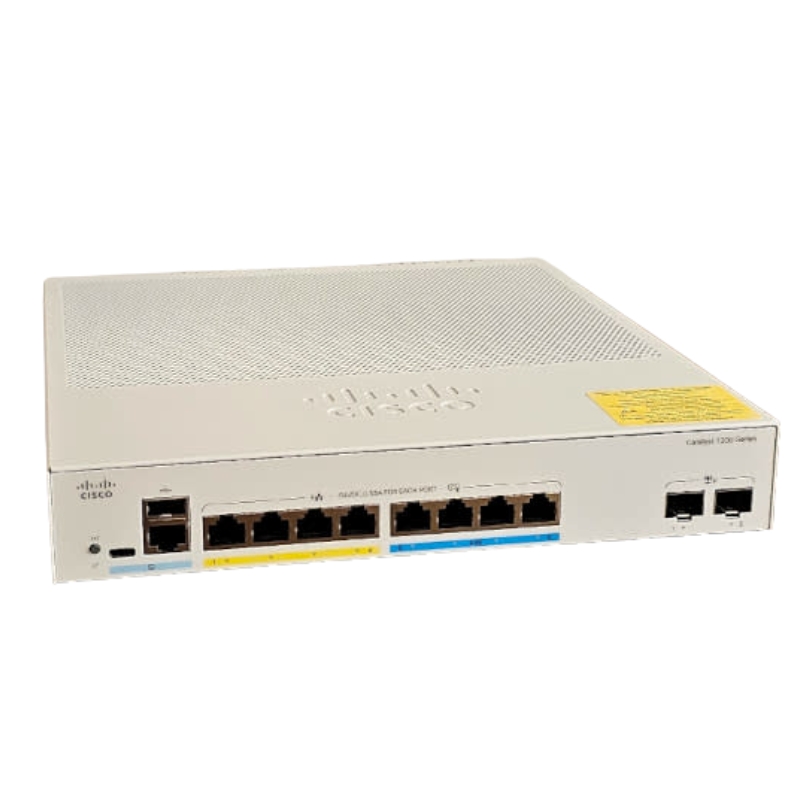
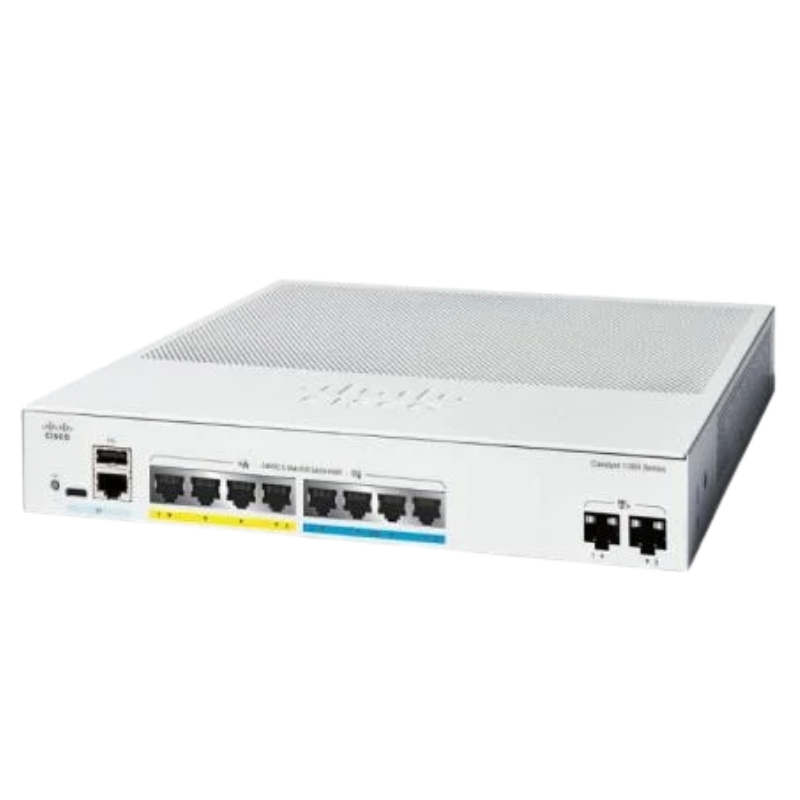
C1300-8MGP-2X Cisco L3 Managed 8X 10 Gigabit Ethernet Sfp+ Rack Mountable Switch.

C1300-8MGP-2X
* Product may have slight variations vs. image
Hover on image to enlarge

Brief Overview of C1300-8MGP-2X

Cisco C1300-8MGP-2X L3 Managed 8X 10 Gigabit Ethernet Sfp+ Rack Mountable Switch. Factory-Sealed New in Original Box (FSB) with 1 year replacement warranty 

$985.50
$730.00
You save: $255.50 (26%)
Ask a question
Price in points: 730 points
+
Quote
SKU/MPNC1300-8MGP-2XAvailability✅ In StockProcessing TimeUsually ships same day ManufacturerCisco Product/Item ConditionFactory-Sealed New in Original Box (FSB) ServerOrbit Replacement Warranty1 Year Warranty
Google Top Quality Store Customer Reviews
Our Advantages
Payment Options
  • — Visa, MasterCard, Discover, and Amex
  • — JCB, Diners Club, UnionPay
  • — PayPal, ACH/Bank Transfer (11% Off)
  • — Apple Pay, Amazon Pay, Google Pay
  • — Buy Now, Pay Later - Affirm, Afterpay
  • — GOV/EDU/Institutions PO's Accepted 
  • — Invoices
Delivery
  • — Deliver Anywhere
  • — Express Delivery in the USA and Worldwide
  • — Ship to -APO -FPO
  • For USA - Free Ground Shipping
  • — Worldwide - from $30

Same product also available in:

Description

Details of Cisco Catalyst C1300-8MGP-2X Switch

The Cisco Catalyst C1300-8MGP-2X is a compact, rack-mountable Layer-3 managed switch engineered for demanding edge and aggregation environments. It combines eight high-speed 10 GbE copper PoE+ ports with two 10 Gb SFP+ uplinks, delivering flexible connectivity, robust power delivery (PoE+), and advanced routing capabilities in a single, stackable chassis.

Technical Specifications

  • Device Type: L3 Managed Switch, Rack-mountable, Stackable
  • Ports: 8 × 100/1000/2.5G/5G/10G RJ-45 (PoE+), 2 × 10G SFP+
  • PoE Support: IEEE 802.3at (PoE+), 120 W budget
  • Performance: 56 Gbps switching capacity, 41.66 Mpps forwarding
  • MAC Table: 16,000 entries
  • VLANs: Up to 4,093 VLAN IDs
  • Routing: Static IPv4/IPv6, RIP-2, PBR, Multicast (IGMP, MLD)
  • Stacking: Up to 8 units
  • Buffer & Queues: 1.5 Mb packet buffer, 8 priority queues
  • Frame Size: Jumbo frames up to 9,000 bytes
  • Security: 802.1X, RADIUS, TACACS+, ACLs, DHCP snooping, ARP inspection
  • Management: CLI, SNMP v1/v2c/v3, RMON, Syslog, SSH, HTTPS, Telnet
  • Processor: 1.4 GHz ARM
  • Memory: 1 GB DDR4 SDRAM, 512 MB Flash
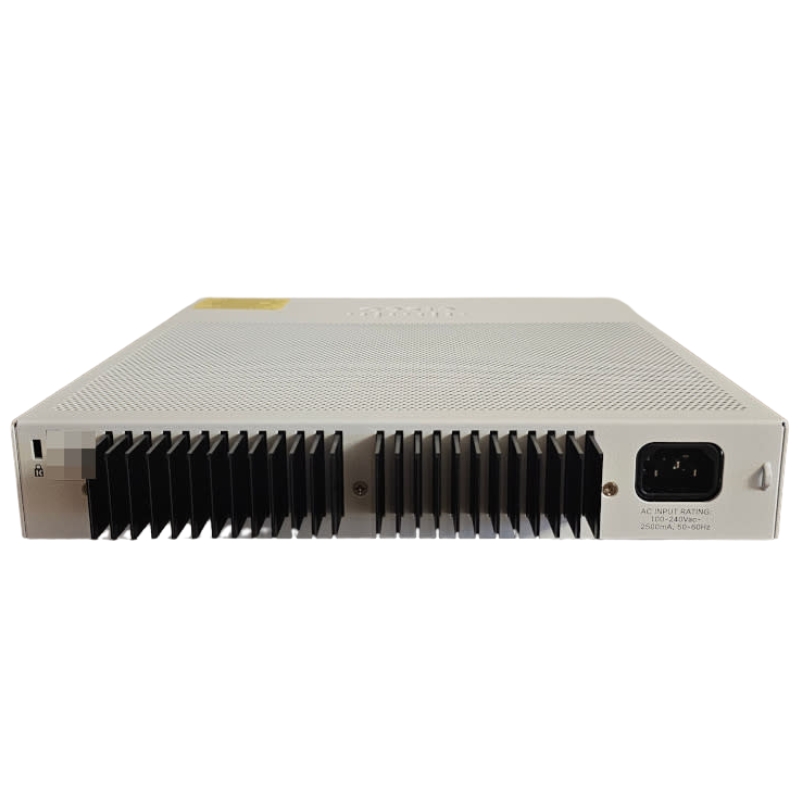
  • Power: External AC adapter, 100–240 V, 50/60 Hz
  • Indicators: System, PoE, Link/Activity/Speed LEDs
  • Compliance: IEEE 802.3, 802.3u, 802.3z, 802.3ae, 802.3at, 802.1q, 802.1x, 802.1w, 802.1s

Primary Advantages

  • High-performance multi-gigabit switching suitable for small to medium enterprise edges.
  • Integrated PoE+ on all RJ-45 ports with a 120 W power budget for IP phones, cameras and wireless APs.
  • Layer-3 routing and rich switching features for secure, resilient networks.
  • Compact rack-mount form factor with stackability for growth without rip-and-replace.

Ports, Power and Physical Connectivity

Port Configuration

Versatile front-panel options let you mix high-speed copper access with fiber uplinks to suit modern campus and branch topologies.

  • Access: 8 × RJ-45 ports supporting 100/1000/2.5G/5G/10G with PoE+ capability (per-port power profile up to 65 W).
  • Uplinks: 2 × 10G SFP+ modules for fiber or direct-attach connectivity.
  • Management: 1 × RJ-45 console and 1 × USB-C console for local configuration and recovery.

PoE and Power Design

  • PoE+ (IEEE 802.3at) support for powered devices — total PoE budget: 120 W.
  • External universal AC adapter: AC 100–240 V, 50–60 Hz for global compatibility.
  • Power management features such as PoE scheduling and persistent PoE for uptime-sensitive devices.

Performance & Capacity

Throughput and Forwarding

  • Forwarding rate (64-byte packets): approximately 41.66 Mpps.
  • Switching capacity: 56 Gbps, designed to prevent bottlenecks at the access layer.

Scaling Limits & Resources

  • MAC address table: 16,000 entries.
  • Maximum VLAN IDs supported: 4,093.
  • IPv4 static routes: up to 990; IPv4 interfaces: up to 128.
  • ACL capacity: 1,024 rules; priority queues: 8.
  • Packet buffer: 1.5 Mb to help handle bursts and reduce packet loss.

Advanced Switching & Routing Capabilities

Routing & Protocol Support

  • Layer-3 routing: static routing, RIP-2 and policy-based routing (PBR).
  • Multicast handling: IGMPv2/v3, MLDv1/v2 and IGMP snooping for efficient streaming.
  • Dual-stack IPv4/IPv6 support for modern network transitions.

Resiliency & Link Management

  • Stackable design: stack up to 8 units to increase port density and simplify management.
  • Link Aggregation (LACP): supports multiple LAG groups and ports for higher throughput and redundancy.
  • STP family: MSTP, RSTP, PVST+, loopguard, root guard and BPDU guard to avoid bridging loops and preserve topology integrity.

Security, Policy & Visibility

Access Control & Threat Mitigation

  • 802.1X, RADIUS and TACACS+ authentication for secure access control.
  • Port security, IP source guard, DHCP snooping and ARP inspection to reduce spoofing and rogue devices.
  • Denial-of-service protections, storm control and QoS policing to prioritize critical traffic and maintain uptime.

Traffic Monitoring & Management

  • SNMP v2c/v3, RMON and syslog for centralized monitoring.
  • Port mirroring, sFlow support and SSH/TLS management for secure diagnostics and analytics.
  • Web UI, CLI, Telnet, TFTP and SCP for versatile firmware and configuration workflows.

Feature Highlights — Enterprise-Grade Extras

Quality of Service & Multitenancy

  • Advanced QoS controls — DSCP, CoS and weighted round-robin (WRR) scheduling.
  • Private VLANs, Q-in-Q tunneling and guest VLAN support for secure multi-tenant segmentation.

Reliability & Operational Tools

  • Zero-touch provisioning (ZTP) for automated deployment at scale.
  • Cable length detection, loopback detection and persistent PoE for operational troubleshooting.
  • Firmware integrity features like secure boot, MD5 validation and SSL for management encryption.

Standards & Interoperability

Built to interoperate within heterogeneous environments, the C1300 complies with a wide list of IEEE standards ensuring predictable behavior and vendor-agnostic compatibility.

  • Ethernet standards: IEEE 802.3, 802.3u, 802.3z, 802.3ae, 802.3an and 802.3x.
  • PoE and energy standards: IEEE 802.3af, 802.3at, 802.3az (Energy Efficient Ethernet).
  • Bridging and VLANs: IEEE 802.1d, 802.1q, 802.1p, 802.1w, 802.1s and 802.1x.

Hardware Specifications

Processing and Memory

  • CPU: 1.4 GHz ARM processor optimized for switching workloads.
  • Memory: 1 GB DDR4 SDRAM and 512 MB flash storage for OS and images.
  • Indicators: system status, PoE state and per-port link/activity/speed LEDs.

Frame & Packet Support

  • Jumbo frames up to 9,000 bytes for storage and virtualization traffic.
  • Support for up to 2,000 IGMP multicast groups for large stream deployments.

Ideal Deployment Scenarios

Where this switch excels

  • Branch office aggregation where multi-gigabit client access and PoE are required.
  • Small campus access layers supporting Wi-Fi 6 APs, IP cameras and VoIP endpoints.
  • Edge compute and IoT concentrators that need secure, manageable Layer-3 services.

Configuration & Best Practices

Optimization Tips

  • Plan PoE budgets per port and stagger reboot windows to avoid power oversubscription.
  • Use link aggregation for uplinks to maximize throughput and provide redundancy.
  • Enable SNMPv3 and HTTPS for secure remote management and monitoring.
  • Segment traffic with VLANs and apply ACLs close to the edge to reduce unnecessary backbone load.

Cisco C1300-8MGP-2X L3 Managed 8x10 Gigabit Ethernet SFP+ Rack-Mount Switch — Product Category Overview

The Cisco C1300-8MGP-2X series represents a modern, compact class of Layer 3 managed switches designed for demanding aggregation, distribution, and edge roles in campus, branch, and data center access environments. This category centers on rack-mountable appliances that combine high-density 10 Gigabit SFP+ connectivity with advanced Layer 3 routing capabilities, robust management features, and enterprise-grade reliability. The devices in this family are frequently chosen when organizations need to consolidate multiple 1 Gb and 10 Gb access links, enable high-throughput virtualized services, and support latency-sensitive applications such as unified communications, video, and real-time analytics. The product line is aimed at network architects, system integrators, and IT operations teams that require a balance of performance, security, and manageability in a relatively small physical footprint.

Architecture and Design Philosophy

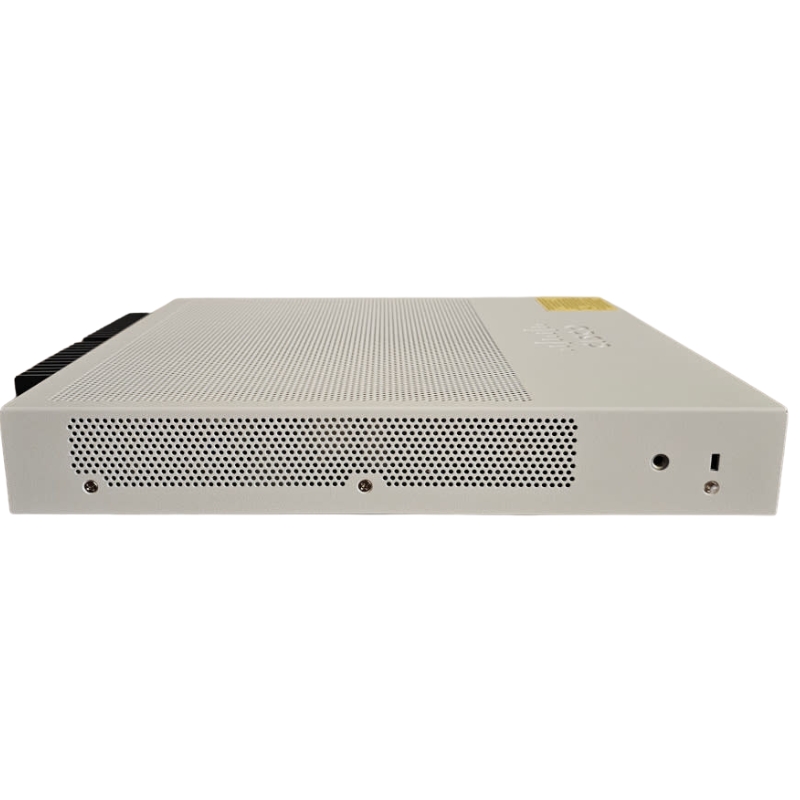
Cisco designed the C1300-8MGP-2X with a focus on efficient throughput per rack unit, resilience under mixed L2/L3 loads, and streamlined lifecycle operations. The architecture emphasizes hardware-accelerated forwarding for common Layer 2 and Layer 3 functions while retaining software flexibility for advanced policy enforcement and telemetry. This approach enables predictable performance under heavy east-west traffic patterns typical of virtualized workloads and microsegmented data center fabrics. The product’s thermal and power architecture is engineered for rack-dense deployments, yielding stable operation in standard equipment racks used by branch and campus data closets. From a physical perspective, the chassis is compact yet serviceable; front-facing SFP+ ports enable simplified fiber management and hot-pluggable optic swaps without disrupting average rack cabling.

Form Factor and Deployment Flexibility

The C1300-8MGP-2X is a rack-mountable switch optimized for 1RU or 2RU installation depending on vendor-specific submodels and accessory kits. Its physical design is tuned to fit constrained branch environments, telco shelters, and collocated racks. The front-panel placement of SFP+ cages and management interfaces facilitates port visibility and fast troubleshooting. For deployments that require stacking or virtual chassis capabilities, the family includes models with dedicated stacking interfaces and models that support virtual chassis modes through software, enabling logical aggregation of multiple units into a single management plane. Because of these options, the category accommodates a broad set of deployment topologies, from single-site access aggregation to multi-site cascading in distributed enterprise networks.

Connectivity and Port Considerations

At the core of the product category is high-speed 10 Gigabit SFP+ connectivity designed to serve as uplinks, server access links, or aggregation trunks. The presence of eight 10G-capable ports makes the platform suitable for small server-edge roles as well as dense uplink aggregation of gigabit access switches. The models with additional uplink slots or integrated 25G/40G expansion options are particularly useful in future-proofing networks as server NIC speeds increase. When planning connectivity, engineers should carefully consider the optics ecosystem — choice of single-mode or multi-mode fiber transceivers, reach requirements, and compatibility with third-party optics. The category supports industry-standard SFP+ modules, enabling a wide range of fiber and DAC options for short and long reach.

Performance and Forwarding Capabilities

This switch category offers line-rate forwarding for a mix of L2 and L3 traffic patterns common in enterprise aggregation. Hardware-based forwarding paths accelerate unicast and multicast traffic while ensuring low-latency switching for delay-sensitive applications. Routing tables and Access Control Entries (ACEs) are sized to meet typical campus aggregation needs, and QoS pipelines are designed to honor differentiated traffic classes. The devices support advanced features such as bidirectional forwarding detection and fast convergence protocols that reduce failover times in routed topologies. For environments with heavy east-west VM traffic, the C1300-8MGP-2X provides sufficient throughput to avoid bottlenecking virtualized application clusters when properly architected.

Layer 3 Routing and Protocol Support

Layer 3 functionality is an important distinguishing characteristic for this product family. Native support for static routing, OSPF, BGP-lite or full BGP on select firmware images, and route redistribution mechanisms enable the switches to participate in dynamic routed fabrics. For campus architectures, the ability to perform inter-VLAN routing at the access or distribution layer reduces hairpinning and keeps latency low. In multisite or service-provider contexts, BGP support on the platform allows for policy-based routing and selective advertisement of prefixes. IPv6 capabilities, when enabled, ensure long-term addressability and modern network planning. Route summarization and route maps enhance scale and make the switches practical in midsize enterprise topologies.

Quality of Service and Traffic Prioritization

Ensuring application performance is critical, and the C1300-8MGP-2X category supports comprehensive QoS tools. Classification, queuing, shaping, and policing features permit administrators to prioritize voice and video traffic over best-effort data streams. The switch firmware exposes hierarchical QoS constructs that can be applied per-port or per-VLAN to shape traffic consistent with business policies. Advanced queuing strategies minimize jitter for real-time communications and allocate buffer resources efficiently under congestion. Additionally, the platform supports flow-based telemetry and counters that enable operators to verify QoS effectiveness and tune parameters based on observed traffic patterns.

Security, Access Control, and Policy Enforcement

Embedded security features are designed to protect both the control plane and the data plane. Role-based access control for management interfaces ensures separation of duties, while TACACS+ and RADIUS integration provide central authentication and accounting. On the data plane, VLAN segmentation, Private VLAN configurations, and ACLs enable fine-grained access control between tenants, departments, or service types. For environments that demand advanced threat mitigation, integration with network access control and identity services allows for dynamic policy application based on user or device posture. MAC address filtering and DHCP snooping help mitigate common layer 2 attacks and improve the security posture of the access layer.

Secure Management and Telemetry

Secure management channels such as SSH, TLS-encrypted web UI, and SNMPv3 are supported to safeguard operational access. The devices also integrate with modern telemetry frameworks that publish streaming telemetry, gNMI, or RESTCONF endpoints depending on firmware capabilities. These telemetry streams make it possible to export high-resolution metrics to network monitoring stacks for anomaly detection and capacity planning. Working with centralized controllers and orchestration platforms, the category can participate in policy-driven operations, enabling automated configuration drift correction and faster provisioning cycles.

High Availability, Resiliency, and Redundancy

For mission-critical deployments, the C1300-8MGP-2X series supports a range of high-availability mechanisms. Features such as VRRP, HSRP-like failover modes, and rapid spanning tree enhancements reduce downtime during control plane failures or link outages. Redundant power supply options and graceful restart capabilities assist in smoothing upgrades and maintenance windows. On the data plane, active-active link aggregation and multi-chassis link aggregation options are available on certain models or via licensing, allowing traffic to be distributed across parallel links and minimizing the risk of single-point failures. When combined with deterministic convergence tuning, these switches provide robust behavior under planned and unplanned network events.

Firmware Lifecycle and Patch Management

Maintaining an up-to-date firmware baseline is essential for security and feature compatibility. Cisco typically provides well-maintained release paths for hardware in this category, with periodic feature updates, bug fixes, and security advisories. Administrators should follow a staged upgrade process using lab validation, image signing verification, and scheduled maintenance windows to lower operational risk. Many organizations leverage automation frameworks and configuration management systems to orchestrate firmware upgrades across multiple sites, enforce standardized configurations, and ensure rollback procedures are documented and tested.

Power, Cooling, and Environmental Considerations

The category is optimized to operate within standard data center temperature and humidity ranges, with thermal design tuned for rack-dense installations. Power consumption varies by model and loaded optics, so power budget planning must account for both switch chassis draw and SFP+ module consumption. Where available, optional redundant power supplies increase resiliency, while features such as Energy Efficient Ethernet and dynamic fan management reduce operational costs in large-scale deployments. Environmental monitoring interfaces report chassis temperature and power input status to centralized management systems to enable proactive intervention before thermal events become critical.

Cabling and Optics Best Practices

Fiber management and proper selection of optics are crucial for predictable link behavior. The category supports a wide range of SFP+ optics, including short-reach multimode transceivers and long-reach single-mode transceivers. Choice of direct-attach copper (DAC) or active optical cables (AOC) for server adjacency will depend on distance and budget. Engineers should avoid mixing incompatible transceivers and must validate that optics conform to the vendor’s supported list to ensure link stability and performance. Cable labeling, structured patching, and fiber bend-radius management help maintain physical layer integrity and simplify troubleshooting over the lifecycle of the installation.

Management, Orchestration, and Automation

The switches integrate into a broader ecosystem of network management tools. Centralized orchestration platforms can provision VLANs, deploy security policies, and collect logs and telemetry. Support for APIs, automation hooks, and configuration templates accelerate provisioning and reduce configuration drift that commonly plagues manual operations. For organizations moving toward intent-based networking or software-defined access architectures, the switches in this category can often be governed via northbound controllers, enabling policy translation from business intent to device-level configuration. Scripted operational tasks and infrastructure-as-code patterns reduce human error and speed deployment cycles.

Use Cases and Deployment Scenarios

This product family fits a variety of real-world scenarios. In branch office aggregation, the eight 10 Gbps ports can combine WAN, server, and uplink traffic while offering local routing to keep intra-branch traffic efficient. In campus distribution roles, the switches serve as compact aggregation points for smaller access closets, enabling high-speed uplinks to core routers. In converged environments, the switches provide the necessary throughput and QoS to support voice, video, and wireless backhaul simultaneously. For edge computing sites, the platform delivers low-latency access to compute nodes and can be paired with virtual routing instances to host localized services. Because of its flexible feature set, the category is also useful for service providers offering managed LAN or connectivity services to SMB customers where a small, resilient device is preferred.

Migration and Integration Strategies

When replacing legacy switches or expanding existing fabrics, planners should inventory current link rates, optic types, and routing policies to map a clean migration path. Interoperability testing with existing core and access devices will reveal protocol tuning and MTU settings that require alignment. Careful staging, testing of QoS and ACL policies, and progressive traffic cutovers lower the risk of unexpected disruptions. Consideration should be given to management integration, addressing SNMP community strings, syslog endpoints, and automation scripts that will need to be updated to recognize the new platform. For multi-vendor environments, validating feature parity for critical functions such as LLDP, LACP, and multicast routing is essential to prevent service regressions.

Troubleshooting and Operational Guidance

Effective troubleshooting begins with clear observability. The switches provide counters and diagnostic tools such as interface statistics, hardware-level error counters, and logging facilities. Root cause analysis often involves correlating physical layer metrics with higher-layer protocol events. For fabric-level incidents, checking routing protocol adjacencies, ARP tables, and ACL hit counters can reveal policy mismatches. In scenarios where optics are suspected, swapping modules and validating with a known-good link helps isolate faulty transceivers. Routine maintenance tasks include reviewing logs for microbursts or buffer overflow indications and ensuring consistent firmware levels across similar devices to avoid feature incompatibilities.

Regulatory Compliance and Certifications

For deployments in regulated industries, adherence to standards and certifications can be a procurement requirement. Devices in this category typically comply with common international safety and emissions standards, and they often possess certifications relevant to enterprise and telco environments. When deploying in specialized sectors such as healthcare or finance, verifying electromagnetic compatibility, environmental compliance, and supply chain traceability contributes to meeting organizational risk frameworks. Maintaining a record of certification documentation during procurement aids auditors and streamlines compliance demonstrations.

Features
Product/Item Condition:
Factory-Sealed New in Original Box (FSB)
ServerOrbit Replacement Warranty:
1 Year Warranty