(7% discount is applied at checkout)
Cart is empty
Your go-to destination for cutting-edge server products
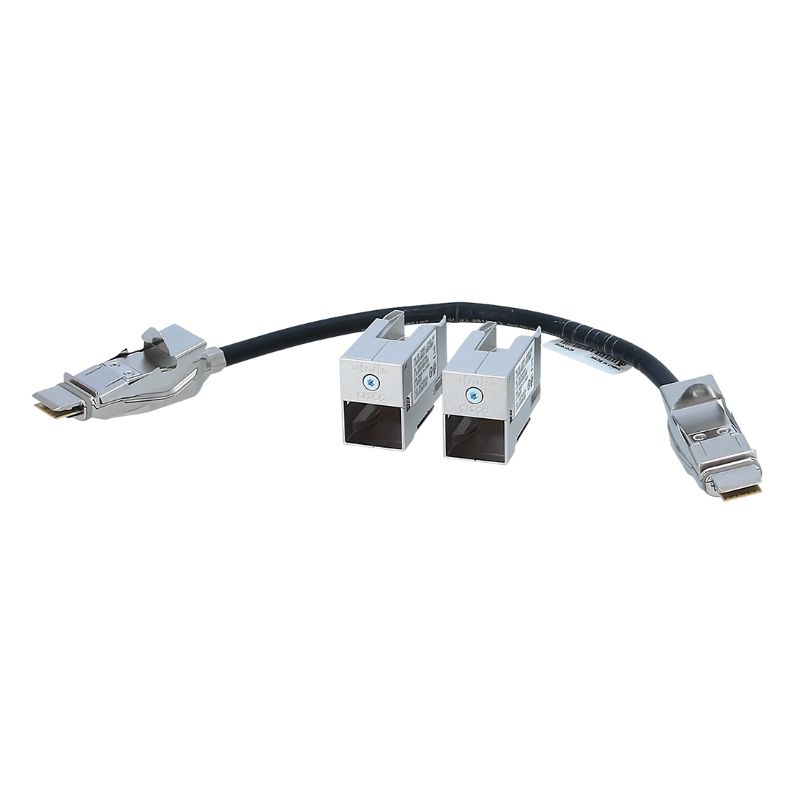


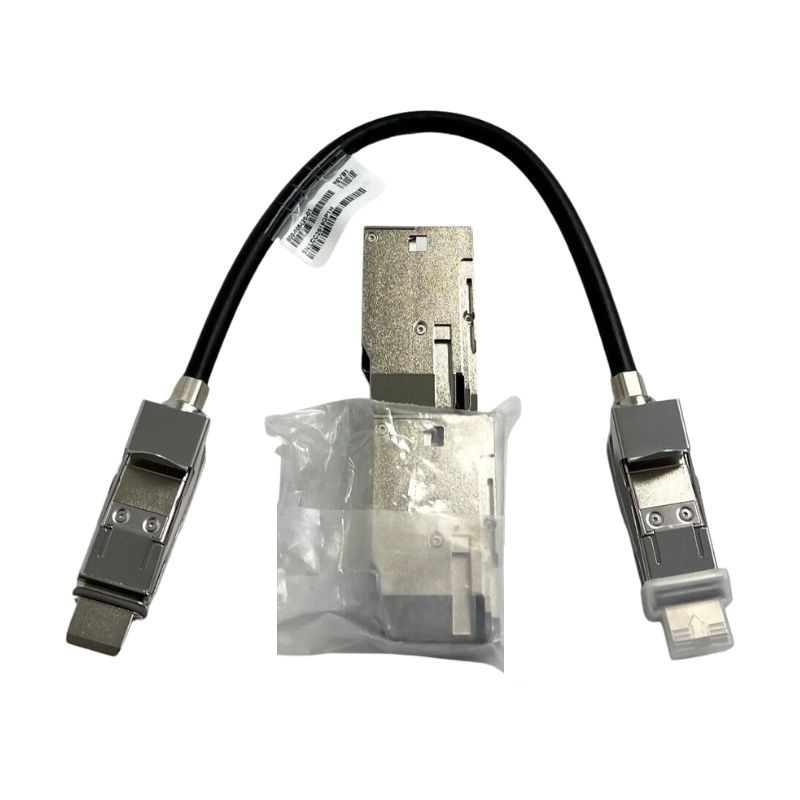
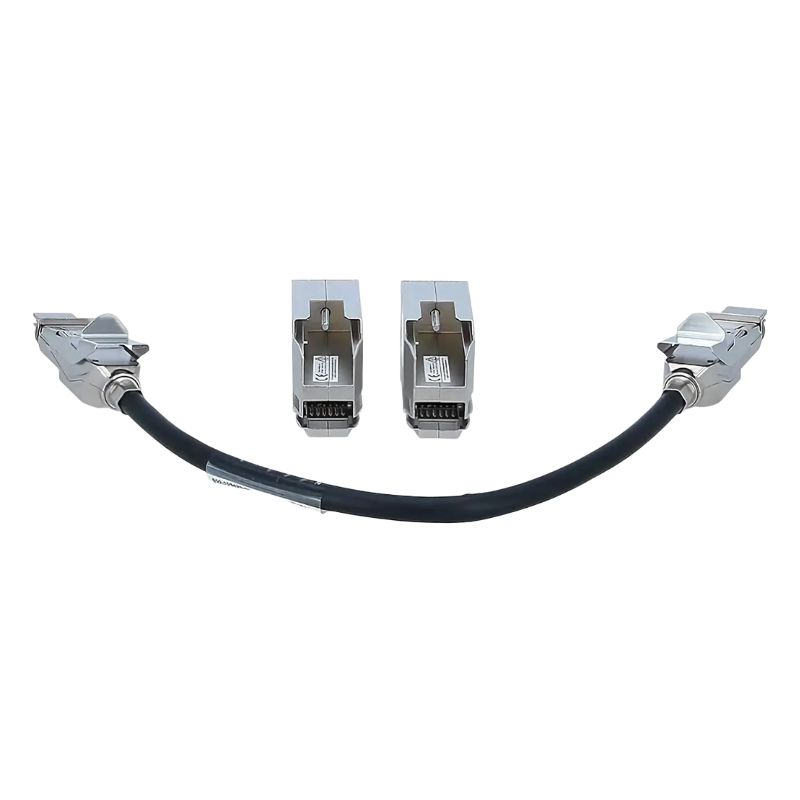
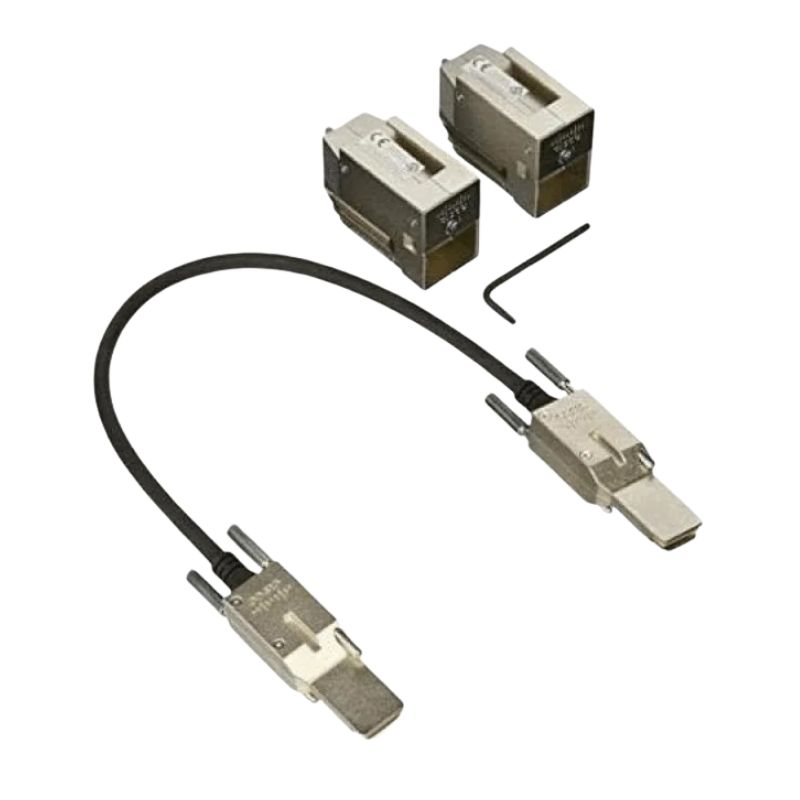
Cisco C9300L-STACK-KIT2 Network Stacking Module Kit for Catalyst 9300l And 9300lm Models. Factory-Sealed New in Original Box (FSB) with 1 Year Replacement Warranty
The Cisco C9300L-STACK-KIT2 offers a dependable way to expand switching capacity, improve operational flexibility, and enhance overall network performance for Catalyst 9300L and 9300LM models. Designed as a plug-in stacking component, it ensures seamless integration and high-speed data handling for demanding enterprise setups.
This stacking kit enhances wired connectivity and boosts network adaptability, enabling structured scalability and efficient data forwarding within Catalyst switching environments.
Equipped with Cisco StackWise-320 technology, this module provides:
The kit comes complete with essential stacking components for immediate deployment.
This stacking module kit is engineered specifically to integrate flawlessly with select Catalyst switches.
The Cisco C9300L-STACK-KIT2 Network Stacking Module Kit is engineered to extend the capabilities of the Catalyst 9300L and 9300LM series switches by enabling physical stacking. This stacking module kit provides a robust, high-availability method for combining multiple switches into a single logical unit, simplifying management and enhancing resiliency across campus and enterprise networks. For network architects, systems integrators, and IT managers looking to build resilient access layers or compact, highly manageable aggregation layers, the Cisco C9300L-STACK-KIT2 stacking kit represents a strategic component that aligns with modern network design best practices and scales to meet evolving organizational needs.
The Cisco C9300L-STACK-KIT2 stacking module kit is ideal for environments where simplified management, predictable failover behavior, and consolidated control plane operations are priorities. Deployments that benefit most include mid-sized campus campus access networks, branch offices with limited on-premises IT staff, and consolidated wiring closets where multiple Catalyst 9300L/9300LM switches must operate as one logical chassis. When used in classrooms, retail locations, and distributed enterprise sites, this stacking solution delivers the advantages of centralized policy enforcement, unified firmware updates, and coordinated port-level features without sacrificing the performance expected from Catalyst series hardware.
Compatibility is a central concern when selecting network accessories; the Cisco C9300L-STACK-KIT2 is specifically designed for the Catalyst 9300L and 9300LM models. These Catalyst switches are widely deployed as next-generation access and aggregation devices. The stacking module kit fits into the designated stacking slot on supported chassis and integrates seamlessly with the Catalyst operating environment. Because it is an OEM stacking solution, the stacking kit maintains firmware and feature parity across stack members, ensuring consistent behavior for routing, switching, QoS, security, and telemetry functions. Network planners should verify the exact hardware revision and software compatibility matrix, as the kit is built to work with the Catalyst 9300L and 9300LM families to provide a supported, tested stacking configuration.
Physical stacking driven by the Cisco C9300L-STACK-KIT2 offers several important advantages compared to purely logical clustering or virtual link aggregation. When multiple switches are stacked, they present themselves as a single logical switch to administrators and to the control plane. This simplifies configuration changes, reduces management overhead, and ensures consistent policy enforcement across all stack members. Stacking also provides deterministic failover behavior for both management and data plane functions. Performance benefits include aggregated backplane capacity across stacked units and reduced inter-device latency for traffic that must traverse stack members. Additionally, stacking supports unified management for software updates, which allows operators to orchestrate synchronized firmware upgrades with minimal operational complexity. These technical benefits directly translate to operational savings and increased uptime for production networks.
The Cisco C9300L-STACK-KIT2 supports resilient architectures in which stack members provide automatic state synchronization and leadership election mechanisms to ensure uninterrupted operation during failures. Redundancy is achieved through the stack fabric linking multiple switches so that in the event of a single switch failure, other stack members continue forwarding traffic and providing services without manual intervention. This behavior reduces mean time to recovery and lowers the risk of session disruption for critical applications. The kit is engineered to maintain stack stability even during hot-swaps of individual units, which allows maintenance operations with minimal service impact when performed according to Cisco recommended procedures.
Performance planning for a stacked Catalyst deployment requires an understanding of the stack fabric capacity and the distribution of traffic patterns. The Cisco C9300L-STACK-KIT2 is designed to deliver a high-performance stack interconnect, enabling fast, low-latency communication between stack members. Throughput across the stack fabric supports the port densities and traffic loads typical of Catalyst 9300L and 9300LM deployments. When designing a stack, it is critical to consider uplink utilization, the placement of high-traffic endpoints, and the way services such as multicast, AV streaming, and server east-west traffic will traverse the stack. Properly architected stacks can serve as the backbone of a high-density access layer, supporting power over Ethernet (PoE) devices, voice and video endpoints, and wireless controller uplinks without creating performance bottlenecks.
The Cisco C9300L-STACK-KIT2 enables networks to scale by allowing additional Catalyst 9300L or 9300LM switches to be added to the stack as the network grows. Scalability planning should address the intended maximum stack size, the availability of stacking slots, power management, and cooling considerations in the rack or closet. Growing the stack is often simpler than adding isolated switches because the logical single-chassis model reduces incremental configuration tasks. IT teams should plan for physical cable routing for the stacking harnesses and ensure that rack space and power budgets are sufficient for future growth. The stacked approach also keeps management plane complexity lower than managing the same number of discrete, independently managed switches, which helps teams scale operations efficiently.
A paramount advantage of using manufacturer-provided stacking modules such as the Cisco C9300L-STACK-KIT2 is the cohesive software behavior across stack members. Features like unified access control lists, consistent QoS policies, and synchronized telemetry settings behave as if applied to a single chassis. The consistency extends to licensing and feature entitlements, where Cisco’s licensing model for Catalyst platforms is designed to function predictably in stacked environments. Administrators will find that troubleshooting and diagnostics are centralized, with consolidated logs and fault indicators that streamline root cause analysis. This coherence simplifies both day-to-day administration and deeper operational tasks such as performance tuning and compliance audits.
Security policy enforcement benefits significantly when switches are stacked using the Cisco C9300L-STACK-KIT2. Stacked units enable centralized implementation of network access control, 802.1X authentication, dynamic VLAN assignment, and port security policies. Consistent enforcement across stack members reduces the potential for policy gaps that can occur with independently managed switches. Additionally, stacked devices can integrate with higher-level Cisco security services and network monitoring tools to feed telemetry and alerts into centralized security operations workflows, improving incident response times and reducing the blast radius of localized misconfigurations.
Quality of Service (QoS) configuration in a stack benefits from consistent policy application across all member ports. Traffic shaping, priority queuing, and admission control can be defined at the stack level to ensure that voice, video, and other latency-sensitive services receive appropriate treatment regardless of the physical switch port to which an endpoint is connected. Features like multicast optimization and advanced switching capabilities are more predictable when the stack is configured as a single logical unit. This consistency leads to a more stable user experience and simplifies the implementation of performance-sensitive services across the access layer.
Licensing in a stacked environment should be carefully planned. Cisco’s licensing model for Catalyst switches governs feature availability and entitlements. When stacking, it is important to confirm that the stack's licensing approach aligns with organizational licensing agreements and that support contracts reflect the stacked configuration. Having appropriate Cisco support and service contracts in place helps ensure timely access to technical assistance, replacement parts, and validated firmware updates. Support plans can also influence lifecycle decisions and help organizations plan hardware refreshes at the optimal time.


 Contact Us
 Information
 Catalog
 Solid State Drives (SSD)
 Network Switches
 Hard Disk Drives
 HBA & Controllers
 PC & Servers
 PC & Server Memory
 CPU & Processors
 Network Routers
 Power Supplies
 Tape Drives & Libraries
 Network Devices
 Computer & Network Cables