(7% discount is applied at checkout)
Cart is empty
Your go-to destination for cutting-edge server products
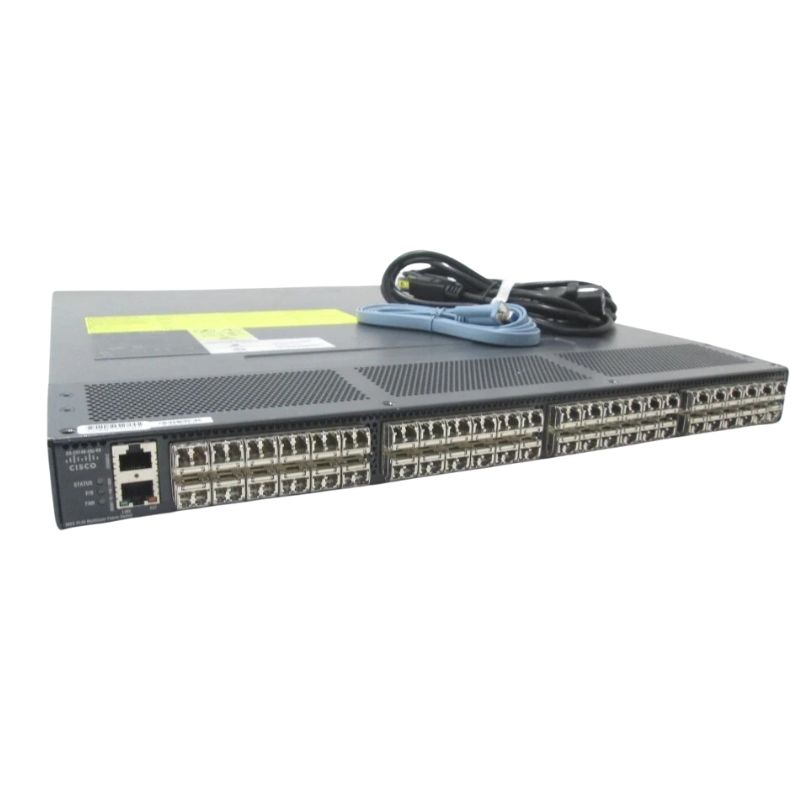


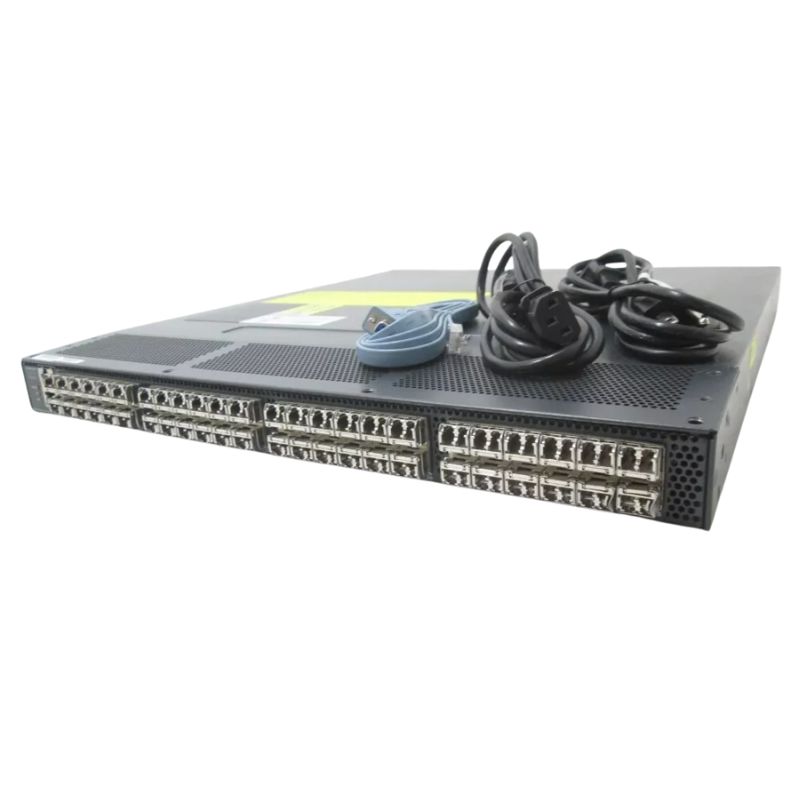
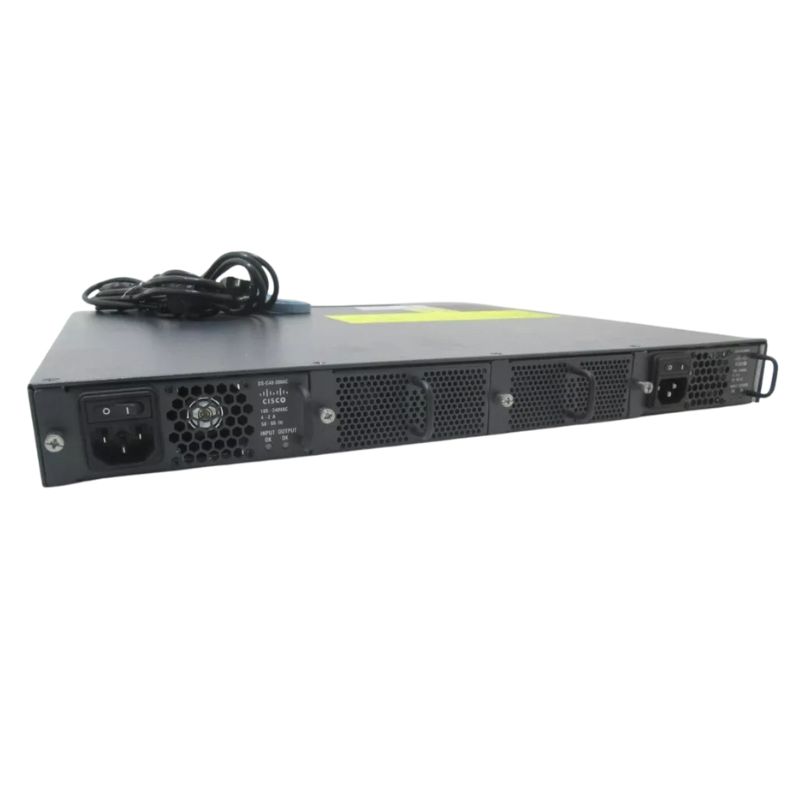
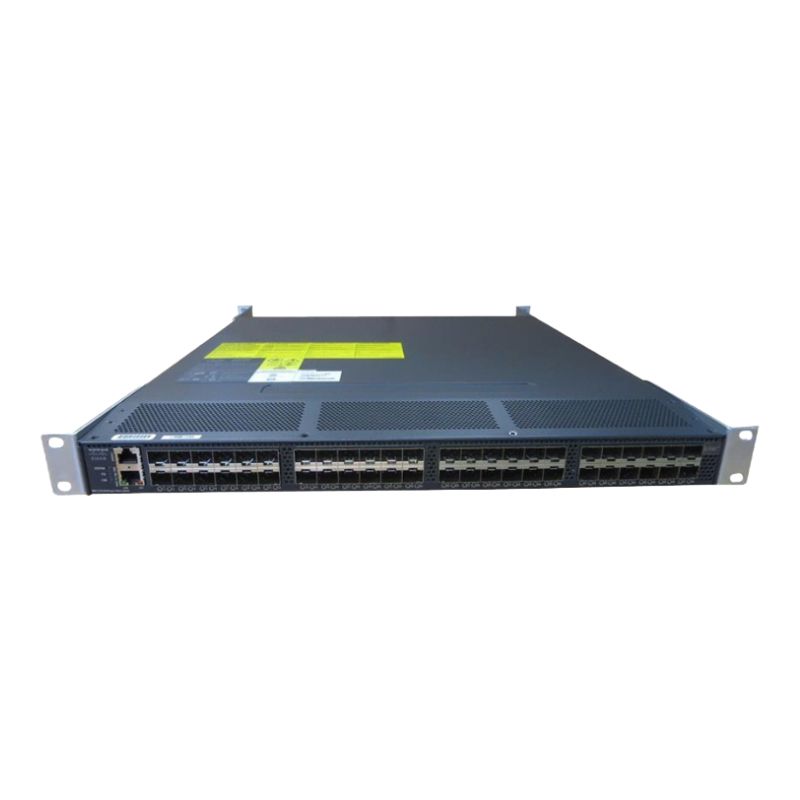
Cisco DS-C9148D-8G48P-K9 MDS 48 Ports Fibre Channel Managed Switch. Excellent Refurbished with 1 year replacement warranty
The Cisco DS-C9148D-8G48P-K9 is a high-performance, enterprise-grade Fibre Channel switch engineered to optimize data center connectivity, enhance storage networking efficiency, and support mission-critical infrastructures. Designed with 48 ports and robust management capabilities, it ensures reliable throughput, simplified configuration, and seamless scalability for growing SAN environments.
The Cisco DS-C9148D-8G48P-K9 MDS 48 Ports Fibre Channel Managed Switch is positioned as a high-density enterprise storage networking device designed to simplify, accelerate, and secure storage area network (SAN) deployments. Built to integrate with enterprise SAN topologies, this model delivers the port density and manageability required by data centers that host mission-critical storage workloads. The product category centers on Fibre Channel switching for block storage, bringing storage arrays, backup appliances, and host HBAs together in a resilient, controllable fabric tailored for low-latency, predictable I/O. The description below expands on the capabilities, deployment patterns, operational benefits, and purchasing considerations for organizations evaluating an MDS-class 48-port Fibre Channel switch.
This class of switch emphasizes centralized management, deterministic performance, and storage-aware controls. Administrators gain granular control over storage traffic through widely used SAN features such as zoning, VSANs, port-based policies, and quality of service. With a managed switch in this category, enterprises can isolate traffic types, segment tenant or application traffic, and enforce access policies that reduce operational risk. High port density allows fewer devices to support larger SAN fabrics, lowering rack space usage and reducing cabling complexity. The switch supports standards and protocols common to enterprise storage—ensuring compatibility with a broad range of HBAs, storage arrays, and backup systems—so organizations can evolve their fabrics without vendor lock-in concerns. Additional enterprise benefits include improved troubleshooting visibility, operational automation, and integration with data center orchestration tools and storage management frameworks.
Performance predictability is central to SAN design, and the managed features in this category reinforce deterministic traffic behavior for storage workloads. The switch offers per-port configuration of fabric services and the ability to shape or prioritize traffic using storage-aware QoS policies. These controls reduce jitter and congestion-related latency spikes by ensuring the most critical storage flows are given priority on shared fabric resources. For environments that run database systems, virtualization clusters, or high-throughput analytics, predictable latency and consistent IOPS deliver more reliable application SLAs. While specific throughput characteristics vary based on firmware and transceiver choices, the design intent of this product family is to maintain consistent block storage performance under mixed workload conditions.
Business continuity demands redundancy at every layer. Fibre Channel switch deployments in this category are typically integrated into dual-fabric topologies to eliminate single points of failure for storage paths. The switch supports features that help maintain fabric resiliency such as rapid reconvergence of routing, hardware-assisted failover, and fabric-based multipathing when paired with host multipathing software. Administrative features like secure persistent zoning and non-disruptive software upgrades minimize planned downtime and reduce operational risk during maintenance windows. Built-in monitoring and alerting further enhance operational readiness by surfacing link errors, port degradation, and fabric anomalies before they impact applications.
Understanding how to deploy a 48-port Fibre Channel switch is essential for making the technology work for your environment. Common deployment patterns include top-of-rack (ToR) consolidation, edge-of-fabric aggregation, and core fabric roles in larger campus or data center fabrics. The dense port count is particularly effective for rack-level consolidation where many hosts or storage systems are collocated. In larger fabrics, these switches often serve as distribution aggregation points, handing off to core switches that focus on scale and inter-fabric connectivity. Dual-fabric deployments remain industry best practice for critical storage infrastructures to provide redundant paths and improve performance through path diversity.
Typical topologies show a pair of redundant fabrics, each formed by one or more switches in a core and distribution arrangement. Hosts are connected to both fabrics to enable multipath I/O, while storage arrays present controllers into both fabrics to balance load and ensure continuous access. The 48-port switch can support multiple hosts and arrays within a single rack or be combined with other switches for larger fabrics that span multiple rooms or sites. When scaling beyond a single rack, careful planning of port utilization, oversubscription ratios, and zoning boundaries will preserve performance and manageability. Architects should take into account oversubscription at the distribution layer and plan uplink capacities to avoid fabric bottlenecks.
Interoperability is a cornerstone of SAN design. The Fibre Channel switch category is built to work with a wide range of storage arrays, tape libraries, backup appliances, and host bus adapters from various vendors. Through adherence to Fibre Channel standards and common storage protocols, the switch enables heterogeneous environments where investment protection and flexible procurement are priorities. Integration points include multipathing software on hosts, array replication features, and backup orchestration tools that expect stable fabric behavior. Certification programs from array vendors often provide tested interoperability matrices that administrators should consult during planning to ensure firmware and feature compatibility.
Beyond basic switching, modern Fibre Channel switches include storage-aware services that add value in complex environments. Virtual SANs and zoning maintain strict boundaries between tenants or applications. Fabric services expose metrics useful for capacity planning and troubleshooting. NPIV and software-defined storage integration enable virtualization hosts to present many virtual initiators over a single physical HBA port, simplifying address management in virtualized clusters. SAN extension features can connect geographically dispersed fabrics over dark fiber or with specialized extension appliances for disaster recovery and remote replication scenarios. These features enable enterprise storage teams to build resilient, flexible architectures that match application SLAs.
When multiple storage workloads share a fabric, Quality of Service mechanisms help maintain predictable performance. The managed switch allows administrators to set policies that limit the impact of noisy neighbors and guarantee bandwidth for critical applications. Traffic engineering can prioritize latency-sensitive flows, throttle low-priority backup streams during business hours, and schedule maintenance traffic during off-peak windows. These capabilities are fundamental when mixed workloads—such as OLTP databases, backup jobs, and analytics—coexist on the same physical infrastructure.
Enterprises deploy 48-port Fibre Channel switches for a range of storage use cases. High-performance database systems that require low latency and consistent IOPS benefit from dedicated SAN fabrics. Virtualized server farms with shared storage backends use the switch to centralize SAN access and simplify multipathing. Backup and archive infrastructures take advantage of port density to connect tape libraries and deduplication appliances without consuming excessive rack space. Additionally, disaster recovery and replication solutions often rely on Fibre Channel fabrics for predictable block replication between primary and secondary sites. The switch category is also suited for converged infrastructures where compute, network, and storage teams collaborate to deliver integrated services.
Virtualization platforms commonly rely on shared storage for live migration, high availability, and snapshotting. The switch supports virtualization by enabling NPIV and efficient zoning practices, allowing hypervisor clusters to use multipath drivers and present storage pools to virtual machines. When integrated with cloud orchestration frameworks, the fabric can be programmatically provisioned to deliver storage resources as part of automated workflows. This supports hybrid cloud architectures where on-premises storage systems must meet cloud-like operational agility.
Backup infrastructures often require predictable throughput during backup windows while remaining non-intrusive to production applications. The switch facilitates this by enabling traffic policies that deprioritize backup streams during peak hours, while allowing full performance during maintenance windows. High port count also simplifies cabling of backup appliances and library systems, reducing the need for additional switch layers and simplifying restore procedures. Archive workflows that rely on tape or object-based storage can coexist on the same fabric when appropriate policies and zoning are enforced.


 Contact Us
 Information
 Catalog
 Solid State Drives (SSD)
 Network Switches
 Hard Disk Drives
 HBA & Controllers
 PC & Servers
 PC & Server Memory
 CPU & Processors
 Network Routers
 Power Supplies
 Tape Drives & Libraries
 Network Devices
 Computer & Network Cables