(7% discount is applied at checkout)
Cart is empty
Your go-to destination for cutting-edge server products
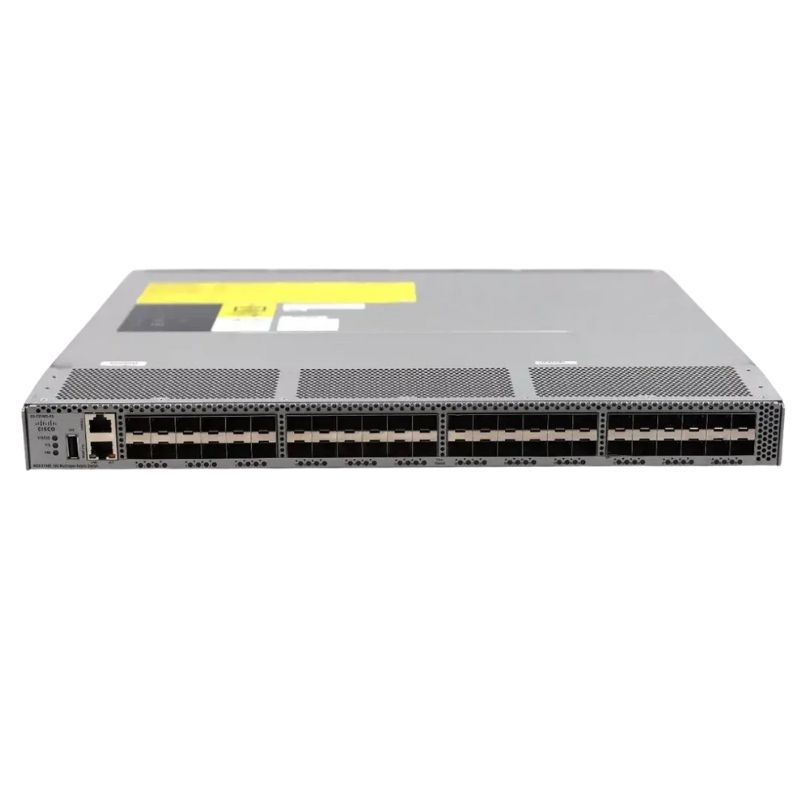


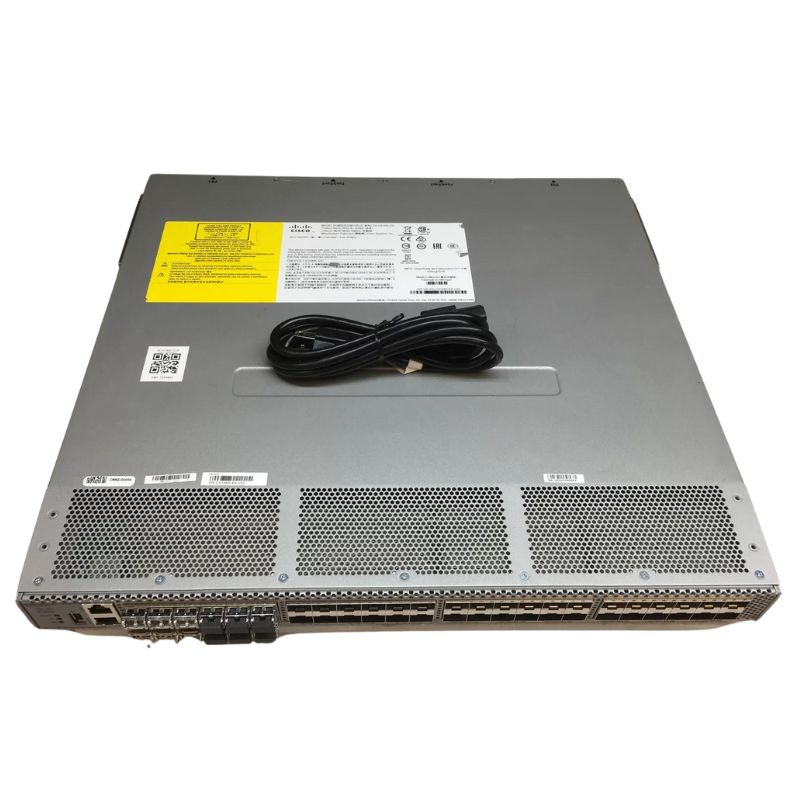
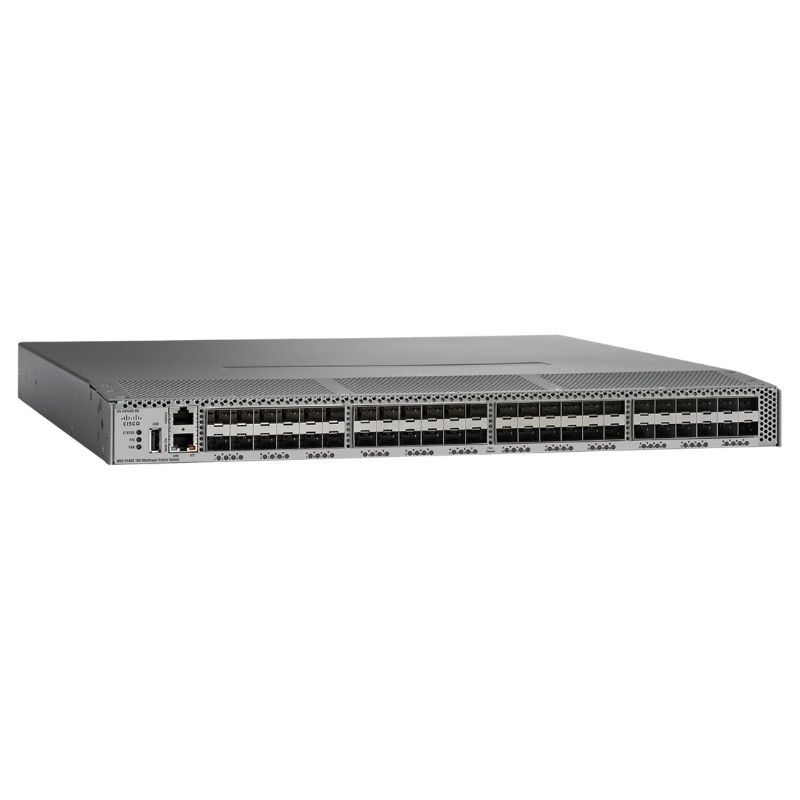
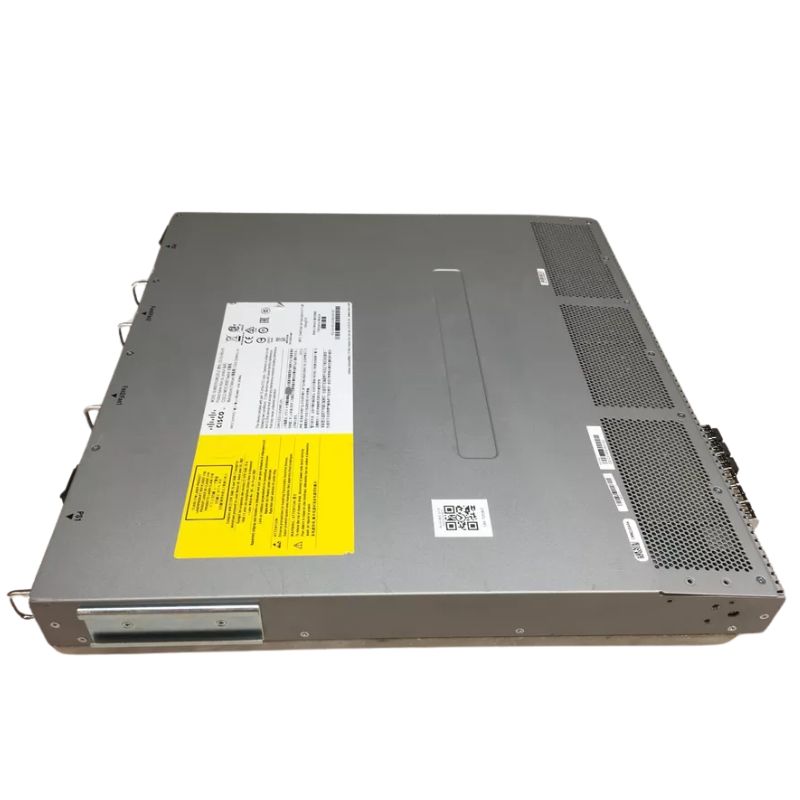
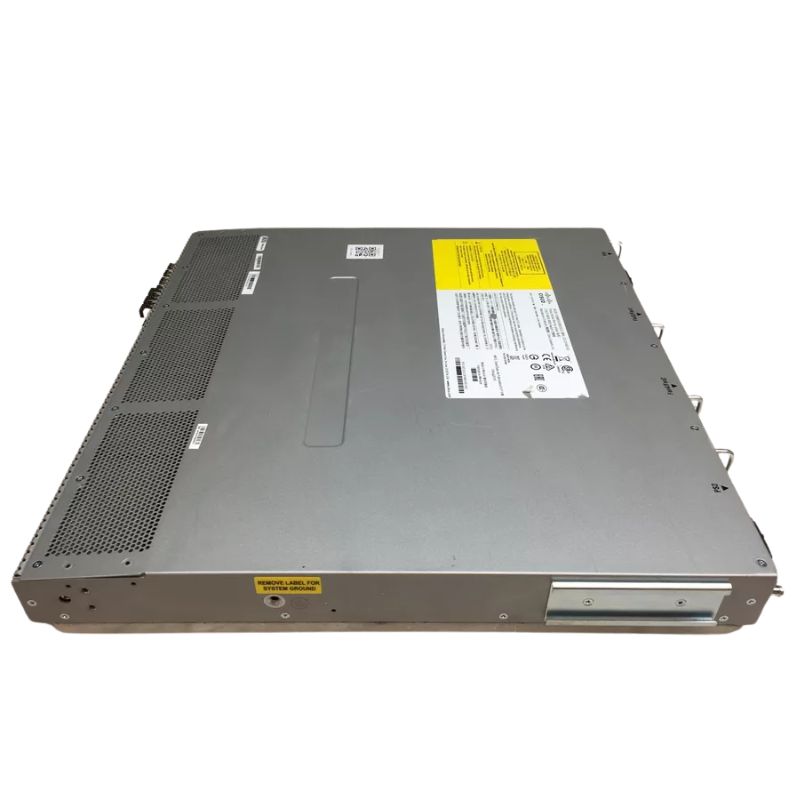
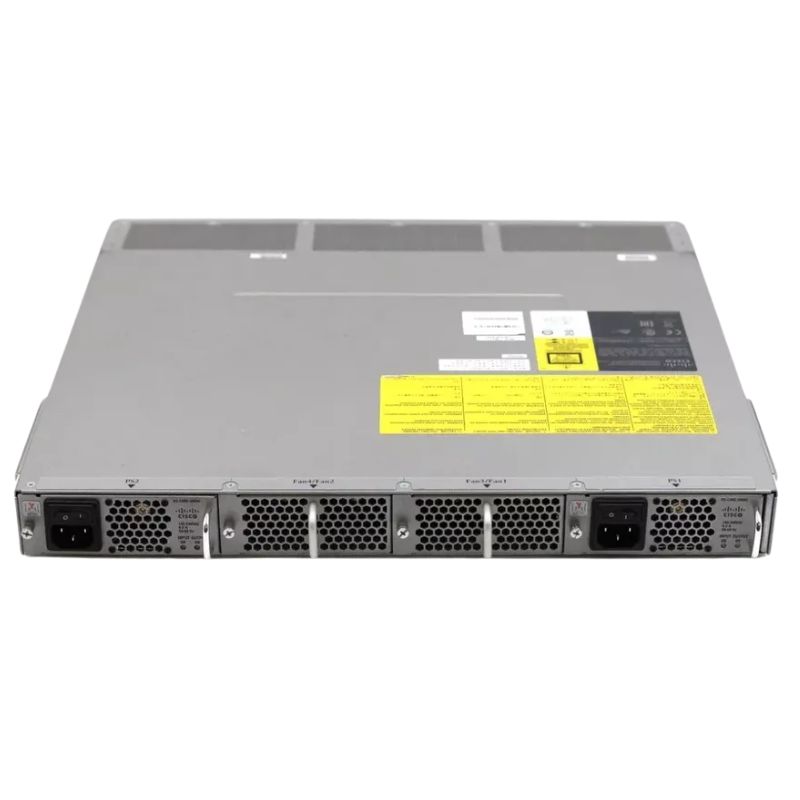
Cisco DS-C9148S-12PK9 Manageable Switch 48 Ports. Factory-Sealed New in Original Box (FSB) with 1 year replacement warranty
| SKU/MPN | Warranty | Price | Condition | You save |
|---|---|---|---|---|
| DS-C9148S-12PK9 | 1 Year Warranty | $235.00 | Excellent Refurbished | You save: $82.25 (26%) |
| DS-C9148S-12PK9 | 1 Year Warranty | $1,899.00 | Factory-Sealed New Retail in Original Box (FSB) | You save: $664.65 (26%) |
The Cisco DS-C9148S-12PK9 is a high-performance, rack-mountable 48-port multilayer fabric switch designed for enterprise and data center networks. Optimized for Fibre Channel connectivity, it provides exceptional speed, reliability, and flexibility for modern storage networks.
The Cisco DS-C9148S-12PK9 Manageable Multilayer Fabric Switch SFP+ 48 Ports represents a high-density, enterprise-grade switching solution designed for modern data center, aggregation, and high-performance campus environments. This category emphasizes 48-port SFP+ connectivity at 10 Gigabit Ethernet, delivering a balance of port density, low-latency forwarding, and advanced multilayer switching features. Customers searching for a reliable 48-port SFP+ fabric switch will find detailed guidance here on technical capabilities, typical deployment patterns, management options, performance considerations, compatibility with optics and cabling, security and availability features, and practical buying and installation advice suitable for both greenfield and refresh projects.
At the core of this category is dense SFP+ porting that supports widespread 10 Gigabit Ethernet connectivity for servers, top-of-rack aggregation, and storage networking. The 48 SFP+ ports enable consolidation of multiple 1Gb or 10Gb endpoints without sacrificing rack space, and provide a predictable upgrade path from existing 1Gb switches to full 10Gb server access. This density allows network architects to reduce the number of switches needed in a given rack, simplify cabling, and consolidate power and cooling demands. While the primary interface type is SFP+, this category often supports a range of small form-factor pluggable modules — from 10GBASE-SR for multimode fiber to 10GBASE-LR and DWDM-capable optics for longer distances — giving teams the flexibility to match optics to link lengths and building backbone designs.
Performance considerations for switches in this category emphasize predictable, wire-speed forwarding for both layer 2 and layer 3 traffic. The manageable multilayer fabric design is optimized for low latency across short and long flows, which makes these switches appropriate for high-performance computing clusters, virtualization hosts, and storage networks where microsecond-level latency can affect application behavior. Hardware-based forwarding paths accelerate common protocols and offload routing and switching tasks from the control plane, delivering consistent throughput even under heavy east-west traffic patterns. When planning capacity, focus on oversubscription ratios, flow distribution, and the number of active 10Gb links to avoid bottlenecks at aggregation points.
Switches in this product category offer full multilayer capabilities, enabling both robust layer 2 switching and advanced layer 3 routing features used in modern fabric architectures. Support for VLAN segmentation, dynamic routing protocols, and Virtual Extensible LAN (VXLAN) overlays provides network teams with the ability to implement both traditional and overlay network topologies. Fabric-aware features ease large-scale deployments by simplifying provisioning, enabling fast convergence, and supporting virtualized workloads. For environments that require a unified control plane across multiple devices, fabric features reduce operational complexity by centralizing policy and simplifying the distribution of forwarding and security rules.
Scalability is a critical design concern for data center and campus networks. This category addresses growth through modular management, stacking or fabric linking options, and support for uplinks to higher-tier switches. Whether expanding an existing leaf-and-spine fabric or consolidating racks into fewer, more powerful switches, the 48-port SFP+ architecture scales horizontally. Network designers will account for available uplink slots, the ability to add expansion modules or stacking cables, and the switch’s support for multi-switch logical configurations to create larger, resilient fabrics with predictable performance characteristics.
Management capabilities are central to the value proposition for manageable multilayer fabric switches. Modern switches in this category ship with advanced software that supports CLI, web-based GUIs, and RESTful APIs for integration with orchestration frameworks and automation platforms. Role-based access control and audit logging allow teams to enforce consistent configuration practices while providing clear accountability. Automation-ready features such as programmable interfaces, templating, and ACI- or SDN-compatible tools make these switches well-suited for organizations moving toward infrastructure-as-code. In addition, real-time telemetry and streaming analytics feed into monitoring platforms to facilitate proactive operations and capacity planning.
Telemetry and observability are must-haves for operators who need to maintain service levels and quickly troubleshoot incidents. This category includes support for modern telemetry frameworks that export high-resolution metrics and event data. Flow monitoring and sampling technologies provide visibility into traffic patterns, while counters and historical trend data help isolate intermittent issues. When combined with centralized log management and packet capture tools, the telemetry capabilities of these switches accelerate root-cause analysis and reduce mean time to repair for complex network problems.
Security is woven into the design of manageable multilayer fabric switches. Access control models on these devices include port-level authentication, dynamic VLAN assignment, and integration with identity services for consistent policy enforcement. Deep packet inspection and control-plane protection guard against malformed traffic and common attack vectors. For environments with strict compliance requirements, these switches can be configured to segment sensitive traffic, provide flow-level auditing, and integrate with external security stacks. Microsegmentation capabilities via overlay technologies further limit lateral movement between virtual machines and containers, aligning network controls with modern zero trust models.
High availability features elevate switches in this category to enterprise-grade reliability. Resiliency mechanisms include redundant power supply options, dual control-plane paths, and stateful failover. Fabric-level redundancy with link aggregation or MLAG-like technologies enables active-active connectivity for critical hosts and uplinks, reducing single points of failure. Convergence behavior during failover events is designed to be fast and deterministic to minimize impact on application traffic. For mission-critical deployments, operators often pair these switches with redundant backbone switches and multi-homing to storage arrays and upstream routers to ensure continuous operation even under component failure scenarios.
This product category is particularly well-matched to data center top-of-rack deployments where dense 10GbE connectivity is required to support virtualization hosts, hyperconverged nodes, and storage servers. The low-latency fabric supports east-west traffic prevalent in virtualized workloads and distributed applications. In converged infrastructure stacks, these switches aggregate compute and storage traffic while enabling quality-of-service policies to prioritize storage or latency-sensitive workloads. For enterprises migrating to hybrid cloud models, the switches act as a stable on-premises foundation that interconnects private cloud resources with WAN or cloud on-ramps.
Beyond the data center, manageability and multilayer capabilities make these switches suitable for campus aggregation layers and service provider edge nodes where 10Gb uplinks are essential. Aggregation of access-layer switches to a 48-port SFP+ device simplifies topology and reduces layer count, while advanced routing and policy features enable secure segmentation and traffic engineering. In carrier or MSP environments, service profiles and programmable interfaces accelerate tenant provisioning and multi-tenant isolation, driving operational efficiency for managed services.


 Contact Us
 Information
 Catalog
 Solid State Drives (SSD)
 Network Switches
 Hard Disk Drives
 HBA & Controllers
 PC & Servers
 PC & Server Memory
 CPU & Processors
 Network Routers
 Power Supplies
 Tape Drives & Libraries
 Network Devices
 Computer & Network Cables