(7% discount is applied at checkout)
Cart is empty
Your go-to destination for cutting-edge server products
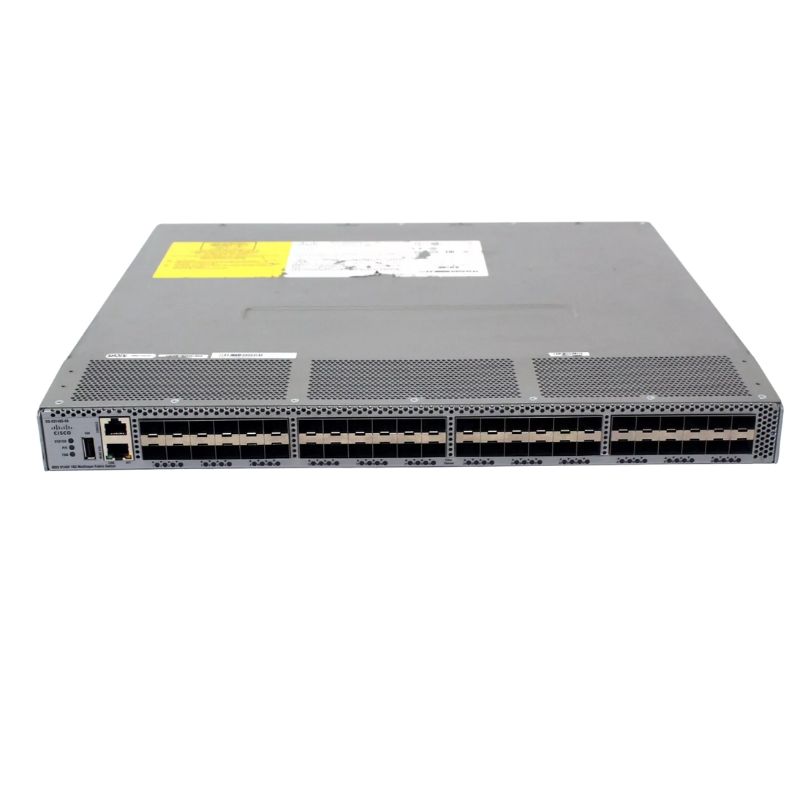


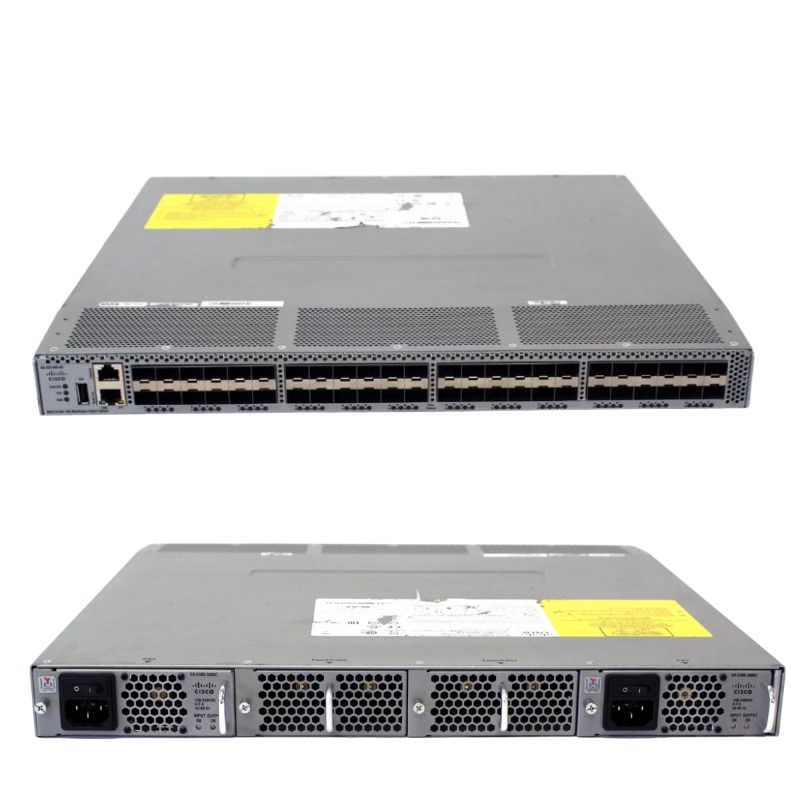
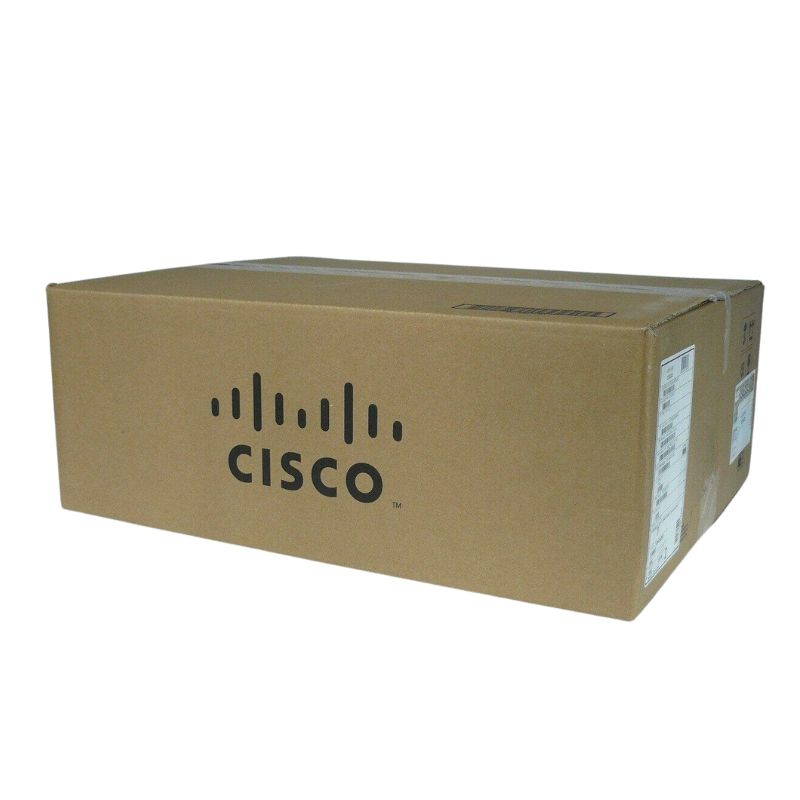
Cisco DS-C9148S-48PK9 48 Ports Multilayer Fabric Switch. Factory-Sealed New in Original Box (FSB) with 1 year replacement warranty
| SKU/MPN | Warranty | Price | Condition | You save |
|---|---|---|---|---|
| DS-C9148S-48PK9 | 1 Year Warranty | Contact us for a price | Factory-Sealed New Retail in Original Box (FSB) | |
| DS-C9148S-48PK9 | 1 Year Warranty | $920.00 | Excellent Refurbished | You save: $322.00 (26%) |
The Cisco DS-C9148S-48PK9 is a powerful multilayer fabric switch engineered to handle modern data-center workloads with exceptional reliability and scalable Fibre Channel performance. Designed for enterprises looking to enhance storage networking efficiency, this 48-port switch delivers consistent throughput, simplified administration, and robust security features.
This managed 48-port switching platform supports back-to-front airflow in a compact 1U rack-mount design. Its Fibre Channel architecture ensures smooth integration into demanding SAN ecosystems.
The switch is compatible with an extensive suite of FC protocols, enabling advanced interoperability and optimized fabric management. Supported standards include (but are not limited to) FC-DA, FC-FLA, FC-FS, FC-GS-3, FC-MI, FC-PH variants, FC-PI series, FC-SB generations, FC-SW versions, FC-TAPE, FC-VI, and numerous FCP profiles.
The DS-C9148S-48PK9 provides a versatile mix of management and Fibre Channel interfaces:
Engineered for consistent uptime, the switch includes dual hot-plug internal power supplies with a 1+1 redundancy architecture. This design ensures uninterrupted service even during power module replacement.
The Cisco DS-C9148S-48PK9 48 Ports Multilayer Fabric Switch represents a class of high-density, low-latency switching platforms engineered for modern data center and enterprise fabrics. This category centers on multilayer fabric switches that combine flexible port density, advanced forwarding capabilities, and resilient hardware design to meet the needs of converged networks running east-west traffic at scale. The product name itself — Cisco DS-C9148S-48PK9 — signals a 48-port topology with fabric-aware architecture. Buyers visiting this category are typically looking for switches that deliver deterministic performance, simplified management, and feature sets that support virtualization, overlay networks, and high-availability topologies.
Devices in this category provide a dense port count in a compact form factor while supporting multilayer switching functions. Multilayer capabilities refer to the appliance’s ability to perform both Layer 2 traffic switching and Layer 3 routing within the same forwarding plane, allowing for granular network segmentation, routed overlay deployment, and improved traffic steering. The 48 ports available on models like the Cisco DS-C9148S-48PK9 enable aggregation of server, storage, and uplink connectivity, consolidating network resources without sacrificing performance. Important characteristics found across this category include predictable latency, hardware-based forwarding engines, sophisticated Quality of Service (QoS) policies, and support for modern data center protocols and encapsulations.
The physical design of a 48-port multilayer fabric switch is intended to optimize rack space while delivering thermal and power efficiency. A rack-ready chassis with a 1U or 2U footprint is commonplace, engineered to fit into standard data center racks and cages. Front-panel port placement simplifies cabling and reduces cross-rack clutter. Internally, redundant power supplies and hot-swappable fan assemblies are frequently implemented to maintain uptime and streamline serviceability. The hardware design balances density with modularity to allow for future port upgrades and to support a variety of optics and transceiver options.
Performance is a cornerstone of the multilayer fabric category. Switches such as the Cisco DS-C9148S-48PK9 are expected to deliver line-rate forwarding across all ports, enabling full-bandwidth throughput for both north-south and east-west traffic flows. Deterministic latency and high packet-per-second capacity are essential for latency-sensitive applications like real-time analytics, high-performance computing, financial services trading platforms, and storage replication. The forwarding plane in these products often relies on application-specific integrated circuits (ASICs) optimized for multi-protocol support and deep buffers to smooth traffic bursts, thereby maintaining predictable application performance even under heavy loads.
Software capabilities define how a multilayer fabric switch integrates into a broader network architecture. Modern switches in this category deliver feature-rich operating systems that provide advanced routing protocols, overlay network support, and policy-driven automation. Support for VXLAN, EVPN, and similar overlay technologies allows enterprises to create virtualized Layer 2 networks over a Layer 3 fabric, simplifying tenant isolation and microsegmentation for cloud-native and multi-tenant environments. In addition, integrated telemetry, streaming telemetry support, and programmable APIs empower network teams to automate configuration, monitor health, and collect actionable performance data in real time.
Security functionality in multilayer fabric switches extends beyond access control lists to include capabilities for traffic encryption, hardware-assisted segmentation, and microsegmentation when deployed with orchestration platforms. These switches can participate in distributed security models by enforcing policies at the switch port or virtual network interface level, thereby reducing lateral movement risk within the data center. They also support role-based access control for administrators and granular policy enforcement for workloads, helping organizations meet compliance and security posture objectives.
Carrier-grade and enterprise-grade QoS features are common in this category, enabling prioritization for mission-critical applications, bandwidth policing for services, and traffic shaping to avoid congestion. Advanced queuing models and scheduler algorithms allow fine-grained control over packet handling, ensuring that real-time applications receive the necessary forwarding priority without starving other services. Traffic engineering features also facilitate the design of resilient and predictable paths across the fabric through path selection policies and link utilization strategies.
Multilayer fabric switches are versatile and find use across a variety of deployment scenarios. In a cloud or private cloud environment, a 48-port switch can serve as a top-of-rack aggregation switch for hyperconverged servers, providing tenants and workloads with high-speed connectivity and overlay support. In a campus or enterprise core, these devices can aggregate access-layer switches and offer routing services, enabling centralized policy enforcement and east-west traffic optimization. For high-performance computing clusters and data-intensive applications, the low latency and high throughput of this category make it possible to support parallel compute jobs and massive data transfers efficiently. Storage networks also benefit from the predictable forwarding and enhanced QoS of these switches when used in converged Ethernet or iSCSI deployments.
As a top-of-rack device, the 48-port multilayer switch provides immediate connectivity for the servers in a rack while offering uplinks to aggregation and spine layers. The density reduces the need for multiple smaller switches and simplifies cabling, which helps in both greenfield deployments and rack refresh projects. When combined with overlay technologies, these switches can present consistent logical networks across racks and pods, supporting live workload mobility and simplified network segmentation.
In modern data center topologies, leaf-spine architectures are prevalent for their predictable performance and scale-out properties. A 48-port switch often plays the role of a leaf node connecting servers and storage to spine switches that provide the east-west backbone. Multilayer features allow leaf devices to perform local routing decisions, relieve potential bottlenecks, and maintain robust traffic paths across the fabric. Deployments that require scale and minimal latency benefit from the short path lengths and even traffic distribution that leaf-spine designs enable.
Scalability considerations are fundamental when selecting a multilayer fabric switch for evolving network needs. The ability to scale port density, support higher-speed optics, and integrate with orchestration systems extends the life and value of the switch. Compatibility with modular transceivers and breakout cables allows data centers to migrate from lower speeds to higher speeds without wholesale platform replacement. Additionally, support for programmable interfaces and policy-driven automation helps organizations implement continuous improvement in network operations, enabling new services and application demands without disrupting existing infrastructure.
Port flexibility is a key aspect of future-proofing. Switches in this class commonly accept a range of optics and modules that allow administrators to choose or upgrade port speeds according to traffic demands. This flexibility reduces long-term costs because upgrades can be phased and targeted. Moreover, the ability to configure ports for specific roles, such as server access, uplinks to the spine, or storage connectivity, gives network architects the freedom to optimize fabric layouts and cabling strategies for performance and manageability.
Software maturity and licensing models will influence how the platform grows with an organization. Vendors in this category frequently provide tiered software licenses that unlock advanced features like enhanced security modules, extended routing protocols, or automation toolkits. A robust upgrade path and backward compatibility for configuration and APIs allow administrators to adopt new capabilities with minimal friction. The performance and stability of software updates are paramount, and a secure, well-documented lifecycle for the platform contributes to predictable operational outcomes.


 Contact Us
 Information
 Catalog
 Solid State Drives (SSD)
 Network Switches
 Hard Disk Drives
 HBA & Controllers
 PC & Servers
 PC & Server Memory
 CPU & Processors
 Network Routers
 Power Supplies
 Tape Drives & Libraries
 Network Devices
 Computer & Network Cables