(7% discount is applied at checkout)
Cart is empty
Your go-to destination for cutting-edge server products
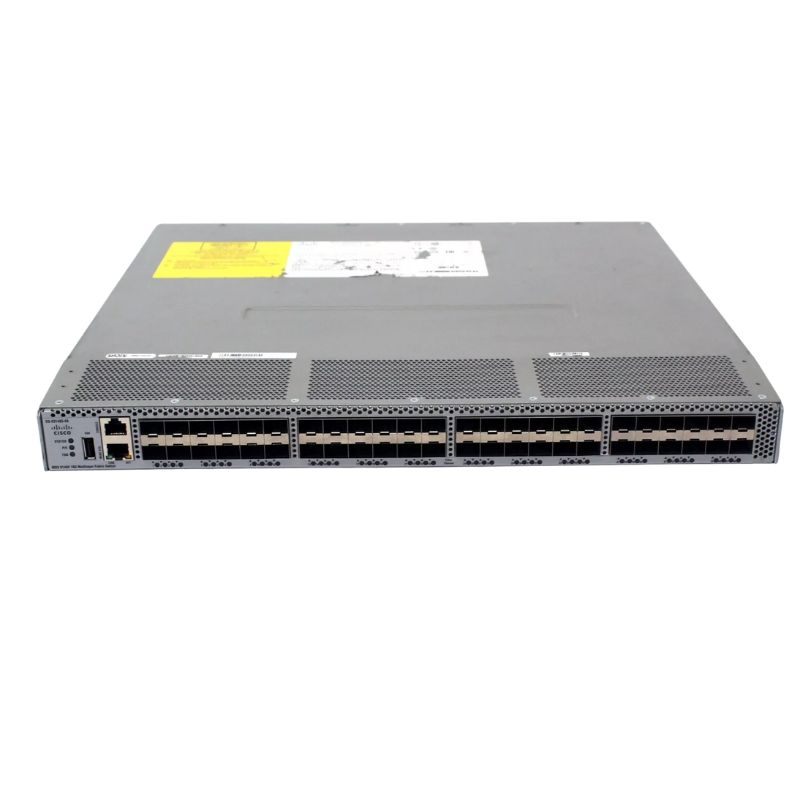


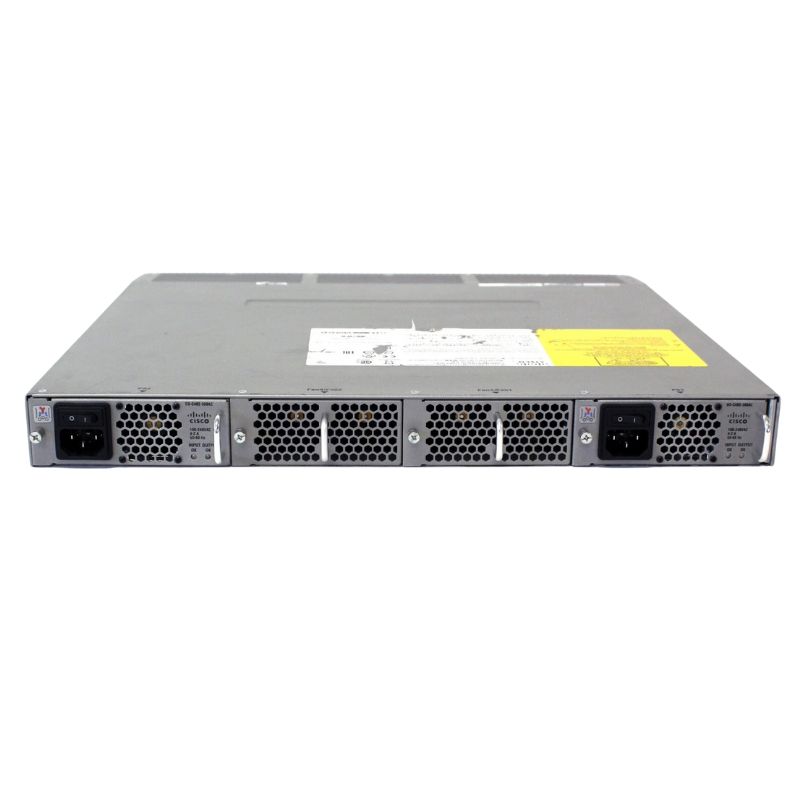
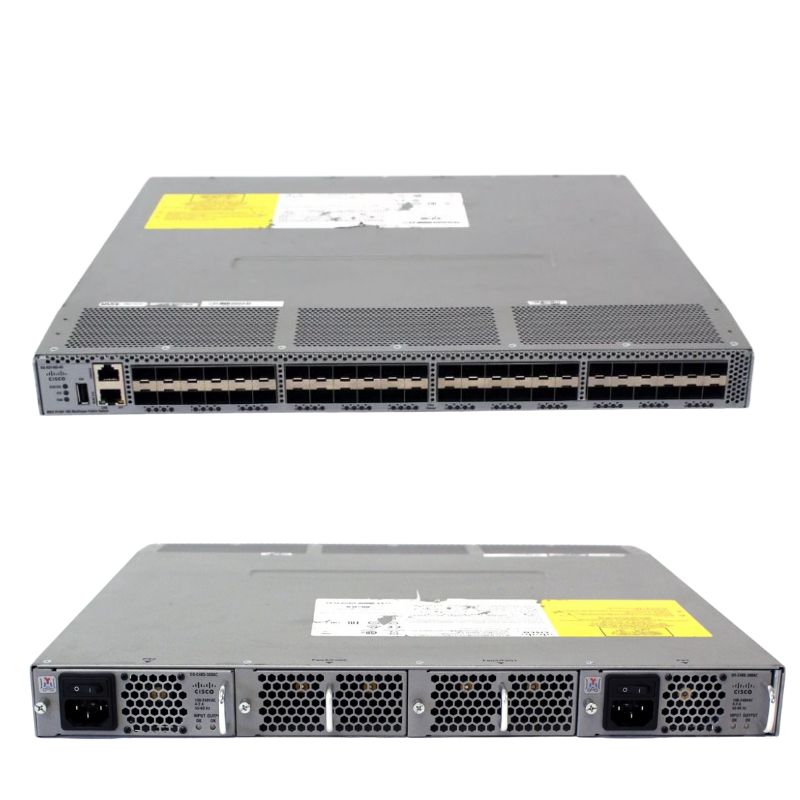
Cisco DS-C9148S-D12P8K9 MDS 9148S SFP+ 48 Ports Manageable 1U Multilayer Fabric Network Switches. Excellent Refurbished with 1 year replacement warranty.
The Cisco DS-C9148S-D12P8K9 delivers dependable performance for storage networks, featuring a compact 1U rack-mountable build and highly efficient back-to-front airflow. Designed for scalable, enterprise-grade operations, this switch offers robust management capabilities, flexible configuration options, and advanced traffic optimization for demanding SAN environments.
This model is engineered for high-density data centers, providing versatile connectivity and consistent throughput. Its rugged structure and compact dimensions allow seamless integration into modern infrastructures.
The DS-C9148S-D12P8K9 integrates numerous enterprise-class features to improve network reliability, enhance performance, and streamline administrative tasks.
Designed for continuous uptime, the switch includes dependable power options and redundancy support to maintain stable operation in enterprise environments.
The Cisco DS-C9148S-D12P8K9, commonly referred to as the Cisco MDS 9148S 48-port switch, sits within the enterprise storage networking category as a high-density, low-latency, managed rack-mountable Fibre Channel SAN switch designed for demanding data center environments. This category encompasses high-performance SAN switching hardware optimized for storage arrays, backup and recovery systems, virtualization platforms, and mission-critical applications requiring predictable throughput, hardware redundancy, and advanced fabric services. Buyers selecting from this category expect carrier-grade reliability, integrated management capabilities, and hardware designed to handle large-scale Fibre Channel deployments with simplified provisioning and strong interoperability with a broad ecosystem of SAN-attached devices.
The MDS 9148S family is intended for data centers and enterprise branches where dense port counts, managed fabric features, and simplified operations reduce overall footprint and complexity. Typical deployment scenarios include small to medium SAN cores, top-of-rack SAN connectivity for blade and rack servers, storage consolidation projects where multiple storage arrays are aggregated, disaster recovery islands, and virtualization clusters where consistent latency and predictable bandwidth are essential. This category is frequently chosen by organizations consolidating storage fabrics, optimizing backup windows, or building multi-site replication infrastructures that rely on Fibre Channel reliability and QoS controls.
Switches in this category deliver deterministic latency and strong buffer management to accommodate bursty storage traffic patterns typical of SAN operations. The MDS 9148S is engineered to handle sustained high-throughput data flows and short-lived transaction bursts from transactional databases, virtual machine I/O spikes, and parallel backup jobs. Quality of Service and hardware-based prioritization ensure that latency-sensitive traffic such as synchronous replication and database commit acknowledgements receive preferential forwarding treatment over less time-sensitive background replication tasks. The hardware architecture of the switch focuses on line-rate performance across all ports, enabling consistent performance regardless of the number of active ports under load.
As a managed switch, the MDS 9148S supports a comprehensive set of fabric services that are critical for enterprise SAN operations. These services generally include fabric zoning for traffic segmentation, NPV and NPIV modes for flexible host connectivity, fabric-wide management for policy enforcement, and in-line diagnostic tools for rapid fault isolation. Advanced features in this category often offer dynamic path management, nondisruptive firmware upgrades, and support for fabric-based replication solutions that rely on predictable switching behavior. Customers selecting this category prioritize switches that integrate cleanly into larger Cisco MDS environments and leverage centralized controllers and tools for automated provisioning and monitoring.
Physical design considerations are central to the category. The DS-C9148S-D12P8K9 is engineered for rack-mountable installation, optimizing data center space utilization while delivering a 48-port density in a single chassis. Rack-mountable switches in this class typically come with redundant power supplies, modular cooling systems, and front-to-back airflow patterns compatible with modern hot-aisle/cold-aisle data center designs. Cable management, port labeling, and accessible console interfaces are emphasized to reduce time-to-service during initial installation and routine maintenance. The compact footprint reduces the need for additional racks while preserving the ability to scale out fabrics through targeted uplink strategies.
Port flexibility is a hallmark of this category, with support for SFP+/SFP28 or dedicated Fibre Channel transceivers depending on platform revision. The 48 ports provide options for direct-attached server links, storage array connectivity, or uplinks to core switches and directors. Compatibility with a wide array of optical transceivers and cable types allows integrators to tailor link speeds and reach to specific site requirements, including short-range multimode fiber for rack-level connections and long-range single-mode fiber for inter-rack or site-to-site links. Choosing a switch from this category typically requires planning SFP inventory and cable runs to match link budget and latency targets across the SAN fabric.
High availability is core to the enterprise SAN switch category, and the MDS 9148S aligns with these expectations through redundant power supplies, hot-swappable components where applicable, and robust failover mechanisms. Fabric resiliency features such as path failover, link aggregation, and software-accelerated reroute capabilities reduce the impact of isolated hardware failures on application uptime. In addition to hardware redundancy, switches in this category generally support nondisruptive software upgrades, allowing administrators to apply critical updates without downtime when deployed in highly available fabrics. These characteristics are crucial in environments where even short interruptions in storage connectivity could impact revenue-generating systems.
Management capabilities are a differentiator in this category. The MDS 9148S typically offers a combination of command-line interface (CLI) access, web-based GUI, SNMP integration, and support for automation frameworks. Integration with Cisco Data Center Network Manager and other orchestration tools enables administrators to centrally manage policy, monitor health metrics, and automate routine configuration tasks. Programmability features like NETCONF, REST APIs, or other model-driven telemetry options allow the appliance to participate in modern DevOps pipelines and infrastructure-as-code workflows, enabling rapid provisioning and consistent state management across multiple switches and fabrics.
Security in SAN switching is expressed through access controls, zoning, authentication mechanisms, and support for securing management planes. SAN zoning isolates devices at the fabric level to enforce least privilege access between hosts and storage devices, reducing the risk of accidental cross-traffic or unauthorized access. When security is a major concern, switches in this category provide features for role-based administration, secure management protocols, and logging integrations with SIEM systems to record configuration changes and access attempts. These measures ensure that storage resources remain available and that data paths are not inadvertently exposed to unauthorized initiators.
Switches in the Cisco MDS category are engineered to interoperate with a broad set of storage arrays, tape libraries, backup appliances, and virtualization hosts. Compatibility matrices and interoperability testing with major vendors reduce risk during procurement and deployment, simplifying migrations from legacy fabrics. Virtualization platforms that leverage shared storage, such as VMware vSphere and Microsoft Hyper-V, benefit from the predictable I/O and fabric zoning provided by these switches. Enterprise customers typically verify end-to-end compatibility, including firmware interworking and validated configuration guides, before large-scale rollouts to ensure predictable performance and supportability.
Quality of Service functions are critical for managing mixed workloads in the storage environment. This switch category offers granular control over traffic prioritization, congestion avoidance, and buffer allocation to ensure that critical storage operations maintain performance even under heavy load. Administrators can define policies that guarantee bandwidth for replication or database traffic while allowing noncritical traffic to be scheduled or rate-limited during peak utilization windows. Proper QoS planning reduces the risk of performance degradation caused by competing workloads and enables more aggressive consolidation of storage resources.


 Contact Us
 Information
 Catalog
 Solid State Drives (SSD)
 Network Switches
 Hard Disk Drives
 HBA & Controllers
 PC & Servers
 PC & Server Memory
 CPU & Processors
 Network Routers
 Power Supplies
 Tape Drives & Libraries
 Network Devices
 Computer & Network Cables