(7% discount is applied at checkout)
Cart is empty
Your go-to destination for cutting-edge server products
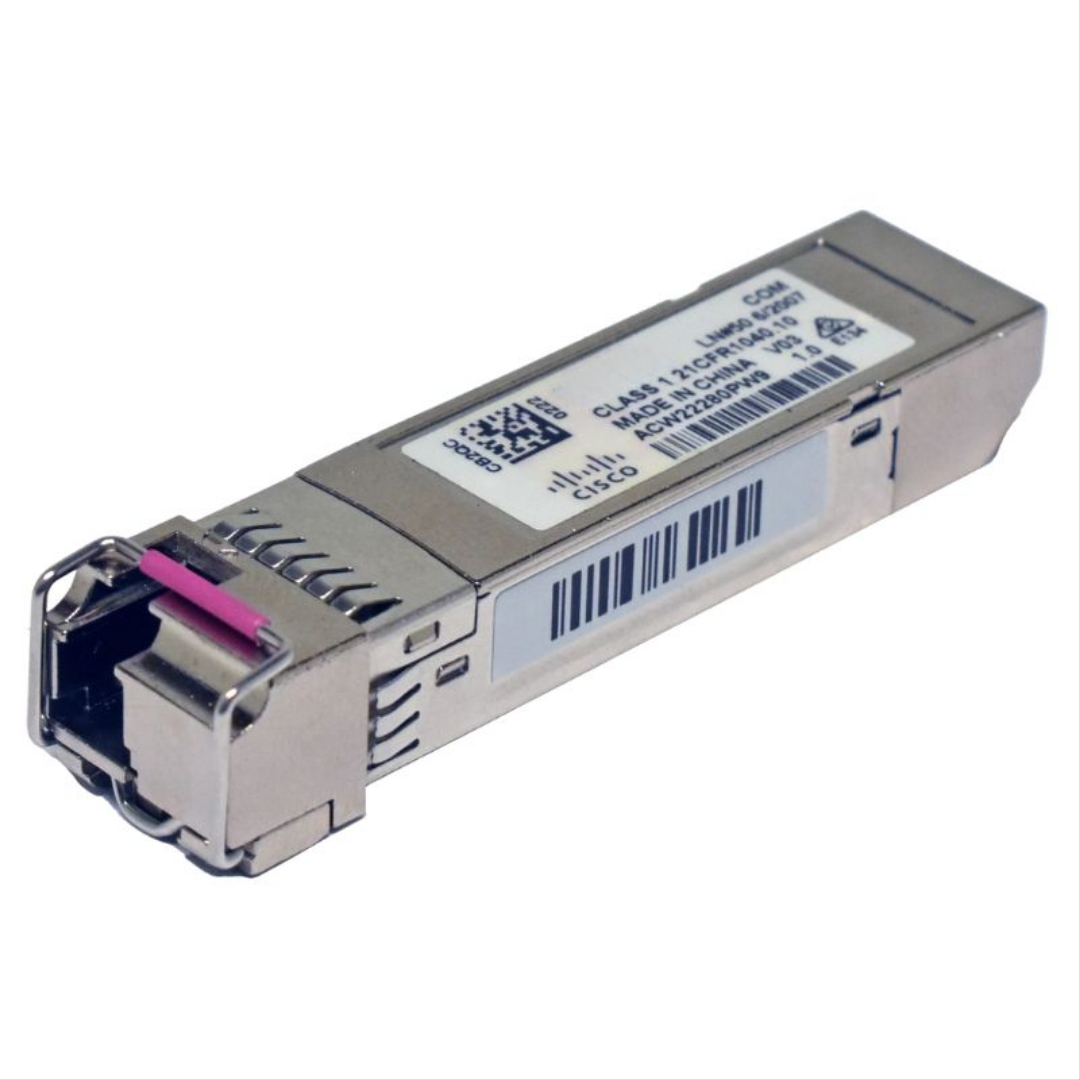


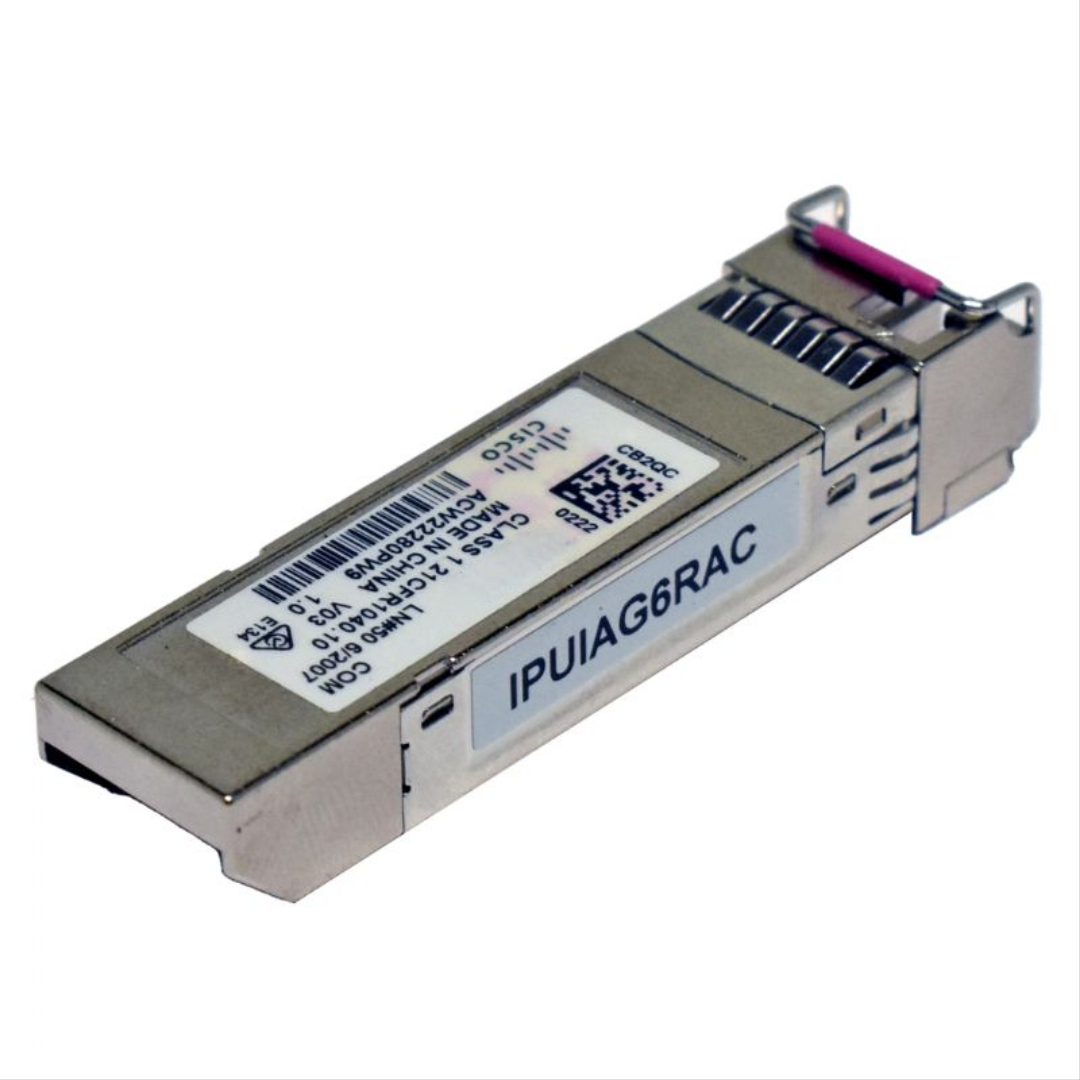
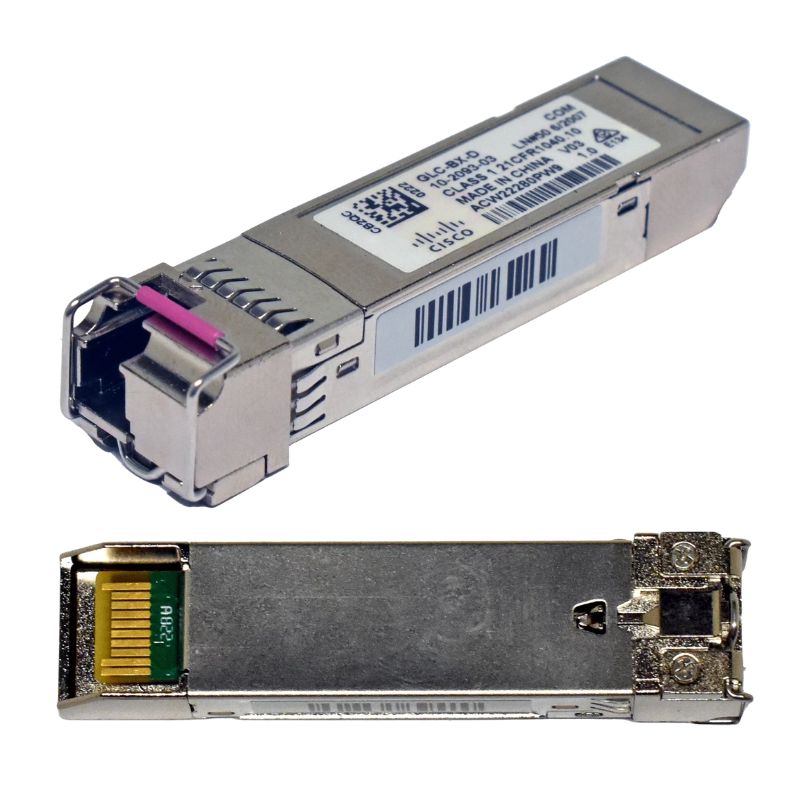
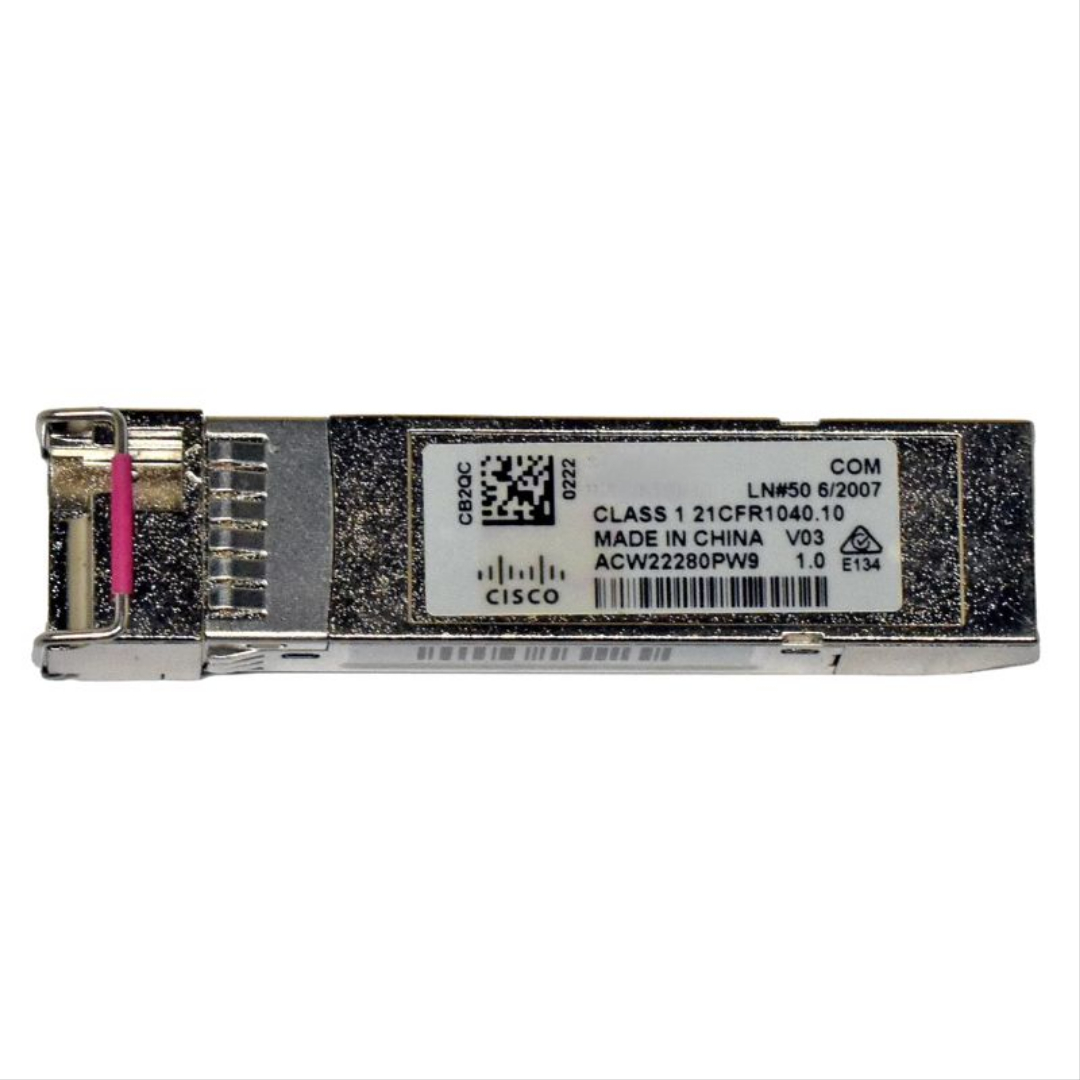
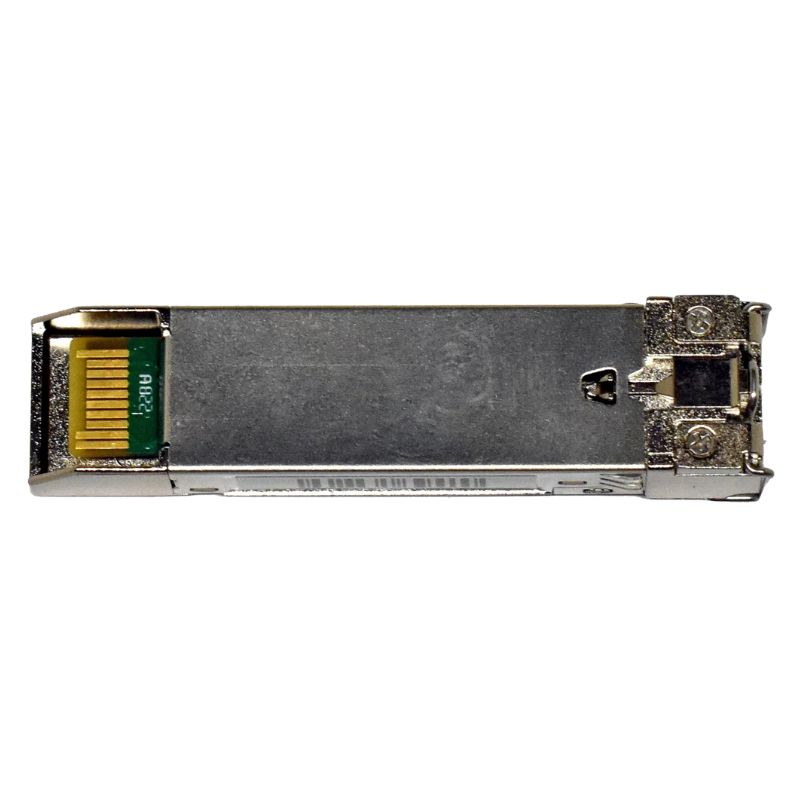
Cisco GLC-BX-D-I 1Gbps 1000Base-BX-D Single-mode SFP Transceiver Module. Excellent Refurbished with 1 year replacement warranty
The Cisco GLC-BX-D-I SFP Transceiver Module is a reliable optical networking solution designed for Gigabit Ethernet connectivity. It supports 1000BASE single-mode fiber transmission over distances up to 10km, operating with 1490nm TX and 1310nm RX wavelengths through an LC connector.
The GLC-BX-D-I Cisco 1Gbps SFP 1000Base-BX-D Transceiver Module is a high-performance, compact optical networking component designed to deliver reliable Gigabit Ethernet connectivity over single-mode fiber. This module is widely used in enterprise networking environments where long-distance, high-speed, and stable data transmission is essential. Built under strict quality standards by, this transceiver ensures interoperability, scalability, and superior network efficiency.
As part of Cisco’s extensive Small Form-Factor Pluggable (SFP) portfolio, the GLC-BX-D-I is optimized for bidirectional communication over a single strand of optical fiber. This reduces cabling complexity and infrastructure costs while maintaining robust data throughput. It is commonly deployed in enterprise networks, campus LANs, fiber-to-building connections, and service provider access networks.
Designed to comply with the IEEE 802.3z 1000BASE-BX standard, this module operates at 1 Gbps full-duplex transmission speed, making it suitable for modern network architectures requiring stable and efficient data exchange between switches, routers, and other networking devices.
The GLC-BX-D-I supports Gigabit Ethernet speeds of up to 1 Gbps, ensuring smooth handling of bandwidth-intensive applications such as VoIP, cloud computing, virtualization, and large-scale data transfers. Its performance consistency makes it a reliable choice for enterprise-level deployments.
One of the defining features of this module is its ability to transmit and receive data over a single optical fiber strand. This is achieved using wavelength division multiplexing (WDM) technology, which separates transmission and reception wavelengths. This reduces fiber usage by half compared to traditional dual-fiber solutions.
The module uses an LC simplex connector, known for its compact design and high precision alignment. This connector type is widely adopted in modern fiber optic systems due to its reliability and ease of installation.
The transceiver is hot-swappable, allowing network administrators to install or replace the module without powering down the system. This feature ensures minimal downtime and continuous network availability, which is critical in enterprise environments.
The module operates using two distinct wavelengths for transmission and reception, typically around 1310nm and 1490nm depending on configuration. This wavelength separation ensures stable communication with minimal signal interference over long distances.
The GLC-BX-D-I supports transmission distances up to 10 kilometers over single-mode fiber, making it suitable for inter-building and metropolitan area network deployments. The long reach capability allows organizations to connect distributed network infrastructure efficiently.
This SFP module is engineered for low power consumption, typically operating under 1 watt. This efficiency reduces overall energy usage in large-scale deployments where multiple transceivers are installed in networking equipment.
The module supports DDM functionality, which provides real-time monitoring of operating parameters such as temperature, voltage, optical power, and laser bias current. This feature enables proactive maintenance and enhances network reliability.
The GLC-BX-D-I is widely deployed in enterprise campus environments where multiple buildings need to be interconnected over fiber. Its long-range capability and single-fiber design reduce infrastructure costs while maintaining high performance.
In data center environments, this module plays a crucial role in connecting switches, aggregation layers, and distribution networks. Its high-speed performance ensures low latency and reliable data transfer between servers and storage systems.
ISPs utilize this transceiver in last-mile connectivity and subscriber aggregation systems. The ability to transmit over long distances using minimal fiber resources makes it highly cost-effective for service providers.
City-wide network infrastructures rely on BX-D modules for connecting nodes across urban environments. The long-distance capability and stable performance make it ideal for metropolitan deployments.
Before installation, it is essential to handle the module carefully to prevent electrostatic discharge damage. Users should avoid touching the optical interface and ensure proper grounding procedures are followed.
The module is designed to be inserted into Cisco switches and routers equipped with SFP slots. Once inserted, the device automatically detects the transceiver and configures the appropriate settings.
While primarily designed for Cisco equipment, compatibility with third-party networking devices may vary. It is recommended to verify firmware and hardware compatibility before deployment.
The LC connector should be aligned precisely with the fiber patch cable. Ensuring proper alignment reduces signal loss and maintains optimal transmission quality across the network.
By utilizing single-fiber bidirectional technology, organizations can significantly reduce fiber infrastructure costs. This eliminates the need for dual-fiber cabling, reducing installation complexity and material expenses.
The module is highly scalable and supports expanding network environments without requiring significant infrastructure upgrades. This makes it suitable for businesses experiencing rapid digital transformation.
Built with Cisco’s rigorous engineering standards, the transceiver provides consistent performance with minimal packet loss and low latency. This reliability is crucial for mission-critical applications.
In layered network architectures, the GLC-BX-D-I is often deployed in the core layer to ensure high-speed backbone connectivity between aggregation devices.
At the distribution layer, the module helps manage traffic flow between access and core layers, ensuring efficient data routing and network segmentation.
In access layer configurations, it connects end-user devices and edge switches, enabling seamless communication within enterprise networks.
Unlike traditional dual-fiber SFP modules, the GLC-BX-D-I reduces fiber usage by half. This makes it more efficient in environments where fiber availability is limited.
While some SFP modules may support higher speeds such as 10Gbps, the GLC-BX-D-I provides an optimal balance between cost, distance, and performance for Gigabit networks.
As part of Cisco’s certified product ecosystem, it offers superior compatibility compared to generic transceiver modules, reducing the risk of interoperability issues.
The GLC-BX-D-I is designed to operate within standard commercial temperature ranges, ensuring stable performance in controlled environments such as data centers and network closets.
The module is built for continuous operation in high-demand networking environments, ensuring minimal degradation over time.
While the module itself does not encrypt data, it plays a critical role in maintaining secure transmission paths within encrypted network architectures.
By providing stable optical connectivity, it reduces packet loss and transmission errors, contributing to overall data integrity across the network infrastructure.


 Contact Us
 Information
 Catalog
 Solid State Drives (SSD)
 Network Switches
 Hard Disk Drives
 HBA & Controllers
 PC & Servers
 PC & Server Memory
 CPU & Processors
 Network Routers
 Power Supplies
 Tape Drives & Libraries
 Network Devices
 Computer & Network Cables