(7% discount is applied at checkout)
Cart is empty
Your go-to destination for cutting-edge server products
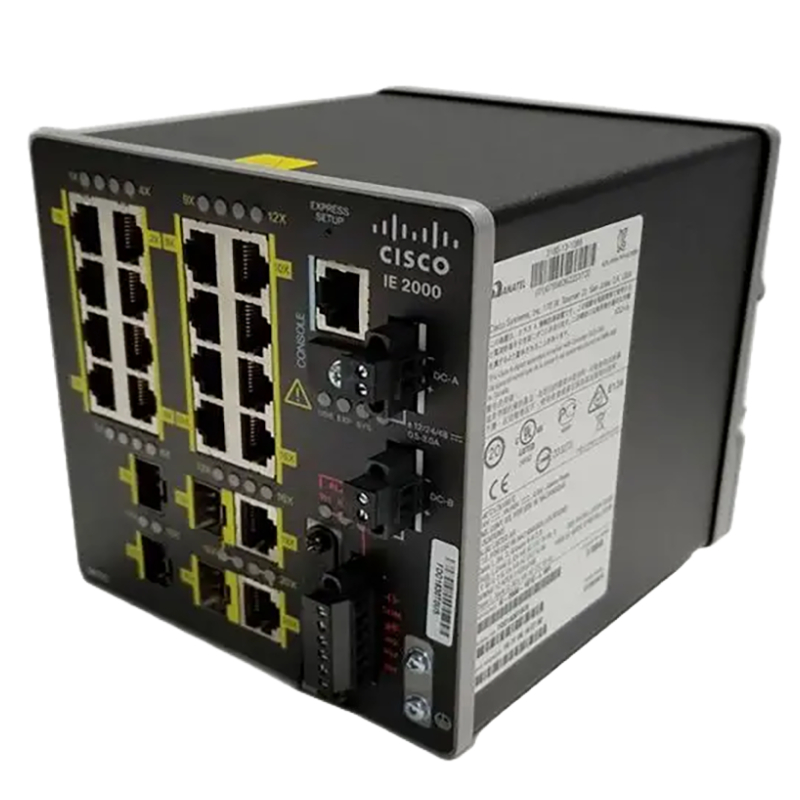


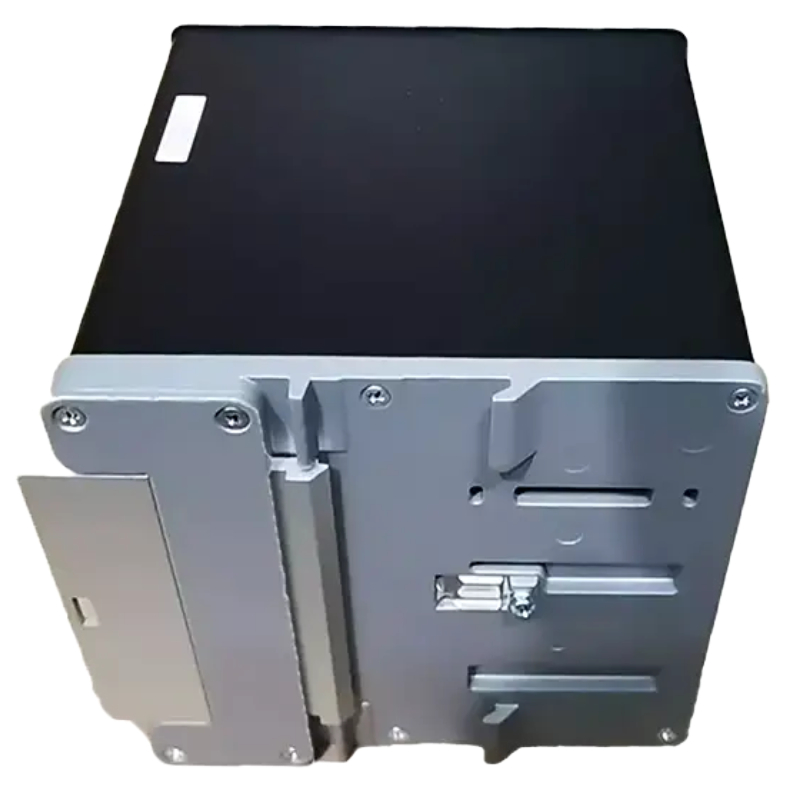
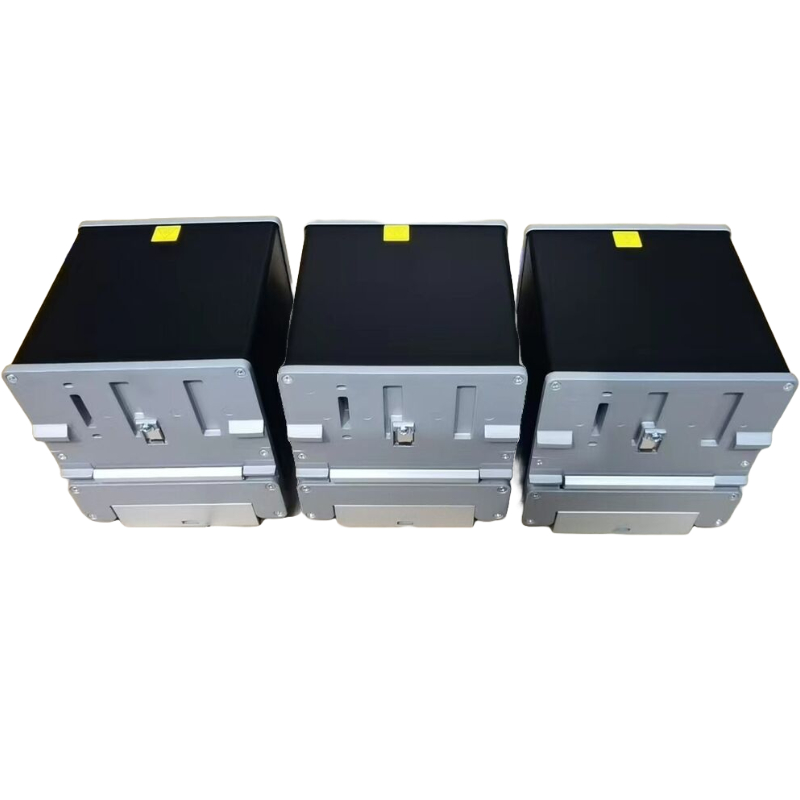
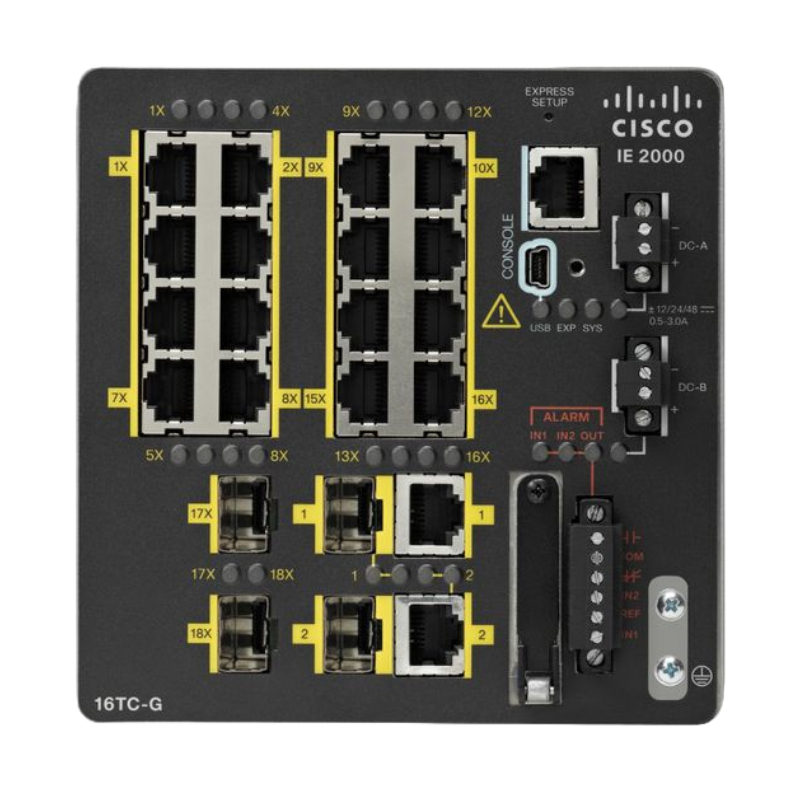
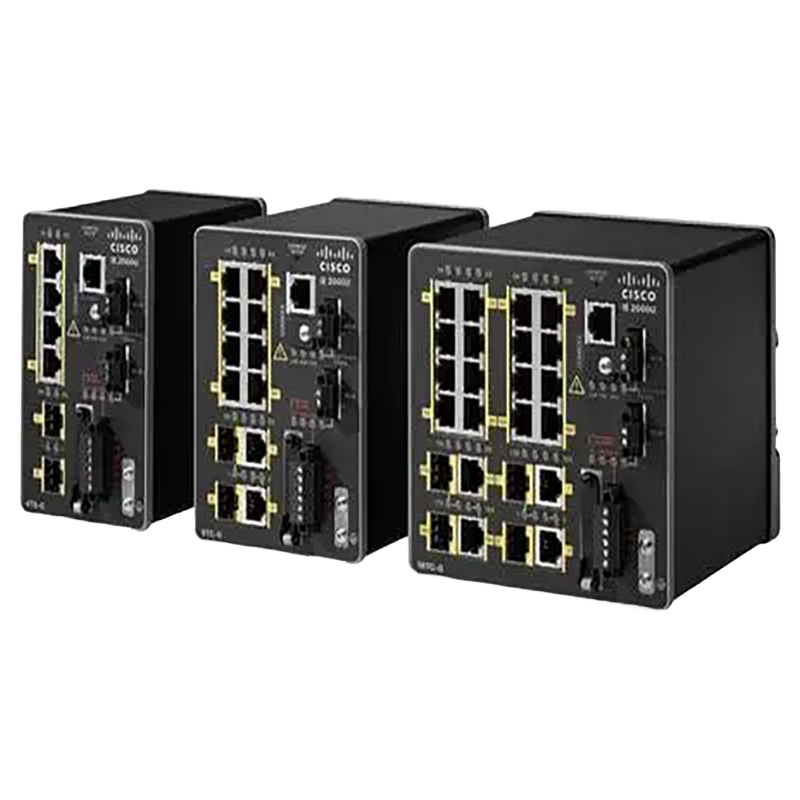
Cisco IE-2000-16TC-B 20 Ports Desktop Switch with 4x SFP Expansion Slots. Factory-Sealed New in Original Box (FSB) with 1 year replacement warranty
| SKU/MPN | Warranty | Price | Condition | You save |
|---|---|---|---|---|
| IE-2000-16TC-B | 1 Year Warranty | $340.00 | Excellent Refurbished | You save: $119.00 (26%) |
| IE-2000-16TC-B | 1 Year Warranty | $665.00 | Factory-Sealed New Retail in Original Box (FSB) | You save: $232.75 (26%) |
The Cisco IE-2000-16TC-B is a high-performance 20-port managed switch designed for industrial environments. Featuring robust connectivity and flexible deployment options, it ensures reliable network operations across demanding scenarios.
The Cisco IE-2000-16TC-B 20 Ports Desktop Switch with 4x SFP Expansion Slots represents a specialized class of industrial Ethernet switches designed to support reliable, deterministic, and secure network communications in demanding operational environments. This category of industrial-grade desktop switches is purpose-built to extend Ethernet connectivity beyond traditional enterprise offices into industrial automation, transportation systems, energy distribution, smart infrastructure, and remote operational facilities. Unlike conventional commercial switches, industrial Ethernet switches prioritize resilience, long operational lifecycles, environmental tolerance, and predictable performance to ensure uninterrupted network operations in harsh and distributed settings.
Within this category, the Cisco IE-2000 series stands out for its ability to combine compact desktop form factors with enterprise-grade switching intelligence. The inclusion of 20 total ports, with 16 copper Ethernet ports and 4 SFP expansion slots, allows these switches to act as aggregation points for industrial devices while also supporting long-distance fiber uplinks. This architectural flexibility positions the category as a critical foundation layer for industrial networks that must integrate sensors, controllers, human-machine interfaces, and supervisory systems into a unified IP-based infrastructure.
Desktop industrial Ethernet switches like the Cisco IE-2000-16TC-B play a vital role in operational technology environments where space constraints, power efficiency, and localized connectivity are key considerations. These switches are often deployed in control cabinets, factory floors, substations, roadside enclosures, and small equipment rooms where rack-mounted hardware is impractical. Despite their compact size, they provide robust Layer 2 switching capabilities that enable reliable device-to-device communication, traffic segmentation, and redundancy within industrial networks.
The category addresses the convergence of IT and OT by supporting standard Ethernet protocols while maintaining compatibility with industrial communication standards. This allows organizations to modernize legacy systems, migrate from proprietary fieldbus networks, and adopt Industrial Internet of Things architectures without compromising operational stability. Desktop industrial switches serve as the edge of the network, bridging field-level devices with higher-level aggregation and core layers.
Industrial Ethernet switches in this category are engineered to integrate seamlessly with programmable logic controllers, distributed control systems, remote terminal units, and intelligent electronic devices. The Cisco IE-2000-16TC-B supports deterministic traffic handling required for real-time control applications, ensuring that time-sensitive data flows are prioritized and delivered with minimal latency. This capability is essential for manufacturing lines, process automation, and critical infrastructure operations where network delays can directly impact safety and productivity.
By offering multiple copper Ethernet ports alongside SFP expansion slots, the category supports mixed-media environments. Copper connections facilitate short-range device connectivity, while fiber uplinks provide electrical isolation and long-distance communication across large facilities or geographically dispersed sites. This adaptability reduces the need for additional media converters and simplifies network design.
The defining characteristic of the Cisco IE-2000-16TC-B category is its balanced port configuration, which delivers both high-density access and scalable uplink options. With a total of 20 ports, these switches accommodate a wide range of endpoint devices while preserving flexibility for network growth. The 16 Ethernet ports support direct connections to industrial endpoints, while the 4 SFP slots enable fiber-based connectivity to aggregation switches, control centers, or redundant network paths.
This port composition aligns with industrial network topologies that require star, ring, or mesh configurations. The ability to deploy fiber uplinks enhances resilience and supports network segmentation across different operational zones. In industrial environments where electromagnetic interference, grounding issues, and long cable runs are common, fiber connectivity becomes a critical component of reliable network design.
The inclusion of four SFP expansion slots positions this category as a versatile solution for industrial networks that demand scalability and future-proofing. SFP-based fiber connectivity enables extended reach beyond the limitations of copper Ethernet, supporting distances suitable for campuses, production lines, transportation corridors, and utility networks. This flexibility allows organizations to adapt their network infrastructure as operational requirements evolve.
Fiber uplinks also contribute to enhanced network security and stability. Optical links are immune to electromagnetic interference and provide inherent electrical isolation, reducing the risk of ground loops and surge-related damage. These characteristics are particularly valuable in environments such as power generation facilities, substations, and heavy industrial plants where electrical noise is prevalent.
Industrial Ethernet switch categories emphasize high availability through support for redundancy protocols and resilient network architectures. The Cisco IE-2000-16TC-B category is designed to support ring and redundant topologies that minimize downtime in the event of link or device failures. By leveraging multiple uplink paths through SFP ports, networks can maintain continuous operation even when individual connections are disrupted.
This focus on availability aligns with the operational requirements of industrial environments, where network outages can halt production, disrupt transportation systems, or impact public safety. Desktop industrial switches provide the reliability expected from critical infrastructure components while maintaining a compact and cost-effective footprint.
One of the most important differentiators of the Cisco IE-2000-16TC-B category is its industrial-grade construction. These switches are engineered to operate reliably in environments that exceed the tolerances of standard enterprise networking equipment. This includes exposure to temperature extremes, vibration, humidity, and electrical noise. The ruggedized design ensures consistent performance in conditions commonly found in manufacturing plants, outdoor enclosures, and remote installations.
The desktop form factor does not compromise durability. Instead, it offers flexibility in mounting options while maintaining the robust build quality required for industrial use. This makes the category suitable for deployment in control panels, wall-mounted enclosures, and compact network cabinets where space efficiency is critical.
Industrial Ethernet switches are typically deployed for long periods, often exceeding a decade of continuous operation. The Cisco IE-2000-16TC-B category reflects this requirement by supporting extended product lifecycles and long-term availability. This stability is essential for industrial organizations that prioritize consistent hardware platforms, predictable maintenance schedules, and compatibility with existing systems.
By maintaining consistent hardware and software support, this category reduces the need for frequent network redesigns and hardware replacements. This contributes to lower total cost of ownership and minimizes operational disruptions associated with equipment upgrades.
Power efficiency is a critical consideration in industrial environments where power budgets may be limited or where equipment is deployed in remote locations. Desktop industrial switches are designed to operate efficiently while maintaining stable thermal performance. Effective heat dissipation ensures reliable operation without the need for active cooling, which can introduce additional points of failure.
This passive or low-noise thermal design is particularly valuable in control rooms, roadside cabinets, and distributed installations where maintenance access is limited. The ability to operate continuously without overheating enhances network reliability and reduces operational risks.
Security is a foundational requirement for industrial Ethernet switch categories, especially as industrial networks become increasingly connected to enterprise IT systems and external networks. The Cisco IE-2000-16TC-B category supports advanced security features that protect industrial assets from unauthorized access, network breaches, and malicious activity. These capabilities enable organizations to implement defense-in-depth strategies that align with modern cybersecurity standards.
Network segmentation plays a critical role in securing industrial environments. By logically separating devices, applications, and operational zones, industrial switches help contain potential threats and limit their impact. Desktop industrial switches provide the switching intelligence needed to enforce segmentation policies at the network edge.
Industrial Ethernet switches in this category support access control mechanisms that regulate which devices can connect to the network and what resources they can access. This is essential in environments where numerous field devices, contractors, and remote systems interact with the network. Effective access control reduces the risk of accidental misconfigurations and intentional attacks.
Traffic management capabilities ensure that critical control and monitoring data is prioritized over less time-sensitive traffic. This quality-of-service functionality supports predictable network behavior, which is essential for real-time industrial applications. By managing traffic flows intelligently, desktop industrial switches help maintain consistent performance even under heavy network loads.
The category aligns with industrial cybersecurity frameworks and best practices, supporting compliance with standards that govern critical infrastructure protection. This includes features that facilitate network monitoring, auditing, and incident response. Industrial Ethernet switches act as enforcement points where security policies can be implemented and validated.
By embedding security capabilities directly into the switching infrastructure, organizations can reduce reliance on external security appliances and simplify network architectures. This integrated approach enhances visibility and control across industrial networks.
The Cisco IE-2000-16TC-B category is well-suited for a wide range of deployment scenarios across multiple industries. Its combination of compact design, port density, fiber expansion, and industrial resilience makes it adaptable to diverse operational contexts. These switches often serve as the foundational connectivity layer for industrial automation, intelligent transportation systems, and energy distribution networks.
In manufacturing environments, desktop industrial switches connect production equipment, sensors, and control systems, enabling real-time monitoring and automation. In transportation infrastructure, they support traffic management systems, signaling equipment, and surveillance networks. In utilities and energy sectors, they facilitate communication between substations, monitoring devices, and control centers.
As industries embrace digital transformation initiatives, the role of industrial Ethernet switches becomes increasingly important. The Cisco IE-2000-16TC-B category supports the transition to IP-based communication, enabling data-driven decision-making, predictive maintenance, and remote monitoring. By providing reliable connectivity at the network edge, these switches help unlock the value of industrial data.
The ability to integrate legacy equipment with modern network architectures ensures that organizations can modernize incrementally without disrupting existing operations. Desktop industrial switches act as enablers of innovation while preserving the stability of core industrial processes.
Scalability is a defining attribute of this category. The combination of multiple Ethernet ports and SFP expansion slots allows networks to grow organically as operational needs evolve. Organizations can add new devices, extend network reach, and implement redundancy without replacing existing switching infrastructure.
This forward-looking design ensures that investments in industrial Ethernet switches remain relevant as technologies and requirements change. By supporting modular expansion and flexible deployment options, the Cisco IE-2000-16TC-B category delivers long-term value and adaptability for industrial networks.
Within the broader landscape of industrial networking, desktop industrial Ethernet switches occupy a strategic position. They bridge the gap between field-level devices and higher-level network infrastructure, providing the reliability, security, and performance needed to support critical operations. The Cisco IE-2000-16TC-B category exemplifies this role by combining industrial durability with enterprise-grade networking intelligence.
By enabling resilient, secure, and scalable connectivity, this category supports the continuous operation of industrial systems that underpin modern economies. From manufacturing and transportation to energy and smart infrastructure, desktop industrial switches serve as essential building blocks for connected industrial environments.


 Contact Us
 Information
 Catalog
 Solid State Drives (SSD)
 Network Switches
 Hard Disk Drives
 HBA & Controllers
 PC & Servers
 PC & Server Memory
 CPU & Processors
 Network Routers
 Power Supplies
 Tape Drives & Libraries
 Network Devices
 Computer & Network Cables