(7% discount is applied at checkout)
Cart is empty
Your go-to destination for cutting-edge server products
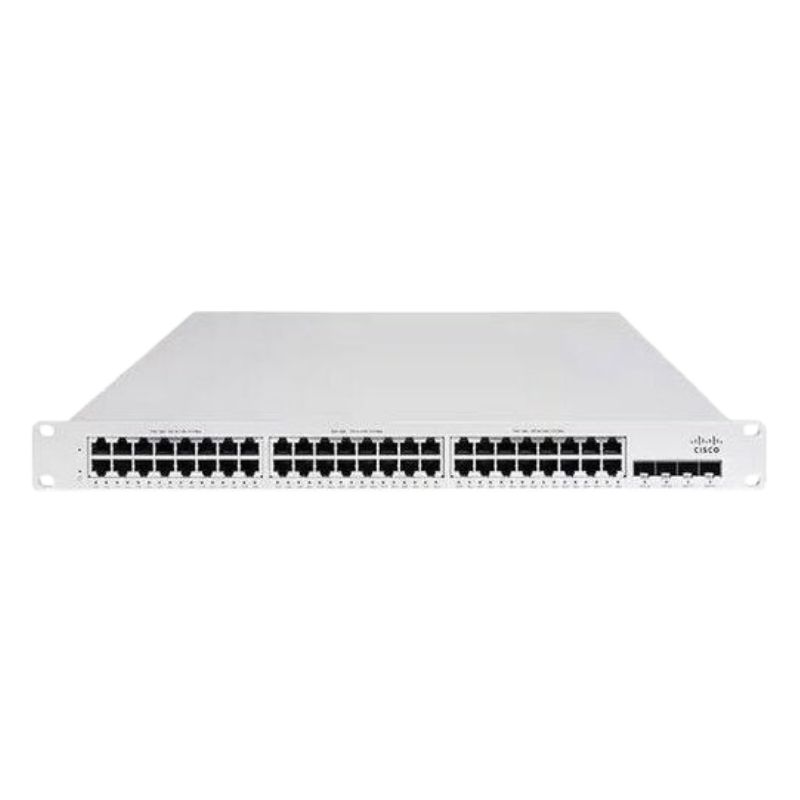


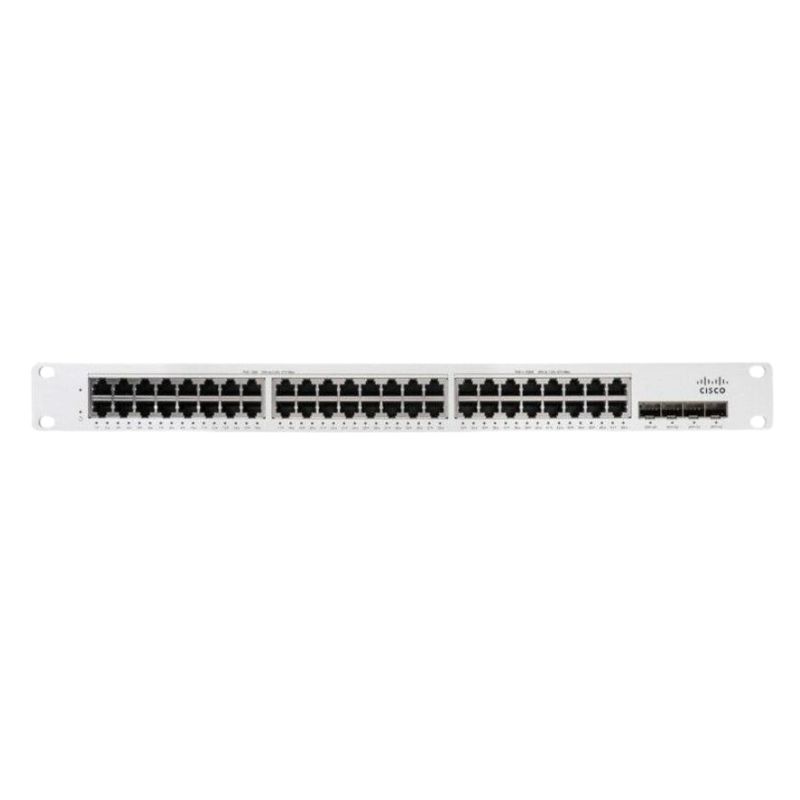
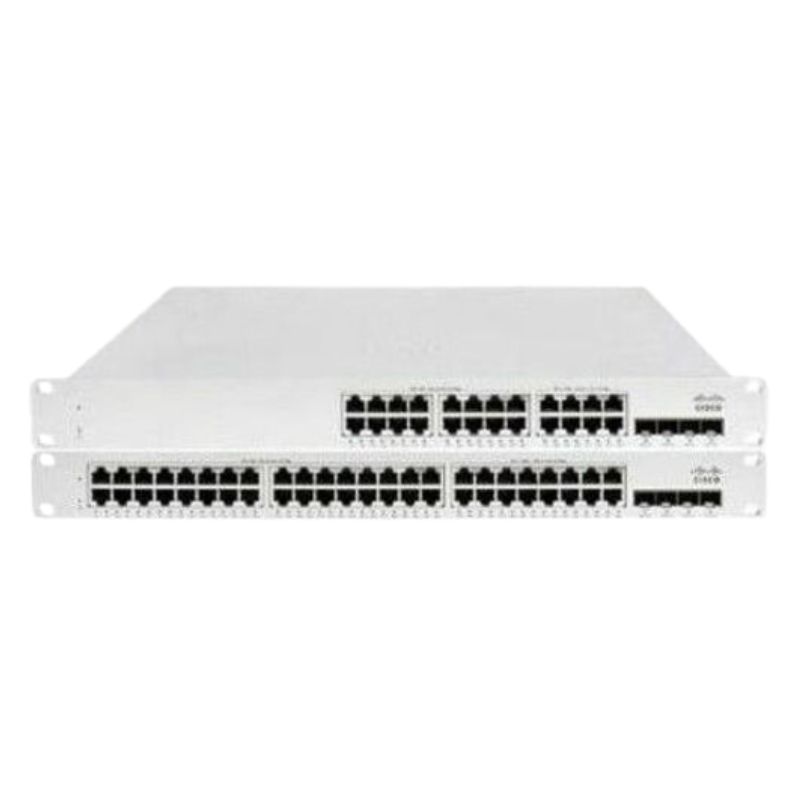
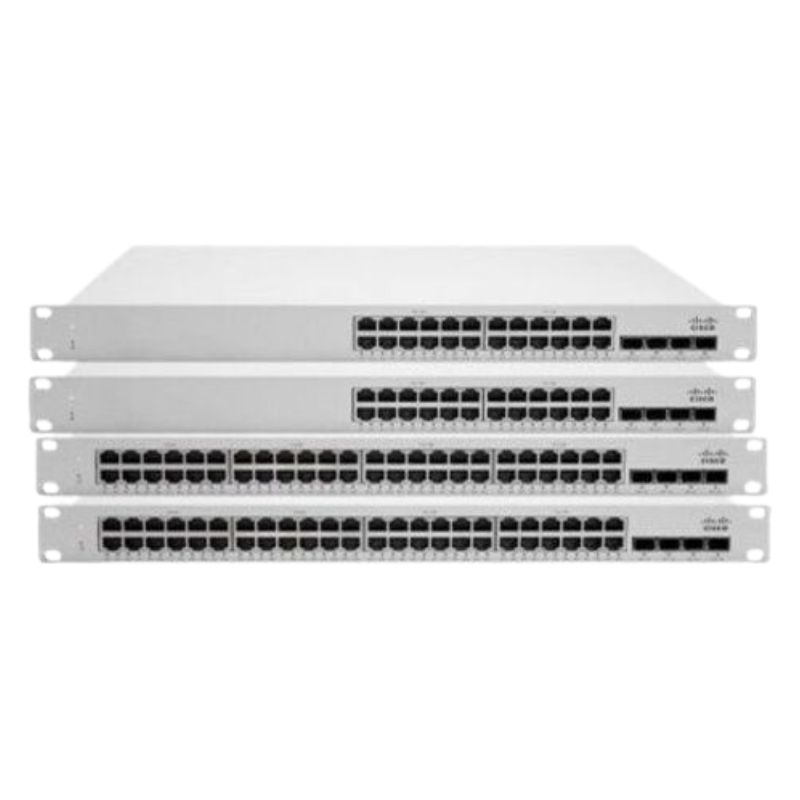
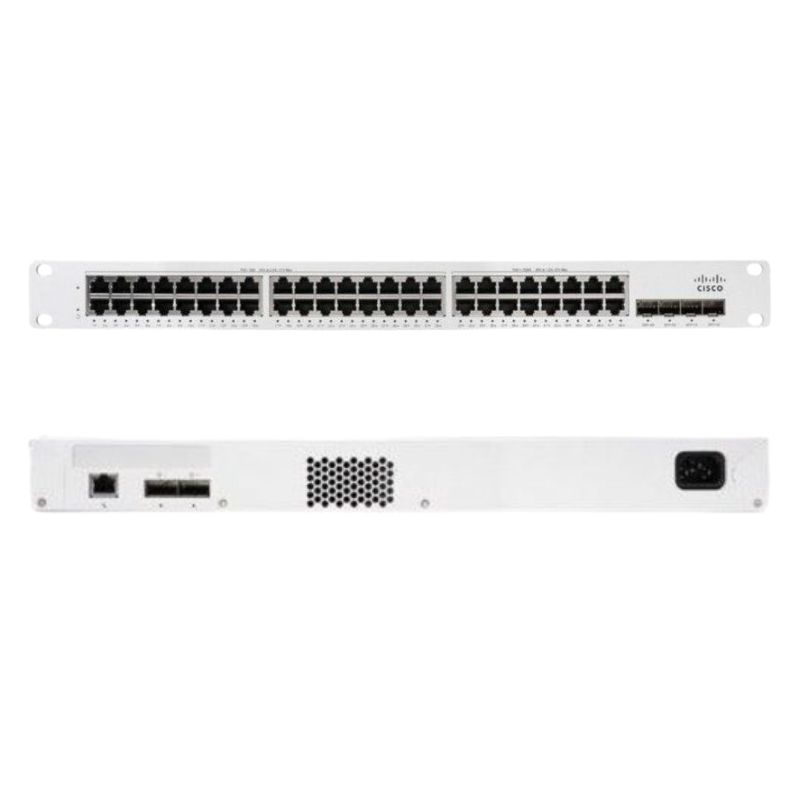
Cisco MS150-48MP-4X Meraki Ethernet Switch 48 Ports Manageable Gigabit Ethernet. New Sealed with 1 Year Replacement Warranty. Unclaimed, Clean Serials, No License
The Cisco MS150-48MP-4X is a high-performance, rack-mountable Ethernet switch designed for enterprise networks requiring speed, flexibility, and advanced management features. With 48 network ports and robust PoE capabilities, it ensures reliable connectivity across various devices and network layers.
The Cisco MS150-48MP-4X Meraki Ethernet Switch category represents a modern class of enterprise-grade managed network switches designed to meet the increasing demands of high-density access layer deployments. This category focuses on scalable, cloud-managed switching solutions that combine advanced Layer 3 routing support, high-performance Gigabit and Multi-Gigabit Ethernet connectivity, and a substantial Power over Ethernet budget. Devices within this category are engineered to serve as a foundational networking layer for organizations that require reliability, simplified management, and the flexibility to support bandwidth-intensive applications across twisted pair and optical fiber infrastructures.
As part of the Meraki ecosystem, switches in this category integrate tightly with Cisco’s cloud-based dashboard, enabling centralized monitoring, configuration, and troubleshooting. This architectural approach significantly reduces operational complexity while maintaining enterprise-level control and visibility. The category is well-suited for medium to large organizations, distributed enterprises, campuses, and branch networks that require consistent performance and policy enforcement across multiple locations.
A defining characteristic of this category is its reliance on cloud-managed networking principles. Switches such as the Cisco MS150-48MP-4X are designed to operate with continuous synchronization to the Meraki cloud, providing administrators with real-time insights into network health, traffic patterns, and device status. This centralized management paradigm eliminates the need for traditional command-line interfaces for day-to-day operations, replacing them with intuitive web-based controls that enhance efficiency and reduce the learning curve.
The cloud-managed model enables rapid deployment and zero-touch provisioning, allowing switches to be installed at remote locations and configured automatically once they connect to the internet. This capability is particularly valuable for organizations with geographically distributed networks, where consistent configuration and policy application are essential. The category emphasizes operational simplicity without compromising on advanced features such as VLAN segmentation, access control policies, and Layer 3 routing capabilities.
Within this category, real-time monitoring is a core feature that enhances network visibility. Administrators gain access to detailed analytics on port utilization, Power over Ethernet consumption, client connectivity, and application-level traffic flows. These insights allow for proactive network optimization and faster resolution of issues before they impact end users. The integration of analytics into the cloud dashboard ensures that performance metrics are accessible from any location, supporting agile IT operations.
Policy-driven management is another hallmark of this category, enabling consistent enforcement of network rules across all connected switches. Administrators can define policies for traffic prioritization, security access, and device behavior, ensuring that business-critical applications receive appropriate bandwidth and protection. This approach simplifies network governance and supports compliance requirements in regulated industries.
The Cisco MS150-48MP-4X Meraki Ethernet Switch category is characterized by high-density port configurations that accommodate a wide range of connected devices. With forty-eight ports supporting 10/100/1000Base-T as well as 5GBase-T connectivity, this category is optimized for environments where numerous endpoints require simultaneous access. The inclusion of Multi-Gigabit Ethernet support addresses the growing need for higher throughput to wireless access points, IP cameras, and other bandwidth-intensive devices.
In addition to copper-based connectivity, this category incorporates high-speed uplink ports that support 10GBase-X over optical fiber. These uplinks provide the backbone connectivity necessary to aggregate traffic from multiple access ports and connect to core or distribution layer switches. The combination of twisted pair and optical fiber interfaces ensures flexibility in network design, allowing organizations to tailor their infrastructure to physical layout and performance requirements.
Switches in this category are designed to support evolving Ethernet standards, ensuring long-term relevance and investment protection. By accommodating both traditional Gigabit Ethernet and newer Multi-Gigabit standards, the category enables seamless integration with existing cabling infrastructure while providing headroom for future upgrades. This adaptability is particularly important in environments transitioning to high-performance wireless technologies that demand increased backhaul capacity.
The availability of 5GBase-T ports within this category is especially beneficial for modern wireless deployments. High-performance Wi-Fi access points often exceed the throughput limits of standard Gigabit Ethernet, making Multi-Gigabit support essential. This category ensures that wireless infrastructure can operate at peak performance without requiring extensive recabling, reducing deployment costs and complexity.
The Cisco MS150-48MP-4X Meraki Ethernet Switch category extends beyond basic Layer 2 switching by incorporating Layer 3 routing support. This capability enables switches to perform inter-VLAN routing, static routing, and other advanced network functions directly at the access layer. By distributing routing intelligence closer to the edge, organizations can reduce latency, improve performance, and simplify network architecture.
Layer 3 support within this category is particularly valuable for campus and enterprise networks that require segmentation for security, performance, or organizational purposes. VLAN-based segmentation combined with routing at the switch level allows for efficient traffic management and enhanced security controls. This approach reduces dependency on centralized routers for local traffic, improving scalability and resilience.
Network segmentation is a critical component of modern security and performance strategies, and this category is designed to support it effectively. By enabling multiple VLANs and routing between them, switches can isolate traffic types such as voice, data, and video while maintaining seamless communication where required. This capability enhances security by limiting the scope of potential threats and improves performance by reducing unnecessary broadcast traffic.
Switches within this category can enforce enterprise routing policies that align with organizational requirements. Static routing support allows for predictable traffic paths, while integration with the Meraki dashboard ensures that routing configurations are consistently applied and easily managed. This combination of flexibility and simplicity makes the category suitable for both complex and straightforward network topologies.
A significant defining feature of the Cisco MS150-48MP-4X Meraki Ethernet Switch category is its robust Power over Ethernet capabilities. With a substantial PoE budget of up to 740 watts, switches in this category are capable of powering a large number of connected devices directly through Ethernet cables. This eliminates the need for separate power supplies for endpoints such as IP phones, wireless access points, surveillance cameras, and IoT devices.
The high PoE budget supports dense deployments where multiple high-power devices operate simultaneously. This capability is essential in modern enterprise environments where network infrastructure is expected to deliver both data connectivity and power distribution. By consolidating power delivery into the switching layer, organizations can simplify installation, reduce cabling clutter, and enhance overall reliability.
Intelligent power management is integral to this category, allowing switches to allocate power dynamically based on device requirements. Administrators can monitor power consumption at the port level and prioritize critical devices to ensure uninterrupted operation. This level of control is particularly valuable in environments with diverse device types and varying power needs.
The availability of high-capacity PoE within this category supports infrastructure expansion initiatives, such as the deployment of advanced wireless networks, security systems, and smart building technologies. As organizations adopt more PoE-powered devices, the ability to support them without additional electrical work becomes a key advantage.
The Cisco MS150-48MP-4X Meraki Ethernet Switch category emphasizes a practical and standardized physical design suitable for enterprise installations. The 1U rack-mountable form factor allows switches to be easily integrated into existing server racks and network closets. This standardized design supports efficient space utilization and simplifies cable management in high-density environments.
In addition to rack-mounting capabilities, the physical construction of switches in this category is optimized for durability and continuous operation. Robust chassis design, effective thermal management, and enterprise-grade components contribute to long-term reliability. These characteristics are essential for network infrastructure that must operate continuously with minimal downtime.
Thermal efficiency is a critical consideration in dense network environments, and this category addresses it through optimized airflow and cooling mechanisms. Effective heat dissipation ensures stable operation even under high traffic loads and full PoE utilization. This focus on reliability supports mission-critical applications and reduces the risk of performance degradation.
Security is a core consideration in the Cisco MS150-48MP-4X Meraki Ethernet Switch category, reflecting the growing importance of protecting network infrastructure against internal and external threats. Switches in this category support a range of security features designed to safeguard data integrity, control access, and detect anomalies. Integration with the Meraki cloud platform enhances security by enabling centralized policy enforcement and continuous monitoring.
Access control mechanisms, such as port-level authentication and VLAN assignment, help prevent unauthorized devices from connecting to the network. Combined with traffic monitoring and alerting capabilities, these features provide a comprehensive security framework suitable for enterprise environments.
Enhanced visibility into network activity is a key benefit of this category, allowing administrators to identify unusual behavior and respond quickly. Real-time alerts and detailed logs provide actionable information that supports incident response and ongoing security management. This proactive approach reduces the risk of prolonged disruptions and data breaches.
The Cisco MS150-48MP-4X Meraki Ethernet Switch category is designed with scalability in mind, making it suitable for a wide range of deployment scenarios. From single-site installations to large, multi-campus networks, switches in this category can be deployed incrementally and managed centrally. This scalability ensures that network infrastructure can grow alongside organizational needs without requiring wholesale replacement.
Enterprise deployment scenarios often involve a mix of wired and wireless devices, diverse application requirements, and varying performance demands. The category’s combination of high port density, Multi-Gigabit support, Layer 3 capabilities, and robust PoE delivery addresses these challenges effectively. As a result, it serves as a versatile solution for modern enterprise networking.
In distributed and hybrid network environments, consistent performance and centralized management are essential. The cloud-managed nature of this category ensures that administrators can maintain visibility and control across all locations. This capability supports hybrid work models and remote operations by providing reliable connectivity and simplified network oversight.
As part of the broader Cisco Meraki portfolio, the MS150-48MP-4X category benefits from seamless integration with other Meraki networking products. This includes wireless access points, security appliances, and network management tools that operate within the same cloud-based framework. Such integration enables unified management and consistent policy enforcement across the entire network stack.
The ecosystem approach simplifies network design and operations by reducing compatibility concerns and enabling holistic visibility. Organizations can leverage this integration to build cohesive, scalable, and secure network infrastructures that adapt to evolving business requirements.
The unified dashboard experience is a central advantage of this category, allowing administrators to manage switching, wireless, and security components from a single interface. This consolidation reduces operational overhead and improves responsiveness, making it easier to maintain optimal network performance.


 Contact Us
 Information
 Catalog
 Solid State Drives (SSD)
 Network Switches
 Hard Disk Drives
 HBA & Controllers
 PC & Servers
 PC & Server Memory
 CPU & Processors
 Network Routers
 Power Supplies
 Tape Drives & Libraries
 Network Devices
 Computer & Network Cables