(7% discount is applied at checkout)
Cart is empty
Your go-to destination for cutting-edge server products
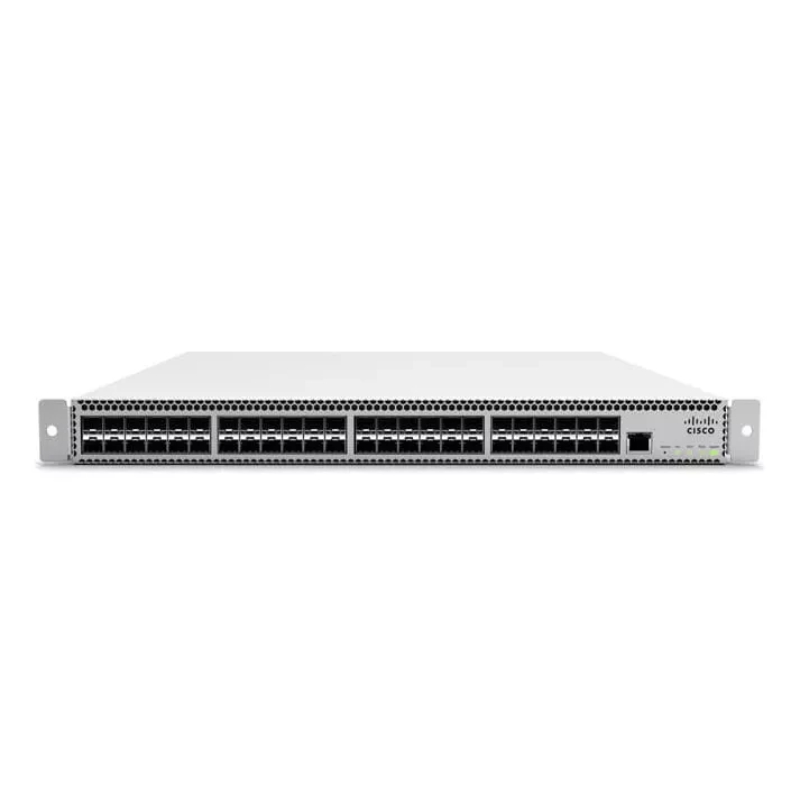


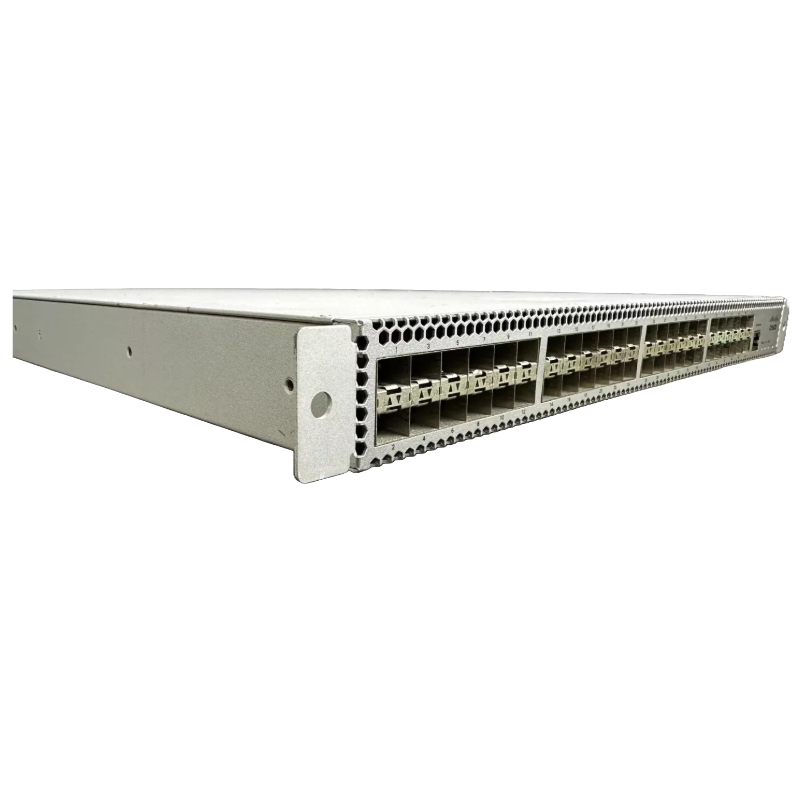
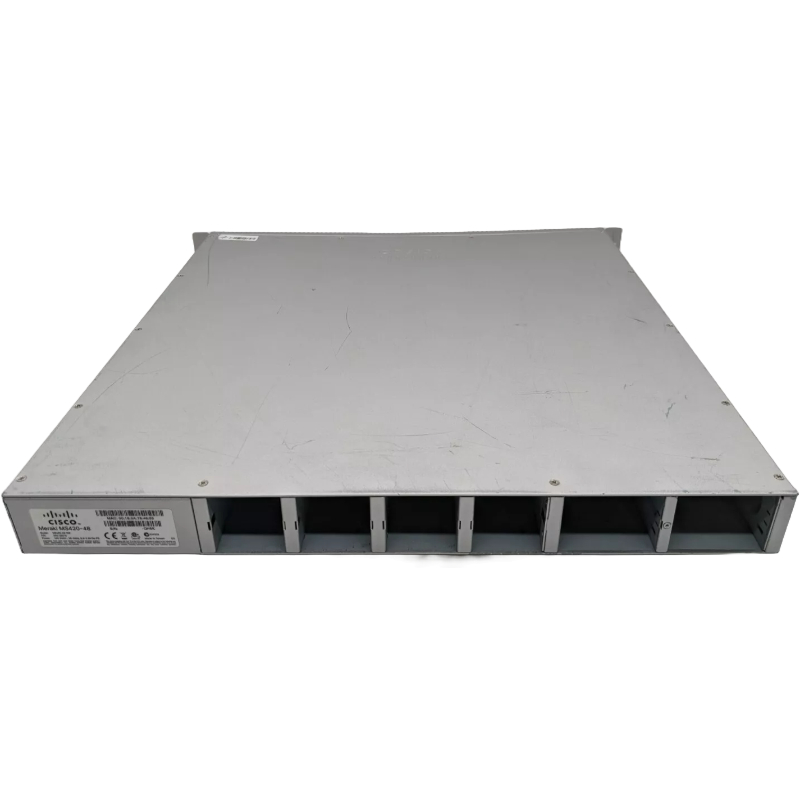
Cisco MS420-48-HW Meraki MS420 Cloud Managed 48 Port SFP+ Aggregation Switch. New Sealed with 1 Year Replacement Warranty
| SKU/MPN | Warranty | Price | Condition | You save |
|---|---|---|---|---|
| MS420-48-HW | 1 Year Warranty | $375.00 | Factory-Sealed New in Original Box (FSB) | You save: $131.25 (26%) |
| MS420-48-HW | 1 Year Warranty | $1,558.00 | New Sealed in Box (NIB) | You save: $545.30 (26%) |
The Cisco MS420-48-HW is a high-performance, cloud-managed aggregation switch designed for modern network environments. Perfect for enterprise setups, this switch provides robust connectivity, simplified management, and scalable options for expanding your network infrastructure.
The Cisco MS420-48-HW Meraki MS420 Cloud Managed 48 Port SFP+ Aggregation Switch represents a high‑performance enterprise networking solution engineered for organizations that require robust scalability, centralized cloud management, and ultra‑reliable connectivity. As part of the Meraki MS420 series, this aggregation switch combines advanced infrastructure capabilities with simplified deployment and seamless integration into existing network environments. Designed to meet the demands of modern enterprise networks, the Meraki MS420‑48‑HW supports high bandwidth across 48 SFP+ fiber ports, making it ideal for data center aggregation, large campus backbones, or high‑capacity distribution layers where performance and operational efficiency are critical.
Central to the appeal of the Meraki MS420‑48‑HW aggregation switch is its seamless integration with the Meraki Dashboard, a powerful cloud management platform that transforms how networks are monitored, configured, and optimized. The Dashboard provides an intuitive web‑based interface that allows IT teams to manage the switch remotely, configure settings in real time, perform firmware upgrades, and analyze performance metrics without the need for complex command‑line interactions. By leveraging Cisco Meraki’s cloud infrastructure, organizations gain visibility across distributed sites, unified policy enforcement, and simplified troubleshooting workflows. This cloud‑centric model enhances operational agility while reducing the overhead historically associated with traditional hardware‑centric network management.
One of the most compelling aspects of cloud management with the Meraki Dashboard is its ability to deliver real‑time monitoring and analytics. Network administrators can access granular insights into traffic patterns, port utilization, and device health, enabling proactive detection of anomalies and potential bottlenecks. Historical performance data can be visualized through easy‑to‑interpret dashboards, helping IT teams identify trends over time. Beyond performance metrics, administrators can configure alerting mechanisms to receive notifications about threshold breaches, link failures, or unusual network behaviors. This rich set of tools transforms the MS420‑48‑HW switch from a static piece of hardware into a dynamic, observable element of the network fabric.
The Meraki Dashboard streamlines the configuration and deployment process for the MS420‑48‑HW, allowing network policies, VLANs, QoS rules, and security settings to be applied consistently across multiple devices and sites. This centralized approach eliminates the need for manual configuration at each physical location, resulting in reduced deployment times and minimized configuration errors. IT teams can replicate configurations from one switch to another with ease, enabling rapid scaling of network infrastructure. For distributed organizations with remote branches or multiple campuses, the ability to push configurations from a single dashboard contributes significantly to operational efficiency.
The Cisco Meraki MS420‑48‑HW stands out in the aggregation switch category due to its high port density and exceptional throughput capabilities. With 48 SFP+ fiber ports capable of supporting 10 Gigabit per second connections, this switch accommodates large‑scale uplink and backbone requirements with ease. The abundant SFP+ connectivity makes it well suited for environments where fiber links are preferred for their superior performance, long‑distance capabilities, and immunity to electromagnetic interference. Organizations that require resilient, high‑speed interconnects between access switches, servers, and core network components will find the MS420‑48‑HW particularly beneficial.
In enterprise networks where bandwidth demands are continually escalating, the Meraki MS420‑48‑HW ensures that throughput capacity is not a limiting factor. By delivering consistent 10 Gbps connectivity across all ports, this aggregation switch supports high‑performance applications, virtualization infrastructures, and cloud workloads without compromise. The high port count enables dense connectivity for access layer switches, storage systems, and high‑traffic links, facilitating robust network architectures capable of handling peak loads with minimal latency. Whether deployed in large data centers or campus core networks, the MS420‑48‑HW offers the bandwidth necessary to sustain modern digital workflows.
Scalability is a key consideration for any network infrastructure investment. The Meraki MS420‑48‑HW is engineered to support future growth through its expansive port configuration and modular design. As organizational needs evolve and traffic volumes increase, additional access switches and aggregation links can be integrated seamlessly, maintaining consistent performance. The infrastructure is well positioned to support next‑generation services and applications such as high‑definition video streaming, real‑time collaboration tools, cloud computing, and IoT deployments. This scalability ensures that the switch remains a valuable network asset over its lifecycle, delaying the need for costly replacements or upgrades.
In addition to high‑density Layer 2 switching, the Cisco Meraki MS420‑48‑HW offers advanced Layer 3 capabilities that empower network architects to implement sophisticated routing strategies and network segmentation. These features include static routing, dynamic routing protocols such as OSPF, and support for virtual routing instances that facilitate inter‑VLAN communication and efficient traffic flows across the network. The inclusion of robust Layer 3 functionality enhances network performance while enabling administrators to optimize traffic flows, reduce broadcast domains, and implement secure routing boundaries.
Dynamic routing protocols like OSPF support automatic route discovery and adaptation to changing network conditions, reducing the administrative burden of manual route configuration. The MS420‑48‑HW can participate in routing topologies that span multiple layers and geographic scales, integrating seamlessly with other routing infrastructures. This dynamic capability is especially valuable in environments with redundant paths or complex topologies that require intelligent path selection based on network state. The switch’s support for dynamic routing ensures efficient routing convergence and enhances network resilience in the face of link failures or topology changes.
Effective traffic segmentation is essential for performance optimization and security enforcement. With support for inter‑VLAN routing, the MS420‑48‑HW enables communication between different segments of the network while maintaining logical separation. This capability supports organizational policies for departmental isolation, quality‑of‑service prioritization, and controlled access to critical resources. As traffic patterns evolve and organizational priorities shift, the ability to reconfigure VLANs and routing behaviors through the Meraki Dashboard ensures adaptable network structures that align with business objectives.
Security remains a fundamental consideration in enterprise networking, and the Cisco Meraki MS420‑48‑HW incorporates a range of features designed to protect network resources and enforce organizational policies. The switch supports access control lists (ACLs), port security features, and integration with security services that monitor and mitigate threats across the network. The cloud management platform further enhances security by centralizing policy deployment, enabling consistent enforcement across distributed locations without the need for onsite intervention. With the increasing prevalence of cyber threats, the ability to maintain robust network security across all layers of the infrastructure is invaluable.
Access control lists enable administrators to define traffic filtering rules based on criteria such as source and destination IP addresses, protocols, and port numbers. By enforcing ACLs at the switch level, unauthorized access and traffic anomalies can be prevented before they propagate further into the network. This proactive filtering approach contributes to reducing the attack surface and aligning network behavior with organizational security policies. When combined with Meraki’s centralized policy framework, ACLs provide a powerful mechanism for controlling traffic flows and preventing unauthorized lateral movements within the network.
Port security features on the MS420‑48‑HW allow administrators to restrict network access based on MAC address bindings, limiting the number of devices that can connect to a given switch port. This is particularly important in sensitive areas of the network or in environments where endpoint proliferation creates potential vectors for unauthorized access. Port security mechanisms help ensure that only authorized devices can communicate through specific interfaces, thereby strengthening the perimeter defenses of access and aggregation points. The Meraki Dashboard makes it easy to configure and monitor port security settings across all connected switches.
For mission‑critical networks, reliability and high availability are non‑negotiable. The Cisco Meraki MS420‑48‑HW is engineered to deliver persistent, uninterrupted performance through features that support redundancy and fault tolerance. Redundant power supply options minimize downtime due to power failures, while network redundancy protocols such as Spanning Tree Protocol (STP) and link aggregation ensure continuous connectivity even in the event of individual link disruptions. This resilience is crucial in environments where network outages can lead to significant operational disruptions or financial loss.
Link aggregation allows multiple physical interfaces to be combined into a single logical connection, increasing bandwidth and providing failover protection. In configurations where traffic demands exceed the capacity of individual links, aggregated connections distribute traffic across multiple paths, enhancing throughput while offering redundancy in case of link degradation. Load balancing across aggregated links further optimizes network performance by preventing congestion and ensuring efficient utilization of available bandwidth. The MS420‑48‑HW supports industry‑standard link aggregation protocols, making it compatible with diverse network topologies and partner devices.
To support continuous operation in environments where power instability is a concern, the Meraki MS420‑48‑HW can be equipped with redundant power supplies. These auxiliary power units provide backup capacity in situations where the primary power source fails or requires maintenance. The ability to maintain operational continuity during power transitions protects network performance and preserves data flows without interruption. For organizations that operate critical applications or services, redundant power configurations are an essential component of a resilient infrastructure.
The Cisco Meraki MS420‑48‑HW serves a wide range of deployment scenarios, reflecting its versatility as a high‑density aggregation switch suitable for diverse network architectures. From enterprise campuses to data center environments, the MS420‑48‑HW provides the performance, management simplicity, and reliability necessary to support complex networking demands. Its suitability for large‑scale uplinks, fiber‑centric backbones, and cloud‑orchestrated management make it a compelling choice across industries including education, healthcare, finance, and government, where network performance and uptime are paramount.
In enterprise campus networks, the MS420‑48‑HW serves as a core or distribution layer switch aggregating traffic from multiple access switches. Its high port density and fiber connectivity accommodate large numbers of access points, user devices, and departmental resources, ensuring efficient traffic consolidation and high‑speed delivery to core services. The cloud management capabilities streamline policy enforcement across diverse campus zones, while the advanced routing features support seamless communication across segmented networks.
Data centers demand high‑capacity aggregation switches to connect access layer devices, storage arrays, and compute clusters. The MS420‑48‑HW delivers the necessary throughput and fiber‑based connections to sustain intense traffic volumes characteristic of modern data center operations. Its scalability enables expansion as workloads grow, supporting additional racks and blade servers without compromising performance. Data center administrators benefit from the Meraki Dashboard’s visibility into network traffic, enabling precise optimization of resource utilization and rapid troubleshooting in high‑density environments.
For organizations with distributed branch offices, the Meraki MS420‑48‑HW facilitates centralized management of remote networks from the Meraki Dashboard. Branch IT staff can implement standardized configurations, monitor performance, and receive alerts for network issues without needing specialized expertise onsite. The consistent policy framework supports uniform security postures, VLAN assignments, and routing protocols across branches, ensuring predictable network behavior regardless of geographic location. This approach significantly reduces the complexity and cost associated with managing multiple remote networks.
Performance optimization is a cornerstone of the MS420‑48‑HW’s design, with support for Quality of Service (QoS) mechanisms that ensure critical applications receive priority treatment across the network. As enterprises adopt real‑time communication tools, virtualization platforms, and bandwidth‑intensive services, the need to prioritize traffic flows becomes increasingly important. The switch’s QoS features allow administrators to classify and schedule traffic based on defined criteria, optimizing packet delivery and minimizing latency for high‑priority services such as voice, video conferencing, and cloud‑based applications.
QoS policies enable traffic classification according to parameters like DSCP markings, IP precedence, and protocol types. The MS420‑48‑HW applies these policies to assign priority levels that influence how traffic is queued and forwarded during periods of congestion. By elevating the priority of latency‑sensitive packets, organizations can maintain reliable performance for business‑critical applications even under heavy load conditions. The Meraki Dashboard simplifies QoS configuration by providing visual tools for defining traffic classes and mapping them to appropriate service levels, ensuring that performance policies align with business objectives.
Effective bandwidth management prevents any single application or user group from monopolizing network resources. The MS420‑48‑HW supports rate limits and bandwidth allocation rules that ensure equitable distribution of capacity across competing traffic streams. This capability is particularly useful in shared environments or campuses with diverse user populations, where predictable performance is essential to user satisfaction and operational efficiency. By shaping traffic and enforcing bandwidth policies, organizations can avoid congestion, reduce packet loss, and maintain service quality throughout the network.
Beyond its standalone capabilities, the Cisco Meraki MS420‑48‑HW integrates seamlessly with the broader Meraki ecosystem, including wireless access points, security appliances, and endpoint management tools. This unified ecosystem enables coordinated policy enforcement, simplified authentication workflows, and consistent visibility across all connected devices. Integration with third‑party systems via APIs further extends the switch’s capabilities, allowing organizations to incorporate custom automation, reporting, and orchestration workflows that align with their operational requirements. By leveraging a unified network fabric, enterprises can achieve a cohesive infrastructure that supports innovation, agility, and operational excellence.
The Meraki Dashboard allows administrators to define policies that span multiple device types, ensuring consistent behavior across wired and wireless segments. For example, VLAN assignments, access control policies, and security profiles can be applied uniformly to users irrespective of connectivity type. This level of integration simplifies network administration while enhancing the end‑user experience through predictable and secure connectivity. By centralizing policy control, IT teams can reduce configuration drift and enforce corporate standards across the entire network fabric.
To support advanced operational workflows, the Meraki ecosystem offers robust APIs that enable automation of routine tasks, extraction of analytics data, and integration with external management systems. Organizations can develop customized scripts to automate firmware updates, generate performance reports, or trigger alerts based on specific network conditions. This extensibility fosters innovation and allows IT teams to tailor network operations to meet unique business needs. Whether integrating with IT service management platforms or building custom dashboards, the MS420‑48‑HW’s API support enhances the flexibility and utility of the entire network environment.


 Contact Us
 Information
 Catalog
 Solid State Drives (SSD)
 Network Switches
 Hard Disk Drives
 HBA & Controllers
 PC & Servers
 PC & Server Memory
 CPU & Processors
 Network Routers
 Power Supplies
 Tape Drives & Libraries
 Network Devices
 Computer & Network Cables