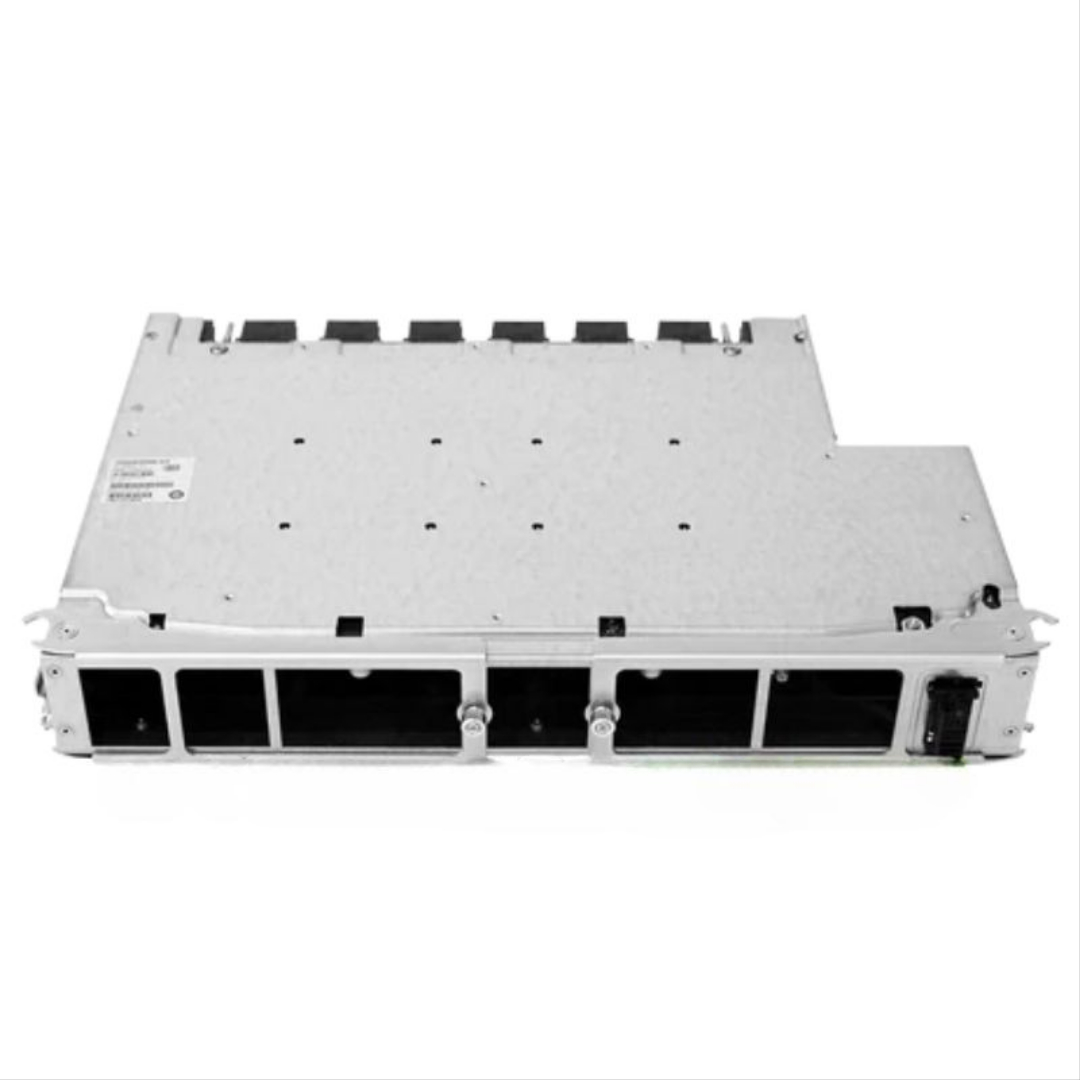
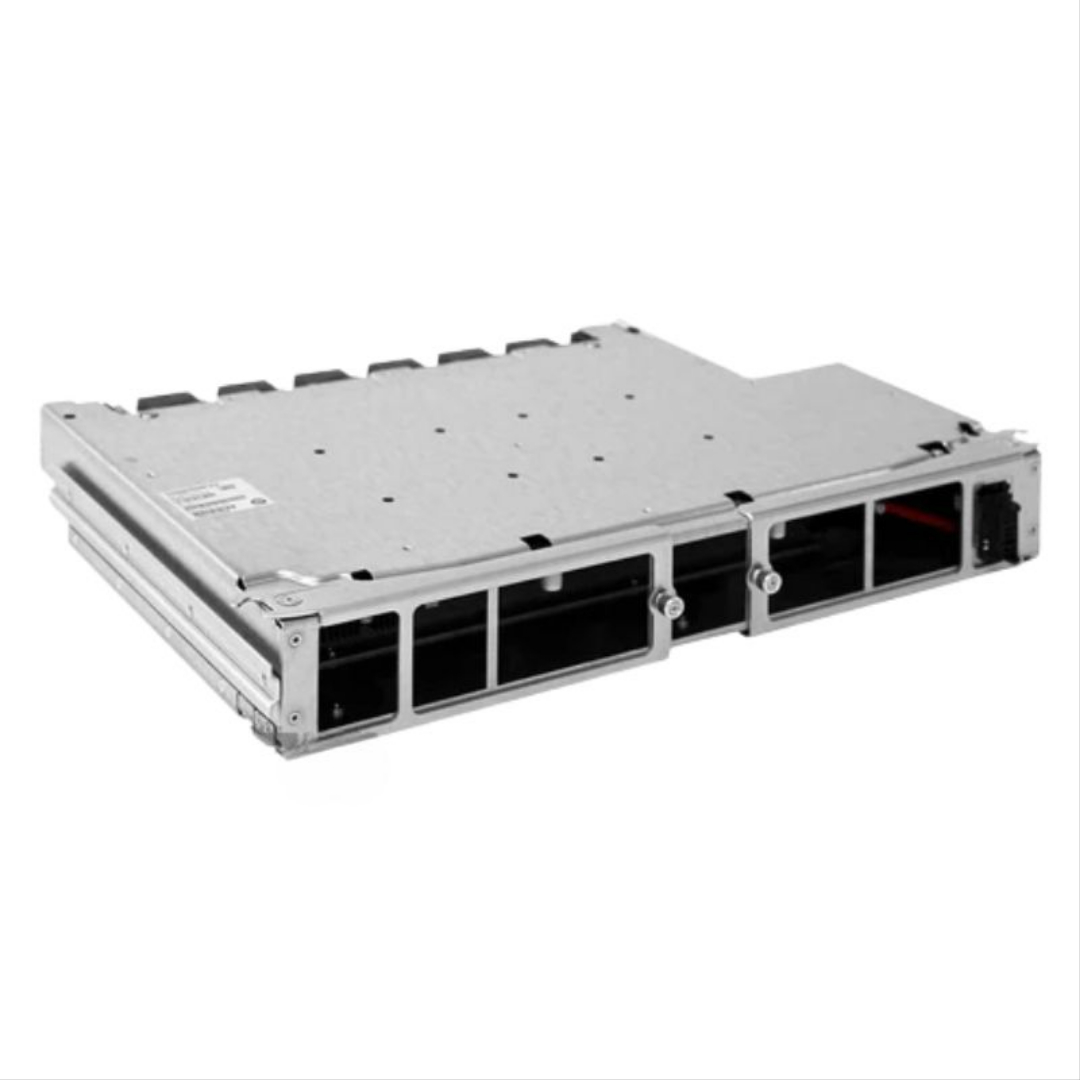
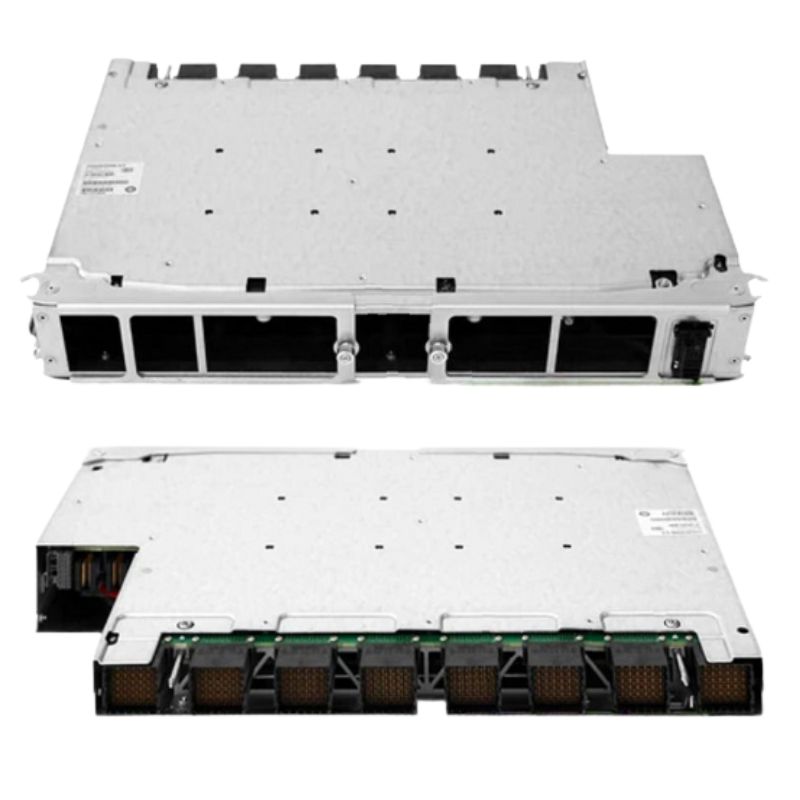
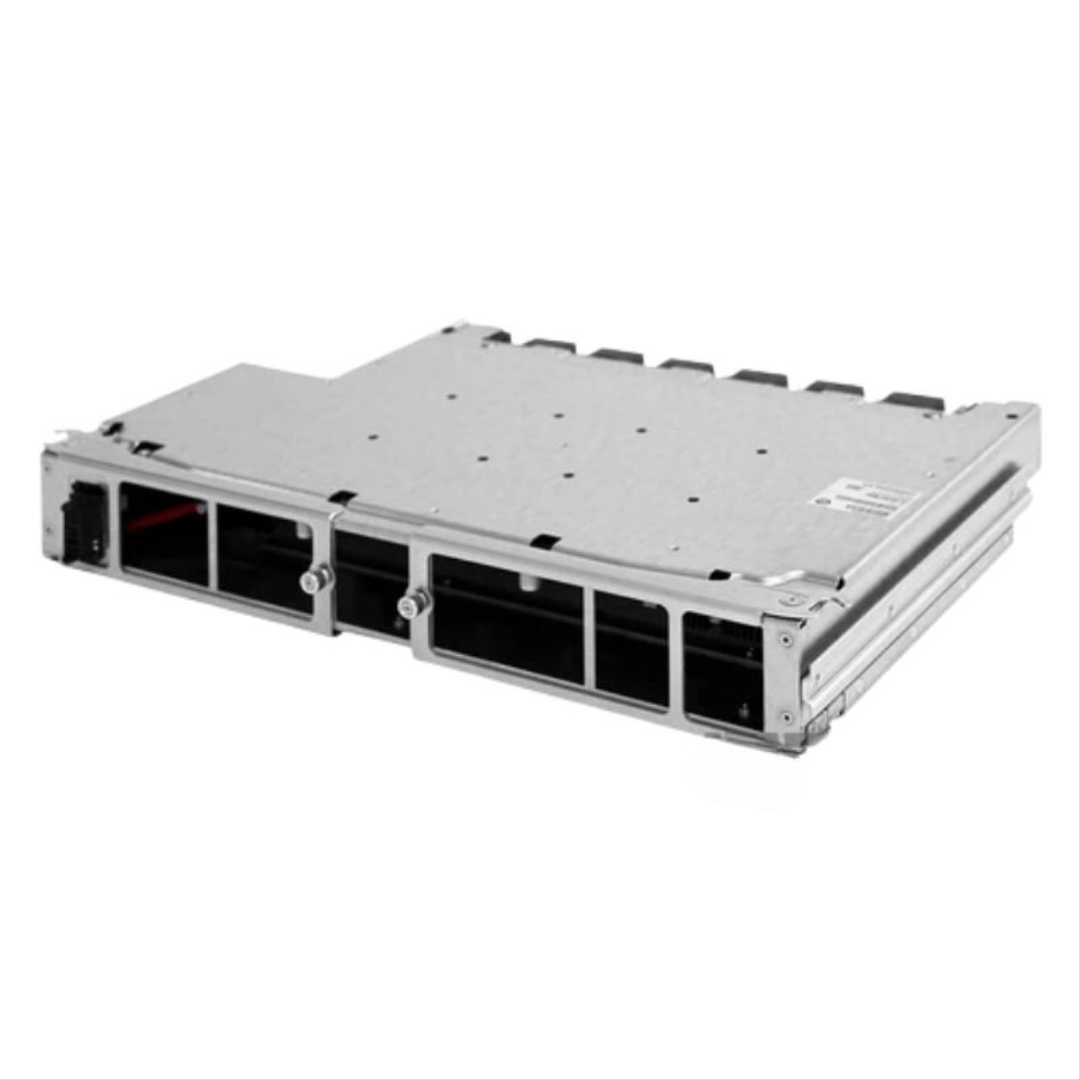
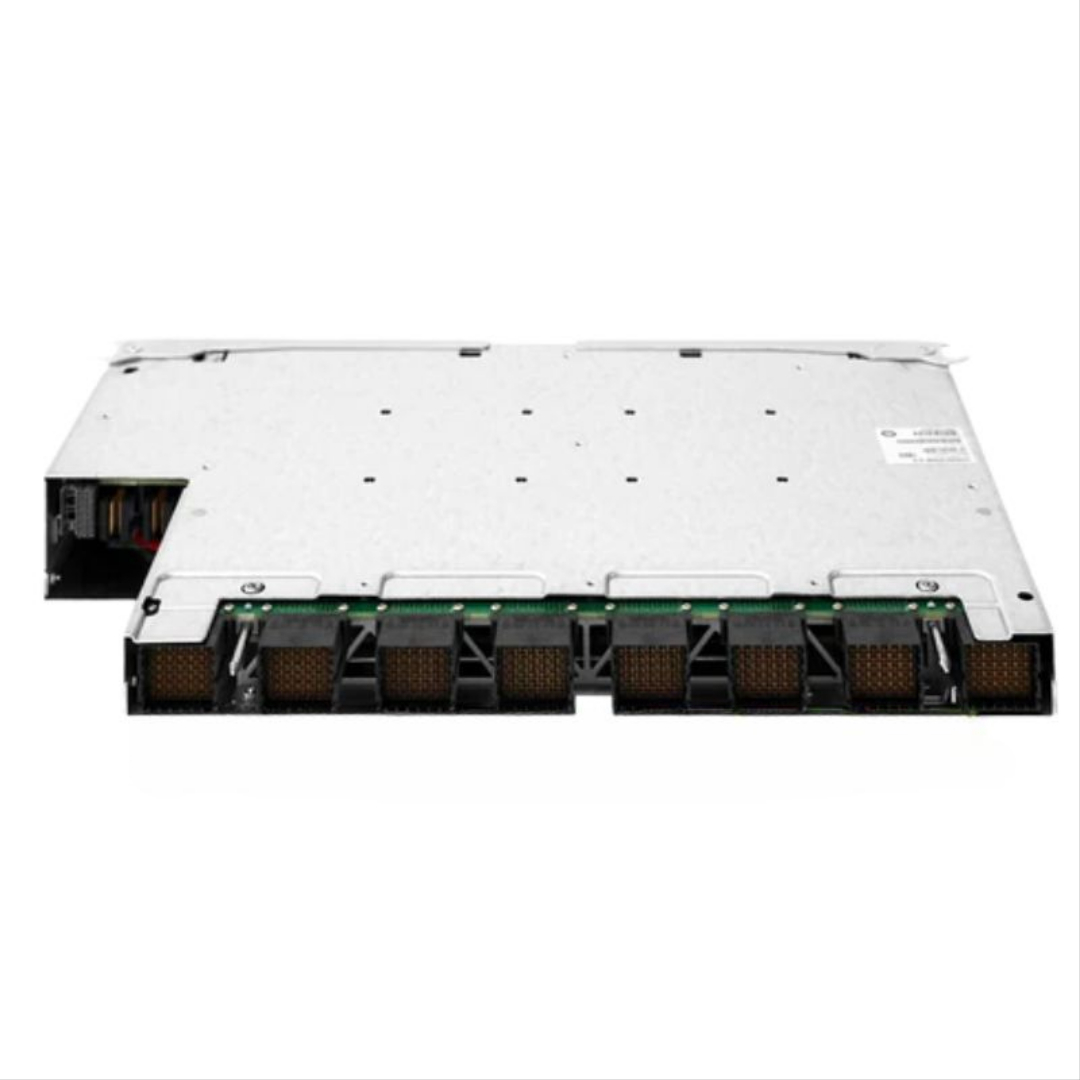
Cisco N9K-C9508-FM-G 8 Slot 1.6 TBPS Switch Fabric Module
- — Free Ground Shipping
- — Min. 6-month Replacement Warranty
- — Genuine/Authentic Products
- — Easy Return and Exchange
- — Different Payment Methods
- — Best Price
- — We Guarantee Price Matching
- — Tax-Exempt Facilities
- — 24/7 Live Chat, Phone Support
- — Visa, MasterCard, Discover, and Amex
- — JCB, Diners Club, UnionPay
- — PayPal, ACH/Bank Transfer (11% Off)
- — Apple Pay, Amazon Pay, Google Pay
- — Buy Now, Pay Later - Affirm, Afterpay
- — GOV/EDU/Institutions PO's Accepted
- — Invoices
- — Deliver Anywhere
- — Express Delivery in the USA and Worldwide
- — Ship to -APO -FPO
- — For USA - Free Ground Shipping
- — Worldwide - from $30
Cisco N9K-C9508-FM-G Nexus 9500 Cloud-Scale Fabric Module Overview
The Cisco N9K-C9508-FM-G is an advanced cloud-scale fabric module engineered for the Nexus 9500 8-slot chassis, delivering deterministic performance and resilient switching for modern data centers. It interconnects line cards through a high-bandwidth, low-latency fabric, sustaining predictable throughput for virtualized, containerized, and bare-metal workloads.
- Purpose-built fabric for the Nexus 9500 8-slot chassis, enabling non-blocking internal connectivity
- Optimized for cloud-scale architectures with consistent forwarding and predictable latency
- Enterprise-grade reliability with redundant deployment options and hot-swappable handling
- Ideal for leaf-spine, EVPN-VXLAN, and multi-tenant environments requiring steady high bandwidth
Key Identifiers and Commercial Details
- Manufacturer: Cisco
- Part Number / SKU: N9K-C9508-FM-G
- Product Type: Switch component
- Sub-Type: Fabric Module for Nexus 9500 Series (8-slot)
Performance Characteristics
- Aggregate Fabric Capacity: 1.6 Tbps designed for sustained high-throughput operation
- Flow Size: Up to 400 Gbps, supporting demanding east-west traffic patterns
- Engineered for non-blocking fabric backplane connectivity across all active line cards
- Low, consistent latency to preserve application performance under heavy load
Power, Cooling, and Physical Attributes
- Typical Power Draw: ~685 W for efficient, high-density switching fabrics
- Thermal Handling: Designed to align with chassis airflow for stable operation
- Approximate Weight: 14.08 lb for straightforward handling during maintenance
- Field-replaceable unit (FRU) supporting hot-swap procedures to minimize downtime
Architecture Fit and Use Cases
This module underpins cloud-scale designs where horizontal scalability, fault isolation, and consistent throughput are essential. It is equally suited to private clouds, enterprise core fabrics, and service-provider data centers consolidating mixed workloads.
- EVPN-VXLAN overlays that demand steady spine-level bandwidth across tenants
- High-performance compute clusters requiring deterministic east-west traffic
- Storage networking use cases that benefit from consistent intra-fabric throughput
- Multi-site and hybrid cloud fabrics with predictable scale-out expansion
Operational Advantages
- Scalable fabric capacity enabling future line-card growth without re-architecting
- Predictable, balanced traffic distribution across fabric channels
- Resilient design to maintain forwarding continuity during component events
- Simplified lifecycle operations through standardized module handling
Cloud-Ready Features
- Works in EVPN-VXLAN fabrics to simplify multi-tenant segmentation
- Supports telemetry-rich operations when combined with Nexus 9000 software features
- Complements automation frameworks (e.g., DCNM/NDFC, Ansible) at the fabric level
Performance Optimization Highlights
- Line-rate, fabric-level bandwidth for concurrent high-density interfaces
- Traffic symmetry to avoid micro-bursts and hotspots within the chassis
- Latency consistency aiding time-sensitive application tiers
Compatibility and Deployment Considerations
The N9K-C9508-FM-G is designed for the Nexus 9500 8-slot chassis. For full functionality, pair with compatible supervisors, line cards, and power systems recommended for the platform generation.
- Validated with Nexus 9500 8-slot chassis ecosystems and recommended NX-OS releases
- Aligns with chassis airflow direction for optimal thermal performance
- Supports redundant fabric configurations for higher availability targets
- Adheres to Cisco best practices for fabric cabling and slot population
Installation and Handling Notes
- Follow ESD precautions and rack-level safety guidelines
- Insert the module firmly until latches engage, verifying status LEDs per documentation
- Coordinate fabric insertion with maintenance windows when changing multiple modules
- Use proper lifting technique; unit weight is approximately 14.08 lb
Power Planning Tips
- Budget around 685 W per module under typical conditions
- Account for redundancy, thermal headroom, and growth in overall power design
- Verify PDU capacity and UPS runtime with projected peak loads
Cooling Guidelines
- Maintain clear airflow paths front-to-back or back-to-front per chassis configuration
- Monitor inlet temperature and fan speeds via platform telemetry
- Observe recommended ambient ranges to prolong component lifespan
Reliability, Security, and Compliance
- Redundant fabric deployment options to minimize single-point failures
- Secure supply-chain and platform integrity features at the Nexus 9000 family level
- Compliance with data-center regulatory norms when installed within certified chassis
Lifecycle and Management
- Visibility through platform monitoring tools and streaming telemetry
- Integration with automation pipelines for repeatable configuration baselines
- Proactive alerting for power, temperature, and fabric health
Serviceability Advantages
- Hot-swappable FRU simplifies replacement without full chassis shutdown
- Modular design accelerates RMA processes and reduces MTTR
- Clear labeling and latch mechanisms aid quick, accurate servicing
Sustainability Notes
- Efficient power profile relative to delivered fabric bandwidth
- Supports consolidation strategies that reduce overall rack footprint
- Telemetry aids in right-sizing power and cooling for greener operations
At-a-Glance Specifications
- Model: Cisco N9K-C9508-FM-G
- Chassis Fit: Nexus 9500 8-slot
- Role: Fabric Module (Switch backplane component)
- Aggregate Fabric Throughput: 1.6 Tbps
- Flow Size: 400 Gbps
- Typical Power: 685 W
- Approximate Weight: 14.08 lb
Product overview — Cisco N9K-C9508-FM-G Fabric Module
The Cisco N9K-C9508-FM-G is an 8-slot cloud-scale fabric module engineered for the Nexus 9500 family of modular data-center switches. Designed to deliver ultra-high throughput, deterministic latency, and resilient fabric interconnects between line cards, the FM-G variant raises the bar for hybrid cloud, virtualization, and large east-west traffic environments. It is commonly deployed in aggregation and spine layers where predictable line-rate switching and nondisruptive scalability are required.
This description drills into architecture, performance, compatibility, deployment best practices, management, and purchase/upgrade considerations so you can assess fit for your data center designs and procurement decisions.
Key technical highlight: the FM-G family is specified to provide up to 1.6 Tbps of fabric capacity (per module design used in the 8-slot chassis), enabling high-density line cards to operate at full line rate.
Architecture and cloud-scale fabric design
Clos fabric fundamentals
The Nexus 9500 platform uses a Clos-style fabric architecture where multiple fabric modules create a nonblocking backplane that interconnects all line cards. The FM-G is implemented as a high-performance fabric plane optimized for large flows and dense aggregation use cases. This modular approach provides linear scaling: adding compatible fabric modules increases aggregate switching bandwidth while preserving the forwarding characteristics of the platform.
Scalability and slot distribution
In an 8-slot chassis, the FM-G sits in the rear bays and operates together with other fabric modules to realize the full bandwidth available to each line-card slot. Because the Nexus 9500 chassis can accept different fabric module types, the FM-G option gives you a higher per-slot bandwidth ceiling than earlier fabric families, allowing denser, faster line cards to achieve their designed throughput. The chassis supports redundant fabric planes to keep forwarding paths resilient under failure conditions.
Performance characteristics
Throughput and fabric bandwidth
The FM-G fabric module is rated to support up to 1.6 Tbps of aggregate fabric bandwidth per module in the 8-slot architecture (reference Cisco datasheets for exact per-slot distribution in mixed configurations). This capability is intended to support modern line cards that push 100/400G ports and require broad internal switching capacity. When planning capacity, remember total chassis bandwidth depends on the number and type of fabric modules installed and the set of installed line cards.
Latency, flow handling, and buffer behavior
To support latency-sensitive applications — such as real-time storage fabrics, NFV workloads, and east-west VM migration traffic — the FM-G is designed to minimize ingress-to-egress latency across the chassis. The module works with the Nexus 9500 forwarding ASICs to balance packets across available fabric planes; internal buffering and load distribution mechanisms are tuned for predictable packet handling under heavy microburst conditions. Cisco documentation outlines how line-card buffers and fabric capacities combine to meet line-rate performance for the portfolio of supported cards.
Compatibility & interoperability
Supported chassis and line cards
The N9K-C9508-FM-G is specifically intended for use with the Nexus 9508 chassis and is compatible with the Cloud-Scale family of Nexus 9500 line cards. When mixing fabric module types or using different line cards, consult the official Nexus 9500 platform line-cards and fabric modules datasheet to confirm compatibility tables, required module counts, and slot population rules. Use of mismatched fabric families requires careful attention to empty-slot filler modules or FAN-PWR modules per Cisco guidance.
Population rules and installation notes
Cisco’s hardware installation guidance notes that when FM-G fabric modules are deployed, any empty fabric module slots should be filled with the specified FAN-PWR modules to preserve thermal, airflow, and power balance in the chassis. Additionally, certain fabric families have specific requirements about leaving slots empty or inserting “cover” modules for safety and compatibility — always consult the chassis installation and fabric module release notes before changing module types.
Power, thermal and physical details
Electrical and thermal planning
Fabric modules are among the higher-power components in a modular chassis; the FM-G has a typical power consumption profile that must be planned alongside line cards, power supplies, and fans. Exact wattage differs by part revision and system population; check the platform datasheet and the hardware installation guide for measured typical and maximum power figures for the FM-G variant. Adequate rack PDUs, power redundancy (n+1 or combined modes), and thermal dissipation strategies are essential for reliable operation in confined racks.
Mechanical footprint and weight
The FM-G is a rear-mounted plug-in fabric module sized for the Nexus 9508 chassis. Weight and physical dimensions are documented in the official datasheet; these matter when planning shipping, rack rails, and field installation steps. Always use ESD-safe handling and follow Cisco’s field installation instructions to avoid damage to the backplane connectors.
High availability and resiliency features
Redundant fabric planes and non-stop forwarding
The Nexus 9500 design enables multiple fabric planes so that traffic can be load-balanced and survive a fabric module failure without forwarding interruption. When the chassis is populated with the recommended number and types of fabric modules, the switch can maintain forwarding while a plane is taken offline for maintenance — assuming correct line card and fabric population and adherence to Cisco’s hardware redundancy guidelines. This behavior supports maintenance windows with minimal application disruption.
Operational considerations for maintenance
Planned software upgrades and hardware swaps should follow Cisco’s recommended workflows; for large chassis with FM-G modules, the preferred approach often uses in-service software upgrades (ISSU) and staged module replacements to avoid traffic loss. Documented procedures in the hardware guide define safe removal and insertion practices and the exact steps to preserve forwarding state during module-level operations.
Management, visibility and operational tooling
NX-OS integration and telemetry
Fabric modules are managed through the Nexus NX-OS control plane — health, utilization, and telemetry data are exposed via CLI, XML/JSON APIs, and modern telemetry streams (e.g., gNMI/RESTCONF depending on NX-OS version). This integration enables automated capacity monitoring and telemetry-driven scaling decisions. Use Nexus monitoring features to track fabric utilization per plane and per line card slot, then integrate those metrics into your data-center dashboards and alerting.
Diagnostics and proactive health checks
Cisco provides platform diagnostics for fabric modules, including self-test routines and fabric-plane counters to quickly surface link or plane anomalies. Integrating these checks into routine operations reduces mean-time-to-repair and can automate dispatch triggers for replacement modules under warranty or support contracts. Document retrieval of fabric telemetry metrics as part of change and incident playbooks.
Deployment patterns and use cases
Hyperscale aggregation and multi-tenant data centers
For environments that push very high throughput between server racks (east-west heavy traffic), the FM-G enables line cards to saturate 100/400G ports and achieve consistent inter-slot bandwidth. Typical use cases include spine/aggregation fabrics for private cloud providers, multi-tenant colocation fabrics, and telco NFV aggregation where predictable internal switching is critical to service quality.
High-performance computing and storage backbones
Compute clusters and storage fabrics (e.g., NVMe over Fabrics, massively distributed storage) demand low latency and high internal bandwidth. The FM-G, when combined with appropriate line cards, provides the internal switching capacity and flow handling characteristics to support these workloads with fewer chassis and less oversubscription than older fabric options.
Campus aggregation for large enterprise cores
Large campus cores that consolidate multiple aggregation switches can use Nexus 9500 systems with FM-G modules to centralize policy and routing while preserving headroom for bursts and future growth. This deployment reduces the number of devices to manage while enabling consistent policy enforcement across distributed sites when paired with Cisco management suites.
Purchase, upgrade, and lifecycle considerations
Choosing the right fabric module for long-term growth
Select FM-G when your roadmap includes sustained migration to higher-speed line cards (100G/400G) or when you want significant per-slot headroom for unpredictable growth. If you already operate earlier fabric families, evaluate migration paths: in many cases you can replace fabric modules while preserving existing line cards, but check compatibility tables for mixed populations and required blank/filler modules.
Support, spares and warranties
When procuring FM-G modules, include spare modules and maintain support contracts to reduce downtime for hardware failures. Ensure you have documentation for module part numbers and compatibility with your installed line cards so field engineers can quickly identify correct spares. Many resellers and Cisco partners can offer refurbishment options, but verify warranty and support scope before accepting refurbished modules in production.
Migration and configuration best practices
Staged migration approach
To move from an older fabric family to FM-G, plan a staged approach: (1) audit existing line cards and their fabric requirements, (2) acquire the number of FM-G modules required for your population and redundancy model, (3) schedule maintenance windows and follow Cisco’s insertion/removal guidance to maintain air flow and power balance, and (4) validate traffic distribution and telemetry post-change. Avoid mixing incompatible fabric module revisions without consulting Cisco documentation.
Configuration tips for optimal load balancing
Leverage NX-OS features that enable optimal load distribution across fabric planes. Regularly monitor per-slot and per-plane utilization to detect imbalances; adjust line-card population or traffic engineering policies to avoid creating hot spots. Use telemetry to automate alerts when plane utilization approaches thresholds that would indicate potential congestion.
Security and compliance considerations
Physical security and tamper management
Fabric modules are physical components of a chassis and should be controlled under the same physical security policies as server blades and storage arrays. Restrict rack access, log hardware changes, and integrate module serial numbers into asset management systems for audit and compliance tracking.
Firmware and CVE management
Keep NX-OS and module firmware aligned with your security patching cadence. Cisco publishes advisories and recommended releases; subscribe to security bulletins, validate fixes in lab environments, and schedule coordinated upgrades to chassis, line cards, and fabric modules to address vulnerabilities in a controlled manner.
Comparison — FM-G vs alternative fabric options
When to choose FM-G over FM-E/FM-E2
FM-G is aimed at maximum per-slot bandwidth environments; FM-E and FM-E2 are alternatives optimized for different balance points of capacity, cost, and power. If your design centers on maximizing per-slot capacity for 100/400G line cards and long-term scaling, FM-G is the preferred option. For cost-sensitive or lower-speed environments, FM-E or FM-E2 may be more economical. Always match the fabric family to the line-card portfolio and budget profile.
Operational tradeoffs
Higher capacity fabrics like FM-G can increase power draw and thermal output; they also typically carry a higher acquisition cost. The tradeoff is fewer chassis and fabric planes needed to support equivalent bandwidth, which can reduce operational overhead over the long term. Model and compare total cost of ownership (TCO) that includes spare parts, power, cooling, and support contracts before committing to a fabric family.
Quick reference — checklist for deployment
- Confirm Nexus 9508 chassis and installed line cards are supported with FM-G as per Cisco compatibility tables.
- Plan for additional power and thermal headroom; document PDU and rack cooling specs.
- Order required filler/fan-power modules if there will be empty fabric slots during transition.
- Schedule staged insertion and hardware validation; verify telemetry and load balancing after insertion.
- Maintain spare FM-G module(s) under support contract or keep validated refurbished spares with known warranty.