(7% discount is applied at checkout)
Cart is empty
Your go-to destination for cutting-edge server products
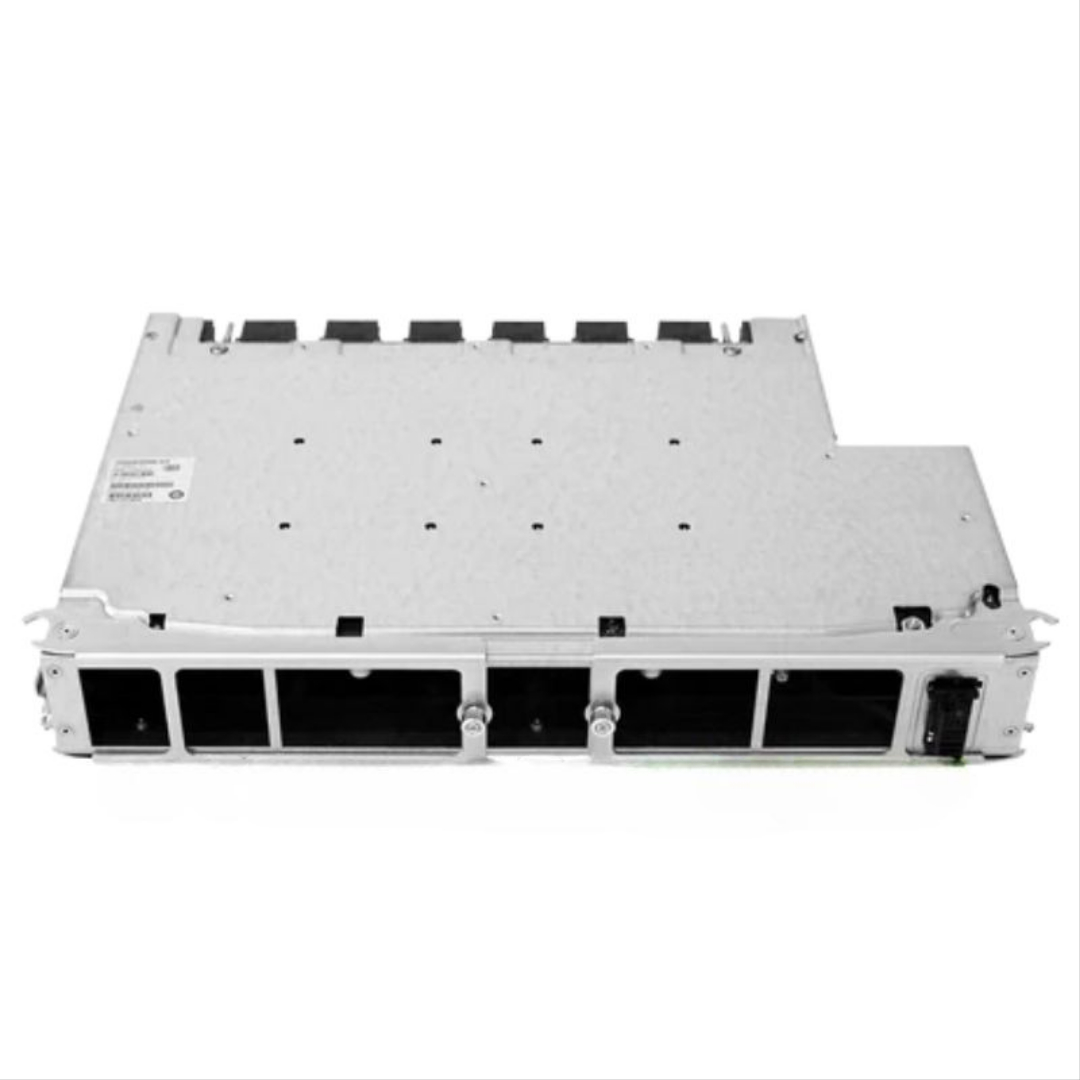


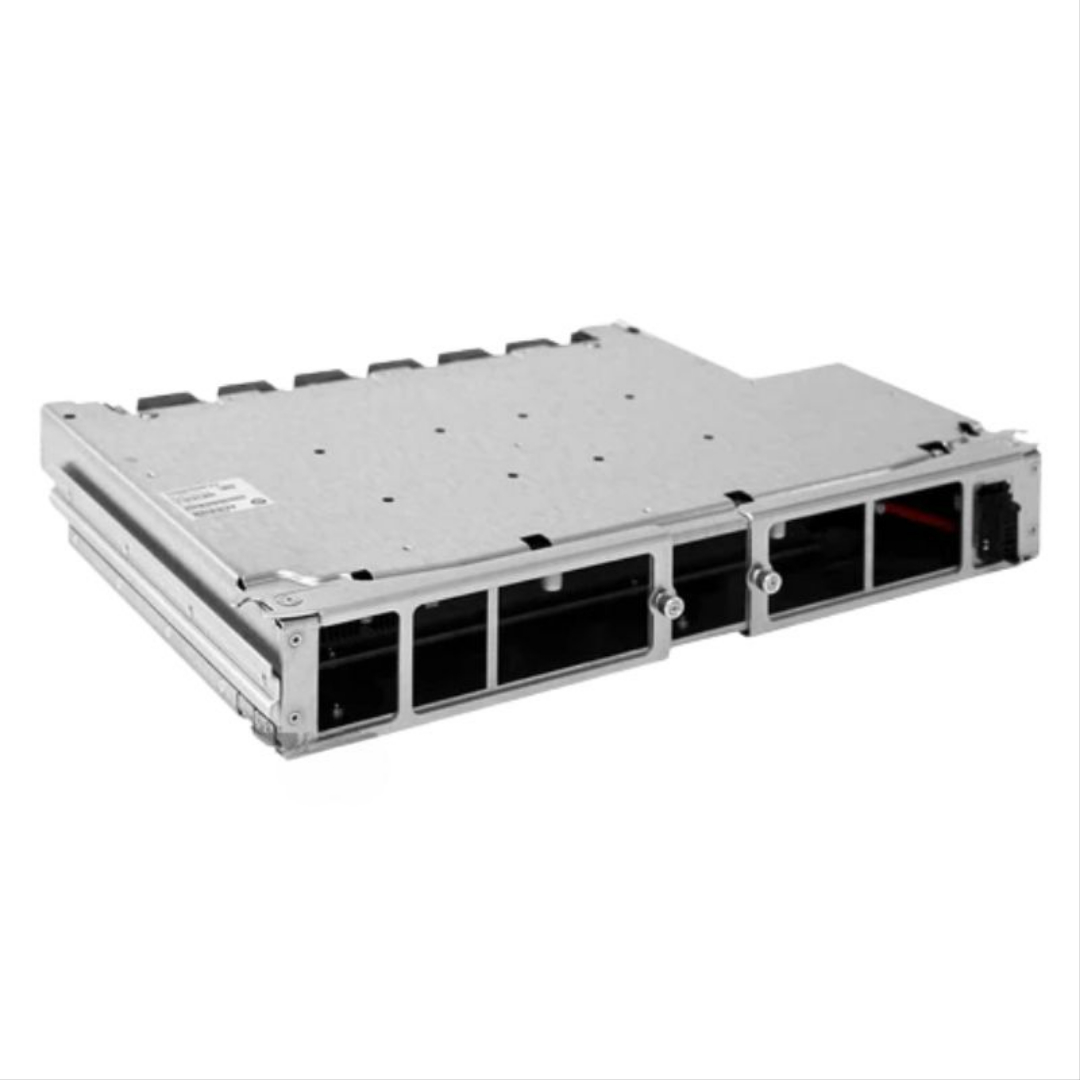
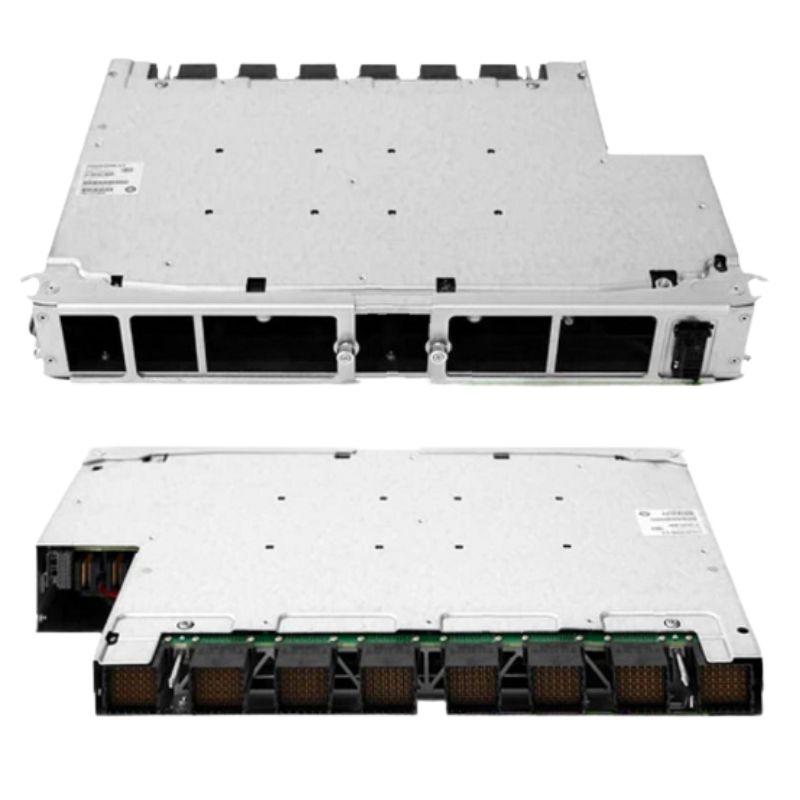
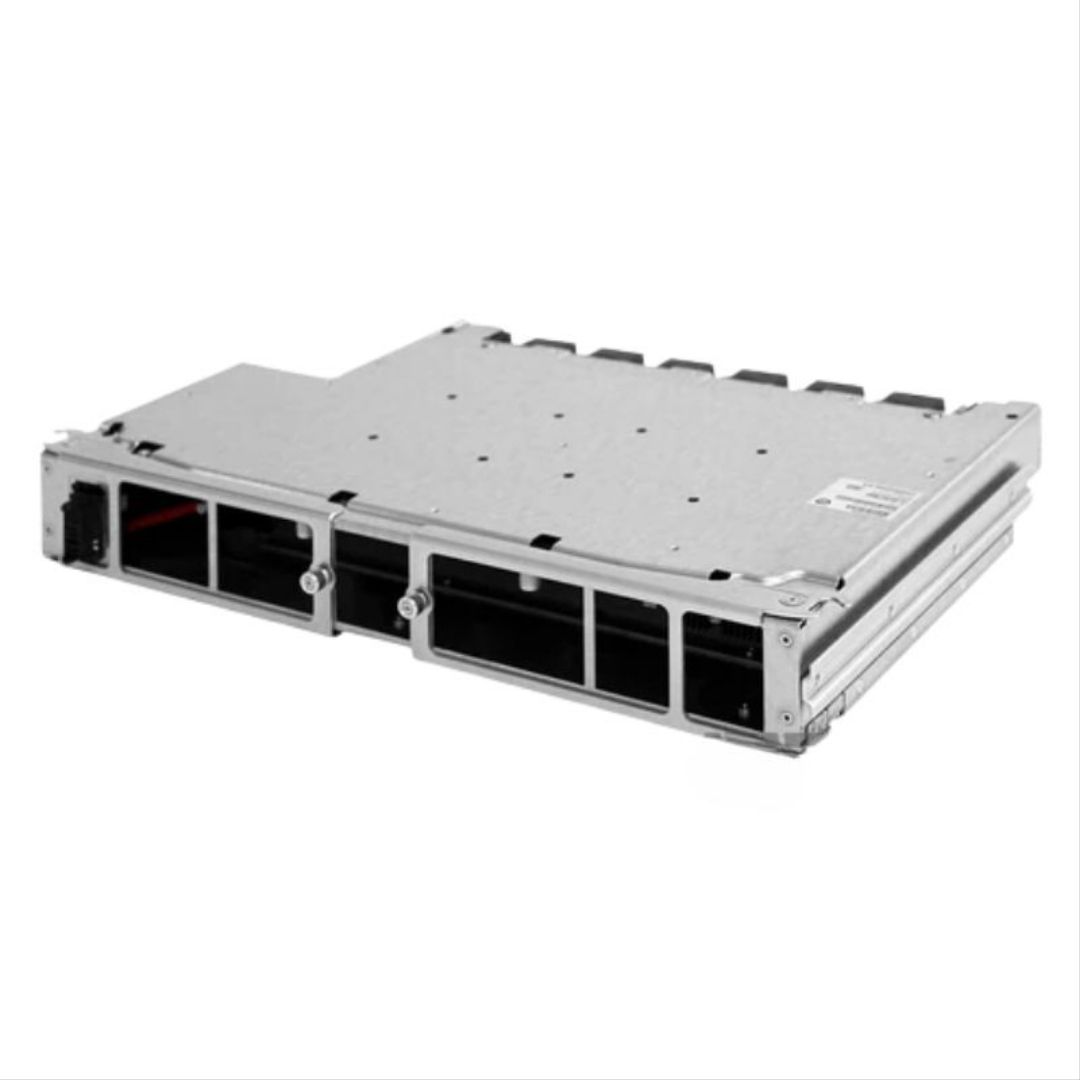
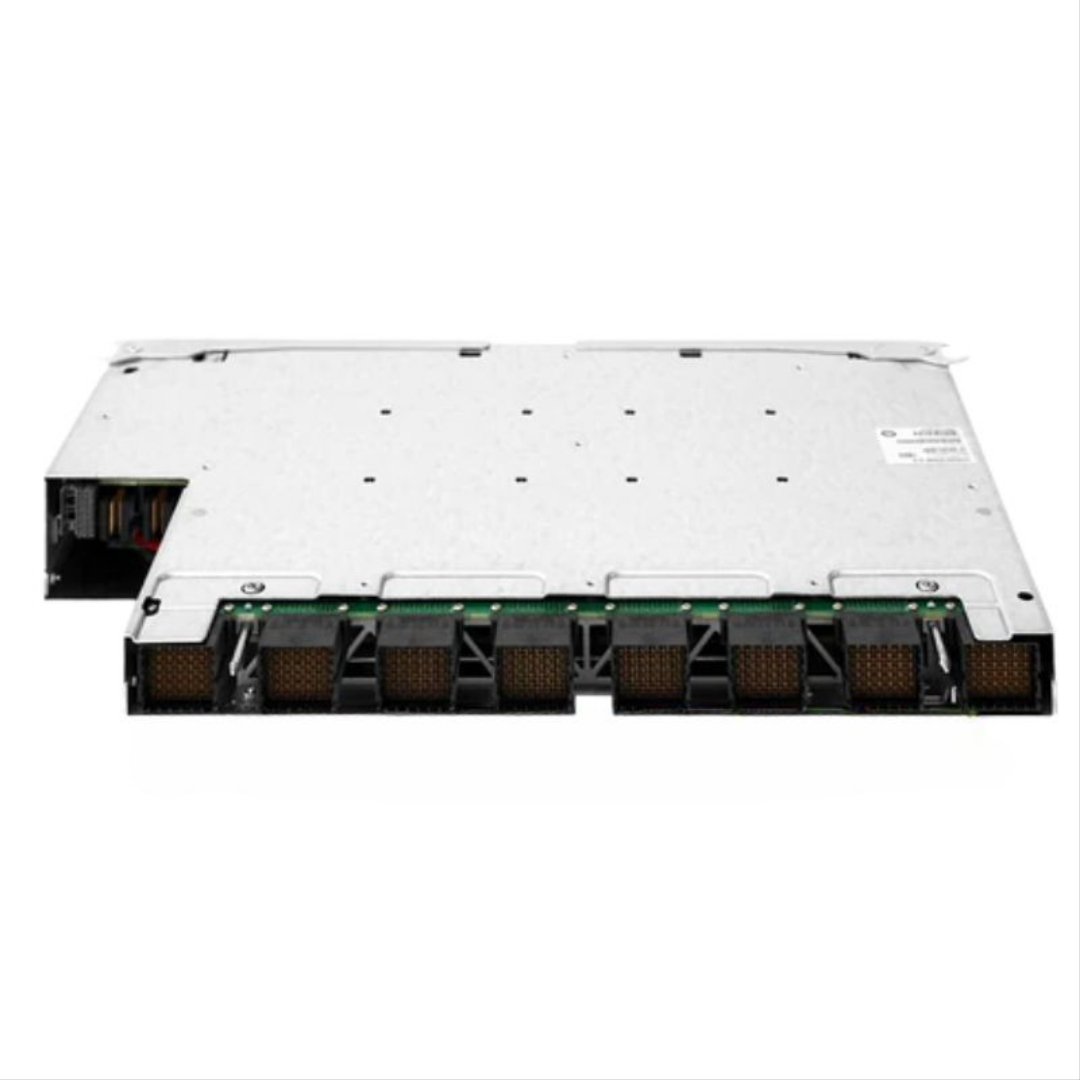
Cisco N9K-C9508-FM-S Nexus 9500 Series Switch Fabric Module. Excellent Refurbished with 1 year replacement warranty
The Cisco N9K-C9508-FM-S belongs to the Nexus 9500 family, designed to deliver unparalleled scalability, high-density performance, and reliable 100G fabric connectivity. As a modular component, it enhances the flexibility and speed of data center operations, ensuring optimal throughput for demanding enterprise and cloud environments.
Engineered for data-intensive workloads, the Cisco N9K-C9508-FM-S provides exceptional fabric capacity within the Cisco Nexus 9500 Series chassis. Its high-performance switching fabrics minimize latency, accelerate communication, and ensure smooth handling of east-west traffic inside large-scale networks.
The N9K-C9508-FM-S fabric module is specifically designed for the Cisco Nexus 9500 chassis, ensuring smooth compatibility with other Cisco hardware components. It boosts system scalability while maintaining efficiency and consistent performance across multiple networking layers.
With a compact yet powerful design, the Cisco N9K-C9508-FM-S delivers the throughput required to support applications such as virtualization, cloud computing, and software-defined networking (SDN). It enhances fabric bandwidth within the chassis while contributing to network simplification and long-term investment protection.
The Cisco N9K-C9508-FM-S is a high-capacity switch fabric module engineered for the Nexus 9500 Series chassis. Built to support 100 Gigabit Ethernet line cards and next-generation data center fabrics, this module delivers massive backplane throughput, deterministic low-latency switching, and the resiliency required by modern enterprise and cloud-scale networks. Designed as a core building block for modular Nexus 9500 platforms, the N9K-C9508-FM-S enables operators to scale performance while maintaining operational simplicity and advanced feature parity found in Cisco NX-OS software.
The N9K-C9508-FM-S is characterized by its purpose-built silicon and optimized fabric pathways that provide predictable high throughput across all installed line cards. In multi-tiered data center fabrics where east-west traffic dominates, the switch fabric is the heartbeat of packet transit — and this module is designed to keep that heartbeat steady under heavy loads.
Engineered for multi-terabit operations, the N9K-C9508-FM-S increases the total available bandwidth of the Nexus 9500 chassis, enabling simultaneous, high-speed connectivity to every occupied line card slot. This translates into consistent forwarding performance even as port densities and 100G port counts grow.
Latency is minimized through optimized forwarding engines and internal queuing algorithms. Predictable forwarding delays are particularly valuable for financial trading platforms, virtualization clusters, and real-time analytics clusters where microsecond-level variance can degrade application performance.
When combined with compatible 100G line cards, the fabric module supports line-rate forwarding across all ports, ensuring no bottleneck is introduced between ingress and egress ports within the chassis. This preserves the full performance of 100G optics and modules and prevents oversubscription surprises.
The N9K-C9508-FM-S adopts a chassis-aware, modular design philosophy that aligns with Cisco’s broader Nexus portfolio. It is intended for insertion into the dedicated fabric slots of the Nexus 9500 series chassis and interoperates with Cisco’s backplane and management plane.
Because this module is a dedicated fabric component for the Nexus 9500, the installation, replacement, and upgrade activities are planned to be non-disruptive when redundant fabrics are used. The module works in concert with supervisor engines, line cards, and power shelves to deliver a complete, serviceable switching solution.
Specifically targeted at 8-slot Nexus 9500 models, this fabric module maps to the chassis backplane and provides fabric lanes to each line-card slot. Always review chassis model and slot numbering to confirm supported fabric placement and redundancy architecture.
High-performance fabrics consume power and generate heat. The N9K-C9508-FM-S is cooled by the chassis’ integrated airflow design; however, data center operators should account for its thermal footprint when planning rack placements, ambient temperature profiles, and cooling redundancy.
Hardware is only as valuable as the features it enables. The N9K-C9508-FM-S is tightly integrated with Cisco NX-OS to support advanced features required in modern fabrics: VXLAN with EVPN control plane, extensive QoS and traffic shaping, distributed multicast, programmable telemetry, and hardware offload for tunneling and encapsulation.
Telemetery streaming, model-driven programmability (YANG/NETCONF/RESTCONF), and SDK-compatible telemetry allow operators to embed the fabric module within automated orchestration and management workflows. This reduces manual configuration drift and enables consistent deployment patterns across multiple chassis.
VXLAN and EVPN workflows benefit from the hardware’s ability to process encapsulated packets at line rate. For organizations implementing multi-tenant overlays, the fabric module’s ability to handle encapsulation without software fallbacks is a decisive advantage.
Comprehensive QoS features ensure that mission-critical traffic is prioritized end-to-end. The fabric supports granular classification, shaping, and policing policies so that congestion is handled deterministically according to defined SLAs.
Enterprise and cloud networks demand resilience. The N9K-C9508-FM-S supports design patterns that provide high availability and graceful failure handling.
When deployed as part of a chassis with redundant fabric modules, the platform supports hitless failover modes that maintain traffic forwarding while a fabric module is being upgraded or replaced. Cisco’s design guides recommend dual-fabric topologies for production environments that require continuous uptime.
This module is field-replaceable, enabling quick remediation during hardware faults. While single-fabric chassis may experience partial service interruptions during replacement, multi-fabric deployments enable maintenance without affecting packet forwarding.
Firmware upgrades and maintenance releases are carried out via NX-OS lifecycle tooling. The fabric module participates in coordinated upgrades that align line cards, supervisors, and fabric components to ensure consistent protocol support and security patching.
Security is a multilayered requirement that includes both hardware hardening and software controls. The N9K-C9508-FM-S plays its part in an architecture that enforces segmentation, telemetry, access control, and secure management.
With hardware-assisted overlays and tenant-aware switching, the fabric module helps maintain strict isolation between virtual networks. This is essential for service providers, multi-tenant data centers, and enterprise IT environments running multiple business units on shared infrastructure.
Management plane access is controlled through role-based administrative accounts, AAA integration, and secure transport protocols. The module itself does not host exposed user interfaces; instead, it is managed through the chassis management subsystem and NX-OS APIs.
Real-time telemetry data from the fabric can be streamed into SIEMs and network analytics systems. Rapid discovery of anomalous traffic patterns — such as microbursts, DDoS signatures, or east-west lateral movement — is improved with high-fidelity, hardware-generated statistics.
The N9K-C9508-FM-S is versatile and lends itself to a variety of modern network roles. Below are common design patterns where this module provides clear value.
In high-performance leaf-spine architectures, Nexus 9500 chassis act as spine nodes aggregating hundreds of 100G ports from leaf devices. The fabric module ensures that to/from leaf traffic is switched efficiently across the chassis backplane, removing internal bottlenecks and preserving end-to-end performance.
For campus aggregation or WAN edge scenarios where high-throughput aggregation is needed, the module supports large-scale uplinks and distributed services, making it suitable for consolidating high-speed WAN and campus flows.
Cloud-scale providers can leverage the Nexus 9500 with this fabric module to deliver tenant isolation, high-density 100G services, and programmability for on-demand provisioning of virtual networks.
Compatibility is essential when planning upgrades or integrating new fabric modules into existing racks. The N9K-C9508-FM-S is built to interoperate with specific Nexus 9500 chassis models and is tuned for Cisco’s line cards and supervisor engines.
To realize full 100G support, compatible line cards and optics must be used. Cisco sells a range of 100G-capable cards and transceivers that pair with the Nexus 9500 chassis. Cross-reference Cisco’s release notes and hardware compatibility matrices for the exact part numbers and optics supported.
While designed for the Nexus 9500 family, consider software release levels and platform-specific caveats when mixing older and newer hardware in the same chassis or fabric. Firmware mismatches can lead to limited feature sets or suboptimal performance.
Correctly sizing the fabric is one of the most important tasks during network design. Underprovisioned fabrics introduce hidden oversubscription; overprovisioned fabrics waste capital and power.
Right-sizing requires modeling expected traffic and understanding peak utilization patterns. Conservative designs may add margin for headroom, but modern fabrics often balance cost and performance with predictive monitoring and capacity-on-demand strategies.
Operational simplicity is key to accelerating time-to-resolution and maintaining availability. The N9K-C9508-FM-S integrates with modern observability tools and NX-OS features to provide visibility into the fabric’s health and performance.
Streaming telemetry provides continuous, high-frequency metrics for fabric throughput, queue depths, error counters, and temperature. These streams can be directed to analytics platforms for anomaly detection and capacity trending.
Administrators can use familiar NX-OS CLI constructs for ad-hoc troubleshooting. For automation, REST APIs, NETCONF, and Python SDKs allow scripted tasks such as inventory, firmware updates, and configuration rollouts.
Troubleshooting often focuses on physical optics mismatches, fabric lane errors, and thermal or power-related alarms. Workflows should include running diagnostics, checking port/line-card compatibility, and validating software release levels across the chassis.
Energy, space, and maintenance expenses directly affect the total cost of ownership (TCO). High-capacity fabric modules often require thoughtful rack planning to optimize power distribution and cooling.
Consider not only the capital cost of the module but also the recurring costs: power consumption, cooling, spare parts inventory, and field service agreements. In many deployment scenarios, savings are realized over time through consolidated high-density switching that reduces the required number of chassis.
Planned upgrades, end-of-life schedules, and spares strategy should be part of procurement planning. Cisco’s hardware lifecycle policies and software maintenance offerings (such as SMARTnet) can mitigate risk and support long-term operational stability.
When selecting a fabric module for high-density 100G deployments, compare performance metrics, software feature parity, and ecosystem fit. The Nexus 9500 chassis and its fabric modules are often compared to alternative modular platforms from both Cisco and other vendors. Key comparison axes include:
Before ordering an N9K-C9508-FM-S module, review a short checklist to ensure the part fits your environment and future needs:
A switch fabric module provides the internal switching backbone inside a modular chassis. It connects ingress and egress line cards, enabling high-bandwidth, low-latency packet forwarding within the chassis. The fabric determines how much internal bandwidth is available to every slot and therefore directly impacts overall chassis performance.
Mixing modules or using unsupported combinations can cause suboptimal performance or incompatibilities. Always consult Cisco’s compatibility matrices and release notes prior to mixing hardware generations or firmware levels. Where supported, ensure all devices run compatible NX-OS versions.
Because it is engineered for deterministic forwarding and minimal queuing delay, the N9K-C9508-FM-S is well-suited to latency-sensitive applications. Proper chassis configuration, avoidance of oversubscription, and consistent software releases are important to realize minimal latency in production.
If the chassis is equipped with a single fabric module, maintenance may affect forwarding. Dual-fabric deployments allow for staged upgrades and hitless failovers. Validate upgrade paths and follow Cisco’s upgrade guides to minimize risk.
Below is a concise list of technical attributes to evaluate during solution design. (This is a snapshot intended for planning; always consult product datasheets for full specifications.)
Organizations typically deploy high-capacity fabric modules where port density, low-latency switching, and advanced overlay services are required. Example scenarios include:
A cloud provider uses a bank of Nexus 9500 chassis with N9K-C9508-FM-S modules in their aggregation layer to terminate hundreds of 100G tenant uplinks. The fabric enables high-speed inter-tenant routing through EVPN while giving operators telemetry-based visibility to automate tenant life cycle operations.
A research university operates an HPC cluster with intense east-west flows. The deterministic latency and line-rate performance of the fabric module ensures predictable performance for distributed compute jobs and data storage traffic.
Run traffic simulations and plan for both steady-state and burst conditions. Account for future bandwidth expansion and factor in dual-fabric redundancy for production workloads.
Adopt a telemetry-first approach: stream platform-level metrics into analytics platforms and set alerting thresholds for fabric-level counters. Automate firmware and configuration audits using model-driven tools to reduce human error.
Implement strict role-based access controls and integrate with central AAA. Use overlay segmentation and hardware-accelerated filtering to minimize attack surfaces within the data center.
Although the preceding sections have explored technical detail, it is useful to summarize why organizations choose the N9K-C9508-FM-S in Nexus 9500 deployments:
When evaluating the N9K-C9508-FM-S for purchase or upgrade projects, teams should:
Engage Cisco’s sales engineering or certified channel partners for design guidance, compatibility checks, and to obtain official datasheets. Support contracts such as SMARTnet provide hardware replacement, software updates, and technical assistance to ensure long-term operational success.
For detailed, authoritative information, review the official product datasheet, Nexus 9500 hardware installation guide, and NX-OS feature guides. These documents will provide the exact numeric specifications, supported optics lists, and firmware compatibility matrices necessary for production deployments.
The Cisco N9K-C9508-FM-S switch fabric module is a strategic choice for organizations seeking to scale to dense 100G fabrics within the Nexus 9500 chassis family. Its blend of high throughput, resiliency, and deep software integration makes it suitable for demanding data center roles — from cloud aggregation to latency-sensitive research and enterprise core switching.


 Contact Us
 Information
 Catalog
 Solid State Drives (SSD)
 Network Switches
 Hard Disk Drives
 HBA & Controllers
 PC & Servers
 PC & Server Memory
 CPU & Processors
 Network Routers
 Power Supplies
 Tape Drives & Libraries
 Network Devices
 Computer & Network Cables