(7% discount is applied at checkout)
Cart is empty
Your go-to destination for cutting-edge server products
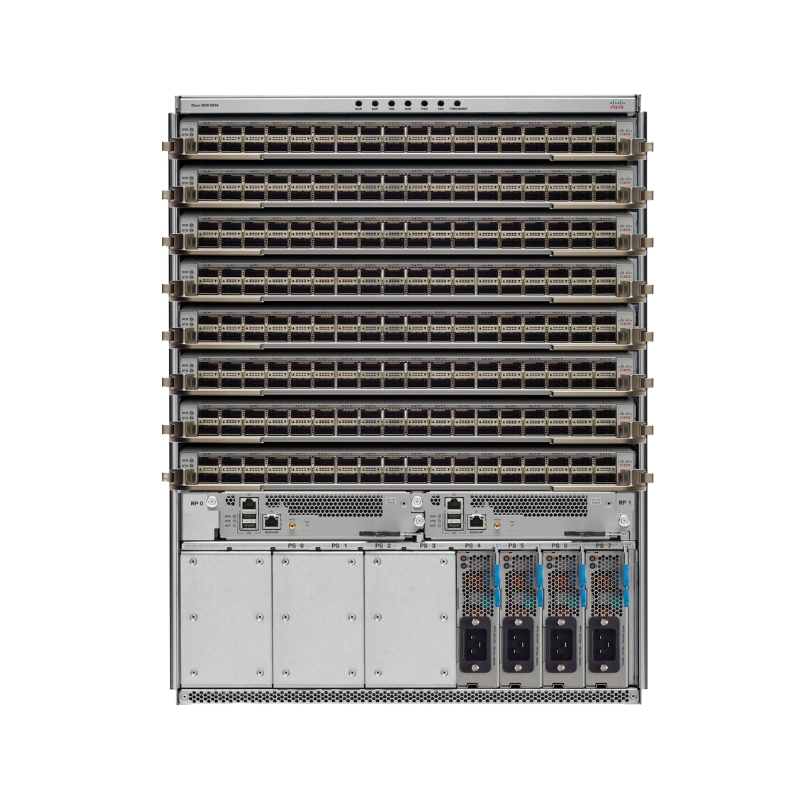


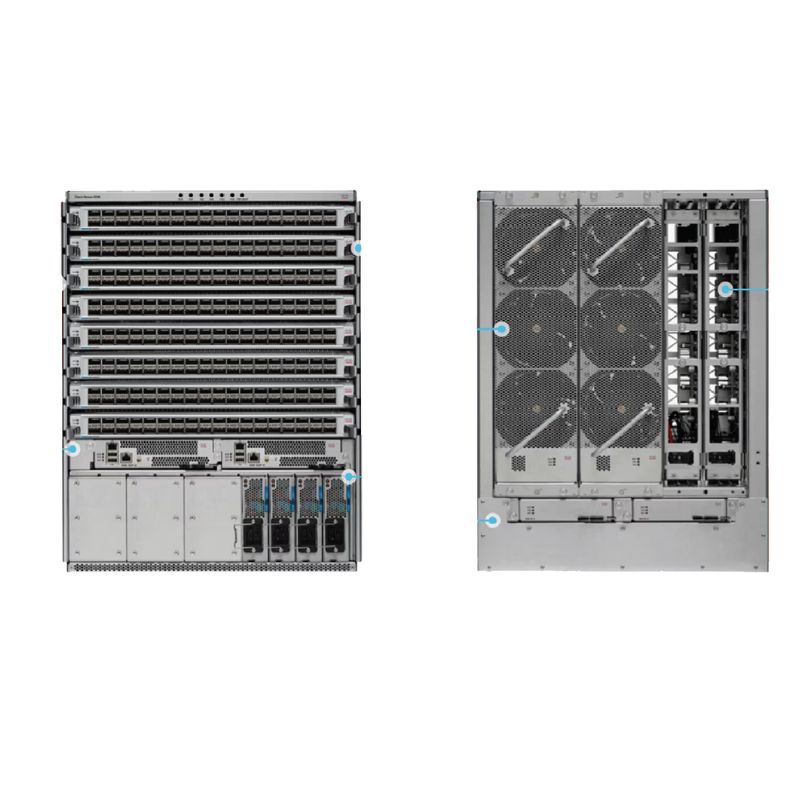
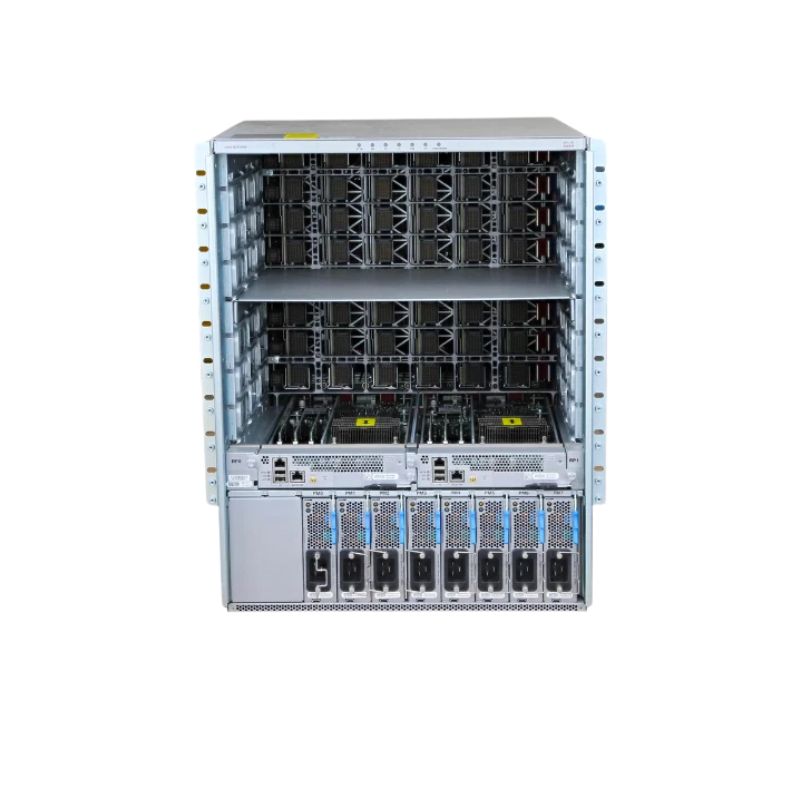
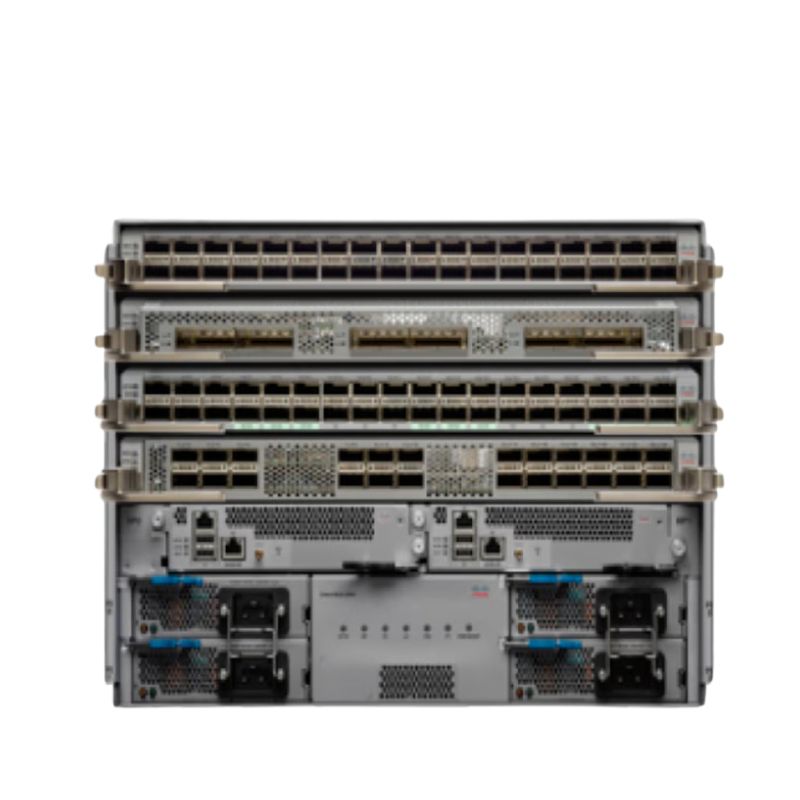
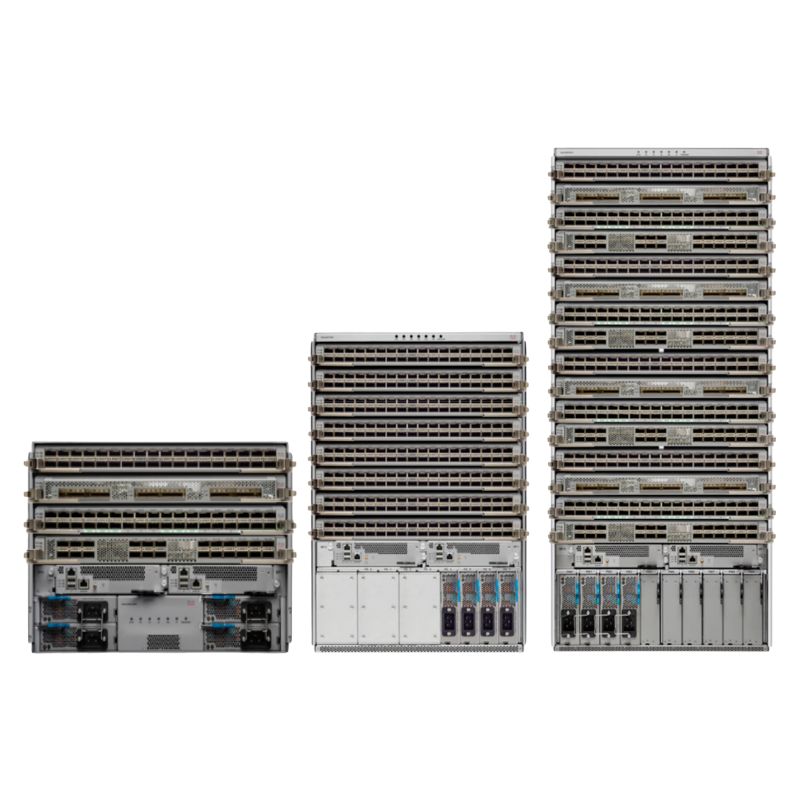
Cisco NCS-5508= Network Convergence System 5508 Modular Expansion Base 13U Rack-mountable. Excellent Refurbished with 1 year replacement warranty
The Cisco NCS-5508= Network Convergence System 5508 Modular Expansion Base is a high-performance 13U rack-mountable platform engineered to support modern service provider, enterprise, and data center networking environments. Built for exceptional scalability, reliability, and long-term operational efficiency, this modular expansion base delivers the flexibility required for evolving network infrastructures. Its space-saving rack-mounted design allows organizations to maximize cabinet utilization while providing ample capacity for advanced networking deployments. With support for up to 9.6 Tbps switching capacity, redundant power architecture, and a durable chassis designed for continuous operation, the Cisco NCS-5508= helps businesses maintain outstanding network availability, simplified expansion, and dependable performance in demanding mission-critical environments.
The Cisco NCS-5508= Network Convergence System 5508 Modular Expansion Base is engineered for organizations that require a modular routing foundation capable of supporting evolving network architectures, expanding traffic volumes, and demanding enterprise or service provider applications. Designed as a 13U rack-mountable platform, this modular system provides a highly scalable infrastructure that accommodates changing connectivity requirements while maintaining dependable operational performance.
Modern digital environments require networking equipment that delivers consistent throughput, predictable latency, simplified management, and outstanding reliability. The Cisco NCS-5508= platform addresses these requirements by providing a modular chassis capable of supporting numerous routing functions, interface configurations, and expansion possibilities. Organizations can adapt their infrastructure over time without replacing the entire networking environment, making modular expansion an effective long-term investment.
The architecture is designed to support continuous operation while enabling administrators to scale capacity according to business growth. As organizations expand cloud connectivity, virtualization, edge computing, and large-scale data transport, modular routing platforms become increasingly valuable because they allow network upgrades through component additions rather than complete hardware replacement.
Today's networking environments demand far more than simple packet forwarding. Large enterprises, cloud providers, educational institutions, government agencies, telecommunications providers, and managed service organizations require sophisticated routing platforms capable of handling massive amounts of traffic while supporting multiple services simultaneously.
The Cisco NCS-5508= chassis provides a foundation that allows administrators to configure network resources according to operational needs. Modular hardware enables organizations to deploy different interface combinations, increase bandwidth over time, and accommodate changing network designs without extensive infrastructure disruption.
Network expansion often occurs gradually rather than all at once. A modular chassis simplifies deployment because organizations can begin with an initial configuration and expand hardware resources as operational requirements increase. This approach reduces unnecessary hardware purchases while maintaining room for future development.
The scalable nature of the platform supports incremental growth across enterprise campuses, regional data centers, internet exchange points, cloud facilities, backbone routing environments, and large aggregation layers. Rather than replacing networking equipment whenever additional interfaces or higher capacity become necessary, administrators can expand supported modules according to changing operational requirements.
The modular expansion base supports multiple networking requirements through interchangeable hardware components. Different networking environments often require different interface densities, media types, and bandwidth capabilities. Modular expansion provides the flexibility needed to support evolving connectivity requirements while protecting existing infrastructure investments.
The 13U rack-mountable design provides an efficient balance between physical footprint and hardware capacity. Rack-mounted networking infrastructure enables organized equipment installation while simplifying cable management, airflow optimization, maintenance accessibility, and infrastructure planning.
Data centers rely on standardized rack installations for consistent equipment organization. The Cisco NCS-5508= integrates into these standardized environments while allowing administrators to maintain structured layouts for networking, storage, computing, and security equipment.
Efficient rack utilization remains an important consideration within enterprise facilities. The 13U chassis provides substantial modular capacity while supporting organized deployment within standard equipment racks.
Proper rack organization simplifies maintenance activities, equipment upgrades, hardware replacement, airflow optimization, cable routing, and overall infrastructure documentation.
Mission-critical networks require infrastructure capable of maintaining continuous operation despite component failures or maintenance activities. High availability principles are central to modular routing platforms because network downtime can significantly affect productivity, business operations, customer experience, and service delivery.
Modular networking platforms frequently incorporate redundant operational components that improve system resilience. Redundant architecture minimizes the impact of isolated hardware failures while supporting uninterrupted network availability.
Enterprise routing infrastructure must consistently deliver reliable performance regardless of traffic levels or deployment complexity. Reliability supports business continuity, cloud access, voice services, application availability, and inter-site communications.
Large-scale networking environments generate significant traffic volumes resulting from cloud applications, virtualization, collaboration platforms, streaming services, storage replication, security inspection, and internet connectivity. Routing infrastructure must process these workloads efficiently while maintaining predictable forwarding performance.
Large campus environments frequently require centralized routing platforms capable of aggregating traffic from numerous access and distribution layers. Modular routing systems provide the flexibility necessary for gradual expansion as buildings, users, and applications increase.
Regional facilities require dependable routing between storage systems, virtualization clusters, application servers, cloud gateways, and security infrastructure. Modular expansion supports increasing bandwidth demands while maintaining operational consistency.
Modular infrastructure allows organizations to respond quickly to changing technology requirements without replacing existing investments.
Expansion through modular hardware reduces installation complexity while allowing planned growth according to organizational priorities.
Business expansion often introduces additional employees, branch offices, cloud resources, business applications, collaboration platforms, and digital services. Scalable networking infrastructure supports these developments while maintaining operational consistency.
Storage environments generate continuous traffic associated with backup operations, disaster recovery replication, database synchronization, and virtualization workloads. Modular routing infrastructure supports dependable communication between these systems.
Telecommunications providers aggregate customer traffic from numerous access networks before forwarding it toward backbone infrastructure. Modular routing platforms provide scalable aggregation capabilities suitable for expanding subscriber environments.
Professional rack organization improves accessibility, documentation accuracy, maintenance efficiency, and cable management throughout the infrastructure lifecycle.


 Contact Us
 Information
 Catalog
 Solid State Drives (SSD)
 Network Switches
 Hard Disk Drives
 HBA & Controllers
 PC & Servers
 PC & Server Memory
 CPU & Processors
 Network Routers
 Power Supplies
 Tape Drives & Libraries
 Network Devices
 Computer & Network Cables