(7% discount is applied at checkout)
Cart is empty
Your go-to destination for cutting-edge server products
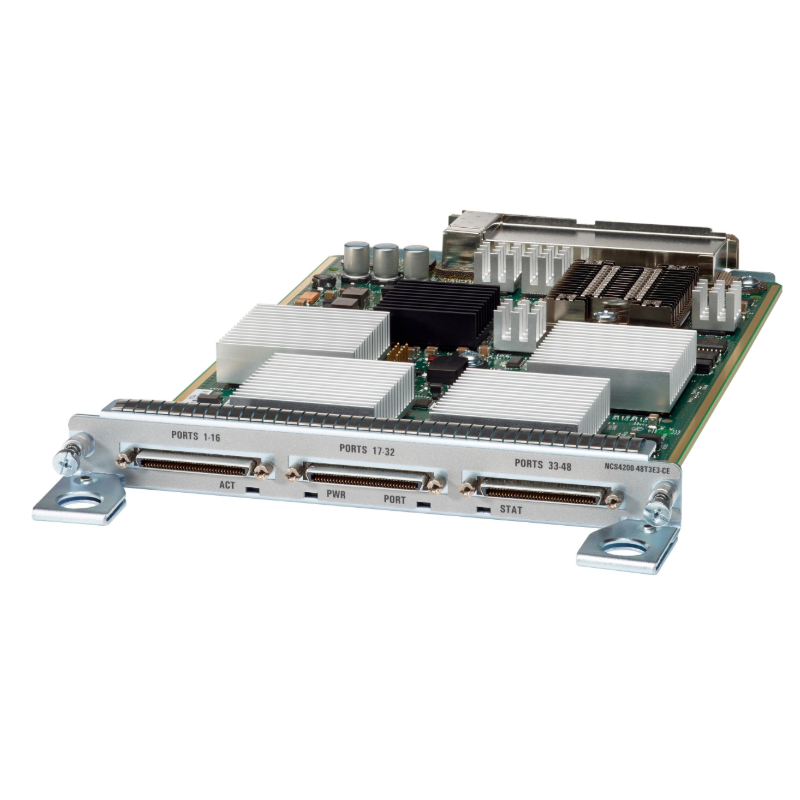


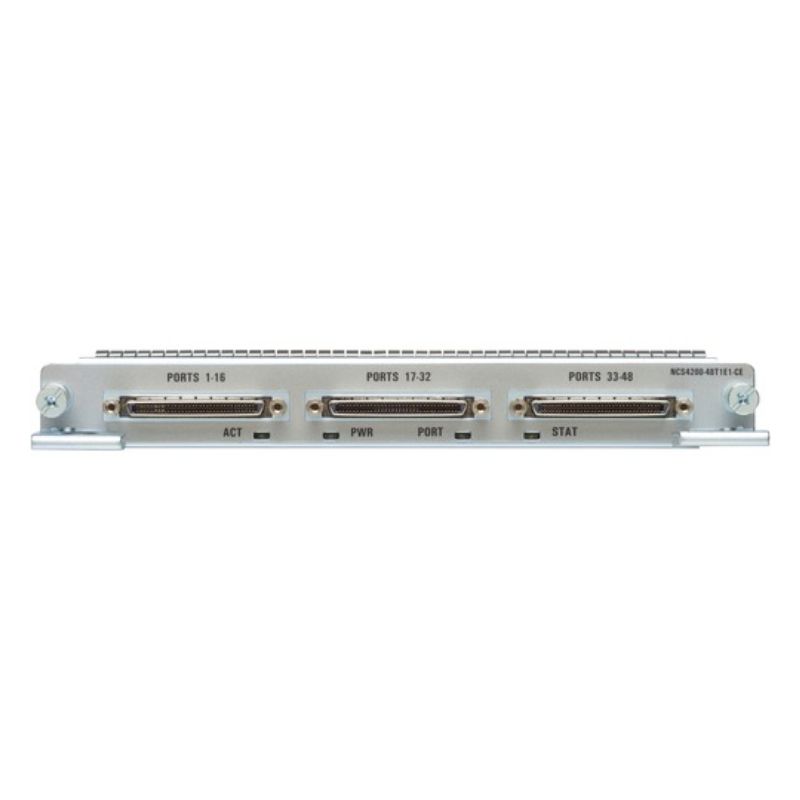
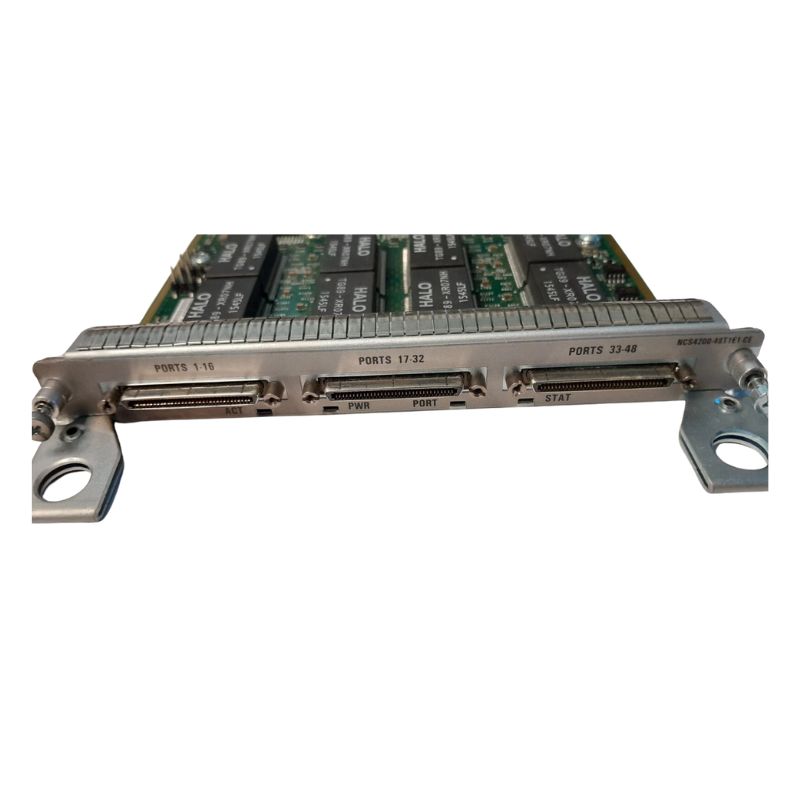
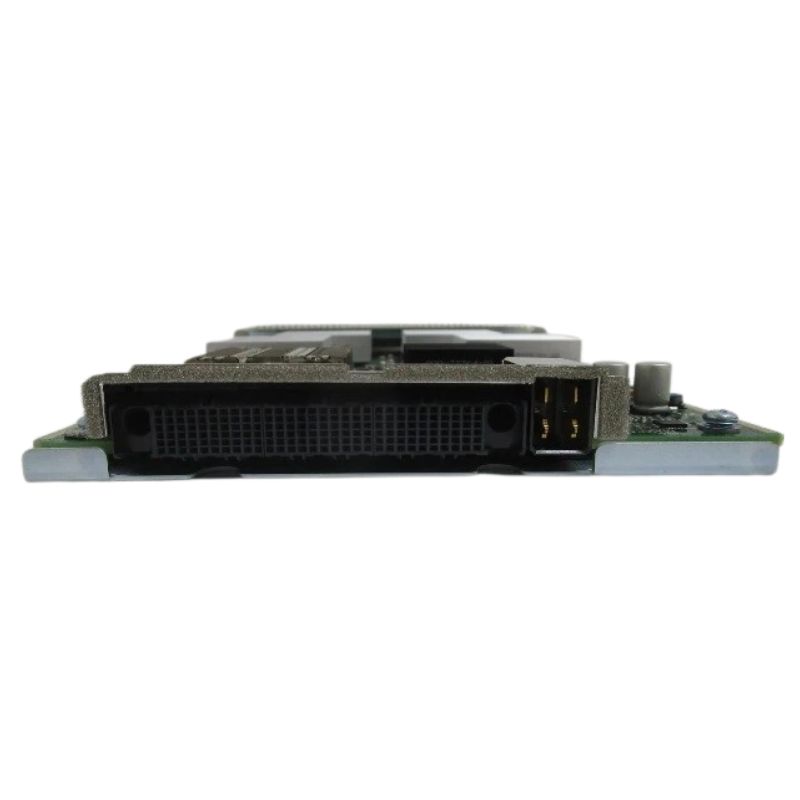
Cisco NCS420048T1E1CE Interface Module Expansion Module T1/E1 X 48 - T-1/E-1. Factory-Sealed New in Original Box (FSB) with 1 year replacement warranty
The Cisco NCS420048T1E1CE interface expansion module is a high-density networking component designed to extend carrier-grade infrastructure with reliable T1/E1 connectivity. Engineered for scalability and operational efficiency, this plug-in module enhances system capacity by delivering 48 dedicated ports, making it ideal for telecom and enterprise-grade communication environments that demand stable circuit-based transmission and flexible expansion options.
The Cisco NCS420048T1E1CE Interface Module Expansion Module T1/E1 X 48 is a high-density telecommunications expansion component designed for carrier-grade network systems that require large-scale T1 and E1 connectivity. Developed within the advanced routing and transport ecosystem of
This interface module is engineered to support environments where legacy telephony systems must coexist with modern packet-based infrastructure. It is commonly deployed in service provider networks, enterprise WAN aggregation points, and metropolitan aggregation nodes where reliability, scalability, and deterministic performance are essential.
The primary function of this expansion module is to provide forty-eight individual T1/E1 ports within a single integrated hardware unit. Each port supports circuit-switched communication channels that are widely used in traditional telecommunications systems. T1 and E1 lines remain critical in many regions for voice transport, leased line connectivity, and synchronization services.
By integrating this module into a compatible Cisco NCS platform, network operators can significantly increase interface density without expanding physical rack space. This allows optimized hardware utilization while maintaining the operational stability expected in carrier-class environments.
In carrier networks, T1 and E1 interfaces often serve as aggregation points for smaller customer circuits. The module enables efficient collection of these circuits and their conversion into higher-speed packet-based transport across MPLS or IP backbones. This makes it a bridge technology component that connects traditional telecom infrastructure with modern routing architectures.
The integration capability ensures that service providers can continue supporting legacy customers while gradually migrating toward fully IP-based systems without disruption.
The architecture of the Cisco NCS420048T1E1CE module is designed with high availability and modular scalability in mind. It fits into a compatible chassis and interacts directly with the system backplane to deliver synchronized data and timing signals across all active ports.
Each of the forty-eight ports is engineered with independent line interface circuitry, allowing simultaneous operation without cross-interference. This isolation ensures consistent signal integrity even under full load conditions.
The module processes T1 and E1 signals using integrated framing and clock recovery systems. These systems ensure accurate interpretation of incoming bit streams and maintain synchronization with external network timing sources. Clock stability is critical in TDM environments because even minor timing variations can lead to jitter or data corruption.
Advanced jitter attenuation techniques are incorporated into the design to ensure clean signal transmission, especially in long-haul or multi-hop telecom environments.
One of the defining characteristics of this module is its high port density. By consolidating forty-eight T1/E1 interfaces into a single expansion unit, it dramatically reduces the number of physical cards required in a deployment. This leads to simplified network design and improved operational efficiency.
Scalability is achieved through modular expansion, allowing multiple interface modules to be installed within a single chassis depending on capacity requirements. This modular approach enables incremental upgrades without the need for full system replacement.
Telecommunication facilities often face strict space constraints, especially in metropolitan central offices. The compact design of this module helps maximize rack utilization by reducing hardware footprint while maintaining high interface availability.
This space efficiency translates into lower operational costs, reduced power consumption per port, and improved cooling efficiency across the system.
The Cisco NCS420048T1E1CE module is deployed in a variety of operational scenarios across telecom and enterprise networks. These include legacy voice aggregation, leased line services, and interconnectivity between regional network hubs.
Many organizations still rely on T1/E1 circuits for voice communication infrastructure. This module allows seamless integration of these circuits into modern transport networks while preserving service continuity. It enables voice traffic to be efficiently carried across packet-based infrastructure without requiring complete system replacement.
In enterprise environments, multiple branch offices may still use T1 or E1 connections for dedicated communication lines. The module aggregates these connections into a centralized routing system, allowing streamlined traffic management and improved bandwidth utilization.
Service providers utilize this module to interconnect different network regions or to interface with third-party carriers. The ability to support multiple T1/E1 circuits simultaneously makes it ideal for large-scale network aggregation points.
Reliability is a core design principle in carrier-grade networking equipment. This interface module is built to operate continuously under high traffic conditions without performance degradation. It supports redundant system configurations when deployed within compatible chassis environments.
The hardware is designed with fault isolation mechanisms that ensure a failure in one port does not affect the operation of others. This enhances overall system resilience and minimizes downtime.
The Cisco NCS420048T1E1CE module is designed to integrate seamlessly into supported Cisco network chassis within the Network Convergence System family. It communicates with the system control plane to enable configuration, monitoring, and diagnostics.
Compatibility with network management systems allows operators to configure each port individually or in groups, depending on service requirements. This flexibility ensures that the module can be adapted to a wide range of deployment scenarios.
Although packet-based technologies dominate modern networking, T1 and E1 circuits remain relevant due to their deterministic performance and widespread legacy adoption. The Cisco NCS420048T1E1CE module represents a transitional technology that supports gradual migration toward fully packetized infrastructures.
Its ability to interface legacy systems with modern routing platforms ensures that organizations can protect existing investments while still evolving their network architecture.
Hybrid networks combine circuit-switched and packet-switched technologies. This module plays a crucial role in such environments by providing a reliable interface layer between the two domains. It ensures consistent communication across heterogeneous systems without compromising performance.


 Contact Us
 Information
 Catalog
 Solid State Drives (SSD)
 Network Switches
 Hard Disk Drives
 HBA & Controllers
 PC & Servers
 PC & Server Memory
 CPU & Processors
 Network Routers
 Power Supplies
 Tape Drives & Libraries
 Network Devices
 Computer & Network Cables