(7% discount is applied at checkout)
Cart is empty
Your go-to destination for cutting-edge server products
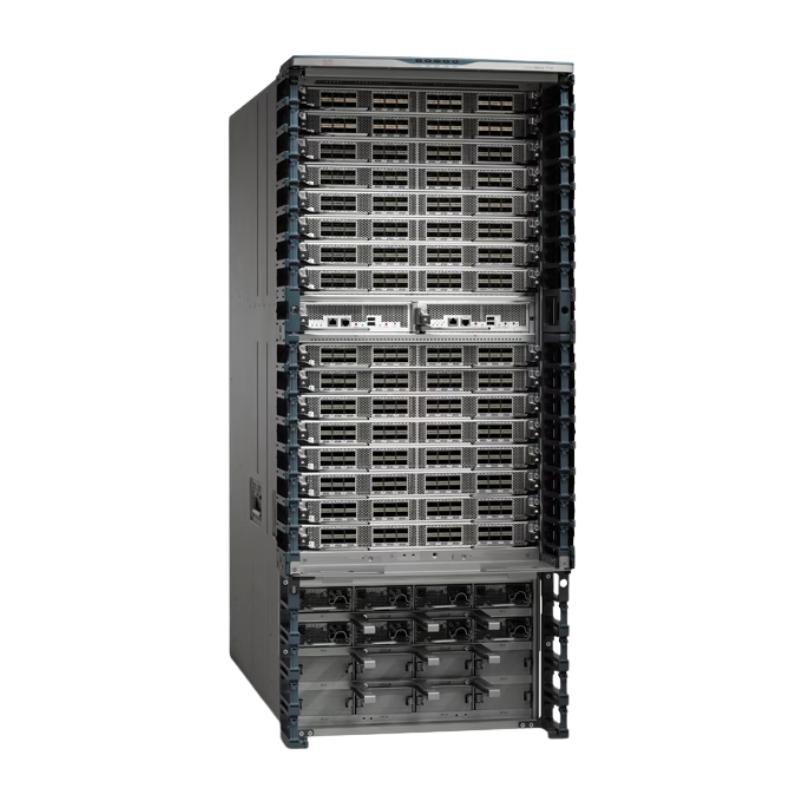


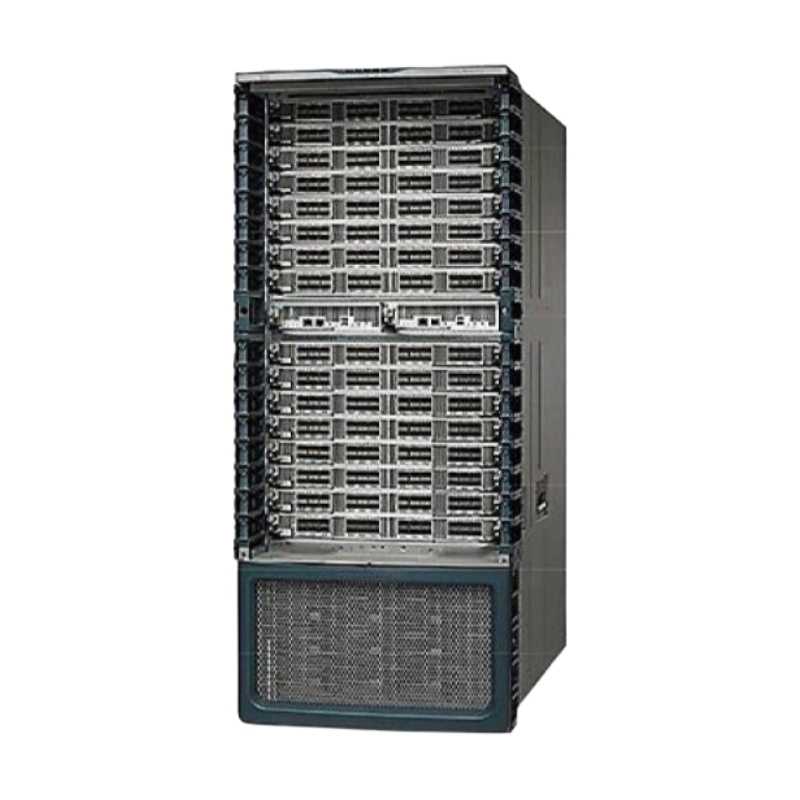
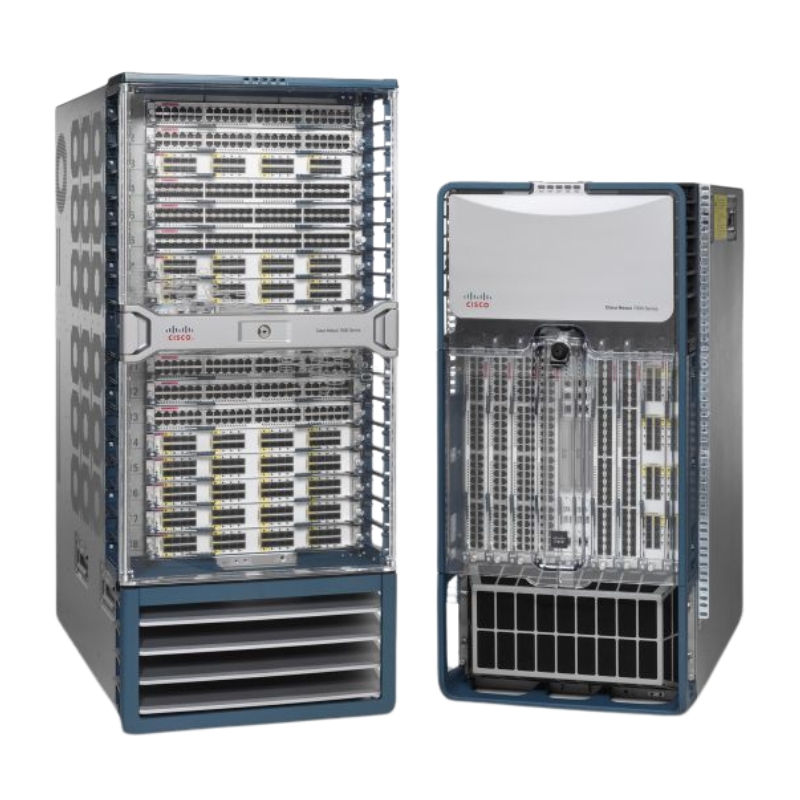
Cisco N77-C7718-AFLT Nexus 7700-18 Slot Chassis FD. Factory-Sealed New in Original Box (FSB)
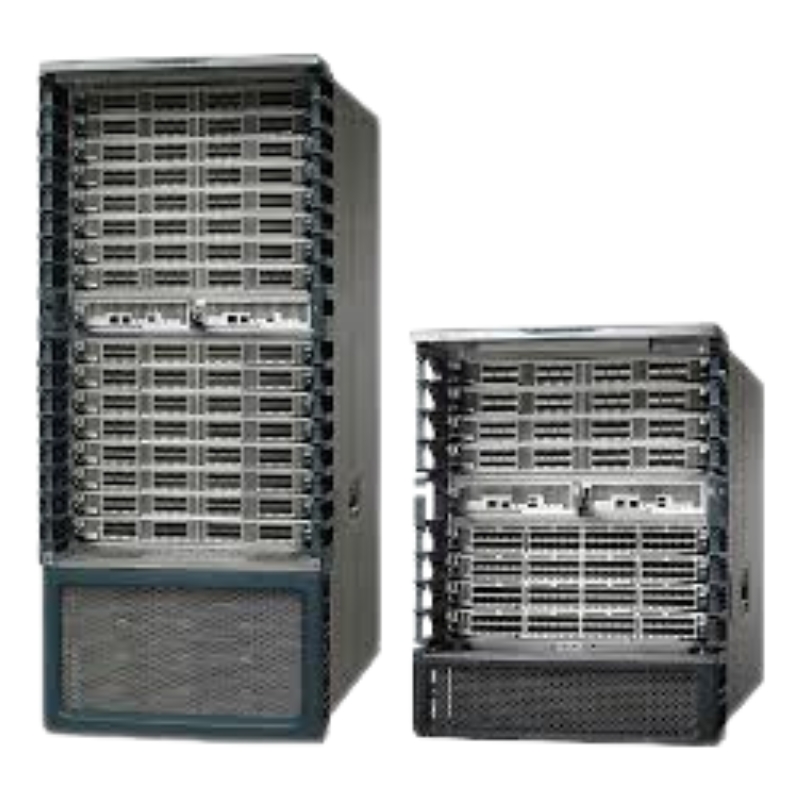
The N77-C7718-AFLT Cisco Nexus 7700-18 Slot Chassis FD belongs to the enterprise-class Cisco Nexus 7700 Series platform family and is designed for organizations that require a highly scalable, modular, and resilient foundation for demanding data center networking environments. Built around an 18-slot chassis architecture, this platform supports extensive network expansion while providing the flexibility required for high-density switching, aggregation, core networking, and large-scale infrastructure deployments. The chassis-focused configuration gives network architects a substantial modular framework for building a switching system according to specific capacity, redundancy, interface, and performance requirements.
As data centers continue to accommodate virtualization, cloud services, distributed applications, high-volume storage traffic, and increasingly bandwidth-intensive workloads, the underlying network infrastructure must provide sufficient room for expansion. The N77-C7718-AFLT is positioned for environments where a fixed-configuration switch may not deliver the necessary scalability or modularity. Its large chassis format enables organizations to develop a customized Cisco Nexus 7700 switching solution using compatible supervisors, fabric modules, I/O modules, power supplies, cooling components, and other supported hardware elements.
The Cisco Nexus 7700-18 Slot Chassis FD category is particularly relevant to enterprise data centers, service provider facilities, cloud infrastructure environments, campus cores, and organizations operating mission-critical network services. Its modular design allows individual components to be selected, upgraded, serviced, or expanded according to operational requirements. This approach can help organizations protect infrastructure investments by providing a platform that can evolve as network demands increase.
The defining characteristic of the N77-C7718-AFLT Cisco Nexus 7700-18 Slot Chassis FD is its extensive modular architecture. Unlike compact fixed-port switches, a modular chassis provides dedicated slots for different functional components. This architecture allows network teams to configure a system around current requirements while maintaining flexibility for future expansion. The 18-slot design provides substantial physical capacity for building a high-density networking platform suitable for complex data center topologies.
Within a modular switching environment, different hardware elements perform specialized roles. Supervisor modules provide system control and management capabilities, fabric modules support internal switching capacity, and compatible line cards or I/O modules deliver external network connectivity. Power and cooling subsystems support continuous hardware operation, while redundancy options can be implemented to reduce the impact of individual component failures.
The modular structure is particularly valuable in environments where network growth is difficult to predict. An organization may initially deploy only the components needed for current traffic levels and then add compatible modules as application requirements, server populations, storage systems, or interconnection demands increase. This incremental approach can provide greater deployment flexibility than replacing an entire fixed switch whenever additional interfaces or capacity are required.
Data center networks must support a growing number of connected systems, including physical servers, virtualization hosts, storage arrays, security appliances, management platforms, and external network connections. The N77-C7718-AFLT Cisco Nexus 7700-18 Slot Chassis FD provides a modular foundation intended for environments where substantial interface density may be required. By accommodating compatible line cards within a large chassis, the platform can be adapted to support diverse connectivity strategies.
High-density switching is particularly important when consolidating network infrastructure. Rather than deploying numerous independent switches, organizations may choose a modular chassis architecture to centralize connectivity and simplify the physical network design. A properly planned chassis-based solution can reduce the number of separate switching devices that must be individually powered, managed, interconnected, and maintained.
The 18-slot format also supports long-term capacity planning. Data center administrators can reserve chassis capacity for future expansion instead of immediately populating every available slot. As additional network interfaces are required, compatible modules can be incorporated according to supported platform configurations. This scalability can be valuable for growing enterprises, expanding colocation environments, cloud service infrastructure, and organizations undergoing data center modernization.
Scalability is one of the primary reasons organizations select a modular chassis such as the N77-C7718-AFLT Cisco Nexus 7700-18 Slot Chassis FD. Network requirements rarely remain static. New applications, additional employees, larger databases, expanded storage environments, cloud integration, artificial intelligence workloads, analytics platforms, and virtualization projects can all increase network traffic and interface demand.
A large modular chassis provides physical and architectural room to accommodate changing requirements. Rather than designing a network exclusively around immediate needs, administrators can establish a platform with expansion capacity. This approach may help extend the useful lifecycle of the switching infrastructure when supported modules and configurations are selected appropriately.
Expansion within a modular platform can involve adding connectivity, increasing internal switching resources, introducing redundancy, or adapting the system to changing network architectures. The exact capabilities depend on the installed Cisco Nexus 7700 components and their compatibility with the chassis. For this reason, buyers should evaluate the complete bill of materials rather than considering the chassis part number alone.
The N77-C7718-AFLT Cisco Nexus 7700-18 Slot Chassis FD can serve as the physical foundation for a high-capacity switching platform used in core and aggregation network roles. The core layer is responsible for moving substantial volumes of traffic between different sections of an infrastructure, while the aggregation layer commonly consolidates connections from multiple downstream network devices. Both roles can require significant scalability, reliability, and forwarding capacity.
In a large enterprise data center, numerous access switches, server-facing switches, storage systems, and network appliances may need to communicate through a centralized high-capacity switching layer. A modular Cisco Nexus 7700 chassis allows architects to develop a configuration suited to these requirements by selecting supported hardware modules according to the intended topology.
Aggregation environments can also benefit from the ability to consolidate numerous connections into a single modular platform. This can simplify physical cabling strategies and provide a structured path for future growth. Core deployments, meanwhile, may prioritize redundancy, high availability, and substantial internal capacity. The chassis architecture provides the framework through which these design objectives can be addressed using compatible system components.
Network availability is critical in modern organizations because a switching infrastructure interruption can affect applications, communications, storage access, cloud connectivity, and business operations. The N77-C7718-AFLT Cisco Nexus 7700-18 Slot Chassis FD belongs to a modular platform family designed to accommodate redundant system components when configured with the appropriate supported hardware.
Redundancy can be implemented at multiple levels within a modular network architecture. Depending on the selected system configuration, administrators may deploy redundant control, power, cooling, and fabric resources. The objective is to minimize the effect of an individual component failure and maintain network operations while maintenance or replacement activities are performed.
A chassis-based platform also supports serviceability by allowing individual modular components to be addressed separately rather than treating the entire switch as a single inseparable unit. This characteristic can be especially valuable in data centers with strict uptime requirements. However, redundancy is dependent on the actual installed configuration, so buyers should verify which components are included with a particular N77-C7718-AFLT offering.
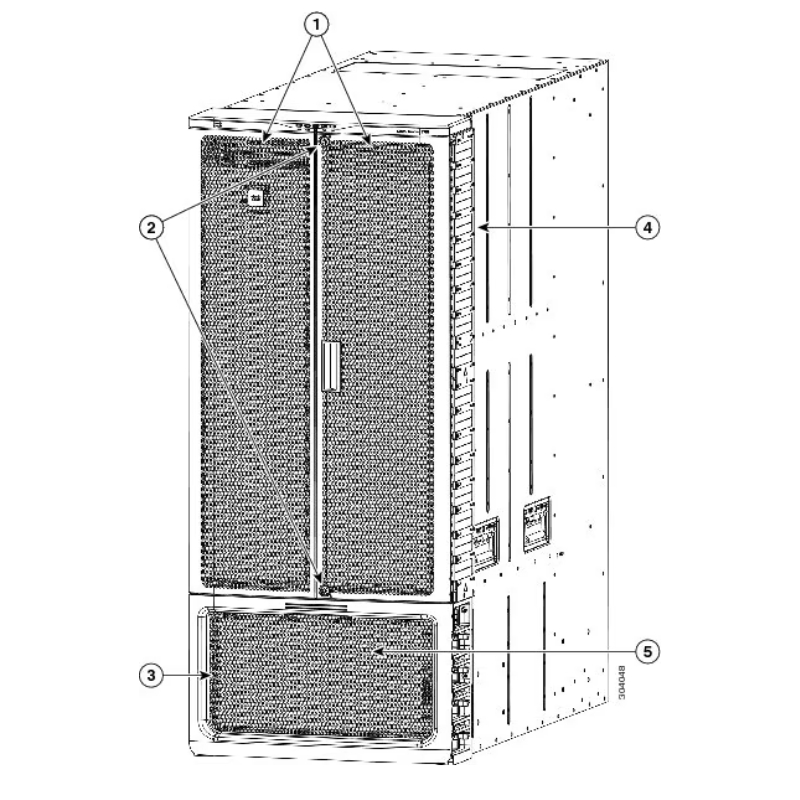
Airflow is an important consideration when deploying a large modular networking chassis. The “AFLT” designation associated with the N77-C7718-AFLT should be considered when planning the physical installation and matching the chassis with the intended data center cooling strategy. Correct airflow alignment helps ensure that network equipment operates within supported environmental conditions.
Modern data centers commonly use structured hot-aisle and cold-aisle arrangements. Equipment orientation, fan direction, rack placement, cable management, and surrounding hardware can all influence cooling efficiency. Before installation, administrators should verify the airflow characteristics of the chassis and all relevant components to ensure compatibility with the facility design.
Mixing equipment with incompatible airflow directions can create recirculation zones and reduce cooling effectiveness. For a high-capacity chassis containing multiple modules, power supplies, and internal components, careful thermal planning is particularly important. Adequate clearance should be maintained around ventilation areas, and environmental monitoring should be incorporated into normal data center operations.
A high-density modular chassis requires careful power planning. The N77-C7718-AFLT Cisco Nexus 7700-18 Slot Chassis FD can support a configuration containing multiple hardware components, and the total power requirement depends on the installed supervisors, fabric modules, line cards, cooling assemblies, and other supported elements. As a result, power planning should be performed for the complete system configuration rather than the empty chassis alone.
Data center administrators should consider available electrical capacity, power distribution, redundancy requirements, and future expansion. A system configured with additional modules may require more power than the initial deployment. Reserving sufficient electrical capacity can help prevent infrastructure limitations from restricting future chassis expansion.
Redundant power design is another important consideration for mission-critical installations. Where supported and appropriately configured, multiple power sources can reduce dependence on a single electrical path. Organizations may also integrate the switching platform with uninterruptible power supplies, backup generation systems, and monitored power distribution units as part of a broader availability strategy.
The value of a modular chassis is closely connected to the range of supported interface modules that can be installed. The N77-C7718-AFLT provides a large physical platform for configuring network connectivity according to specific deployment requirements. Depending on the selected compatible Cisco Nexus 7700 Series hardware, organizations can build a system designed around required interface types, port densities, and network architectures.
This flexibility is useful in environments containing multiple generations of infrastructure. A data center may have different connectivity requirements for server networks, storage environments, inter-switch links, backbone connections, and external services. A modular chassis architecture allows network designers to select supported line cards according to these requirements rather than being limited to a predetermined fixed-port arrangement.
When purchasing the N77-C7718-AFLT chassis, compatibility verification is essential. Not every module within a broader product family is necessarily supported in every hardware or software configuration. Buyers should confirm chassis compatibility, supervisor requirements, fabric dependencies, software support, transceiver compatibility, and power requirements before building or expanding a system.
Modern applications generate substantial volumes of east-west and north-south network traffic. East-west traffic moves between servers, virtual machines, containers, storage resources, and internal services, while north-south traffic flows between the data center and external networks. Large modular switching platforms are commonly deployed where these traffic patterns require substantial aggregate capacity.
The N77-C7718-AFLT Cisco Nexus 7700-18 Slot Chassis FD provides the physical foundation for a system that can be configured for demanding networking environments. Actual forwarding capacity and interface performance depend on the installed fabric and line-card architecture, but the large chassis format is designed to accommodate substantial modular expansion.
Bandwidth planning should account for more than current average utilization. Traffic peaks, application growth, replication workloads, backup operations, virtualization migration, disaster recovery processes, and new service deployments can all increase demand. A scalable chassis platform can provide greater flexibility for addressing these changes when configured with appropriate compatible hardware.
Consolidating substantial network capacity into a modular chassis can support more structured infrastructure operations. Instead of managing a large collection of unrelated switching devices, network teams can deploy a standardized modular platform with a consistent hardware architecture. This can simplify certain aspects of inventory management, capacity planning, maintenance procedures, and infrastructure documentation.
The Cisco Nexus ecosystem is designed for data center networking, where administrators often require detailed visibility into system health, interfaces, traffic behavior, hardware status, and configuration. The management capabilities available to a complete Nexus 7700 system depend on the installed hardware and software environment, but the platform is intended for professional network operations where centralized administration is important.
Operational planning should include software lifecycle management, configuration backup procedures, monitoring integration, change control, spare component strategies, and hardware maintenance processes. A large chassis is a significant infrastructure component, and organizations should manage it as part of a broader network lifecycle rather than as an isolated piece of equipment.
Infrastructure consolidation is a common objective for organizations seeking to simplify data center operations. Over time, network environments can accumulate numerous switches deployed for different projects, departments, applications, or capacity requirements. This fragmented architecture may increase management complexity, consume additional rack space, and require extensive inter-switch cabling.
A large modular chassis such as the N77-C7718-AFLT can form part of a consolidation strategy by providing a centralized platform capable of accommodating significant network connectivity. Depending on architecture requirements, compatible modules can be selected to support the desired interface density and network design.
Consolidation does not simply mean replacing multiple devices with one chassis. Network architects must evaluate redundancy, failure domains, traffic patterns, maintenance requirements, and operational risk. A modular platform can provide significant scalability, but it should be incorporated into a resilient architecture that matches business availability objectives.
Compatibility is one of the most important factors when purchasing a modular Cisco Nexus chassis. The N77-C7718-AFLT part number identifies a specific chassis-related product, but a complete operational switching system may require multiple additional components. Buyers should carefully review what is included in the offered configuration and identify any components that must be purchased separately.
Potential configuration elements include supervisor modules, fabric modules, line cards, power supplies, fan or cooling assemblies, transceivers, cables, mounting hardware, and software-related requirements. The exact component list varies according to the intended deployment and the condition or packaging of the product being purchased.
Organizations upgrading an existing Cisco Nexus 7700 environment should also verify compatibility between new and existing hardware. Hardware revisions, software releases, module dependencies, and power requirements can affect deployment decisions. Detailed planning helps reduce the possibility of purchasing components that cannot be used together in the intended configuration.
Large networking platforms are typically purchased as part of a broader infrastructure strategy. The N77-C7718-AFLT can be relevant to organizations expanding an existing Cisco Nexus 7700 environment, replacing a damaged chassis, consolidating network resources, or maintaining compatibility with deployed modules and operational procedures.
Lifecycle planning should consider current requirements, expected growth, software strategy, hardware availability, support objectives, and eventual migration plans. A modular chassis may provide substantial flexibility, but every enterprise platform exists within a broader technology lifecycle. Organizations should evaluate how the system fits into both immediate operational needs and longer-term network architecture plans.
For existing Nexus 7700 users, maintaining a compatible chassis platform can reduce the complexity associated with introducing an entirely different hardware architecture. It may also allow organizations to continue using compatible components where technically and operationally appropriate. New deployments should be assessed against current requirements and the organization's complete technology roadmap.
When evaluating an N77-C7718-AFLT listing, the product title alone may not fully describe the supplied configuration. Some listings may refer primarily to the chassis, while others may include selected fans, power components, supervisors, fabric modules, or accessories. Buyers should request or review a detailed inventory of included hardware before placing an order.
This distinction is important because a chassis is the structural foundation of a modular switching system rather than necessarily a complete ready-to-operate switch. The final system configuration depends on the additional components installed. Understanding the exact scope of supply helps organizations budget accurately and avoid delays during deployment.
A modular chassis architecture can support structured maintenance strategies because major system functions are distributed across replaceable hardware components. In appropriately designed configurations, administrators can plan redundancy so that maintenance activities have less impact on network availability. The actual maintenance capabilities depend on the installed components, system software, network topology, and operational procedures.
Organizations should maintain accurate documentation of chassis configuration, installed modules, serial information, software versions, cabling, and dependencies. Spare hardware planning may also be appropriate for critical environments. Keeping compatible replacement components available can reduce recovery time when hardware faults occur.
Preventive operational practices are equally important. Administrators should monitor hardware alarms, environmental conditions, power status, fan performance, interface errors, and other system indicators. Regular review of system health can help identify developing issues before they become service-affecting events.
Virtualization has transformed data center traffic patterns by allowing many workloads to operate on shared physical infrastructure. A single virtualization host may support numerous virtual machines or application instances, creating substantial network demand through a comparatively small number of physical systems. Large virtualized environments therefore require network platforms capable of supporting high aggregate traffic volumes and scalable connectivity.
The N77-C7718-AFLT Cisco Nexus 7700-18 Slot Chassis FD provides a modular platform that can be incorporated into network designs serving extensive virtualized environments. Its chassis capacity allows architects to build configurations that align with server connectivity, aggregation, and core networking requirements.
Virtualized infrastructure also increases the importance of network availability. A failure affecting one physical host connection can potentially influence many workloads. At the broader network level, resilient switching architecture and redundant connectivity can help reduce the effect of individual hardware or path failures.
Enterprise networks increasingly carry large volumes of data associated with storage access, backup operations, replication, disaster recovery, analytics, and application synchronization. These workloads can create sustained or burst-intensive traffic patterns that place significant demands on switching infrastructure.
A modular Cisco Nexus 7700 platform can be configured as part of a high-capacity network architecture designed to transport substantial data volumes. The N77-C7718-AFLT chassis provides room for compatible hardware resources selected according to the organization's specific performance and connectivity requirements.
Storage-related network planning should consider throughput, latency sensitivity, oversubscription, redundancy, and traffic isolation. The chassis itself provides the physical framework, while the final architecture depends on module selection, software configuration, topology, and connected systems.
Service providers and very large enterprises often operate networks with substantial scale and diverse connectivity requirements. These environments may need to support many downstream systems, high aggregate traffic levels, strict availability objectives, and continuous expansion. The N77-C7718-AFLT Cisco Nexus 7700-18 Slot Chassis FD is suited to infrastructure strategies that favor a large modular switching platform.
For service provider environments, modularity can help accommodate changing capacity requirements and different interface needs. For large enterprises, the chassis may support centralized data center core or aggregation functions. In both cases, the ability to configure the platform using compatible modular components provides greater architectural flexibility than a fixed configuration.
Successful procurement requires more than matching a part number. Organizations should begin by documenting the intended network role, required connectivity, expected capacity, redundancy objectives, physical installation conditions, and compatibility requirements. This information can then be used to determine the complete hardware configuration needed around the N77-C7718-AFLT chassis.
Buyers should compare the exact supplied configuration against their bill of materials. If the chassis is being purchased as a replacement, the compatibility of existing modules should be confirmed before migration. If it is being used for expansion, administrators should verify that the new system can support the planned modules and software environment.
Supplier quality is also important, particularly for secondary-market enterprise hardware. Clear product descriptions, detailed condition information, component inventories, warranty coverage, and professional shipping practices can reduce procurement risk. For business-critical deployments, organizations may also require documented testing or validation procedures.
The N77-C7718-AFLT Cisco Nexus 7700-18 Slot Chassis FD provides the structural foundation for building a substantial modular network switching system. Its 18-slot architecture gives network designers significant flexibility when planning a platform for large-scale connectivity, aggregation, and core networking requirements. The chassis can be incorporated into a broader infrastructure design using supported components selected according to performance, availability, and interface objectives.
A carefully planned deployment should balance current operational requirements with future growth. Reserving expansion capacity, designing appropriate redundancy, maintaining airflow compatibility, ensuring sufficient power infrastructure, and validating hardware support are all essential elements of a successful chassis-based network deployment.
For organizations already operating Cisco Nexus 7700 Series infrastructure, the N77-C7718-AFLT may also provide a practical option for compatible expansion, replacement, or capacity planning. The large modular format can support long-term infrastructure strategies where flexibility and serviceability remain important.


 Contact Us
 Information
 Catalog
 Solid State Drives (SSD)
 Network Switches
 Hard Disk Drives
 HBA & Controllers
 PC & Servers
 PC & Server Memory
 CPU & Processors
 Network Routers
 Power Supplies
 Tape Drives & Libraries
 Network Devices
 Computer & Network Cables