(7% discount is applied at checkout)
Cart is empty
Your go-to destination for cutting-edge server products
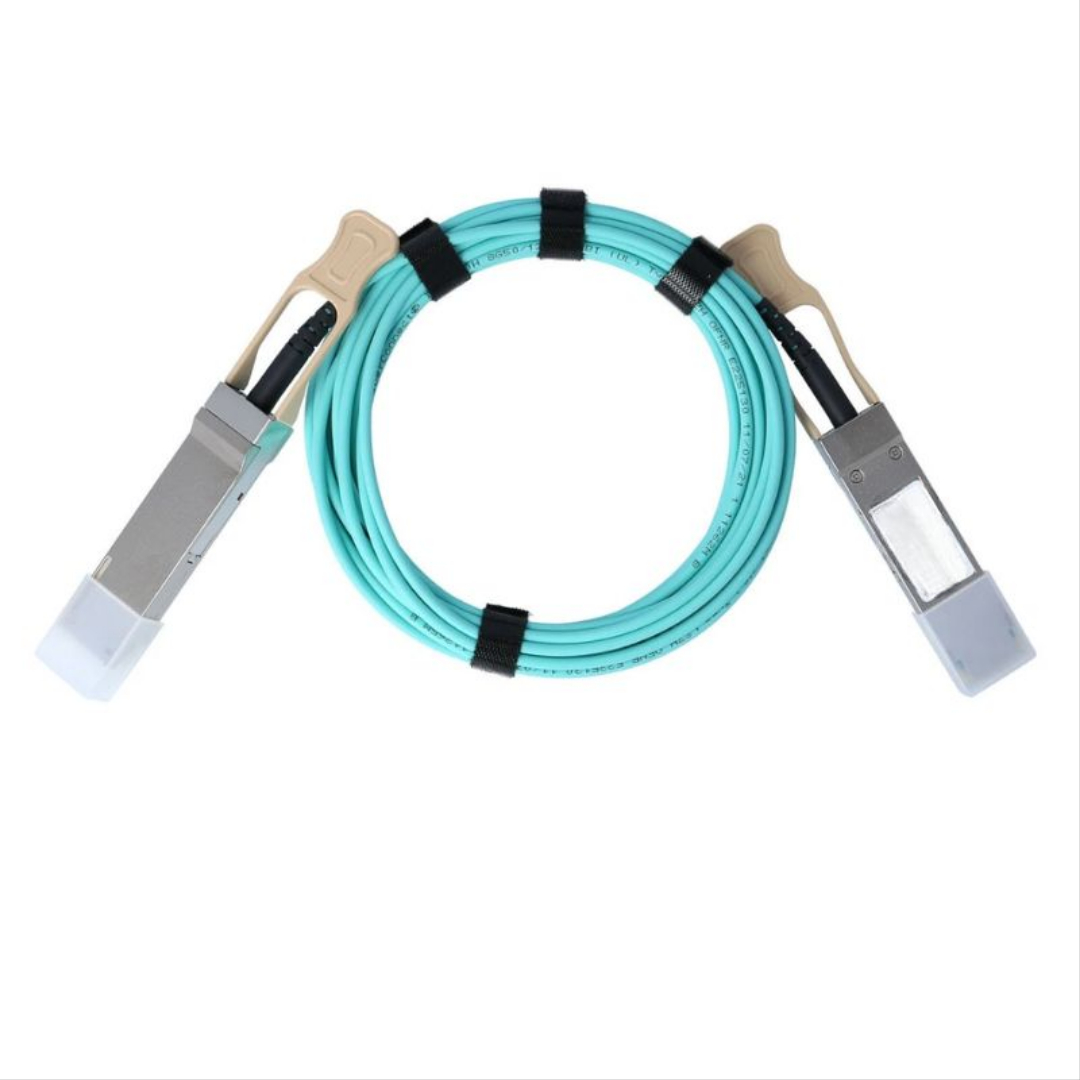


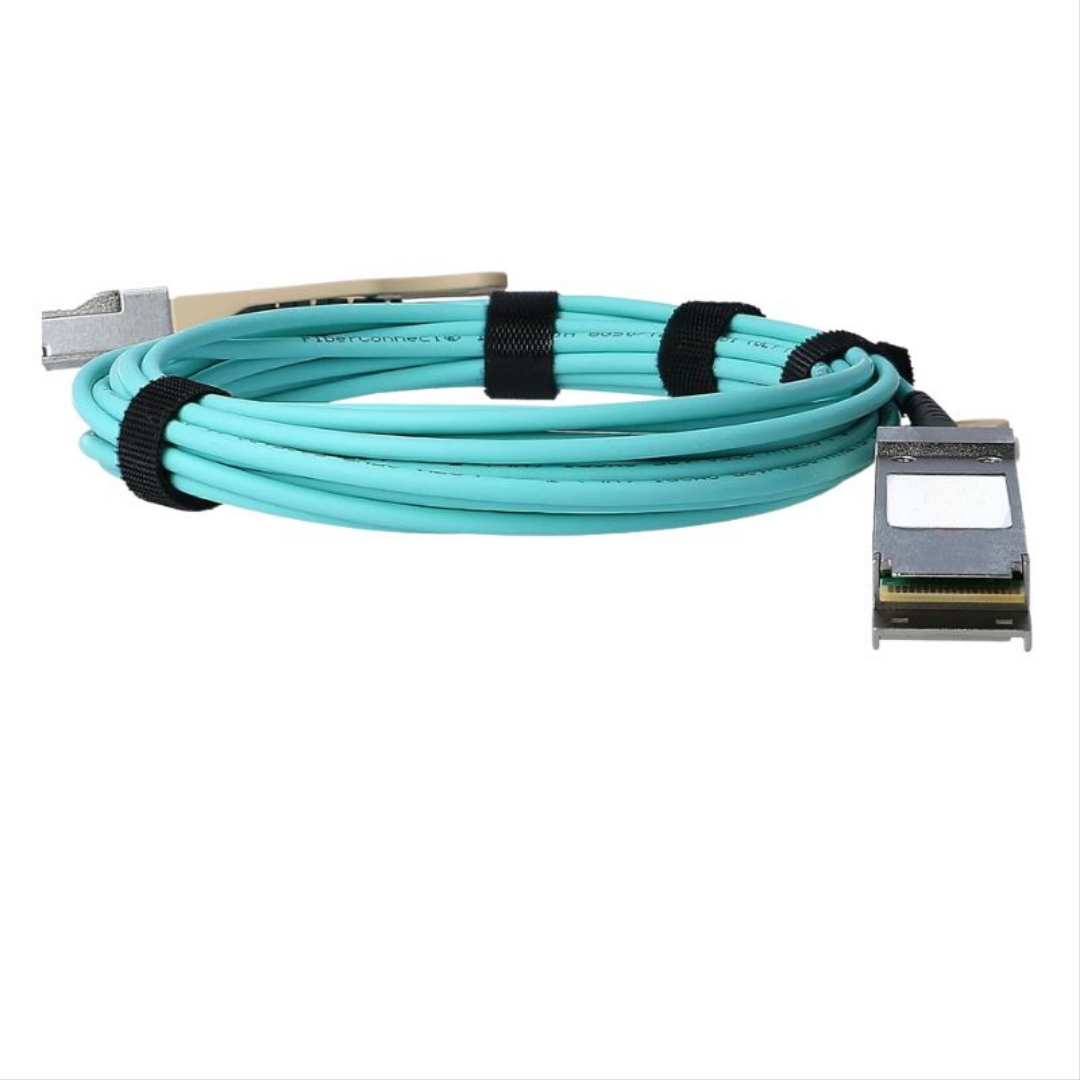
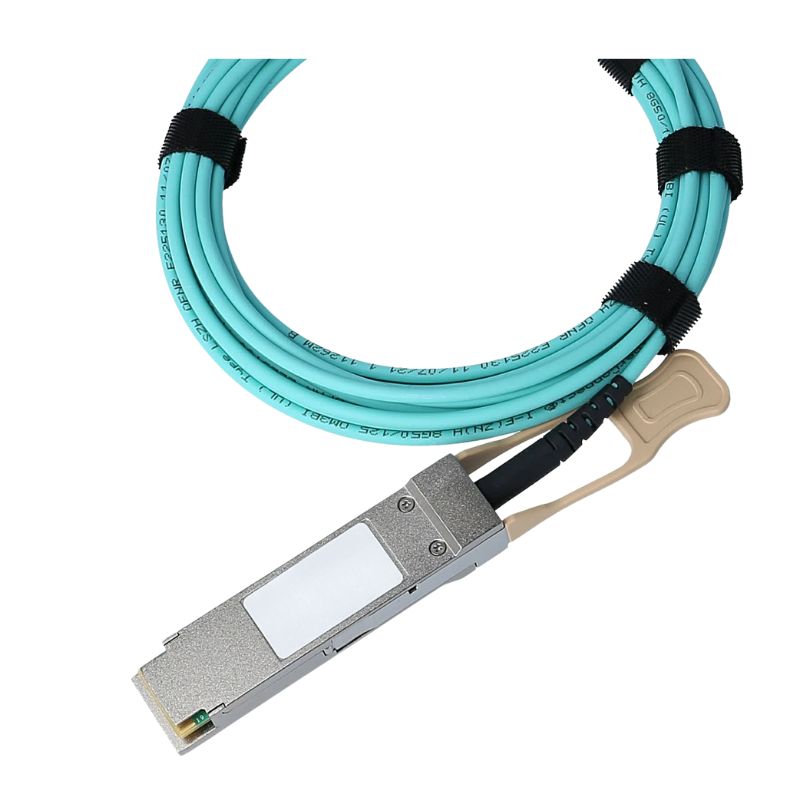
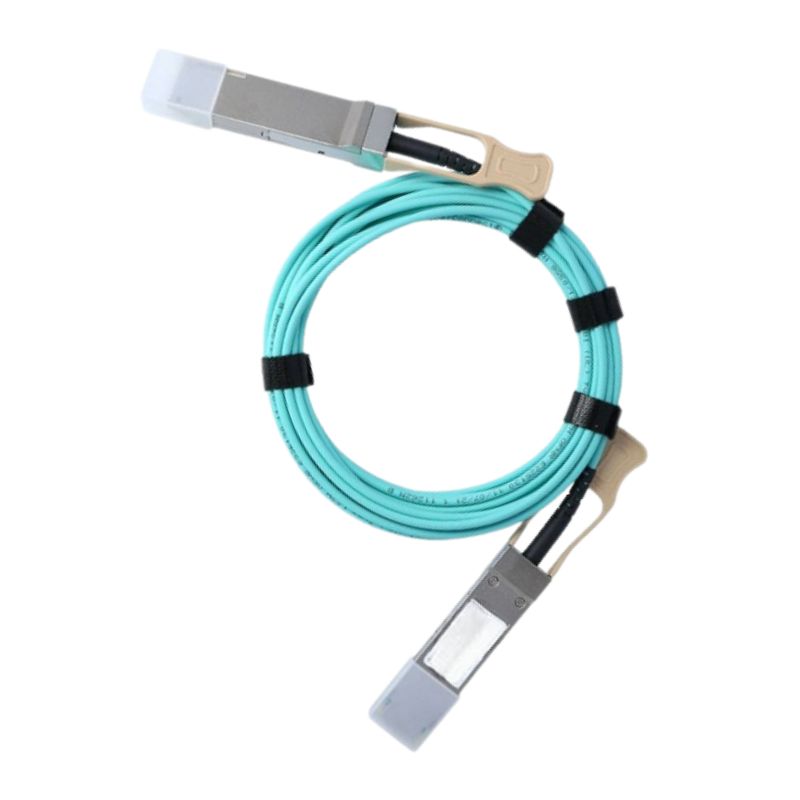
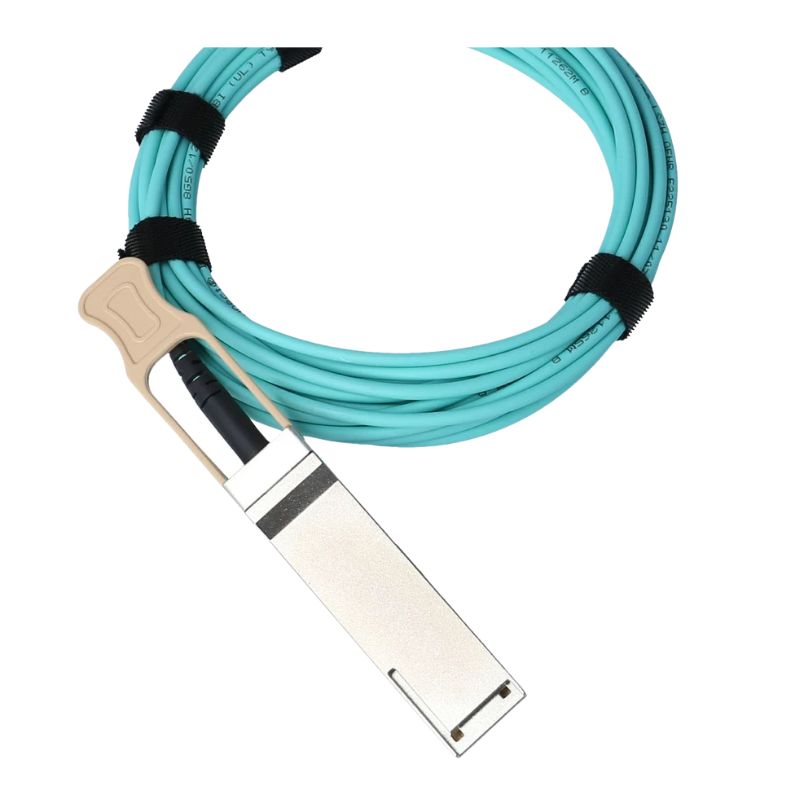
Cisco QSFP-100G-AOC7M= 7m 100GB QSFP28 Active Optical Cable. Factory-Sealed New in Original Box (FSB) with 1 year replacement warranty
The Cisco QSFP-100G-AOC7M= is a high-performance 7-meter active optical cable designed for reliable and efficient 100Gbps data transmission. Built with Cisco quality standards, this solution offers excellent connectivity for modern networking infrastructure, supporting smooth communication across switches, routers, and data center devices.
This active optical cable is engineered for 100 Gigabit Ethernet applications, ensuring low-latency and high-bandwidth communication. It supports demanding workloads such as cloud computing, virtualization, large-scale storage, and real-time analytics, making it ideal for enterprise-level deployments.
The QSFP28 connectors on both ends provide a secure and reliable link between compatible Cisco networking devices. This design simplifies installation while maintaining signal integrity, ensuring superior performance for mission-critical workloads.
Investing in the Cisco 7m 100GB QSFP28 active optical cable provides several benefits for enterprises and data centers.
The Cisco QSFP-100G-AOC7M= is a factory-terminated, hot-swappable QSFP28 active optical cable engineered to deliver dependable 100-Gigabit Ethernet connectivity across a 7-meter distance. Designed for high-density switching fabrics and modern spine-leaf architectures, this integrated cable-plus-transceiver assembly simplifies 100G deployments by eliminating field polishing, fusion splicing, or transceiver selection guesswork. With optimized signal conditioning and integrated electronics, this 7-meter AOC enables predictable performance in Top-of-Rack (ToR), End-of-Row (EoR), and aggregation layers, as well as in storage networks requiring low latency and consistent throughput. The compact QSFP28 form factor supports four parallel 25G electrical lanes, providing an aggregate 100G link that is easy to install, manage, and scale.
This category page focuses on the role of Cisco QSFP28 active optical cables—specifically the QSFP-100G-AOC7M=—within data center, enterprise campus core, and service provider environments. It explores use cases, design patterns, best practices, compatibility considerations, and lifecycle management, helping network teams choose the right 100G interconnects for present and future growth.
The QSFP-100G-AOC7M= delivers 100G aggregate bandwidth over parallel fiber with integrated electronics that condition the signal for clean eye diagrams and robust BER performance. The cable length is optimized for low-latency, low-power, and high-reliability operation in environments where fiber management and physical flexibility are essential. Installation is tool-free: insert each QSFP28 end into the host port, verify link LEDs, and document the link for your wiring database or DCIM.
QSFP28 is the de-facto form factor for 100-Gigabit Ethernet short-reach applications. It hosts four electrical lanes at 25 Gbps each, creating a 4×25G aggregate. In an AOC assembly, the optical conversion circuitry is built directly into each QSFP28 end and factory-matched to the specific fiber bundle, resulting in controlled insertion loss, return loss, and skew characteristics. This integrated approach simplifies interoperability and removes variables caused by mixing optics brands, fiber types, or connector qualities.
In contrast to passive copper DACs, AOCs use optical fiber and active components to extend reach while keeping the cable thin and flexible. Compared to discrete SR transceivers with patch cords, AOCs reduce component count and eliminate field cleaning and inspection steps, which is attractive for teams standardizing on repeatable deployment patterns.
The Cisco QSFP-100G-AOC7M= is designed for hosts that implement QSFP28 cages and 100GBASE short-reach electrical interfaces. Typical host ASICs expose CAUI-4 or equivalent electrical lanes, and the AOC electronics manage the electrical-to-optical conversion while presenting a standard MSA-compatible interface to the switch or adapter. This maintains familiarity for network engineers accustomed to plugging QSFP28 modules, while giving operations teams the benefits of a single integrated part.
At 7 meters, latency is dominated by device processing and propagation through the short fiber run. AOCs are favored in performance-sensitive environments because the path length is minimal and the optics are tuned for short-reach operation with tight jitter budgets. This makes the QSFP-100G-AOC7M= a strong choice for leaf-spine fabrics where microbursts are common and predictable transport is critical.
Active optical cables are generally lower power than many long-reach pluggable optics while offering more reach than passive DACs. Their thin-diameter jacket and absence of heavy copper conductors also help improve airflow in dense racks. When designing for thermal headroom, consider the host platform’s port power budget and ensure adequate front-to-back or back-to-front airflow consistent with the switch’s design. The 7-meter length keeps power and heat within the envelope expected of short-reach optical links.
Modern networks often embrace a spine-leaf topology for predictable oversubscription and resilience. The QSFP-100G-AOC7M= shines in these architectures by providing straightforward, repeatable interconnects between adjacent rows or within the same row as your fabric scales horizontally. Architects can adopt a “pod” design, assigning color-coded AOCs per function—spine links, east-west interlinks, or storage fabrics—to standardize on installation patterns and documentation.
When planning AOC links, confirm distance requirements and routing paths. A 7-meter reach comfortably handles ToR to aggregation within a row, and leaf to spine across neighboring racks. Plot cable trays, PDUs, and airflow paths to minimize bends and avoid EMI sources. While fiber is immune to electromagnetic interference, good hygiene in cable routing prevents physical stress and accidental dislodgement. Identify switch elevation within the rack to maintain smooth, arced runs that avoid sharp bends or pinch points.
QSFP28 ports support a variety of modes, including 100G and 4×25G breakout when using appropriate break-out assemblies. The QSFP-100G-AOC7M= is a straight 100G-to-100G AOC; it is best suited for dedicated 100G uplinks or spine-leaf trunks rather than break-out applications. If your design requires fan-out from one QSFP28 port to multiple 25G endpoints, plan those runs with compatible break-out cables or transceiver-plus-fanout fiber assemblies. For fabrics standardizing on uniform 100G links, staying with straight AOCs simplifies spares and troubleshooting.
Even with deterministic 100G links, contention can occur during bursty east-west traffic. Pair your AOC-based uplinks with switch models that offer sufficient buffering and QoS policy controls. Implement class-based queuing and ECN to manage incast patterns from distributed storage flows. The cable itself won’t introduce notable buffering; instead, it preserves the fidelity of your QoS strategy by maintaining stable, low-jitter transport across short distances.


 Contact Us
 Information
 Catalog
 Solid State Drives (SSD)
 Network Switches
 Hard Disk Drives
 HBA & Controllers
 PC & Servers
 PC & Server Memory
 CPU & Processors
 Network Routers
 Power Supplies
 Tape Drives & Libraries
 Network Devices
 Computer & Network Cables