(7% discount is applied at checkout)
Cart is empty
Your go-to destination for cutting-edge server products
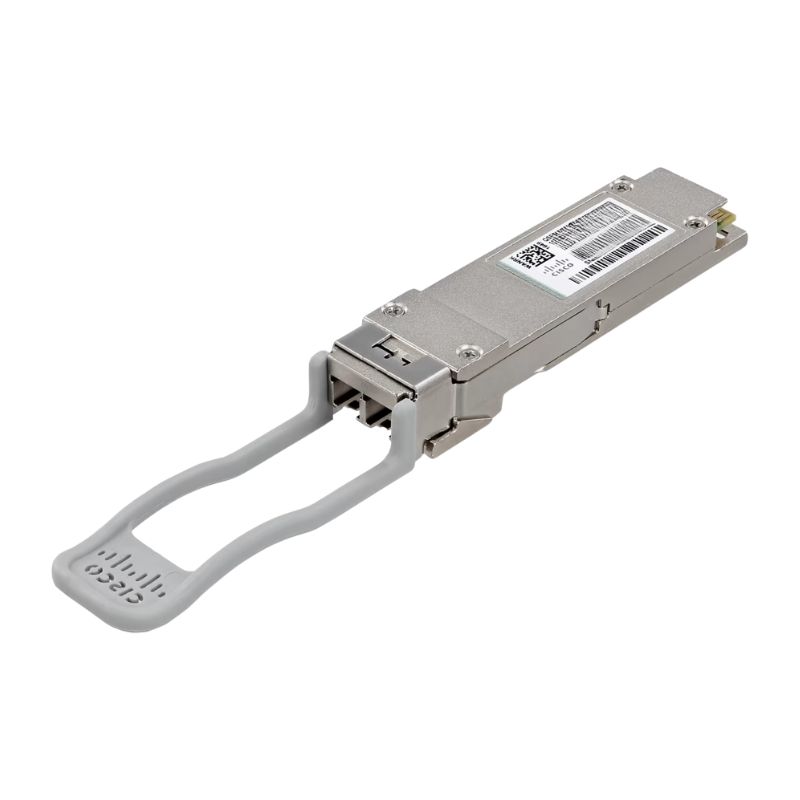


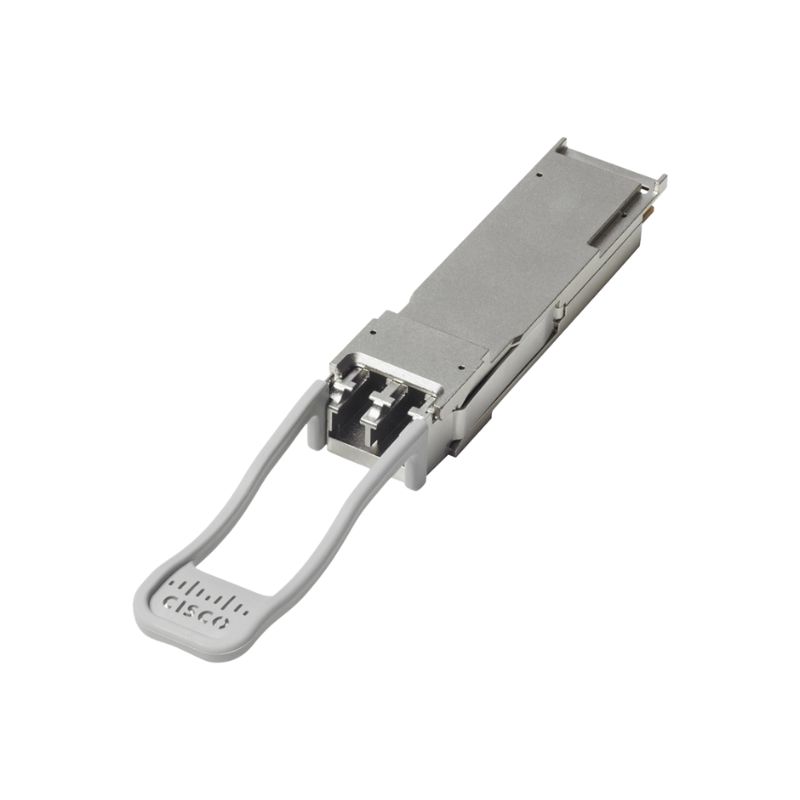
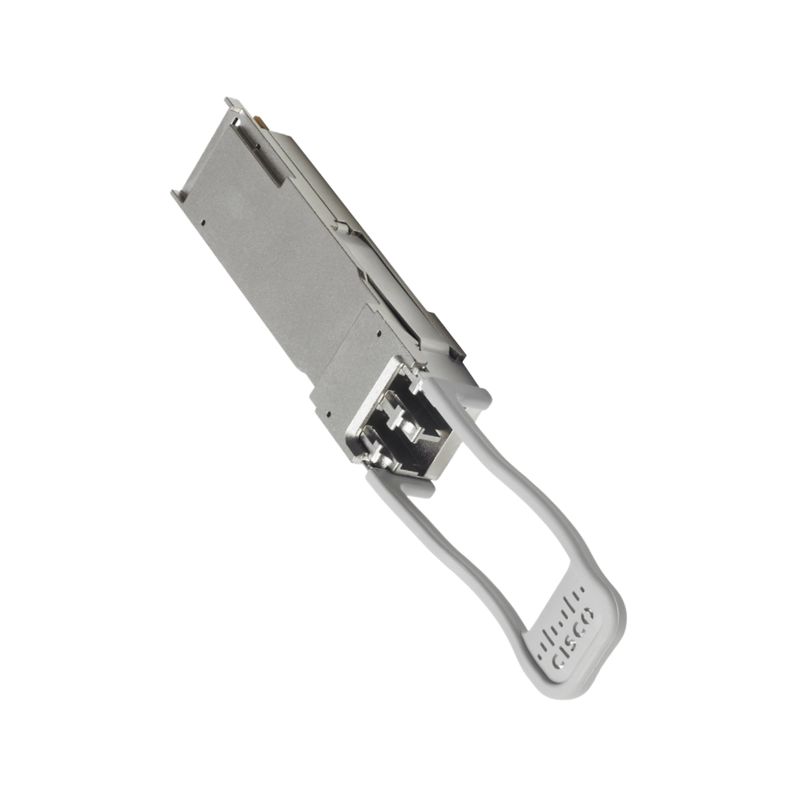
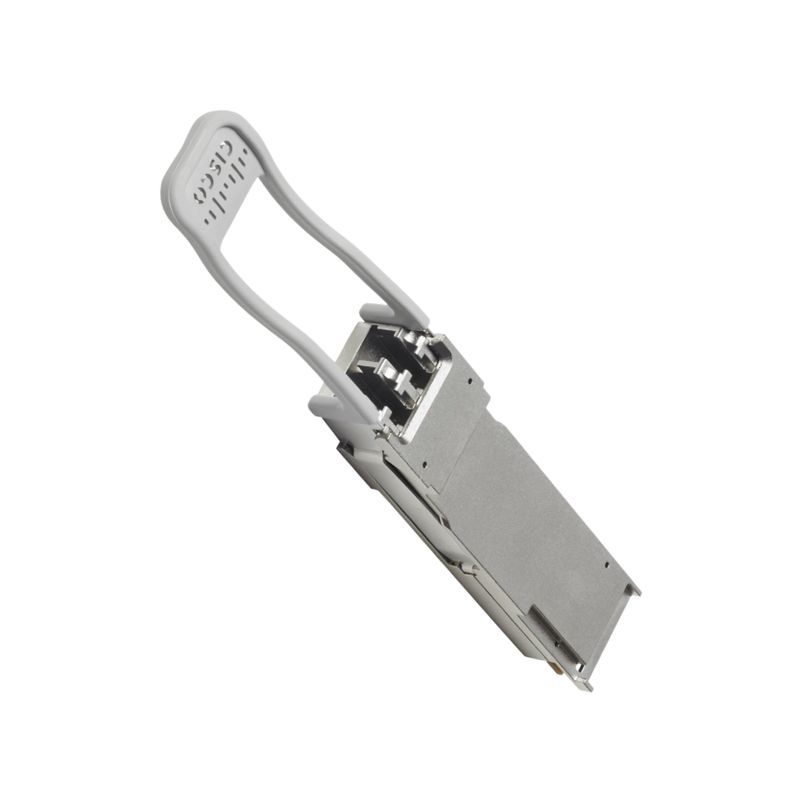
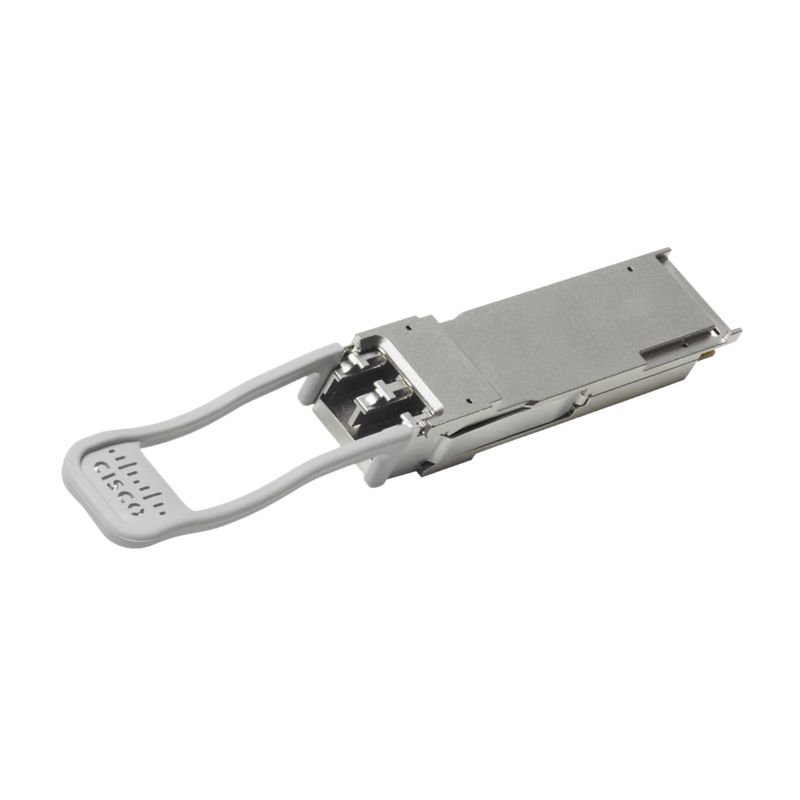
Cisco QSFP-40G-SRBD Compatible 40GBASE-SR Bi-directional Duplex Lc Mmf Optical Transceiver Module. Excellent Refurbished with 1-Year Replacement Warranty
| SKU/MPN | Warranty | Price | Condition | You save |
|---|---|---|---|---|
| QSFP-40G-SRBD | 1 Year Warranty | $114.00 | Factory-Sealed New in Original Box (FSB) | You save: $39.90 (26%) |
| QSFP-40G-SRBD | 1 Year Warranty | $49.00 | Excellent Refurbished | You save: $17.15 (26%) |
The Cisco QSFP-40G-SRBD compatible 40GBASE-SR Bi-Directional duplex LC multimode fiber transceiver module is engineered to deliver high-capacity data transmission, dependable optical connectivity, and optimized network throughput for modern enterprise and data center infrastructures. This module is designed to reduce cabling complexity while ensuring stable 40-gigabit performance over short-range links.
The Cisco QSFP-40G-SRBD compatible 40GBASE-SR bi-directional duplex LC multimode fiber optical transceiver module represents a specialized class of high-speed networking technology purposely engineered for short-range links within data centers, campus environments, and enterprise switching architectures. This module delivers impressive 40-gigabit throughput by leveraging advanced bi-directional optical signaling that transmits and receives over a single strand pair of multimode fiber, allowing operators to modernize infrastructures without redesigning existing cable systems. Its architecture is optimized to promote network scalability, maintain optical stability, and enable seamless migration scenarios. The compact QSFP form factor further ensures that high-density switching platforms can operate efficiently while reducing power draw and maintaining appropriate thermal conditions.
This transceiver is developed on a compact quad small form-factor pluggable design that makes it suitable for switches, routers, and aggregation devices deployed in midrange to enterprise-grade infrastructures. The module allows for simplified installation using the duplex LC interface that aligns with existing multimode fiber patch panels, cable trunks, and structured cabling channels. Because the SRBD specification transmits in two distinct wavelengths operating bidirectionally over one fiber pair, organizations gain the advantage of improved link efficiency and extended use of previously installed cabling investments. Such a design enables long-term reliability, consistent optical modulation, and stable link integrity even in environments with frequent traffic surges or rapid scaling requirements.
Utilizing bi-directional laser technology, the QSFP-40G-SRBD compatible module supports effective data rates across distances commonly found in top-of-rack to aggregation connectivity zones as well as access-to-core distribution layouts in structured data centers. Its optical performance ensures dependable transmission within the typical 100-meter MMF link ranges depending on fiber type. By integrating tightly controlled wavelength precision, the module reduces potential signal drift and ensures minimal power loss even when deployed within congested cable trays or environments where fiber bends are unavoidable. The module’s ability to maintain optical clarity over multimode fiber infrastructure reinforces its critical role in modern high-bandwidth networks that require predictable and consistent throughput.
Power efficiency plays a central role in the long-term stability of high-density switching equipment. The Cisco QSFP-40G-SRBD compatible transceiver is built to minimize power consumption per port, resulting in improved overall device thermal performance. Reduced energy consumption lowers heat generation within crowded switch enclosures, thereby helping maintain consistent system performance while reducing cooling load. This capability contributes significantly to operational efficiency for organizations that require continuous uptime in environments hosting virtualized workloads, high-performance compute clusters, or unified communication services. The module’s power characteristics are managed through advanced integrated circuits designed to maintain stable functionality even when link utilization is near peak levels.
Integrating this bi-directional transceiver into enterprise architectures enables smoother transitions between 10G and 40G optical topologies without requiring massive recabling projects. The module helps organizations reduce operational disruption, upgrade cycles, and capital expenses due to its duplex LC connector compatibility. Consistent optical performance is further reinforced by sophisticated internal calibration components that continuously manage wavelength accuracy. These features ensure that large-scale switching fabrics can meet today’s demanding application requirements involving real-time analytics, distributed cloud services, software-defined access infrastructures, and dynamic multitenant environments.
Many data centers still operate extensive multimode fiber backbones installed during earlier 10G deployments. The QSFP-40G-SRBD module is engineered to extend the life of those cable systems by offering 40-gigabit performance without requiring MPO connectors. Operators in spaces with complex fiber pathways or densely populated fiber trays benefit greatly from this capability, as re-pulling or replacing thousands of cables introduces unnecessary cost and operational challenges. Instead, switches and aggregation systems can leverage the existing LC duplex channels and immediately transition to higher-speed architectures. This design approach maximizes return on prior infrastructure investments while enabling incrementally scalable upgrades.
The compatible module integrates easily with numerous network devices supporting the QSFP standard. This includes modular chassis switches, fixed-configuration data center switches, and aggregation-layer controllers. Its hot-swappable profile allows technicians to replace or upgrade modules without interrupting running services, resulting in minimal downtime and simplified maintenance procedures. The module supports auto-detection techniques that ensure it works seamlessly with various vendor platforms, delivering reliable functionality for hybrid infrastructures combining on-premises systems with cloud-connected workloads.
Virtualization, cloud hyperscaling, and bandwidth-demanding workloads require transceivers that consistently perform under variable and unpredictable traffic conditions. The QSFP-40G-SRBD compatible unit meets these requirements by ensuring signal integrity through adaptive error correction and precision components that mitigate environmental interference. When applications such as real-time processing, database clustering, storage replication, and compute-intensive analytics generate constant packet flow, the module maintains throughput without introducing unnecessary latency. This stability is crucial for organizations that rely on high availability or operate centralized storage systems with synchronous replication between data center nodes.
The transceiver adheres to international optical networking standards, ensuring interoperability across vendor ecosystems and compliance with recognized performance guidelines. These characteristics enable the module to integrate seamlessly with evolving technologies such as automation-driven network orchestration, virtual network functions, and 40G backbone infrastructures supporting next-generation application delivery. Its multimode fiber compatibility ensures balanced performance when paired with OM3 and OM4 cabling, allowing organizations to optimize link distances according to their existing cabling categories. Standard-compliant performance helps ensure smooth adoption of software-defined networking transitions and hardware refresh cycles.
A refined optical modulation process helps maintain consistent data exchange rates that support the 40-gigabit Ethernet standard. By utilizing multiple wavelengths over a duplex LC interface, the module enhances link efficiency without requiring traditionally complex ribbon fiber assemblies. This makes it ideal for facilities that prefer simplified cable management methods but still demand robust fiber performance. The optical modulation techniques are supported by digital diagnostic monitoring features that allow system administrators to review performance metrics including temperature, laser power, and voltage conditions. Such monitoring helps ensure long-term reliability and early detection of abnormal optical patterns.
To ensure dependable operation in mission-critical networks, the compatible transceiver undergoes extensive testing that simulates real-world environmental and operational scenarios. These evaluations help validate optical performance under thermal extremes, heavy vibration conditions, and extended operational cycles. Each module is examined for precision wavelength alignment, connector integrity, and stability under both low-load and high-load network utilization. This rigorous testing environment ensures the final product performs consistently within high-density networks, high-performance computing environments, cloud aggregation systems, and edge computing deployments where link quality cannot be compromised.
Data centers and enterprise networks require transceivers that sustain long operational lifespans while maintaining optical precision. The QSFP-40G-SRBD compatible module is crafted using durable materials, robust soldering techniques, and finely calibrated optical components that minimize degradation. By combining structural durability with internal circuitry that prevents overheating and electrical imbalance, the module maintains high uptime standards. This supports complex transport architectures, including collapsed-core designs and leaf-spine networks intended to support application mobility, large-scale virtualization, and distributed data processing.
Migration strategies often depend on leveraging existing structured cabling assets to reduce cost and operational strain. Because this module uses standard LC connectors and multimode fiber, enterprises gain a simple path to 40-gigabit upgrade cycles. Such adaptability is especially valuable in colocation facilities, legacy-designed data centers, or campus networks where re-cabling would require extensive labor or downtime. The bi-directional optical signaling enables higher throughput on existing fiber pairs, ensuring networks can scale incrementally without replacing entire optical backbones.
As cloud-native workloads and real-time processing frameworks continue to grow, traffic intensity within data centers increases dramatically. Applications such as AI model training, HD video distribution, massive-scale virtualization, and container orchestration depend on low-latency optical communication. The transceiver meets these demands by offering a stable optical solution that handles heavy throughput without compromising signal fidelity. Its architecture is well-suited for systems that depend on consistent performance such as disaster recovery clusters, server-to-switch links, and high-speed storage interconnects.
The module supports organizations as they adopt next-generation network enhancements, making it an ideal component in long-term technological transformation strategies. By providing reliable 40-gigabit performance on duplex LC multimode fiber, enterprises gain a high-speed backbone capable of supporting near-future transitions to faster optical standards. This approach minimizes disruptive upgrade cycles and ensures that network deployments remain operational, predictable, and capable of handling continuous application growth.
Administrators benefit from the module’s built-in diagnostic monitoring features that gather real-time performance analytics. These metrics help identify developing issues early, reducing the likelihood of service interruption. The module performs consistently across various environmental conditions, allowing organizations to maintain dense switching fabrics where steady airflow and thermal management are essential. Its hot-swappable profile supports ongoing maintenance without requiring system downtime, reinforcing the operational efficiency required for complex enterprise networks.


 Contact Us
 Information
 Catalog
 Solid State Drives (SSD)
 Network Switches
 Hard Disk Drives
 HBA & Controllers
 PC & Servers
 PC & Server Memory
 CPU & Processors
 Network Routers
 Power Supplies
 Tape Drives & Libraries
 Network Devices
 Computer & Network Cables