(7% discount is applied at checkout)
Cart is empty
Your go-to destination for cutting-edge server products
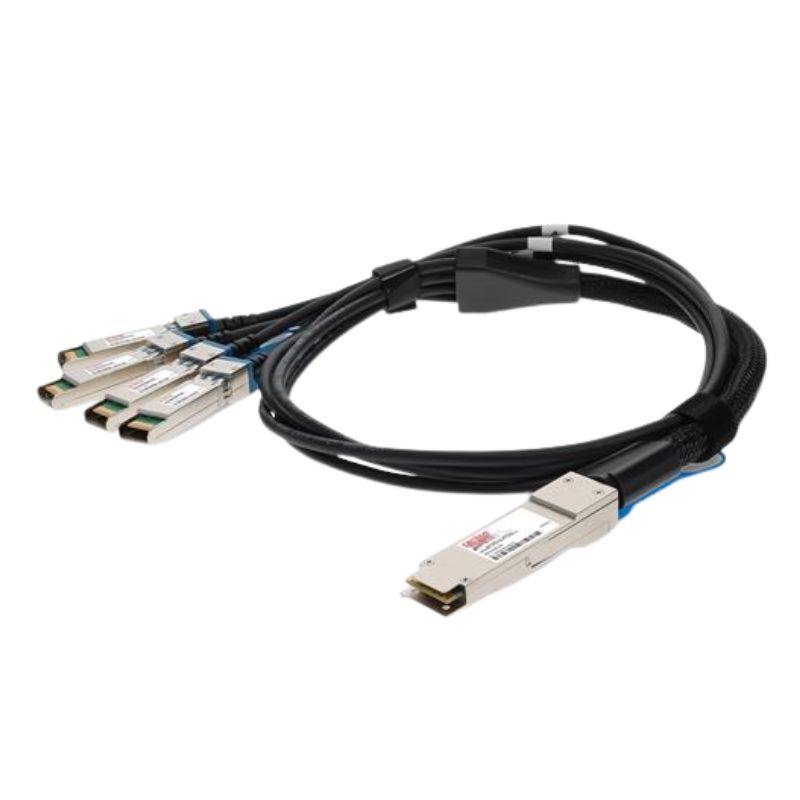


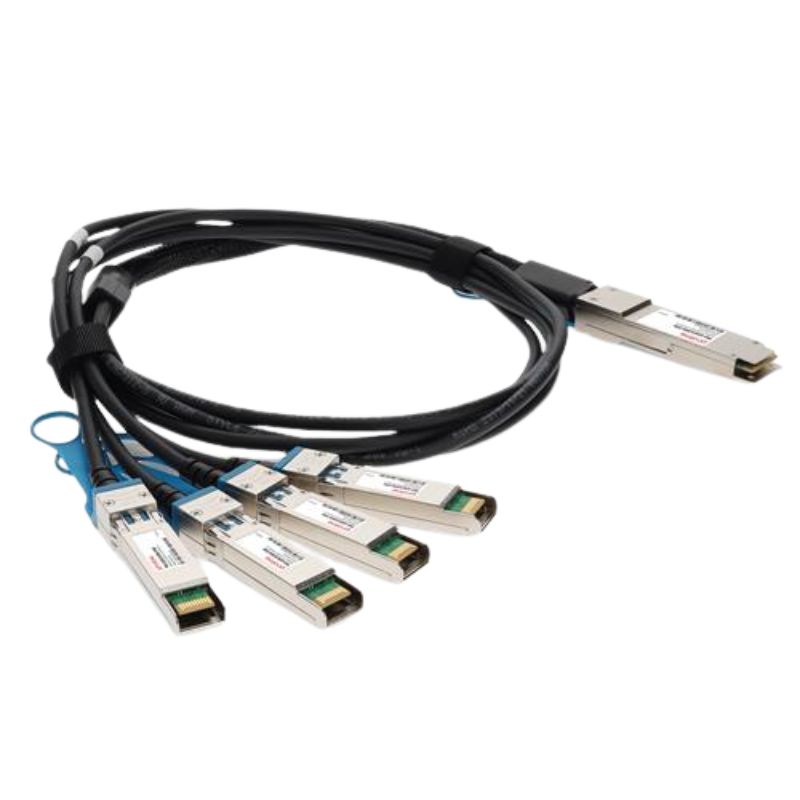
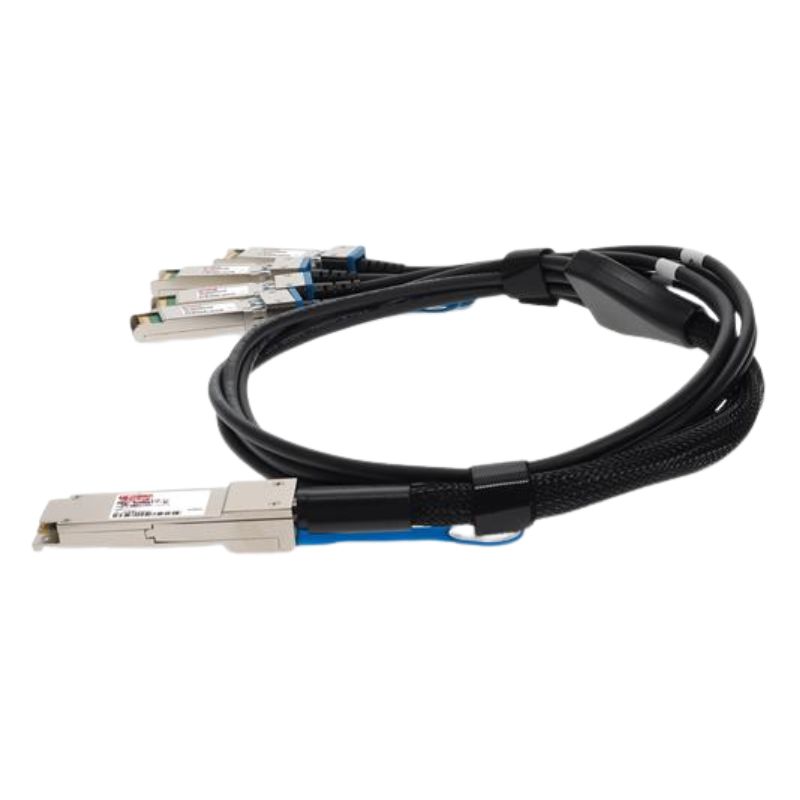
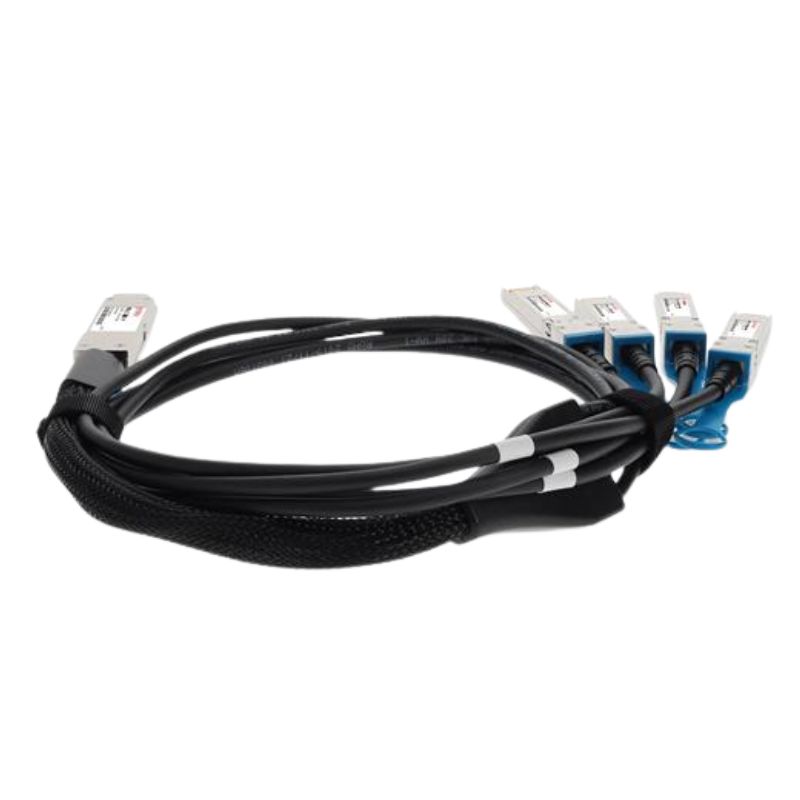
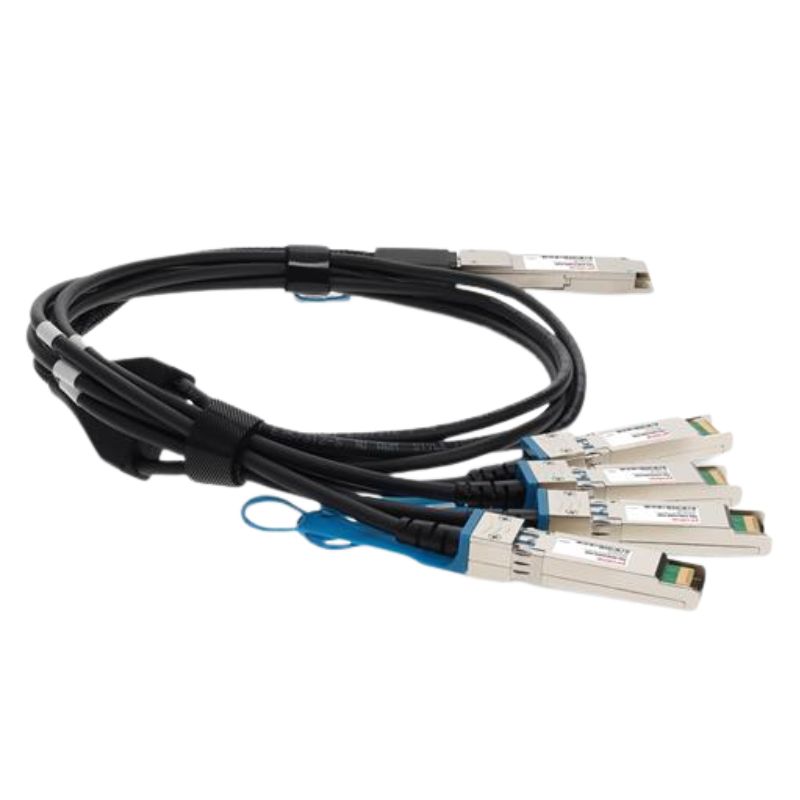
Cisco QSFP-4SFP25G-CU5M= 100GB QSFP28 to 4 x 25GB SFP28 Passive Direct Attach Copper Twinax Cable 5M (16 feet). New Sealed with 1-Year Replacement Warranty
Cisco QSFP-4SFP25G-CU5M= — High-Performance 100Gbps to 4×25Gbps Twinax Cable (5m)
Deliver reliable, low-latency connectivity with the Cisco QSFP-4SFP25G-CU5M=, a 5-meter passive direct attach copper (DAC) twinax cable engineered for high-density data centers, enterprise networks, and hyperscale deployments. This 100GB QSFP28 to 4 × 25GB SFP28 copper assembly provides cost-effective, power-efficient short-reach interconnects between QSFP28 and SFP28 ports.
This passive twinax solution is optimized for short-reach links inside racks and across adjacent racks. It delivers the following technical strengths:
The QSFP-4SFP25G-CU5M= is designed primarily for Cisco QSFP28 and SFP28 ports. It is recommended for Cisco switching and routing platforms that explicitly list support for this DAC SKU. While many vendors accept standard DAC wiring, always consult your switch or server compatibility matrix before purchase to ensure seamless interoperability and warranty compliance.
The Cisco QSFP-4SFP25G-CU5M= 100GB QSFP28 to 4 x 25GB SFP28 Passive Direct Attach Copper Twinax Cable 5M (16 feet) sits at the intersection of high-density data center cabling and cost-efficient short-reach connectivity. This category covers passive direct attach copper (DAC) breakout cables designed to convert a single QSFP28 100G port into four independent 25G SFP28 ports. These cables enable architects and operators to deploy scalable 25 Gigabit Ethernet connectivity where aggregation or chassis expansion is needed without the additional cost and power of active optical transceivers. When browsing this category you will encounter products that focus on mechanical compatibility, signal integrity across 5 meters, Cisco-qualified part numbers, and the practical realities of deploying twinsax passive DAC in modern top-of-rack and leaf-spine topologies.
Physically, these cables have a QSFP28 plug on one end and four SFP28 plugs on the other, with the cable jacket and connectors designed to meet Cisco form-factor specifications. Electrically, the twinax copper conductors maintain controlled impedance to support 25 Gbps per lane data rates with minimal crosstalk. The passive nature means the cable transmits analog signals without onboard electronics, making the assembly simple, reliable, and inexpensive compared with active optics. Thermal behavior is predictable and well-suited for dense environments where keeping power draw low is critical. The 5M length is chosen to balance reach and signal quality; it's a common standard for direct-attach twinax deployments and is widely supported by Cisco switches and routers that accept the QSFP-4SFP25G form factor.
Within the category, compatibility is paramount. Customers should confirm that their Cisco equipment supports QSFP-4SFP25G breakout mode and that firmware on the switch or router is up to date for interoperability. Cisco-branded part numbers such as QSFP-4SFP25G-CU5M= are qualified on specific Cisco platforms, and many third-party OEMs produce compatible cables that mirror mechanical and electrical specifications. When purchasing, pay attention to supplier descriptions that indicate "Cisco compatible" or "Cisco-qualified" along with explicit mention of supported platforms and firmware versions. The cable’s SFP28 ends must mate securely with SFP28 cages, and the QSFP28 plug must seat properly in QSFP28 ports; mechanical tolerance and latch design are therefore critical to ensure zero issues during hot-plug operations in live environments.
The performance of QSFP28-to-SFP28 passive twinax depends heavily on proper cable selection relative to deployment distance and environmental conditions. At 5 meters, the passive twinax design comfortably supports 25 Gbps per lane with excellent signal-to-noise ratio and low bit error rate (BER). The low-latency advantage is especially important for latency-sensitive applications such as high frequency trading, real-time analytics, and distributed storage clusters. In leaf-spine designs that aggregate many 25G servers into 100G uplinks, these breakout cables simplify port mapping and reduce the number of transceivers required, which in turn reduces both initial capital expenditures and recurring power costs.
Using a breakout cable effectively transforms a single 100G QSFP28 port into four 25G SFP28 ports, which can influence port utilization strategies and capacity planning. Network architects can increase the number of available 25G server-facing ports without adding more line cards or front-panel density. This capability is especially useful during phased upgrades from 10G to 25G where existing 100G uplinks can be repartitioned to serve more endpoints at the intermediate rate. However, planners must carefully map server uplinks, monitor oversubscription, and consider switch ASIC port grouping limitations, because not all QSFP28 ports can always be split simultaneously depending on hardware and firmware constraints.
Signal integrity in twinax cables is managed through precise impedance control and shielding. High-quality twinax cable assemblies include braided shields and foil layers to reduce electromagnetic interference and maintain consistent differential impedance across the entire length. This is crucial in high-density racks where multiple high-speed cables run in close proximity. The passive nature of the cable minimizes heat-generating components, but it also means that the cable’s design must inherently control losses and reflections to preserve high-speed signal fidelity over the 5-meter run. Quality assurance in manufacturing and strict adherence to the industry’s electrical specifications are what separate reliable breakout assemblies from cheaper, less dependable alternatives.
Because passive DACs contain no active electronics, they do not consume electrical power for signal conditioning, which lowers overall rack power density. This benefit becomes notable at scale; thousands of passive cables translate into meaningful reductions in total data center power consumption and cooling requirements. Lower power also reduces thermal stress on switches, which is beneficial for reliability. Organizations looking to optimize energy use and reduce total cost of ownership will often prefer passive twinax for short links over active optical transceivers that require additional wattage and generate heat.
This category is commonly used in several repeatable deployment patterns. The most obvious is top-of-rack aggregation where servers with SFP28 NICs connect to an upstream QSFP28 port using the breakout cable. Another frequent pattern is connecting line cards within modular switches or routers that expose QSFP28 front ports intended to be subdivided into multiple SFP28 links. Cloud and hyperscale data centers often use these cables during stages of incremental upgrades, where a mix of 10G, 25G, 40G, and 100G devices coexists and operators need a flexible, low-cost solution to reach 25G density quickly. Telecom central offices and enterprise wiring closets also deploy these cables for short interconnects and cross-connects where fiber may not be necessary or cost-effective.
Servers equipped with SFP28 Network Interface Cards (NICs) connect cleanly into the four SFP28 ends of the breakout cable. It is important to ensure that the server’s operating system and NIC drivers support the SFP28 module and the intended speed. Many modern NICs support auto-negotiation and will work seamlessly, but verifying driver versions and firmware is a best practice to avoid link flapping or speed mismatches. Because the breakout cable is static and integrated, it reduces the number of discrete termination points and can simplify cable management inside the rack, making serviceability and replacement more predictable.
High-performance storage clusters and fabrics that use RDMA over Converged Ethernet (RoCE) or iWARP can benefit from the low latency and predictable performance of passive twinax breakout cables. For latency-sensitive storage traffic and clustered file systems, the short electrical path reduces serialization and conversion overhead. This category is therefore a solid choice for storage interconnects inside racks where 25G connectivity offers an excellent balance between cost and throughput for NVMe-oF and other high-performance storage protocols.
When evaluating purchase options in this category, buyers should consider initial cost, compatibility guarantees, warranty terms, and the supplier’s reputation for quality. Although non-branded or third-party cables may offer lower upfront cost, verified compatibility, return policies, and warranty service are important factors, especially when deploying at scale. Total cost of ownership should account for the power you will save with passive cables, the reduced need for spare transceivers, and potential operational simplicity from having integrated breakout assemblies. In many networks the combination of lower acquisition cost and ongoing savings in power and cooling make passive twinax a compelling economic choice.
Network teams often keep a small inventory of spare breakout cables to speed replacement during failures and to facilitate rapid reconfiguration during upgrades. Because these cables are passive and generally reliable, spoilage rates are low, but stocking spares sized to typical failure rates and deployment scale reduces mean time to repair. When ordering, match part numbers exactly, and confirm that the supplier’s shipping and lead times align with maintenance window schedules to avoid deployment delays.
Select cables that comply with environmental safety standards for flame retardancy and materials. Data center operators should prefer products that meet common regulatory standards for the region of deployment. Also consider recyclability and end-of-life disposal practices for copper cabling to align with organizational sustainability goals. Since twinax cables are electrical conductors, they are subject to different handling and installation best practices than optical fiber, and installers should follow safety and grounding guidelines when routing cables near power infrastructure.


 Contact Us
 Information
 Catalog
 Solid State Drives (SSD)
 Network Switches
 Hard Disk Drives
 HBA & Controllers
 PC & Servers
 PC & Server Memory
 CPU & Processors
 Network Routers
 Power Supplies
 Tape Drives & Libraries
 Network Devices
 Computer & Network Cables