(7% discount is applied at checkout)
Cart is empty
Your go-to destination for cutting-edge server products
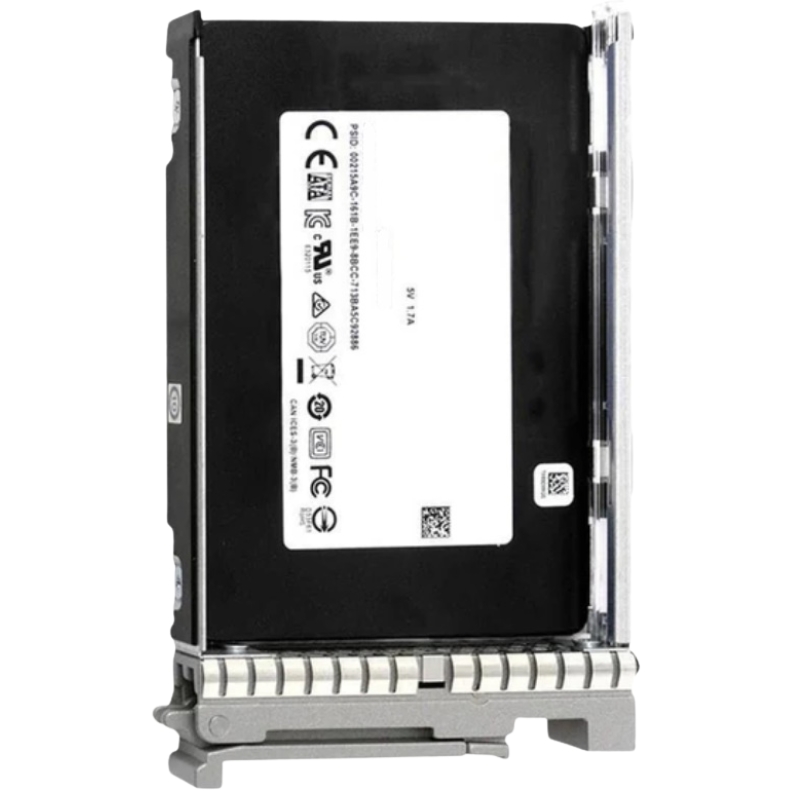


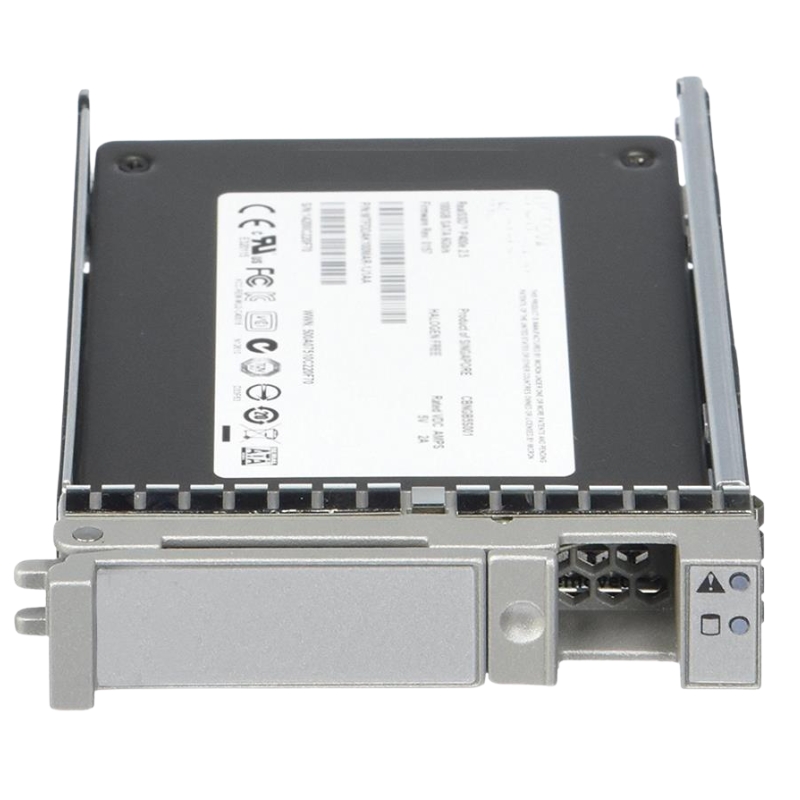
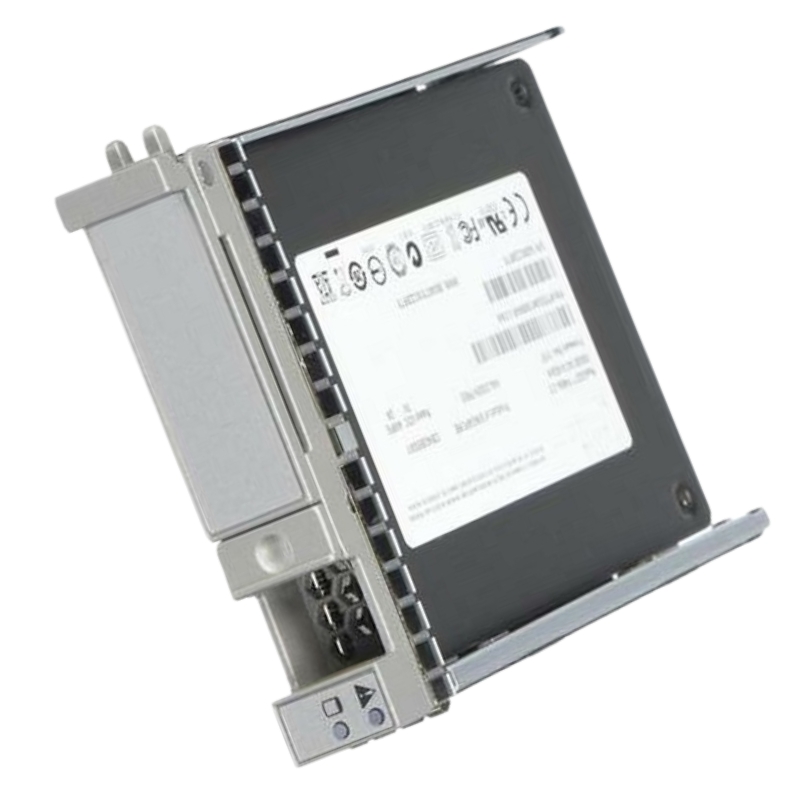
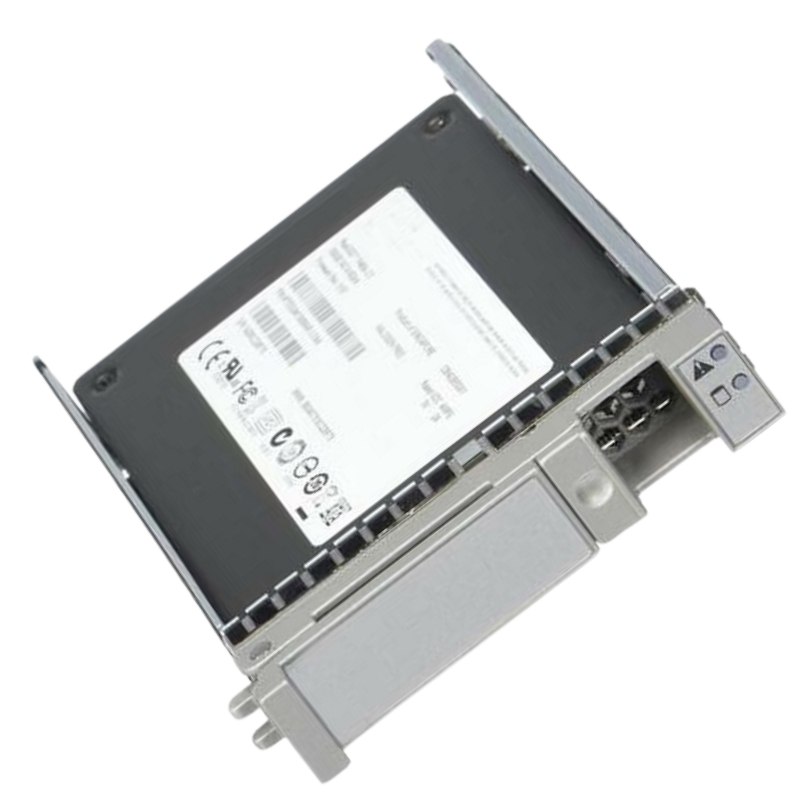
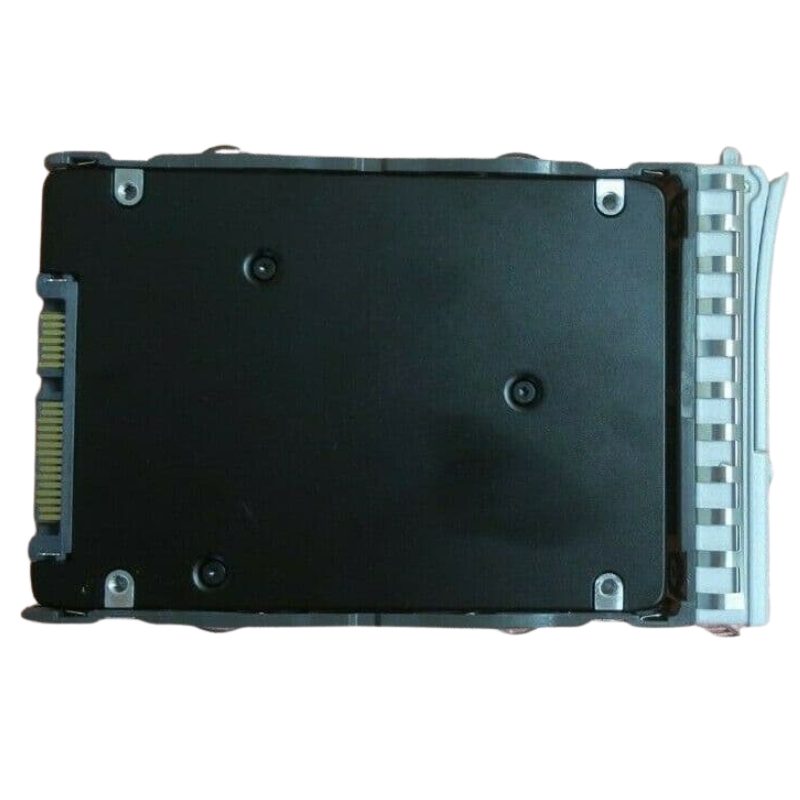
Cisco UCS-SD19TM1X-EV 1.9TB SATA 6GBPS SSD SFF Hot Swap With Tray. Excellent Refurbished with 1 year replacement warranty
Enhance your enterprise storage with the Cisco UCS-SD19TM1X-EV, a high-performance 1.9TB solid-state drive (SSD) designed for seamless hot-swap deployment. Perfect for data-intensive environments, this 2.5" SFF SATA SSD delivers reliable and efficient storage performance for Cisco servers.
This Cisco SSD provides high reliability and hot-swap convenience, making it ideal for enterprise applications, virtualization, and cloud storage setups.
The Cisco UCS-SD19TM1X-EV is compatible with a wide range of Cisco UCS servers. Key compatible models include:
The Cisco UCS-SD19TM1X-EV represents a pinnacle of enterprise-grade solid-state storage technology, specifically engineered for deployment within Cisco Unified Computing System (UCS) environments. This 1.9TB SATA 6Gbps SSD combines high-capacity storage with the reliability and performance characteristics demanded by modern data centers, cloud infrastructure, and enterprise applications. As organizations continue to transition from traditional hard disk drives (HDDs) to solid-state technology, understanding the specific advantages and implementation scenarios for drives like the UCS-SD19TM1X-EV becomes critical for IT infrastructure planning and optimization.
The UCS-SD19TM1X-EV features a 1.9TB storage capacity presented in a 2.5-inch Small Form Factor (SFF) design. This specific capacity point represents an optimal balance between storage density and performance characteristics, making it suitable for a wide range of enterprise workloads. The SFF design allows for high-density configurations within Cisco UCS server chassis, maximizing storage per rack unit while maintaining efficient thermal characteristics and power consumption profiles.
Utilizing the SATA 6Gbps interface, this drive delivers sequential read speeds typically exceeding 500MB/s and sequential write speeds up to 450MB/s, with random read/write performance measured in tens of thousands of IOPS (Input/Output Operations Per Second). While not matching the theoretical maximum speeds of SAS or NVMe interfaces, the SATA interface provides an excellent price-to-performance ratio for many enterprise applications, particularly those involving sequential data access patterns or where cost-efficiency is a primary consideration.
Enterprise SATA SSDs like the UCS-SD19TM1X-EV are engineered with enhanced endurance characteristics compared to consumer-grade SSDs. With advanced wear-leveling algorithms, over-provisioning, and high-quality NAND flash components, these drives can withstand the rigorous write-intensive workloads common in server environments. The specific endurance rating, typically measured in Drive Writes Per Day (DWPD) or Total Bytes Written (TBW), ensures reliable performance throughout the drive's operational lifespan in enterprise scenarios.
In virtualized environments powered by VMware vSphere, Microsoft Hyper-V, or other hypervisors, the UCS-SD19TM1X-EV serves as excellent storage for host operating systems, virtualization management components, and virtual machine swap files. The consistent low-latency performance of SSDs significantly improves virtual machine density per host and enhances overall responsiveness during periods of high contention. For organizations running virtual desktop infrastructure (VDI), these drives provide the necessary IOPS to support boot storms and user login events that characterize VDI environments.
While high-performance database applications often utilize faster NVMe or SAS SSDs for transaction logs and hot data, the UCS-SD19TM1X-EV finds ideal application as a capacity-optimized tier for warmer data, historical records, or less frequently accessed database segments. In SQL Server, Oracle Database, and other RDBMS environments, strategic tiering between performance-optimized and capacity-optimized storage can deliver significant cost savings while maintaining acceptable performance characteristics for the majority of workloads.
The sequential read performance characteristics of the UCS-SD19TM1X-EV make it well-suited for content delivery networks, media streaming platforms, and digital asset management systems. These applications typically involve large file transfers where consistent sequential throughput is more critical than random IOPS. The 1.9TB capacity provides ample storage for substantial media libraries while delivering the performance necessary to serve multiple concurrent streams or downloads.
For big data platforms like Hadoop, Spark, and other distributed computing frameworks, the UCS-SD19TM1X-EV offers a balanced storage solution that can handle both the sequential I/O patterns of large dataset processing and the random access requirements of metadata operations. In analytics environments where cost-per-terabyte is a significant consideration, SATA SSDs provide a middle ground between performance HDDs and premium SAS/NVMe storage, enabling faster processing times than HDDs without the cost premium of higher-performance SSDs.
The UCS-SD19TM1X-EV is specifically validated for use across the Cisco UCS portfolio, including UCS B-Series Blade Servers and UCS C-Series Rack Servers. This validation ensures full compatibility with UCS Manager, the centralized management interface for Cisco UCS environments. The drive's firmware has been tested and optimized to work seamlessly with UCS infrastructure components, including fabric interconnects, I/O modules, and server controllers, providing a unified management experience across compute and storage resources.
When deployed in UCS B-Series blade servers, the UCS-SD19TM1X-EV takes advantage of the UCS fabric architecture to provide consistent storage performance and simplified management. The hot-swap capability allows for drive replacement without service interruption, while the integrated management through UCS Manager provides comprehensive monitoring of drive health, performance metrics, and predictive failure analysis. The 2.5-inch form factor aligns with the storage bay configurations available in B-Series chassis, enabling flexible storage capacity planning.
In UCS C-Series rack servers, the UCS-SD19TM1X-EV delivers the same enterprise-grade storage characteristics with the deployment flexibility of rack-mounted infrastructure. The drive can be configured in various RAID configurations using Cisco UCS RAID controllers, with support for RAID 0, 1, 5, 6, 10, 50, and 60 depending on the specific controller and application requirements. This flexibility enables organizations to tailor the storage configuration to their specific performance, capacity, and redundancy needs.
As part of the Cisco UCS portfolio, the UCS-SD19TM1X-EV is compatible with Cisco Intersight, the cloud-based management platform that extends UCS management capabilities beyond the data center. Through Intersight, organizations can monitor drive health, performance trends, and capacity utilization across distributed UCS deployments from a single interface. This cloud-operating model simplifies lifecycle management, enhances operational efficiency, and provides actionable insights for storage optimization and capacity planning.
The SATA 6Gbps interface of the UCS-SD19TM1X-EV delivers robust sequential read and write performance that significantly outperforms traditional hard disk drives. In typical enterprise workloads, sequential read speeds can reach up to 560MB/s, while sequential write performance achieves approximately 520MB/s. This performance level makes the drive particularly well-suited for applications involving large file transfers, streaming media, backup and recovery operations, and data migration tasks where sustained throughput is the primary performance consideration.
While SATA SSDs traditionally exhibit lower random I/O performance compared to their SAS and NVMe counterparts, the UCS-SD19TM1X-EV delivers substantial improvements over mechanical hard drives. With random read performance typically in the range of 75,000-95,000 IOPS and random write performance of 15,000-25,000 IOPS (depending on queue depth and block size), these drives can comfortably handle mixed-workload environments where both sequential and random access patterns are present. The consistent low latency, typically under 100 microseconds for reads, ensures responsive performance even under moderate random I/O loads.
Enterprise SSDs like the UCS-SD19TM1X-EV are engineered to deliver consistent performance under varying workload conditions, with advanced QoS features that prevent performance degradation during sustained write operations. Technologies such as static and dynamic wear-leveling, garbage collection, and TRIM support (when used with supported operating systems and configurations) maintain performance consistency over the drive's lifespan. This predictable performance is essential for enterprise applications where service level agreements (SLAs) depend on consistent storage response times.
The UCS-SD19TM1X-EV is designed with enterprise-grade components and undergoes rigorous testing to ensure high reliability in data center environments. With a typical MTBF rating of 2 million hours or more, these drives significantly exceed the reliability characteristics of consumer-grade SSDs or traditional hard disk drives. This enhanced reliability translates to reduced replacement frequency, lower total cost of ownership, and improved application availability for business-critical systems.
The hot-swap design of the UCS-SD19TM1X-EV, complete with tray, enables drive replacement without system downtime—a critical feature for maintaining service availability in 24/7 operational environments. When configured in redundant RAID arrays, the hot-swap capability allows for seamless drive replacement and subsequent rebuild operations while the system remains fully operational. This feature is particularly valuable in high-availability configurations where scheduled maintenance windows are limited or non-existent.
Enterprise SATA SSDs incorporate sophisticated error correction mechanisms that extend beyond the capabilities of consumer storage devices. The UCS-SD19TM1X-EV features end-to-end data path protection, power-loss protection circuits that prevent data corruption during unexpected power events, and advanced ECC algorithms that correct multi-bit errors. These protection mechanisms ensure data integrity throughout the drive's operation, making them suitable for applications where data accuracy is paramount.
When deploying UCS-SD19TM1X-EV drives in enterprise environments, appropriate RAID configuration is essential for balancing performance, capacity, and data protection requirements. For performance-oriented applications, RAID 10 provides excellent read and write performance with mirroring protection, though at a 50% capacity overhead. For capacity-optimized configurations with redundancy, RAID 5 or RAID 6 offer better storage efficiency while maintaining protection against single or dual drive failures, respectively. The specific RAID level should be selected based on workload characteristics, performance requirements, and availability targets.
When configuring multiple UCS-SD19TM1X-EV drives in RAID arrays, understanding the write penalty associated with different RAID levels is important for performance planning. RAID 1 and RAID 10 have minimal write penalties, making them suitable for write-intensive workloads. RAID 5 incurs a higher write penalty due to parity calculation, which can impact performance in heavily write-biased applications. RAID 6 introduces additional write overhead for dual parity protection but provides enhanced fault tolerance. These characteristics should inform RAID selection based on anticipated workload patterns.
In heterogeneous storage environments, the UCS-SD19TM1X-EV can be effectively deployed as part of a comprehensive storage tiering strategy. By positioning these drives as a capacity-optimized SSD tier between performance-optimized NVMe/SAS SSDs and high-capacity HDDs, organizations can achieve an optimal balance of performance and cost-efficiency. Automated tiering solutions, available in various storage arrays and through software-defined storage platforms, can dynamically migrate data between tiers based on access patterns, ensuring frequently accessed data resides on the most appropriate storage medium.
When compared to SAS SSDs, the UCS-SD19TM1X-EV offers a different balance of performance and cost. SAS interfaces provide full-duplex operation, dual-port capability for enhanced availability, and typically higher queue depths, resulting in superior random I/O performance, especially in heavily concurrent access scenarios. However, SATA SSDs deliver comparable sequential performance at a lower cost point, making them economically attractive for workloads where sequential throughput is the primary requirement or where budget constraints are a significant consideration.
NVMe technology represents the current performance pinnacle for solid-state storage, with significantly higher bandwidth and lower latency compared to SATA interfaces. NVMe drives excel in I/O-intensive applications, virtualized environments with high VM density, and real-time analytics workloads. However, the UCS-SD19TM1X-EV remains relevant for capacity-oriented applications, archival storage, and environments where the existing infrastructure is optimized for SATA connectivity. The decision between SATA and NVMe should consider both performance requirements and infrastructure compatibility.
Compared to high-performance hard disk drives, such as 10,000 or 15,000 RPM SAS drives, the UCS-SD19TM1X-EV delivers order-of-magnitude improvements in random I/O performance, significantly lower latency, reduced power consumption, and enhanced reliability due to the absence of mechanical components. While HDDs may still offer advantages in pure capacity-per-dollar for archival storage, the performance and operational benefits of SSDs have made them the preferred choice for primary storage in most enterprise scenarios.


 Contact Us
 Information
 Catalog
 Solid State Drives (SSD)
 Network Switches
 Hard Disk Drives
 HBA & Controllers
 PC & Servers
 PC & Server Memory
 CPU & Processors
 Network Routers
 Power Supplies
 Tape Drives & Libraries
 Network Devices
 Computer & Network Cables