(7% discount is applied at checkout)
Cart is empty
Your go-to destination for cutting-edge server products
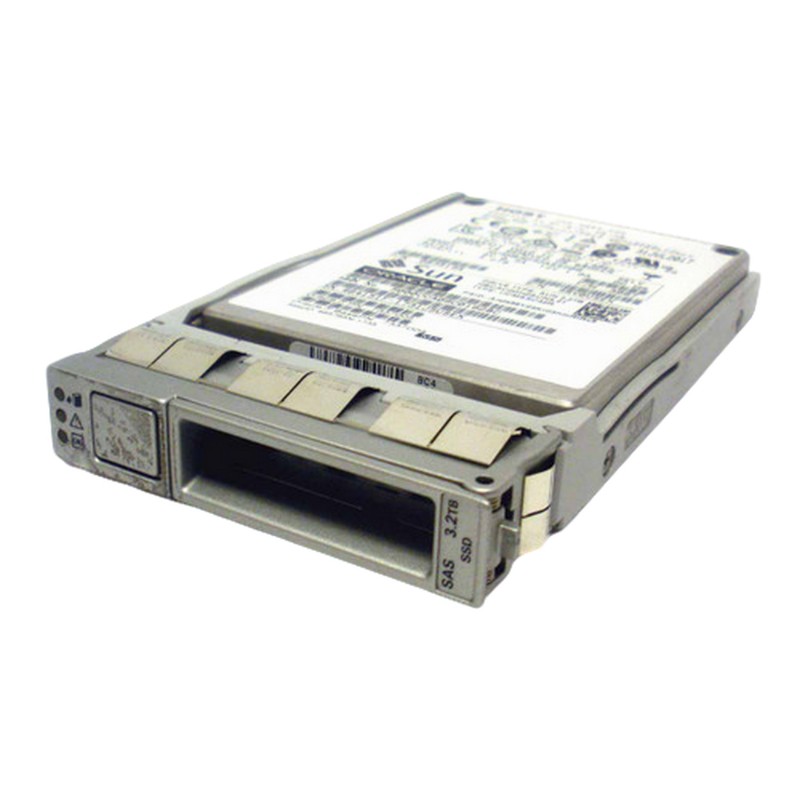


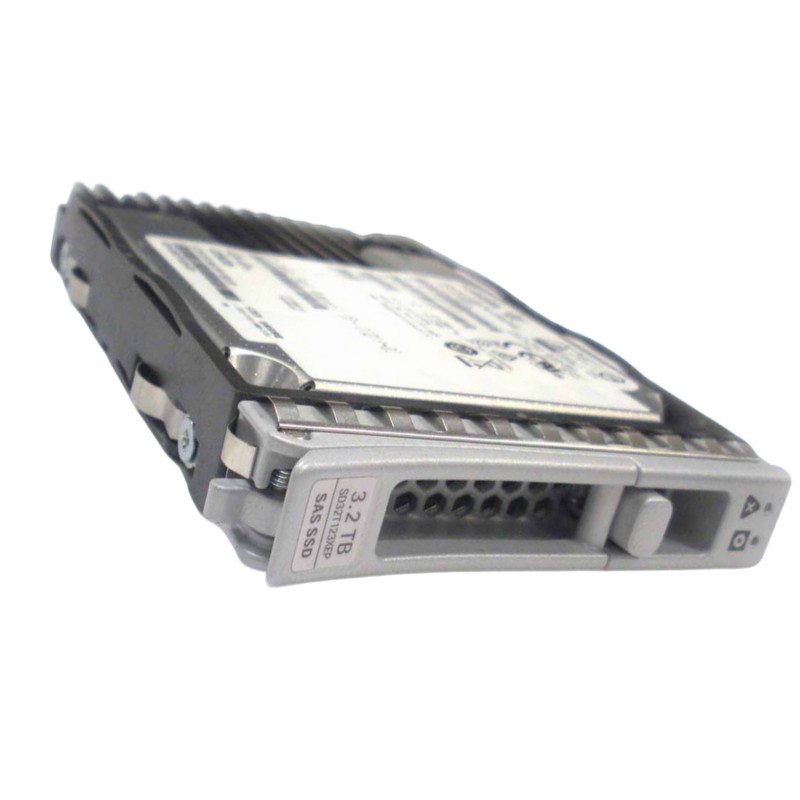
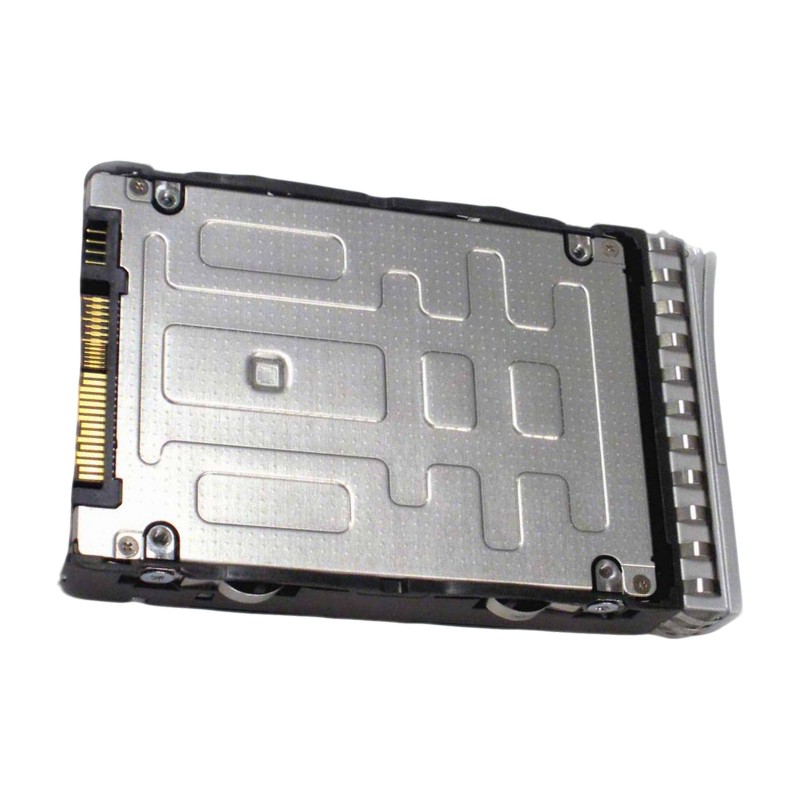
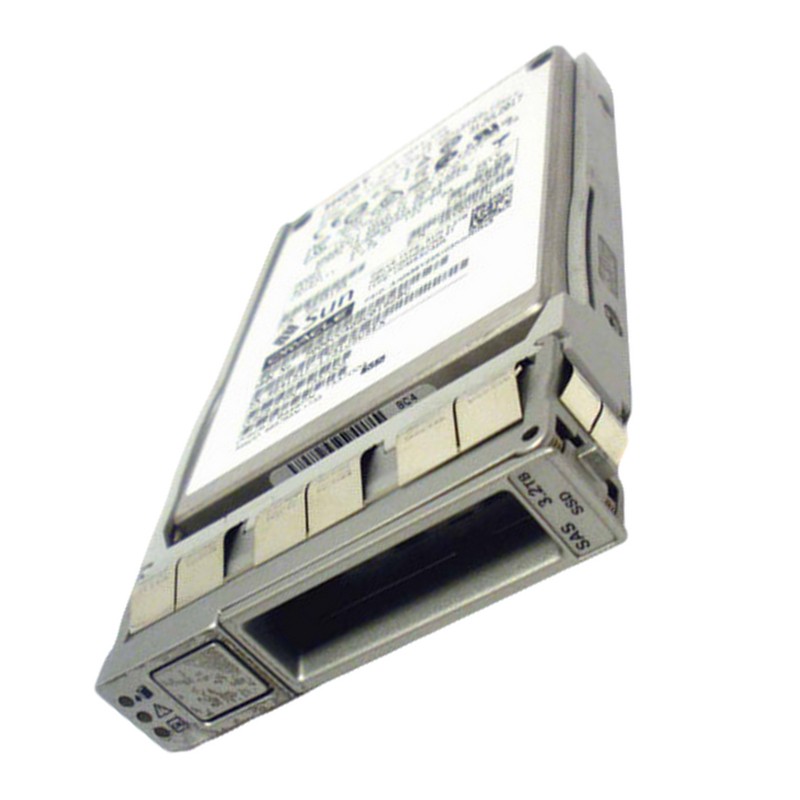
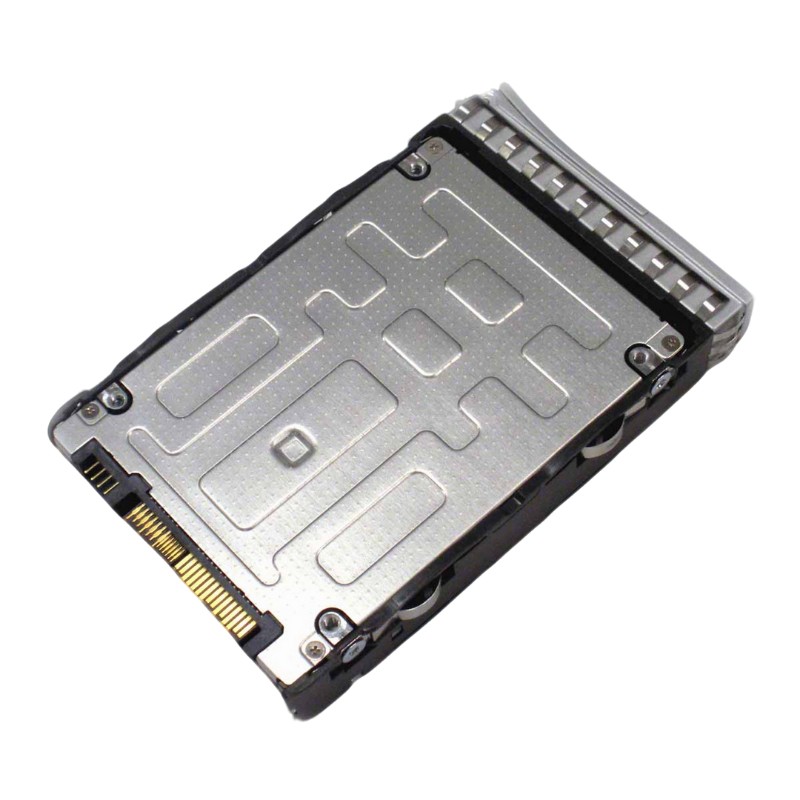
Cisco UCS-SD32T123X-EP 3.2TB SAS 12GBPS 2.5inch Enterprise Hot Swap Solid State Drive. Excellent Refurbished with 1 year replacement warranty
Engineered for high-demand data environments, the Cisco UCS-SD32T123X-EP represents a pinnacle of storage technology. This enterprise-grade solid-state drive delivers remarkable speed and unwavering reliability for critical server applications.
The UCS-SD32T123X-EP is a 3.2TB enterprise-grade solid state drive designed for Cisco Unified Computing System environments that require consistent throughput, low latency, and hot-swap serviceability. Built around a dual-port 12Gbps SAS interface and a compact 2.5-inch small form factor, this drive integrates into Cisco rack and blade servers to accelerate mission-critical workloads while maintaining the durability and predictable performance that data centers demand. Its engineering emphasizes sustained I/O under write-intensive operations, stable latency during peak hours, and robust data-integrity features that protect in-flight data during power events. As a platform-validated component, it plays an essential role in storage pools for virtualization, databases, analytics, and private cloud platforms that rely on secure, always-on infrastructure.
Enterprise SAS SSDs occupy a specific niche between high-throughput NVMe accelerators and value-oriented SATA drives. The UCS-SD32T123X-EP represents this category’s balance of reliability, compatibility, and multi-path connectivity. In enterprise arrays and server backplanes, dual-port SAS enables redundant data paths through two independent host connections, minimizing single-point failures. This capability aligns with clustered compute nodes, shared JBOD enclosures, and RAID controllers that expect SAS topology features such as expander support, domain management, and persistent reservations. In environments standardized on Cisco UCS, the drive’s firmware profile and power characteristics are tuned for consistent service delivery, creating predictability across mixed application stacks where steady latency matters more than maximum burst throughput.
The 2.5-inch SFF design provides high density for front-accessible bays in UCS rack servers and fabric-attached storage nodes. Hot-swap readiness enables technicians to replace or scale drives without halting services, a critical advantage for organizations with tight maintenance windows. In conjunction with Cisco server design standards, the drive supports ESD-safe caddies, vibration controls, and guided airflow so that sustained performance is not compromised by thermal throttling or mechanical resonance. The hot-swap feature is essential in RAID groups and software-defined storage clusters, where quick drive replacement preserves redundancy levels and rebuild timelines. With defined service LED states and predictable spin-up behavior—translated here to SSD power-on initialization—the result is smooth field operations and reduced mean time to repair.
A key benefit of the UCS-SD32T123X-EP is its 12Gbps SAS interface. Dual-port SAS presents two independent links to separate controllers or paths, enabling active-active redundancy in storage fabrics. When coupled with enterprise RAID adapters or UCS fabric interconnects, multipath I/O establishes automatic failover and load distribution. SAS expanders allow hundreds of drives to be addressed within a single domain, which is valuable for scale-out architectures. Command queuing, advanced error recovery, and standardized sense data enable consistent behavior across vendors and generations. Unlike consumer interfaces, SAS defines strong out-of-band management and diagnostic capabilities, easing integration into monitoring pipelines and predictive failure analysis workflows.
At 3.2TB, this drive sits in a sweet spot for mixed-use storage pools. Capacity is high enough to consolidate multiple application datasets, VM repositories, or log streams, while remaining small enough for granular scaling and fast RAID rebuilds. Administrators can right-size tiers by combining multiple UCS-SD32T123X-EP units into RAID 10 for maximum performance and resiliency, RAID 5 for balanced capacity and protection, or RAID 6 when the dataset and rebuild time require dual-parity. Software-defined storage stacks can leverage erasure coding or replication policies to distribute 3.2TB increments across nodes, achieving both fault tolerance and balanced utilization. The moderate capacity also suits cache tiering, where SSDs accelerate reads and writes in front of large HDD pools without overspending on underutilized flash.
Enterprise SAS SSDs like the UCS-SD32T123X-EP are engineered for predictable IOPS and steady throughput rather than consumer-style burst metrics. Queue-depth handling is tuned for multi-threaded server patterns, sustaining high random read and write operations under continuous load. Latency consistency—especially the behavior of the 99th percentile and 99.9th percentile—is a defining trait, ensuring that application response times remain tight even during spikes, garbage collection, or background media management. The firmware aims for consistent write amplification control, balancing wear with performance. For sequential workloads such as backup staging or content distribution, the 12Gbps link provides headroom for multi-stream transfers, while the controller’s caches and data-path pipelines reduce stalls.
Enterprise SSDs prioritize end-to-end data integrity. The UCS-SD32T123X-EP supports protection mechanisms at multiple layers, including internal checksums, cyclic redundancy checks, and firmware-controlled validation of data paths from host interface to NAND media. Power-loss protection capacitors or equivalent energy-reserve designs help ensure that data in transit is committed to stable storage in the event of sudden outages. This reduces the possibility of partial writes that might compromise file systems or databases. Coupled with metadata journaling and robust flush behavior, the drive preserves consistency across unplanned restarts. These capabilities simplify disaster recovery playbooks and reduce the risk of silent data corruption—a non-negotiable requirement for regulated industries and persistent transactional systems.
Virtualization clusters benefit from the UCS-SD32T123X-EP because VM density is often limited by storage latency rather than CPU or RAM. Read caching and write buffering on an enterprise SAS SSD unlock higher consolidation ratios without compromising responsiveness. In database environments, the drive supports heavy random I/O for indexes and transaction logs, where consistent write latency translates directly to query performance and commit times. For VDI deployments and application streaming, the SSD’s ability to handle boot storms and profile writes maintains a steady end-user experience. In content management systems and microservices platforms, the mix of small-block metadata, ephemeral caches, and occasional large objects is well matched to SAS SSD characteristics. Backup and restore workflows also gain speed when staging areas reside on enterprise flash, reducing job windows and accelerating point-in-time recovery objectives.
Reliability in the enterprise SSD class extends beyond headline MTBF figures to include firmware stability, component screening, and rigorous qualification. The UCS-SD32T123X-EP is selected for interoperability with Cisco backplanes, SAS expanders, and RAID controllers, resulting in fewer corner-case failures. Field-replaceable hot-swap mechanisms, clear fault indicators, and consistent part numbering streamline sparing programs. When paired with proactive monitoring, maintenance windows become routine rather than reactive, and capacity planning can align with procurement cycles. The overall effect is a predictable service lifecycle that supports long-term application roadmaps and compliance commitments.
Each interface family serves a different purpose. NVMe excels at extreme parallelism and ultra-low latency over PCIe, making it ideal for high-frequency trading, AI training caches, and log ingestion at massive scale. SAS, in contrast, prioritizes dual-path resilience, established management tooling, and smooth scale through expanders and JBODs. SATA remains suitable for read-heavy, capacity-oriented tiers that benefit from lower cost but do not require dual-port access or advanced multipathing. The UCS-SD32T123X-EP sits in the SAS tier, delivering the balanced profile that many enterprise applications rely upon, particularly when existing infrastructure includes SAS backplanes, RAID controllers, and operating models built around SAS domain management.
Scaling storage with UCS-SD32T123X-EP units can be achieved through two complementary methods: vertical scale within a node and horizontal scale across nodes. Vertical scale increases the number of SSDs per server, improving IOPS and capacity under a single operating system instance or hypervisor. Horizontal scale spreads drives across additional servers, increasing aggregate throughput and resilience. Software-defined storage frameworks can pool multiple nodes, providing a single namespace with automated rebalancing. In either approach, the 3.2TB capacity point allows incremental expansion without overshooting immediate needs, keeping capital expenditures aligned with real-world growth curves. Because SAS domains are well understood, adding enclosures or expanders follows consistent procedures and predictable performance characteristics.
While the UCS-SD32T123X-EP is reliable on its own, enterprise storage typically layers additional protection. RAID 10 provides mirroring and striping for peak performance and swift rebuilds, ideal for latency-sensitive databases. RAID 5 offers single-parity efficiency for mixed workloads, while RAID 6 adds a second parity block to withstand concurrent failures. The choice depends on dataset size, rebuild windows, and SLA commitments. Many organizations supplement RAID with near-real-time replication or snapshots at the file system, volume manager, or hypervisor level. This belt-and-suspenders approach protects against localized incidents, operational errors, and site-level disruptions. Because the drive’s performance is consistent under load, background protection tasks are less likely to degrade application responsiveness.
Transactional databases experience faster commit times and smoother checkpoint operations when log files and hot tables reside on the UCS-SD32T123X-EP. Virtualized environments can place the most I/O-intensive VMs on datastores backed by these drives, raising consolidation ratios. Search and indexing platforms see improved query responsiveness as inverted indexes and term dictionaries leverage low-latency reads. Build and CI/CD pipelines accelerate artifact storage and dependency caching, shortening development cycles. In security analytics, faster ingest and query speed enable broader rule sets and more frequent detections. Even backup servers improve overall job throughput when metadata and deduplication tables live on enterprise-grade flash.
Real data centers rarely run isolated, single-pattern I/O. The UCS-SD32T123X-EP is built for the messy reality of mixed workloads, where small random writes coexist with large sequential reads and metadata churn. Controller algorithms arbitrate resources to prevent background tasks from starving foreground I/O. Write caching is tuned for safe, consistent flush behavior. Over-provisioning reserves ensure there is space for garbage collection without triggering sudden latency spikes. These traits keep user experiences stable during busy hours, maintenance activities, and backup windows. Predictability makes capacity planning easier and reduces the fire-drill debugging often caused by bursty storage tiers.
For rack servers with backplanes, the UCS-SD32T123X-EP slides into standard 2.5-inch bays that present SAS lanes to the controller. In external JBODs or storage shelves, cabling through mini-SAS connectors to RAID cards or HBAs must observe length and bend-radius guidelines to maintain signal integrity. Dual-port configurations should be cabled to independent controllers or expander paths to realize genuine redundancy. Airflow should remain front-to-back with unobstructed intake, and servers should maintain firmware levels recommended by Cisco for maximum compatibility. Power domains must support the instantaneous current drawn during drive initialization, even though SSDs generally present lower spin-up loads than HDDs.
Quality of Service settings at the controller or software-defined storage layer can cap noisy-neighbor effects and maintain fairness across tenants. The UCS-SD32T123X-EP’s steady latency profile makes QoS more effective, because the underlying device does not introduce unexpected jitter. Administrators can define read and write IOPS ceilings per workload, ensuring that critical services such as APIs or customer-facing databases receive consistent performance even when batch jobs or analytics tasks run concurrently. Monitoring 95th and 99th percentile latency over time provides early warning for contention, allowing capacity to be added before SLAs are at risk.
Fast storage tiers shorten backup windows by accelerating synthetic full operations, metadata traversal, and deduplication. When the UCS-SD32T123X-EP underpins these workflows, restore times also improve, reducing downtime during incidents. Replication between sites can be paced to match WAN bandwidth, while local snapshots capture frequent points in time with minimal impact. The dual-port SAS interface provides flexible attachment models to backup servers and scale-out appliances, and predictable device behavior ensures that data protection tasks do not cause erratic application slowdowns.
Maintaining a small free space margin on SSD volumes improves long-term performance stability. While the UCS-SD32T123X-EP features internal over-provisioning, administrators can further enhance steady-state behavior by avoiding sustained 100% logical utilization. Thin provisioning should be monitored to guard against unexpected full-volume events, especially in virtualized environments. Snapshot sprawl and log retention policies should be periodically audited to prevent slow creep in storage usage. By keeping working sets appropriately sized, background maintenance tasks such as garbage collection and wear leveling operate smoothly, preserving predictable latency for applications.
Enterprises deploy this model to accelerate virtualization, databases, analytics, and VDI. Dual-port SAS ensures continuity during controller failovers, and hot-swap simplifies field service without downtime. Consistent firmware baselines and UCS policy integration streamline management, while telemetry supports predictive maintenance. Paired with RAID or replication, the drive forms resilient storage pools that meet demanding SLAs.
Performance tuning focuses on queue depth, stripe sizes, and alignment with filesystem or database block sizes. Endurance is managed through over-provisioning, wear leveling, and temperature control, all of which sustain performance during long-running, write-heavy operations. Latency consistency across percentiles is a defining advantage, minimizing tail-latency events that degrade user experience.
Capacity planning should reserve headroom to prevent full-volume conditions and to keep background maintenance smooth. Firmware and driver versions must be standardized, and change control should document mappings between physical bays and logical volumes. Monitoring of health metrics and error counters enables proactive replacement before failures impact production workloads.
Data-at-rest protection, authenticated updates, and secure decommissioning practices complement enterprise security programs. Integration with host-level encryption and key management systems allows adherence to organizational policies without sacrificing manageability.


 Contact Us
 Information
 Catalog
 Solid State Drives (SSD)
 Network Switches
 Hard Disk Drives
 HBA & Controllers
 PC & Servers
 PC & Server Memory
 CPU & Processors
 Network Routers
 Power Supplies
 Tape Drives & Libraries
 Network Devices
 Computer & Network Cables