(7% discount is applied at checkout)
Cart is empty
Your go-to destination for cutting-edge server products
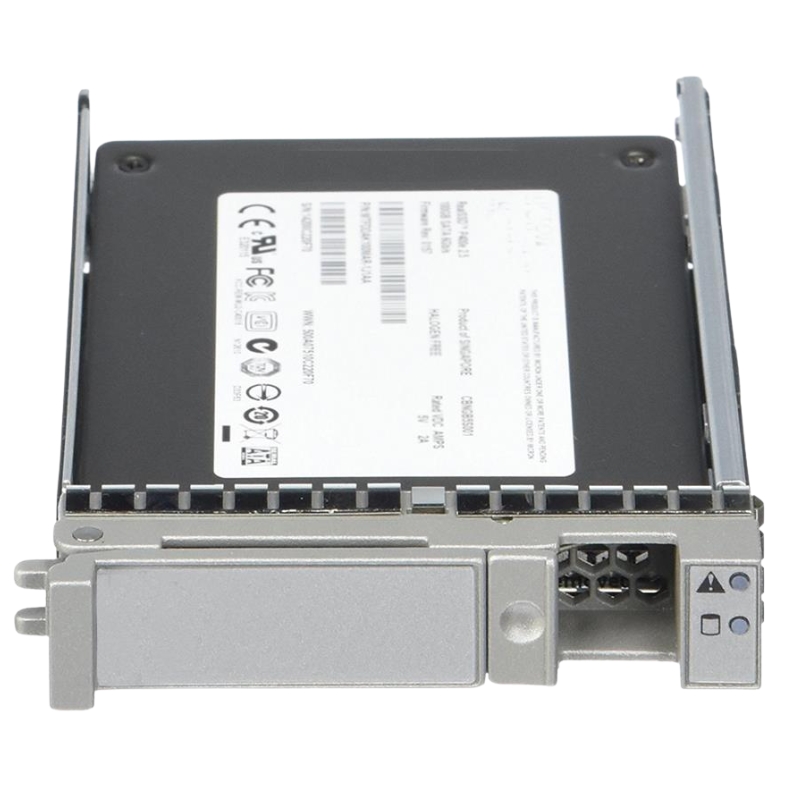


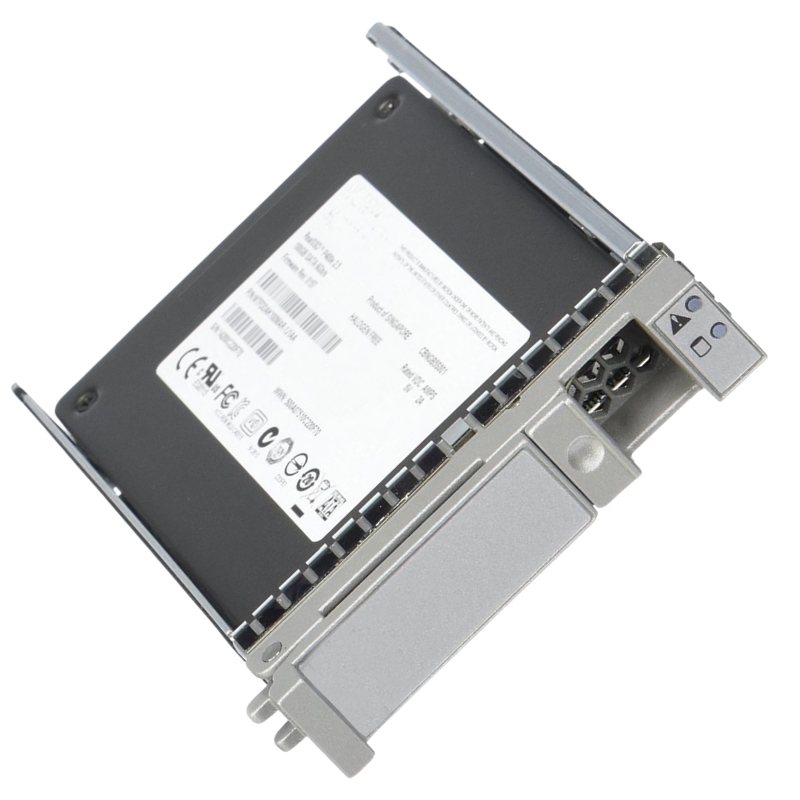
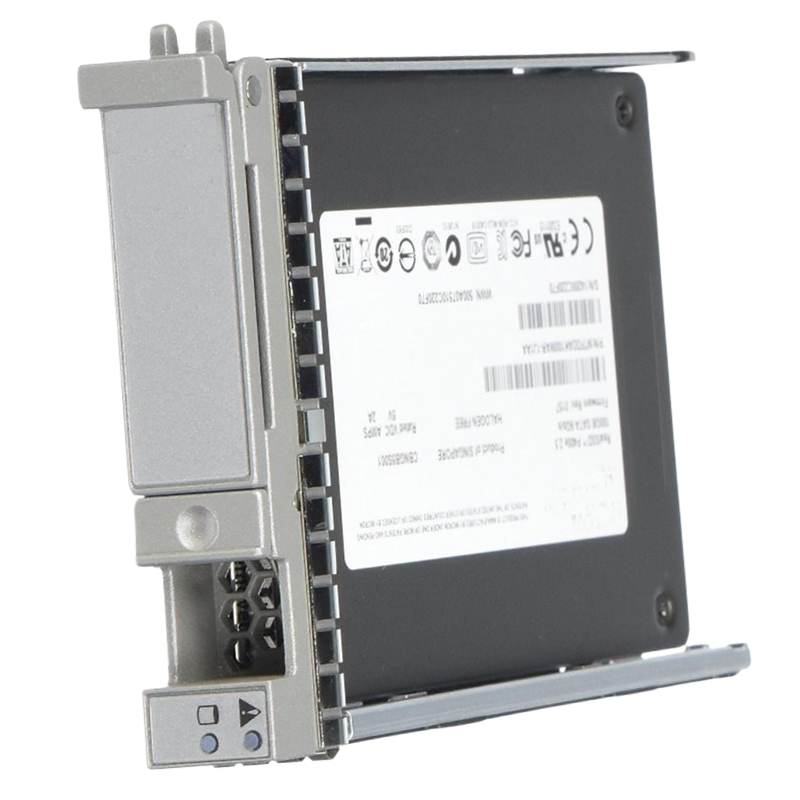
Cisco UCSB-NVMEHW-H6400 6.4TB MLC PCI-Express 3.0 x4 NVMe Mixed-Use U.2 SFF Internal Solid State Drive. Excellent Refurbished with 1-Year Replacement warranty
The Cisco UCSB-NVMEHW-H6400 is engineered for demanding workloads, offering exceptional speed and reliability through its PCI-E 3.0 x4 interface. Designed for mixed-use environments, this solid-state drive delivers consistent performance across a range of enterprise storage needs.
The Cisco UCSB-NVMEHW-H6400 6.4TB MLC PCI-Express 3.0 x4 NVMe Mixed-Use U.2 SFF Internal Solid State Drive stands as a high-capacity enterprise NVMe SSD option built for modern data center workloads. Combining the low-latency NVMe protocol over a PCI-Express 3.0 x4 link with multi-level cell (MLC) flash technology and a compact U.2 small form factor (SFF), this drive is purpose-engineered to deliver predictable performance, strong write endurance for mixed-use scenarios, and easy integration into dense server platforms. The category encompasses full-length enterprise NVMe U.2 modules designed for internal storage bays in rack and blade servers, hyperconverged nodes, and storage arrays where performance and reliability must be balanced against capacity.
This category emphasizes drives that leverage the NVMe protocol over the PCI-Express 3.0 x4 physical interface, maximizing I/O operations per second and minimizing latency compared to legacy SAS and SATA devices. The U.2 SFF mechanical footprint allows these modules to plug into standard enterprise drive bays with hot-swap capability, maintaining compatibility with modern server chassis and shared storage hardware. The MLC NAND used in the Cisco UCSB-NVMEHW-H6400 family is selected to provide a balance of sustained throughput, endurance, and cost-effectiveness for mixed-read and mixed-write enterprise workloads.
The U.2 small form factor in this category provides robust mechanical compatibility for enterprise deployment. Drives in this family are designed to be hot-swappable in supported chassis and to fit into U.2 drive sleds without the need for special adapters. The compact height and sled compatibility make these drives suitable for high-density server configurations where rack space efficiency and serviceability are critical for operations teams managing large fleets of servers.
Multi-Level Cell (MLC) NAND flash is a hallmark of this product category, offering a middle ground between Single-Level Cell (SLC) and Triple-Level Cell (TLC) in terms of endurance, performance, and cost. MLC provides superior write endurance relative to most TLC options while remaining more cost-effective than SLC, making it an attractive choice for mixed-use environments where both read and write activity are significant. Drives like the Cisco UCSB-NVMEHW-H6400 are tuned with firmware-level optimizations for wear-leveling, garbage collection, and error mitigation to extend usable life and ensure consistent performance throughout the drive lifecycle.
Endurance metrics for mixed-use MLC NVMe drives are engineered to handle diverse enterprise workloads including databases, virtualization, virtual desktop infrastructure (VDI), and caching layers. The firmware and controller technologies included in this category provide features such as dynamic over-provisioning and advanced error correction to maintain data integrity as program/erase cycles accumulate. Capacity points such as 6.4TB are intended to offer balance between high-capacity storage tiers and performance-oriented tiers, enabling architects to consolidate hot datasets on NVMe media with confidence in the drives’ ability to sustain operations under continuous mixed I/O.
Performance for Cisco UCSB-NVMEHW-H6400 class drives centers on low-latency I/O, high throughput in sequential and random workloads, and sustained IOPS under mixed read/write conditions. The NVMe interface reduces latency overhead while allowing the SSD controller to present deep queue depths and parallel command processing to the host. Workloads that benefit include online transaction processing (OLTP) databases, analytics jobs with random I/O patterns, caching layers in scale-out storage, and virtual machine boot storms where many VMs perform concurrent I/O.
Power-loss protection in this category is implemented to minimize the potential for corrupt writes and to safeguard metadata and mapping tables that the controller needs to correctly translate host LBA addresses to physical NAND pages. Enterprise implementations often include capacitive energy reservoirs or equivalent mechanisms that allow the drive firmware to complete pending writes during a sudden loss of power, protecting the filesystem and preserving recoverability.
Proactive monitoring capabilities are a focal point for administrators managing drive fleets. SMART attributes, telemetry, and vendor-specific health reporting for these NVMe drives enable ongoing assessment of wear levels, bad block counts, and temperature trends.
Thermal design is a consideration when populating high-density server bays with multiple NVMe drives. This product category includes drives engineered to operate within tight thermal envelopes, often featuring heat spreaders, optimized thermal throttling policies, and firmware that balances performance and thermal boundaries to prevent thermal runaway. Power efficiency is also important for data center TCO; enterprise NVMe drives are optimized to deliver high performance per watt, reducing overall rack-level power and cooling demands when used to replace rotational storage or older flash solutions.
The Cisco UCSB-NVMEHW-H6400 product category targets a broad set of enterprise use cases where a balance of capacity, performance, and endurance is required. Typical deployments include primary storage for virtualized servers, performance tier for multi-node analytics clusters, caching layers for hybrid storage architectures, and direct-attach storage for compute-heavy applications. The mixed-use endurance profile makes these drives suitable for environments with a combination of sustained reads and regular write activity, such as database journaling, metadata services, and containerized application data stores.
The U.2 form factor and NVMe over PCIe interface ensure broad compatibility with modern server platforms designed to support NVMe drives. When planning upgrades, infrastructure teams should verify firmware interoperability, backplane support, and the server vendor’s compatibility list to ensure optimal performance and system stability.
Capacity planning should account for usable capacity after provisioning overhead, over-provisioning for performance reserves, and potential wear over time. Combining high-capacity NVMe drives with lower-cost bulk storage tiers provides a cost-effective approach for workloads with differing performance requirements. Tiering strategies can place hot datasets on NVMe media while retaining colder, less performance-sensitive data on high-density HDD or TLC-based flash, allowing organizations to fine-tune cost vs. performance across their storage estate.
Compared to SATA and SAS SSDs, NVMe U.2 drives in this category deliver markedly lower latency and higher concurrency. When contrasted with PCIe add-in card (AIC) NVMe solutions, U.2 drives offer the convenience of hot-swap bays and easier serviceability in shared chassis. Against TLC-based NVMe offerings, MLC drives present higher write endurance and a different cost-performance balance, which may be preferable for mixed-use workloads where write amplification and endurance are key concerns.


 Contact Us
 Information
 Catalog
 Solid State Drives (SSD)
 Network Switches
 Hard Disk Drives
 HBA & Controllers
 PC & Servers
 PC & Server Memory
 CPU & Processors
 Network Routers
 Power Supplies
 Tape Drives & Libraries
 Network Devices
 Computer & Network Cables