(7% discount is applied at checkout)
Cart is empty
Your go-to destination for cutting-edge server products
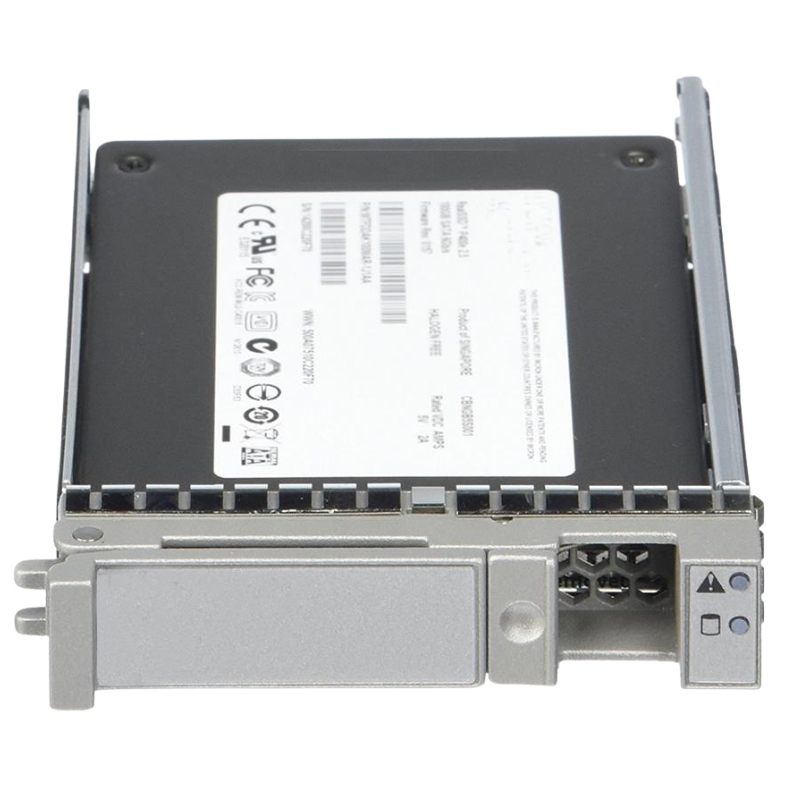


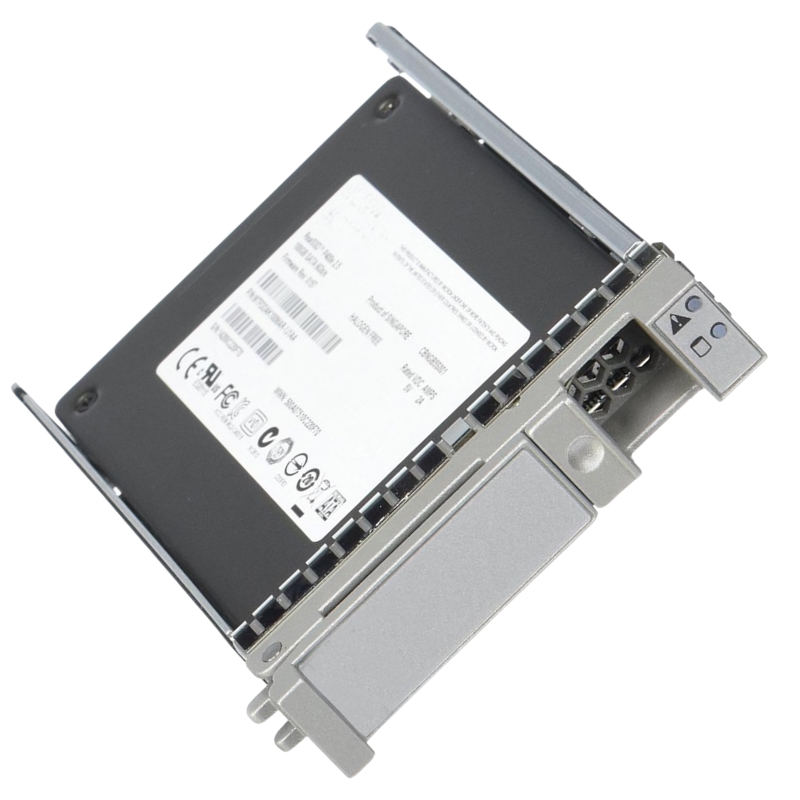
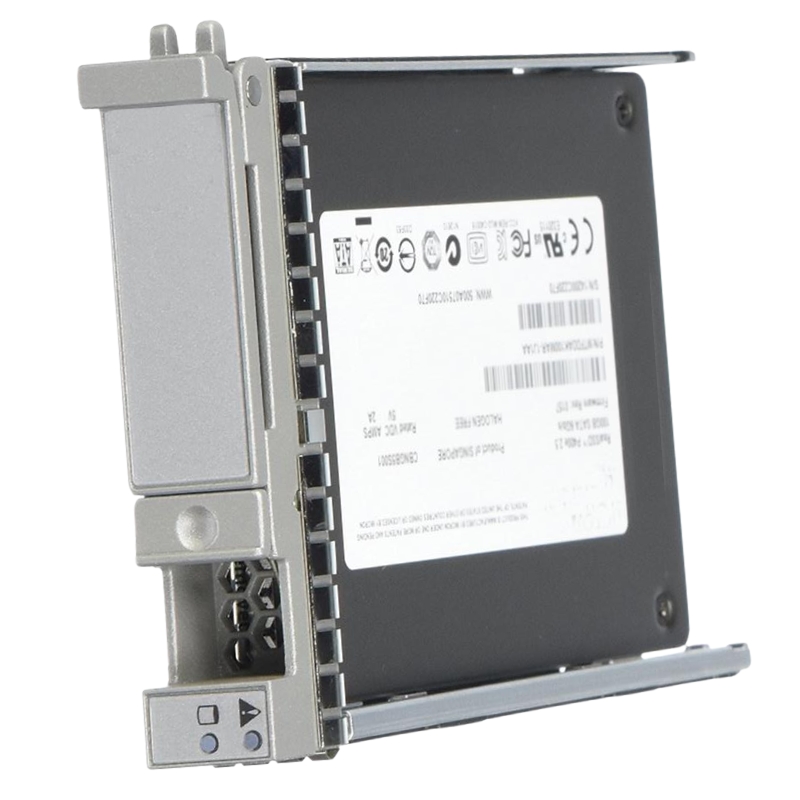
Cisco UCSB-NVMEHW-H7680 7.68TB MLC PCI-Express 3.0 x4 Hot-Swap NVMe High Endurance U.2 SFF Internal Solid State Drive. Excellent Refurbished with 1 year replacement warranty
The Cisco UCSB-NVMEHW-H7680 delivers exceptional performance and endurance, tailored for demanding data center environments and high-throughput applications.
The Cisco UCSB-NVMEHW-H7680 7.68TB MLC PCI-Express 3.0 x4 Hot-Swap NVMe High Endurance U.2 SFF Internal Solid State Drive (SLED Mounted) for UCS B200 M5 Blade Server UCSB-Hot Swap NVMeHW-H7680 is engineered to deliver enterprise-class flash storage performance for mission-critical applications deployed on Cisco UCS B200 M5 blade infrastructure. Optimized for mixed and write-intensive workloads, this high-endurance U.2 NVMe SFF drive combines multi-level cell (MLC) NAND technology with NVMe protocol efficiencies over PCIe 3.0 x4 lanes, resulting in low latency, high IOPS, sustained throughput, and durability required in modern datacenter environments.
The 7.68TB capacity leverages MLC NAND that balances endurance and cost per gigabyte to provide a resilient option for applications that demand sustained write performance. The high endurance classification indicates a drive designed to support significant terabytes written (TBW) over its lifetime, making it suitable for database transaction logs, virtualization hosts with high write amplification, and analytics pipelines where consistent write throughput and predictable wear leveling are critical. Endurance characteristics are further supported by firmware-level wear-leveling algorithms and over-provisioning that maintain consistent performance while extending usable lifespan.
Using the PCIe 3.0 x4 physical interface and NVMe protocol, the drive benefits from direct CPU-to-storage communication paths and optimized command sets that minimize latency and maximize parallelism. PCIe 3.0 x4 provides ample lanes for high sustained throughput while remaining compatible with a wide range of server backplanes. NVMe reduces command overhead relative to legacy SATA/SAS interfaces and unlocks high IOPS for random read/write workloads. Real-world performance manifests as decreased application response times, faster database commits, and greater virtual machine density per host when compared to traditional spinning media or SATA SSDs.
The U.2 SFF (Small Form Factor) 2.5-inch physical design with SLED mounting aligns with Cisco UCS blade chassis architecture, enabling straightforward insertion and removal of drives from the blade sled without disrupting server operation. Hot-swap capability ensures that failed drives can be replaced live, maintaining application availability and supporting maintenance windows that prioritize service continuity. SLED mounting in UCS B200 M5 blades offers integration with chassis cooling and power delivery while simplifying inventory and field replacement procedures for IT operators managing large fleets of blades.
This NVMe drive is purpose-built to function within the UCS B200 M5 blade server ecosystem, matching mechanical, electrical, and firmware expectations of the platform. The compatibility extends beyond physical fit to include management integration with Cisco UCS Manager for drive inventory, health monitoring, statistics collection, and firmware orchestration. Administrators can view drive health attributes, predictive failure warnings, SMART-like telemetry, and endurance metrics from the UCS management plane, enabling proactive maintenance and integration with existing monitoring and alerting workflows.
For virtualized environments running on Cisco UCS B200 M5 blades, the NVMe drive enables higher VM consolidation ratios by accelerating common tasks like boot storms, snapshot operations, and ephemeral storage writes. The drive’s low-latency characteristics are especially beneficial for latency-sensitive VDI workloads and read/write intensive hyperconverged storage tiers where predictable fast IO is required to maintain system-level quality of service and end-user experience.
Hot-swap capability supports live replacement of failed units with minimal disruption. Standard operating procedures for hot-swap should be followed: confirm drive failure through UCS Manager or monitoring, identify the correct SLED location, and follow the UCS chassis procedures for decommissioning and removing a sled if required. Replacement drives should be pre-staged with compatible firmware where possible to streamline field replacement and minimize post-installation validation time. After replacement, verify that the new drive is recognized by UCS Manager and that RAID rebuilds or storage re-synchronizations proceed according to expected performance curves.
Data integrity features like power loss protection and robust write-atomicity ensure that in-flight data is not corrupted in unexpected power events. Drives intended for enterprise use in blade servers typically integrate controller-level protections that flush volatile caches to persistent media on sudden power transitions. These features reduce the risk of silent data corruption and are particularly valuable for transactional workloads where atomicity and consistency are paramount.
MLC offers a balance of endurance and cost, with higher write endurance than typical TLC and QLC NAND options. When choosing a drive for write-intensive workloads, MLC remains preferable for long-lived performance and reliability. Alternative configurations using TLC or QLC may provide higher capacities at lower cost per gigabyte but often at the expense of endurance and sustained write performance. System designers should weigh total cost of ownership against expected write workloads and replacement cadence when selecting NAND types for blade server deployments.


 Contact Us
 Information
 Catalog
 Solid State Drives (SSD)
 Network Switches
 Hard Disk Drives
 HBA & Controllers
 PC & Servers
 PC & Server Memory
 CPU & Processors
 Network Routers
 Power Supplies
 Tape Drives & Libraries
 Network Devices
 Computer & Network Cables