(7% discount is applied at checkout)
Cart is empty
Your go-to destination for cutting-edge server products
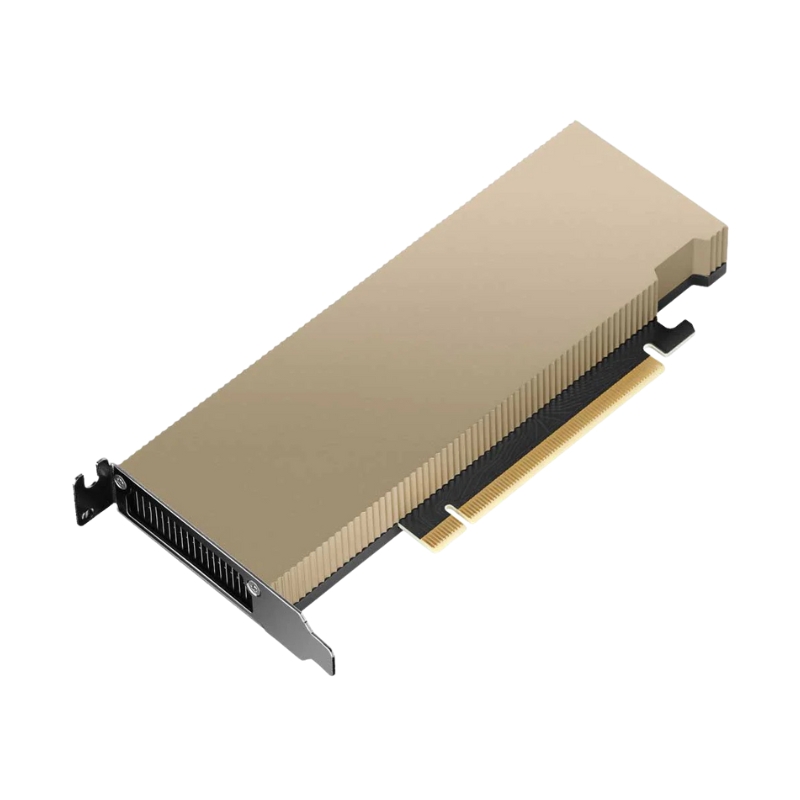


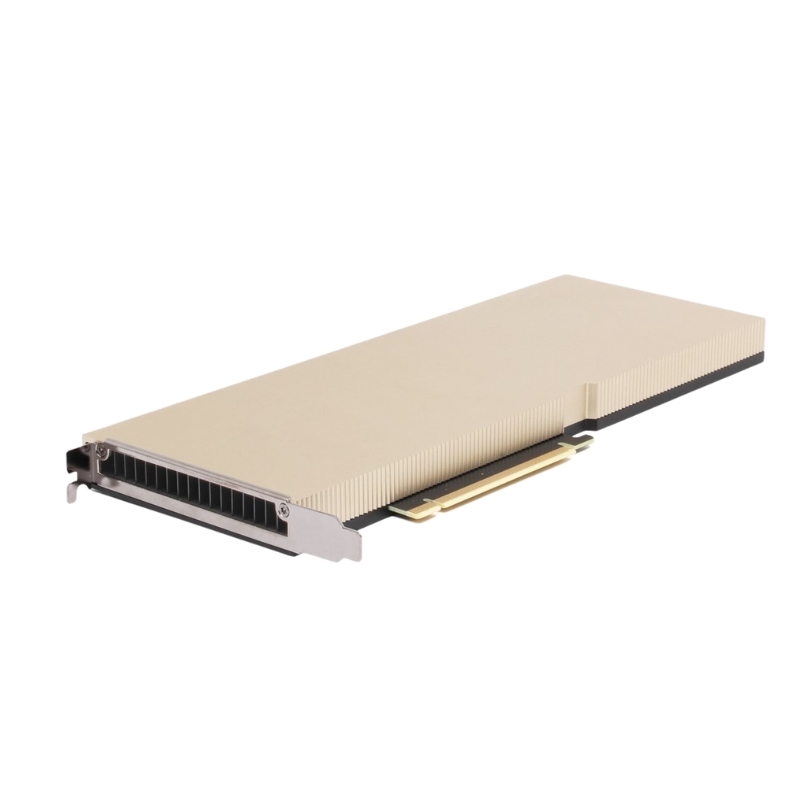
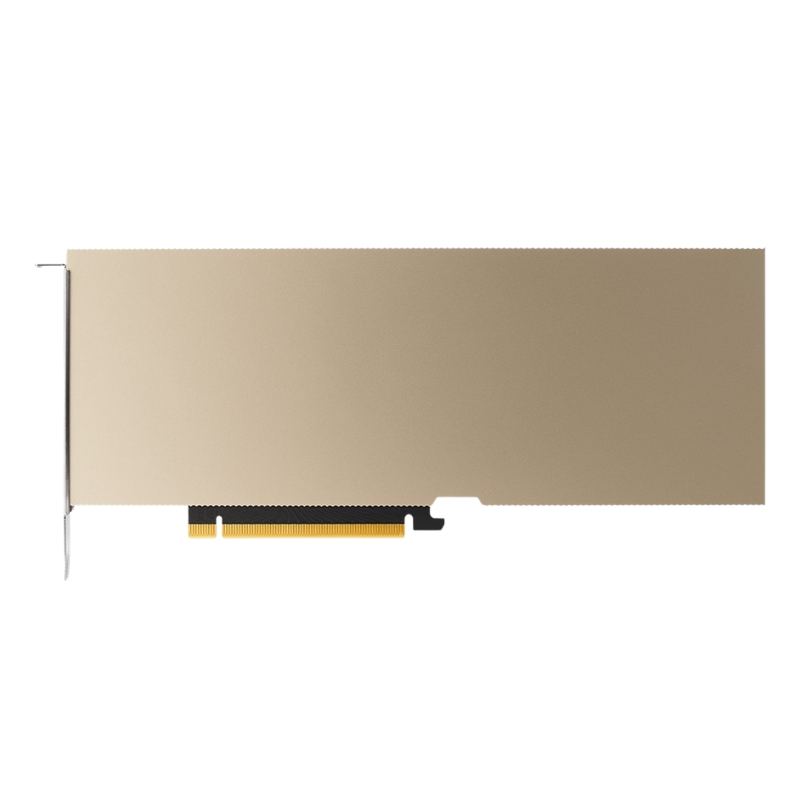
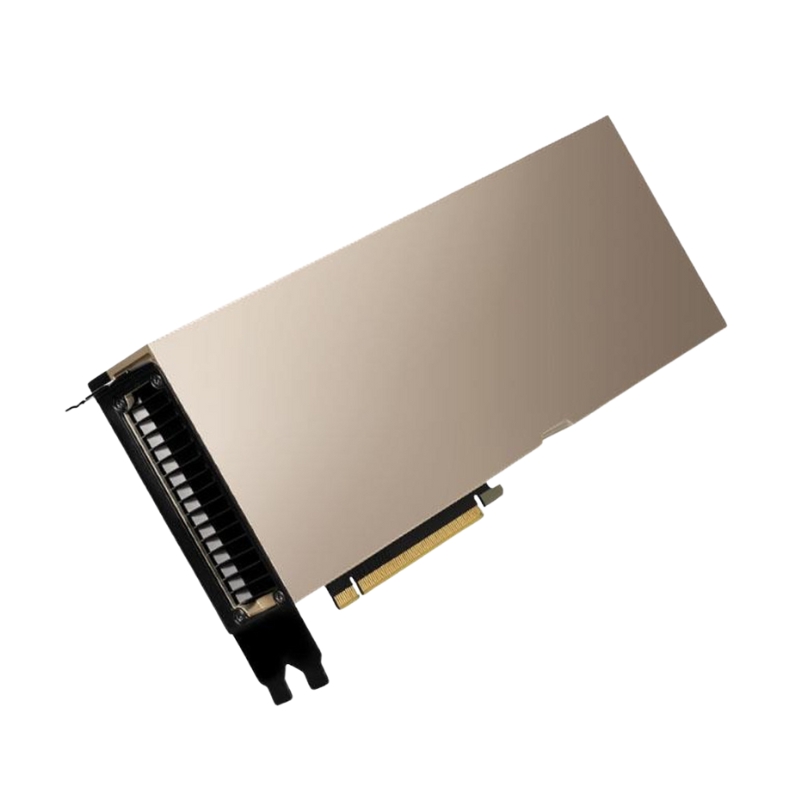
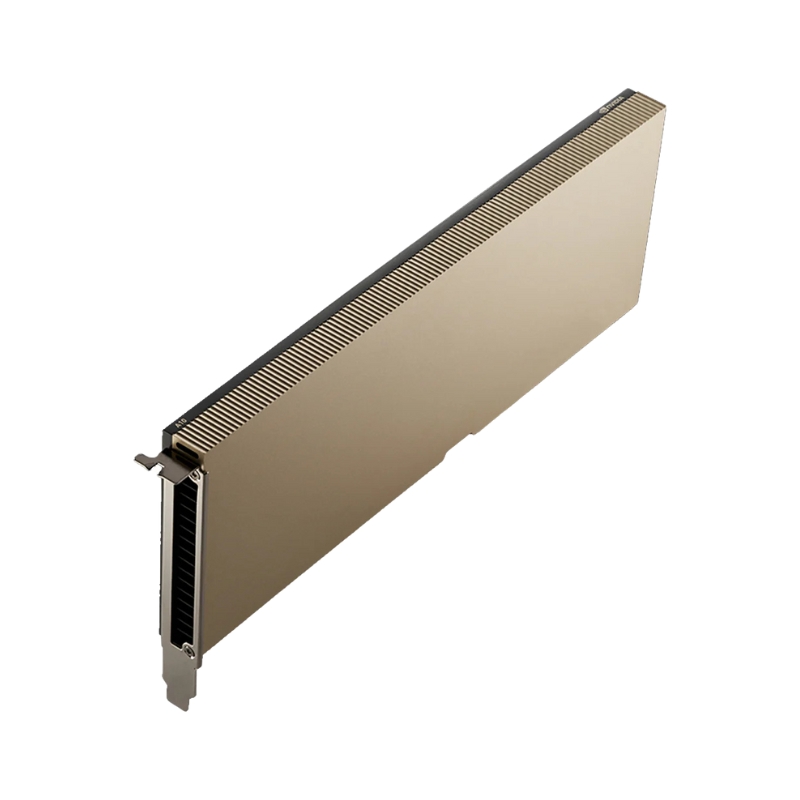
Cisco UCSC-GPU-A10 Nvidia Tesla A10 24GB GDDR6 Single Slot PCI Express 4.0 X16 Graphic Card. Excellent Refurbished with 1 year replacement warranty
The Cisco UCSC-GPU-A10 Nvidia Tesla A10 is a high-performance 24GB GDDR6 GPU engineered for demanding data center, AI, and virtualization workloads. Designed with a single-slot PCI Express 4.0 x16 interface, it offers excellent power efficiency and broad compatibility for enterprise-grade systems.
The Cisco UCSC-GPU-A10 supports enterprise virtualization and GPU partitioning solutions for secure, scalable computing.
This graphics card balances top-tier performance with low power draw, making it perfect for dense deployments and scalable GPU-accelerated infrastructures.
Fully compatible with Cisco UCS servers and most enterprise-class motherboards supporting PCIe Gen4 x16.
Within the domain of high‑performance compute and AI infrastructure, the UCSC‑GPU‑A10 category represents a class of server‑grade accelerators that deliver powerful GPU processing, tight form factor, and modern interconnects. These products combine Cisco’s hardware platform integration with NVIDIA’s A10 GPU architecture, providing a distinct offering in the market for virtualization, inference, rendering, and data center workloads. This category is defined by its 24 GB GDDR6 memory, single‑slot PCI Express 4.0 x16 interface, and highly parallel tensor core architecture. As such, any product within this group is engineered to operate in dense server environments, offering excellent performance per watt and compatibility with enterprise virtualization stacks.
Members of the UCSC‑GPU‑A10 category share a uniform technical baseline centered on the NVIDIA A10 GPU architecture. The architecture supports FP32 performance up to 31.2 teraflops, making it suitable for mixed‑precision compute tasks. Tensor core enhancements enable TF32 throughput up to 62.5 teraflops, which can be doubled to 125 teraflops when sparsity is leveraged. In the realm of bfloat16, the devices deliver up to 125 teraflops (extendable to 250 teraflops with sparsity). For FP16 workloads, these GPUs achieve comparable performance, while INT8 and INT4 throughput reaches up to 250 TOPS and 500 TOPS respectively, or 500 TOPS and 1,000 TOPS under sparsity. The underlying architecture also includes 72 RT cores for hardware‑accelerated ray tracing, and dedicated encoding/decoding hardware featuring one NVENC encoder and two NVDEC decoders (with AV1 decode support). Memory bandwidth is 600 GB/s, and the devices connect via PCIe Gen4, enabling 64 GB/s bidirectional throughput. The thermal design power is 150 W, and the single‑slot full‑height, full‑length form factor ensures dense deployment in server chassis.
The core subcategory includes modules that strictly adhere to the defined architecture: 24 GB GDDR6, single‑slot, PCIe 4.0 x16, 150 W TDP, and full support for NVIDIA virtualization frameworks. These units are targeted at general‑purpose compute, AI inference, and virtualization deployments.
Within this family, some variants may arrive with custom firmware tuned for specific deployment models. These may include pre‑configured virtualization profiles, memory partitions optimized for virtual GPU (vGPU) use, or thermal tuning for specialized cooling systems. Although the hardware baseline remains the same, firmware enhancements can influence latency, security isolation, and performance under multi‑tenant workloads.
Another distinction involves how these GPUs are packaged. Some units are integrated directly into Cisco UCS server modules or blade enclosures, optimized for power, signal integrity, and thermal coupling within that environment. Others are offered as standalone full‑height, full‑length PCIe cards that can be slotted into expansion slots of compatible servers or workstations. Despite physical differences, the GPU core and capabilities remain consistent across all members of the category.
In production AI environments, UCSC‑GPU‑A10 units are well suited for inference deployments, where model predictions must be delivered with low latency and high throughput. The tensor core architecture excels at mixed‑precision operations, enabling real‑time inference for models spanning computer vision, natural language processing, recommendation systems, and speech recognition. The support for INT8 and INT4 accelerations ensures these GPUs can maximize throughput while minimizing power draw.
When deployed in VDI or GPU‑accelerated remote workstation environments, these GPUs enable multiple virtual machines or user sessions to share GPU resources securely. They support NVIDIA’s virtualization platforms such as Virtual PC (vPC), RTX Virtual Workstation (vWS), Virtual Compute Server (vCS), and AI Enterprise. In graphics‑intensive workloads, these GPUs can render 3D scenes, accelerate CAD and visualization tasks, or drive GPU acceleration for creative applications.
Because these units include 72 RT cores and dedicated acceleration for ray tracing, the UCSC‑GPU‑A10 family can also serve in workloads that require real‑time rendering, such as architecture visualization, 3D rendering farms, and virtual reality simulation. The presence of NVENC and NVDEC modules allows for efficient video streaming and decode pipelines tied to visual workloads.
Compared with higher‑end data center GPUs (e.g. A100, H100), the UCSC‑GPU‑A10 category occupies a mid‑range slot, trading off some peak performance for lower power consumption, smaller footprint, and better integration flexibility. In environments where density, thermal constraints, or power budgets are strict, the A10 family often outperforms older generation GPUs or workstation cards. Against consumer GPUs, these modules provide enterprise features such as multi‑instance GPU partitioning, ECC memory support, driver support for server OS, and firmware tuning for sustained throughput.
Many server GPUs come in dual‑slot or multi‑slot configurations, which limit how many units can coexist in a chassis. The single‑slot design of the UCSC‑GPU‑A10 category enables deployment in tighter server architectures, facilitating higher GPU density. Although the cooling envelope is more constrained, the category is engineered to maintain thermal safety under typical server airflow conditions.
All GPUs in this category are fully compatible with NVIDIA’s modern driver stacks, CUDA toolkit releases, and deep learning frameworks such as TensorFlow, PyTorch, MXNet, and others. Users can take advantage of CUDA kernels, cuDNN, and optimized libraries for inference, training, and compute workloads. Firmware updates may be delivered to adjust performance ceilings, ensure security, or improve hardware interoperability with server systems.
A core value proposition of the UCSC‑GPU‑A10 category is its support for enterprise virtualization platforms. Administrators can carve up GPU resources into multiple vGPU instances using NVIDIA Virtual PC, RTX Virtual, and Virtual Compute Server systems. This enables multiuser GPU sharing, isolation of workloads, and utilization of GPU acceleration across VDI, compute, and AI contexts. The integration ensures that virtual machines or containers receive deterministic GPU performance, aligning with SLAs and service tiers.
Operating at a TDP of 150 W, every design in the UCSC‑GPU‑A10 category must manage heat within strict constraints. The single‑slot form factor demands efficient heat spreaders, fin stacks, and passive or active airflow designs. These modules rely on server chassis airflow patterns to maintain safe junction temperatures. Some variants may include thermal tuning or firmware locks to prevent overheating in less favorable environments. System integrators must ensure proper airflow, avoid recirculation zones, and maintain ambient temperature in compliance with datasheet limits.
The compact single‑slot, full‑height length ensures that more GPUs can coexist in dense server nodes. This allows for scalable compute architectures in GPU farms, hyperconverged systems, or AI clusters. The category supports stacking, CPU‑to‑GPU proximity, and routing within high‑density servers, giving greater flexibility to system architects.
As software ecosystems evolve, the category remains forward‑compatible through firmware updates. Newer drivers, security patches, or performance enhancements may unlock higher sustained throughput or better stability. Administrators can upgrade in the field without hardware replacement, extending the lifetime of existing deployments.
Although the UCSC‑GPU‑A10 category is not the most powerful available, it offers a natural stepping stone for migrating workloads to higher tiers. Architects can scale capacity by adding more units, or by pairing them with next‑generation GPU nodes for heavier workloads. The backward compatibility of PCIe and virtualization software ensures these GPUs remain interoperable in hybrid clusters.
As AI inference, edge computing, and GPU virtualization continue to evolve, demand for dense, low‑power, high‑utilization GPU modules will grow. The UCSC‑GPU‑A10 category is well positioned to support future innovations like federated AI, hybrid cloud bursting, real‑time ray tracing in cloud VDI, and low-latency inference at scale. Its architecture allows it to adapt to new computational models, making it relevant in evolving AI and visualization ecosystems.
Before deploying UCSC‑GPU‑A10 modules, ensure that the target server chassis offers sufficient airflow, cooling path, and PCIe Gen4 x16 slots with proper clearance. Because these cards are full-height and full-length, adjacent card spacing and alignment matter for cooling efficiency. In blade systems, ensure the enclosure supports single‑slot GPU profiles.
Each GPU in this category is rated at 150 W TDP, meaning that power rails and connectors must be capable of delivering consistent current under load. System integrators should verify that power supplies, VRM (voltage regulator module) components, and distribution busses can support multiple cards under maximum utilization. Redundancy in power distribution is recommended for high-availability setups.
Because these GPUs utilize PCIe 4.0, ensuring signal integrity is critical. System designers should use high-quality connectors, short trace lengths, proper impedance matching, and board layouts that minimize latency or crosstalk. In dense multi‑GPU configurations, careful layout and shielding help preserve throughput and avoid data errors.


 Contact Us
 Information
 Catalog
 Solid State Drives (SSD)
 Network Switches
 Hard Disk Drives
 HBA & Controllers
 PC & Servers
 PC & Server Memory
 CPU & Processors
 Network Routers
 Power Supplies
 Tape Drives & Libraries
 Network Devices
 Computer & Network Cables