(7% discount is applied at checkout)
Cart is empty
Your go-to destination for cutting-edge server products
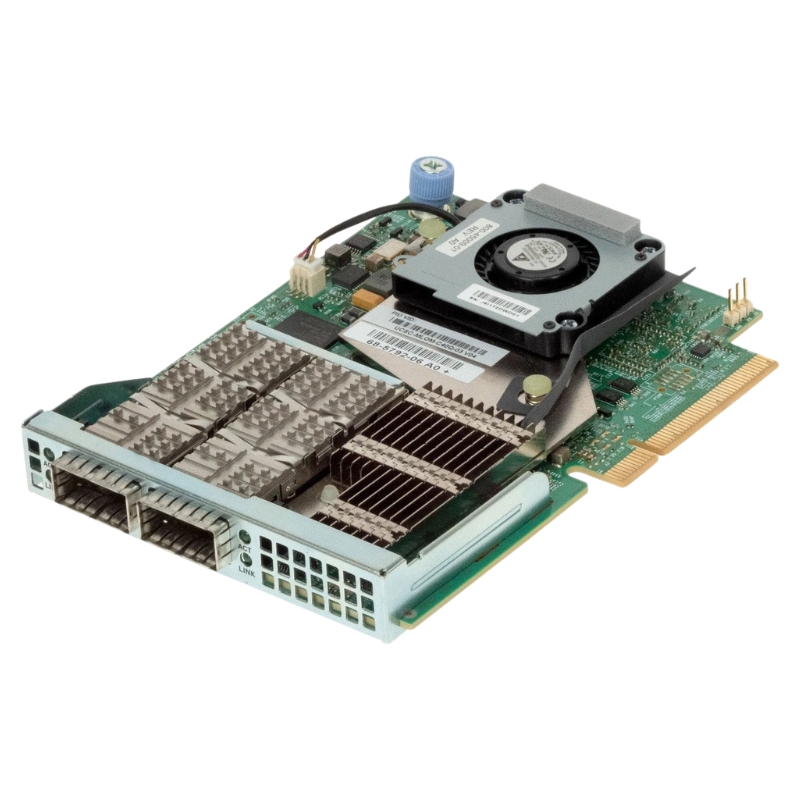


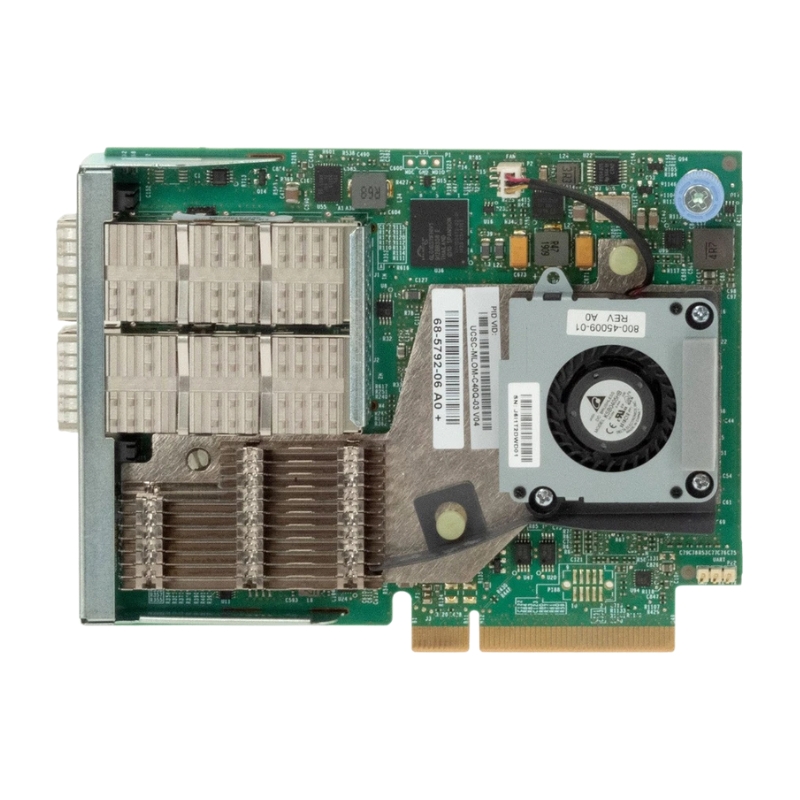
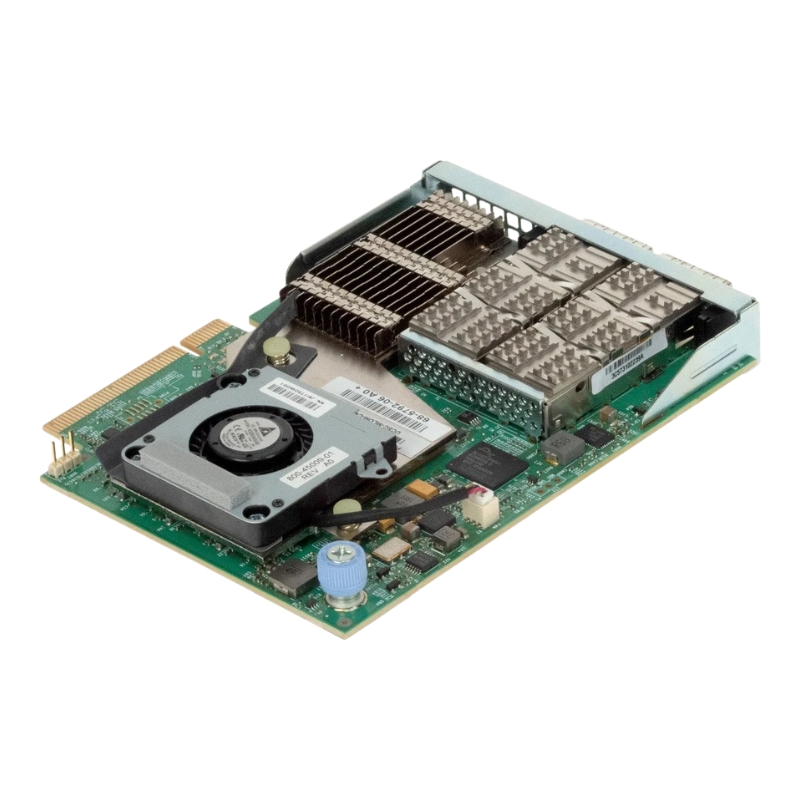
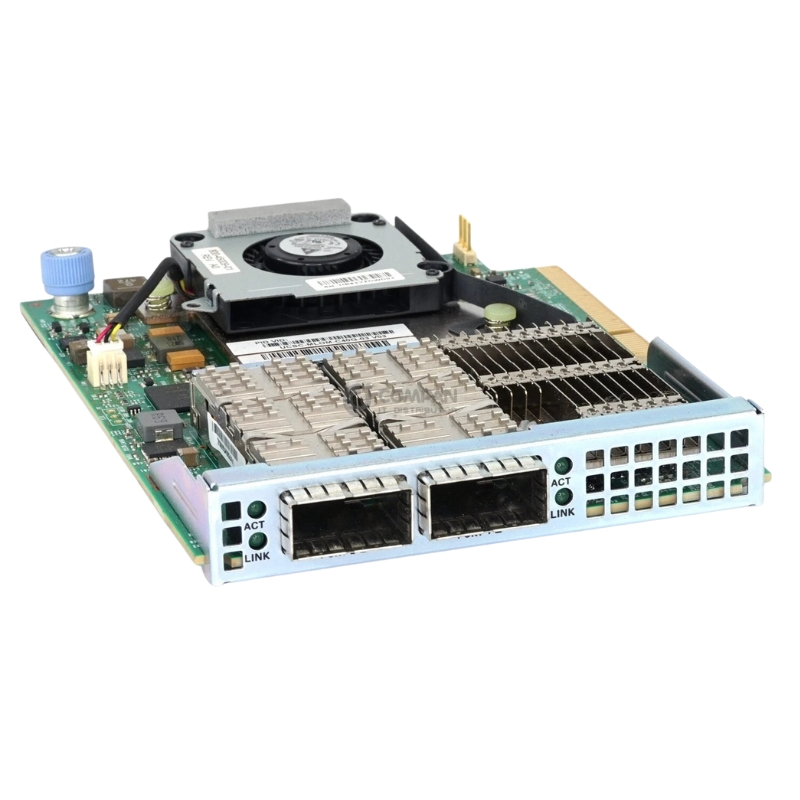
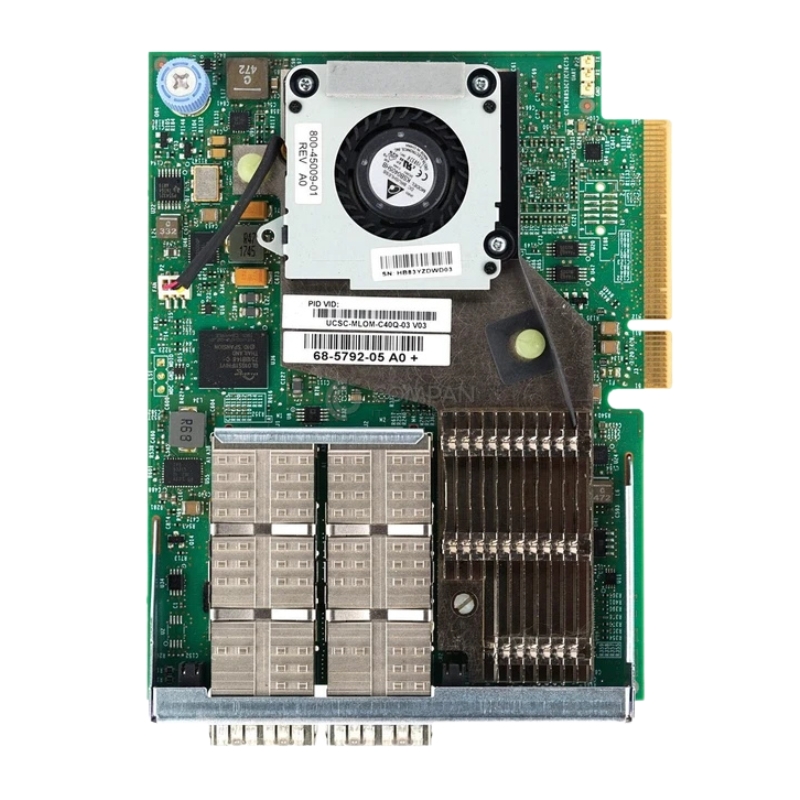
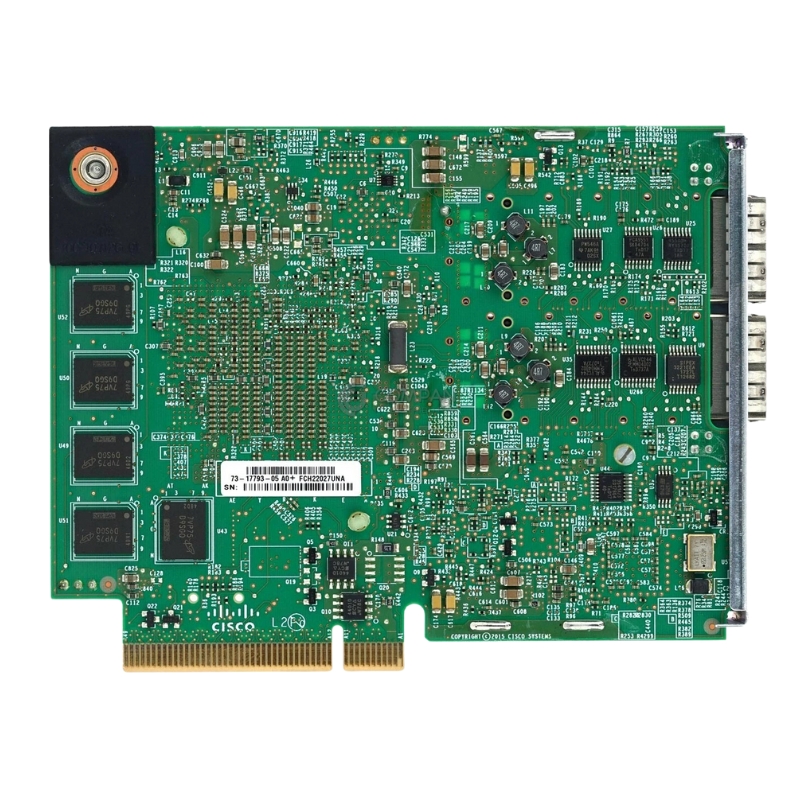
Cisco UCSC-MLOM-C40Q-03= Vic 1387 Dual-Ports 40Gbps QSFP Converged Network Adapter. Factory-Sealed New in Original Box (FSB) with 1 year replacement warranty
The UCSC-MLOM-C40Q-03= Virtual Interface Card Network Adapter is a high-performance networking solution designed for modern enterprise data centers requiring ultra-fast connectivity, scalability, and flexible I/O architecture. this adapter is engineered to support advanced virtualization, cloud computing environments, and high-throughput workloads where reliability and bandwidth efficiency are critical.
Built with 40GBase-X network technology, this adapter delivers high-speed data transfer capabilities through optical fiber media, ensuring low latency and superior performance for mission-critical applications.
The Cisco UCSC-MLOM-C40Q-03= Virtual Interface Card Network Adapter represents a high-performance, enterprise-grade networking solution designed for Cisco Unified Computing System (UCS) environments. Engineered to deliver advanced virtualization capabilities, scalable bandwidth performance, and efficient data center integration, this adapter is part of Cisco’s modular LAN-on-Motherboard (MLOM) architecture, specifically optimized for blade and rack server deployments that require dense, low-latency network connectivity.
Built to support modern workloads including cloud computing, virtualization clusters, high-performance databases, and distributed application frameworks, this virtual interface card is positioned as a critical component in next-generation IT infrastructures. It enables organizations to consolidate network interfaces, optimize server I/O performance, and reduce operational complexity while maintaining high throughput and reliability.
The Cisco UCSC-MLOM-C40Q-03= adapter is designed with a virtual interface architecture that allows multiple virtual network interfaces to be created on a single physical adapter. This approach supports efficient workload segmentation and enables seamless integration with hypervisors such as VMware ESXi, Microsoft Hyper-V, and KVM-based environments. By abstracting physical NIC resources into virtual interfaces, the adapter enhances resource utilization and simplifies network management in complex data center environments.
The virtualization engine embedded in the adapter provides flexible bandwidth allocation across virtual machines, ensuring predictable performance even under heavy traffic loads. This is particularly beneficial for enterprise environments running mixed workloads where traffic prioritization and isolation are essential for maintaining application performance and security compliance.
A key feature of the Cisco UCS virtual interface card family is its integration into Cisco Unified Fabric architecture. The UCSC-MLOM-C40Q-03= enables consolidation of LAN, SAN, and management traffic onto a single converged network infrastructure. This reduces the need for multiple discrete adapters and cables, significantly simplifying data center cabling while improving airflow and reducing power consumption.
Through Cisco’s fabric interconnect technology, the adapter seamlessly connects with UCS Fabric Interconnects, ensuring consistent policy enforcement, centralized management, and simplified provisioning. This unified approach enhances scalability and operational efficiency in both small-scale and large-scale deployments.
The UCSC-MLOM-C40Q-03= Virtual Interface Card is engineered to support high-speed data transmission suitable for modern enterprise workloads. It delivers robust throughput capabilities designed to handle data-intensive applications such as virtualization clusters, real-time analytics, financial transaction systems, and high-frequency trading platforms.
Its architecture ensures minimal packet loss and reduced latency, making it ideal for environments where deterministic performance is critical. The adapter is optimized to reduce CPU overhead through hardware offloading techniques, allowing server processors to focus on application-level tasks rather than network processing duties.
Latency optimization is a core design principle of the Cisco UCSC-MLOM-C40Q-03= adapter. By leveraging hardware-based packet processing and intelligent queue management, the adapter minimizes delays in data transmission. This makes it particularly suitable for mission-critical applications such as database replication, distributed storage systems, and real-time communication platforms.
The reduction in network jitter and latency variability ensures consistent application performance, which is essential for maintaining service level agreements in enterprise IT environments. This capability also enhances user experience in virtual desktop infrastructure (VDI) deployments where responsiveness is a key performance indicator.
The UCSC-MLOM-C40Q-03= is fully compatible with Cisco UCS blade and rack server platforms, making it an integral part of Cisco’s data center ecosystem. It is designed to fit into the modular MLOM slot architecture, allowing organizations to easily deploy or upgrade network capabilities without requiring extensive hardware redesign or infrastructure changes.
This compatibility ensures that enterprises leveraging Cisco UCS environments can maintain consistent hardware standards while scaling their network capabilities. It also simplifies lifecycle management, as firmware updates and configuration changes can be centrally managed through Cisco UCS Manager.
Modern data centers rely heavily on virtualization technologies, and the Cisco UCSC-MLOM-C40Q-03= is optimized for such environments. It supports advanced virtualization offloads, enabling efficient handling of virtual machine traffic without burdening host CPU resources.
This adapter is particularly effective in cloud infrastructure environments where dynamic workload distribution and multi-tenant isolation are required. Its ability to support multiple virtual interfaces per physical port ensures optimal resource allocation across virtual machines, containers, and microservices architectures.
The adapter incorporates advanced hardware acceleration capabilities that significantly reduce CPU utilization in network processing tasks. Features such as TCP/IP offloading, checksum calculation, and segmentation offload allow the server to operate more efficiently by delegating repetitive networking tasks to dedicated hardware components within the adapter.
This hardware acceleration is particularly beneficial in environments with high packet throughput requirements, such as cloud service providers and enterprise virtualization clusters. By reducing CPU overhead, organizations can achieve higher VM density per server, improving overall infrastructure efficiency.
Quality of Service (QoS) support is a fundamental feature of the Cisco UCSC-MLOM-C40Q-03= Virtual Interface Card. It enables administrators to prioritize network traffic based on application requirements, ensuring that critical workloads receive the necessary bandwidth and low-latency paths.
This capability is essential in multi-tenant environments where different applications compete for network resources. By implementing traffic shaping and prioritization policies, organizations can maintain predictable performance for latency-sensitive applications such as voice, video, and transactional systems.
The Cisco UCSC-MLOM-C40Q-03= is designed for scalable deployment across large enterprise data centers. Its modular architecture allows it to be deployed in a wide range of server configurations, from small clusters to hyperscale environments. This flexibility ensures that organizations can expand their infrastructure without needing to replace existing network components.
In distributed computing environments, the adapter plays a crucial role in maintaining consistent connectivity across compute nodes, enabling seamless communication between virtual machines and storage systems.
As enterprises increasingly adopt hybrid cloud strategies, the need for adaptable and high-performance networking solutions becomes critical. The UCSC-MLOM-C40Q-03= supports hybrid infrastructure models by enabling consistent networking performance across on-premises and cloud-connected environments.
This ensures that workloads can be dynamically migrated between environments without disruption or performance degradation. The adapter’s virtualization capabilities also support software-defined networking (SDN) architectures commonly used in hybrid cloud deployments.
The Cisco UCSC-MLOM-C40Q-03= is engineered for energy efficiency, making it suitable for modern green data center initiatives. Its optimized power usage helps reduce overall operational costs while maintaining high-performance network capabilities.
By consolidating multiple network functions into a single adapter, organizations can reduce the number of physical components required, further decreasing power consumption and cooling requirements.
Efficient thermal management is essential in high-density server environments. The adapter is designed to operate within Cisco UCS thermal frameworks, ensuring stable performance even under heavy workloads. Its low heat generation contributes to improved system airflow and reduced cooling overhead.
The Cisco UCSC-MLOM-C40Q-03= is highly effective in VDI environments where multiple virtual desktops require stable and high-speed network connectivity. Its virtualization capabilities ensure that each desktop instance receives adequate bandwidth without interference from other workloads.
Cloud service providers benefit from the adapter’s ability to support multi-tenant architectures and high-density virtualization. It enables efficient resource sharing while maintaining strict isolation between tenants.
In data-intensive environments such as analytics platforms and distributed databases, the adapter provides the necessary throughput and low latency required for efficient data processing and replication.


 Contact Us
 Information
 Catalog
 Solid State Drives (SSD)
 Network Switches
 Hard Disk Drives
 HBA & Controllers
 PC & Servers
 PC & Server Memory
 CPU & Processors
 Network Routers
 Power Supplies
 Tape Drives & Libraries
 Network Devices
 Computer & Network Cables