(7% discount is applied at checkout)
Cart is empty
Your go-to destination for cutting-edge server products
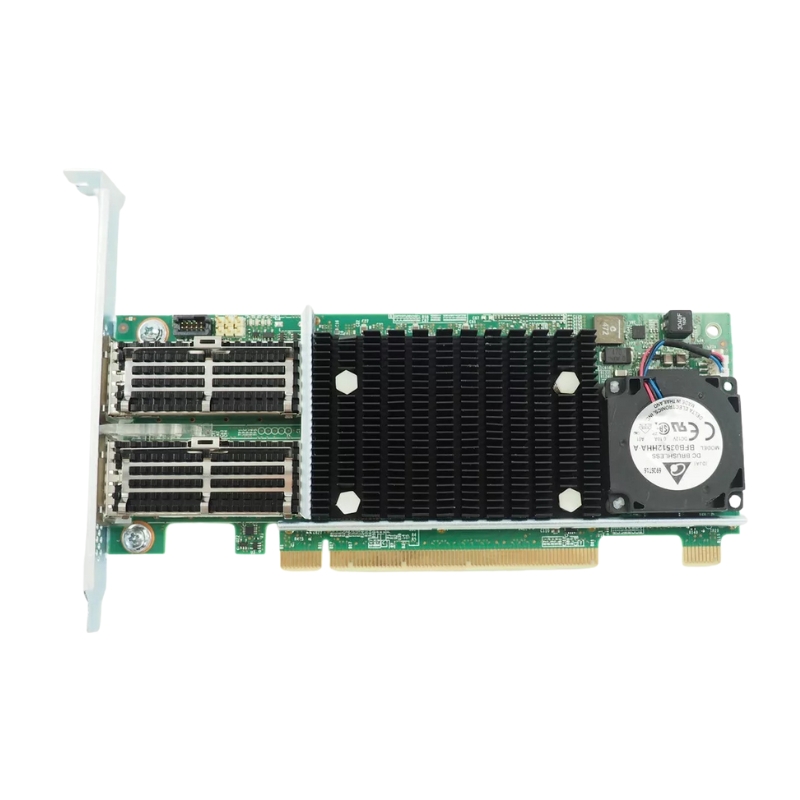


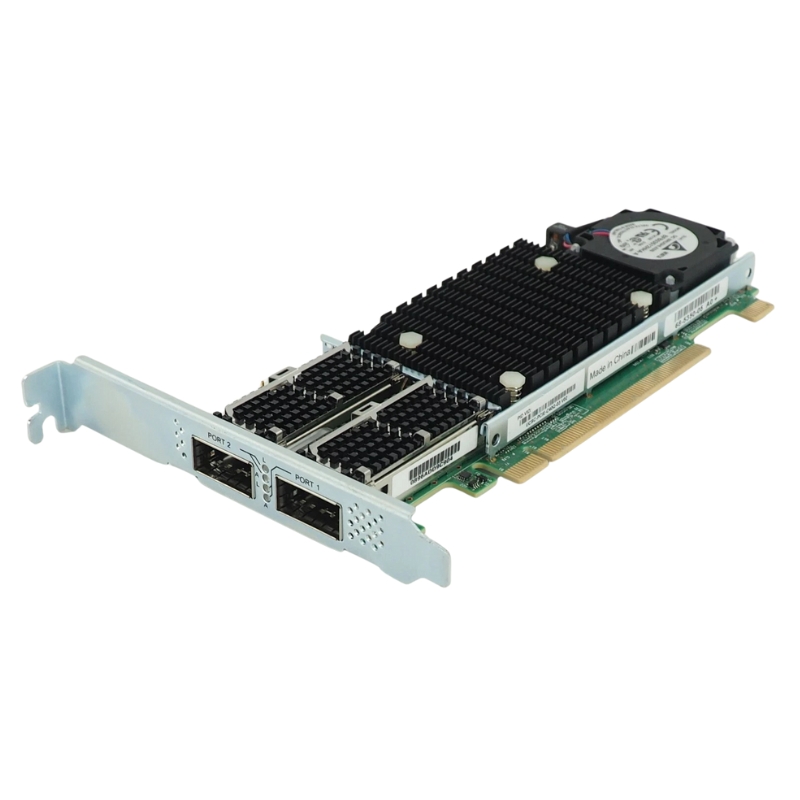
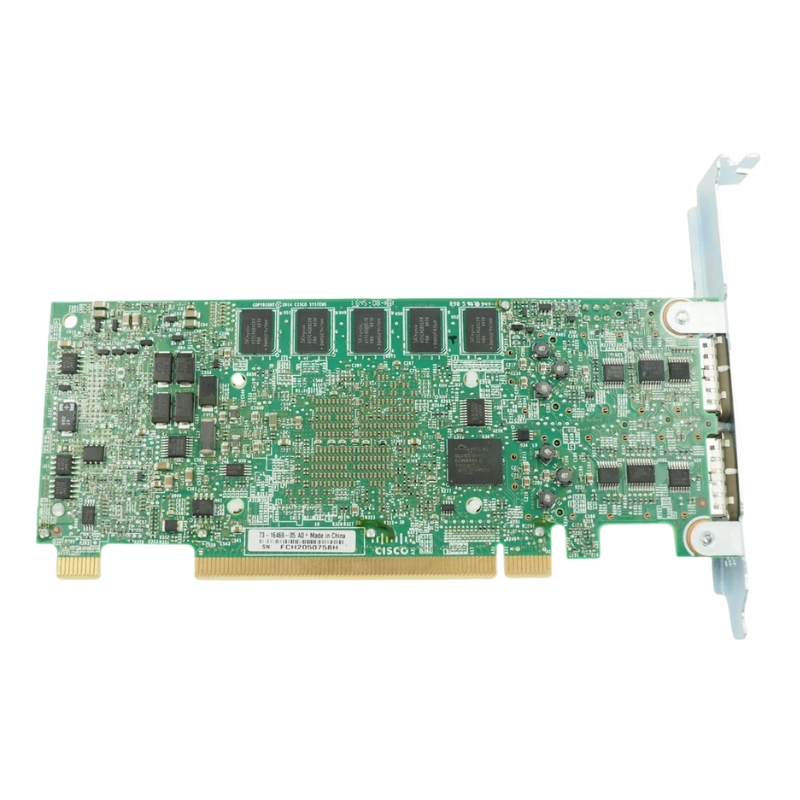
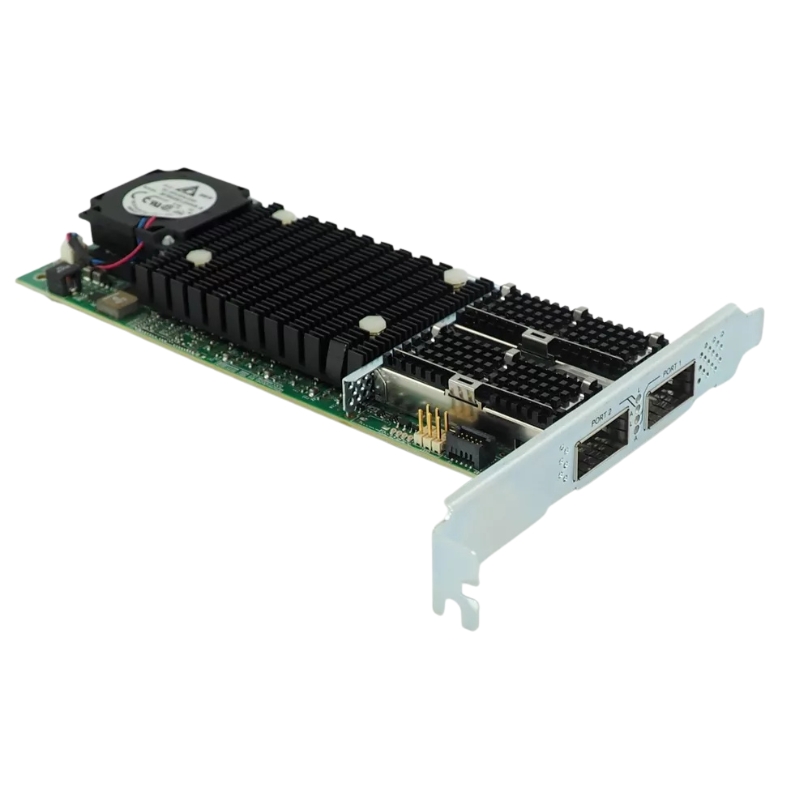
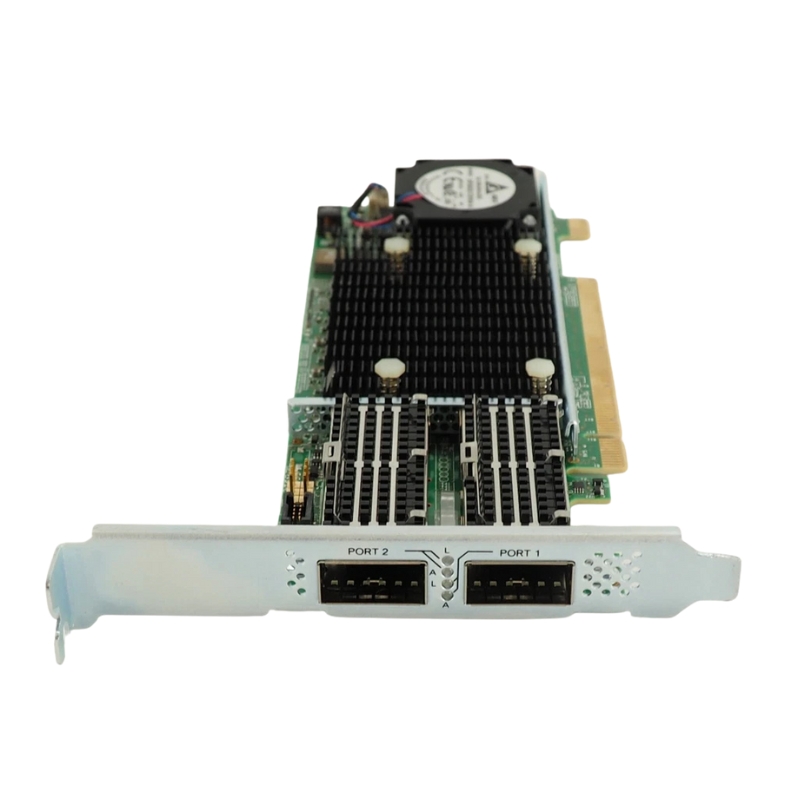
Cisco UCSC-PCIEC40Q03 UCS Virtual Interface Card 1385 -PCIe 3.0 X16 - 40 Gigabit QSFP+ Network Adapter. Excellent Refurbished with 1 year replacement warranty
The Cisco UCSC-PCIEC40Q03 UCS Virtual Interface Card is a powerful enterprise-grade network adapter designed to deliver ultra-fast connectivity, high throughput, and reliable virtualization support. Built for modern data center environments, this PCIe 3.0 x16 adapter enables seamless 40 Gigabit Ethernet performance with advanced protocol support and optimized scalability.
The Cisco UCSC-PCIEC40Q03 UCS Virtual Interface Card 1385 represents a powerful generation of converged network adapters designed to deliver ultra-high bandwidth, virtualization efficiency, and scalable cloud connectivity within modern enterprise and service provider infrastructures. this PCIe 3.0 x16 based 40 Gigabit QSFP+ network adapter is engineered specifically for Cisco Unified Computing System (UCS) environments where performance density, virtualization offload, and network consolidation are essential requirements for next-generation workloads.
As organizations increasingly transition toward hyper-converged infrastructure, hybrid cloud environments, and software-defined networking architectures, adapters like the UCS VIC 1385 provide a critical foundation for reducing I/O bottlenecks while enabling multiple virtual interfaces over a single physical hardware footprint. This design approach allows enterprises to optimize server utilization while simplifying cabling, switching, and overall network management complexity.
At the core of the Cisco UCSC-PCIEC40Q03 architecture is the PCI Express 3.0 x16 interface, which delivers a theoretical throughput of up to 128 Gbps in each direction. This high lane count ensures that the adapter can fully utilize its dual 40 Gigabit Ethernet capabilities without encountering host-side bottlenecks. The PCIe 3.0 standard also enhances latency characteristics compared to earlier generations, enabling faster packet processing, improved throughput consistency, and reduced jitter in virtualized workloads.
The x16 lane configuration is particularly important in environments where multiple virtual machines, containers, and application workloads simultaneously require direct network access. By leveraging full-width PCIe connectivity, the adapter ensures that both north-south and east-west traffic flows remain stable even under heavy compute and storage demand.
The internal architecture of the UCS VIC 1385 is designed around a low-latency packet processing pipeline that offloads critical networking tasks from the CPU. This includes encapsulation and decapsulation of network traffic, checksum offloading, and intelligent packet steering. The result is a significant reduction in CPU overhead, allowing compute resources to be allocated more efficiently toward application workloads rather than network processing tasks.
The Cisco UCSC-PCIEC40Q03 utilizes a QSFP+ (Quad Small Form-Factor Pluggable Plus) interface capable of delivering 40 Gigabit Ethernet speeds. This high-throughput interface is ideal for modern data center spine-leaf architectures where aggregation layers require massive bandwidth consolidation. The QSFP+ interface supports breakout configurations in certain deployments, allowing flexible scaling into multiple lower-speed connections depending on transceiver and switch compatibility.
This flexibility makes the UCS VIC 1385 suitable for both high-density virtualization clusters and high-performance computing environments where data throughput is critical.
The adapter supports a wide range of QSFP+ transceivers and direct attach copper (DAC) cables, enabling deployment across different distances and infrastructure types. Short-reach DAC cables are often used within rack-level deployments, while optical fiber transceivers support extended distances between server racks and aggregation switches. This flexibility ensures seamless integration into existing enterprise network topologies without requiring extensive infrastructure redesign.
One of the defining features of the Cisco UCSC-PCIEC40Q03 is its Virtual Interface Card (VIC) technology. This innovation allows the physical adapter to be partitioned into multiple virtual network interfaces, enabling administrators to assign dedicated bandwidth channels to individual virtual machines or workloads. This reduces network contention and ensures predictable performance in multi-tenant environments.
The VIC architecture eliminates the need for multiple physical NICs per server, simplifying hardware design and reducing power consumption while increasing network flexibility.
Single Root I/O Virtualization (SR-IOV) support enables the adapter to present multiple virtual functions directly to hypervisors. This bypasses traditional software-based switching layers, reducing latency and improving packet throughput for virtual machines. In cloud environments, this is particularly valuable for workloads such as database clusters, real-time analytics platforms, and high-frequency trading applications where microsecond-level latency differences can be significant.
The UCS VIC 1385 integrates seamlessly with major hypervisors, allowing direct assignment of virtual functions to guest operating systems. This reduces CPU overhead associated with network emulation and ensures more deterministic performance across virtualized workloads.
Designed specifically for Cisco UCS environments, the UCSC-PCIEC40Q03 integrates tightly with UCS Fabric Interconnects. This allows for unified management of compute and networking resources through a centralized management framework. By combining network and server management into a single pane of control, administrators can streamline provisioning, monitoring, and troubleshooting processes.
By consolidating multiple NIC functions into a single adapter, organizations can significantly reduce cable clutter, switch port consumption, and hardware redundancy. This simplification not only reduces capital expenditures but also lowers operational costs associated with maintenance and power consumption.
The adapter is particularly well suited for cloud-scale deployments where rapid provisioning and elasticity are required. Its virtualization-centric architecture supports dynamic allocation of network resources based on workload demands, making it ideal for private cloud, hybrid cloud, and service provider environments.
Beyond raw bandwidth, the Cisco UCS VIC 1385 is engineered for high packet-per-second processing efficiency. This ensures that small packet workloads, such as database queries or microservices communication, do not degrade overall system performance. The adapter optimizes interrupt handling and packet batching mechanisms to maintain consistent throughput under heavy load conditions.
The adapter incorporates hardware acceleration for key networking functions including TCP segmentation offload (TSO), large receive offload (LRO), and checksum calculations. By transferring these tasks from CPU to dedicated hardware logic, system resources are preserved for application-level processing.
The Cisco UCSC-PCIEC40Q03 is widely deployed in private cloud infrastructures where virtualization density is high and network efficiency is critical. It supports workloads such as virtual desktop infrastructure (VDI), enterprise resource planning (ERP) systems, and large-scale web applications that require consistent network performance.
In HPC environments, the adapter’s 40GbE bandwidth and low-latency design enable efficient handling of distributed computing workloads. Applications involving scientific simulations, machine learning model training, and large-scale data processing benefit significantly from the adapter’s ability to reduce communication overhead between compute nodes.
Service providers leverage the UCS VIC 1385 for its scalability and virtualization capabilities. It supports network function virtualization (NFV) architectures where multiple virtual network functions run on shared hardware infrastructure, improving resource utilization and reducing infrastructure costs.
Security is enhanced through hardware-based traffic segmentation, allowing different virtual interfaces to remain isolated from one another. This is particularly important in multi-tenant environments where workload isolation is a critical requirement.
The UCS VIC 1385 incorporates secure boot mechanisms to ensure that only authenticated firmware is executed. This protects against unauthorized modifications and potential firmware-level attacks.


 Contact Us
 Information
 Catalog
 Solid State Drives (SSD)
 Network Switches
 Hard Disk Drives
 HBA & Controllers
 PC & Servers
 PC & Server Memory
 CPU & Processors
 Network Routers
 Power Supplies
 Tape Drives & Libraries
 Network Devices
 Computer & Network Cables