(7% discount is applied at checkout)
Cart is empty
Your go-to destination for cutting-edge server products
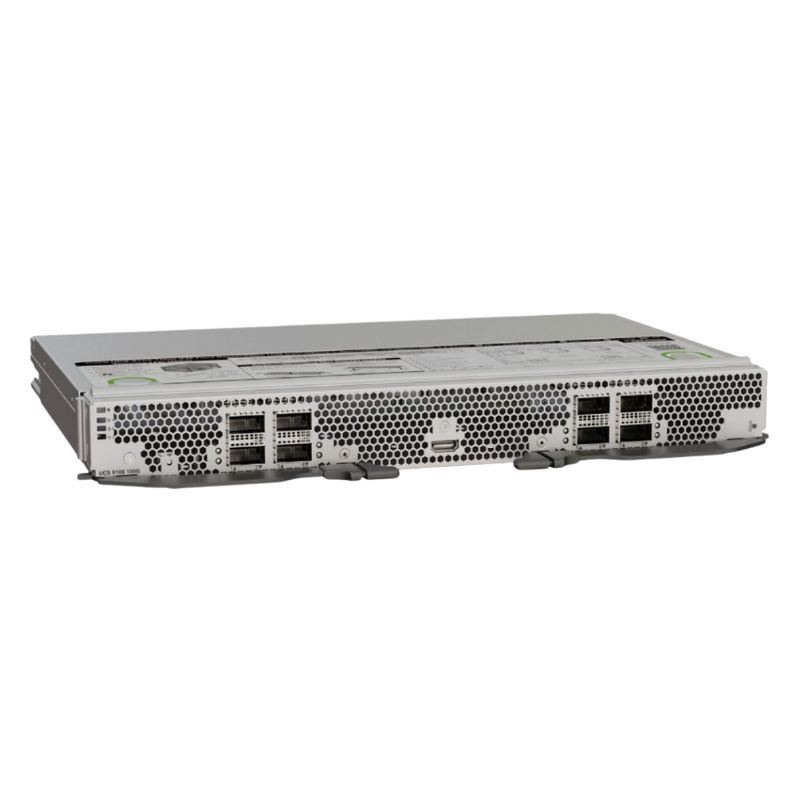


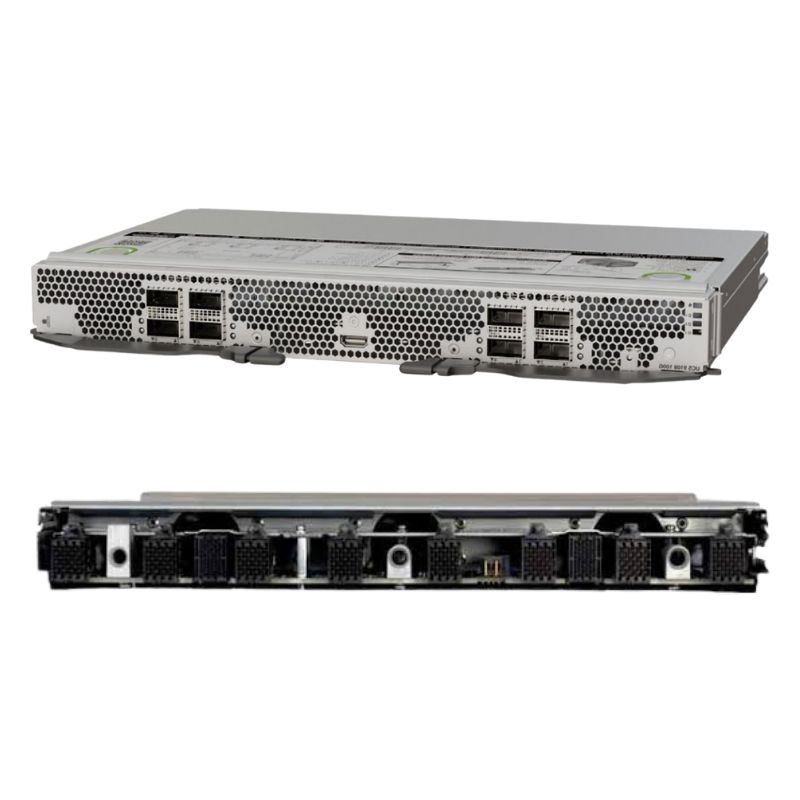
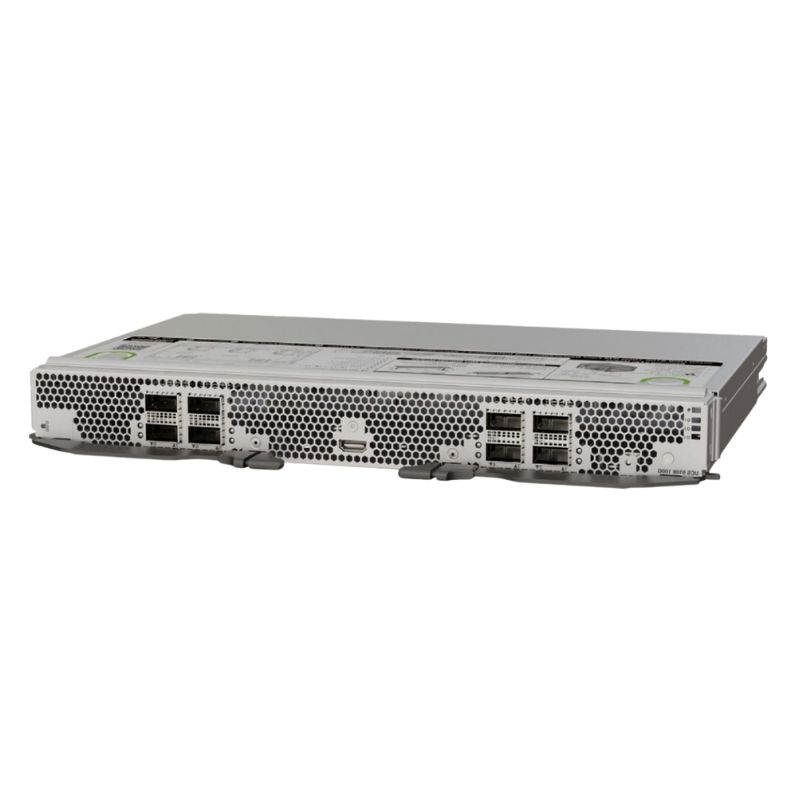
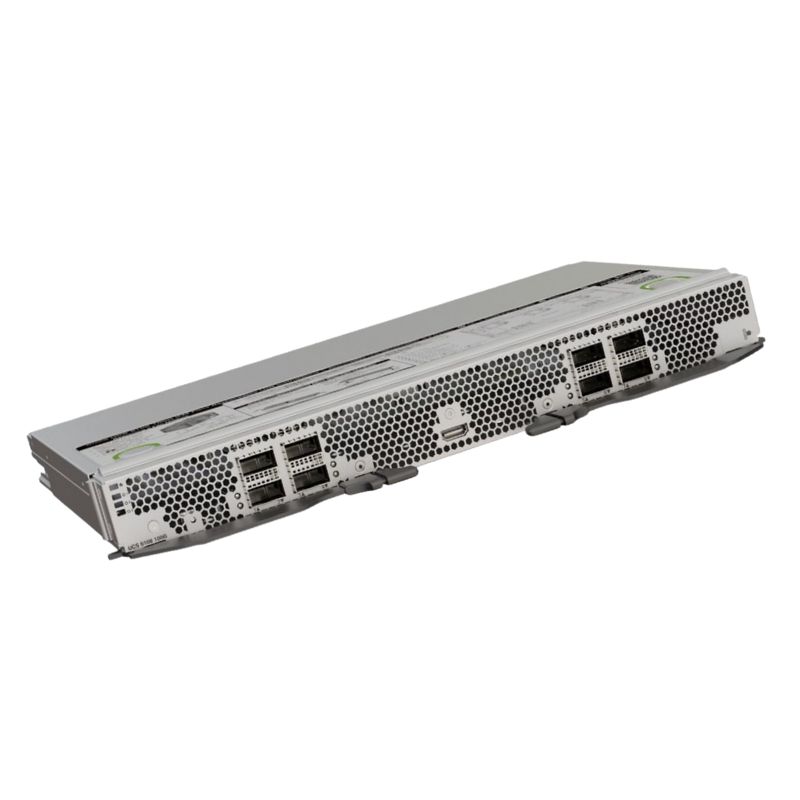
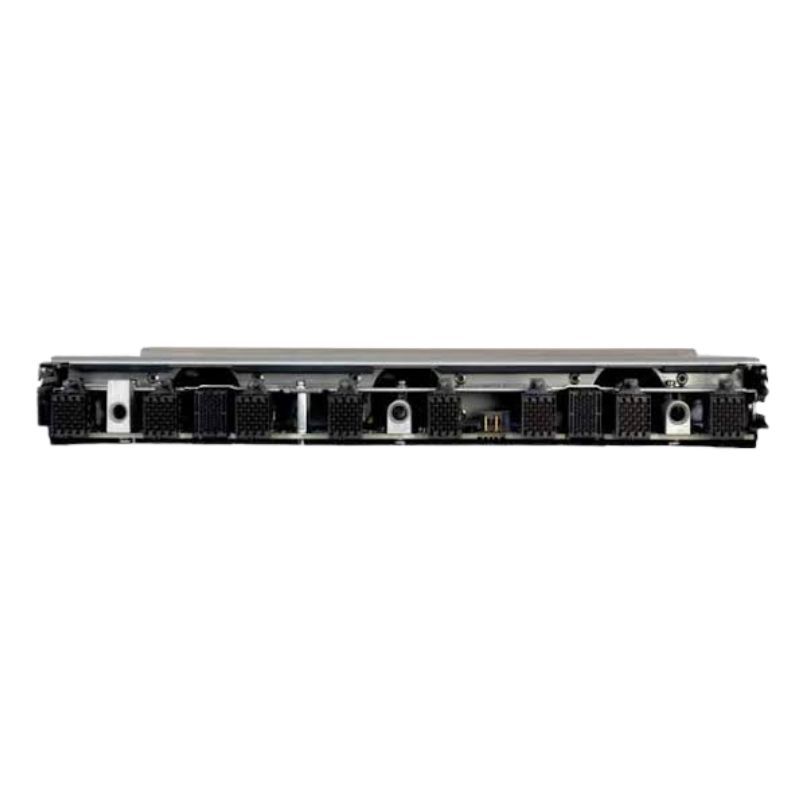
Cisco UCSX-S9108-100G UCS X-series Direct Intelligent Fabric Interconnect Module. Excellent Refurbished with 1 Year Replacement Warranty
This Cisco module is designed for advanced data networking and optical communication tasks, ensuring robust connectivity in modern network environments.
This module seamlessly integrates with select Cisco UCS X-series hardware for optimized network performance.
The category of Cisco UCSX‑S9108‑100G UCS X‑series Direct Intelligent Fabric Interconnect Modules represents a critical component class within the broader architecture of Cisco’s Unified Computing System (UCS) X‑series infrastructure. This class of modules is designed to serve as the backbone connectivity fabric that links server nodes and storage or Ethernet fabrics, while delivering high throughput, low latency, and centralized management. The UCSX‑S9108‑100G module stands out in this category as a high‑performance, 100 Gigabit Ethernet (100G) intelligent interconnect solution engineered for demanding data center environments, hyperconverged deployments, and cloud-scale workloads.
At the core of the UCSX‑S9108‑100G classification lies its support for 100 Gigabit Ethernet speeds, which provide the bandwidth headroom required for modern applications such as virtualization clusters, real‑time analytics, machine learning workloads, and large‑scale storage replication. Unlike older generation fabric interconnects limited to 10G or 40G, the 100G interface ensures that aggregated traffic from multiple UCS X‑series server nodes does not become a bottleneck. The interconnect module’s 100G lanes are engineered for sustained line-rate throughput, well beyond typical bursty traffic patterns, ensuring consistent performance even under heavy, continuous I/O loads.
The “intelligent fabric” aspect of this category emphasizes more than raw speed. The interconnect modules in this class—including the UCSX‑S9108‑100G—are built to integrate tightly with Cisco UCS X‑series chassis, server blades, and management controllers. They support Cisco’s UCS Manager orchestration, letting administrators define service profiles, VLAN configurations, QoS policies, and fabric zoning at a central point. This intelligent orchestration capability ensures that deployment, scaling, and lifecycle management of servers become a software‑defined process, minimizing manual configuration errors and speeding up provisioning cycles.
The modules enable unified fabric control across diverse physical and virtual resources. By carrying both storage traffic and Ethernet/IP traffic over the same high-speed links, they consolidate network paths, reduce cable complexity, and lower data center footprint. The UCSX‑S9108‑100G category supports features such as dynamic fabric reconfiguration, failover, and redundancy, making it ideal for mission-critical environments requiring high availability and minimal downtime. Administrators can reshuffle logical connections, reassign bandwidth priorities, or isolate tenant traffic without touching physical cabling.
Direct interconnect modules like these are particularly advantageous in scenarios where multiple servers within the same chassis or across chassis need to communicate with sub‑millisecond latency. Because the UCSX‑S9108‑100G offers direct fabric paths rather than routing traffic through external switches, it cuts down on latency overhead and eliminates single points of congestion. This makes it especially well suited for latency‑sensitive workloads such as high‑frequency trading, database clustering, virtualization hypervisors, or real-time analytics pipelines.
Another defining characteristic of this category is the ability to scale both vertically and horizontally. Organizations can start with a small deployment—populating only a few server nodes in a chassis and a single interconnect module—and grow over time. As more workloads are consolidated or new applications are onboarded, additional UCS X‑series chassis and cabinets can be connected into the same fabric backbone. The UCSX‑S9108‑100G modules support stacking (or fabric extension) so that multiple interconnects behave as a single logical fabric, maintaining consistent network policies and management across the entire deployment.
The modules belonging to this category are explicitly engineered to work with the UCS X‑series platform, including X‑series chassis, server nodes (both blade servers and modular nodes), and the fabric extender architecture. Compatibility is verified across multiple generations of UCS hardware, ensuring that enterprises with mixed hardware refresh cycles can still standardize on the 100G interconnect backbone. The UCSX‑S9108‑100G acts as a drop‑in component in supported chassis slots, automatically recognized by UCS Manager and managed as part of the unified fabric paradigm.
Given its robust throughput and unified fabric capabilities, this category is ideal for hybrid workload environments—where virtualization, container orchestration, and bare-metal applications coexist. Virtual machine farms, container clusters, and database nodes all benefit from the consistent low-latency, high-bandwidth connectivity. Storage traffic, whether block or file‑based, can travers through the same fabrics used for VM traffic or distributed application data flows, simplifying network design and improving operational efficiency.
Organizations looking to consolidate multiple legacy 10G/25G/40G silos or refresh aging hardware racks often turn to the UCS X‑series ecosystem paired with 100G interconnect modules. This category offers a forward-compatible foundation that accommodates future growth, greater bandwidth demand, and evolving virtualization density, all while reducing cabling complexity and management overhead. It offers a clear upgrade path for data centers moving towards software‑defined infrastructure and cloud-native operations.
The 100G interconnect modules in this category excel in clustered deployments where high throughput and fault tolerance are essential. For example, in hyperconverged infrastructure (HCI) clusters, storage replication, virtualization failover, live migration, and distributed application orchestration all depend on reliable, high-bandwidth fabric connectivity. Similarly, high-availability database clusters—whether SQL-based, NoSQL, or in-memory—benefit from consistent, low-latency network paths that prevent network-induced performance variance. Enterprises with strict SLAs regarding uptime, performance, and scalability often rely on fabric interconnect modules like UCSX‑S9108‑100G to deliver predictable behavior under load.
Compared to legacy interconnect modules capped at 10G or 40G, the 100G class from Cisco provides several multiples over older bandwidth ceilings. This difference becomes particularly prominent as organizations adopt virtualization densities, container orchestration, or big data workloads. Where a 40G module might saturate under aggregated traffic from multiple servers, the UCSX‑S9108‑100G maintains headroom, delivering significant performance gains. This bandwidth cushion effectively future-proofs infrastructure, enabling data center operators to deploy high-bandwidth applications today while staying ready for more aggressive workloads tomorrow.
High-performance fabric interconnect modules avoid common pitfalls of oversubscribed network fabrics. By delivering full 100G lanes per pair of fabric ports or uplinks, they mitigate oversubscription issues that historically caused latency spikes or packet loss under heavy load. The result is more consistent throughput, fewer retransmissions, and more predictable performance—key for applications where timing and consistency matter, such as real-time data analytics, high-performance computing (HPC), or financial applications. The unified fabric design also reduces the number of cables, switch boxes, and network hops required, cutting down operational complexity and lowering energy consumption in the data center.


 Contact Us
 Information
 Catalog
 Solid State Drives (SSD)
 Network Switches
 Hard Disk Drives
 HBA & Controllers
 PC & Servers
 PC & Server Memory
 CPU & Processors
 Network Routers
 Power Supplies
 Tape Drives & Libraries
 Network Devices
 Computer & Network Cables