(7% discount is applied at checkout)
Cart is empty
Your go-to destination for cutting-edge server products
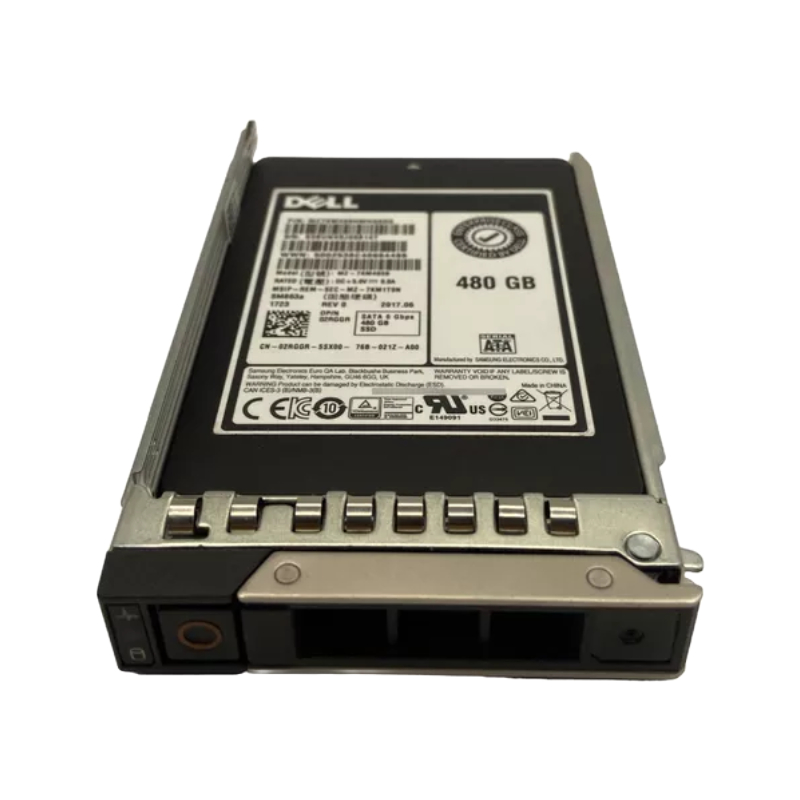


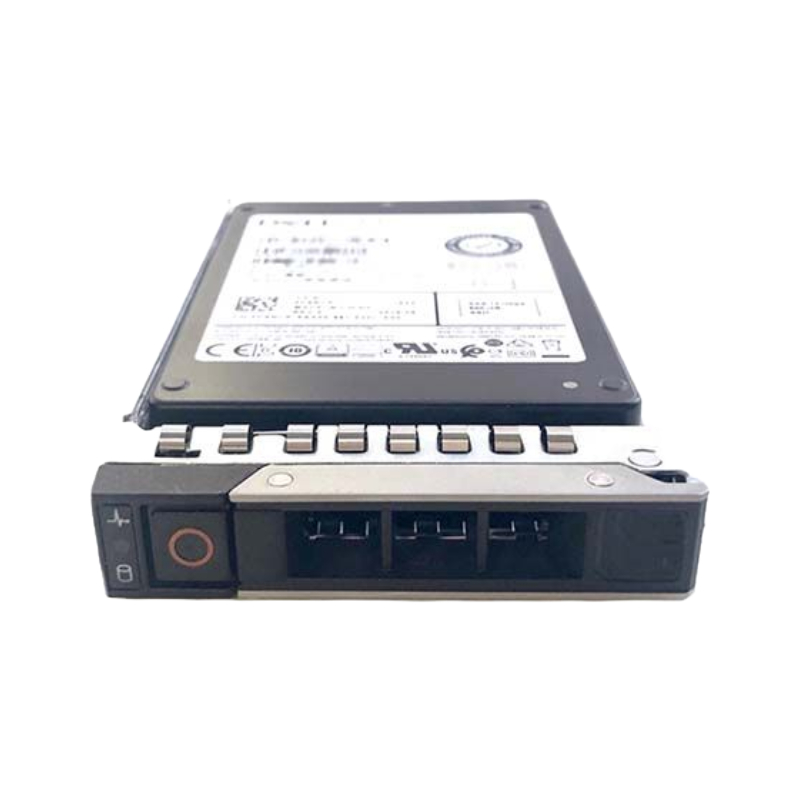
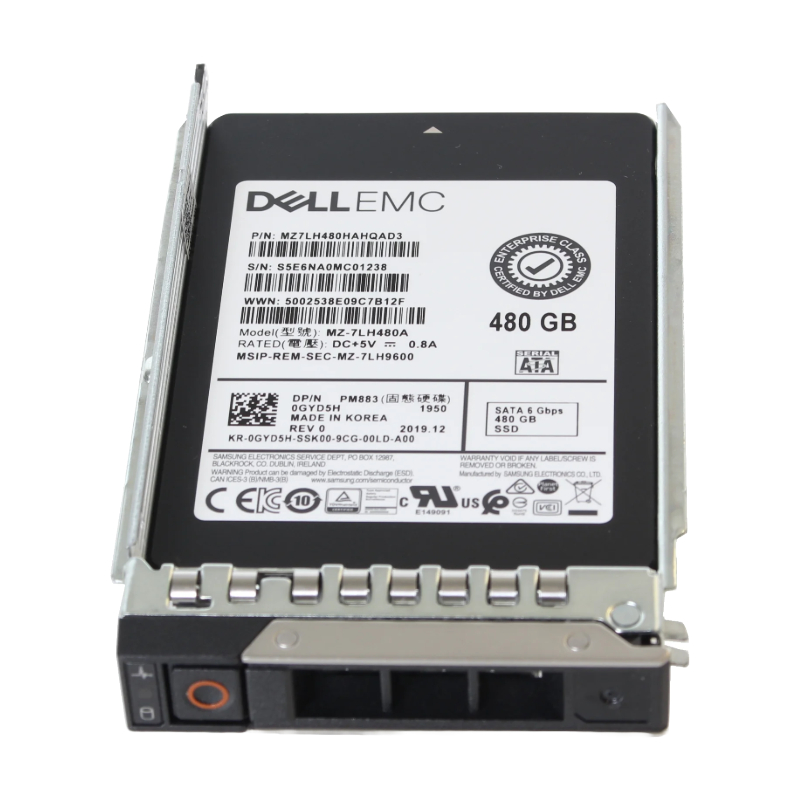
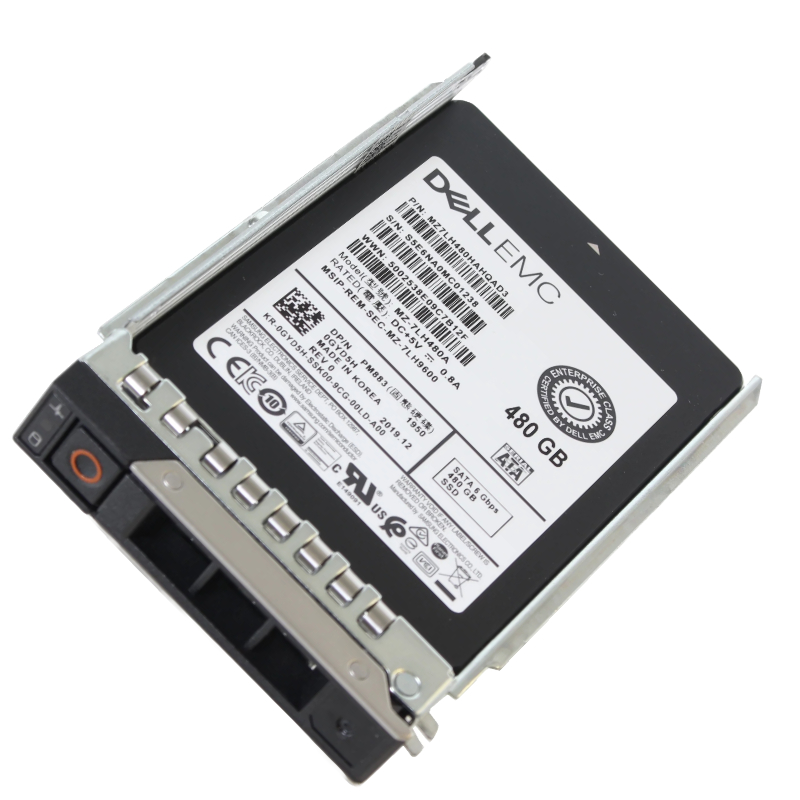
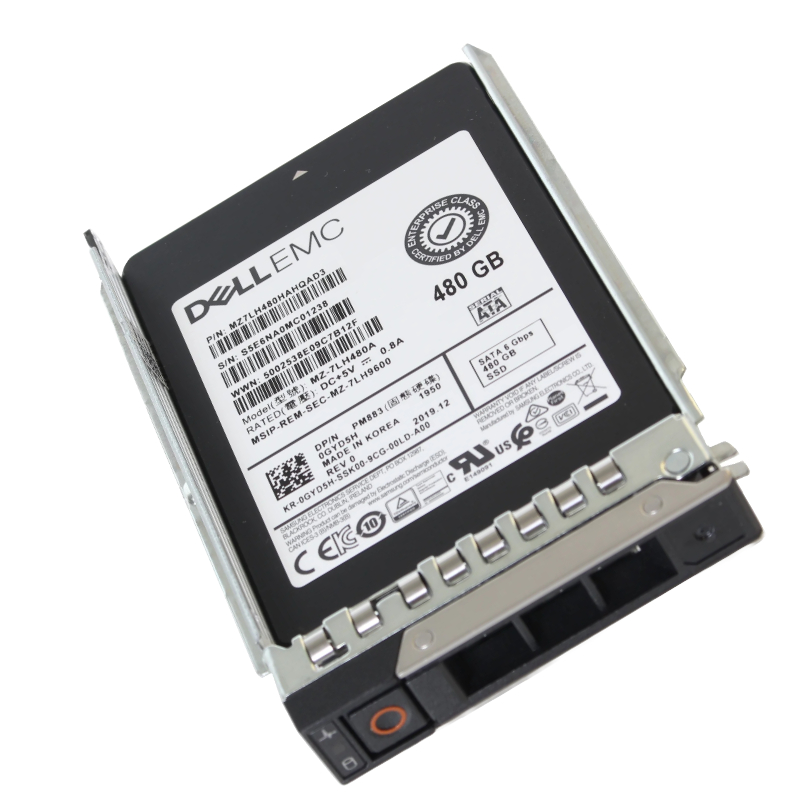
Dell D35F3 480GB SATA-6GBPS Mixed-Use TLC SFF Hot-Plug for Server Solid State Drive. Excellent Refurbished with 1 year replacement warranty
| SKU/MPN | Warranty | Price | Condition | You save |
|---|---|---|---|---|
| D35F3 | 1 Year Warranty | $142.00 | Excellent Refurbished | You save: $49.70 (26%) |
| D35F3 | 1 Year Warranty | $560.00 | New Sealed in Box (NIB) | You save: $196.00 (26%) |
This SSD is engineered for seamless integration with Dell’s server infrastructure, ensuring optimal performance and reliability across a wide range of enterprise applications.
The Dell D35F3 480GB SATA-6GBPS Mixed-Use TLC SFF Hot-Plug server SSD category covers enterprise-grade solid state drives designed for modern datacenter workloads that demand a balance between performance, endurance, and cost-efficiency. These drives are built on triple-level cell (TLC) NAND flash technology and deliver SATA 6 Gbps interface compatibility in a small form factor (SFF) intended for hot-plug use within rack and tower servers. The category emphasizes drives tailored to mixed-use applications: environments where read and write activity are both significant, where predictable latency matters, and where drive-level features such as power-loss protection, firmware optimization, and thermal management become differentiators for systems running virtualization, streaming, caching, or transactional databases. The continuous product description section below expands on technical characteristics, deployment scenarios, compatibility considerations, performance expectations, lifecycle management, and procurement best practices relevant to this category.
At the heart of this category is the combination of the SATA 6 Gbps interface and TLC NAND flash in a compact SFF enclosure. The SATA interface remains widely supported across server platforms and provides an easy upgrade path for many enterprise systems, making these drives suitable for mixed fleets. TLC NAND balances cost per gigabyte with reasonable endurance compared to older MLC or enterprise-grade SLC options; modern controller algorithms, wear-leveling, error correction, and over-provisioning substantially improve usable life and performance consistency. Hot-plug capability and the SFF design enable dense storage arrays and swift swap-outs during maintenance windows, reducing mean time to repair and improving overall infrastructure resilience. Firmware-level features such as intelligent garbage collection, background scrubbing, and prioritized I/O scheduling are essential for maintaining predictable throughput under mixed workloads.
SATA 6 Gbps remains an industry staple for server storage density and interoperability. In this category, the SATA interface ensures broad compatibility with existing RAID controllers and HBA architectures that support standard SATA drives. The small form factor designation (SFF) refers to the physical dimensions that allow these drives to occupy 2.5-inch bays or proprietary sleds commonly found in contemporary servers. Hot-plug functionality is a defining trait for enterprise operations: administrators can replace or upgrade drives without powering down systems, which is critical for maintaining uptime in production environments. When planning deployments, it’s important to confirm that server chassis, backplanes, and RAID controllers support SATA SFF hot-plug devices and that any tray adapters are compatible with Dell or third-party sleds used in the environment.
TLC NAND stores three bits per cell, providing a favorable cost-to-capacity ratio while achieving reasonable endurance for mixed-use patterns. Enterprise-class TLC drives intended for mixed-use workloads are typically engineered with enhanced error correction code (ECC), substantial over-provisioning, and firmware optimized for write amplification reduction. These techniques extend drive life and keep latency consistent under heavy mixed read/write activity. Performance tuning on such drives can include enabling appropriate queue depths in the operating system, leveraging NCQ (Native Command Queuing) where supported, and adjusting RAID stripe sizes to match the workload. Administrators often calibrate write-back cache settings and battery-backed or flash-backed cache controllers to maximize throughput without compromising data integrity in the event of power incidents.
Mixed-use drives are designed to handle a blend of read-heavy and write-intensive tasks. Typical mixed workloads include virtual machine density on hypervisors, online transaction processing (OLTP), email servers, and application hosting where both reads and writes occur at substantive rates. Capacity planning for this category should consider workload characterization: random small-block I/O vs. sequential large-block transfers, read ratio versus write ratio, peak concurrency, and sustained throughput demands. Matching drive endurance (measured in drive writes per day or total terabytes written over warranty period) to the expected workload pattern helps avoid premature replacement and reduces total cost of ownership.
Organizations adopt Dell D35F3-class mixed-use SATA SSDs across several deployment patterns where a balance between cost and performance is crucial. These include caching tiers in hybrid storage arrays, primary volumes for less latency-sensitive VMs, boot and system volumes for application servers, and secondary database shards where extremely high endurance is not mandatory. The small form factor and hot-plug capability make these drives suitable for dense server arrays and converged infrastructure setups where physical space is at a premium and fast replacement during maintenance is expected. Use in RAID configurations further enhances data protection and performance by distributing load across multiple drives, though RAID rebuild behavior and rebuild times should be evaluated when selecting drive counts and RAID levels for mixed-use SSD deployments.
In virtualized environments and virtual desktop infrastructure (VDI), mixed-use SSDs can serve as a cost-effective storage tier that accelerates virtual machine boot storms and handles the read/write interplay of multiple concurrently running workloads. The drive’s ability to maintain consistent I/O latency during peaks is important for end-user experience. When designing storage for virtualization, architects should consider combining these SSDs with caching layers, memory-backed accelerators, or higher-tier NVMe capacity for the most performance-sensitive VMs. Techniques such as thin provisioning, storage QoS, and workload isolation help maintain predictable performance across many tenants.
Reliability is a core expectation for server SSDs. Drives in this category are typically validated for enterprise-class mean time between failures (MTBF), backed by manufacturer warranties and supported by firmware features that safeguard data. Regular health monitoring using SMART attributes, vendor utilities, and storage management platforms is essential to detect early signs of wear, error rate escalation, or capacity consumption that might affect performance. Proactive lifecycle management includes planning for drive replacement well before warranty expiration, updating firmware in controlled windows, and maintaining spare drives to reduce downtime during replacements. Administrators should record write amplification metrics and total terabytes written per drive to evaluate wear trends over time.
Enterprise SSDs often include mechanisms to protect in-flight data during abrupt power events. While SATA SSDs in this category may not include full capacitive power-loss protection as higher-end enterprise NVMe drives do, many implement internal safeguards that reduce the risk of metadata corruption and preserve user data to the extent possible. Pairing drives with redundant power supplies, UPS systems, and power-loss protected controllers is a best practice for environments where data consistency is critical. Confirm the exact power-loss behavior in vendor specifications and design the storage architecture to minimize exposure to unprotected power events.
Using these SSDs in enterprise arrays involves careful selection of RAID levels, controller features, and backplane compatibility. For mixed-use SATA SSDs, common RAID choices include RAID 1 for mirroring critical system volumes and RAID 5 or RAID 6 for larger-capacity arrays where fault tolerance and usable capacity are balanced. RAID controller behavior during rebuilds can influence overall system performance and drive wear; SSD-optimized rebuild techniques and background rebuild throttling help control performance impact. Additionally, ensure that RAID controllers and backplanes support SATA hot-plug semantics and that firmware recognizes SSD characteristics to avoid misclassification as legacy HDDs, which might disable SSD-optimized features like TRIM support in some environments.
Thermal dynamics directly affect SSD performance and durability. Sustained high temperatures can accelerate NAND wear and may trigger thermal throttling that reduces throughput to protect the drive. Conversely, excessively cold conditions can affect electronic component behavior during startup. The enterprise context often exposes drives to higher ambient temperatures due to dense rack layouts; therefore, architectures should incorporate hot-aisle/cold-aisle design, coordinated fan curves, and real-time thermal monitoring. Server management tools and SMART attributes provide temperature telemetry for each device; integrating this data into alerting systems enables proactive cooling adjustments before performance degradation occurs.


 Contact Us
 Information
 Catalog
 Solid State Drives (SSD)
 Network Switches
 Hard Disk Drives
 HBA & Controllers
 PC & Servers
 PC & Server Memory
 CPU & Processors
 Network Routers
 Power Supplies
 Tape Drives & Libraries
 Network Devices
 Computer & Network Cables