(7% discount is applied at checkout)
Cart is empty
Your go-to destination for cutting-edge server products


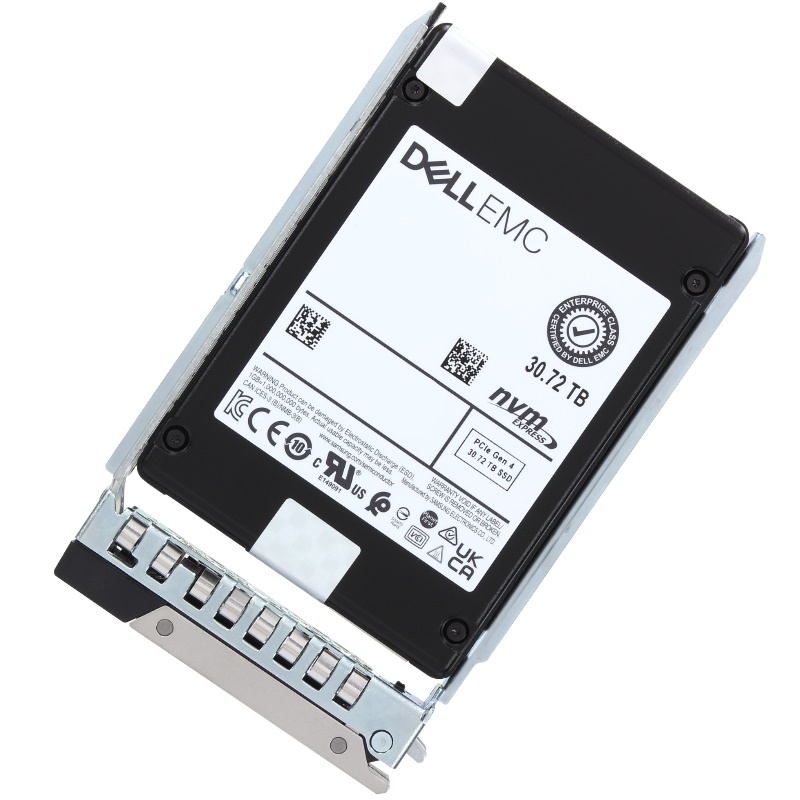
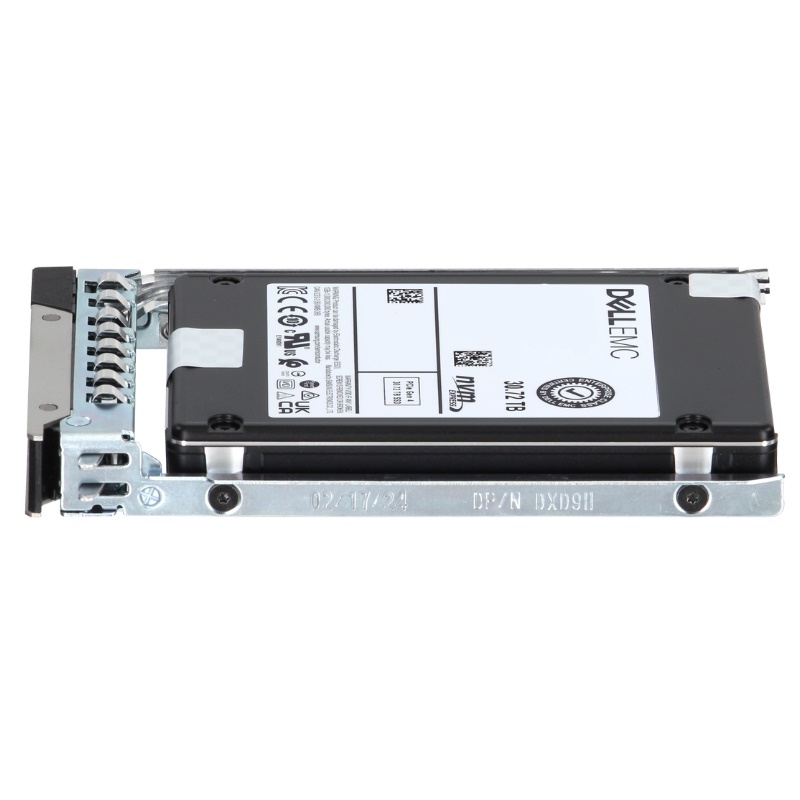
Dell D3TJG 30.72TB PCI-E Gen4 X4 NVMe U.2 SFF Enterprise Class QLC 3D-Nand SSD with tray for 14G/15G/16G/17G Poweredge Server. Excellent Refurbished with 1-Year Replacement Warranty
The Dell 30.72TB PCIe Gen4 x4 NVMe U.2 SFF SSD offers massive data capacity and blazing-fast performance, tailored for demanding enterprise environments. Engineered with advanced QLC 3D NAND technology, this drive ensures efficient data handling and long-term reliability.
At the core of this category are a few defining characteristics: ultra-high capacity (30.72TB and similar sizes), a U.2 small form factor (SFF) for 2.5-inch server bays, NVMe protocol over PCIe Gen4 x4 lanes for maximum throughput per device, and QLC (quad-level cell) 3D-NAND technology that enables denser storage cells and lower manufacturing cost per gigabyte. These drives typically ship with a tray or sled designed specifically for Dell 14G, 15G, 16G and 17G PowerEdge server chassis, ensuring tool-less hot-swap support and mechanical compatibility with backplanes. The category is intentionally engineered to balance the economics of large capacity against enterprise expectations: firmware tuned for PowerEdge firmware stacks, support for thermal management in constrained rack environments, and telemetry that integrates into server management suites. Buyers who evaluate this category are usually looking at parameters beyond raw headline capacity: they weigh endurance expressed in drive writes per day (DWPD) or total bytes written (TBW), consistent latency under mixed I/O, and integration features such as TCG/Opal encryption or hardware-assisted secure erase.
PCIe Gen4 x4 combined with the NVMe protocol places this category in the high-throughput, low-latency storage class. The Gen4 interface doubles the per-lane bandwidth compared to Gen3, allowing a single U.2 NVMe device to achieve substantially higher sequential throughput and improved concurrent I/O performance for demanding workloads. In practice, these devices excel at read-centric tasks such as analytics, object storage front ends, content delivery and backup staging. The NVMe command set reduces I/O overhead and provides a more direct path between host CPU and NAND controller, which means lower latency than SATA or SAS SSDs and better CPU utilization during heavy parallel I/O. Although QLC 3D-NAND has different performance characteristics compared to TLC or MLC NAND—particularly in sustained heavy write scenarios—category products mitigate these characteristics through controller design, SLC caching strategies, adaptive thermal throttling and firmware write optimization. For organizations that require balance between throughput and cost efficiency, the Dell D3TJG style drives offer a compelling compromise: large capacity with Gen4 speeds suitable for read-intensive or archive-adjacent use cases while keeping per-TB acquisition costs lower than higher-endurance media.
One of the defining economic propositions of this category is the use of QLC 3D-NAND to lower cost per terabyte. QLC stores four bits per cell which allows much higher density than TLC or MLC. For organizations prioritizing capacity—backup hosts, archival layers, cold data pools and content repositories—QLC enables dramatic reductions in rack space and total cost of ownership when compared to arrays of smaller drives or HDDs when factoring in power, cooling and management overhead. The tradeoffs are clear: lower write endurance and different performance under sustained heavy write patterns. However, enterprise grade QLC devices in this category include features that extend usable endurance such as dynamic overprovisioning, background media management, wear leveling and error correction algorithms designed to preserve data integrity over the expected service life. Buyers should weigh workload profiles carefully; read-heavy, sequential and infrequently rewritten datasets are ideal candidates for QLC-based 30.72TB NVMe devices because they maximize the benefit of density while minimizing write amplification and endurance stress. When used in tiered storage architectures, these devices are particularly cost-effective as capacity tiers beneath higher-endurance NVMe or as a dense front for deduplicated backup and snapshot repositories.
Endurance planning for this category focuses on mapping expected daily write volumes to the drive’s rated total bytes written and manufacturer DWPD metrics. Enterprise deployments must consider the mix of sequential and random writes, the presence of background data reduction technologies and any workload bursts that might temporarily increase write pressure. The category typically includes firmware tools and SMART attributes to help system administrators predict wear and schedule non-disruptive replacements prior to failure. Lifecycle management also includes verifying firmware compatibility with Dell PowerEdge generations 14G through 17G, ensuring the tray mechanism supports hot-swap and that thermal profiles are tuned for the server model and rack density. In addition to predictive failure analysis and firmware updates, organizations should include these drives in regular backup, snapshot and replication plans: despite robust error correction and power loss protection, the correct operational stance is one of redundancy and data protection, especially when deploying large capacity units containing critical datasets.
Compatibility is a central theme of this category. The inclusion of a tray matched to 14G, 15G, 16G and 17G PowerEdge server models ensures straightforward mechanical and electrical compatibility with Dell backplanes that accept U.2 NVMe SFF devices. Beyond physical fit, enterprise buyers value drives whose firmware is validated with PowerEdge server firmware stacks and iDRAC management controllers so telemetry, secure erase, SMART reporting and firmware upgrades can be administered centrally. The drives in this category are commonly cross-tested for thermal behavior in typical PowerEdge chassis configurations, accounting for higher airflow demands in densely populated racks and ensuring that power and cooling policies in the server BIOS do not inadvertently throttle NVMe performance. For managed environments the ability to monitor each drive’s health through iDRAC and integrate alerts into management consoles helps maintain uptime and simplifies large fleet operations. The tray design also supports hot-swap operations so drives can be replaced without powering down a host, enabling minimal disruption during maintenance windows.
Category deployments typically fall into a few archetypes. First, they serve as capacity-dense NVMe tiers for object storage front ends and content delivery networks where read performance and compact rack footprint are valuable. Second, they are used as dense node-local storage for virtualization hosts that maintain many seldom-written virtual machine images or container images, offering fast boot times and a smaller datacenter footprint. Third, they act as dense caches or deduplication staging areas in backup appliances, where temporary performance is useful during ingest but long-term endurance requirements are limited. Finally, in cloud and managed service provider scenarios these drives enable high density multi-tenant nodes where maximizing revenue per rack unit matters. In each deployment pattern the category’s benefits are most pronounced when workload characteristics are aligned with QLC strengths: predominantly read workloads, sequential write patterns, or workloads that place a premium on capacity over sustained random write endurance.


 Contact Us
 Information
 Catalog
 Solid State Drives (SSD)
 Network Switches
 Hard Disk Drives
 HBA & Controllers
 PC & Servers
 PC & Server Memory
 CPU & Processors
 Network Routers
 Power Supplies
 Tape Drives & Libraries
 Network Devices
 Computer & Network Cables