(7% discount is applied at checkout)
Cart is empty
Your go-to destination for cutting-edge server products
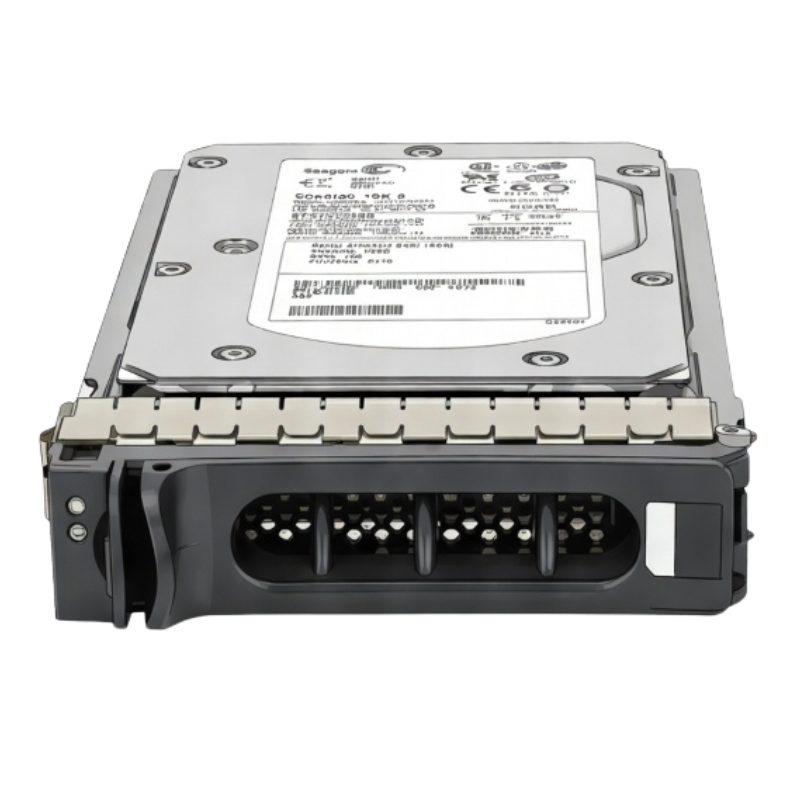


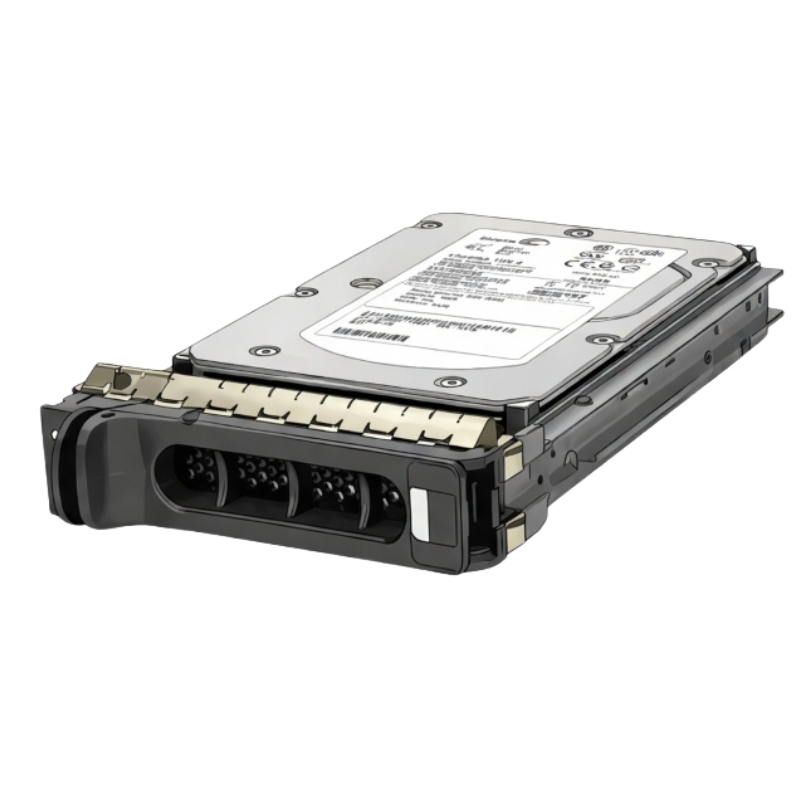
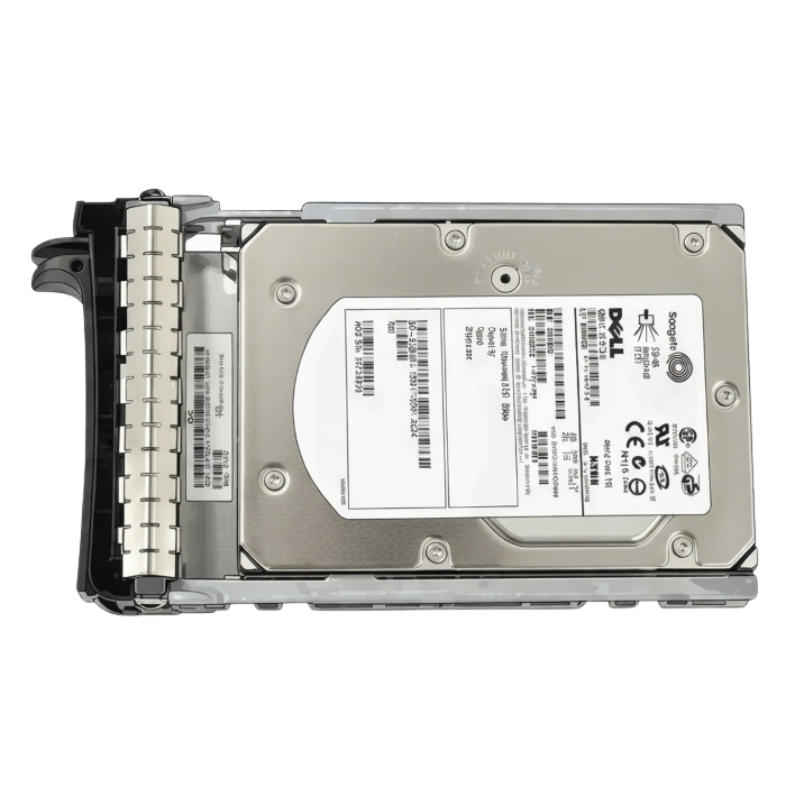
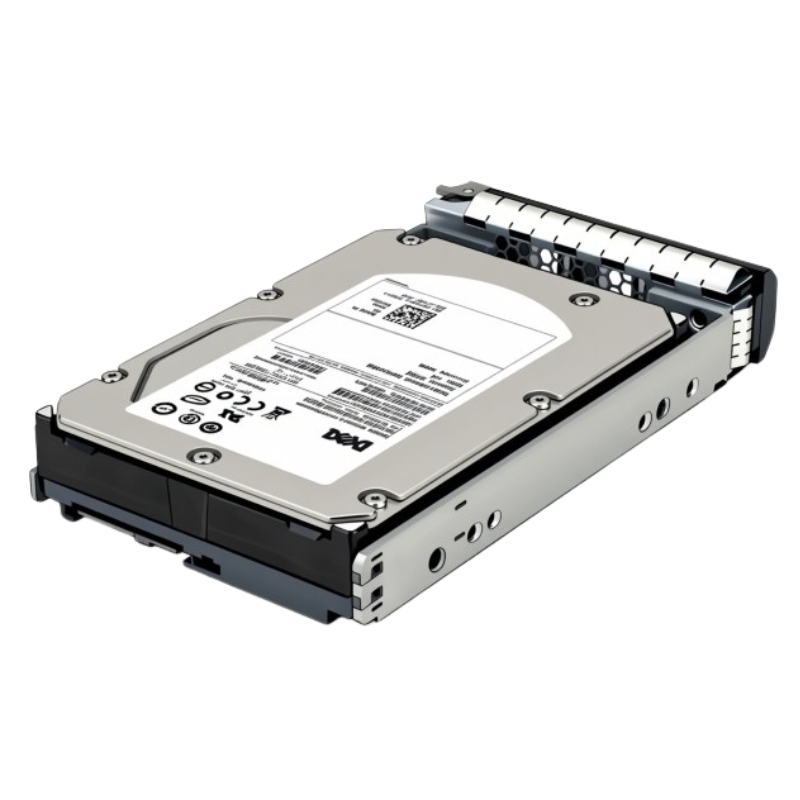
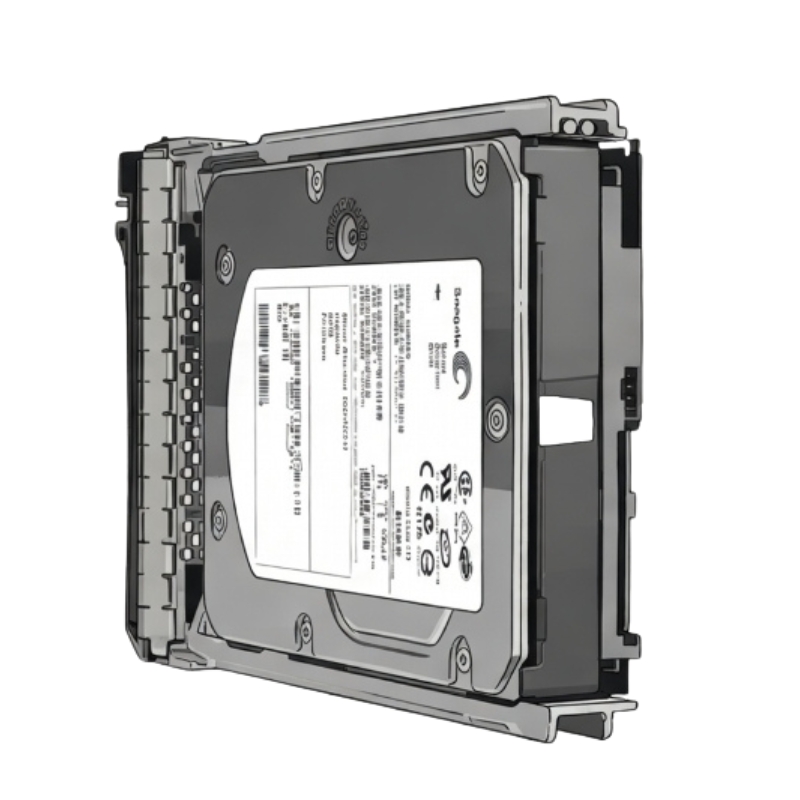
Dell 07KXJR 1TB 7.2K RPM SAS 6Gbps 3.5 Inch Internal Hard Disk Drive with Tray. Excellent Refurbished with 1 year Replacement Warranty
The Dell 07KXJR 1TB SAS Hard Disk Drive is a reliable internal storage solution designed for enterprise servers and storage arrays. With a 7.2K RPM spindle speed and SAS 6Gbps interface, this 3.5-inch HDD delivers consistent performance, durability, and compatibility for Dell PowerVault systems.
The foundation of the Dell 07KXJR's performance lies in its use of the SAS 6Gbps interface. This protocol is the backbone of enterprise storage, offering significant benefits over SATA for server applications.
Unlike SATA's half-duplex operation, SAS operates in full-duplex mode, meaning it can read and write data simultaneously. This effectively doubles the potential bandwidth of the connection. Furthermore, a key enterprise feature is dual-porting. The drive has two separate physical pathways to the server's storage controller. This enables advanced failover configurations; if one path fails, the system automatically switches to the other, ensuring continuous data availability—a non-negotiable requirement for RAID arrays and critical servers.
SAS drives employ a more robust error correction code (ECC) algorithm, significantly reducing the chance of data corruption during transfer. They also support a much larger command queue (TCQ/NCQ) depth, often up to 256 commands versus SATA's 32. This allows the drive to intelligently re-order and optimize incoming read/write requests, drastically improving performance under heavy, multi-user workloads typical in virtualization, database hosting, and file serving.
It's crucial to note that SAS controllers are generally backward compatible with SATA drives, but SAS drives cannot be used on a SATA-only controller. The Dell 07KXJR is designed to work seamlessly with Dell PowerEdge servers equipped with SAS-capable PERC (PowerEdge RAID Controller) cards, such as the H200, H700, H800, and their modern equivalents. This ensured compatibility simplifies procurement and IT lifecycle management for organizations standardized on Dell infrastructure.
The choice of the 3.5-inch form factor is strategic. It offers a proven balance of physical space for platters, capacity potential, and widespread compatibility with server chassis designed for high-density storage. The Dell 07KXJR leverages this standard, but its true mechanical ingenuity is revealed in its tray-based mounting system.
The included tray, often model-specific (like the Dell part number for which the 07KXJR is a substitute), is far more than a bracket. It is a hot-swappable carrier engineered for Dell's proprietary sled design. It features:
Integrated Connector Alignment: Guides the drive's SATA/SAS connectors perfectly into the server backplane, preventing bent pins during insertion.
Vibration Dampening: Rubber grommets or shock-absorbing materials isolate the drive from chassis vibrations, which is critical in multi-drive systems to prevent performance degradation and premature wear.
Hot-Swap Functionality: The tray enables the drive to be safely inserted and removed from a powered-on server without downtime, a cornerstone of enterprise maintenance and RAID rebuilds.
LED Indicators and Management: The tray integrates with the server's diagnostic LED system, allowing an administrator to visually identify a specific drive (e.g., by flashing its locate LED) from the front panel, even in a rack full of identical servers.
Using the correct, genuine Dell tray is not a recommendation but a requirement for supported configurations. Third-party or generic trays may not align correctly, lack proper damping, or fail to engage the latch and LED mechanisms, potentially leading to physical damage, unreliable connections, and loss of management functionality.
The performance characteristics of the Dell 07KXJR are defined by its 7,200 RPM spindle speed and 1TB capacity. This places it in a specific tier of the enterprise storage hierarchy.
With a sustained data transfer rate leveraging the SAS 6Gbps interface (theoretical max 600MB/s, with real-world speeds typically between 120-180MB/s depending on data layout), this drive excels at sequential read/write operations. This makes it well-suited for:
File servers storing large documents, images, and archives.Back-to-disk backup targets or VTL (Virtual Tape Library) storage.
Media repositories for streaming content.
Lower-tier storage in a multi-tiered virtualization environment.
For random I/O-intensive workloads (e.g., high-transaction databases, heavy VM boot storms), the seek time of a 7.2K RPM drive can become a bottleneck compared to 10K or 15K RPM SAS drives or modern SSDs. Its role is often one of high-capacity, reliable storage rather than extreme performance.
While 1TB may seem modest in an age of multi-terabyte drives, it remains a highly relevant and strategic capacity point for enterprise use. It is ideal for creating RAID arrays with multiple spindles. Combining several 1TB drives in a RAID 5, 6, or 10 configuration provides a balance of usable capacity, performance (through parallel I/O across multiple drives), and redundancy. This approach is often more cost-effective and resilient than relying on a single, higher-capacity drive.
The Dell 07KXJR is not a general-purpose drive. Its design dictates specific, optimal deployment scenarios within the IT infrastructure.
The most common application is direct replacement in existing Dell PowerEdge servers (such as the PowerEdge R710, R720, T620, and similar generations). When an original drive fails under warranty or post-warranty, the 07KXJR (or its equivalent certified part) is the specified component to restore the system to its original configuration and performance profile, maintaining the integrity of the RAID set.
For businesses building or maintaining on-premises storage servers, an array of Dell 07KXJR drives offers a dependable solution. Deployed in a RAID configuration managed by a Dell PERC card, they provide a robust storage pool for secondary data, archived projects, or as a landing zone for data before being moved to colder storage.
This drive category is highly sought after in the homelab and IT education community. Enthusiasts and students use decommissioned enterprise servers to learn about RAID, virtualization, and network services. The Dell 07KXJR provides an authentic, reliable, and affordable way to populate these servers with enterprise-grade storage, offering a real-world learning environment.
To fully appreciate the role of the Dell 07KXJR, one must view it within the broader storage technology spectrum.
While a 7.2K RPM SATA drive may share similar capacity and speed specs, the underlying SAS protocol of the 07KXJR provides superior reliability, dual-port failover, and deeper command queueing. In a server, SAS is the preferred choice for primary storage arrays, while SATA may be relegated to secondary bulk storage or boot volumes.
10,000 and 15,000 RPM SAS drives offer significantly lower latency and higher IOPS for random I/O, but at a higher cost-per-GB, lower maximum capacities, and increased power consumption and heat output. The 7.2K RPM SAS drive occupies a "sweet spot" of capacity, cost, and performance for throughput-oriented tasks.
This is the defining comparison of the modern era. SSDs offer orders of magnitude faster performance, especially in random I/O, silent operation, and lower power draw. However, the Dell 07KXJR retains advantages in cost-per-terabyte for bulk storage and proven long-term data retention characteristics for archived, cold, or warm data. In many modern servers, SSDs (NVMe and SATA) are used for tier-1 performance, while high-capacity SAS or SATA HDDs like the 07KXJR form the larger capacity tier.


 Contact Us
 Information
 Catalog
 Solid State Drives (SSD)
 Network Switches
 Hard Disk Drives
 HBA & Controllers
 PC & Servers
 PC & Server Memory
 CPU & Processors
 Network Routers
 Power Supplies
 Tape Drives & Libraries
 Network Devices
 Computer & Network Cables