(7% discount is applied at checkout)
Cart is empty
Your go-to destination for cutting-edge server products
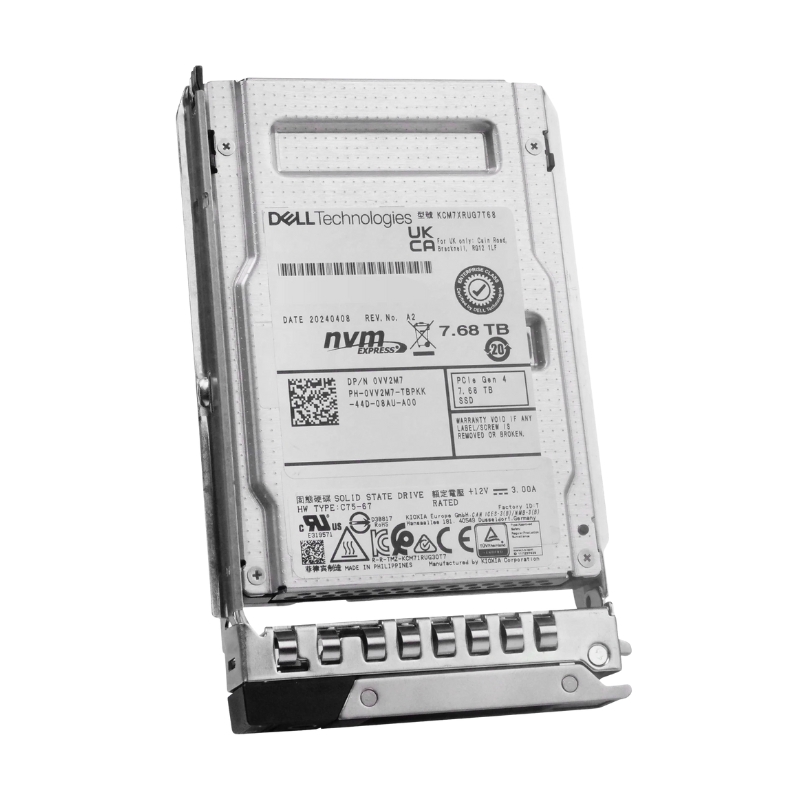


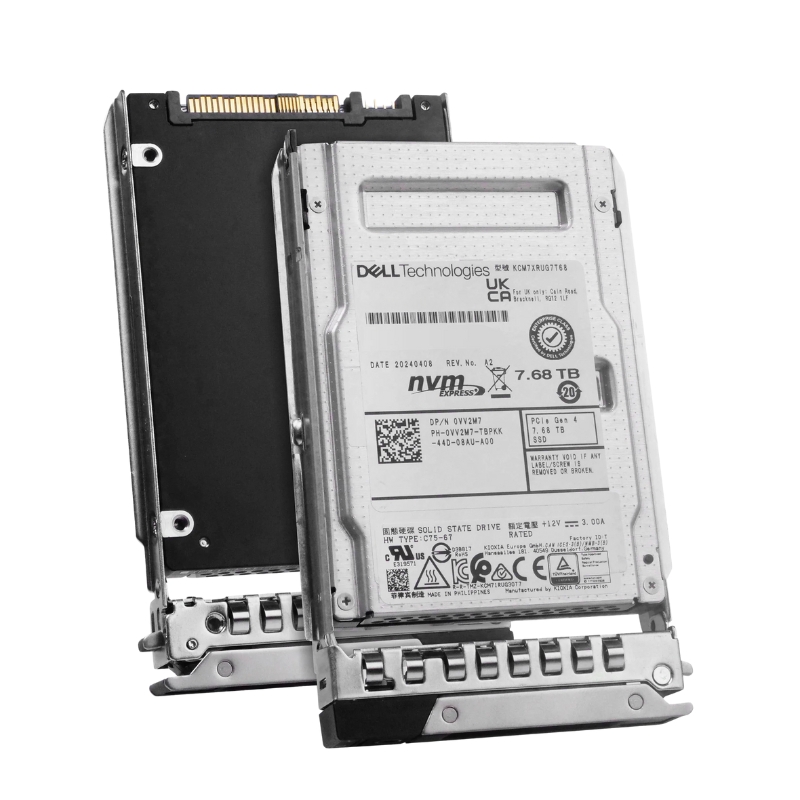
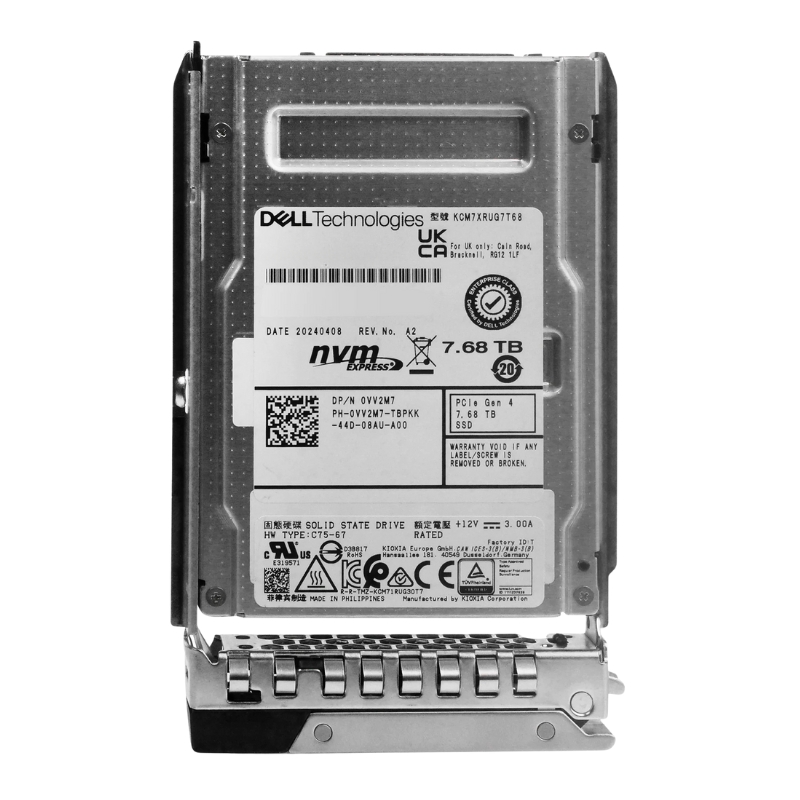
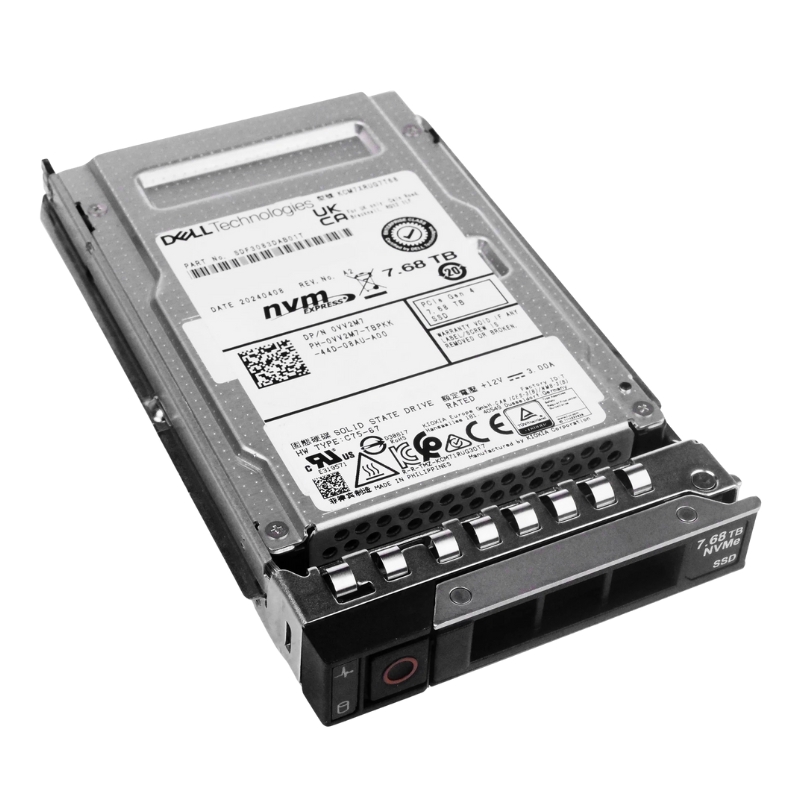
Dell 0VV2M7 7.68Tb Gen4 NVMe U.2 PCI-E 2.5Inch Read Intensive Solid State Drive. New Sealed in Box (NIB) with 1 year Warranty
High-capacity, enterprise-grade NVMe solid state drive engineered for read-optimized workloads. The Dell 0VV2M7 delivers ultra-fast sequential throughput, exceptional random read I/O and a compact U.2 2.5-inch form factor — ideal for data centers, caching layers and read-heavy applications.
Manufactured by Dell — engineered for reliability and compatibility with Dell PowerEdge servers and enterprise storage arrays.
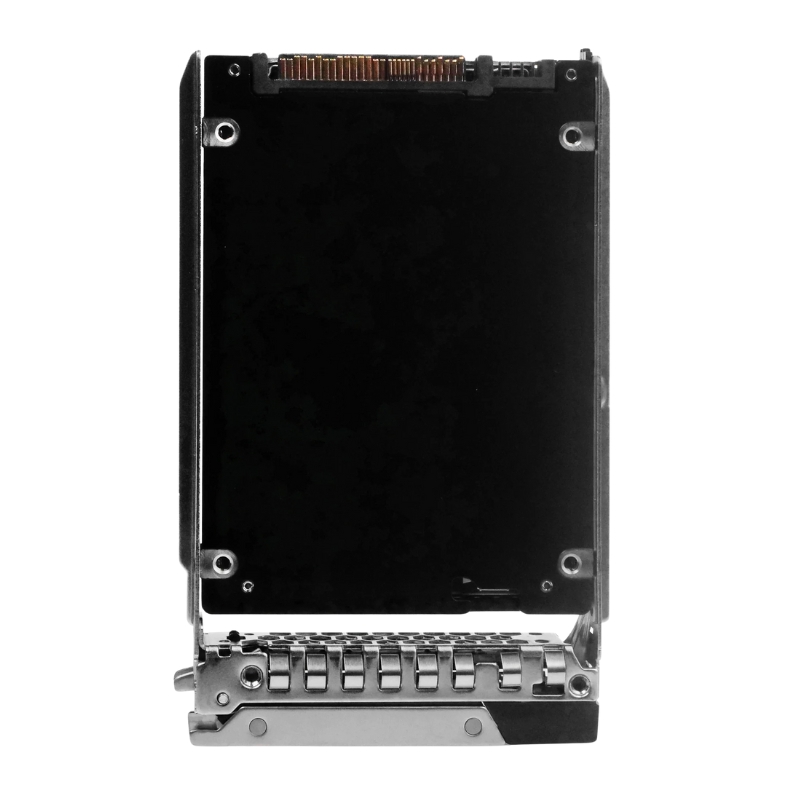
Compact U.2 2.5-inch enclosure for high-density server bays and drawer-style storage systems.
Utilizes 3D TLC NAND — a cost-efficient, performance-oriented flash technology that balances endurance and density for large capacity drives.
The Dell 0VV2M7 represents the pinnacle of enterprise storage technology, combining massive 7.68TB capacity with cutting-edge Gen4 NVMe performance in a versatile U.2 form factor. Designed specifically for read-intensive workloads in data centers, cloud infrastructure, and high-performance computing environments, this solid-state drive delivers exceptional reliability, endurance, and consistent low-latency performance that modern enterprise applications demand.
In today's data-driven business landscape, storage infrastructure must keep pace with exponentially growing data volumes and performance requirements. The Dell 0VV2M7 addresses these challenges head-on with its optimized architecture for read-centric operations, making it ideal for applications where data retrieval speed is critical to operational efficiency and user experience.
This drive leverages PCIe Gen4 interface technology to deliver up to double the bandwidth of previous generation solutions, with sequential read speeds reaching up to 6,900 MB/s and write speeds up to 3,600 MB/s. The advanced NVMe protocol reduces command overhead and latency compared to traditional SATA or SAS interfaces, enabling faster data access for critical applications.
With Quality of Service (QoS) guarantees ensuring consistent performance under varying workloads, the 0VV2M7 maintains exceptionally low latency profiles even during peak demand periods. This consistency is vital for database applications, virtualization environments, and real-time analytics platforms where performance predictability directly impacts business operations.
Understanding the underlying technology of the Dell 0VV2M7 helps IT professionals make informed decisions about storage infrastructure investments. This section details the comprehensive technical specifications that define the drive's capabilities and compatibility requirements.
The 2.5-inch U.2 form factor (formerly known as SFF-8639) provides a versatile physical design that supports both enterprise server bays and storage arrays. This standardized form factor ensures broad compatibility with existing infrastructure while delivering the performance benefits of NVMe technology without requiring specialized connectors or cabling.
Measuring 100.2mm x 69.85mm x 15mm, the drive conforms to enterprise 2.5-inch drive specifications, allowing seamless integration into most server and storage systems designed for 2.5-inch bays. The U.2 connector supports both PCIe NVMe signaling and SATA compatibility mode for maximum flexibility during deployment and migration scenarios.
Enterprise workloads generate significant heat, and the 0VV2M7 incorporates advanced thermal throttling mechanisms to maintain optimal operating temperatures without performance degradation. The drive's power consumption profile ranges from 8-12 watts during active operation, with sophisticated power management capabilities that adjust based on workload demands.
PCIe 4.0 technology doubles the bandwidth per lane compared to PCIe 3.0, with x4 lanes delivering up to 64 Gb/s of theoretical throughput. The Dell 0VV2M7 fully leverages this increased bandwidth to eliminate storage bottlenecks in data-intensive applications, making it particularly well-suited for high-throughput read scenarios common in big data analytics, content delivery networks, and scientific computing.
As a read-intensive drive, the 0VV2M7 is rated for 1.3 Drive Writes Per Day (DWPD) over its 5-year warranty period, translating to approximately 17.5 Petabytes Written (PBW) total endurance. This endurance rating ensures the drive can handle substantial write workloads despite its read-optimized design, providing flexibility for mixed-workload environments.
Advanced ECC (Error Correction Code) algorithms, end-to-end data protection, and power-loss protection circuits safeguard data integrity during unexpected power events. These enterprise-grade reliability features ensure data remains consistent and accessible even under adverse conditions, meeting the stringent requirements of business-critical applications.
The Dell 0VV2M7 is engineered specifically for environments where fast data access and high throughput are paramount. Its balanced performance profile makes it suitable for a wide range of enterprise applications, particularly those dominated by read operations.
Relational databases, both traditional and in-memory variants, benefit significantly from the low-latency, high-IOPS capabilities of the 0VV2M7. The drive's consistent performance profile ensures predictable query response times, which is critical for OLTP (Online Transaction Processing) systems where user experience directly correlates with application responsiveness.
Hypervisors and container platforms generate substantial storage I/O from multiple virtual machines competing for resources. The 0VV2M7's high queue depths and efficient NVMe protocol implementation enable superior VM density per host while maintaining performance isolation between workloads, making it ideal for private cloud deployments and VDI (Virtual Desktop Infrastructure) implementations.
Media-rich applications, streaming platforms, and content delivery networks require massive read bandwidth to serve files to numerous simultaneous users. The 7.68TB capacity provides ample storage for popular content while the Gen4 NVMe interface ensures rapid content delivery with minimal latency, enhancing viewer experience and reducing buffering.
Data analytics platforms often involve reading large datasets for processing and analysis. The 0VV2M7 accelerates these workflows by reducing data access times, particularly beneficial for iterative machine learning training processes that repeatedly access training datasets. The drive's capacity enables larger datasets to reside on faster storage, reducing the need to tier data to slower storage mediums.
Research institutions and scientific computing environments dealing with massive datasets from instruments, simulations, or observations benefit from the drive's combination of capacity and performance. The ability to quickly access reference datasets, genomic information, or simulation results accelerates discovery and analysis timelines.
Understanding where the Dell 0VV2M7 fits within the broader storage landscape helps IT decision-makers select the appropriate storage technology for their specific requirements and budget constraints.
Compared to SATA SSDs, the 0VV2M7 delivers approximately 5-7x the performance while maintaining similar capacity points. Against SAS SSDs, the NVMe interface provides significantly lower latency and higher IOPS, particularly for random read workloads. The performance advantage becomes most apparent in heavily virtualized environments or applications requiring consistent low-latency storage access.
Positioned as a read-intensive drive, the 0VV2M7 offers a balance between performance, endurance, and cost compared to mixed-use and write-intensive NVMe drives. For workloads with predominantly read patterns, it provides superior value while maintaining enterprise-grade reliability and features.


 Contact Us
 Information
 Catalog
 Solid State Drives (SSD)
 Network Switches
 Hard Disk Drives
 HBA & Controllers
 PC & Servers
 PC & Server Memory
 CPU & Processors
 Network Routers
 Power Supplies
 Tape Drives & Libraries
 Network Devices
 Computer & Network Cables